talk-data.com talk-data.com

Topic

machine-learning

49

tagged

Activity Trend

1 peak/qtr
2020-Q1 2026-Q1

Activities

49 activities · Newest first

Architecting Data and Machine Learning Platforms

All cloud architects need to know how to build data platforms that enable businesses to make data-driven decisions and deliver enterprise-wide intelligence in a fast and efficient way. This handbook shows you how to design, build, and modernize cloud native data and machine learning platforms using AWS, Azure, Google Cloud, and multicloud tools like Snowflake and Databricks. Authors Marco Tranquillin, Valliappa Lakshmanan, and Firat Tekiner cover the entire data lifecycle from ingestion to activation in a cloud environment using real-world enterprise architectures. You'll learn how to transform, secure, and modernize familiar solutions like data warehouses and data lakes, and you'll be able to leverage recent AI/ML patterns to get accurate and quicker insights to drive competitive advantage. You'll learn how to: Design a modern and secure cloud native or hybrid data analytics and machine learning platform Accelerate data-led innovation by consolidating enterprise data in a governed, scalable, and resilient data platform Democratize access to enterprise data and govern how business teams extract insights and build AI/ML capabilities Enable your business to make decisions in real time using streaming pipelines Build an MLOps platform to move to a predictive and prescriptive analytics approach
Low-Code AI

Take a data-first and use-case-driven approach with Low-Code AI to understand machine learning and deep learning concepts. This hands-on guide presents three problem-focused ways to learn no-code ML using AutoML, low-code using BigQuery ML, and custom code using scikit-learn and Keras. In each case, you'll learn key ML concepts by using real-world datasets with realistic problems. Business and data analysts get a project-based introduction to ML/AI using a detailed, data-driven approach: loading and analyzing data; feeding data into an ML model; building, training, and testing; and deploying the model into production. Authors Michael Abel and Gwendolyn Stripling show you how to build machine learning models for retail, healthcare, financial services, energy, and telecommunications. You'll learn how to: Distinguish between structured and unstructured data and the challenges they present Visualize and analyze data Preprocess data for input into a machine learning model Differentiate between the regression and classification supervised learning models Compare different ML model types and architectures, from no code to low code to custom training Design, implement, and tune ML models Export data to a GitHub repository for data management and governance

Machine Learning for High-Risk Applications

The past decade has witnessed the broad adoption of artificial intelligence and machine learning (AI/ML) technologies. However, a lack of oversight in their widespread implementation has resulted in some incidents and harmful outcomes that could have been avoided with proper risk management. Before we can realize AI/ML's true benefit, practitioners must understand how to mitigate its risks. This book describes approaches to responsible AI—a holistic framework for improving AI/ML technology, business processes, and cultural competencies that builds on best practices in risk management, cybersecurity, data privacy, and applied social science. Authors Patrick Hall, James Curtis, and Parul Pandey created this guide for data scientists who want to improve real-world AI/ML system outcomes for organizations, consumers, and the public. Learn technical approaches for responsible AI across explainability, model validation and debugging, bias management, data privacy, and ML security Learn how to create a successful and impactful AI risk management practice Get a basic guide to existing standards, laws, and assessments for adopting AI technologies, including the new NIST AI Risk Management Framework Engage with interactive resources on GitHub and Colab

Essential Math for AI

Companies are scrambling to integrate AI into their systems and operations. But to build truly successful solutions, you need a firm grasp of the underlying mathematics. This accessible guide walks you through the math necessary to thrive in the AI field such as focusing on real-world applications rather than dense academic theory. Engineers, data scientists, and students alike will examine mathematical topics critical for AI--including regression, neural networks, optimization, backpropagation, convolution, Markov chains, and more--through popular applications such as computer vision, natural language processing, and automated systems. And supplementary Jupyter notebooks shed light on examples with Python code and visualizations. Whether you're just beginning your career or have years of experience, this book gives you the foundation necessary to dive deeper in the field. Understand the underlying mathematics powering AI systems, including generative adversarial networks, random graphs, large random matrices, mathematical logic, optimal control, and more Learn how to adapt mathematical methods to different applications from completely different fields Gain the mathematical fluency to interpret and explain how AI systems arrive at their decisions

Applied Machine Learning and AI for Engineers

While many introductory guides to AI are calculus books in disguise, this one mostly eschews the math. Instead, author Jeff Prosise helps engineers and software developers build an intuitive understanding of AI to solve business problems. Need to create a system to detect the sounds of illegal logging in the rainforest, analyze text for sentiment, or predict early failures in rotating machinery? This practical book teaches you the skills necessary to put AI and machine learning to work at your company. Applied Machine Learning and AI for Engineers provides examples and illustrations from the AI and ML course Prosise teaches at companies and research institutions worldwide. There's no fluff and no scary equations—just a fast start for engineers and software developers, complete with hands-on examples. This book helps you: Learn what machine learning and deep learning are and what they can accomplish Understand how popular learning algorithms work and when to apply them Build machine learning models in Python with Scikit-Learn, and neural networks with Keras and TensorFlow Train and score regression models and binary and multiclass classification models Build facial recognition models and object detection models Build language models that respond to natural-language queries and translate text to other languages Use Cognitive Services to infuse AI into the apps that you write

Intelligent Document Processing with AWS AI/ML

Dive into the world of Intelligent Document Processing (IDP) with the power of AWS AI/ML. This book guides you from understanding the challenges of document processing to building effective IDP pipelines using advanced AWS APIs and Python. Through hands-on projects and real-world applications, this book will equip you with the skills needed to automate and unlock value from your document workflows. What this Book will help me do Understand the stages and challenges of the Intelligent Document Processing pipeline. Learn how to automate document processing workflow using AWS AI services. Acquire practical insights into Python libraries for document processing. Discover industry applications including healthcare and financial sectors. Develop the skill to solve real-world IDP problems with AI/ML. Author(s) Sonali Sahu is a seasoned AI/ML consultant and author with a focus on innovative technologies for industry problems. With extensive hands-on project experience and deep expertise in AWS AI/ML tools, she bridges the gap between theory and application. Her writing is approachable and practical, aimed to empower technical practitioners to excel. Who is it for? This book is aimed at developers, data scientists, and technical professionals wanting to leverage AWS AI/ML for document processing. Aimed at intermediate-level professionals, the content helps those with a working knowledge of Python or AI tools to enhance their skills. Whether you're in healthcare, finance, or a similar field, this book equips you to address document-centric problems using cutting-edge solutions.

Designing Machine Learning Systems

Machine learning systems are both complex and unique. Complex because they consist of many different components and involve many different stakeholders. Unique because they're data dependent, with data varying wildly from one use case to the next. In this book, you'll learn a holistic approach to designing ML systems that are reliable, scalable, maintainable, and adaptive to changing environments and business requirements. Author Chip Huyen, co-founder of Claypot AI, considers each design decision--such as how to process and create training data, which features to use, how often to retrain models, and what to monitor--in the context of how it can help your system as a whole achieve its objectives. The iterative framework in this book uses actual case studies backed by ample references. This book will help you tackle scenarios such as: Engineering data and choosing the right metrics to solve a business problem Automating the process for continually developing, evaluating, deploying, and updating models Developing a monitoring system to quickly detect and address issues your models might encounter in production Architecting an ML platform that serves across use cases Developing responsible ML systems

Machine Learning with PyTorch and Scikit-Learn

Machine Learning with PyTorch and Scikit-Learn is a comprehensive resource for developers looking to dive deep into the world of machine learning. It introduces foundational concepts alongside practical implementations using Python and leading libraries such as PyTorch and Scikit-Learn. With well-explained techniques and real-world examples, you'll gain the knowledge needed to design, build, and optimize machine learning systems. What this Book will help me do Understand and apply core concepts in machine learning using Scikit-Learn. Develop and deploy deep learning models using PyTorch efficiently. Configure and optimize neural networks, transformers, and GANs for various applications. Handle and preprocess data effectively for building robust models. Follow best practices for model evaluation, tuning, and deployment. Author(s) Sebastian Raschka, Yuxi (Hayden) Liu, and Vahid Mirjalili are experienced professionals in the field of machine learning with extensive teaching and writing backgrounds. They bring their expertise in Python and machine learning frameworks like PyTorch to provide both theoretical and practical insights helpful for learners. Their combined knowledge ensures a thorough and engaging learning experience suited for aspiring data scientists. Who is it for? This book is tailored for Python developers and data scientists eager to master machine learning and deep learning techniques. If you're familiar with Python programming and possess fundamental knowledge of calculus and linear algebra, you will find this book incredibly insightful. Whether you're entering the field or seeking to enhance your expertise, this resource caters to your professional growth in building advanced machine learning systems.

Grokking Machine Learning

Discover valuable machine learning techniques you can understand and apply using just high-school math. In Grokking Machine Learning you will learn: Supervised algorithms for classifying and splitting data Methods for cleaning and simplifying data Machine learning packages and tools Neural networks and ensemble methods for complex datasets Grokking Machine Learning teaches you how to apply ML to your projects using only standard Python code and high school-level math. No specialist knowledge is required to tackle the hands-on exercises using Python and readily available machine learning tools. Packed with easy-to-follow Python-based exercises and mini-projects, this book sets you on the path to becoming a machine learning expert. About the Technology Discover powerful machine learning techniques you can understand and apply using only high school math! Put simply, machine learning is a set of techniques for data analysis based on algorithms that deliver better results as you give them more data. ML powers many cutting-edge technologies, such as recommendation systems, facial recognition software, smart speakers, and even self-driving cars. This unique book introduces the core concepts of machine learning, using relatable examples, engaging exercises, and crisp illustrations. About the Book Grokking Machine Learning presents machine learning algorithms and techniques in a way that anyone can understand. This book skips the confused academic jargon and offers clear explanations that require only basic algebra. As you go, you’ll build interesting projects with Python, including models for spam detection and image recognition. You’ll also pick up practical skills for cleaning and preparing data. What's Inside Supervised algorithms for classifying and splitting data Methods for cleaning and simplifying data Machine learning packages and tools Neural networks and ensemble methods for complex datasets About the Reader For readers who know basic Python. No machine learning knowledge necessary. About the Author Luis G. Serrano is a research scientist in quantum artificial intelligence. Previously, he was a Machine Learning Engineer at Google and Lead Artificial Intelligence Educator at Apple. Quotes Did you think machine learning is complicated and hard to master? It’s not! Read this book! Serrano demystifies some of the best-held secrets of the machine learning society. - Sebastian Thrun, Founder, Udacity The first step to take on your machine learning journey. - Millad Dagdoni, Norwegian Labour and Welfare Administration A nicely written guided introduction, especially for those who want to code but feel shaky in their mathematics. - Erik D. Sapper, California Polytechnic State University The most approachable introduction to machine learning I’ve had the pleasure to read in recent years. Highly recommended. - Kay Engelhardt, devstats

Artificial Intelligence and Machine Learning in Business Management

The focus of this book is to introduce Artificial Intelligence (AI) and Machine Learning (ML) technologies into the context of Business Management. The book gives insights into the implementation and impact of AI and ML to business leaders, managers, technology developers, and implementers.

Deep Learning

Ever since computers began beating us at chess, they've been getting better at a wide range of human activities, from writing songs and generating news articles to helping doctors provide healthcare. Deep learning is the source of many of these breakthroughs, and its remarkable ability to find patterns hiding in data has made it the fastest growing field in artificial intelligence (AI). Digital assistants on our phones use deep learning to understand and respond intelligently to voice commands; automotive systems use it to safely navigate road hazards; online platforms use it to deliver personalized suggestions for movies and books – the possibilities are endless. Deep Learning: A Visual Approach is for anyone who wants to understand this fascinating field in depth, but without any of the advanced math and programming usually required to grasp its internals. If you want to know how these tools work, and use them yourself, the answers are all within these pages. And, if you’re ready to write your own programs, there are also plenty of supplemental Python notebooks in the accompanying Github repository to get you going. The book’s conversational style, extensive color illustrations, illuminating analogies, and real-world examples expertly explain the key concepts in deep learning, including: •How text generators create novel stories and articles •How deep learning systems learn to play and win at human games •How image classification systems identify objects or people in a photo •How to think about probabilities in a way that’s useful to everyday life •How to use the machine learning techniques that form the core of modern AI Intellectual adventurers of all kinds can use the powerful ideas covered in Deep Learning: A Visual Approach to build intelligent systems that help us better understand the world and everyone who lives in it. It’s the future of AI, and this book allows you to fully envision it.

Reinforcement Learning

Reinforcement learning (RL) will deliver one of the biggest breakthroughs in AI over the next decade, enabling algorithms to learn from their environment to achieve arbitrary goals. This exciting development avoids constraints found in traditional machine learning (ML) algorithms. This practical book shows data science and AI professionals how to learn by reinforcement and enable a machine to learn by itself. Author Phil Winder of Winder Research covers everything from basic building blocks to state-of-the-art practices. You'll explore the current state of RL, focus on industrial applications, learn numerous algorithms, and benefit from dedicated chapters on deploying RL solutions to production. This is no cookbook; doesn't shy away from math and expects familiarity with ML. Learn what RL is and how the algorithms help solve problems Become grounded in RL fundamentals including Markov decision processes, dynamic programming, and temporal difference learning Dive deep into a range of value and policy gradient methods Apply advanced RL solutions such as meta learning, hierarchical learning, multi-agent, and imitation learning Understand cutting-edge deep RL algorithms including Rainbow, PPO, TD3, SAC, and more Get practical examples through the accompanying website

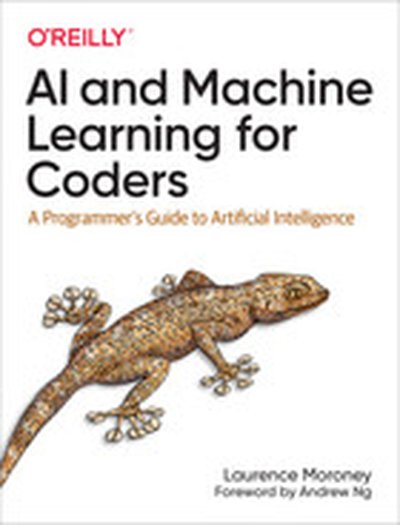
AI and Machine Learning for Coders

If you're looking to make a career move from programmer to AI specialist, this is the ideal place to start. Based on Laurence Moroney's extremely successful AI courses, this introductory book provides a hands-on, code-first approach to help you build confidence while you learn key topics. You'll understand how to implement the most common scenarios in machine learning, such as computer vision, natural language processing (NLP), and sequence modeling for web, mobile, cloud, and embedded runtimes. Most books on machine learning begin with a daunting amount of advanced math. This guide is built on practical lessons that let you work directly with the code. You'll learn: How to build models with TensorFlow using skills that employers desire The basics of machine learning by working with code samples How to implement computer vision, including feature detection in images How to use NLP to tokenize and sequence words and sentences Methods for embedding models in Android and iOS How to serve models over the web and in the cloud with TensorFlow Serving

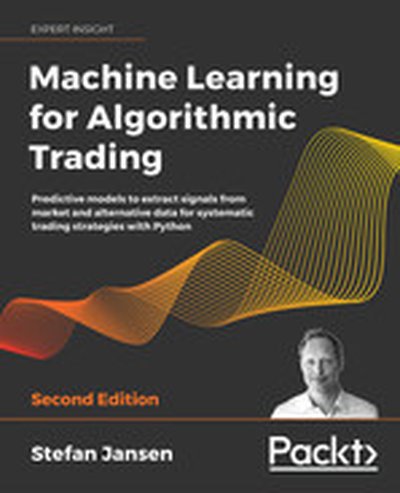
Machine Learning for Algorithmic Trading - Second Edition

Explore the intersection of machine learning and algorithmic trading with "Machine Learning for Algorithmic Trading" by Stefan Jansen. This comprehensive guide walks you through applying predictive modeling and data analysis to uncover financial signals and build systematic trading strategies. By the end, you'll be equipped to design and implement machine learning-driven trading systems. What this Book will help me do Develop data-driven trading strategies using supervised, unsupervised, and reinforcement learning methods. Master techniques for extracting predictive features from market and alternative datasets. Gain expertise in backtesting and validating ML-based trading strategies in Python. Apply text analysis techniques like NLP to news articles and transcripts for financial insights. Optimize portfolio risk and returns using advanced Python libraries. Author(s) Stefan Jansen is a quantitative researcher and data scientist with extensive experience in developing algorithmic trading solutions. He specializes in leveraging machine learning to extract financial insights and optimize investment strategies. His practical approach to applying ML in trading is reflected in this comprehensive guide, helping readers navigate complex trading challenges. Who is it for? This book is crafted for Python developers, data scientists, and finance professionals looking to integrate machine learning into algorithmic trading. Ideal for those with a basic understanding of Python and ML principles, it guides readers in crafting data-driven trading strategies. It's especially useful for analysts aiming to harness diverse data types for financial applications.

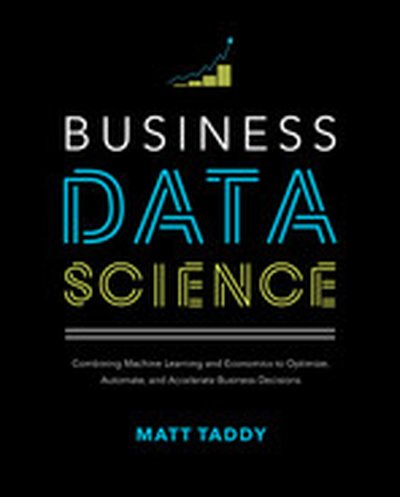
Business Data Science: Combining Machine Learning and Economics to Optimize, Automate, and Accelerate Business Decisions

Publisher's Note: Products purchased from Third Party sellers are not guaranteed by the publisher for quality, authenticity, or access to any online entitlements included with the product. Use machine learning to understand your customers, frame decisions, and drive value The business analytics world has changed, and Data Scientists are taking over. Business Data Science takes you through the steps of using machine learning to implement best-in-class business data science. Whether you are a business leader with a desire to go deep on data, or an engineer who wants to learn how to apply Machine Learning to business problems, you’ll find the information, insight, and tools you need to flourish in today’s data-driven economy. You’ll learn how to: •Use the key building blocks of Machine Learning: sparse regularization, out-of-sample validation, and latent factor and topic modeling •Understand how use ML tools in real world business problems, where causation matters more that correlation •Solve data science programs by scripting in the R programming language Today’s business landscape is driven by data and constantly shifting. Companies live and die on their ability to make and implement the right decisions quickly and effectively. Business Data Science is about doing data science right. It’s about the exciting things being done around Big Data to run a flourishing business. It’s about the precepts, principals, and best practices that you need know for best-in-class business data science.

Machine Learning for Finance

Dive deep into how machine learning is transforming the financial industry with 'Machine Learning for Finance'. This comprehensive guide explores cutting-edge concepts in machine learning while providing practical insights and Python code examples to help readers apply these techniques to real-world financial scenarios. Whether tackling fraud detection, financial forecasting, or sentiment analysis, this book equips you with the understanding and tools needed to excel. What this Book will help me do Understand and implement machine learning techniques for structured data, natural language, images, and text. Learn Python-based tools and libraries such as scikit-learn, Keras, and TensorFlow for financial data analysis. Apply machine learning for tasks like predicting financial trends, detecting fraud, and customer sentiment analysis. Explore advanced topics such as neural networks, generative adversarial networks (GANs), and reinforcement learning. Gain hands-on experience with machine learning debugging, products launch preparation, and addressing bias in data. Author(s) James Le None and Jannes Klaas are experts in machine learning applications in financial technology. Jannes has extensive experience training financial professionals on implementing machine learning strategies in their work and pairs this with a deep academic understanding of the topic. Their dedication to empowering readers to confidently integrate AI and machine learning into financial applications shines through in this user-focused, richly detailed book. Who is it for? This book is tailored for financial professionals, data scientists, and enthusiasts aiming to harness machine learning's potential in finance. Readers should have a foundational understanding of mathematics, statistics, and Python programming. If you work in financial services and are curious about applications ranging from fraud detection to trend forecasting, this resource is for you. It's designed for those looking to advance their skills and make impactful contributions in financial technology.