talk-data.com talk-data.com

Topic

machine-learning

49

tagged

Activity Trend

1 peak/qtr
2020-Q1 2026-Q1

Activities

49 activities · Newest first

Learning AutoML

Learning AutoML is your practical guide to applying automated machine learning in real-world environments. Whether you're a data scientist, ML engineer, or AI researcher, this book helps you move beyond experimentation to build and deploy high-performing models with less manual tuning and more automation. Using AutoGluon as a primary toolkit, you'll learn how to build, evaluate, and deploy AutoML models that reduce complexity and accelerate innovation. Author Kerem Tomak shares insights on how to integrate models into end-to-end deployment workflows using popular tools like Kubeflow, MLflow, and Airflow, while exploring cross-platform approaches with Vertex AI, SageMaker Autopilot, Azure AutoML, Auto-sklearn, and H2O.ai. Real-world case studies highlight applications across finance, healthcare, and retail, while chapters on ethics, governance, and agentic AI help future-proof your knowledge. Build AutoML pipelines for tabular, text, image, and time series data Deploy models with fast, scalable workflows using MLOps best practices Compare and navigate today's leading AutoML platforms Interpret model results and make informed decisions with explainability tools Explore how AutoML leads into next-gen agentic AI systems

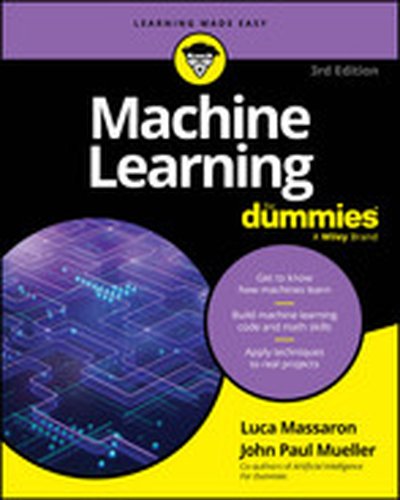
Machine Learning For Dummies, 3rd Edition

The most human-friendly book on machine learning Somewhere buried in all the systems that drive artificial intelligence, you'll find machine learning—the process that allows technology to build knowledge based on data and patterns. Machine Learning For Dummies is an excellent starting point for anyone who wants deeper insight into how all this learning actually happens. This book offers an overview of machine learning and its most important practical applications. Then, you'll dive into the tools, code, and math that make machine learning go—and you'll even get step-by-step instructions for testing it out on your own. For an easy-to-follow introduction to building smart algorithms, this Dummies guide is your go-to. Piece together what machine learning is, what it can do, and what it can't do Learn the basics of machine learning code and how it integrates with large datasets Understand the mathematical principles that AI uses to make itself smarter Consider real-world applications of machine learning and write your own algorithms With clear explanations and hands-on instruction, Machine Learning For Dummies is a great entry-level resource for developers looking to get started with AI and machine learning.

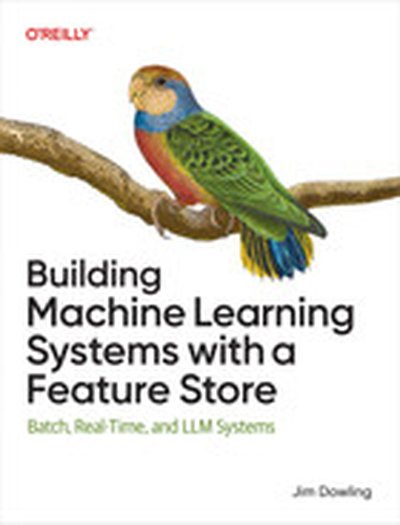
Building Machine Learning Systems with a Feature Store

Get up to speed on a new unified approach to building machine learning (ML) systems with a feature store. Using this practical book, data scientists and ML engineers will learn in detail how to develop and operate batch, real-time, and agentic ML systems. Author Jim Dowling introduces fundamental principles and practices for developing, testing, and operating ML and AI systems at scale. You'll see how any AI system can be decomposed into independent feature, training, and inference pipelines connected by a shared data layer. Through example ML systems, you'll tackle the hardest part of ML systems--the data, learning how to transform data into features and embeddings, and how to design a data model for AI. Develop batch ML systems at any scale Develop real-time ML systems by shifting left or shifting right feature computation Develop agentic ML systems that use LLMs, tools, and retrieval-augmented generation Understand and apply MLOps principles when developing and operating ML systems

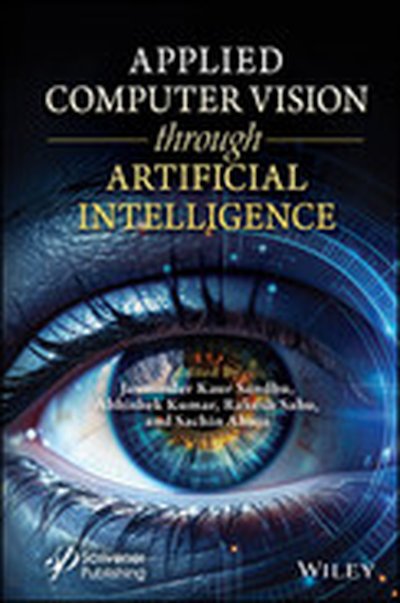
Applied Computer Vision through Artificial Intelligence

Master the cutting-edge field of computer vision and artificial intelligence with this accessible guide to the applications of machine learning and deep learning for real-world solutions in robotics, healthcare, and autonomous systems. Applied Computer Vision through Artificial Intelligence provides a thorough and accessible exploration of how machine learning and deep learning are driving breakthroughs in computer vision. This book brings together contributions from leading experts to present state-of-the-art techniques, tools, and frameworks, while demonstrating this technology’s applications in healthcare, autonomous systems, surveillance, robotics, and other real-world domains. By blending theory with hands-on insights, this volume equips readers with the knowledge needed to understand, design, and implement AI-powered vision solutions. Structured to serve both academic and professional audiences, the book not only covers cutting-edge algorithms and methodologies but also addresses pressing challenges, ethical considerations, and future research directions. It serves as a comprehensive reference for researchers, engineers, practitioners, and graduate students, making it an indispensable resource for anyone looking to apply artificial intelligence to solve complex computer vision problems in today’s data-driven world.

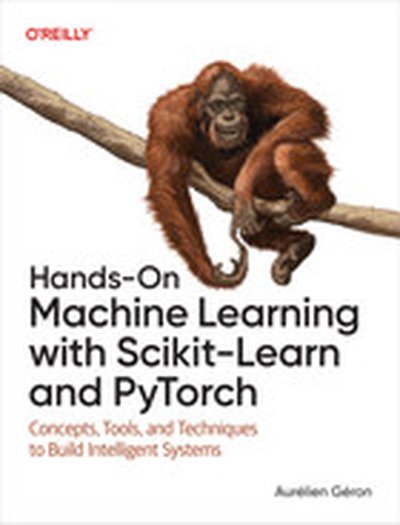
Hands-On Machine Learning with Scikit-Learn and PyTorch

The potential of machine learning today is extraordinary, yet many aspiring developers and tech professionals find themselves daunted by its complexity. Whether you're looking to enhance your skill set and apply machine learning to real-world projects or are simply curious about how AI systems function, this book is your jumping-off place. With an approachable yet deeply informative style, author Aurélien Géron delivers the ultimate introductory guide to machine learning and deep learning. Drawing on the Hugging Face ecosystem, with a focus on clear explanations and real-world examples, the book takes you through cutting-edge tools like Scikit-Learn and PyTorch—from basic regression techniques to advanced neural networks. Whether you're a student, professional, or hobbyist, you'll gain the skills to build intelligent systems. Understand ML basics, including concepts like overfitting and hyperparameter tuning Complete an end-to-end ML project using scikit-Learn, covering everything from data exploration to model evaluation Learn techniques for unsupervised learning, such as clustering and anomaly detection Build advanced architectures like transformers and diffusion models with PyTorch Harness the power of pretrained models—including LLMs—and learn to fine-tune them Train autonomous agents using reinforcement learning

Deep Learning with Python, Third Edition

The bestselling book on Python deep learning, now covering generative AI, Keras 3, PyTorch, and JAX! Deep Learning with Python, Third Edition puts the power of deep learning in your hands. This new edition includes the latest Keras and TensorFlow features, generative AI models, and added coverage of PyTorch and JAX. Learn directly from the creator of Keras and step confidently into the world of deep learning with Python. In Deep Learning with Python, Third Edition you’ll discover: Deep learning from first principles The latest features of Keras 3 A primer on JAX, PyTorch, and TensorFlow Image classification and image segmentation Time series forecasting Large Language models Text classification and machine translation Text and image generation—build your own GPT and diffusion models! Scaling and tuning models With over 100,000 copies sold, Deep Learning with Python makes it possible for developers, data scientists, and machine learning enthusiasts to put deep learning into action. In this expanded and updated third edition, Keras creator François Chollet offers insights for both novice and experienced machine learning practitioners. You'll master state-of-the-art deep learning tools and techniques, from the latest features of Keras 3 to building AI models that can generate text and images. About the Technology In less than a decade, deep learning has changed the world—twice. First, Python-based libraries like Keras, TensorFlow, and PyTorch elevated neural networks from lab experiments to high-performance production systems deployed at scale. And now, through Large Language Models and other generative AI tools, deep learning is again transforming business and society. In this new edition, Keras creator François Chollet invites you into this amazing subject in the fluid, mentoring style of a true insider. About the Book Deep Learning with Python, Third Edition makes the concepts behind deep learning and generative AI understandable and approachable. This complete rewrite of the bestselling original includes fresh chapters on transformers, building your own GPT-like LLM, and generating images with diffusion models. Each chapter introduces practical projects and code examples that build your understanding of deep learning, layer by layer. What's Inside Hands-on, code-first learning Comprehensive, from basics to generative AI Intuitive and easy math explanations Examples in Keras, PyTorch, JAX, and TensorFlow About the Reader For readers with intermediate Python skills. No previous experience with machine learning or linear algebra required. About the Authors François Chollet is the co-founder of Ndea and the creator of Keras. Matthew Watson is a software engineer at Google working on Gemini and a core maintainer of Keras. Quotes Perfect for anyone interested in learning by doing from one of the industry greats. - Anthony Goldbloom, Founder of Kaggle A sharp, deeply practical guide that teaches you how to think from first principles to build models that actually work. - Santiago Valdarrama, Founder of ml.school The most up-to-date and complete guide to deep learning you’ll find today! - Aran Komatsuzaki, EleutherAI Masterfully conveys the true essence of neural networks. A rare case in recent years of outstanding technical writing. - Salvatore Sanfilippo, Creator of Redis

Machine Learning and AI for Absolute Beginners

Explore AI and Machine Learning fundamentals, tools, and applications in this beginner-friendly guide. Learn to build models in Python and understand AI ethics. Key Features Covers AI fundamentals, Machine Learning, and Python model-building Provides a clear, step-by-step guide to learning AI techniques Explains ethical considerations and the future role of AI in society Book Description This book is an ideal starting point for anyone interested in Artificial Intelligence and Machine Learning. It begins with the foundational principles of AI, offering a deep dive into its history, building blocks, and the stages of development. Readers will explore key AI concepts and gradually transition to practical applications, starting with machine learning algorithms such as linear regression and k-nearest neighbors. Through step-by-step Python tutorials, the book helps readers build and implement models with hands-on experience. As the book progresses, readers will dive into advanced AI topics like deep learning, natural language processing (NLP), and generative AI. Topics such as recommender systems and computer vision demonstrate the real-world applications of AI technologies. Ethical considerations and privacy concerns are also addressed, providing insight into the societal impact of these technologies. By the end of the book, readers will have a solid understanding of both the theory and practice of AI and Machine Learning. The final chapters provide resources for continued learning, ensuring that readers can continue to grow their AI expertise beyond the book. What you will learn Understand key AI and ML concepts and how they work together Build and apply machine learning models from scratch Use Python to implement AI techniques and improve model performance Explore essential AI tools and frameworks used in the industry Learn the importance of data and data preparation in AI development Grasp the ethical considerations and the future of AI in work Who this book is for This book is ideal for beginners with no prior knowledge of AI or Machine Learning. It is tailored to those who wish to dive into these topics but are not yet familiar with the terminology or techniques. There are no prerequisites, though basic programming knowledge can be helpful. The book caters to a wide audience, from students and hobbyists to professionals seeking to transition into AI roles. Readers should be enthusiastic about learning and exploring AI applications for the future.

AI and ML for Coders in PyTorch

Eager to learn AI and machine learning but unsure where to start? Laurence Moroney's hands-on, code-first guide demystifies complex AI concepts without relying on advanced mathematics. Designed for programmers, it focuses on practical applications using PyTorch, helping you build real-world models without feeling overwhelmed. From computer vision and natural language processing (NLP) to generative AI with Hugging Face Transformers, this book equips you with the skills most in demand for AI development today. You'll also learn how to deploy your models across the web and cloud confidently. Gain the confidence to apply AI without needing advanced math or theory expertise Discover how to build AI models for computer vision, NLP, and sequence modeling with PyTorch Learn generative AI techniques with Hugging Face Diffusers and Transformers

Mathematics of Machine Learning

In "Mathematics of Machine Learning," you will explore the foundational mathematics essential for understanding and advancing in machine learning. The book covers linear algebra, calculus, and probability theory, offering readers clear explanations and practical Python-based implementations. What this Book will help me do Master fundamental linear algebra concepts such as matrices, eigenvalues, and vector spaces. Understand and apply principles of calculus, including multivariable functions and optimization. Gain confidence in utilizing probability theory concepts like Bayes' theorem and random distributions. Learn to implement mathematical concepts in Python to solve machine learning problems. Bridge the gap between theoretical mathematics and the practical demands of modern machine learning. Author(s) Tivadar Danka is a PhD mathematician with a specialized focus on machine learning applications. Known for his clear and engaging teaching style, Tivadar has a deep understanding of both mathematical rigor and practical ML challenges. His ability to break down complex ideas into comprehensible concepts has helped him reach thousands of learners globally. Who is it for? The book is perfect for data scientists, aspiring machine learning engineers, software developers working with ML, and researchers interested in advanced ML methodologies. If you have a basic understanding of algebra and Python programming, alongside some familiarity with machine learning concepts, this book will help you deepen your mathematical insight and elevate your practical applications.

Applied Machine Learning for Data Science Practitioners

A single-volume reference on data science techniques for evaluating and solving business problems using Applied Machine Learning (ML). Applied Machine Learning for Data Science Practitioners offers a practical, step-by-step guide to building end-to-end ML solutions for real-world business challenges, empowering data science practitioners to make informed decisions and select the right techniques for any use case. Unlike many data science books that focus on popular algorithms and coding, this book takes a holistic approach. It equips you with the knowledge to evaluate a range of techniques and algorithms. The book balances theoretical concepts with practical examples to illustrate key concepts, derive insights, and demonstrate applications. In addition to code snippets and reviewing output, the book provides guidance on interpreting results. This book is an essential resource if you are looking to elevate your understanding of ML and your technical capabilities, combining theoretical and practical coding examples. A basic understanding of using data to solve business problems, high school-level math and statistics, and basic Python coding skills are assumed. Written by a recognized data science expert, Applied Machine Learning for Data Science Practitioners covers essential topics, including: Data Science Fundamentals that provide you with an overview of core concepts, laying the foundation for understanding ML. Data Preparation covers the process of framing ML problems and preparing data and features for modeling. ML Problem Solving introduces you to a range of ML algorithms, including Regression, Classification, Ranking, Clustering, Patterns, Time Series, and Anomaly Detection. Model Optimization explores frameworks, decision trees, and ensemble methods to enhance performance and guide the selection of the most effective model. ML Ethics addresses ethical considerations, including fairness, accountability, transparency, and ethics. Model Deployment and Monitoring focuses on production deployment, performance monitoring, and adapting to model drift.

Machine Learning for Tabular Data

Business runs on tabular data in databases, spreadsheets, and logs. Crunch that data using deep learning, gradient boosting, and other machine learning techniques. Machine Learning for Tabular Data teaches you to train insightful machine learning models on common tabular business data sources such as spreadsheets, databases, and logs. You’ll discover how to use XGBoost and LightGBM on tabular data, optimize deep learning libraries like TensorFlow and PyTorch for tabular data, and use cloud tools like Vertex AI to create an automated MLOps pipeline. Machine Learning for Tabular Data will teach you how to: Pick the right machine learning approach for your data Apply deep learning to tabular data Deploy tabular machine learning locally and in the cloud Pipelines to automatically train and maintain a model Machine Learning for Tabular Data covers classic machine learning techniques like gradient boosting, and more contemporary deep learning approaches. By the time you’re finished, you’ll be equipped with the skills to apply machine learning to the kinds of data you work with every day. About the Technology Machine learning can accelerate everyday business chores like account reconciliation, demand forecasting, and customer service automation—not to mention more exotic challenges like fraud detection, predictive maintenance, and personalized marketing. This book shows you how to unlock the vital information stored in spreadsheets, ledgers, databases and other tabular data sources using gradient boosting, deep learning, and generative AI. About the Book Machine Learning for Tabular Data delivers practical ML techniques to upgrade every stage of the business data analysis pipeline. In it, you’ll explore examples like using XGBoost and Keras to predict short-term rental prices, deploying a local ML model with Python and Flask, and streamlining workflows using large language models (LLMs). Along the way, you’ll learn to make your models both more powerful and more explainable. What's Inside Master XGBoost Apply deep learning to tabular data Deploy models locally and in the cloud Build pipelines to train and maintain models About the Reader For readers experienced with Python and the basics of machine learning. About the Authors Mark Ryan is the AI Lead of the Developer Knowledge Platform at Google. A three-time Kaggle Grandmaster, Luca Massaron is a Google Developer Expert (GDE) in machine learning and AI. He has published 17 other books. Quotes

Machine Learning Algorithms in Depth

Learn how machine learning algorithms work from the ground up so you can effectively troubleshoot your models and improve their performance. Fully understanding how machine learning algorithms function is essential for any serious ML engineer. In Machine Learning Algorithms in Depth you’ll explore practical implementations of dozens of ML algorithms including: Monte Carlo Stock Price Simulation Image Denoising using Mean-Field Variational Inference EM algorithm for Hidden Markov Models Imbalanced Learning, Active Learning and Ensemble Learning Bayesian Optimization for Hyperparameter Tuning Dirichlet Process K-Means for Clustering Applications Stock Clusters based on Inverse Covariance Estimation Energy Minimization using Simulated Annealing Image Search based on ResNet Convolutional Neural Network Anomaly Detection in Time-Series using Variational Autoencoders Machine Learning Algorithms in Depth dives into the design and underlying principles of some of the most exciting machine learning (ML) algorithms in the world today. With a particular emphasis on probabilistic algorithms, you’ll learn the fundamentals of Bayesian inference and deep learning. You’ll also explore the core data structures and algorithmic paradigms for machine learning. Each algorithm is fully explored with both math and practical implementations so you can see how they work and how they’re put into action. About the Technology Learn how machine learning algorithms work from the ground up so you can effectively troubleshoot your models and improve their performance. This book guides you from the core mathematical foundations of the most important ML algorithms to their Python implementations, with a particular focus on probability-based methods. About the Book Machine Learning Algorithms in Depth dissects and explains dozens of algorithms across a variety of applications, including finance, computer vision, and NLP. Each algorithm is mathematically derived, followed by its hands-on Python implementation along with insightful code annotations and informative graphics. You’ll especially appreciate author Vadim Smolyakov’s clear interpretations of Bayesian algorithms for Monte Carlo and Markov models. What's Inside Monte Carlo stock price simulation EM algorithm for hidden Markov models Imbalanced learning, active learning, and ensemble learning Bayesian optimization for hyperparameter tuning Anomaly detection in time-series About the Reader For machine learning practitioners familiar with linear algebra, probability, and basic calculus. About the Author Vadim Smolyakov is a data scientist in the Enterprise & Security DI R&D team at Microsoft. Quotes I love this book! It shows you how to implement common ML algorithms in plain Python with only the essential libraries, so you can see how the computation and math works in practice. - Junpeng Lao, Senior Data Scientist at Google I highly recommend this book. In the era of ChatGPT real knowledge of algorithms is invaluable. - Vatsal Desai, InfoDesk Explains algorithms so well that even a novice can digest it. - Harsh Raval, Zymr

Deep Learning and AI Superhero

"Deep Learning and AI Superhero" is an extensive resource for mastering the core concepts and advanced techniques in AI and deep learning using TensorFlow, Keras, and PyTorch. This comprehensive guide walks you through topics from foundational neural network concepts to implementing real-world machine learning solutions. You will gain hands-on experience and theoretical knowledge to elevate your AI development skills. What this Book will help me do Develop a solid foundation in neural networks, their structure, and their training methodologies. Understand and implement deep learning models using TensorFlow and Keras effectively. Gain experience using PyTorch for creating, training, and optimizing advanced machine learning models. Learn advanced applications such as CNNs for computer vision, RNNs for sequential data, and Transformers for natural language processing. Deploy AI models on cloud and edge platforms through practical examples and optimized workflows. Author(s) Cuantum Technologies LLC has established itself as a pioneer in creating educational resources for advanced AI technologies. Their team consists of experts and practitioners in the field, combining years of industry and academic experience. Their books are crafted to ensure readers can practically apply cutting-edge AI techniques with clarity and confidence. Who is it for? This book is ideally suited for software developers, AI enthusiasts, and data scientists who have a basic understanding of programming and machine learning concepts. It's perfect for those seeking to enhance their skills and tackle real-world AI challenges. Whether your goals are professional development, research, or personal learning, you'll find practical and detailed guidance throughout this book.

Data Engineering for Machine Learning Pipelines: From Python Libraries to ML Pipelines and Cloud Platforms

This book covers modern data engineering functions and important Python libraries, to help you develop state-of-the-art ML pipelines and integration code. The book begins by explaining data analytics and transformation, delving into the Pandas library, its capabilities, and nuances. It then explores emerging libraries such as Polars and CuDF, providing insights into GPU-based computing and cutting-edge data manipulation techniques. The text discusses the importance of data validation in engineering processes, introducing tools such as Great Expectations and Pandera to ensure data quality and reliability. The book delves into API design and development, with a specific focus on leveraging the power of FastAPI. It covers authentication, authorization, and real-world applications, enabling you to construct efficient and secure APIs using FastAPI. Also explored is concurrency in data engineering, examining Dask's capabilities from basic setup to crafting advanced machine learning pipelines. The book includes development and delivery of data engineering pipelines using leading cloud platforms such as AWS, Google Cloud, and Microsoft Azure. The concluding chapters concentrate on real-time and streaming data engineering pipelines, emphasizing Apache Kafka and workflow orchestration in data engineering. Workflow tools such as Airflow and Prefect are introduced to seamlessly manage and automate complex data workflows. What sets this book apart is its blend of theoretical knowledge and practical application, a structured path from basic to advanced concepts, and insights into using state-of-the-art tools. With this book, you gain access to cutting-edge techniques and insights that are reshaping the industry. This book is not just an educational tool. It is a career catalyst, and an investment in your future as a data engineering expert, poised to meet the challenges of today's data-driven world. What You Will Learn Elevate your data wrangling jobs by utilizing the power of both CPU and GPU computing, and learn to process data using Pandas 2.0, Polars, and CuDF at unprecedented speeds Design data validation pipelines, construct efficient data service APIs, develop real-time streaming pipelines and master the art of workflow orchestration to streamline your engineering projects Leverage concurrent programming to develop machine learning pipelines and get hands-on experience in development and deployment of machine learning pipelines across AWS, GCP, and Azure Who This Book Is For Data analysts, data engineers, data scientists, machine learning engineers, and MLOps specialists

Artificial Intelligence and Machine Learning in Drug Design and Development

The book is a comprehensive guide that explores the use of artificial intelligence and machine learning in drug discovery and development covering a range of topics, including the use of molecular modeling, docking, identifying targets, selecting compounds, and optimizing drugs. The intersection of Artificial Intelligence (AI) and Machine Learning (ML) within the field of drug design and development represents a pivotal moment in the history of healthcare and pharmaceuticals. The remarkable synergy between cutting-edge technology and the life sciences has ushered in a new era of possibilities, offering unprecedented opportunities, formidable challenges, and a tantalizing glimpse into the future of medicine. AI can be applied to all the key areas of the pharmaceutical industry, such as drug discovery and development, drug repurposing, and improving productivity within a short period. Contemporary methods have shown promising results in facilitating the discovery of drugs to target different diseases. Moreover, AI helps in predicting the efficacy and safety of molecules and gives researchers a much broader chemical pallet for the selection of the best molecules for drug testing and delivery. In this context, drug repurposing is another important topic where AI can have a substantial impact. With the vast amount of clinical and pharmaceutical data available to date, AI algorithms find suitable drugs that can be repurposed for alternative use in medicine. This book is a comprehensive exploration of this dynamic and rapidly evolving field. In an era where precision and efficiency are paramount in drug discovery, AI and ML have emerged as transformative tools, reshaping the way we identify, design, and develop pharmaceuticals. This book is a testament to the profound impact these technologies have had and will continue to have on the pharmaceutical industry, healthcare, and ultimately, patient well-being. The editors of this volume have assembled a distinguished group of experts, researchers, and thought leaders from both the AI, ML, and pharmaceutical domains. Their collective knowledge and insights illuminate the multifaceted landscape of AI and ML in drug design and development, offering a roadmap for navigating its complexities and harnessing its potential. In each section, readers will find a rich tapestry of knowledge, case studies, and expert opinions, providing a 360-degree view of AI and ML’s role in drug design and development. Whether you are a researcher, scientist, industry professional, policymaker, or simply curious about the future of medicine, this book offers 19 state-of-the-art chapters providing valuable insights and a compass to navigate the exciting journey ahead. Audience The book is a valuable resource for a wide range of professionals in the pharmaceutical and allied industries including researchers, scientists, engineers, and laboratory workers in the field of drug discovery and development, who want to learn about the latest techniques in machine learning and AI, as well as information technology professionals who are interested in the application of machine learning and artificial intelligence in drug development.

Google Machine Learning and Generative AI for Solutions Architects

This book teaches solutions architects how to effectively design and implement AI/ML solutions utilizing Google Cloud services. Through detailed explanations, examples, and hands-on exercises, you will understand essential AI/ML concepts, tools, and best practices while building advanced applications. What this Book will help me do Build robust AI/ML solutions using Google Cloud tools such as TensorFlow, BigQuery, and Vertex AI. Prepare and process data efficiently for machine learning workloads. Establish and apply an MLOps framework for automating ML model lifecycle management. Implement cutting-edge generative AI solutions using best practices. Address common challenges in AI/ML projects with insights from expert solutions. Author(s) Kieran Kavanagh is a seasoned principal architect with nearly twenty years of experience in the tech industry. He has successfully led teams in designing, planning, and governing enterprise cloud strategies, and his wealth of experience is distilled into the practical approaches and insights in this book. Who is it for? This book is ideal for IT professionals aspiring to design AI/ML solutions, particularly in the role of solutions architects. It assumes a basic knowledge of Python and foundational AI/ML concepts but is suitable for both beginners and seasoned practitioners. If you're looking to deepen your understanding of state-of-the-art AI/ML applications on Google Cloud, this resource will guide you.

Math and Architectures of Deep Learning

Shine a spotlight into the deep learning “black box”. This comprehensive and detailed guide reveals the mathematical and architectural concepts behind deep learning models, so you can customize, maintain, and explain them more effectively. Inside Math and Architectures of Deep Learning you will find: Math, theory, and programming principles side by side Linear algebra, vector calculus and multivariate statistics for deep learning The structure of neural networks Implementing deep learning architectures with Python and PyTorch Troubleshooting underperforming models Working code samples in downloadable Jupyter notebooks The mathematical paradigms behind deep learning models typically begin as hard-to-read academic papers that leave engineers in the dark about how those models actually function. Math and Architectures of Deep Learning bridges the gap between theory and practice, laying out the math of deep learning side by side with practical implementations in Python and PyTorch. Written by deep learning expert Krishnendu Chaudhury, you’ll peer inside the “black box” to understand how your code is working, and learn to comprehend cutting-edge research you can turn into practical applications. About the Technology Discover what’s going on inside the black box! To work with deep learning you’ll have to choose the right model, train it, preprocess your data, evaluate performance and accuracy, and deal with uncertainty and variability in the outputs of a deployed solution. This book takes you systematically through the core mathematical concepts you’ll need as a working data scientist: vector calculus, linear algebra, and Bayesian inference, all from a deep learning perspective. About the Book Math and Architectures of Deep Learning teaches the math, theory, and programming principles of deep learning models laid out side by side, and then puts them into practice with well-annotated Python code. You’ll progress from algebra, calculus, and statistics all the way to state-of-the-art DL architectures taken from the latest research. What's Inside The core design principles of neural networks Implementing deep learning with Python and PyTorch Regularizing and optimizing underperforming models About the Reader Readers need to know Python and the basics of algebra and calculus. About the Author Krishnendu Chaudhury is co-founder and CTO of the AI startup Drishti Technologies. He previously spent a decade each at Google and Adobe. Quotes Machine learning uses a cocktail of linear algebra, vector calculus, statistical analysis, and topology to represent, visualize, and manipulate points in high dimensional spaces. This book builds that foundation in an intuitive way–along with the PyTorch code you need to be a successful deep learning practitioner. - Vineet Gupta, Google Research A thorough explanation of the mathematics behind deep learning! - Grigory Sapunov, Intento Deep learning in its full glory, with all its mathematical details. This is the book! - Atul Saurav, Genworth Financial

Machine Learning Q and AI

If you're ready to venture beyond introductory concepts and dig deeper into machine learning, deep learning, and AI, the question-and-answer format of Machine Learning Q and AI will make things fast and easy for you, without a lot of mucking about. Born out of questions often fielded by author Sebastian Raschka, the direct, no-nonsense approach of this book makes advanced topics more accessible and genuinely engaging. Each brief, self-contained chapter journeys through a fundamental question in AI, unraveling it with clear explanations, diagrams, and hands-on exercises. WHAT'S INSIDE: FOCUSED CHAPTERS: Key questions in AI are answered concisely, and complex ideas are broken down into easily digestible parts. WIDE RANGE OF TOPICS: Raschka covers topics ranging from neural network architectures and model evaluation to computer vision and natural language processing. PRACTICAL APPLICATIONS: Learn techniques for enhancing model performance, fine-tuning large models, and more. You'll also explore how to: Manage the various sources of randomness in neural network training Differentiate between encoder and decoder architectures in large language models Reduce overfitting through data and model modifications Construct confidence intervals for classifiers and optimize models with limited labeled data Choose between different multi-GPU training paradigms and different types of generative AI models Understand performance metrics for natural language processing Make sense of the inductive biases in vision transformers If you've been on the hunt for the perfect resource to elevate your understanding of machine learning, Machine Learning Q and AI will make it easy for you to painlessly advance your knowledge beyond the basics.

Machine Learning Interviews

As tech products become more prevalent today, the demand for machine learning professionals continues to grow. But the responsibilities and skill sets required of ML professionals still vary drastically from company to company, making the interview process difficult to predict. In this guide, data science leader Susan Shu Chang shows you how to tackle the ML hiring process. Having served as principal data scientist in several companies, Chang has considerable experience as both ML interviewer and interviewee. She'll take you through the highly selective recruitment process by sharing hard-won lessons she learned along the way. You'll quickly understand how to successfully navigate your way through typical ML interviews. This guide shows you how to: Explore various machine learning roles, including ML engineer, applied scientist, data scientist, and other positions Assess your interests and skills before deciding which ML role(s) to pursue Evaluate your current skills and close any gaps that may prevent you from succeeding in the interview process Acquire the skill set necessary for each machine learning role Ace ML interview topics, including coding assessments, statistics and machine learning theory, and behavioral questions Prepare for interviews in statistics and machine learning theory by studying common interview questions