talk-data.com talk-data.com

Topic

NumPy

scientific_computing numerical_analysis python

6

tagged

Activity Trend

16 peak/qtr
2020-Q1 2026-Q1

Activities

Showing filtered results

Filtering by: O'Reilly Data Engineering Books ×
Software Engineering for Data Scientists

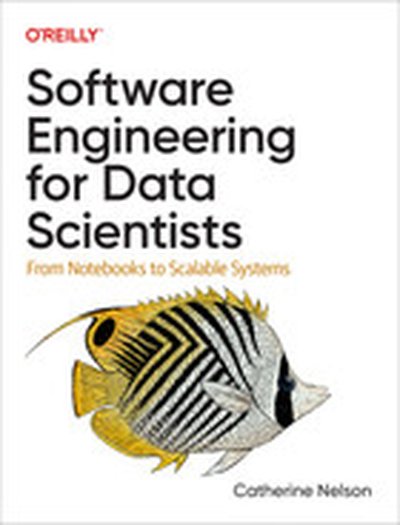
Data science happens in code. The ability to write reproducible, robust, scaleable code is key to a data science project's success—and is absolutely essential for those working with production code. This practical book bridges the gap between data science and software engineering, and clearly explains how to apply the best practices from software engineering to data science. Examples are provided in Python, drawn from popular packages such as NumPy and pandas. If you want to write better data science code, this guide covers the essential topics that are often missing from introductory data science or coding classes, including how to: Understand data structures and object-oriented programming Clearly and skillfully document your code Package and share your code Integrate data science code with a larger code base Learn how to write APIs Create secure code Apply best practices to common tasks such as testing, error handling, and logging Work more effectively with software engineers Write more efficient, maintainable, and robust code in Python Put your data science projects into production And more
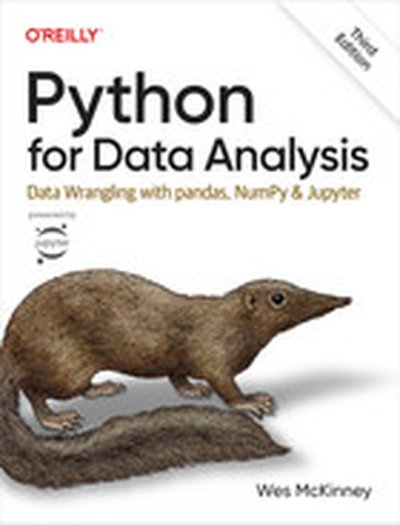
Python for Data Analysis, 3rd Edition

Get the definitive handbook for manipulating, processing, cleaning, and crunching datasets in Python. Updated for Python 3.10 and pandas 1.4, the third edition of this hands-on guide is packed with practical case studies that show you how to solve a broad set of data analysis problems effectively. You'll learn the latest versions of pandas, NumPy, and Jupyter in the process. Written by Wes McKinney, the creator of the Python pandas project, this book is a practical, modern introduction to data science tools in Python. It's ideal for analysts new to Python and for Python programmers new to data science and scientific computing. Data files and related material are available on GitHub. Use the Jupyter notebook and IPython shell for exploratory computing Learn basic and advanced features in NumPy Get started with data analysis tools in the pandas library Use flexible tools to load, clean, transform, merge, and reshape data Create informative visualizations with matplotlib Apply the pandas groupby facility to slice, dice, and summarize datasets Analyze and manipulate regular and irregular time series data Learn how to solve real-world data analysis problems with thorough, detailed examples

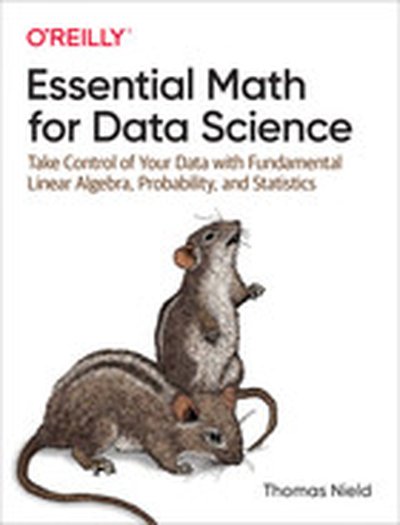
Essential Math for Data Science

Master the math needed to excel in data science, machine learning, and statistics. In this book author Thomas Nield guides you through areas like calculus, probability, linear algebra, and statistics and how they apply to techniques like linear regression, logistic regression, and neural networks. Along the way you'll also gain practical insights into the state of data science and how to use those insights to maximize your career. Learn how to: Use Python code and libraries like SymPy, NumPy, and scikit-learn to explore essential mathematical concepts like calculus, linear algebra, statistics, and machine learning Understand techniques like linear regression, logistic regression, and neural networks in plain English, with minimal mathematical notation and jargon Perform descriptive statistics and hypothesis testing on a dataset to interpret p-values and statistical significance Manipulate vectors and matrices and perform matrix decomposition Integrate and build upon incremental knowledge of calculus, probability, statistics, and linear algebra, and apply it to regression models including neural networks Navigate practically through a data science career and avoid common pitfalls, assumptions, and biases while tuning your skill set to stand out in the job market

Python for ArcGIS Pro

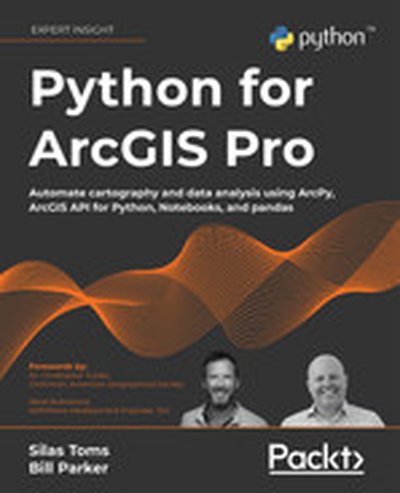
Python for ArcGIS Pro is your guide to automating geospatial tasks and maximizing your productivity using Python. Inside, you'll learn how to integrate Python scripting into ArcGIS workflows to streamline map production, data analysis, and data management. What this Book will help me do Automate map production and streamline repetitive cartography tasks. Conduct geospatial data analysis using Python libraries like pandas and NumPy. Integrate ArcPy and ArcGIS API for Python to manage geospatial data more effectively. Create script tools to improve repeatability and manage datasets. Publish and manage geospatial data to ArcGIS Online seamlessly. Author(s) None Toms and None Parker are both experienced GIS professionals and Python developers. With years of hands-on experience using Esri technology in real-world scenarios, they bring practical insights into the application's nuances. Their collaborative approach allows them to demystify technical concepts, making their teachings accessible to audiences of all skill levels. Who is it for? This book is for ArcGIS users looking to integrate Python into workflows, whether you're a GIS specialist, technician, or analyst. It's also suitable for those transitioning to roles requiring programming skills. A basic understanding of ArcGIS helps, but the book starts from the fundamentals.

PySpark Recipes: A Problem-Solution Approach with PySpark2

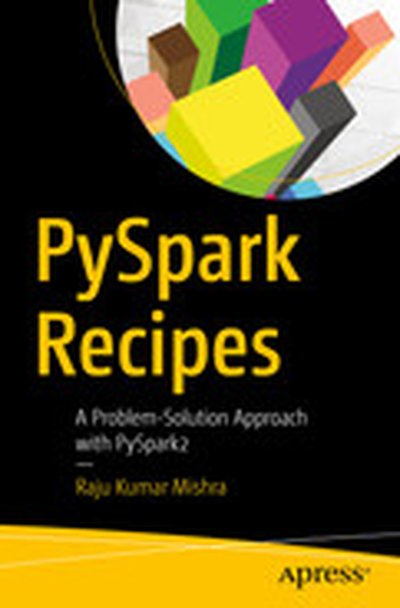
Quickly find solutions to common programming problems encountered while processing big data. Content is presented in the popular problem-solution format. Look up the programming problem that you want to solve. Read the solution. Apply the solution directly in your own code. Problem solved! PySpark Recipes covers Hadoop and its shortcomings. The architecture of Spark, PySpark, and RDD are presented. You will learn to apply RDD to solve day-to-day big data problems. Python and NumPy are included and make it easy for new learners of PySpark to understand and adopt the model. What You Will Learn Understand the advanced features of PySpark2 and SparkSQL Optimize your code Program SparkSQL with Python Use Spark Streaming and Spark MLlib with Python Perform graph analysis with GraphFrames Who This Book Is For Data analysts, Python programmers, big data enthusiasts

Apache Spark for Data Science Cookbook

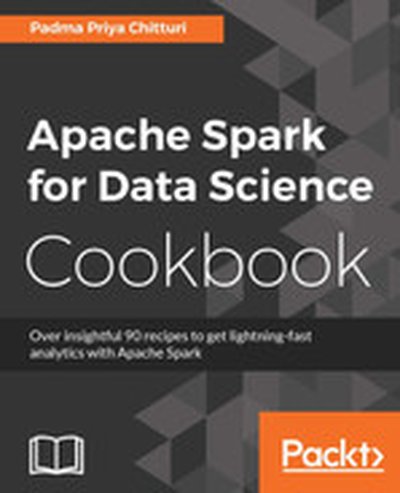
In "Apache Spark for Data Science Cookbook," you'll delve into solving real-world analytical challenges using the robust Apache Spark framework. This book features hands-on recipes that cover data analysis, distributed machine learning, and real-time data processing. You'll gain practical skills to process, visualize, and extract insights from large datasets efficiently. What this Book will help me do Master using Apache Spark for processing and analyzing large-scale datasets effectively. Harness Spark's MLLib for implementing machine learning algorithms like classification and clustering. Utilize libraries such as NumPy, SciPy, and Pandas in conjunction with Spark for numerical computations. Apply techniques like Natural Language Processing and text mining using Spark-integrated tools. Perform end-to-end data science workflows, including data exploration, modeling, and visualization. Author(s) Nagamallikarjuna Inelu and None Chitturi bring their extensive experience working with data science and distributed computing frameworks like Apache Spark. Nagamallikarjuna specializes in applying machine learning algorithms to big data problems, while None has contributed to various big data system implementations. Together, they focus on providing practitioners with practical and efficient solutions. Who is it for? This book is primarily intended for novice and intermediate data scientists and analysts who are curious about using Apache Spark to tackle data science problems. Readers are expected to have some familiarity with basic data science tasks. If you want to learn practical applications of Spark in data analysis and enhance your big data analytics skills, this resource is for you.