talk-data.com talk-data.com

Topic

Oracle

database enterprise_software cloud

541

tagged

Activity Trend

33 peak/qtr
2020-Q1 2026-Q1

Activities

541 activities · Newest first

Oracle Database Transactions and Locking Revealed

Oracle Database Transactions and Locking Revealed provides much-needed information for building scalable, high-concurrency applications and deploy them against the Oracle Database. Read this short, 150-page book that is adapted from Expert Oracle Database Architecture to gain a solid and accurate understanding of how locking and concurrency are dealt with by Oracle Database. Also learn how the Oracle Database architecture accommodates user transactions, and how you can write code to mesh with how Oracle Database is designed to operate. Good transaction design is an important facet of highly-concurrent applications that are run by hundreds, even thousands of users who are all executing transactions at the same time. Transaction design in turn relies upon a good understanding of how the underlying database platform manages of the locking of resources so as to prevent access conflicts and data loss that might otherwise result from concurrent access to data in the database. Oracle Database Transactions and Locking Revealed covers in detail the various lock types, and also different locking schemes such as pessimistic and optimistic locking. Then you'll learn about transaction isolation and multiversion concurrency, and how the various lock types support Oracle Databases transactional features. You'll learn some good tips for transaction design, as well as some bad practices and habits to avoid. Coverage is also given to redo and undo, and their role in concurrency. This is an important book that anyone developing highly-concurrent applications will want to have handy on their shelf.
Oracle RMAN for Absolute Beginners

Oracle RMAN for Absolute Beginners is a gentle introduction to the use of Oracle's Recovery Manager software to make backups of an Oracle database, and to restore all or part of a database in the event that data loss occurs. It is often said that a database administrator's #1 job responsibility is to be able to recover from data loss. If you're new to the Oracle platform, or you're new to database administration in general, you can hardly go wrong by making it your first priority to learn to backup and recover the database that has been entrusted into your hands. This book is short and sweet at just 200 pages. Focus lies on the mainstream use cases. Recovery Manager, or RMAN as it is called, is a powerful and complex tool that can be intimidating at first. Author Darl Kuhn understands the need to focus on the core use cases, building your confidence in the tool, and in your ability to recover from lost database files, and even to recover your entire database should that become necessary. Oracle RMAN for Absolute Beginners shows how to backup your database. That's the first job. You'll learn to backup the entire database, and to create incremental backups that in turn can speed restore and recovery operations. Then you'll learn to recover from lost data files, lost redo log files, lost control files, and even to restore the entire database from scratch. You'll even learn how to clone a database for development and test purposes by backing the database up on one system and restoring it onto another. Author Darl Kuhn has a decade and a half of experience in writing about, and teaching Oracle Database backup and recovery. If you are newly responsible for an Oracle Database, you can hardly do better than to pick up a copy of Oracle RMAN for Absolute Beginners.

Oracle Enterprise Manager 12c Command-Line Interface

Oracle Enterprise Manager 12c Command-Line Interface shows how to use Enterprise Manager’s powerful scripting language to automate your database administration work and save time by scripting routine tasks, and then executing those scripts across collections of databases and instances in your environment. This book is chock full of ready-made scripting examples contributed by the authors and leading members of the community. For example, you'll find scripts and examples of commands to: Remove an Enterprise Manager agent and its related targets Quickly create administrator accounts that are fully-configured with pre-expired passwords and all needed roles Invoke batch files to execute sequences of related commands with consistency against multiple targets Batch create large groups of user logins with a single command and more! The Enterprise Manager Command Line Interface (EM CLI) is the administrator's key to unlocking the power of Enterprise Manager 12c (EM12c) with scalability, repeatability, and confidence. In previous versions, most administrators ventured into the command-line interface only with the assistance of Oracle Support. But now there are many features in EM12c that are accessible only from the command-line. This is far from a disadvantage! Enterprise Manager is now a powerful tool for automation in the hands of a skilled database administrator. Enterprise Manager scripting offers potential for all administrators who manage Oracle’s enterprise-level products in their environment. You can automate from the smallest, single-instance configuration all the way up to a broadly distributed enterprise-level rollout having database instances strewn across broad geographical distributions. The power of the EM CLI returns the administrator to the golden age, where the entire environment, from database to application to infrastructure, can often be managed from this powerful command line tool secured by the robust Enterprise Manager framework. Brings a golden-age of automation to Oracle Database administrators Provides ready-made scripts contributed by leading members of the community Covers advanced techniques involving Jython and Python

Expert Oracle RAC Performance Diagnostics and Tuning

" Expert Oracle RAC Performance Diagnostics and Tuning provides comprehensive coverage of the features, technology and principles for testing and tuning RAC databases. The book takes a deep look at optimizing RAC databases by following a methodical approach based on scientific analysis rather than using a speculative approach, twisting and turning knobs and gambling on the system. The book starts with the basic concepts of tuning methodology, capacity planning, and architecture. Author Murali Vallath then dissects the various tiers of the testing implementation, including the operating system, the network, the application, the storage, the instance, the database, and the grid infrastructure. He also introduces tools for performance optimization and thoroughly covers each aspect of the tuning process, using many real-world examples, analyses, and solutions from the field that provide you with a solid, practical, and replicable approach to tuning a RAC environment. The book concludes with troubleshooting guidance and quick reference of all the scripts used in the book. Expert Oracle RAC Performance Diagnostics and Tuning covers scenarios and details never discussed before in any other performance tuning books. If you have a RAC database, this book is a requirement. Get your copy today. Takes you through optimizing the various tiers of the RAC environment. Provides real life case studies, analysis and solutions from the field. Maps a methodical approach to testing, tuning and diagnosing the cluster"

Oracle BPM Suite 12c Modeling Patterns

Dive deep into Oracle BPM Suite 12c with this comprehensive guide on workflow automation and modeling patterns. This book equips you with practical knowledge on designing and implementing intricate Business Process Management solutions using Oracle BPM Suite 12c, making complex processes harmonious and effective. What this Book will help me do Master advanced flow control and branching patterns in Oracle BPM Suite 12c. Implement human workflow integration for better interaction within BPM applications. Learn effective handling of process correlation and exceptions for robust solutions. Explore adaptive case management for handling unpredictable business needs. Understand the usage of predictive analysis and KPIs in business processes. Author(s) None Acharya is a seasoned Oracle BPM and IT solutions expert. With years of practical experience in enterprise process management and cloud-based application development, None combines a technical depth with a passion for sharing knowledge. Their approach to writing ensures a balance of theory and actionable insights. Who is it for? This book is designed for enterprise and solution architects, developers, process analysts, and technical or functional consultants with a focus on process modeling and enterprise IT solutions. Intended readers should have a foundational understanding of BPM concepts. By reading this book, you'll enhance your ability to work with Oracle BPM Suite 12c in professional environments. Ideal for those seeking to deepen their expertise in BPM and workflow automation.

Master Competitive Analytics with Oracle Endeca Information Discovery

Oracle Endeca Information Discovery Best Practices Maximize the powerful capabilities of this self-service enterprise data discovery platform. Master Competitive Analytics with Oracle Endeca Information Discovery reveals how to unlock insights from any type of data, regardless of structure. The first part of the book is a complete technical guide to the product's architecture, components, and implementation. The second part presents a comprehensive collection of business analytics use cases in various industries, including financial services, healthcare, research, manufacturing, retail, consumer packaged goods, and public sector. Step-by-step instructions on implementing some of these use cases are included in this Oracle Press book. Install and manage Oracle Endeca Server Design Oracle Endeca Information Discovery Studio visualizations to facilitate user-driven data exploration and discovery Enable enterprise-driven data exploration with Oracle Endeca Information Discovery Integrator Develop and implement a fraud detection and analysis application Build a healthcare correlation application that integrates claims, patient, and operations analysis; partners; clinical research; and remote monitoring Use an enterprise architecture approach to incrementally establish big data and analytical capabilities

WS-BPEL 2.0 Beginner's Guide

The "WS-BPEL 2.0 Beginner's Guide" is an essential resource for getting started with designing and implementing WS-BPEL 2.0-based business processes using Oracle SOA Suite 12c. The book introduces you to core concepts, guides you through practical activities, and equips you with skills to effectively use WS-BPEL for orchestrating and managing web services. What this Book will help me do Understand the core syntax and semantics of WS-BPEL 2.0 for designing business processes. Learn to utilize the Oracle SOA Suite 12c to build and deploy WS-BPEL executable processes. Develop skills to use WS-BPEL features such as variables, conditions, loops, and error handling for robust implementations. Gain practical insights into asynchronous operations, dynamic invocations, and messaging patterns in WS-BPEL. Master advanced WS-BPEL concepts like human task integration, event handling, and compensation mechanisms. Author(s) Matjaz B. Juric is a renowned author and technical expert with extensive experience in SOA and BPM technologies. He has authored multiple books focusing on enterprise systems and has a background in academic research and teaching. His approachable and thorough writing style ensures that readers are able to grasp complex topics and apply them effectively in their work. Who is it for? This book is directed at software professionals such as architects, designers, and developers who are working on or looking to adopt SOA and BPM solutions within their projects. Readers should have a basic understanding of SOA concepts and web services but do not need prior experience with WS-BPEL. It is suitable for those aiming to learn WS-BPEL 2.0 from scratch to become proficient in designing and implementing business processes.

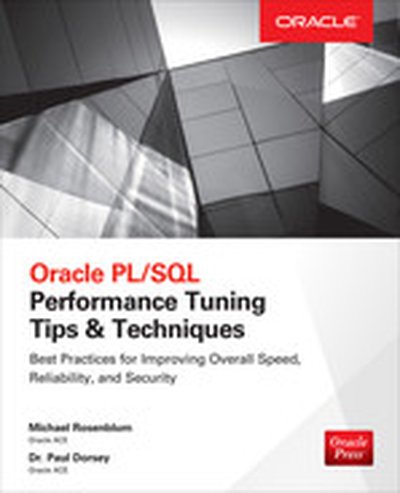
Oracle PL/SQL Performance Tuning Tips & Techniques

Proven PL/SQL Optimization Solutions In Oracle PL/SQL Performance Tuning Tips & Techniques, Oracle ACE authors with decades of experience building complex production systems for government, industry, and educational organizations present a hands-on approach to enabling optimal results from PL/SQL. The book begins by describing the discovery process required to pinpoint performance problems and then provides measurable and repeatable test cases. In-depth coverage of linking SQL and PL/SQL is followed by deep dives into essential Oracle Database performance tuning tools. Real-world examples and best practices are included throughout this Oracle Press guide. Follow a request-driven nine-step process to identify and address performance problems in web applications Use performance-related database tools, including data dictionary views, logging, tracing, PL/SQL Hierarchical Profiler, PL/Scope, and RUNSTATS Instrument code to pinpoint performance issues using call stack APIs, error stack APIs, and timing markers Embed PL/SQL in SQL and manage user-defined functions Embed SQL in PL/SQL using a set-based approach to handle large volumes of data Properly write and deploy data manipulation language triggers to avoid performance problems Work with advanced datatypes, including LOBs and XML Use caching techniques to avoid redundant operations Effectively use dynamic SQL to reduce the amount of code needed and streamline system management Manage version control and ensure that performance fixes are successfully deployed Code examples in the book are available for download.

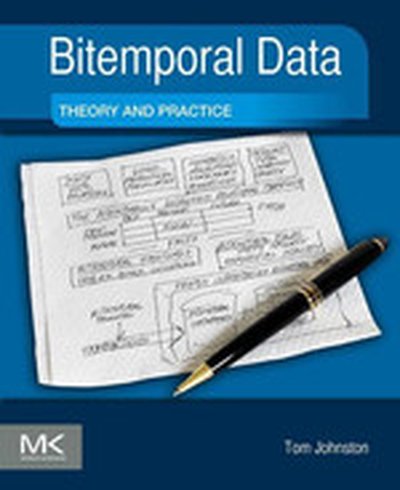
Bitemporal Data

Bitemporal data has always been important. But it was not until 2011 that the ISO released a SQL standard that supported it. Currently, among major DBMS vendors, Oracle, IBM and Teradata now provide at least some bitemporal functionality in their flagship products. But to use these products effectively, someone in your IT organization needs to know more than how to code bitemporal SQL statements. Perhaps, in your organization, that person is you. To correctly interpret business requests for temporal data, to correctly specify requirements to your IT development staff, and to correctly design bitemporal databases and applications, someone in your enterprise needs a deep understanding of both the theory and the practice of managing bitemporal data. Someone also needs to understand what the future may bring in the way of additional temporal functionality, so their enterprise can plan for it. Perhaps, in your organization, that person is you. This is the book that will show the do-it-yourself IT professional how to design and build bitemporal databases and how to write bitemporal transactions and queries, and will show those who will direct the use of vendor-provided bitemporal DBMSs exactly what is going on "under the covers" of that software. Explains the business value of bitemporal data in terms of the information that can be provided by bitemporal tables and not by any other form of temporal data, including history tables, version tables, snapshot tables, or slowly-changing dimensions Provides an integrated account of the mathematics, logic, ontology and semantics of relational theory and relational databases, in terms of which current relational theory and practice can be seen as unnecessarily constrained to the management of nontemporal and incompletely temporal data Explains how bitemporal tables can provide the time-variance and nonvolatility hitherto lacking in Inmon historical data warehouses Explains how bitemporal dimensions can replace slowly-changing dimensions in Kimball star schemas, and why they should do so Describes several extensions to the current theory and practice of bitemporal data, including the use of episodes, "whenever" temporal transactions and queries, and future transaction time Points out a basic error in the ISO’s bitemporal SQL standard, and warns practitioners against the use of that faulty functionality. Recommends six extensions to the ISO standard which will increase the business value of bitemporal data Points towards a tritemporal future for bitemporal data, in which an Aristotelian ontology and a speech-act semantics support the direct management of the statements inscribed in the rows of relational tables, and add the ability to track the provenance of database content to existing bitemporal databases This book also provides the background needed to become a business ontologist, and explains why an IT data management person, deeply familiar with corporate databases, is best suited to play that role. Perhaps, in your organization, that person is you

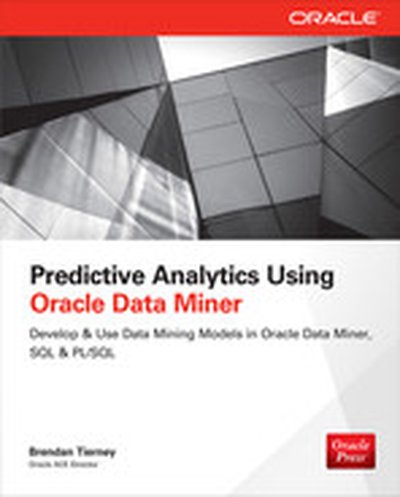
Predictive Analytics Using Oracle Data Miner

Build Next-Generation In-Database Predictive Analytics Applications with Oracle Data Miner “If you have an Oracle Database and want to leverage that data to discover new insights, make predictions, and generate actionable insights, this book is a must read for you! In Predictive Analytics Using Oracle Data Miner: Develop & Use Oracle Data Mining Models in Oracle Data Miner, SQL & PL/SQL, Brendan Tierney, Oracle ACE Director and data mining expert, guides you through the basic concepts of data mining and offers step-by-step instructions for solving data-driven problems using SQL Developer’s Oracle Data Mining extension. Brendan takes it full circle by showing you how to deploy advanced analytical methodologies and predictive models immediately into enterprise-wide production environments using the in-database SQL and PL/SQL functionality. Definitely a must read for any Oracle data professional!” --Charlie Berger, Senior Director Product Management, Oracle Data Mining and Advanced Analytics Perform in-database data mining to unlock hidden insights in data. Written by an Oracle ACE Director, Predictive Analytics Using Oracle Data Miner shows you how to use this powerful tool to create and deploy advanced data mining models. Covering topics for the data scientist, Oracle developer, and Oracle database administrator, this Oracle Press guide shows you how to get started with Oracle Data Miner and build Oracle Data Miner models using SQL and PL/SQL packages. You'll get best practices for integrating your Oracle Data Miner models into applications to automate the discovery and distribution of business intelligence predictions throughout the enterprise. Install and configure Oracle Data Miner for Oracle Database 11 g Release 11.2 and Oracle Database 12 c Create Oracle Data Miner projects and workflows Prepare data for data mining Develop data mining models using association rule analysis, classification, clustering, regression, and anomaly detection Use data dictionary views and prepare your data using in-database transformations Build and use data mining models using SQL and PL/SQL packages Migrate your Oracle Data Miner models, integrate them into dashboards and applications, and run them in parallel Build transient data mining models with the Predictive Queries feature in Oracle Database 12 c

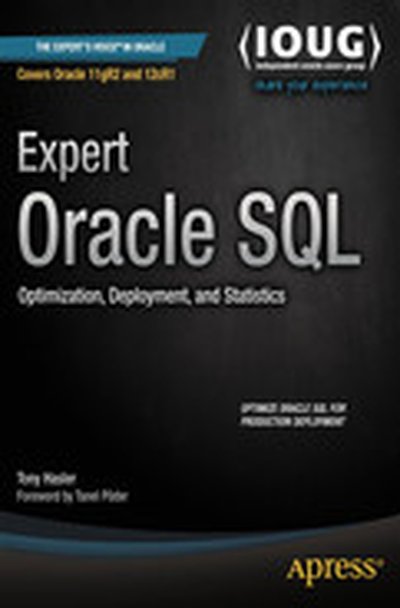
Expert Oracle SQL

Expert Oracle SQL: Optimization, Deployment, and Statistics is about optimizing individual SQL statements, especially on production database systems. This Oracle-specific book begins by assuming you have already identified a particular SQL statement and are considering taking steps to improve its performance. The book describes a systematic process by which to diagnose a problem statement, identify a fix, and to implement that fix safely in a production system. You'll learn not only to improve performance when it is too slow, but also to stabilize performance when it is too variable. You'll learn about system statistics and how the Cost-Based Optimizer uses them to determine a suitable execution plan for a given statement. That knowledge provides the foundation from which to identify the root cause, and to stabilize and improve performance. Next after identifying a problem and the underlying root cause is to put in place a solution. Expert Oracle SQL: Optimization, Deployment, and Statistics explains how to apply various remedies such as changing the SQL statement, adding hints, changing the physical design, and more, and how they can be brought to bear on fixing a problem once and for all. Rolling a change out smoothly is an important topic when dealing with tuning and optimization. Expert Oracle SQL: Optimization, Deployment, and Statistics does not let you down in this critical area. The book contains two chapters of good information from an experienced professional on how to safely deploy changes into production so that your systems remaining running and available throughout the deployment process. Describes a systematic approach to tuning Oracle SQL Explains how things are supposed to work, what can go wrong, and how to fix it Takes you through the steps needed to stabilize performance in your production systems What you'll learn Determine the root cause of poor performance in a SQL statement Decipher each line of an execution plan and how it relates to its source SQL statement Know the various options and transformations available for the Cost-Based Optimizer Interpret the diagnostic data from Active Session History, SQL Performance Monitor, and from other sources Apply optimizer hints, SQL profiles, and SQL baselines when they are best used, and avoid them otherwise Manage object statistics used by the optimizer to ensure efficient execution plans

OCP Upgrade to Oracle Database 12c Exam Guide (Exam 1Z0-060), 2nd Edition

A Fully Integrated Study System for OCP Exam 1Z0-060 Prepare for the Oracle Certified Professional Upgrade to Oracle Database 12 c exam with this exclusive Oracle Press guide. Each chapter features step-by-step examples, a certification summary, a two-minute drill, and a self-test to reinforce the topics presented. This authoritative resource helps you pass the exam and also serves as an essential, on-the-job reference. Get complete coverage of the new features of Oracle Database 12 c, including: Oracle Enterprise Manager Database Express and additional tools for database monitoring Multitenant container databases and pluggable databases Auditing, administrative privileges, data redaction, and other Oracle security features Adaptive execution plans, adaptive statistics, and automatic SQL plan management Oracle Recovery Manager backup and recovery improvements Oracle Database Resource Manager and other performance enhancements Oracle Data Pump, SQL*Loader, external tables, and online operations enhancements Improvements to information lifecycle management and storage, including automatic data optimization, in-database archiving, and temporal validity Electronic content includes: 170 practice exam questions with detailed answer explanations

Troubleshooting Oracle Performance, Second Edition

Troubleshooting Oracle Performance, 2nd Edition is your systematic guide to diagnosing and resolving performance problems in database-backed applications involving Oracle's database engine. Christian Antognini brings a decade and a half experience to his topic. His first edition is one of the most well-respected books in its field. This second edition has been rigorously updated to cover the latest developments in Oracle Database 11 g Release 2 through Oracle Database 12 c. What do you do when your database application isn't running fast enough? You troubleshoot, of course. Finding the slow part of an application is often the easy part of the battle. It's finding a solution that's difficult. Troubleshooting Oracle Performance, 2nd Edition helps by providing a systematic approach to addressing the underlying causes of poor database application performance. The author freely shares his experience while explaining the underlying foundations of how SQL statements are executed by the Oracle database engine. You'll be able to draw a solid foundation of theory and shared experience as you face head-on the performance challenges in your daily work. Written for developers by an application developer who has learned by doing Gives a systematic approach to solving database application performance problems Helps you plan for performance as you would for any other application requirement What you'll learn Systematically identify performance problems Configure the query optimizer to meet performance goals Read and recognize inefficient execution plans Minimize the impact of parsing upon performance Optimize data access, joins, and the physical design of your database Improve performance through parallel processing, materialized views, and result caching Apply SQL tuning techniques such as hints, SQL profiles, stored outlines, and SQL plan baselines Reduce inefficiencies from too much procedural code Who this book is for Troubleshooting Oracle Performance, Second Edition is targeted at application developers and database administrators involved in troubleshooting performance problems in Oracle-based applications.

OCA Oracle Database 12c Installation and Administration Exam Guide (Exam 1Z0-062), 2nd Edition

A Complete Study System for OCA Exam 1Z0-062 Prepare for the Oracle Certified Associate Oracle Database 12 c Installation and Administration exam with this exclusive Oracle Press guide. Each chapter features challenging exercises, a certification summary, a two-minute drill, and a self-test to reinforce the topics presented. This authoritative resource helps you pass the exam and also serves as an essential, on-the-job reference. Get complete coverage of all OCA objectives for exam 1Z0-062, including: Installing and upgrading Oracle Database software Managing the database instance Configuring the Oracle network environment Managing database storage structures Administering user security Managing undo data and data concurrency Implementing Oracle Database auditing Performing database maintenance Managing performance and tuning SQL Managing resources using Oracle Database Resource Manager Automating tasks Moving data Performing backup and recovery Installing Oracle Grid Infrastructure for a standalone server Electronic content includes: 185+ practice exam questions with detailed answers and explanations Test engine that provides custom exams by chapter or by domain

Oracle WebLogic Server 12c Administration Handbook

Best Practices for Oracle WebLogic Server 12 c Configuration and Administration Maintain a high-performance enterprise application framework using the detailed information in this authoritative resource. Through expert instruction and real-world examples, Oracle WebLogic Server 12c Administration Handbook fully explains the latest management tools and techniques. Learn how to work from the Oracle WebLogic Server Administration Console or command line, configure servers and clusters, deploy applications, and optimize application performance. Tuning, troubleshooting, and load balancing are thoroughly covered in this Oracle Press guide. Install Oracle WebLogic Server 12 c or perform an upgrade Manage domains, server instances, networks, and virtual hosts Work with the WebLogic Scripting Tool feature and Node Manager Build custom network channels and resource adapters Monitor performance with the WebLogic Diagnostics Framework feature Prioritize requests using Oracle WebLogic Server Work Managers Configure Oracle WebLogic clusters and migrate servers and services Deploy web applications, Enterprise JavaBeans, and Java EE modules Establish security realms and authenticate and authorize users Allocate memory, optimize throughput, and tune the Java Virtual Machine

Experiences with Oracle Database 12c Release 1 on Linux on System z

Oracle Database 12c Release 1 is now supported on Linux on IBM® System z®. This platform offers many advantages to customers who rely upon the IBM mainframe systems to run their businesses. Linux on System z takes advantage of the qualities of service in the System z hardware and in IBM z/VM®, making it a robust industrial strength version of Linux. This provides an excellent platform for hosting Oracle solutions that run in an enterprise. This IBM Redbooks® publication shares experiences that are gained while installing and testing Oracle Database 12c Release 1: Recommendations about how to set up an infrastructure Installing an Oracle Grid Infrastructure Installing Oracle 12C R1 Real Application Clusters (RAC) and creating a RAC Database, including a multitenant database Using the Cloud Control Agent to manage Oracle Database 12c Release 1 Installing Oracle WebLogic Server 12c Upgrading from an Oracle Database from 11gR2 to 12c Release 1

OCA Oracle Database 12c SQL Fundamentals I Exam Guide (Exam 1Z0-061), 2nd Edition

A Complete Study System for OCA Exam 1Z0-061 Prepare for the Oracle Certified Associate Oracle Database 12 c SQL Fundamentals I exam with this Oracle Press guide. Each chapter features challenging exercises, a certification summary, a two-minute drill, and a self-test to reinforce the topics presented. This authoritative resource helps you pass the exam and also serves as an essential, on-the-job reference. Get complete coverage of all OCA objectives for exam 1Z0-061, including: Data retrieval using the SQL SELECT statement Restricting and sorting data Single-row functions Using conversion functions and conditional expressions Reporting aggregated data with the group functions Displaying data from multiple tables with joins Using subqueries to solve problems Using the set operators Manipulating data with DML statements Using DDL statements to create and manage tables Electronic content includes: 150+ practice exam questions with detailed answers and explanations Score report performance assessment tool

Geoinformation, 2nd Edition

Written by a renowned expert, Geoinformation: Remote Sensing, Photogrammetry and Geographic Information Systems, Second Edition gives you an overarching view of how remote sensing, photogrammetry, and geographic information systems work together in an interdisciplinary manner. The book presents the required basic background of the geoinformatics concept in which the different methodologies must be combined. It details the principal components of remote sensing, from theoretical principles to advanced image analysis and interpretation techniques, sensor components, and operating platforms. New and Updated in the Second Edition: Web-based image viewing with Google Earth Aerial platforms Existing digital photogrammetric software systems, including Intergraph image station, Autodesk, and Oracle Spatial Land management and cadaster Imaging sensors such as laser scanning, image spectrometry, radar imaging, and radar interferometry With the advent of high-resolution satellite systems in stereo, the theory of analytical photogrammetry restituting 2D image information into 3D is of increasing importance, merging the remote sensing approach with that of photogrammetry. This text describes the fundamentals of these approaches in detail, with an emphasis on global, regional, and local applications. It provides a short introduction to the GPS satellite positioning system in the context of data integration. An extensive overview of the basic elements of GIS technologies and data management approaches, as well as the widely employed positioning systems such as GPS and GSM networks, complete the presentation of the technological framework for geoinformation. Appropriate for GIS courses at all levels, the book proceeds beyond the science and technology to tackle cost considerations and practical implementation issues, giving you a starting point for multidisciplinary new activities and services in the future.

Beginning Oracle SQL: for Oracle Database 12c, Third Edition

Beginning Oracle SQL is your introduction to the interactive query tools and specific dialect of SQL used with Oracle Database. These tools include SQLPlus and SQL Developer. SQLPlus is the one tool any Oracle developer or database administrator can always count on, and it is widely used in creating scripts to automate routine tasks. SQL Developer is a powerful, graphical environment for developing and debugging queries. Oracle's is possibly the most valuable dialect of SQL from a career standpoint. Oracle's database engine is widely used in corporate environments worldwide. It is also found in many government applications. Oracle SQL implements many features not found in competing products. No developer or DBA working with Oracle can afford to be without knowledge of these features and how they work, because of the performance and expressiveness they bring to the table. Written in an easygoing and example-based style, Beginning Oracle SQL is the book that will get you started down the path to successfully writing SQL statements and getting results from Oracle Database. Takes an example-based approach, with clear and authoritative explanations Introduces both SQL and the query tools used to execute SQL statements Shows how to create tables, populate them with data, and then query that data to generate business results What you'll learn Create database tables and define their relationships. Add data to your tables. Then change and delete that data. Write database queries that generate accurate results. Avoid common traps and pitfalls in writing SQL queries, especially from nulls. Reap the performance and expressiveness of analytic and window functions. Make use of Oracle Database's support for object types. Write recursive queries to query hierarchical data. Who this book is for Beginning Oracle SQL is aimed at developers and database administrators who must write SQL statements to execute against an Oracle database. No prior knowledge of SQL is assumed.

Oracle ADF Enterprise Application Development Made Simple: Second Edition - Second Edition

Oracle ADF Enterprise Application Development Made Simple: Second Edition is a comprehensive guide for developers looking to harness the power of Oracle Application Development Framework (ADF) for building enterprise-grade applications. Throughout the book, you'll explore foundational concepts and advanced techniques, enabling you to create efficient, secure, and user-friendly applications tailored to your organization. What this Book will help me do Create ADF applications based on database tables and utilize a wide range of ADF user interface components effectively. Implement development templates and framework classes for efficient and flexible application development. Adapt applications to specific user requirements and expectations, ensuring a customized experience. Plan and accurately estimate the development effort for building substantial ADF enterprise applications. Thoroughly test applications at various levels and secure them by assigning roles for specific functionalities. Author(s) Sten E Vesterli is a seasoned Oracle expert with years of experience in enterprise application development. He specializes in teaching developers how to effectively utilize Oracle technologies, particularly Oracle ADF, to create impactful business solutions. Sten's approach in writing is clear, pragmatic, and solution-oriented, ensuring readers can translate theory into practice seamlessly. Who is it for? This book is ideal for Oracle developers, software engineers, and IT professionals who want to deepen their skills in using Oracle ADF for enterprise application development. If you're familiar with Oracle databases and have a working knowledge of Java, this book will be of particular benefit. Readers aiming to build robust, secure, and user-friendly applications for organizational purposes will find it highly valuable. Whether you're just beginning with ADF or have prior experience, you'll gain skills to develop professional-grade enterprise applications.