talk-data.com talk-data.com

Topic

Cyber Security

cybersecurity information_security data_security privacy

615

tagged

Activity Trend

297 peak/qtr
2020-Q1 2026-Q1

Activities

Showing filtered results

Filtering by: O'Reilly Data Engineering Books ×
IT Security Policy Management Usage Patterns Using IBM Tivoli Security Policy Manager

In a growing number of organizations, policies are the key mechanism by which the capabilities and requirements of services are expressed and made available to other entities. The goals established and driven by the business need to be consistently implemented, managed and enforced by the service-oriented infrastructure; expressing these goals as policy and effectively managing this policy is fundamental to the success of any IT and application transformation. First, a flexible policy management framework must be in place to achieve alignment with business goals and consistent security implementation. Second, common re-usable security services are foundational building blocks for SOA environments, providing the ability to secure data and applications. Consistent IT Security Services that can be used by different components of an SOA run time are required. Point solutions are not scalable, and cannot capture and express enterprise-wide policy to ensure consistency and compliance. In this IBM® Redbooks® publication, we discuss an IBM Security policy management solution, which is composed of both policy management and enforcement using IT security services. We discuss how this standards-based unified policy management and enforcement solution can address authentication, identity propagation, and authorization requirements, and thereby help organizations demonstrate compliance, secure their services, and minimize the risk of data loss. This book is a valuable resource for security officers, consultants, and architects who want to understand and implement a centralized security policy management and entitlement solution.
IBM IMS Version 12 Technical Overview

IBM® Information Management System (IMS™) provides leadership in performance, reliability, and security to help you implement the most strategic and critical enterprise applications. IMS also keeps pace with the IT industry. IMS, Enterprise Suite 2.1, and IMS Tools continue to evolve to provide value and meet the needs of enterprise customers. With IMS 12, integration and open access improvements provide flexibility and support business growth requirements. Manageability enhancements help optimize system staff productivity by improving ease of use and autonomic computing facilities and by providing increased availability. Scalability improvements have been made to the well-known performance, efficiency, availability, and resilience of IMS by using 64-bit storage. IBM IMS Enterprise Suite for z/OS® V2.1 components enhance the use of IMS applications and data. In this release, components (either orderable or downloaded from the web) deliver innovative new capabilities for your IMS environment. They enhance connectivity, expand application development, extend standards and tools for a service-oriented architecture (SOA), ease installation, and provide simplified interfaces. This IBM Redbooks® publication explores the new features of IMS 12 and Enterprise Suite 2.1 and provides an overview of the IMS tools. In addition, this book highlights the major new functions and facilitates database administrators in their planning for installation and migration.

Oracle Database 11g & MySQL 5.6 Developer Handbook

Master Application Development in a Mixed-Platform Environment Build powerful database applications in a mixed environment using the detailed information in this Oracle Press guide. Oracle Database 11g & MySQL 5.6 Developer Handbook lays out programming strategies and best practices for seamlessly operating between the two platforms. Find out how to migrate databases, port SQL dialects, work with Oracle MySQL databases, and configure effective queries. Security, monitoring, and tuning techniques are also covered in this comprehensive volume. Understand Oracle Database 11 g and MySQL 5.6 architecture Convert databases between platforms and ensure transactional integrity Create tables, sequences, indexes, views, and user accounts Build and debug PL/SQL, SQL*Plus, SQL/PSM, and MySQL Monitor scripts Execute complex queries and handle numeric and date mathematics Merge data from source tables and set up virtual directories

IBM zEnterprise 196 Technical Guide

The popularity of the Internet and the affordability of IT hardware and software have resulted in an explosion of applications, architectures, and platforms. Workloads have changed. Many applications, including mission-critical ones, are deployed on a variety of platforms, and the System z® design has adapted to this change. It takes into account a wide range of factors, including compatibility and investment protection, to match the IT requirements of an enterprise. The zEnterprise System consists of the IBM zEnterprise 196 central processor complex, the IBM zEnterprise Unified Resource Manager, and the IBM zEnterprise BladeCenter® Extension. The z196 is designed with improved scalability, performance, security, resiliency, availability, and virtualization. The z196 Model M80 provides up to 1.6 times the total system capacity of the z10™ EC Model E64, and all z196 models provide up to twice the available memory of the z10 EC. The zBX infrastructure works with the z196 to enhance System z virtualization and management through an integrated hardware platform that spans mainframe, POWER7™, and System x® technologies. Through the Unified Resource Manager, the zEnterprise System is managed as a single pool of resources, integrating system and workload management across the environment. This IBM® Redbooks® publication provides an overview of the zEnterprise System and its functions, features, and associated software support. Greater detail is offered in areas relevant to technical planning. This book is intended for systems engineers, consultants, planners, and anyone wanting to understand the zEnterprise System functions and plan for their usage. It is not intended as an introduction to mainframes. Readers are expected to be generally familiar with existing IBM System z technology and terminology. The changes to this edition are based on the System z hardware announcement dated July 12, 2011.

IBM zEnterprise 114 Technical Guide

The popularity of the Internet and the affordability of IT hardware and software have resulted in an explosion of applications, architectures, and platforms. Workloads have changed. Many applications, including mission-critical ones, are deployed on a variety of platforms, and the System z® design has adapted to this change. It takes into account a wide range of factors, including compatibility and investment protection, to match the IT requirements of an enterprise. This IBM® Redbooks® publication discusses the IBM zEnterprise System, an IBM scalable mainframe server. IBM is taking a revolutionary approach by integrating separate platforms under the well-proven System z hardware management capabilities, while extending System z qualities of service to those platforms. The zEnterprise System consists of the IBM zEnterprise 114 central processor complex, the IBM zEnterprise Unified Resource Manager, and the IBM zEnterprise BladeCenter® Extension. The z114 is designed with improved scalability, performance, security, resiliency, availability, and virtualization. The z114 provides up to 18% improvement in uniprocessor speed and up to a 12% increase in total system capacity for z/OS®, z/VM®, and Linux on System z over the z10™ Business Class (BC). The zBX infrastructure works with the z114 to enhance System z virtualization and management through an integrated hardware platform that spans mainframe, POWER7™, and System x technologies. The federated capacity from multiple architectures of the zEnterprise System is managed as a single pool of resources, integrating system and workload management across the environment through the Unified Resource Manager. This book provides an overview of the zEnterprise System and its functions, features, and associated software support. Greater detail is offered in areas relevant to technical planning. This book is intended for systems engineers, consultants, planners, and anyone wanting to understand the zEnterprise System functions and plan for their usage. It is not intended as an introduction to mainframes. Readers are expected to be generally familiar with existing IBM System z technology and terminology.

Privacy and Big Data

Much of what constitutes Big Data is information about us. Through our online activities, we leave an easy-to-follow trail of digital footprints that reveal who we are, what we buy, where we go, and much more. This eye-opening book explores the raging privacy debate over the use of personal data, with one undeniable conclusion: once data's been collected, we have absolutely no control over who uses it or how it is used. Personal data is the hottest commodity on the market today—truly more valuable than gold. We are the asset that every company, industry, non-profit, and government wants. Privacy and Big Data introduces you to the players in the personal data game, and explains the stark differences in how the U.S., Europe, and the rest of the world approach the privacy issue. You'll learn about: Collectors: social networking titans that collect, share, and sell user data Users: marketing organizations, government agencies, and many others Data markets: companies that aggregate and sell datasets to anyone Regulators: governments with one policy for commercial data use, and another for providing security

MariaDB Crash Course

This first-to-market tutorial covers everything beginners need to succeed with MariaDB, the open, community-based branch of MySQL. Master trainer Ben Forta introduces all the essentials through a series of quick, easy-to-follow, hands-on lessons. Instead of belaboring database theory and relational design, Forta focuses on teaching solutions for the majority of SQL users who simply want to interact with data. Forta covers all this, and more: Using the MariaDB toolset * Retrieving and sorting data Filtering data using comparisons, wildcards, and full text searching Analyzing data with aggregate functions Performing insert, update, and delete operations Joining relational tables using inner, outer, and self joins Combining queries using unions * Using views Creating and modifying tables, and accessing table schemas Working with stored procedures, cursors, and other advanced database features Managing databases, users, and security privileges This book was reviewed and is supported by MariaDB's developers, Monty Program AB. It contains a foreword by project founder Monty Widenius, primary developer of the original version of MySQL.

Security Functions of IBM DB2 10 for z/OS

IBM® DB2® 9 and 10 for z/OS® have added functions in the areas of security, regulatory compliance, and audit capability that provide solutions for the most compelling requirements. DB2 10 enhances the DB2 9 role-based security with additional administrative and other finer-grained authorities and privileges. This authority granularity helps separate administration and data access that provide only the minimum appropriate authority. The authority profiles provide better separation of duties while limiting or eliminating blanket authority over all aspects of a table and its data. In addition, DB2 10 provides a set of criteria for auditing for the possible abuse and overlapping of authorities within a system. In DB2 10, improvements to security and regulatory compliance focus on data retention and protecting sensitive data from privileged users and administrators. Improvements also help to separate security administration from database administration. DB2 10 also lets administrators enable security on a particular column or particular row in the database complementing the privilege model. This IBM Redbooks® publication provides a detailed description of DB2 10 security functions from the implementation and usage point of view. It is intended to be used by database, audit, and security administrators.

Practical Oracle Security

This is the only practical, hands-on guide available to database administrators to secure their Oracle databases. This book will help the DBA to assess their current level of risk as well as their existing security posture. It will then provide practical, applicable knowledge to appropriately secure the Oracle database. The only practical, hands-on guide for securing your Oracle database published by independent experts. Your Oracle database does not exist in a vacuum, so this book shows you how to securely integrate your database into your enterprise.

IBM z/OS Mainframe Security and Audit Management Using the IBM Security zSecure Suite

Every organization has a core set of mission-critical data that must be protected. Security lapses and failures are not simply disruptions—they can be catastrophic events, and the consequences can be felt across the entire organization. As a result, security administrators face serious challenges in protecting the company’s sensitive data. IT staff are challenged to provide detailed audit and controls documentation at a time when they are already facing increasing demands on their time, due to events such as mergers, reorganizations, and other changes. Many organizations do not have enough experienced mainframe security administrators to meet these objectives, and expanding employee skillsets with low-level mainframe security technologies can be time-consuming. The IBM® Security zSecure suite consists of multiple components designed to help you administer your mainframe security server, monitor for threats, audit usage and configurations, and enforce policy compliance. Administration, provisioning, and management components can significantly reduce administration, contributing to improved productivity, faster response time, and reduced training time needed for new administrators. This IBM Redbooks® publication is a valuable resource for security officers, administrators, and architects who wish to better understand their mainframe security solutions.

Oracle Database 11g Building Oracle XML DB Applications

Master the XML Programming Features in Oracle Database 11 g Develop, debug, and administer data-backed XML applications using the expert instruction and best practices in this Oracle Press guide. Oracle Database 11g: Building Oracle XML DB Applications discusses the latest development tools, technologies, and components. Find out how to set up Oracle XML Database (Oracle XML DB), build XML applications in Oracle JDeveloper 11 g, work with XSLT stylesheets, and incorporate full-text search. Troubleshooting, performance tuning, and security are also covered in this comprehensive resource. Create, store, and query XML types using Oracle XML DB Load XML documents into relational tables and define SQL views Parse and validate schema with Oracle XDK for Java and PL/SQL packages Merge documents, generate reports, and transform data using XSLT Construct applications from Oracle XML DB Web services Use Oracle JDeveloper 11 g to design and deploy XML applications Integrate Oracle Text and Oracle Secure Enterprise Search features Streamline the development process using Oracle Application Express

IBM Tivoli Directory Server for z/OS

This IBM® Redbooks® publication examines the IBM Tivoli® Directory Server for z/OS®. IBM Tivoli Directory Server is a powerful Lightweight Directory Access Protocol (LDAP) infrastructure that provides a foundation for deploying comprehensive identity management applications and advanced software architectures. This publication provides an introduction to the IBM Tivoli Directory Server for z/OS that provides a brief summary of its features and a examination of the possible deployment topologies. It discusses planning a deployment of IBM Tivoli Directory Server for z/OS, which includes prerequisites, planning considerations, and data stores, and provides a brief overview of the configuration process. Additional chapters provide a detailed discussion of the IBM Tivoli Directory Server for z/OS architecture that examines the supported back ends, discusses in what scenarios they are best used, and provides usage examples for each back end. The discussion of schemas breaks down the schema and provides guidance on extending it. A broad discussion of authentication, authorization, and security examines the various access protections, bind mechanisms, and transport security available with IBM Tivoli Directory Server for z/OS. This chapter also provides an examination of the new Password Policy feature. Basic and advanced replication topologies are also covered. A discussion on plug-ins provides details on the various types of plug-ins, the plug-in architecture, and creating a plug-in, and provides an example plug-in. Integration of IBM Tivoli Directory Server for z/OS into the IBM Workload Manager environment is also covered. This publication also provides detailed information about the configuration of IBM Tivoli Directory Server for z/OS. It discusses deploying IBM Tivoli Directory Server for z/OS on a single system, with examples of configuring the available back ends. Configuration examples are also provided for deploying the server in a Sysplex, and for both basic and advanced replication topologies. Finally it provides guidance on monitoring and debugging IBM Tivoli Directory Server for z/OS.

Oracle Application Express 4 Recipes

Oracle Application Express 4 Recipes provides an example-based approach to learning Application Express—the ground-breaking, rapid application development platform included with every Oracle Database license. The recipes format is ideal for the quick-study who just wants a good example or two to kick start their thinking and get pointed in the right direction. The recipes cover the gamut of Application Express development. Author and Application Express expert Edmund Zehoo shows how to create data entry screens, visualize data in the form of reports and charts, implement validation and back-end logic, and much more. Solutions are presented in an easy, problem/solution format from which you can copy and adapt for your own use. Detailed discussion for each solution deepens your understanding and aids in customizing the solutions to fit your particular development challenges. Teaches Application Express via an example-based format Takes you from beginner to intermediate level Shows how to build a fully-functional web store in just one hour What you'll learn Create web application forms and tables Customize application look and feel Visualize data via reports, calendars, maps, and charts Globalize applications in support of language and regional differences Implement complex business logic Optimize the performance of Application Express Protect applications from security threats Who this book is for Oracle Application Express 4 Recipes is aimed at web application developers, PL/SQL developers, and database administrators wishing to learn and use Oracle's groundbreaking tool for rapid development—Application Express. The book is a quick-study and is perfect for the reader who wants only a good example to work from, customize, and adapt.

Oracle PeopleSoft Enterprise Financial Management 9.1 Implementation

This book, "Oracle PeopleSoft Enterprise Financial Management 9.1 Implementation," serves as a comprehensive guide for understanding PeopleSoft Financials applications. It delves into core concepts, configurations, and business processes, providing practical, real-world scenarios to bridge theory and application. By mastering the content, readers will be prepared to successfully implement PeopleSoft Financials in complex organizational environments. What this Book will help me do Grasp the core principles of financial ERP systems and PeopleSoft's approach to effective financial application management. Learn to configure security settings to control access to system features, ensuring proper user management. Understand and implement crucial financial modules such as Billing, Accounts Payable, Accounts Receivable, and Asset Management. Develop strategies for budgeting and expense management through Commitment Control and the Expenses module. Gain hands-on experience with PeopleSoft's Setup Manager to navigate and complete implementation tasks efficiently. Author(s) Ranjeet Yadav brings extensive experience in implementing and working with PeopleSoft Financials across various industries. With an in-depth understanding of both the technical and functional aspects of PeopleSoft systems, he has crafted this book to be both accessible and informative for practitioners. Ranjeet's teaching approach focuses on practical knowledge, equipping his readers to tackle real-world challenges confidently. Who is it for? This book is well-suited for functional implementation analysts, business analysts, and business users starting with PeopleSoft applications. It is ideal for individuals aiming to enhance their PeopleSoft Financials skills and gain a comprehensive understanding of its implementation. If you're looking to build a strong foundation in PeopleSoft systems and improve your organization's financial operations, this book is tailored to your needs.

Oracle Fusion Middleware 11g Architecture and Management

Master All Aspects of Oracle Fusion Middleware Management Govern a unified platform for agile, intelligent business applications using the detailed information contained in this Oracle Press book. Oracle Fusion Middleware 11g Architecture and Management explains the entire suite of Oracle Fusion Middleware components and lays out core use cases, best practices, and step-by-step administrative instructions. Discover how to provision servers and clusters, configure Web services, manage portals, and optimize the performance of the full stack of Oracle Fusion Middleware components. Monitoring, diagnosing, and security are also covered in this definitive resource. Understand key architectural concepts behind Oracle Fusion Middleware 11 g Create and deploy Oracle WebLogic Server domains and clusters Set up and manage applications built using Oracle Application Development Framework Maximize the value of your Oracle SOA Suite environments Manage portals and Enterprise 2.0 services from Oracle WebCenter Secure deployments with Oracle Platform Security Services and Oracle Identity Management Understand Oracle Exalogic and Oracle Virtual Assembly Builder

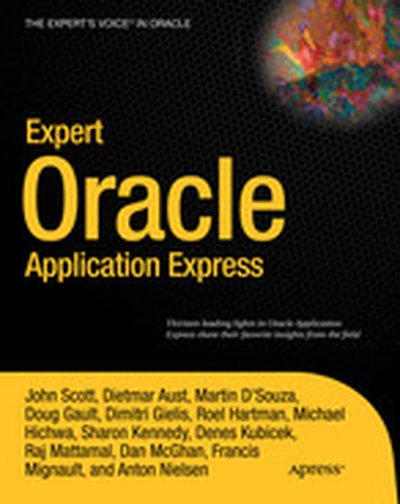
Expert Oracle Application Express

Expert Oracle Application Express brings you groundbreaking insights into developing with Oracle's enterprise-level, rapid-development tool from some of the best practitioners in the field today. Oracle Application Express (APEX) is an entirely web-based development framework that is built into every edition of Oracle Database. The framework rests upon Oracle's powerful PL/SQL language, enabling power users and developers to rapidly develop applications that easily scale to hundreds, even thousands of concurrent users. The 13 authors of Expert Oracle Application Express build their careers around APEX. They know what it takes to make the product sing—developing secure applications that can be deployed globally to users inside and outside a large enterprise. The authors come together in this book to share some of their deepest and most powerful insights into solving the difficult problems surrounding scalability, globalization, configuration and lifecycle management, and more. You'll learn about debugging and performance, deep secrets to customizing your application user interface, how to secure applications from intrusion, and about deploying globally in multiple languages. Expert Oracle Application Express is truly a book that will move you and your skillset a big step towards the apex of Application Express development. Presents best-practices and development insights from leading experts in the field Addresses globalization, scalability, security, and other concerns of enterprise-level development Shows how to customize APEX for your own application needs What you'll learn Solve tough problems in scalability in order to serve thousands of users Design applications to sidestep performance problems and easily scale upwards Deploy applications globally while respecting linguistic and cultural differences Customize applications by exploiting APEX's roots in PL/SQL Reduce the stress of managing application lifecycle and configuration Secure outwardly-facing applications and their data from intrusion Who this book is for Expert Oracle Application Express is aimed at APEX developers who seek the deepest possible knowledge of Oracle Application Express and how to develop with it. Readers should know and be proficient with APEX, and be prepared to expend some mental energy in absorbing the high-end material in this book.

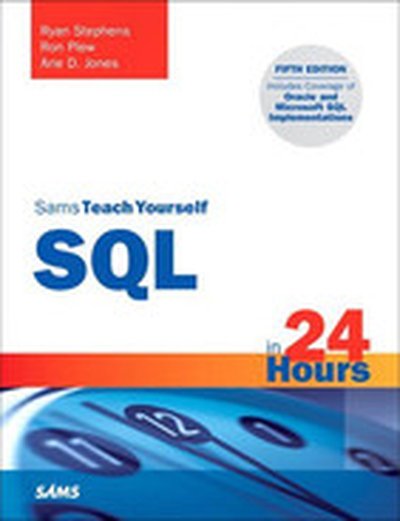
Sams Teach Yourself SQL in 24 Hours, Fifth Edition

Master all the fundamentals of modern SQL -- hands-on, step-by-step! ¿ The up-to-the-minute SQL tutorial for everyone who wants to create applications, query data, or manage databases Updated to cover the latest ANSI/ISO standards, plus powerful Oracle and SQL Server extensions Covers everything from the basics through optimization, security, and enterprise techniques Step-by-step instructions, examples, quizzes, exercises, and tips In just 24 sessions of one hour or less, beginning-to-intermediate-level readers learn how to use SQL to build effective databases, efficiently retrieve data, and manage everything from performance to security! Using this book's straightforward, step-by-step approach, you learn hands-on, through practical examples based on the free, open source MySQL database. One step at a time, you discover how to define efficient database structures, objects, and tables edit data and tables manage transactions write effective queries categorize, summarize, sort, group, and restructure data use joins and subqueries manage databases, users, and security use views, synonyms, and system catalogs extend SQL to the enterprise and Internet even master important Oracle and Microsoft SQL Server extensions. Step-by-step instructions carefully walk through common questions, issues, and tasks... Q and As, Quizzes, and Exercises help you build and test your knowledge... Notes, Tips, and Cautions point out shortcuts, solutions, and problems to avoid. Each lesson builds on what you've already learned, delivering a strong real-world foundation for success with any relational database environment or application!

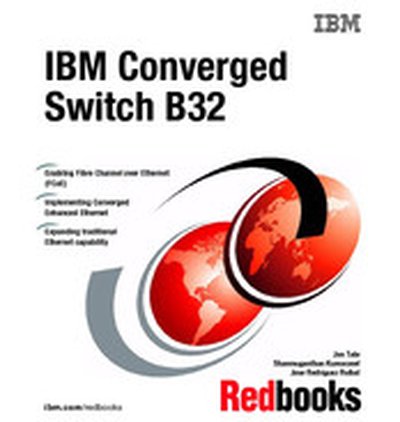
IBM Converged Switch B32

This IBM® Redbooks® document introduces the IBM Converged Switch B32. This switch supports Fibre Channel over Ethernet (FCoE), Fibre Channel, Converged Enhanced Ethernet (CEE), and traditional Ethernet protocol connectivity for servers and storage. FCoE is a new protocol that can expand Fibre Channel into the Ethernet environment, and it helps to combine and leverage the advantages of two technologies, Fibre Channel protocol and Ethernet. Features of the IBM Converged Switch B32 include: A 32-port multiprotocol switch for server I/O consolidation Enterprise-class availability for business continuance Improved return on investment and investment protection Fabric security for mission-critical information

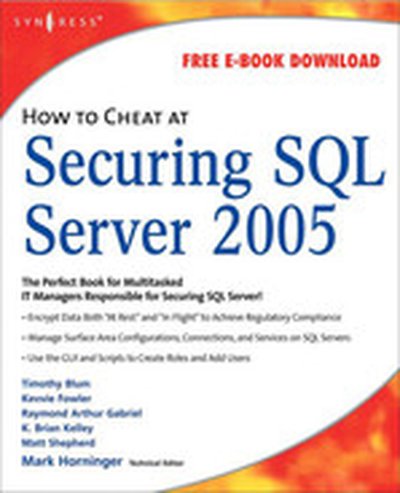
How to Cheat at Securing SQL Server 2005

The perfect book for multi-tasked IT managers responsible for securing the latest version of SQL Server 2005. SQL Server is the perfect product for the How to Cheat series. It is an ambitious product that, for the average SysAdmin, will present a difficult migration path from earlier versions and a vexing number of new features. How to Cheat promises help in order to get SQL Server secured as quickly and safely as possible. Provides the multi-tasked Sys Admin with the essential information needed to perform the daily tasks Covers SQL Server 2005, which is a massive product with significant challenges for IT managers Emphasizes best-practice security measures

Getting Started with the IBM Smart Analytics System 9600

The IBM® Smart Analytics System 9600 is a single, end-to-end business analytics solution to accelerate data warehousing and business intelligence initiatives. It provides integrated hardware, software, and services that enable enterprise customers to quickly and cost-effectively deploy business-changing analytics across their organizations. As a workload-optimized system for business analytics, it leverages the strengths of the System z® platform to drive: Significant savings in hardware, software, operating, and people costs to deliver a complete range of data warehouse and BI capabilities Faster time to value with a reduction in the time and speed associated with deploying Business Intelligence Industry-leading scalability, reliability, availability, and security Simplified and faster access to the data on System z