talk-data.com talk-data.com

Topic

Cyber Security

cybersecurity information_security data_security privacy

615

tagged

Activity Trend

297 peak/qtr
2020-Q1 2026-Q1

Activities

Showing filtered results

Filtering by: O'Reilly Data Engineering Books ×
Designing Web Services with the J2EE™ 1.4 Platform JAX-RPC, SOAP, and XML Technologies

Written by Sun Microsystems' Java™ BluePrints team, is the authoritative guide to the best practices for designing and integrating enterprise-level Web services using the Java 2 Platform, Enterprise Edition (J2EE) 1.4. This book provides the guidelines, patterns, and real-world examples architects and developers need in order to shorten the learning curve and start building robust, scalable, and portable solutions. Designing Web Services with the J2EE™ 1.4 Platform The authors use the Java Adventure Builder application to bring the design process to life and help illustrate the use of Java APIs for XML Processing (JAXP), Java APIs for XML-Based RPC (JAX-RPC), and other Web service and Java-XML technologies. Key topic coverage includes: Web service requirements and design issues Support for Web services provided by the J2EE 1.4 platform Designing and implementing Web service end points Writing efficient Web service client applications Designing and developing XML-based applications Integrating applications and data using Web services The J2EE platform security model as it applies to Web services A coherent programming model for designing and developing Web service endpoints and clients provides the insight, advice, and detail that make it easier to create effective Web service applications using the J2EE 1.4 platform. Designing Web Services with the J2EE™ 1.4 Platform
Microsoft® SQL Server™ 2005 Reporting Services Step by Step

Your hands-on guide to learning Microsoft SQL Server Reporting Services, Microsoft’s customizable reporting solution for business data analysis. Reporting Services is a powerful tool for business intelligence, so an understanding of the essentials—how to architect a report, as well as how to install and program Reporting Services—is key to harnessing the full benefits of SQL Server. This step-by-step tutorial shows you how to get started, how to use the report project wizard, how to think about and access data, and how to build queries. It also walks you through the creation of charts and visual layouts to enable maximum visual understanding of the data analysis. Interactivity features (enhanced in SQL Server 2005) and security are also covered in detail. With STEP BY STEP, you work at your own pace through hands-on, learn-by-doing exercises. Whether you’re a beginning programmer or new to this version of the technology, you’ll understand the fundamental techniques for using Reporting Services. A companion CD includes data sets and sample code.

DB2 for Linux on iSeries: Implementation Guide

This IBM Redbooks publication discusses DB2 UDB for Linux on iSeries. We provide the installation and configuration steps for DB2 UDB for Linux on iSeries. We also present connectivity scenarios between OS/400 resources and Linux resources. With V8.1, DB2 UDB for Linux is available for running in a Linux partition on an IBM eServer iSeries system. Linux is one of the fastest growing operating systems in the industry today. Linux is quickly becoming a key enabler for e-business applications that are demanding more robust local database capabilities. Applications running in the Linux partition can certainly leverage DB2 UDB for iSeries through a variety of interfaces (DB2 Connect, JDBC, ODBC), and this is an excellent choice to leverage the low administration overhead, autonomic computing, and security benefits provided by DB2’s tight integration with OS/400. DB2 for Linux is an excellent choice to support Linux (or other client/server) applications when there is a need to have local data storage within the Linux application environment or to leverage specific features of DB2 UDB V8 such as Federated Database or Microsoft .NET Framework support.

High Performance MySQL

As users come to depend on MySQL, they find that they have to deal with issues of reliability, scalability, and performance--issues that are not well documented but are critical to a smoothly functioning site. This book is an insider's guide to these little understood topics.Author Jeremy Zawodny has managed large numbers of MySQL servers for mission-critical work at Yahoo!, maintained years of contacts with the MySQL AB team, and presents regularly at conferences. Jeremy and Derek have spent months experimenting, interviewing major users of MySQL, talking to MySQL AB, benchmarking, and writing some of their own tools in order to produce the information in this book.In High Performance MySQL you will learn about MySQL indexing and optimization in depth so you can make better use of these key features. You will learn practical replication, backup, and load-balancing strategies with information that goes beyond available tools to discuss their effects in real-life environments. And you'll learn the supporting techniques you need to carry out these tasks, including advanced configuration, benchmarking, and investigating logs.Topics include: A review of configuration and setup options Storage engines and table types Benchmarking Indexes Query Optimization Application Design Server Performance Replication Load-balancing Backup and Recovery Security

Oracle Essentials, 3rd Edition

An enormous system comprising myriad technologies, options, and releases, Oracle's complexities have spawned numerous areas of specialization. For each area of specialization there are equally specialized how-to books and manuals. O'Reilly's Oracle Essentials claims a unique place among these books. Rather than focusing on one area, the book explains the foundational concepts of the Oracle technology and the core technical and business aspects of using it.The new edition of this classic book, Oracle Essentials, 3rd Edition: Oracle Database 10g, distills a vast amount of knowledge into an easy-to-read volume covering every aspect of the Oracle database. Readers of all levels will learn about Oracle's features and technologies, including the product line, architecture, data structures, networking, concurrency, tuning, and much more.Featuring focused text, abundant illustrations, and helpful hints, the new edition offers a valuable overview of Oracle's Database 10 g--the industry's first database to support grid computing. Recent releases such as Oracle 9 i and 8 i are also covered. The book contains chapters on: Oracle products, options, and overall architecture for Oracle 10 g and prior recent releases Installing and running Oracle: how to configure, start up, and shut down the database, and various networking issues Oracle data structures, datatypes, and ways of extending datatypes, with an introduction to Oracle objects (e.g., tables, views, indexes) Managing Oracle: security, the Oracle Enterprise Manager, fragmentation and reorganization, and backup and recovery Oracle performance: characteristics of disk, memory, and CPU tuning Multi-user concurrency, online transaction processing (OLTP), and high availability Hardware architectures (e.g., SMP, MPP, NUMA) and their impact on Oracle Data warehousing and distributed databases Network deployment: using Oracle as an Internet computing platform and for grid computing What's new in Oracle 10 g: a summary of the database changes described in the book Oracle Essentials, 3rd Edition: Oracle Database 10g was written for anyone whose job involves managing or building systems using Oracle DBMS technology or working with staff that uses Oracle technology. This book is the perfect all-in-one source for understanding the complexities and capabilities of Oracle.

IBM Tape Solutions for Storage Area Networks and FICON

The explosive growth of stored data, the increasing value of the data, and the fact that it is often distributed over multiple heterogeneous servers has created significant problems for backing up and archiving data. Also, the increased pressure for more productive IT time and less time for administrative tasks means that there is more data to backup in less time. This IBM Redbooks publication explains how tape drives and tape libraries can use storage area networks (SANs) to solve these problems. It explains how you can exploit SANs to attach, share, and exploit IBM tape subsystems and tape libraries. The ability to share tape libraries across many hosts creates a tremendous financial advantage that can be an immediate benefit of implementing SANs in your enterprise. You can often achieve significant cost savings and increase data security by implementing the tape sharing and extended distance capabilities of SAN. This book also includes a practical description of the products and components that were made available with the IBM SAN product rollout. For a definitive guide to SANs and their implementation, refer to the book Designing an IBM Storage Area Network, SG24-5758. Although the primary focus in this book is on SAN tape solutions, you must also understand advances in SAN-attached disk storage, advances in copy functions, and storage management software.

XForms Essentials

The use of forms on the web is so commonplace that most user interactions involve some type of form. XForms--a combination of XML and forms--offers a powerful alternative to HTML-based forms. By providing excellent XML integration, including XML Schema, XForms allows developers to create flexible, web-based user-input forms for a wide variety of platforms, including desktop computers, handhelds, information appliances, and more. XForms Essentials is an introduction and practical guide to the new XForms specification. Written by Micah Dubinko, a member of the W3C XForms working group and an editor of the specification, the book explains the how and why of XForms, showing readers how to take advantage of them without having to write their own code. You'll learn how to integrate XForms with both HTML and XML vocabularies, and how XForms can simplify the connection between client-based user input and server-based processing. XForms Essentials begins with a general introduction to web forms, including information on history and basic construction of forms. The second part of the book serves as a reference manual to the XForms specification. The third section offers additional hints, guidelines, and techniques for working with XForms. Topics covered in the book include: creating XForms files in a text or XML editor converting existing forms (electronic or paper) to XForms collecting XML data from users in a user-friendly way reducing the amount of JavaScript needed within browser interfaces increasing the security and reliability of your current forms system by combining client-side and server-side checks into a common code base creating interactive websites using the latest standard technology XForms Essentials focuses on the practical application of XForms technology. If you work with forms, HTML, or XML information, XForms Essentials will provide you with a much simpler route to more sophisticated interactions with users.

Unattended Pristine Installation with IBM Tivoli Configuration Manager

Pristine installations of operating systems is a strategic method to ensure that the security of your machines is maintained and that no one has left accounts or Trojan horses on your servers waiting to be executed at a later date. For this reason, reasonable methods to complete this task from a central location is necessary to reduce IT costs. Each vendor has produced software and methods for being able to roll out a new operating system in an unattended fashion. This IBM Redbooks publication ties each of those solutions into a centralized overall solution using IBM Tivoli Configuration Manager Version 4.2. It is important to understand that all the features and enhancements tie together to enable the environment more flexibility, efficiency, and faster deployment, helping to cut costs and time. Pristine installation of software is the first important step of managing your networked computers. IBM Tivoli Configuration Manager Version 4.2 provides an "attended" pristine installation using the Pristine tool. This book explores integrating IBM Tivoli Configuration Manager with tools that provide unattended pristine installations.

Implementing CIFS: The Common Internet File System

"The book that Microsoft should have written, but didn't." —Jeremy Allison, Samba Team "Your detailed explanations are clear and backed-up with source code—and the numerous bits of humor make a dry subject very enjoyable to read." —J.D. Lindemann, network engineer, Adaptec, Inc. The first developer's guide to Microsoft®'s Internet/Intranet file sharing standard For years, developers and administrators have struggled to understand CIFS, Microsoft's poorly documented standard for Internet file sharing. Finally, there is an authoritative, cross-platform guide to CIFS capabilities and behavior. Implementing CIFS not only delivers the priceless knowledge of a Samba Team member dedicated to investigating the inner workings of CIFS, it also identifies and describes crucial specifications and supporting documents. Provides essential information for designing and debugging large Windows® and/or Samba networks Offers clear, in-depth introductions to Server Message Block (SMB), NetBIOS over TCP/IP (NBT), browser services, and authentication Drills down into the internals of CIFS, exposing its behavior on the wire and at the desktop—and its strange quirks Presents illustrative code examples throughout Reflects years of work reviewing obscure documentation, packet traces, and sourcecode Includes the SNIA CIFS Technical Reference Implementing CIFS will be indispensable to every developer who wants to provide CIFS compatibility—and every administrator or security specialist who needs an in-depth understanding of how it really works.

DB2® Universal Database™ v8 Application Development Certification Guide, 2nd Edition

You will find every skill and technique you need to build enterprise, Web, and eBusiness applications with DB2 UDB v8. This book is IBM's official guide to becoming an IBM Certified Application Developer for the DB2 Universal Database v8 Family. New to the second edition is the inclusion of the information that you will need to prepare for the Fundamentals exam, a prerequisite to the Application Development exam. This section covers information about the DB2 products, tools, connectivity, data objects, manipulation, control, security, and concurrency. The application development section has been revised and updated to reflect new powerful features of DB2. You can review the DB2 client-server environment, the role of SQL, and the basic structure of a DB2 application; compare the programming interfaces available for DB2 application development, choosing the ones most appropriate to each project; and, of course, prepare for the Application Development Exam. As a bonus, information that is not needed to become an IBM Certified Application Developer for the DB2 Universal Database v8 Family has been provided by the authors to show you how to take advantage of IBM's powerful Extenders for DB2. Using Extenders, you can build searchable indexes to quickly find elements within text, audio, image, or XML objects stored in DB2. Section 1 covers all the fundamentals of DB2 to get you started and to prepare you for the DB2 UDB v8 Family Fundamentals Exam (test 700) Section 2 covers every DB2 v8 programming interface and strategy and will help prepare you for the DB2 UDB v8 Family Application Development Exam (test 703) Section 3 contains bonus materials including information about the many Extenders that are available to create powerful indexes for text, audio, image, and XML documents The accompanying CD-ROM contains a complete trial version of DB2 UDB v8 Personal Edition along with the Application Development Client.

Enterprise Business Portals II with IBM Tivoli Access Manager

Mastering IBM Tivoli Access Manager is a very important factor in successfully deploying contemporary e-business solutions. Access Manager is the key element in an e-business security framework that needs thorough understanding to achieve maximum security, functionality, and performance. Based on expandable security policies for users, groups, and protected resources, Tivoli Access Manager manages authentication and authorization for application servers, Web sites, and virtually any other resource that requires protection, including custom-written applications. This IBM Redbooks publication describes how to build an integrated enterprise business portal with Tivoli Access Manager Version 4.1, WebSphere Portal, mySAP Workplace, and the SAP Enterprise Portal. It also describes how to implement a federated single sign-on solution within a Web Services scenario. This book is partitioned into general and customer scenario based sections. This book is a valuable resource for security administrators and architects who wish to understand and implement a centralized security infrastructure. Please note that the additional material referenced in the text is not available from IBM.

PostgreSQL

PostgreSQL is the world¿s most advanced open-source database. PostgreSQL is the most comprehensive, in-depth, and easy-to-read guide to this award-winning database. This book starts with a thorough overview of SQL, a description of all PostgreSQL data types, and a complete explanation of PostgreSQL commands. If you are a developer or an administrator, you¿ll love the chapter that explores PostgreSQL performance. The authors explain how PostgreSQL stores data on disk (and in memory) and how to measure and influence the effectiveness of PostgreSQL¿s caching mechanisms. You¿ll also learn how PostgreSQL generates and evaluates execution plans. The authors explain all of the query operators that can appear in the results of an EXPLAIN command, describing the performance implications of each operator as well as the conditions which will cause PostgreSQL to use that operator. PostgreSQL is also a complete guide for the developer. Whether you¿re developing with C, C++, ODBC, Embedded SQL, Java, Tcl/Tk, Perl, Python or PHP, you¿ll find a comprehensive description of the PostgreSQL API for your language of choice. Easy to follow exercises will walk you through the development of working applications that fully demonstrate the features offered by each API. You will also find a chapter that describes the PL/pgSQL server-side procedural language, learning how to build triggers, functions, and stored-procedures. The authors have even included a chapter that walks you through the process of extending the PostgreSQL server with custom-written C functions and new data types. The accompanying web site, www.conjectrix.com, contains downloadable versions of all of the sample code and a wealth of PostgreSQL-related resources. The last section of PostgreSQL was written for the PostgreSQL administrator. You will learn how to install PostgreSQL on Windows, Linux, and Unix systems, from source code or from pre-compiled installers. The authors have described all of the PostgreSQL configuration options (compile-time, startup, and on-the-fly). The chapter on PostgreSQL security describes all of the authentication protocols that you can choose from and describes how to secure your database, both internally and externally. If you have to support a multi-national environment, you will find the chapter on internationalization and localization to be invaluable. You won¿t find a more complete guide to PostgreSQL anywhere. The authors have made PostgreSQL approachable by leading the reader from basic concepts to advanced features. Whether you¿re a database beginner or an advanced user, you will find this book a valuable addition to your library.

Mobile Location Services: The Definitive Guide

The first comprehensive guide to building and deploying mobile location-based services Detailed coverage of mobile location servers, client platforms, protocols, and standards Mapping, geocoding, mobile positioning, security, personalization, privacy, and more Foreword by Joe Astroth, Executive Vice President, Autodesk Location Services "I expect this comprehensive book to inspire a new generation of engineers and to help propel a new wave of independent software vendors. I only wish it was available to our staff as we developed some of our earliest services." —Joe Astroth, Executive Vice President, Autodesk Location Services The first start-to-finish guide to developing location-based services. Tomorrow's mobile applications must be smarter than ever, accessing and intelligently using a wide range of location data. In Mobile Location Services, leading mobile application consultant Andrew Jagoe presents the first end-to-end solutions guide to building and deploying location-based services and applications. Jagoe addresses every key development challenge and presents insightful case studies and interviews with key industry leaders. Mobile location servers and the components of an end-to-end location-based solution Spatial analysis: digital mapping, geocoding, routing, map image generation, and point-of-interest searches Mobile positioning: using and augmenting GPS technology Authentication and security in location-based applications Personalization, profiling, and privacy Mobile location clients: platform, protocols, languages, and localization issues Key applications: navigation, emergency assistance, travel services, advertising/marketing, and more Includes detailed appendices on the Geography Markup Language (GML), the Location Interoperability Forum's Mobile Location Protocol, and P3P privacy standards CD-ROM INCLUDED The accompanying CD-ROM contains several useful tools for developing mobile location services, as well as a list of important resources on the Internet.

Oracle in a Nutshell

Introduced a quarter-century ago, the Oracle database remains the leading enterprise relational database management system (RDBMS) in the world. Oracle is a complex system, offering a myriad of products, languages, and tools. Frequent updates, releases, and editions complicate the ability of Oracle users to keep up with the huge amounts of frequently changing information about the database and its capabilities.The goal of Oracle in a Nutshell is to pull together the most essential information on Oracle architecture, syntax, and user interfaces. The content and format of this book, an admirable addition to O'Reilly's respected In-a-Nutshell line, combine to boil down vital Oracle commands, language constructs, parameters, and file formats in a succinct and highly accessible desktop reference. Oracle in a Nutshell covers the information that database administrators PL/SQL and Java developers, and system, network, and security administrators need as they manage Oracle databases and write code for these databases. It includes: Oracle Foundations--Overview of the Oracle architecture (memory structures and fundamental concepts), Oracle's various editions and packaging options, summary of the initialization file parameters and data dictionary views, and fundamentals of Oracle's concurrency scheme, security mechanisms (privileges, profiles, roles), and networking files (TNSNAMES.ORA, SQLNET.ORA, LISTENER.ORA, DAP.ORA, NAMES.ORA, CMAN.ORA) and options. Oracle Languages--Syntax summary for SQL language statements, SQL function calls PL/SQL language statements and characteristics, PL/SQL built-in package headers, and Java (JDBC and SQLJ) interfaces to the Oracle database. Oracle Tools--Commands provided with SQLPlus, SQLLoader, Import and Export, Oracle Recovery Manager (RMAN) and other backup/recovery methods, Oracle Enterprise Manager, and various performance tuning tools (Explain Plan, TKPROF, AUTOTRACE, UTLBSTAT, UTLESTAT, Statspack). Appendixes--Summary of Oracle datatypes, operators, expressions, conditions, numeric and date formats, and resources for additional reading.

Sams Teach Yourself PHP, MySQL™ and Apache in 24 Hours

Sams Teach Yourself PHP, MySQL, and Apache in 24 Hours combines coverage of three popular open-source Web development tools into one easy-to-understand book -- and it comes with one easy-to-use Starter Kit CD-ROM for Windows or Linux. You will learn to install, configure and set up the PHP scripting language, the MySQL database system and the Apache Web server. By the end of the book, you will understand how these technologies work, and -- more importantly -- how they can work together to create a dynamic Web site. After creating a simple website using these tools, you will be able to manage a simple mailing list and create an online address book, shopping cart and storefront. You will also know how to fine tune Apache and MySQL and cover simple Web server security.

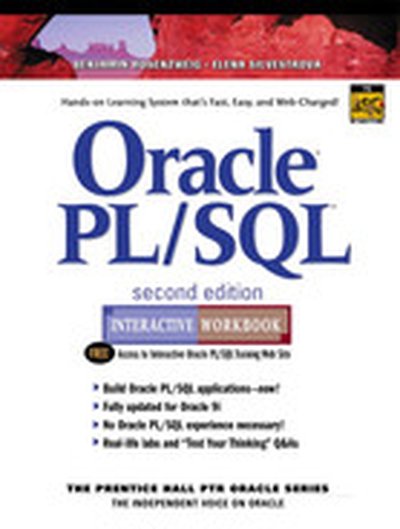
Oracle® PL/SQL® Interactive Workbook, Second Edition

Build Oracle PL/SQL applications—now. Fully updated for Oracle 9i No Oracle PL/SQL experience necessary. Real-life labs and "Test Your Thinking" Q&As Start developing applications with Oracle PL/SQL—fast. This integrated book-and-Web learning solution teaches all the Oracle PL/SQL skills you need, hands on, through real-world labs, exercises, projects, and a complete Web-based training site. Completely updated for Oracle 9i, it covers all the fundamentals—and a whole lot more. Master PL/SQL syntax, iterative and conditional control, scoping, anchored datatypes, cursors, triggers, security, tables, and packaging—plus powerful new techniques for working with exceptions, cursors, collections, and records. Your free Web-based training module includes a Virtual Study Lounge where you can interact with other learners, work on new projects, and get updates. Totally integrated with a FREE, state-of-the-art Oracle 9i learning Web site. Every Prentice Hall Oracle Interactive Workbook is fully integrated with its own exclusive Web site, giving you all this and more: "Test Your Thinking" project solutions and detailed explanations Additional self-review exercises with instant feedback and explanations An exclusive Virtual Study Lounge where you can interact with other students. Just the facts. No endless, boring discussions here. You'll learn hands on through practical exercises, self-review questions, and real-world answers. Exclusive "Test Your Thinking" projects guarantee you'll go beyond rote knowledge to really master the subject. It's an integrated learning system that's proven to work. Dozens of exercises cover the real-world tasks that matter most. Hundreds of self-review questions and answers make sure you understand.

Patterns: Connecting Self-Service Applications to the Enterprise

The Patterns for e-business are a group of proven, reusable assets that can be used to increase the speed of developing and deploying Web applications. The pattern discussed in this IBM Redbooks publication, Self-Service::Directly Integrated Single Channel application pattern, covers Web applications needing one or more point-to-point connections with back end applications. Part 1 of the book guides you through the process of selecting an Application and Runtime pattern. Next, the platform-specific product mappings are identified based upon the selected Runtime pattern. Part 2 of the book provides a set of guidelines for building your Web application with the enterprise tier using Web services, JCA and JMS. These guidelines include technology options, application design, application development, systems management, and security. Part 3 of the book teaches you by example how to design and build sample solutions using IBM WebSphere Application Server V4.0 with Web services, JCA and IBM CICS, and JMS and IBM MQSeries. Please note that the additional material referenced in the text is not available from IBM.

Enterprise Business Portals with IBM Tivoli Access Manager

Mastering the IBM Tivoli Access Manager is the most important factor for successfully deploying contemporary e-business solutions. Access Manager is the key element in an e-business security framework that needs thorough understanding to achieve maximum security, functionality, and performance. Based on expandable security policies for users, groups, and protected resources, the Tivoli Access Manager manages the authentication and authorization to application servers, Web sites, and virtually any other resource that requires protection, including custom-written applications. This IBM Redbooks publication explains the planning steps and describes how to build multi-level enterprise business portals with the new Tivoli Access Manager Version 3.9. It also discusses high-availability scenarios and platform coverage for various involved components like Web servers, registries, and Access Manager management components. It shows the integration of Access Manager into the IBM WebSphere Application Server, IBM WebSphere Everyplace Suite, BEA WebLogic application server, Siebel, and other products. This book is a valuable resource for security administrators and architects who wish to understand and implement a centralized security infrastructure.

MySQL Reference Manual

MySQL is the most popular SQL database in the open source community and is used almost universally by web sites running on open source systems. As powerful and flexible as it is lightweight and efficient, MySQL packs a large feature set into a very small and fast engine that now runs on more than 500,000 servers. This renowned online manual that has supported MySQL administrators and database developers for years is now available in paperback format. This book is an exact reproduction of the MySQL Reference Manual from the MySQL development team's Web site, minus some non-technical appendices. This version covers MySQL 4.0. Many sophisticated topics appear in this comprehensive manual, ranging from the hitches you may run into when first installing MySQL to internals that will help you tune your queries. MySQL Reference Manual contains all the comprehensive reference material one would expect for building the product, running administrative utilities, and using various API as well as MySQL's rich version of SQL. In addition, you can turn a page and find such unexpected riches as: A thorough comparison of MySQL with SQL standards and other databases A discussion of privileges and suggested uses of privileges to enhance security Directions for replicating a database and for running several MySQL servers on a single system Directions for initializing a database from a flat file Guidelines for estimating the performance of different queries A far-reaching discussion of optimization, with reference to the implementation of MySQL Investigations of the differences between data types and the pros and cons of each type of number, string, or timestamp An extended inquiry into the effects of using delayed inserts A candid explanation of why various errors occur and how to recover from them Tips for weighted, full-text searches Detailed descriptions of the features, strengths, and weaknesses of available table formats A guide to adding new functions to MySQL No serious MySQL user should be without this book.

Understanding Web Services: XML, WSDL, SOAP, and UDDI

Web services enable the new generation of Internet-based applications. These services support application-to-application Internet communication--that is, applications at different network locations can be integrated to function as if they were part of a single, large software system. Examples of applications made possible by Web services include automated business transactions and direct (nonbrowser) desktop and handheld device access to reservations, stock trading, and order-tracking systems. Several key standards have emerged that together form the foundation for Web services: XML (Extensible Markup Language), WSDL (Web Services Definition Language), SOAP (Simple Object Access Protocol), and UDDI (Universal Description, Discovery, and Integration). In addition, ebXML (Electronic Business XML) has been specified to facilitate automated business process integration among trading partners. This book introduces the main ideas and concepts behind core and extended Web services' technologies and provides developers with a primer for each of the major technologies that have emerged in this space. In addition, summarizes the major architectural approaches to Web services, examines the role of Web services within the .NET and J2EE communities, and provides information about major product offerings from BEA, Hewlett-Packard, IBM, IONA, Microsoft, Oracle, Sun Microsystems, and others. Understanding Web Services Key topics include: XML facilities for structuring and serializing data How WSDL maps services onto communication protocols and transports WSDL support for RPC-oriented and document-oriented interactions SOAP's required and optional elements Message processing and the role of intermediaries in SOAP UDDI data formats and APIs How ebXML offers an alternative to Web services that supports reliable messaging, security, and trading-partner negotiations With , you will be well informed and well positioned to participate in this vast, emerging marketplace. Understanding Web Services