talk-data.com talk-data.com

Topic

SPSS

statistical_software data_analysis predictive_analytics

35

tagged

Activity Trend

1 peak/qtr
2020-Q1 2026-Q1

Activities

35 activities · Newest first

SPSS Statistics for Dummies, 3rd Edition

The ultimate beginner's guide to SPSS and statistical analysis SPSS Statistics For Dummies is the fun and friendly guide to mastering SPSS. This book contains everything you need to know to get up and running quickly with this industry-leading software, with clear, helpful guidance on working with both the software and your data. Every chapter of this new edition has been updated with screenshots and steps that align with SPSS 23.0. You'll learn how to set up the software and organize your workflow, then delve deep into analysis to discover the power of SPSS capabilities. You'll discover the mechanics behind the calculations, perform predictive analysis, produce informative graphs, and maximize your data, even if it's been awhile since your last statistics class. SPSS is the leading statistical software for social sciences, marketing, health care, demography, government, education, data mining, and more. This powerful package gives you the tools you need to get more out of your data, and this book is your beginner-friendly guide to getting the most out of the software. Install and configure SPSS and learn the basics of how it works Master the process of getting data into SPSS and manipulating it to produce results See how to display data in dozens of different graphic formats to fit specific needs Make SPSS manufacture the numbers you want and take advantage of the many analysis options Discover ways to customize the SPSS interface and the look of your results, edit graphics and pivot tables, and program SPSS with Command Syntax Statistical analysis is crucial to so many industries, and accuracy and efficiency are crucial. SPSS offers you the capability to deliver, but you still must know how to take utmost advantage of the tools at your fingertips. SPSS Statistics For Dummies shows you how to handle data like a pro, with step-by-step instruction and expert advice.
Designing and Conducting Survey Research: A Comprehensive Guide, 4th Edition

The industry standard guide, updated with new ideas and SPSS analysis techniques Designing and Conducting Survey Research: A Comprehensive Guide Fourth Edition is the industry standard resource that covers all major components of the survey process, updated to include new data analysis techniques and SPSS procedures with sample data sets online. The book offers practical, actionable guidance on constructing the instrument, administrating the process, and analyzing and reporting the results, providing extensive examples and worksheets that demonstrate the appropriate use of survey and data techniques. By clarifying complex statistical concepts and modern analysis methods, this guide enables readers to conduct a survey research project from initial focus concept to the final report. Public and nonprofit managers with survey research responsibilities need to stay up-to-date on the latest methods, techniques, and best practices for optimal data collection, analysis, and reporting. Designing and Conducting Survey Research is a complete resource, answering the "what", "why", and "how" every step of the way, and providing the latest information about technological advancements in data analysis. The updated fourth edition contains step-by-step SPSS data entry and analysis procedures, as well as SPSS examples throughout the text, using real data sets from real-world studies. Other new information includes topics like: Nonresponse error/bias Ethical concerns and special populations Cell phone samples in telephone surveys Subsample screening and complex skip patterns The fourth edition also contains new information on the growing importance of focus groups, and places a special emphasis on data quality including size and variability. Those who employ survey research methods will find that Designing and Conducting Survey Research contains all the information needed to better design, conduct, and analyze a more effective survey.

Nonparametric Statistics: A Step-by-Step Approach, 2nd Edition

"...a very useful resource for courses in nonparametric statistics in which the emphasis is on applications rather than on theory. It also deserves a place in libraries of all institutions where introductory statistics courses are taught." -CHOICE This Second Edition presents a practical and understandable approach that enhances and expands the statistical toolset for readers. This book includes: New coverage of the sign test and the Kolmogorov-Smirnov two-sample test in an effort to offer a logical and natural progression to statistical power SPSS (Version 21) software and updated screen captures to demonstrate how to perform and recognize the steps in the various procedures Data sets and odd-numbered solutions provided in an appendix, and tables of critical values Supplementary material to aid in reader comprehension, which includes: narrated videos and screen animations with step-by-step instructions on how to follow the tests using SPSS; online decision trees to help users determine the needed type of statistical test; and additional solutions not found within the book.

IBM InfoSphere Streams: Accelerating Deployments with Analytic Accelerators

This IBM® Redbooks® publication describes visual development, visualization, adapters, analytics, and accelerators for IBM InfoSphere® Streams (V3), a key component of the IBM Big Data platform. Streams was designed to analyze data in motion, and can perform analysis on incredibly high volumes with high velocity, using a wide variety of analytic functions and data types. The Visual Development environment extends Streams Studio with drag-and-drop development, provides round tripping with existing text editors, and is ideal for rapid prototyping. Adapters facilitate getting data in and out of Streams, and V3 supports WebSphere MQ, Apache Hadoop Distributed File System, and IBM InfoSphere DataStage. Significant analytics include the native Streams Processing Language, SPSS Modeler analytics, Complex Event Processing, TimeSeries Toolkit for machine learning and predictive analytics, Geospatial Toolkit for location-based applications, and Annotation Query Language for natural language processing applications. Accelerators for Social Media Analysis and Telecommunications Event Data Analysis sample programs can be modified to build production level applications. Want to learn how to analyze high volumes of streaming data or implement systems requiring high performance across nodes in a cluster? Then this book is for you. Please note that the additional material referenced in the text is not available from IBM.

Nonparametric Statistics for Social and Behavioral Sciences

Incorporating a hands-on pedagogical approach, this text presents the concepts, principles, and methods used in performing many nonparametric procedures. It also demonstrates practical applications of the most common nonparametric procedures using IBM's SPSS software. The text is the only current nonparametric book written specifically for students in the behavioral and social sciences. With examples of real-life research problems, it emphasizes sound research designs, appropriate statistical analyses, and accurate interpretations of results.

IBM SPSS Modeler Cookbook

"IBM SPSS Modeler Cookbook" is your practical guide to mastering data mining with IBM SPSS Modeler. This comprehensive book takes you beyond the basics, offering expert insights, time-saving techniques, and powerful workflows to grow your skills and elevate your analytical abilities. You will learn to apply the CRISP-DM methodology, efficiently prepare and explore data, build advanced models, and confidently incorporate analytical results into your business decisions. What this Book will help me do Effectively apply the CRISP-DM standard process to organize your data mining projects. Leverage efficient techniques for data extraction, transformation, and preparation. Develop and evaluate predictive models for practical applications in your organization. Enhance your models by utilizing advanced features and expert tips. Automate and streamline your data mining process with scripting for ultimate control. Author(s) Keith McCormick and None Abbott are seasoned data mining professionals with deep expertise in IBM SPSS Modeler and predictive analytics. Together, they have extensive experience in consulting, training, and applying advanced analytical techniques across industries. Through their approachable and insightful writing style, they share practical knowledge and expert workflows to empower readers. Who is it for? This book is designed for individuals who have basic experience with IBM SPSS Modeler and aspire to deepen their expertise. Whether you are a data analyst looking to advance your analytical capabilities or a professional aiming to integrate data-driven solutions into your organization, this book provides the knowledge and practical guidance you need to take the next step in your data mining journey.

Risk Scoring for a Loan Application on IBM System z: Running IBM SPSS Real-Time Analytics

When ricocheting a solution that involves analytics, the mainframe might not be the first platform that comes to mind. However, the IBM® System z® group has developed some innovative solutions that include the well-respected mainframe benefits. This book describes a workshop that demonstrates the use of real-time advanced analytics for enhancing core banking decisions using a loan origination example. The workshop is a live hands-on experience of the entire process from analytics modeling to deployment of real-time scoring services for use on IBM z/OS®. In this IBM Redbooks® publication, we include a facilitator guide chapter as well as a participant guide chapter. The facilitator guide includes information about the preparation, such as the needed material, resources, and steps to set up and run this workshop. The participant guide shows step-by-step the tasks for a successful learning experience. The goal of the first hands-on exercise is to learn how to use IBM SPSS® Modeler for Analytics modeling. This provides the basis for the next exercise "Configuring risk assessment in SPSS Decision Management". In the third exercise, the participant experiences how real-time scoring can be implemented on a System z. This publication is written for consultants, IT architects, and IT administrators who want to become familiar with SPSS and analytics solutions on the System z.

Statistical Concepts - A Second Course, 4th Edition

Statistical Concepts consists of the last 9 chapters of An Introduction to Statistical Concepts, 3rd ed. Designed for the second course in statistics, it is one of the few texts that focuses just on intermediate statistics. The book highlights how statistics work and what they mean to better prepare students to analyze their own data and interpret SPSS and research results. As such it offers more coverage of non-parametric procedures used when standard assumptions are violated since these methods are more frequently encountered when working with real data. Determining appropriate sample sizes is emphasized throughout. Only crucial equations are included. The new edition features: New co-author, Debbie L. Hahs-Vaughn, the 2007 recipient of the University of Central Florida's College of Education Excellence in Graduate Teaching Award. A new chapter on logistic regression models for today's more complex methodologies. Much more on computing confidence intervals and conducting power analyses using G*Power. All new SPSS version 19 screenshots to help navigate through the program and annotated output to assist in the interpretation of results. Sections on how to write-up statistical results in APA format and new templates for writing research questions. New learning tools including chapter-opening vignettes, outlines, a list of key concepts, "Stop and Think" boxes, and many more examples, tables, and figures. More tables of assumptions and the effects of their violation including how to test them in SPSS. 33% new conceptual, computational, and all new interpretative problems. A website with Power Points, answers to the even-numbered problems, detailed solutions to the odd-numbered problems, and test items for instructors, and for students the chapter outlines, key concepts, and datasets. Each chapter begins with an outline, a list of key concepts, and a research vignette related to the concepts. Realistic examples from education and the behavioral sciences illustrate those concepts. Each example examines the procedures and assumptions and provides tips for how to run SPSS and develop an APA style write-up. Tables of assumptions and the effects of their violation are included, along with how to test assumptions in SPSS. Each chapter includes computational, conceptual, and interpretive problems. Answers to the odd-numbered problems are provided. The SPSS data sets that correspond to the book’s examples and problems are available on the web. The book covers basic and advanced analysis of variance models and topics not dealt with in other texts such as robust methods, multiple comparison and non-parametric procedures, and multiple and logistic regression models. Intended for courses in intermediate statistics and/or statistics II taught in education and/or the behavioral sciences, predominantly at the master's or doctoral level. Knowledge of introductory statistics is assumed.

Statistics for Sport and Exercise Studies

Statistics for Sport and Exercise Studies guides the student through the full research process, from selecting the most appropriate statistical procedure, to analysing data, to the presentation of results, illustrating every key step in the process with clear examples, case-studies and data taken from real sport and exercise settings. Every chapter includes a range of features designed to help the student grasp the underlying concepts and relate each statistical procedure to their own research project, including definitions of key terms, practical exercises, worked examples and clear summaries. The book also offers an in-depth and practical guide to using SPSS in sport and exercise research, the most commonly used data analysis software in sport and exercise departments. In addition, a companion website includes more than 100 downloadable data sets and work sheets for use in or out of the classroom, full solutions to exercises contained in the book, plus over 1,300 PowerPoint slides for use by tutors and lecturers. Statistics for Sport and Exercise Studies is a complete, user-friendly introduction to the use of statistical tests, techniques and procedures in sport, exercise and related subjects. Visit the companion website at: www.routledge.com/cw/odonoghue

Applied Multiple Regression/Correlation Analysis for the Behavioral Sciences, 3rd Edition

This classic text on multiple regression is noted for its nonmathematical, applied, and data-analytic approach. Readers profit from its verbal-conceptual exposition and frequent use of examples. The applied emphasis provides clear illustrations of the principles and provides worked examples of the types of applications that are possible. Researchers learn how to specify regression models that directly address their research questions. An overview of the fundamental ideas of multiple regression and a review of bivariate correlation and regression and other elementary statistical concepts provide a strong foundation for understanding the rest of the text. The third edition features an increased emphasis on graphics and the use of confidence intervals and effect size measures, and an accompanying website with data for most of the numerical examples along with the computer code for SPSS, SAS, and SYSTAT, at www.psypress.com/9780805822236 . Applied Multiple Regression serves as both a textbook for graduate students and as a reference tool for researchers in psychology, education, health sciences, communications, business, sociology, political science, anthropology, and economics. An introductory knowledge of statistics is required. Self-standing chapters minimize the need for researchers to refer to previous chapters.

Understanding and Applying Research Design

A fresh approach to bridging research design with statistical analysis While good social science requires both research design and statistical analysis, most books treat these two areas separately. Understanding and Applying Research Design introduces an accessible approach to integrating design and statistics, focusing on the processes of posing, testing, and interpreting research questions in the social sciences. The authors analyze real-world data using SPSS software, guiding readers on the overall process of science, focusing on premises, procedures, and designs of social scientific research. Three clearly organized sections move seamlessly from theoretical topics to statistical techniques at the heart of research procedures, and finally, to practical application of research design: Premises of Research introduces the research process and the capabilities of SPSS, with coverage of ethics, Empirical Generalization, and Chi Square and Contingency Table Analysis Procedures of Research explores key quantitative methods in research design including measurement, correlation, regression, and causation Designs of Research outlines various design frameworks, with discussion of survey research, aggregate research, and experiments Throughout the book, SPSS software is used to showcase the discussed techniques, and detailed appendices provide guidance on key statistical procedures and tips for data management. Numerous exercises allow readers to test their comprehension of the presented material, and a related website features additional data sets and SPSS code. Understanding and Applying Research Design is an excellent book for social sciences and education courses on research methods at the upper-undergraduate level. The book is also an insightful reference for professionals who would like to learn how to pose, test, and interpret research questions with confidence.

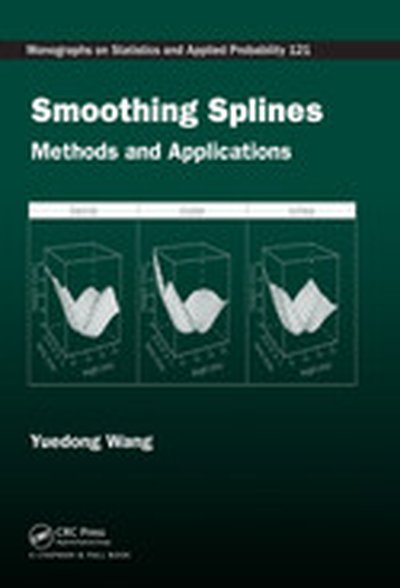
Smoothing Splines

With many real-world examples, this book shows how to apply the powerful methods of smoothing splines in practice. It covers basic smoothing spline models as well as more advanced models, such as spline smoothing with correlated random errors. It also presents methods for model selection and inference. The author makes the advanced smoothing spline methodology based on reproducing kernel Hilbert space (RKHS) accessible to practitioners and students by keeping theory to a minimum. R is used throughout to implement the methods, with code available for download on the book's web page.

Business Research Methods

Business Research Methods provides students with the knowledge, understanding and necessary skills to complete a business research. The reader is taken step-by-step through a range of contemporary research methods, while numerous worked examples and real-life case studies bring to life the realities of undertaking these researchs. Emphasis on data analysis is the key strength of this book. The book uses the latest software packages: MS Excel (2007), SPSS 17 and Minitab 15 to solve statistical data analysis. The complexity of multivariate analysis is also dealt with the help of these three softwares.

SPSS For Dummies®, 2nd Edition

The fun and friendly guide to the world's leading statistical software Predictive Analysis Software (PASW), formerly SPSS software, is the leading statistical software used by commerical, government, and academic organizations around the world to solve business and research problems. It allows you to quickly and easily discover new insights from data, test hypotheses, and build powerful predictive models. PASW Statistics For Dummies covers everything you need to know to get up and running with this efficient and practical software. * PASW Statistics is the leading statistical software used to analyze data and create predictive models; it is used by business, academic, and government entities worldwide This guide explains how to work with automatic codebook generation and customize the variable view Walks you through the rounding method that is used in all calculations and explains using predictive analysis Shows how to maximize your use of graph templates, and much more* Even if you have little or no statistical or mathematical background, PASW Statistics For Dummies will show you how to generate statistical support and decision-making information quickly and easily.

Business Statistics

Business Statistics offers readers a foundation in core statistical concepts using a perfect blend of theory and practical application. This book presents business statistics as value added tools in the process of converting data into useful information. The step-by-step approach used to discuss three main statistical software applications, MS Excel, Minitab, and SPSS, which are critical tools for decision making in the business world, makes this book extremely user friendly. This book is highly relevant for students and practising managers.