talk-data.com talk-data.com

Topic

SPSS

statistical_software data_analysis predictive_analytics

31

tagged

Activity Trend

1 peak/qtr
2020-Q1 2026-Q1

Activities

31 activities · Newest first

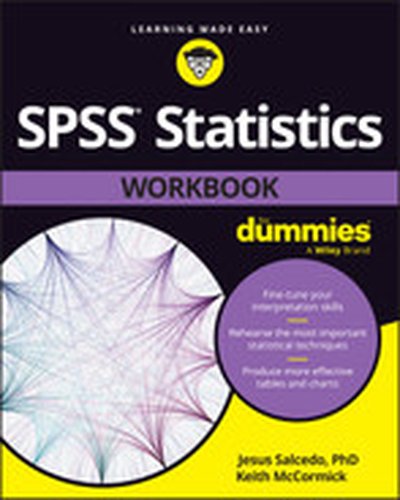
SPSS Statistics Workbook For Dummies

Practice making sense of data with IBM’s SPSS Statistics software SPSS Statistics Workbook For Dummies gives you the practice you need to navigate the leading statistical software suite. Data management and analysis, advanced analytics, business intelligence—SPSS is a powerhouse of a research platform, and this book helps you master the fundamentals and analyze data more effectively. You’ll work through practice problems that help you understand the calculations you need to perform, complete predictive analyses, and produce informative graphs. This workbook gives you hands-on exercises to hone your statistical analysis skills with SPSS Statistics 28. Plus, explanations and insider tips help you navigate the software with ease. Practical and easy-to-understand, in classic Dummies style. Practice organizing, analyzing, and graphing data Learn to write, edit, and format SPSS syntax Explore the upgrades and features new to SPSS 28 Try your hand at advanced data analysis procedures For academics using SPSS for research, business analysts and market researchers looking to extract valuable insights from data, and anyone with a hankering for more stats practice.

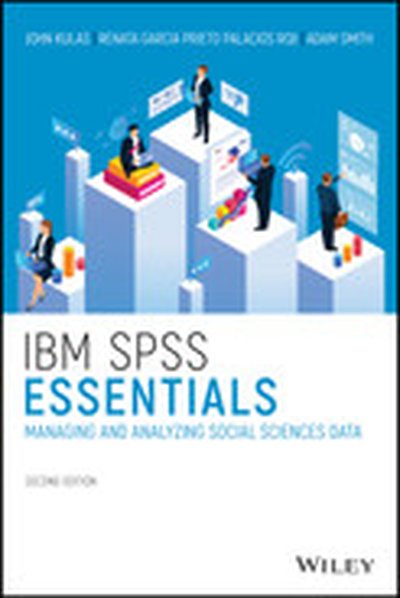
IBM SPSS Essentials, 2nd Edition

Master the fundamentals of SPSS with this newly updated and instructive resource The newly and thoroughly revised Second Edition of SPSS Essentials delivers a comprehensive guide for students in the social sciences who wish to learn how to use the Statistical Package for the Social Sciences (SPSS) for the effective collection, management, and analysis of data. The accomplished researchers and authors provide readers with the practical nuts and bolts of SPSS usage and data entry, with a particular emphasis on managing and manipulating data. The book offers an introduction to SPSS, how to navigate it, and a discussion of how to understand the data the reader is working with. It also covers inferential statistics, including topics like hypothesis testing, one-sample Z-testing, T-testing, ANOVAs, correlations, and regression. Five unique appendices round out the text, providing readers with discussions of dealing with real-world data, troubleshooting, advanced data manipulations, and new workbook activities. SPSS Essentials offers a wide variety of features, including: A revised chapter order, designed to match the pacing and content of typical undergraduate statistics classes An explanation of when particular inferential statistics are appropriate for use, given the nature of the data being worked with Additional material on understanding your data sample, including discussions of SPSS output and how to find the most relevant information A companion website offering additional problem sets, complete with answers Perfect for undergraduate students of the social sciences who are just getting started with SPSS, SPSS Essentials also belongs on the bookshelves of advanced placement high school students and practitioners in social science who want to brush up on the fundamentals of this powerful and flexible software package.

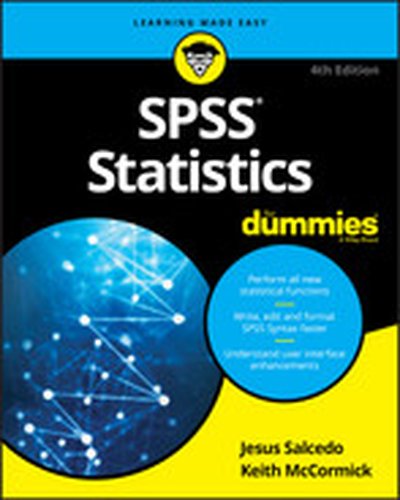
SPSS Statistics For Dummies, 4th Edition

The fun and friendly guide to mastering IBM’s Statistical Package for the Social Sciences Written by an author team with a combined 55 years of experience using SPSS, this updated guide takes the guesswork out of the subject and helps you get the most out of using the leader in predictive analysis. Covering the latest release and updates to SPSS 27.0, and including more than 150 pages of basic statistical theory, it helps you understand the mechanics behind the calculations, perform predictive analysis, produce informative graphs, and more. You’ll even dabble in programming as you expand SPSS functionality to suit your specific needs. Master the fundamental mechanics of SPSS Learn how to get data into and out of the program Graph and analyze your data more accurately and efficiently Program SPSS with Command Syntax Get ready to start handling data like a pro—with step-by-step instruction and expert advice!

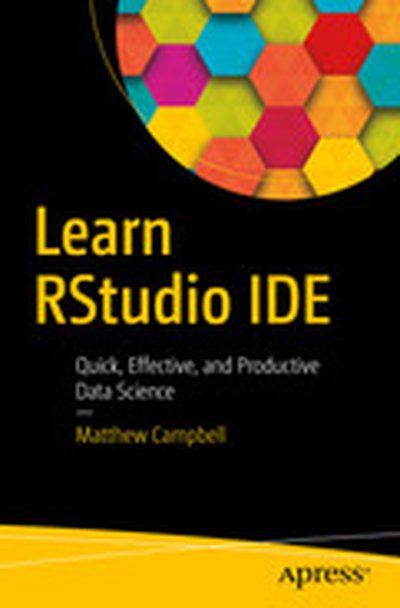
Learn RStudio IDE: Quick, Effective, and Productive Data Science

Discover how to use the popular RStudio IDE as a professional tool that includes code refactoring support, debugging, and Git version control integration. This book gives you a tour of RStudio and shows you how it helps you do exploratory data analysis; build data visualizations with ggplot; and create custom R packages and web-based interactive visualizations with Shiny. In addition, you will cover common data analysis tasks including importing data from diverse sources such as SAS files, CSV files, and JSON. You will map out the features in RStudio so that you will be able to customize RStudio to fit your own style of coding. Finally, you will see how to save a ton of time by adopting best practices and using packages to extend RStudio. Learn RStudio IDE is a quick, no-nonsense tutorial of RStudio that will give you a head start to develop the insights you need in your data science projects. What YouWill Learn Quickly, effectively, and productively use RStudio IDE for building data science applications Install RStudio and program your first Hello World application Adopt the RStudio workflow Make your code reusable using RStudio Use RStudio and Shiny for data visualization projects Debug your code with RStudio Import CSV, SPSS, SAS, JSON, and other data Who This Book Is For Programmers who want to start doing data science, but don’t know what tools to focus on to get up to speed quickly.

Data Science for Business and Decision Making

Data Science for Business and Decision Making covers both statistics and operations research while most competing textbooks focus on one or the other. As a result, the book more clearly defines the principles of business analytics for those who want to apply quantitative methods in their work. Its emphasis reflects the importance of regression, optimization and simulation for practitioners of business analytics. Each chapter uses a didactic format that is followed by exercises and answers. Freely-accessible datasets enable students and professionals to work with Excel, Stata Statistical Software®, and IBM SPSS Statistics Software®. Combines statistics and operations research modeling to teach the principles of business analytics Written for students who want to apply statistics, optimization and multivariate modeling to gain competitive advantages in business Shows how powerful software packages, such as SPSS and Stata, can create graphical and numerical outputs

Testing Statistical Assumptions in Research

Comprehensively teaches the basics of testing statistical assumptions in research and the importance in doing so This book facilitates researchers in checking the assumptions of statistical tests used in their research by focusing on the importance of checking assumptions in using statistical methods, showing them how to check assumptions, and explaining what to do if assumptions are not met. Testing Statistical Assumptions in Research discusses the concepts of hypothesis testing and statistical errors in detail, as well as the concepts of power, sample size, and effect size. It introduces SPSS functionality and shows how to segregate data, draw random samples, file split, and create variables automatically. It then goes on to cover different assumptions required in survey studies, and the importance of designing surveys in reporting the efficient findings. The book provides various parametric tests and the related assumptions and shows the procedures for testing these assumptions using SPSS software. To motivate readers to use assumptions, it includes many situations where violation of assumptions affects the findings. Assumptions required for different non-parametric tests such as Chi-square, Mann-Whitney, Kruskal Wallis, and Wilcoxon signed-rank test are also discussed. Finally, it looks at assumptions in non-parametric correlations, such as bi-serial correlation, tetrachoric correlation, and phi coefficient. An excellent reference for graduate students and research scholars of any discipline in testing assumptions of statistical tests before using them in their research study Shows readers the adverse effect of violating the assumptions on findings by means of various illustrations Describes different assumptions associated with different statistical tests commonly used by research scholars Contains examples using SPSS, which helps facilitate readers to understand the procedure involved in testing assumptions Looks at commonly used assumptions in statistical tests, such as z, t and F tests, ANOVA, correlation, and regression analysis Testing Statistical Assumptions in Research is a valuable resource for graduate students of any discipline who write thesis or dissertation for empirical studies in their course works, as well as for data analysts.

Practical Web Scraping for Data Science: Best Practices and Examples with Python

This book provides a complete and modern guide to web scraping, using Python as the programming language, without glossing over important details or best practices. Written with a data science audience in mind, the book explores both scraping and the larger context of web technologies in which it operates, to ensure full understanding. The authors recommend web scraping as a powerful tool for any data scientist’s arsenal, as many data science projects start by obtaining an appropriate data set. Starting with a brief overview on scraping and real-life use cases, the authors explore the core concepts of HTTP, HTML, and CSS to provide a solid foundation. Along with a quick Python primer, they cover Selenium for JavaScript-heavy sites, and web crawling in detail. The book finishes with a recap of best practices and a collection of examples that bring together everything you've learned and illustrate various data science use cases. What You'll Learn Leverage well-established best practices and commonly-used Python packages Handle today's web, including JavaScript, cookies, and common web scraping mitigation techniques Understand the managerial and legal concerns regarding web scraping Who This Book is For A data science oriented audience that is probably already familiar with Python or another programming language or analytical toolkit (R, SAS, SPSS, etc). Students or instructors in university courses may also benefit. Readers unfamiliar with Python will appreciate a quick Python primer in chapter 1 to catch up with the basics and provide pointers to other guides as well.

Mathematical Statistics

Explores mathematical statistics in its entirety—from the fundamentals to modern methods This book introduces readers to point estimation, confidence intervals, and statistical tests. Based on the general theory of linear models, it provides an in-depth overview of the following: analysis of variance (ANOVA) for models with fixed, random, and mixed effects; regression analysis is also first presented for linear models with fixed, random, and mixed effects before being expanded to nonlinear models; statistical multi-decision problems like statistical selection procedures (Bechhofer and Gupta) and sequential tests; and design of experiments from a mathematical-statistical point of view. Most analysis methods have been supplemented by formulae for minimal sample sizes. The chapters also contain exercises with hints for solutions. Translated from the successful German text, Mathematical Statistics requires knowledge of probability theory (combinatorics, probability distributions, functions and sequences of random variables), which is typically taught in the earlier semesters of scientific and mathematical study courses. It teaches readers all about statistical analysis and covers the design of experiments. The book also describes optimal allocation in the chapters on regression analysis. Additionally, it features a chapter devoted solely to experimental designs. Classroom-tested with exercises included Practice-oriented (taken from day-to-day statistical work of the authors) Includes further studies including design of experiments and sample sizing Presents and uses IBM SPSS Statistics 24 for practical calculations of data Mathematical Statistics is a recommended text for advanced students and practitioners of math, probability, and statistics.

IBM SPSS Modeler Essentials

Learn how to leverage IBM SPSS Modeler for your data mining and predictive analytics needs in this comprehensive guide. With step-by-step instructions, you'll acquire the skills to import, clean, analyze, and model your data using this robust platform. By the end, you'll be equipped to uncover patterns and trends, enabling data-driven decision-making confidently. What this Book will help me do Understand the fundamentals of data mining and the visual programming interface of IBM SPSS Modeler. Prepare, clean, and preprocess data effectively for analysis and modeling. Build robust predictive models such as decision trees using best practices. Evaluate the performance of your analytical models to ensure accuracy and reliability. Export resulting analyses to apply insights to real-world data projects. Author(s) Keith McCormick and Jesus Salcedo are accomplished professionals in data analytics and statistical modeling. With extensive experience in consulting and teaching, they have guided many in mastering IBM SPSS Modeler through both hands-on workshops and written material. Their approachable teaching style and commitment to clarity ensure accessibility for learners. Who is it for? This book is designed for beginner users of IBM SPSS Modeler who wish to gain practical and actionable skills in data analytics. If you're a data enthusiast looking to explore predictive analytics or a professional eager to discover the insights hidden in your organizational data, this book is for you. A basic understanding of data mining concepts is advantageous but not required. This resource will set any novice on the path toward expert-level comprehension and application.

Data Analysis with IBM SPSS Statistics

"Data Analysis with IBM SPSS Statistics" is a comprehensive guide designed to help you master IBM SPSS Statistics for performing robust statistical analyses. Through a practical approach, the book delves into critical techniques like data visualization, regression analysis, and hypothesis testing, enabling you to uncover patterns, make informed decisions, and enhance data interpretation. What this Book will help me do Set up and configure IBM SPSS Statistics for effective data analysis workflows. Perform data cleaning and preparation, including addressing missing data and restructuring datasets. Master statistical techniques such as ANOVA, regression analysis, and clustering to draw insights from data. Generate intuitive visualizations like charts and graphs to communicate findings effectively. Build predictive models and evaluate their effectiveness for decision-making purposes. Author(s) Ken Stehlik-Barry and Anthony Babinec are seasoned data analysts and IBM SPSS experts with extensive experience in statistical methodologies and data science. They have a knack for translating complex concepts into accessible lessons, making this book an ideal resource for learners aiming to build their SPSS aptitude. Their expertise ensures a well-rounded learning journey. Who is it for? This book is tailored for data analysts and researchers who need to analyze and interpret data effectively using IBM SPSS Statistics. Readers should have basic familiarity with statistical concepts, making it ideal for those with a foundational understanding of statistics. If you aim to grasp practical applications of SPSS for real-world data challenges, this book is for you.

SPSS Statistics for Data Analysis and Visualization

Dive deeper into SPSS Statistics for more efficient, accurate, and sophisticated data analysis and visualization SPSS Statistics for Data Analysis and Visualization goes beyond the basics of SPSS Statistics to show you advanced techniques that exploit the full capabilities of SPSS. The authors explain when and why to use each technique, and then walk you through the execution with a pragmatic, nuts and bolts example. Coverage includes extensive, in-depth discussion of advanced statistical techniques, data visualization, predictive analytics, and SPSS programming, including automation and integration with other languages like R and Python. You'll learn the best methods to power through an analysis, with more efficient, elegant, and accurate code. IBM SPSS Statistics is complex: true mastery requires a deep understanding of statistical theory, the user interface, and programming. Most users don't encounter all of the methods SPSS offers, leaving many little-known modules undiscovered. This book walks you through tools you may have never noticed, and shows you how they can be used to streamline your workflow and enable you to produce more accurate results. Conduct a more efficient and accurate analysis Display complex relationships and create better visualizations Model complex interactions and master predictive analytics Integrate R and Python with SPSS Statistics for more efficient, more powerful code These "hidden tools" can help you produce charts that simply wouldn't be possible any other way, and the support for other programming languages gives you better options for solving complex problems. If you're ready to take advantage of everything this powerful software package has to offer, SPSS Statistics for Data Analysis and Visualization is the expert-led training you need.

Enabling Real-time Analytics on IBM z Systems Platform

Regarding online transaction processing (OLTP) workloads, IBM® z Systems™ platform, with IBM DB2®, data sharing, Workload Manager (WLM), geoplex, and other high-end features, is the widely acknowledged leader. Most customers now integrate business analytics with OLTP by running, for example, scoring functions from transactional context for real-time analytics or by applying machine-learning algorithms on enterprise data that is kept on the mainframe. As a result, IBM adds investment so clients can keep the complete lifecycle for data analysis, modeling, and scoring on z Systems control in a cost-efficient way, keeping the qualities of services in availability, security, reliability that z Systems solutions offer. Because of the changed architecture and tighter integration, IBM has shown, in a customer proof-of-concept, that a particular client was able to achieve an orders-of-magnitude improvement in performance, allowing that client’s data scientist to investigate the data in a more interactive process. Open technologies, such as Predictive Model Markup Language (PMML) can help customers update single components instead of being forced to replace everything at once. As a result, you have the possibility to combine your preferred tool for model generation (such as SAS Enterprise Miner or IBM SPSS® Modeler) with a different technology for model scoring (such as Zementis, a company focused on PMML scoring). IBM SPSS Modeler is a leading data mining workbench that can apply various algorithms in data preparation, cleansing, statistics, visualization, machine learning, and predictive analytics. It has over 20 years of experience and continued development, and is integrated with z Systems. With IBM DB2 Analytics Accelerator 5.1 and SPSS Modeler 17.1, the possibility exists to do the complete predictive model creation including data transformation within DB2 Analytics Accelerator. So, instead of moving the data to a distributed environment, algorithms can be pushed to the data, using cost-efficient DB2 Accelerator for the required resource-intensive operations. This IBM Redbooks® publication explains the overall z Systems architecture, how the components can be installed and customized, how the new IBM DB2 Analytics Accelerator loader can help efficient data loading for z Systems data and external data, how in-database transformation, in-database modeling, and in-transactional real-time scoring can be used, and what other related technologies are available. This book is intended for technical specialists and architects, and data scientists who want to use the technology on the z Systems platform. Most of the technologies described in this book require IBM DB2 for z/OS®. For acceleration of the data investigation, data transformation, and data modeling process, DB2 Analytics Accelerator is required. Most value can be archived if most of the data already resides on z Systems platforms, although adding external data (like from social sources) poses no problem at all.

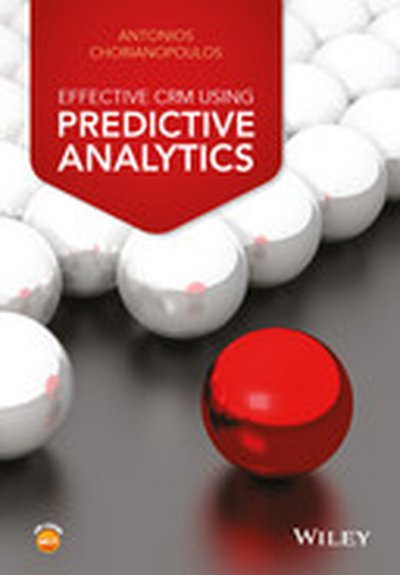
Effective CRM using Predictive Analytics

A step-by-step guide to data mining applications in CRM. Following a handbook approach, this book bridges the gap between analytics and their use in everyday marketing, providing guidance on solving real business problems using data mining techniques. The book is organized into three parts. Part one provides a methodological roadmap, covering both the business and the technical aspects. The data mining process is presented in detail along with specific guidelines for the development of optimized acquisition, cross/ deep/ up selling and retention campaigns, as well as effective customer segmentation schemes. In part two, some of the most useful data mining algorithms are explained in a simple and comprehensive way for business users with no technical expertise. Part three is packed with real world case studies which employ the use of three leading data mining tools: IBM SPSS Modeler, RapidMiner and Data Mining for Excel. Case studies from industries including banking, retail and telecommunications are presented in detail so as to serve as templates for developing similar applications. Key Features: Includes numerous real-world case studies which are presented step by step, demystifying the usage of data mining models and clarifying all the methodological issues. Topics are presented with the use of three leading data mining tools: IBM SPSS Modeler, RapidMiner and Data Mining for Excel. Accompanied by a website featuring material from each case study, including datasets and relevant code. Combining data mining and business knowledge, this practical book provides all the necessary information for designing, setting up, executing and deploying data mining techniques in CRM. Effective CRM using Predictive Analytics will benefit data mining practitioners and consultants, data analysts, statisticians, and CRM officers. The book will also be useful to academics and students interested in applied data mining.

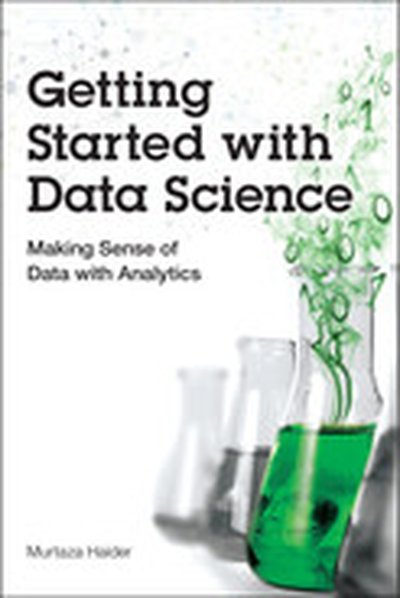
Getting Started with Data Science: Making Sense of Data with Analytics

Master Data Analytics Hands-On by Solving Fascinating Problems You’ll Actually Enjoy! Harvard Business Review recently called data science “The Sexiest Job of the 21st Century.” It’s not just sexy: For millions of managers, analysts, and students who need to solve real business problems, it’s indispensable. Unfortunately, there’s been nothing easy about learning data science–until now. Getting Started with Data Science takes its inspiration from worldwide best-sellers like Freakonomics and Malcolm Gladwell’s Outliers: It teaches through a powerful narrative packed with unforgettable stories. Murtaza Haider offers informative, jargon-free coverage of basic theory and technique, backed with plenty of vivid examples and hands-on practice opportunities. Everything’s software and platform agnostic, so you can learn data science whether you work with R, Stata, SPSS, or SAS. Best of all, Haider teaches a crucial skillset most data science books ignore: how to tell powerful stories using graphics and tables. Every chapter is built around real research challenges, so you’ll always know why you’re doing what you’re doing. You’ll master data science by answering fascinating questions, such as: • Are religious individuals more or less likely to have extramarital affairs? • Do attractive professors get better teaching evaluations? • Does the higher price of cigarettes deter smoking? • What determines housing prices more: lot size or the number of bedrooms? • How do teenagers and older people differ in the way they use social media? • Who is more likely to use online dating services? • Why do some purchase iPhones and others Blackberry devices? • Does the presence of children influence a family’s spending on alcohol? For each problem, you’ll walk through defining your question and the answers you’ll need; exploring how others have approached similar challenges; selecting your data and methods; generating your statistics; organizing your report; and telling your story. Throughout, the focus is squarely on what matters most: transforming data into insights that are clear, accurate, and can be acted upon.

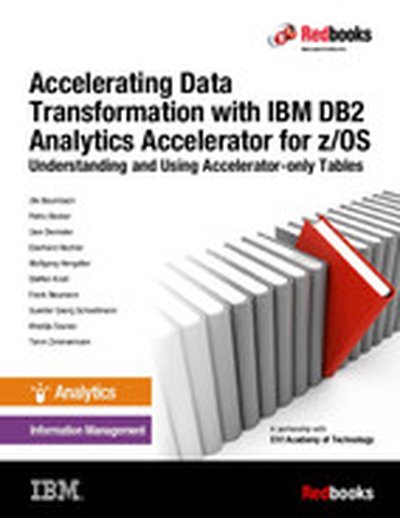
Accelerating Data Transformation with IBM DB2 Analytics Accelerator for z/OS Understanding and Using Accelerator-only Tables

Transforming data from operational data models to purpose-oriented data structures has been commonplace for the last decades. Data transformations are heavily used in all types of industries to provide information to various users at different levels. Depending on individual needs, the transformed data is stored in various different systems. Sending operational data to other systems for further processing is then required, and introduces much complexity to an existing information technology (IT) infrastructure. Although maintenance of additional hardware and software is one component, potential inconsistencies and individually managed refresh cycles are others. For decades, there was no simple and efficient way to perform data transformations on the source system of operational data. With IBM® DB2® Analytics Accelerator, DB2 for z/OS is now in a unique position to complete these transformations in an efficient and well-performing way. DB2 for z/OS completes these while connecting to the same platform as for operational transactions, helping you to minimize your efforts to manage existing IT infrastructure. Real-time analytics on incoming operational transactions is another demand. Creating a comprehensive scoring model to detect specific patterns inside your data can easily require multiple iterations and multiple hours to complete. By enabling a first set of analytical functionality in DB2 Analytics Accelerator, those dedicated mining algorithms can now be run on an accelerator to efficiently perform these modeling tasks. Given the speed of query processing on an accelerator, these modeling tasks can now be performed much quicker compared to traditional relational database management systems. This speed enables you to keep your scoring algorithms more up-to-date, and ultimately adapt more quickly to constantly changing customer behaviors. This IBM Redbooks® publication describes the new table type that is introduced with DB2 Analytics Accelerator V4.1 PTF5 that enables more efficient data transformations. These tables are called accelerator-only tables, and can exist on an accelerator only. The tables benefit from the accelerator performance characteristics, while maintaining access through existing DB2 for z/OS application programming interfaces (APIs). Additionally, we describe the newly introduced analytical capabilities with DB2 Analytics Accelerator V5.1, putting you in the position to efficiently perform data modeling for online analytical requirements in your DB2 for z/OS environment. This book is intended for technical decision-makers who want to get a broad understanding about the analytical capabilities and accelerator-only tables of DB2 Analytics Accelerator. In addition, you learn about how these capabilities can be used to accelerate in-database transformations and in-database analytics in various environments and scenarios, including the following scenarios: Multi-step processing and reporting in IBM DB2 Query Management Facility™, IBM Campaign, or Microstrategy environments In-database transformations using IBM InfoSphere® DataStage® Ad hoc data analysis for data scientists In-database analytics using IBM SPSS® Modeler

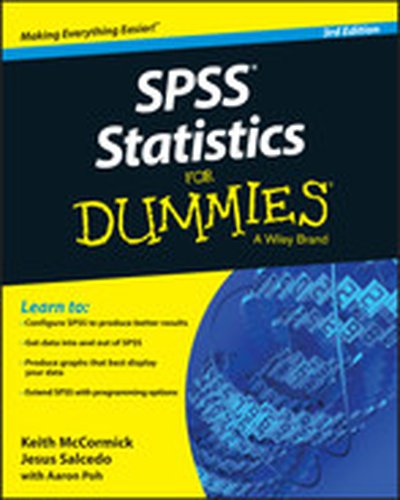
SPSS Statistics for Dummies, 3rd Edition

The ultimate beginner's guide to SPSS and statistical analysis SPSS Statistics For Dummies is the fun and friendly guide to mastering SPSS. This book contains everything you need to know to get up and running quickly with this industry-leading software, with clear, helpful guidance on working with both the software and your data. Every chapter of this new edition has been updated with screenshots and steps that align with SPSS 23.0. You'll learn how to set up the software and organize your workflow, then delve deep into analysis to discover the power of SPSS capabilities. You'll discover the mechanics behind the calculations, perform predictive analysis, produce informative graphs, and maximize your data, even if it's been awhile since your last statistics class. SPSS is the leading statistical software for social sciences, marketing, health care, demography, government, education, data mining, and more. This powerful package gives you the tools you need to get more out of your data, and this book is your beginner-friendly guide to getting the most out of the software. Install and configure SPSS and learn the basics of how it works Master the process of getting data into SPSS and manipulating it to produce results See how to display data in dozens of different graphic formats to fit specific needs Make SPSS manufacture the numbers you want and take advantage of the many analysis options Discover ways to customize the SPSS interface and the look of your results, edit graphics and pivot tables, and program SPSS with Command Syntax Statistical analysis is crucial to so many industries, and accuracy and efficiency are crucial. SPSS offers you the capability to deliver, but you still must know how to take utmost advantage of the tools at your fingertips. SPSS Statistics For Dummies shows you how to handle data like a pro, with step-by-step instruction and expert advice.

Designing and Conducting Survey Research: A Comprehensive Guide, 4th Edition

The industry standard guide, updated with new ideas and SPSS analysis techniques Designing and Conducting Survey Research: A Comprehensive Guide Fourth Edition is the industry standard resource that covers all major components of the survey process, updated to include new data analysis techniques and SPSS procedures with sample data sets online. The book offers practical, actionable guidance on constructing the instrument, administrating the process, and analyzing and reporting the results, providing extensive examples and worksheets that demonstrate the appropriate use of survey and data techniques. By clarifying complex statistical concepts and modern analysis methods, this guide enables readers to conduct a survey research project from initial focus concept to the final report. Public and nonprofit managers with survey research responsibilities need to stay up-to-date on the latest methods, techniques, and best practices for optimal data collection, analysis, and reporting. Designing and Conducting Survey Research is a complete resource, answering the "what", "why", and "how" every step of the way, and providing the latest information about technological advancements in data analysis. The updated fourth edition contains step-by-step SPSS data entry and analysis procedures, as well as SPSS examples throughout the text, using real data sets from real-world studies. Other new information includes topics like: Nonresponse error/bias Ethical concerns and special populations Cell phone samples in telephone surveys Subsample screening and complex skip patterns The fourth edition also contains new information on the growing importance of focus groups, and places a special emphasis on data quality including size and variability. Those who employ survey research methods will find that Designing and Conducting Survey Research contains all the information needed to better design, conduct, and analyze a more effective survey.

Nonparametric Statistics: A Step-by-Step Approach, 2nd Edition

"...a very useful resource for courses in nonparametric statistics in which the emphasis is on applications rather than on theory. It also deserves a place in libraries of all institutions where introductory statistics courses are taught." -CHOICE This Second Edition presents a practical and understandable approach that enhances and expands the statistical toolset for readers. This book includes: New coverage of the sign test and the Kolmogorov-Smirnov two-sample test in an effort to offer a logical and natural progression to statistical power SPSS (Version 21) software and updated screen captures to demonstrate how to perform and recognize the steps in the various procedures Data sets and odd-numbered solutions provided in an appendix, and tables of critical values Supplementary material to aid in reader comprehension, which includes: narrated videos and screen animations with step-by-step instructions on how to follow the tests using SPSS; online decision trees to help users determine the needed type of statistical test; and additional solutions not found within the book.

IBM InfoSphere Streams: Accelerating Deployments with Analytic Accelerators

This IBM® Redbooks® publication describes visual development, visualization, adapters, analytics, and accelerators for IBM InfoSphere® Streams (V3), a key component of the IBM Big Data platform. Streams was designed to analyze data in motion, and can perform analysis on incredibly high volumes with high velocity, using a wide variety of analytic functions and data types. The Visual Development environment extends Streams Studio with drag-and-drop development, provides round tripping with existing text editors, and is ideal for rapid prototyping. Adapters facilitate getting data in and out of Streams, and V3 supports WebSphere MQ, Apache Hadoop Distributed File System, and IBM InfoSphere DataStage. Significant analytics include the native Streams Processing Language, SPSS Modeler analytics, Complex Event Processing, TimeSeries Toolkit for machine learning and predictive analytics, Geospatial Toolkit for location-based applications, and Annotation Query Language for natural language processing applications. Accelerators for Social Media Analysis and Telecommunications Event Data Analysis sample programs can be modified to build production level applications. Want to learn how to analyze high volumes of streaming data or implement systems requiring high performance across nodes in a cluster? Then this book is for you. Please note that the additional material referenced in the text is not available from IBM.