talk-data.com talk-data.com

Topic

statistics

512

tagged

Activity Trend

1 peak/qtr
2020-Q1 2026-Q1

Activities

512 activities · Newest first

Applied Logistic Regression, 3rd Edition

A new edition of the definitive guide to logistic regression modeling for health science and other applications This thoroughly expanded Third Edition provides an easily accessible introduction to the logistic regression (LR) model and highlights the power of this model by examining the relationship between a dichotomous outcome and a set of covariables. Applied Logistic Regression, Third Edition emphasizes applications in the health sciences and handpicks topics that best suit the use of modern statistical software. The book provides readers with state-of-the-art techniques for building, interpreting, and assessing the performance of LR models. New and updated features include: A chapter on the analysis of correlated outcome data A wealth of additional material for topics ranging from Bayesian methods to assessing model fit Rich data sets from real-world studies that demonstrate each method under discussion Detailed examples and interpretation of the presented results as well as exercises throughout Applied Logistic Regression, Third Edition is a must-have guide for professionals and researchers who need to model nominal or ordinal scaled outcome variables in public health, medicine, and the social sciences as well as a wide range of other fields and disciplines.

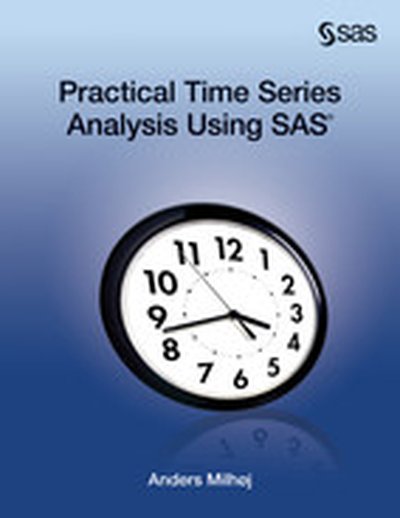
Practical Time Series Analysis Using SAS

Anders Milhøj's Practical Time Series Analysis Using SAS explains and demonstrates through examples how you can use SAS for time series analysis. It offers modern procedures for forecasting, seasonal adjustments, and decomposition of time series that can be used without involved statistical reasoning. The book teaches, with numerous examples, how to apply these procedures with very simple coding. In addition, it also gives the statistical background for interested readers. Beginning with an introductory chapter that covers the practical handling of time series data in SAS using the TIMESERIES and EXPAND procedures, it goes on to explain forecasting, which is found in the ESM procedure; seasonal adjustment, including trading-day correction using PROC X12; and unobserved component models using the UCM procedure.

This book is part of the SAS Press program.

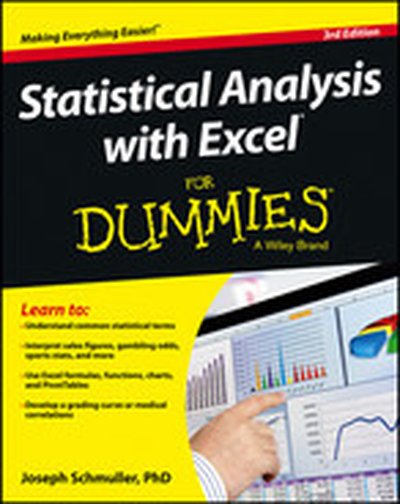
Statistical Analysis with Excel For Dummies, 3rd Edition

Take the mystery out of statistical terms and put Excel to work! If you need to create and interpret statistics in business or classroom settings, this easy-to-use guide is just what you need. It shows you how to use Excel's powerful tools for statistical analysis, even if you've never taken a course in statistics. Learn the meaning of terms like mean and median, margin of error, standard deviation, and permutations, and discover how to interpret the statistics of everyday life. You'll learn to use Excel formulas, charts, PivotTables, and other tools to make sense of everything from sports stats to medical correlations. Statistics have a reputation for being challenging and math-intensive; this friendly guide makes statistical analysis with Excel easy to understand Explains how to use Excel to crunch numbers and interpret the statistics of everyday life: sales figures, gambling odds, sports stats, a grading curve, and much more Covers formulas and functions, charts and PivotTables, samples and normal distributions, probabilities and related distributions, trends, and correlations Clarifies statistical terms such as median vs. mean, margin of error, standard deviation, correlations, and permutations Statistical Analysis with Excel For Dummies, 3rd Edition helps you make sense of statistics and use Excel's statistical analysis tools in your daily life.

Statistical Methods with Applications to Demography and Life Insurance

Suitable for statisticians, mathematicians, actuaries, and students interested in the problems of insurance and analysis of lifetimes, this book presents contemporary statistical techniques for analyzing life distributions and life insurance problems. It mainly focuses on the analysis of an individual life and describes statistical methods based on empirical and related processes. The text not only contains traditional material but also incorporates new problems and techniques not discussed in existing actuarial literature. Coverage ranges from analyzing the tails of distributions of lifetimes to modeling population dynamics with migrations.

Solutions Manual to Accompany Introduction to Linear Regression Analysis, 5th Edition

As the Solutions Manual, this book is meant to accompany the main title, Introduction to Linear Regression Analysis, Fifth Edition. Clearly balancing theory with applications, this book describes both the conventional and less common uses of linear regression in the practical context of today's mathematical and scientific research. Beginning with a general introduction to regression modeling, including typical applications, the book then outlines a host of technical tools that form the linear regression analytical arsenal, including: basic inference procedures and introductory aspects of model adequacy checking; how transformations and weighted least squares can be used to resolve problems of model inadequacy; how to deal with influential observations; and polynomial regression models and their variations. The book also includes material on regression models with autocorrelated errors, bootstrapping regression estimates, classification and regression trees, and regression model validation.

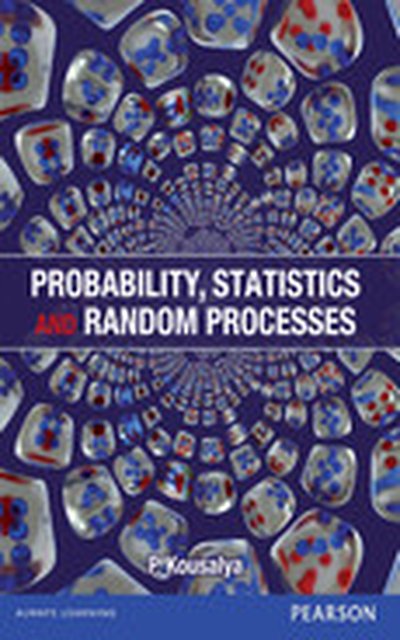
Probability, Statistics and Random Processes

Probability, Statistics and Random Processes is designed to meet the requirements of students and is intended for beginners to help them understand the concepts from the first principles. Spread across 16 chapters, it discusses the theoretical aspects that have been refined and updated to reflect the current developments in the subjects. It expounds on theoretical concepts that have immense practical applications, giving adequate proofs to establish significant theorems.

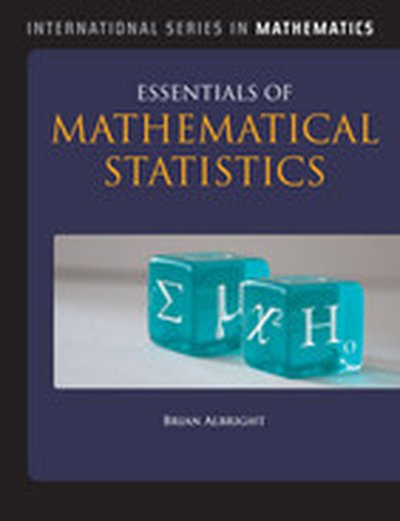
Essentials of Mathematical Statistics

Part of the Jones and Bartlett Learning International Series in Mathematics

Written for the one-term introductory probability and statistics course for mid- to upper-level math and science majors, Essentials of Mathematical Statistics combines the topics generally found in main-stream elementary statistics books with the essentials of the underlying theory. The book begins with an axiomatic treatment of probability followed by chapters on discrete and continuous random variables and their associated distributions. It then introduces basic statistical concepts including summarizing data and interval parameter estimation, stressing the connection between probability and statistics. Final chapters introduce hypothesis testing, regression, and non-parametric techniques. All chapters provide a balance between conceptual understanding and theoretical understanding of the topics at hand.

Key Features of Essentials of Mathematical Statistics:

  • End-of-section exercises range from computational to conceptual to theoretical.
  • Many sections include a sub-section titled “Software Calculations” which gives detailed descriptions of how to perform the calculations discussed in the section using the software Minitab, R, Excel, and the TI-83/84 calculators.
  • Provides a clear balance between conceptual understanding and theoretical understanding
  • Exercises throughout vary in level of difficulty and scope.
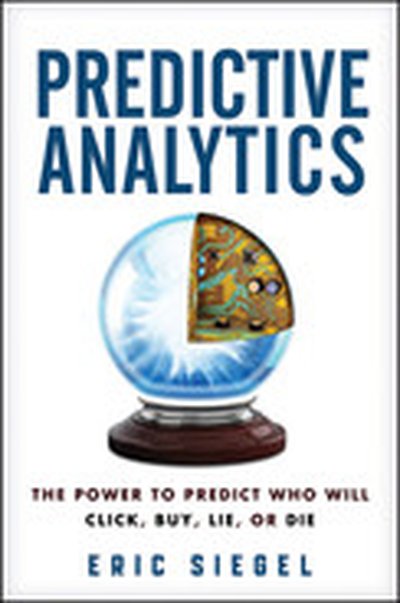
Predictive Analytics: The Power to Predict Who Will Click, Buy, Lie, or Die

"The Freakonomics of big data." —Stein Kretsinger, founding executive of Advertising.com; former lead analyst at Capital One This book is easily understood by all readers. Rather than a "how to" for hands-on techies, the book entices lay-readers and experts alike by covering new case studies and the latest state-of-the-art techniques. You have been predicted — by companies, governments, law enforcement, hospitals, and universities. Their computers say, "I knew you were going to do that!" These institutions are seizing upon the power to predict whether you're going to click, buy, lie, or die. Why? For good reason: predicting human behavior combats financial risk, fortifies healthcare, conquers spam, toughens crime fighting, and boosts sales. How? Prediction is powered by the world's most potent, booming unnatural resource: data. Accumulated in large part as the by-product of routine tasks, data is the unsalted, flavorless residue deposited en masse as organizations churn away. Surprise! This heap of refuse is a gold mine. Big data embodies an extraordinary wealth of experience from which to learn. Predictive analytics unleashes the power of data. With this technology, the computer literally learns from data how to predict the future behavior of individuals. Perfect prediction is not possible, but putting odds on the future — lifting a bit of the fog off our hazy view of tomorrow — means pay dirt. In this rich, entertaining primer, former Columbia University professor and Predictive Analytics World founder Eric Siegel reveals the power and perils of prediction: What type of mortgage risk Chase Bank predicted before the recession. Predicting which people will drop out of school, cancel a subscription, or get divorced before they are even aware of it themselves. Why early retirement decreases life expectancy and vegetarians miss fewer flights. Five reasons why organizations predict death, including one health insurance company. How U.S. Bank, European wireless carrier Telenor, and Obama's 2012 campaign calculated the way to most strongly influence each individual. How IBM's Watson computer used predictive modeling to answer questions and beat the human champs on TV's Jeopardy! How companies ascertain untold, private truths — how Target figures out you're pregnant and Hewlett-Packard deduces you're about to quit your job. How judges and parole boards rely on crime-predicting computers to decide who stays in prison and who goes free. What's predicted by the BBC, Citibank, ConEd, Facebook, Ford, Google, IBM, the IRS, Match.com, MTV, Netflix, Pandora, PayPal, Pfizer, and Wikipedia. A truly omnipresent science, predictive analytics affects everyone, every day. Although largely unseen, it drives millions of decisions, determining whom to call, mail, investigate, incarcerate, set up on a date, or medicate. Predictive analytics transcends human perception. This book's final chapter answers the riddle: What often happens to you that cannot be witnessed, and that you can't even be sure has happened afterward — but that can be predicted in advance? Whether you are a consumer of it — or consumed by it — get a handle on the power of Predictive Analytics.

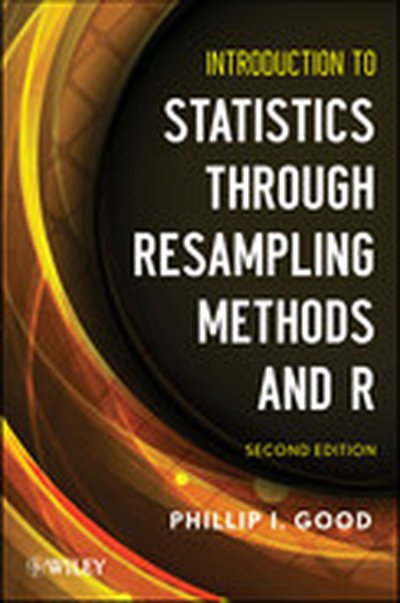
Introduction to Statistics Through Resampling Methods and R, 2nd Edition

A highly accessible alternative approach to basic statistics Praise for the First Edition: "Certainly one of the most impressive little paperback 200-page introductory statistics books that I will ever see . . . it would make a good nightstand book for every statistician."—Technometrics Written in a highly accessible style, Introduction to Statistics through Resampling Methods and R, Second Edition guides students in the understanding of descriptive statistics, estimation, hypothesis testing, and model building. The book emphasizes the discovery method, enabling readers to ascertain solutions on their own rather than simply copy answers or apply a formula by rote. The Second Edition utilizes the R programming language to simplify tedious computations, illustrate new concepts, and assist readers in completing exercises. The text facilitates quick learning through the use of: More than 250 exercises—with selected "hints"—scattered throughout to stimulate readers' thinking and to actively engage them in applying their newfound skills An increased focus on why a method is introduced Multiple explanations of basic concepts Real-life applications in a variety of disciplines Dozens of thought-provoking, problem-solving questions in the final chapter to assist readers in applying statistics to real-life applications Introduction to Statistics through Resampling Methods and R, Second Edition is an excellent resource for students and practitioners in the fields of agriculture, astrophysics, bacteriology, biology, botany, business, climatology, clinical trials, economics, education, epidemiology, genetics, geology, growth processes, hospital administration, law, manufacturing, marketing, medicine, mycology, physics, political science, psychology, social welfare, sports, and toxicology who want to master and learn to apply statistical methods.

Chi-Squared Goodness of Fit Tests with Applications

Chi-Squared Goodness of Fit Tests with Applications provides a thorough and complete context for the theoretical basis and implementation of Pearson’s monumental contribution and its wide applicability for chi-squared goodness of fit tests. The book is ideal for researchers and scientists conducting statistical analysis in processing of experimental data as well as to students and practitioners with a good mathematical background who use statistical methods. The historical context, especially Chapter 7, provides great insight into importance of this subject with an authoritative author team. This reference includes the most recent application developments in using these methods and models. Systematic presentation with interesting historical context and coverage of the fundamentals of the subject Presents modern model validity methods, graphical techniques, and computer-intensive methods Recent research and a variety of open problems Interesting real-life examples for practitioners

A First Course in Probability and Markov Chains

Provides an introduction to basic structures of probability with a view towards applications in information technology A First Course in Probability and Markov Chains presents an introduction to the basic elements in probability and focuses on two main areas. The first part explores notions and structures in probability, including combinatorics, probability measures, probability distributions, conditional probability, inclusion-exclusion formulas, random variables, dispersion indexes, independent random variables as well as weak and strong laws of large numbers and central limit theorem. In the second part of the book, focus is given to Discrete Time Discrete Markov Chains which is addressed together with an introduction to Poisson processes and Continuous Time Discrete Markov Chains. This book also looks at making use of measure theory notations that unify all the presentation, in particular avoiding the separate treatment of continuous and discrete distributions. A First Course in Probability and Markov Chains: Presents the basic elements of probability. Explores elementary probability with combinatorics, uniform probability, the inclusion-exclusion principle, independence and convergence of random variables. Features applications of Law of Large Numbers. Introduces Bernoulli and Poisson processes as well as discrete and continuous time Markov Chains with discrete states. Includes illustrations and examples throughout, along with solutions to problems featured in this book. The authors present a unified and comprehensive overview of probability and Markov Chains aimed at educating engineers working with probability and statistics as well as advanced undergraduate students in sciences and engineering with a basic background in mathematical analysis and linear algebra.

Demand and Supply Integration: The Key to World-Class Demand Forecasting

Supply chain professionals: master pioneering techniques for integrating demand and supply, and create demand forecasts that are far more accurate and useful! In Demand and Supply Integration, Dr. Mark Moon presents the specific design characteristics of a world-class demand forecasting management process, showing how to effectively integrate demand forecasting within a comprehensive Demand and Supply Integration (DSI) process. Writing for supply chain professionals in any business, government agency, or military procurement organization, Moon explains what DSI is, how it differs from approaches such as SandOP, and how to recognize the symptoms of failures to sufficiently integrate demand and supply. He outlines the key characteristics of successful DSI implementations, shows how to approach Demand Forecasting as a management process, and guides you through understanding, selecting, and applying the best available qualitative and quantitative forecasting techniques. You'll learn how to thoroughly reflect market intelligence in your forecasts; measure your forecasting performance; implement state-of-the-art demand forecasting systems; manage Demand Reviews, and much more. For wide audiences of supply chain, logistics, and operations management professionals at all levels, from analyst and manager to Director, Vice President, and Chief Supply Chain Officer; and for researchers and graduate students in the field.

Analysis and Probability

Probability theory is a rapidly expanding field and is used in many areas of science and technology. Beginning from a basis of abstract analysis, this mathematics book develops the knowledge needed for advanced students to develop a complex understanding of probability. The first part of the book systematically presents concepts and results from analysis before embarking on the study of probability theory. The initial section will also be useful for those interested in topology, measure theory, real analysis and functional analysis. The second part of the book presents the concepts, methodology and fundamental results of probability theory. Exercises are included throughout the text, not just at the end, to teach each concept fully as it is explained, including presentations of interesting extensions of the theory. The complete and detailed nature of the book makes it ideal as a reference book or for self-study in probability and related fields. Covers a wide range of subjects including f-expansions, Fuk-Nagaev inequalities and Markov triples. Provides multiple clearly worked exercises with complete proofs. Guides readers through examples so they can understand and write research papers independently.

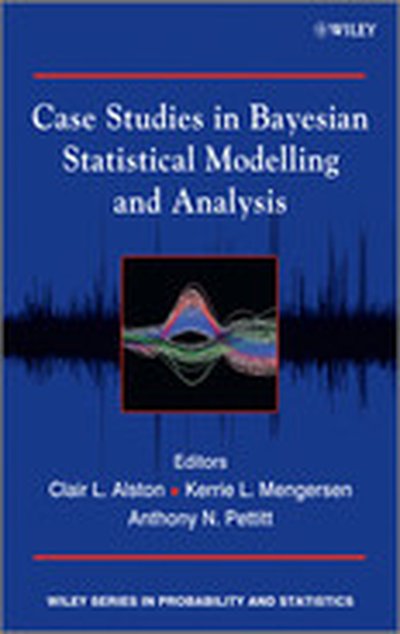
Case Studies in Bayesian Statistical Modelling and Analysis

Provides an accessible foundation to Bayesian analysis using real world models This book aims to present an introduction to Bayesian modelling and computation, by considering real case studies drawn from diverse fields spanning ecology, health, genetics and finance. Each chapter comprises a description of the problem, the corresponding model, the computational method, results and inferences as well as the issues that arise in the implementation of these approaches. Case Studies in Bayesian Statistical Modelling and Analysis: Illustrates how to do Bayesian analysis in a clear and concise manner using real-world problems. Each chapter focuses on a real-world problem and describes the way in which the problem may be analysed using Bayesian methods. Features approaches that can be used in a wide area of application, such as, health, the environment, genetics, information science, medicine, biology, industry and remote sensing. Case Studies in Bayesian Statistical Modelling and Analysis is aimed at statisticians, researchers and practitioners who have some expertise in statistical modelling and analysis, and some understanding of the basics of Bayesian statistics, but little experience in its application. Graduate students of statistics and biostatistics will also find this book beneficial.

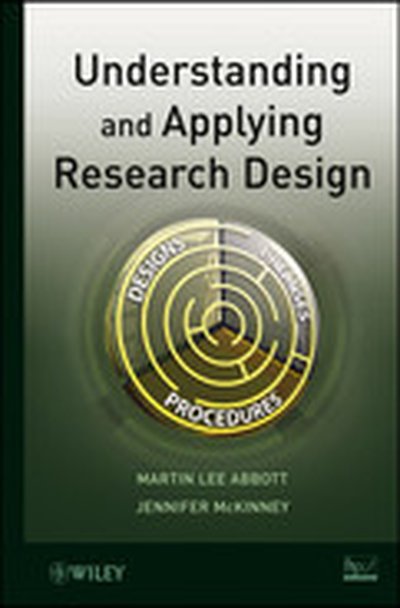
Understanding and Applying Research Design

A fresh approach to bridging research design with statistical analysis While good social science requires both research design and statistical analysis, most books treat these two areas separately. Understanding and Applying Research Design introduces an accessible approach to integrating design and statistics, focusing on the processes of posing, testing, and interpreting research questions in the social sciences. The authors analyze real-world data using SPSS software, guiding readers on the overall process of science, focusing on premises, procedures, and designs of social scientific research. Three clearly organized sections move seamlessly from theoretical topics to statistical techniques at the heart of research procedures, and finally, to practical application of research design: Premises of Research introduces the research process and the capabilities of SPSS, with coverage of ethics, Empirical Generalization, and Chi Square and Contingency Table Analysis Procedures of Research explores key quantitative methods in research design including measurement, correlation, regression, and causation Designs of Research outlines various design frameworks, with discussion of survey research, aggregate research, and experiments Throughout the book, SPSS software is used to showcase the discussed techniques, and detailed appendices provide guidance on key statistical procedures and tips for data management. Numerous exercises allow readers to test their comprehension of the presented material, and a related website features additional data sets and SPSS code. Understanding and Applying Research Design is an excellent book for social sciences and education courses on research methods at the upper-undergraduate level. The book is also an insightful reference for professionals who would like to learn how to pose, test, and interpret research questions with confidence.

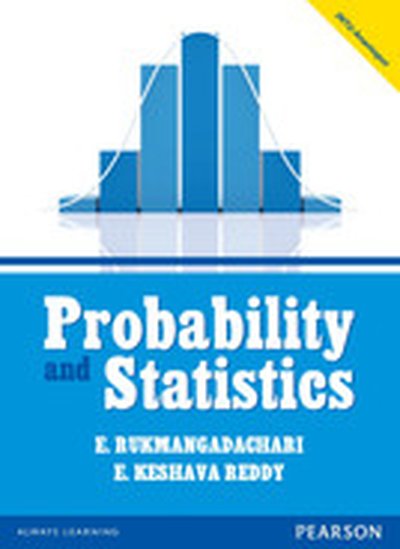
Probability and Statistics by Pearson

This book is designed for engineering students studying the core paper on probability and statistics during their second or third years. It includes detailed explanation of theory with numerous examples and exercises, as well as relevant references to engineering applications. Each also has numerous objective type questions and answers and hints are provided for all the exercise problems and objective type questions.

Book Contents –

  1. Probability
  2. Probability Distribution
  3. Special Distribution
  4. Sampling Distributions
  5. Estimation Theory
  6. Inferences Concerning Means and Proportions
  7. Tests of Significance
  8. Curve Fitting: Regression and Correlation Analysis
  9. Analysis of Variance
  10. Statistical Quality Control
  11. Queueing Theory Appendix A: Test Based on Normal Distributions Appendix B: Statistical Tables Appendix C: Basic Results Additional Solved Problems Index
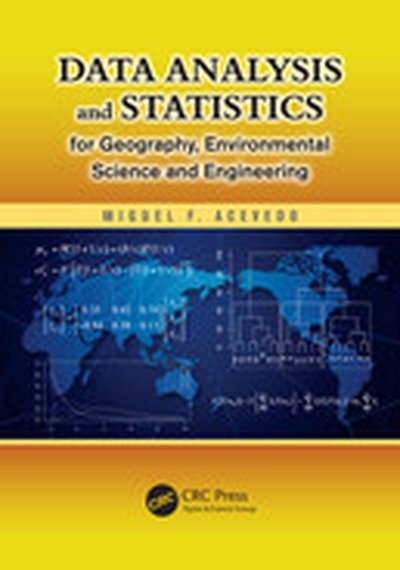
Data Analysis and Statistics for Geography, Environmental Science, and Engineering

Providing a solid foundation for twenty-first-century scientists and engineers, Data Analysis and Statistics for Geography, Environmental Science, and Engineering guides readers in learning quantitative methodology, including how to implement data analysis methods using open-source software. Given the importance of interdisciplinary work in sustainability, the book brings together principles of statistics and probability, multivariate analysis, and spatial analysis methods applicable across a variety of science and engineering disciplines. Learn How to Use a Variety of Data Analysis and Statistics Methods Based on the author’s many years of teaching graduate and undergraduate students, this textbook emphasizes hands-on learning. Organized into two parts, it allows greater flexibility using the material in various countries and types of curricula. The first part covers probability, random variables and inferential statistics, applications of regression, time series analysis, and analysis of spatial point patterns. The second part uses matrix algebra to address multidimensional problems. After a review of matrices, it delves into multiple regression, dependent random processes and autoregressive time series, spatial analysis using geostatistics and spatial regression, discriminant analysis, and a variety of multivariate analyses based on eigenvector methods. Build from Fundamental Concepts to Effective Problem Solving Each chapter starts with conceptual and theoretical material to give a firm foundation in how the methods work. Examples and exercises illustrate the applications and demonstrate how to go from concepts to problem solving. Hands-on computer sessions allow students to grasp the practical implications and learn by doing. Throughout, the computer examples and exercises use seeg and RcmdrPlugin.seeg, open-source R packages developed by the author, which help students acquire the skills to implement and conduct analysis and to analyze the results. This self-contained book offers a unified presentation of data analysis methods for more effective problem solving. With clear, easy-to-follow explanations, the book helps students to develop a solid understanding of basic statistical analysis and prepares them for learning the more advanced and specialized methods they will need in their work.

Bayesian Methods in Health Economics

Health economics is concerned with the study of the cost-effectiveness of health care interventions. This book provides an overview of Bayesian methods for the analysis of health economic data. After an introduction to the basic economic concepts and methods of evaluation, it presents Bayesian statistics using accessible mathematics. The next chapters describe the theory and practice of cost-effectiveness analysis from a statistical viewpoint, and Bayesian computation, notably MCMC. The final chapter presents three detailed case studies covering cost-effectiveness analyses using individual data from clinical trials, evidence synthesis and hierarchical models and Markov models. The text uses WinBUGS and JAGS with datasets and code available online.

Statistics for Economics

Statistics is the branch of mathematics that deals with real-life problems. As such, it is an essential tool for economists. Unfortunately, the way you and many other economists learn the concept of statistics is not compatible with the way economists think and learn. The problem is worsened by the use of mathematical jargon and complex derivations. Here’s a book that proves none of this is necessary. All the examples and exercises in this book are constructed within the field of economics, thus eliminating the difficulty of learning statistics with examples from fields that have no relation to business, politics, or policy. Statistics is, in fact, not more difficult than economics. Anyone who can comprehend economics can understand and use statistics successfully within this field, including you! This book utilizes Microsoft Excel to obtain statistical results, as well as to perform additional necessary computations. Microsoft Excel is not the software of choice for performing sophisticated statistical analysis. However, it is widely available, and almost everyone has some degree of familiarity with it. Using Excel will eliminate the need for students and readers to buy and learn new software, the need that itself would prove to be another impediment to learning and using statistics.