talk-data.com talk-data.com

Topic

statistics

512

tagged

Activity Trend

1 peak/qtr
2020-Q1 2026-Q1

Activities

512 activities · Newest first

Relational Research and Organisation Studies

Relational Research and Organisation Studies does not only present and discuss guidelines for practice at a onto-epistemological level but also presents and discusses concrete cases of research projects building on relational constructionist ideas. Furthermore, excerpts of data are presented and analyzed in order to explain the co-constructed processes of the inquiries more in detail.

SAS for Forecasting Time Series, Third Edition, 3rd Edition

To use statistical methods and SAS applications to forecast the future values of data taken over time, you need only follow this thoroughly updated classic on the subject. With this third edition of SAS for Forecasting Time Series, intermediate-to-advanced SAS users—such as statisticians, economists, and data scientists—can now match the most sophisticated forecasting methods to the most current SAS applications. Starting with fundamentals, this new edition presents methods for modeling both univariate and multivariate data taken over time. From the well-known ARIMA models to unobserved components, methods that span the range from simple to complex are discussed and illustrated. Many of the newer methods are variations on the basic ARIMA structures. Completely updated, this new edition includes fresh, interesting business situations and data sets, and new sections on these up-to-date statistical methods: ARIMA models Vector autoregressive models Exponential smoothing models Unobserved component and state-space models Seasonal adjustment Spectral analysis Focusing on application, this guide teaches a wide range of forecasting techniques by example. The examples provide the statistical underpinnings necessary to put the methods into practice. The following up-to-date SAS applications are covered in this edition: The ARIMA procedure The AUTOREG procedure The VARMAX procedure The ESM procedure The UCM and SSM procedures The X13 procedure The SPECTRA procedure SAS Forecast Studio Each SAS application is presented with explanation of its strengths, weaknesses, and best uses. Even users of automated forecasting systems will benefit from this knowledge of what is done and why. Moreover, the accompanying examples can serve as templates that you easily adjust to fit your specific forecasting needs. This book is part of the SAS Press program.

The Routledge Companion to Trust

Comprising six thematic sections, The Routledge Companion to Trust provides a comprehensive survey of trust research. With contributions from international experts, this volume examines the major topics and emerging areas within the field, including essays on the foundations, levels and theories of trust.

An Introduction to Discrete-Valued Time Series

A much-needed introduction to the field of discrete-valued time series, with a focus on count-data time series Time series analysis is an essential tool in a wide array of fields, including business, economics, computer science, epidemiology, finance, manufacturing and meteorology, to name just a few. Despite growing interest in discrete-valued time series—especially those arising from counting specific objects or events at specified times—most books on time series give short shrift to that increasingly important subject area. This book seeks to rectify that state of affairs by providing a much needed introduction to discrete-valued time series, with particular focus on count-data time series. The main focus of this book is on modeling. Throughout numerous examples are provided illustrating models currently used in discrete-valued time series applications. Statistical process control, including various control charts (such as cumulative sum control charts), and performance evaluation are treated at length. Classic approaches like ARMA models and the Box-Jenkins program are also featured with the basics of these approaches summarized in an Appendix. In addition, data examples, with all relevant R code, are available on a companion website. Provides a balanced presentation of theory and practice, exploring both categorical and integer-valued series Covers common models for time series of counts as well as for categorical time series, and works out their most important stochastic properties Addresses statistical approaches for analyzing discrete-valued time series and illustrates their implementation with numerous data examples Covers classical approaches such as ARMA models, Box-Jenkins program and how to generate functions Includes dataset examples with all necessary R code provided on a companion website An Introduction to Discrete-Valued Time Series is a valuable working resource for researchers and practitioners in a broad range of fields, including statistics, data science, machine learning, and engineering. It will also be of interest to postgraduate students in statistics, mathematics and economics.

Loss Data Analysis

This volume deals with two complementary topics. On one hand the book deals with the problem of determining the the probability distribution of a positive compound random variable, a problem which appears in the banking and insurance industries, in many areas of operational research and in reliability problems in the engineering sciences. On the other hand, the methodology proposed to solve such problems, which is based on an application of the maximum entropy method to invert the Laplace transform of the distributions, can be applied to many other problems. The book contains applications to a large variety of problems, including the problem of dependence of the sample data used to estimate empirically the Laplace transform of the random variable. Contents Introduction Frequency models Individual severity models Some detailed examples Some traditional approaches to the aggregation problem Laplace transforms and fractional moment problems The standard maximum entropy method Extensions of the method of maximum entropy Superresolution in maxentropic Laplace transform inversion Sample data dependence Disentangling frequencies and decompounding losses Computations using the maxentropic density Review of statistical procedures

Regression Analysis with R

Dive into the world of regression analysis with this hands-on guide that covers everything you need to know about building effective regression models in R. You'll learn both the theoretical foundations and how to apply them using practical examples and R code. By the end, you'll be equipped to interpret regression results and use them to make meaningful predictions. What this Book will help me do Master the fundamentals of regression analysis, from simple linear to logistic regression. Gain expertise in R programming for implementing regression models and analyzing results. Develop skills in handling missing data, feature engineering, and exploratory data analysis. Understand how to identify, prevent, and address overfitting and underfitting issues in modeling. Apply regression techniques in real-world applications, including classification problems and advanced methods like Bagging and Boosting. Author(s) Giuseppe Ciaburro is an experienced data scientist and author with a passion for making complex technical topics accessible. With expertise in R programming and regression analysis, he has worked extensively in statistical modeling and data exploration. Giuseppe's writing combines clear explanations of theory with hands-on examples, ideal for learners and practitioners alike. Who is it for? This book is perfect for aspiring data scientists and analysts eager to understand and apply regression analysis using R. It's suited for readers with a foundational knowledge of statistics and basic R programming experience. Whether you're delving into data science or aiming to strengthen existing skills, this book offers practical insights to reach your goals.

Statistical Rethinking

Statistical Rethinking: A Bayesian Course with Examples in R and Stan builds readers’ knowledge of and confidence in statistical modeling. Reflecting the need for even minor programming in today’s model-based statistics, the book pushes readers to perform step-by-step calculations that are usually automated. This unique computational approach ensures that readers understand enough of the details to make reasonable choices and interpretations in their own modeling work. The text presents generalized linear multilevel models from a Bayesian perspective, relying on a simple logical interpretation of Bayesian probability and maximum entropy. It covers from the basics of regression to multilevel models. The author also discusses measurement error, missing data, and Gaussian process models for spatial and network autocorrelation. By using complete R code examples throughout, this book provides a practical foundation for performing statistical inference. Designed for both PhD students and seasoned professionals in the natural and social sciences, it prepares them for more advanced or specialized statistical modeling. Web Resource The book is accompanied by an R package (rethinking) that is available on the author’s website and GitHub. The two core functions (map and map2stan) of this package allow a variety of statistical models to be constructed from standard model formulas.

IBM SPSS Modeler Essentials

Learn how to leverage IBM SPSS Modeler for your data mining and predictive analytics needs in this comprehensive guide. With step-by-step instructions, you'll acquire the skills to import, clean, analyze, and model your data using this robust platform. By the end, you'll be equipped to uncover patterns and trends, enabling data-driven decision-making confidently. What this Book will help me do Understand the fundamentals of data mining and the visual programming interface of IBM SPSS Modeler. Prepare, clean, and preprocess data effectively for analysis and modeling. Build robust predictive models such as decision trees using best practices. Evaluate the performance of your analytical models to ensure accuracy and reliability. Export resulting analyses to apply insights to real-world data projects. Author(s) Keith McCormick and Jesus Salcedo are accomplished professionals in data analytics and statistical modeling. With extensive experience in consulting and teaching, they have guided many in mastering IBM SPSS Modeler through both hands-on workshops and written material. Their approachable teaching style and commitment to clarity ensure accessibility for learners. Who is it for? This book is designed for beginner users of IBM SPSS Modeler who wish to gain practical and actionable skills in data analytics. If you're a data enthusiast looking to explore predictive analytics or a professional eager to discover the insights hidden in your organizational data, this book is for you. A basic understanding of data mining concepts is advantageous but not required. This resource will set any novice on the path toward expert-level comprehension and application.

Analyzing Multidimensional Well-Being

“An indispensable reference for all researchers interested in the measurement of social welfare. . .” —François Bourguignon, Emeritus Professor at Paris School of Economics, Former Chief Economist of the World Bank. “. . .a detailed, insightful, and pedagogical presentation of the theoretical grounds of multidimensional well-being, inequality, and poverty measurement. Any student, researcher, and practitioner interested in the multidimensional approach should begin their journey into such a fascinating theme with this wonderful book.” —François Maniquet, Professor, Catholic University of Louvain, Belgium. A Review of the Multidimensional Approaches to the Measurement of Welfare, Inequality, and Poverty Analyzing Multidimensional Well-Being: A Quantitative Approach offers a comprehensive approach to the measurement of well-being that includes characteristics such as income, health, literacy, and housing. The author presents a systematic comparison of the alternative approaches to the measurement of multidimensional welfare, inequality, poverty, and vulnerability. The text contains real-life applications of some multidimensional aggregations (most of which have been designed by international organizations such as the United Nations Development Program and the Organization for Economic Co-operation and Development) that help to judge the performance of a country in the various dimensions of well-being. The text offers an evaluation of how well a society is doing with respect to achievements of all the individuals in the dimensions considered and clearly investigates how achievements in the dimensions can be evaluated from different perspectives. The author includes a detailed scrutiny of alternative techniques for setting weights to individual dimensional metrics and offers an extensive analysis into both the descriptive and welfare theoretical approaches to the concerned multi-attribute measurement and related issues. This important resource: • Contains a synthesis of multidimensional welfare, inequality, poverty, and vulnerability analysis • Examines aggregations of achievement levels in the concerned dimensions of well-being from various standpoints • Shows how to measure poverty using panel data instead of restricting attention to a single period and when we have imprecise information on dimensional achievements • Argues that multidimensional analysis is intrinsically different from marginal distributions-based analysis Written for students, teachers, researchers, and scholars, Analyzing Multidimensional Well-Being: A Quantitative Approach puts the focus on various approaches to the measurementof the many aspects of well-being and quality of life. Satya R. Chakravarty is a Professor of Economics at the Indian Statistical Institute, Kolkata, India. He is an Editor of Social Choice and Welfare and a member of the Editorial Board of Journal of Economic Inequality.

Statistics for Data Science

Dive into the world of statistics specifically tailored for the needs of data science with 'Statistics for Data Science'. This book guides you from the fundamentals of statistical concepts to their practical application in data analysis, machine learning, and neural networks. Learn with clear explanations and practical R examples to fully grasp statistical methods for data-driven challenges. What this Book will help me do Understand foundational statistical concepts such as variance, standard deviation, and probability. Gain proficiency in using R for programmatically performing statistical computations for data science. Learn techniques for applying statistics in data cleaning, mining, and analysis tasks. Master methods for executing linear regression, regularization, and model assessment. Explore advanced techniques like boosting, SVMs, and neural network applications. Author(s) James D. Miller brings years of experience as a data scientist and educator. He has a deep understanding of how statistics foundationally supports data science and has worked across multiple industries applying these principles. Dedicated to teaching, James simplifies complex statistical concepts into approachable and actionable knowledge for developers aspiring to master data science applications. Who is it for? This book is intended for developers aiming to transition into the field of data science. If you have some basic programming knowledge and a desire to understand statistics essentials for data science applications, this book is designed for you. It's perfect for those who wish to apply statistical methods to practical tasks like data mining and analysis. A prior hands-on experience with R is helpful but not mandatory, as the book explains R methodologies comprehensively.

Measuring Agreement

Presents statistical methodologies for analyzing common types of data from method comparison experiments and illustrates their applications through detailed case studies Measuring Agreement: Models, Methods, and Applications features statistical evaluation of agreement between two or more methods of measurement of a variable with a primary focus on continuous data. The authors view the analysis of method comparison data as a two-step procedure where an adequate model for the data is found, and then inferential techniques are applied for appropriate functions of parameters of the model. The presentation is accessible to a wide audience and provides the necessary technical details and references. In addition, the authors present chapter-length explorations of data from paired measurements designs, repeated measurements designs, and multiple methods; data with covariates; and heteroscedastic, longitudinal, and categorical data. The book also: • Strikes a balance between theory and applications • Presents parametric as well as nonparametric methodologies • Provides a concise introduction to Cohen’s kappa coefficient and other measures of agreement for binary and categorical data • Discusses sample size determination for trials on measuring agreement • Contains real-world case studies and exercises throughout • Provides a supplemental website containing the related datasets and R code Measuring Agreement: Models, Methods, and Applications is a resource for statisticians and biostatisticians engaged in data analysis, consultancy, and methodological research. It is a reference for clinical chemists, ecologists, and biomedical and other scientists who deal with development and validation of measurement methods. This book can also serve as a graduate-level text for students in statistics and biostatistics.

Engineering Biostatistics

Provides a one-stop resource for engineers learning biostatistics using MATLAB® and WinBUGS Through its scope and depth of coverage, this book addresses the needs of the vibrant and rapidly growing bio-oriented engineering fields while implementing software packages that are familiar to engineers. The book is heavily oriented to computation and hands-on approaches so readers understand each step of the programming. Another dimension of this book is in parallel coverage of both Bayesian and frequentist approaches to statistical inference. It avoids taking sides on the classical vs. Bayesian paradigms, and many examples in this book are solved using both methods. The results are then compared and commented upon. Readers have the choice of MATLAB® for classical data analysis and WinBUGS/OpenBUGS for Bayesian data analysis. Every chapter starts with a box highlighting what is covered in that chapter and ends with exercises, a list of software scripts, datasets, and references. Engineering Biostatistics: An Introduction using MATLAB® and WinBUGS also includes: parallel coverage of classical and Bayesian approaches, where appropriate substantial coverage of Bayesian approaches to statistical inference material that has been classroom-tested in an introductory statistics course in bioengineering over several years exercises at the end of each chapter and an accompanying website with full solutions and hints to some exercises, as well as additional materials and examples Engineering Biostatistics: An Introduction using MATLAB® and WinBUGS can serve as a textbook for introductory-to-intermediate applied statistics courses, as well as a useful reference for engineers interested in biostatistical approaches.

Research Methodology

This book offers a standardized approach for research aspirants working in the various areas. At the same time, all the major topics in social research have also been detailed thoroughly which makes this book a very good frame of study for students and researchers in diverse fields. This book charts new and evolving terrain of social research by covering qualitative, quantitative and mixed approach. The chapters has extensive number of case studies that help researchers to understand practical implications of the research and includes plenty of diagrammatic representations for easy understanding of various theories and procedures. Each phase of research is explained in detail so that even beginners can also effectively utilize this book. It is written in a highly interactive manner, which makes for an interesting read. Templates of technical report, business report and research reports are also included in the book. This provides the reader with a hands-on experience.

Statistics for Process Control Engineers

The first statistics guide focussing on practical application to process control design and maintenance Statistics for Process Control Engineers is the only guide to statistics written by and for process control professionals. It takes a wholly practical approach to the subject. Statistics are applied throughout the life of a process control scheme – from assessing its economic benefit, designing inferential properties, identifying dynamic models, monitoring performance and diagnosing faults. This book addresses all of these areas and more. The book begins with an overview of various statistical applications in the field of process control, followed by discussions of data characteristics, probability functions, data presentation, sample size, significance testing and commonly used mathematical functions. It then shows how to select and fit a distribution to data, before moving on to the application of regression analysis and data reconciliation. The book is extensively illustrated throughout with line drawings, tables and equations, and features numerous worked examples. In addition, two appendices include the data used in the examples and an exhaustive catalogue of statistical distributions. The data and a simple-to-use software tool are available for download. The reader can thus reproduce all of the examples and then extend the same statistical techniques to real problems. Takes a back-to-basics approach with a focus on techniques that have immediate, practical, problem-solving applications for practicing engineers, as well as engineering students Shows how to avoid the many common errors made by the industry in applying statistics to process control Describes not only the well-known statistical distributions but also demonstrates the advantages of applying the large number that are less well-known Inspires engineers to identify new applications of statistical techniques to the design and support of control schemes Provides a deeper understanding of services and products which control engineers are often tasked with assessing This book is a valuable professional resource for engineers working in the global process industry and engineering companies, as well as students of engineering. It will be of great interest to those in the oil and gas, chemical, pulp and paper, water purification, pharmaceuticals and power generation industries, as well as for design engineers, instrument engineers and process technical support.

Biostatistics Using JMP

Analyze your biostatistics data with JMP! Trevor Bihl's Biostatistics Using JMP: A Practical Guide provides a practical introduction on using JMP, the interactive statistical discovery software, to solve biostatistical problems. Providing extensive breadth, from summary statistics to neural networks, this essential volume offers a comprehensive, step-by-step guide to using JMP to handle your data. The first biostatistical book to focus on software, Biostatistics Using JMP discusses such topics as data visualization, data wrangling, data cleaning, histograms, box plots, Pareto plots, scatter plots, hypothesis tests, confidence intervals, analysis of variance, regression, curve fitting, clustering, classification, discriminant analysis, neural networks, decision trees, logistic regression, survival analysis, control charts, and metaanalysis. Written for university students, professors, those who perform biological/biomedical experiments, laboratory managers, and research scientists, Biostatistics Using JMP provides a practical approach to using JMP to solve your biostatistical problems.

Practical Time Series Analysis

Discover how to unlock the secrets of time-series data with "Practical Time Series Analysis". With a focus on hands-on learning, this book takes you on a journey through time series data processing, visualization, and modeling. Gain the technical expertise and confidence to tackle real-world datasets using Python. What this Book will help me do Understand the fundamental principles of time series analysis and their application to real-world datasets. Learn to utilize Python for data preparation, visualization, and processing in the context of time series. Master the techniques of evaluating and addressing common challenges such as non-stationarity and autocorrelation. Apply statistical methods and machine learning models, including ARIMA and deep learning approaches, to forecasting tasks. Develop practical skills to implement and deploy end-to-end predictive models for time series data analysis. Author(s) PKS Prakash and Avishek Pal bring decades of combined experience in data science and analytics. Their meticulous approach toward simplifying complex concepts makes learning time series approachable and engaging. Drawing from their professional expertise, they incorporate extensive examples to merge theory with practice. Who is it for? This book is ideal for data scientists and engineers keen on enhancing their abilities to analyze temporal data. Prior knowledge in Python and basic statistics will help you gain the most from this book. Whether advancing your career or solving practical problems, you'll find invaluable insights here.

Data Analysis with IBM SPSS Statistics

"Data Analysis with IBM SPSS Statistics" is a comprehensive guide designed to help you master IBM SPSS Statistics for performing robust statistical analyses. Through a practical approach, the book delves into critical techniques like data visualization, regression analysis, and hypothesis testing, enabling you to uncover patterns, make informed decisions, and enhance data interpretation. What this Book will help me do Set up and configure IBM SPSS Statistics for effective data analysis workflows. Perform data cleaning and preparation, including addressing missing data and restructuring datasets. Master statistical techniques such as ANOVA, regression analysis, and clustering to draw insights from data. Generate intuitive visualizations like charts and graphs to communicate findings effectively. Build predictive models and evaluate their effectiveness for decision-making purposes. Author(s) Ken Stehlik-Barry and Anthony Babinec are seasoned data analysts and IBM SPSS experts with extensive experience in statistical methodologies and data science. They have a knack for translating complex concepts into accessible lessons, making this book an ideal resource for learners aiming to build their SPSS aptitude. Their expertise ensures a well-rounded learning journey. Who is it for? This book is tailored for data analysts and researchers who need to analyze and interpret data effectively using IBM SPSS Statistics. Readers should have basic familiarity with statistical concepts, making it ideal for those with a foundational understanding of statistics. If you aim to grasp practical applications of SPSS for real-world data challenges, this book is for you.

Statistical Process Control for Managers, Second Edition

If you have been frustrated by very technical statistical process control (SPC) training materials, then this is the book for you. This book focuses on how SPC works and why managers should consider using it in their operations. It provides you with a conceptual understanding of SPC so that appropriate decisions can be made about the benefits of incorporating SPC into the process management and quality improvement processes. Today there is little need to make the necessary calculations by hand, so the author utilizes Minitab and NWA Quality Analyst—two of the most popular statistical analysis software packages on the market. Links are provided to the home pages of these software packages where trial versions may be downloaded for evaluation and trial use. The book also addresses the question of why SPC should be considered for use, the process of implementing SPC, how to incorporate SPC into problem identification, problem solving, and the management and improvement of processes, products, and services.

Bayesian Psychometric Modeling

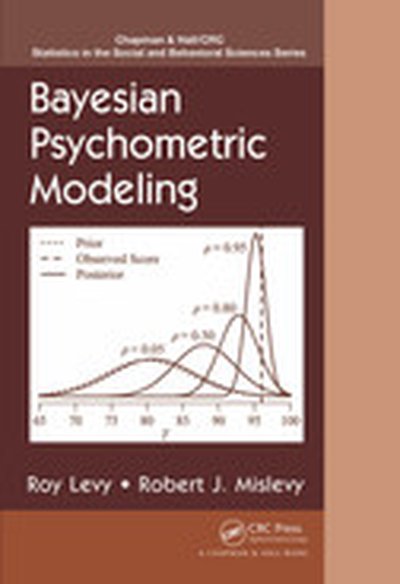
This book presents a unified Bayesian approach across traditionally separate families of psychometric models. It shows that Bayesian techniques, as alternatives to conventional approaches, offer distinct and profound advantages in achieving many goals of psychometrics. The book covers foundational principles and statistical models as well as popular psychometric models. Throughout the text, procedures are illustrated using examples primarily from educational assessments. A supplementary website provides the datasets, WinBUGS code, R code, and Netica files used in the examples.