talk-data.com talk-data.com

Event

O'Reilly Data Engineering Books

2001-10-19 – 2027-05-25 Oreilly Visit website ↗

Activities tracked

499

Collection of O'Reilly books on Data Engineering.

Filtering by: Cloud Computing ×

Sessions & talks

Showing 401–425 of 499 · Newest first

Search within this event →
Data: Emerging Trends and Technologies

What are the emerging trends and technologies that will transform the data landscape in coming months? In this report from Strata + Hadoop World co-chair Alistair Croll, you'll learn how the ubiquity of cheap sensors, fast networks, and distributed computing have given rise to several developments that will soon have a profound effect on individuals and society as a whole. Machine learning, for example, has quickly moved from lab tool to hosted, pay-as-you-go services in the cloud. Those services, in turn, are leading to predictive apps that will provide individuals with the right functionality and content at the right time by continuously learning about them and predicting what they'll need. Computational power can produce cognitive augmentation. Report topics include: The swing between centralized and distributed computing Machine learning as a service Personal digital assistants and cognitive augmentation Graph databases and analytics Regulating complex algorithms The pace of real-time data and automation Solving dire problems with big data Implications of having sensors everywhere This report contains many more examples of how big data is starting to reshape business and change behavior, and it's just a small sample of the in-depth information Strata + Hadoop World provides. Pick up this report and make plans to attend one of several Strata + Hadoop World conferences in the San Francisco Bay Area, London, and New York.
Learning Hadoop 2

Delve into the world of big data with 'Learning Hadoop 2', a comprehensive guide to leveraging the capabilities of Hadoop 2 for data processing and analysis. In this book, you will explore the tools and frameworks that integrate with Hadoop, discovering the best ways to design and deploy effective workflows for managing and analyzing large datasets. What this Book will help me do Understand the fundamentals of the MapReduce framework and its applications. Utilize advanced tools such as Samza and Spark for real-time and iterative data processing. Manage large datasets with data mining techniques tailored for Hadoop environments. Deploy Hadoop applications across various infrastructures, including local clusters and cloud services. Create and orchestrate sophisticated data workflows and pipelines with Apache Pig and Oozie. Author(s) Gabriele Modena is an experienced developer and trained data specialist with a keen focus on distributed data processing frameworks. Having worked extensively with big data platforms, Gabriele brings practical insights and a hands-on perspective to technical subjects. His writing is concise and engaging, aiming to render complex concepts accessible. Who is it for? This book is ideal for system and application developers eager to learn practical implementations of the Hadoop framework. Readers should be familiar with the Unix/Linux command-line interface and Java programming. Prior experience with Hadoop will be advantageous, but not necessary.

Extend Microsoft Access Applications to the Cloud

Learn how to create an Access web app, and move your database into the cloud. This practical book shows you how to design an Access web app for Microsoft Office 365, and convert existing Access desktop databases to a web app as well. You’ll quickly learn your way around the web app design environment, including how to capitalize on its strengths and avoid the pitfalls. You don’t need any special web skills to get started. Discover how to: Make your desktop database compatible with web app table structures Create tables, views, and queries Customize the table selector and work with popup views to provide a navigation interface Implement business rules using the Macro Programming Tools Develop using Office 365 and SharePoint 2013 Use SQL Azure to investigate how your web app is structured Design, test, and troubleshoot Data Macros Understand how security links between a web app and Office 365 Deploy a public facing web app on your Office 365 public website

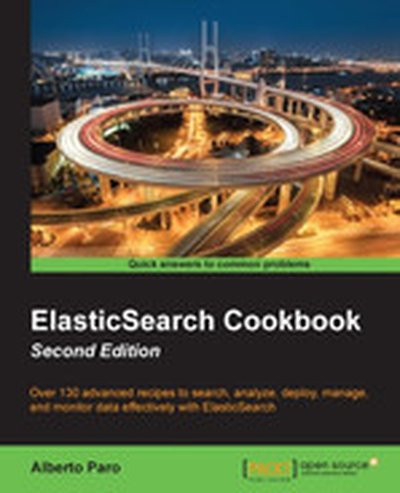
ElasticSearch Cookbook - Second Edition

The "ElasticSearch Cookbook - Second Edition" is a hands-on guide featuring over 130 advanced recipes to help you harness the power of ElasticSearch, a leading search and analytics engine. Through insightful examples and practical guidance, you'll learn to implement efficient search solutions, optimize queries, and manage ElasticSearch clusters effectively. What this Book will help me do Design and configure ElasticSearch topologies optimized for your specific deployment needs. Develop and utilize custom mappings to optimize your data indexes. Execute advanced queries and filters to refine and retrieve search results effectively. Set up and monitor ElasticSearch clusters for optimal performance. Extend ElasticSearch capabilities through plugin development and integrations using Java and Python. Author(s) Alberto Paro is a technology expert with years of experience working with ElasticSearch, Big Data solutions, and scalable cloud architecture. He has authored multiple books and technical articles on ElasticSearch, leveraging his extensive knowledge to provide practical insights. His approachable and detail-oriented style makes complex concepts accessible to technical professionals. Who is it for? This book is best suited for software developers and IT professionals looking to use ElasticSearch in their projects. Readers should be familiar with JSON, as well as basic programming skills in Java. It is ideal for those who have an understanding of search applications and want to deepen their expertise. Whether you're integrating ElasticSearch into a web application or optimizing your system's search capabilities, this book will provide the skills and knowledge you need.

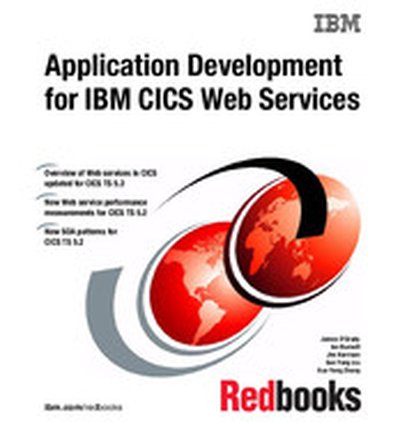
Application Development for IBM CICS Web Services

This IBM® Redbooks® publication focuses on developing Web service applications in IBM CICS®. It takes the broad view of developing and modernizing CICS applications for XML, Web services, SOAP, and SOA support, and lays out a reference architecture for developing these kinds of applications. We start by discussing Web services in general, then review how CICS implements Web services. We offer an overview of different development approaches: bottom-up, top-down, and meet-in-the-middle. We then look at how you would go about exposing a CICS application as a Web service provider, again looking at the different approaches. The book then steps through the process of creating a CICS Web service requester. We follow this by looking at CICS application aggregation (including 3270 applications) with IBM Rational® Application Developer for IBM System z® and how to implement CICS Web Services using CICS Cloud technology. The first part is concluded with hints and tips to help you when implementing this technology. Part two of this publication provides performance figures for a basic Web service. We investigate some common variables and examine their effects on the performance of CICS as both a requester and provider of Web services.

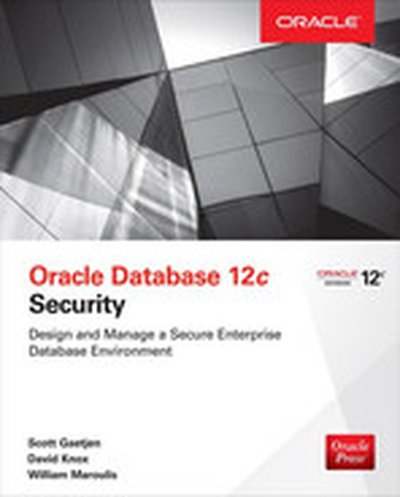
Oracle Database 12c Security

Best Practices for Comprehensive Oracle Database Security Written by renowned experts from Oracle's National Security Group, Oracle Database 12c Security provides proven techniques for designing, implementing, and certifying secure Oracle Database systems in a multitenant architecture. The strategies are also applicable to standalone databases. This Oracle Press guide addresses everything from infrastructure to audit lifecycle and describes how to apply security measures in a holistic manner. The latest security features of Oracle Database 12c are explored in detail with practical and easy-to-understand examples. Connect users to databases in a secure manner Manage identity, authentication, and access control Implement database application security Provide security policies across enterprise applications using Real Application Security Control data access with Oracle Virtual Private Database Control sensitive data using data redaction and transparent sensitive data protection Control data access with Oracle Label Security Use Oracle Database Vault and Transparent Data Encryption for compliance, cybersecurity, and insider threats Implement auditing technologies, including Unified Audit Trail Manage security policies and monitor a secure database environment with Oracle Enterprise Manager Cloud Control

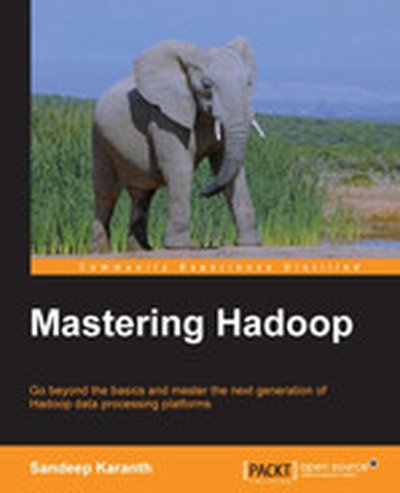
Mastering Hadoop

Embark on a journey to master Hadoop and its advanced features with this comprehensive book. "Mastering Hadoop" equips you with the knowledge needed to tackle complex data processing challenges and optimize your Hadoop workflows. With clear explanations and practical examples, this book is your guide to becoming proficient in leveraging Hadoop technologies. What this Book will help me do Optimize Hadoop MapReduce jobs, Pig scripts, and Hive queries for better performance. Understand and employ advanced data formats and Hadoop I/O techniques. Learn to integrate low-latency processing with Storm on YARN. Explore the cloud deployment of Hadoop and advanced HDFS alternatives. Enhance Hadoop security and master techniques for analytics using Hadoop. Author(s) None Karanth is an experienced Hadoop professional with years of expertise in data processing and distributed computing. With a practical and methodical approach, None has crafted this book to empower learners with the essentials and advanced features of Hadoop. None's focus on performance optimization and real-world applications helps bridge the gap between theory and practice. Who is it for? This book is ideal for data engineers and software developers familiar with the basics of Hadoop who seek to advance their understanding. If you aim to enhance Hadoop performance or adopt new features like YARN and Storm, this book is for you. Readers interested in Hadoop deployment, optimization, and newer capabilities will also greatly benefit. It's perfect for anyone aiming to become a Hadoop expert, from intermediate learners to advanced practitioners.

Cloud Enabling IBM CICS

This IBM® Redbooks® publication takes an existing IBM 3270-COBOL-VSAM application and describes how to use the features of IBM Customer Information Control System (CICS®) Transaction Server (CICS TS) cloud enablement. Working with the General Insurance Application (GENAPP) as an example, this book describes the steps needed to monitor both platform and application health using the CICS Explorer CICS Cloud perspective. It also shows you how to apply threshold policy and measure resource usage, all without source code changes to the original application. In addition, this book describes how to use multi-versioning to safely and reliably apply and back out application changes. This Redbooks publication includes instructions about the following topics: How to create a CICS TS platform to manage and reflect the health of a set of CICS TS regions, and the services that they provide to applications How to quickly get value from CICS TS applications, by creating and deploying a CICS TS application for an existing user application How to protect your CICS TS platform from erroneous applications by using threshold policies How to deploy and run multiple versions of the same CICS TS application on the same CICS TS platform at the same time, enabling a safer migration from one application version to another, with no downtime How to measure application resource usage, enabling a comparison of the performance of different application versions, and chargeback based on application use

Expert Oracle Database Architecture, Third Edition

" Now in its third edition, this best-selling book continues to bring you some of the best thinking on how to apply Oracle Database to produce scalable applications that perform well and deliver correct results. Tom Kyte and Darl Kuhn share a simple philosophy: "you can treat Oracle as a black box and just stick data into it, or you can understand how it works and exploit it as a powerful computing environment." If you choose the latter, then you’ll find that there are few information management problems that you cannot solve quickly and elegantly. This fully revised third edition covers the developments up to Oracle Database 12 c. Significant new content is included surrounding Oracle's new cloud feature set, and especially the use of pluggable databases. Each feature is taught in a proof-by-example manner, not only discussing what it is, but also how it works, how to implement software using it, and the common pitfalls associated with it. Don’t treat Oracle Database as a black-box. Get this book. Get under the hood. Turbo-charge your career. Revised to cover Oracle Database 12 c Proof-by-example approach: Let the evidence be your guide Dives deeply into Oracle Database’s most powerful features"

IBM XIV Storage System Architecture and Implementation

This IBM® Redbooks® publication describes the concepts, architecture, and implementation of the IBM XIV® Storage System. The XIV Storage System is a scalable enterprise storage system that is based on a grid array of hardware components. It can attach to both Fibre Channel Protocol (FCP) and IP network Small Computer System Interface (iSCSI) capable hosts. This system is a good fit for clients who want to be able to grow capacity without managing multiple tiers of storage. The XIV Storage System is suited for mixed or random access workloads, including online transaction processing, video streamings, images, email, and emerging workload areas, such as Web 2.0 and cloud storage. The focus of this edition is on the XIV Gen3 running Version 11.5 of the XIV system software, which brings enhanced value for the XIV Storage System in cloud environments. It offers multitenancy support, VMware vCloud Suite integration, more discrete performance classes, and RESTful API enhancements that expand cloud automation integration. Version 11.5 introduces support for three-site mirroring to provide high availability and disaster recovery. It also enables capacity planning through the Hyper-Scale Manager, mobile push notifications for real-time alerts, and enhanced security. In the first few chapters of this book, we describe many of the unique and powerful concepts that form the basis of the XIV Storage System logical and physical architecture. We explain how the system eliminates direct dependencies between the hardware elements and the software that governs the system. In subsequent chapters, we explain the planning and preparation tasks that are required to deploy the system in your environment by using the intuitive yet powerful XIV Storage Manager GUI or the XIV command-line interface. We also describe the performance characteristics of the XIV Storage System and present options for alerting and monitoring, including enhanced secure remote support. This book is for IT professionals who want an understanding of the XIV Storage System. It is also for readers who need detailed advice on how to configure and use the system.

10 Don'ts on Your Digital Devices: The Non-Techies Survival Guide to Cyber Security and Privacy

In nontechnical language and engaging style, 10 Donts on Your Digital Devices explains to non-techie users of PCs and handheld devices exactly what to do and what not to do to protect their digital data from security and privacy threats at home, at work, and on the road. These include chronic threats such as malware and phishing attacks and emerging threats that exploit cloud-based storage and mobile apps. Its a wonderful thing to be able to use any of your cloud-synced assortment of desktop, portable, mobile, and wearable computing devices to work from home, shop at work, pay in a store, do your banking from a coffee shop, submit your tax returns from the airport, or post your selfies from the Oscars. But with this new world of connectivity and convenience comes a host of new perils for the lazy, the greedy, the unwary, and the ignorant. The 10 Donts cant do much for the lazy and the greedy, but they can save the unwary and the ignorant a world of trouble. 10 Donts employs personal anecdotes and major news stories to illustrate what canand all too often doeshappen when users are careless with their devices and data. Each chapter describes a common type of blunder (one of the 10 Donts), reveals how it opens a particular port of entry to predatory incursions and privacy invasions, and details all the unpleasant consequences that may come from doing a Dont. The chapter then shows you how to diagnose and fix the resulting problems, how to undo or mitigate their costs, and how to protect against repetitions with specific software defenses and behavioral changes. Through ten vignettes told in accessible language and illustrated with helpful screenshots, 10 Donts teaches non-technical readers ten key lessons for protecting your digital security and privacy with the same care you reflexively give to your physical security and privacy, so that you dont get phished, give up your password, get lost in the cloud, look for a free lunch, do secure things from insecure places, let the snoops in, be careless when going mobile, use dinosaurs, or forget the physicalin short, so that you dont trust anyone overanything. Non-techie readers are not unsophisticated readers. They spend much of their waking lives on their devices and are bombarded with and alarmed by news stories of unimaginably huge data breaches, unimaginably sophisticated "advanced persistent threat" activities by criminal organizations and hostile nation-states, and unimaginably intrusive clandestine mass electronic surveillance and data mining sweeps by corporations, data brokers, and the various intelligence and law enforcement arms of our own governments. The authors lift the veil on these shadowy realms, show how the little guy is affected, and what individuals can do to shield themselves from big predators and snoops.

IBM Tivoli Storage Productivity Center V5.2 Release Guide

IBM® Tivoli® Storage Productivity Center V5.2 is a feature-rich storage management software suite. The integrated suite provides detailed monitoring, reporting, and management within a single console. In addition, implementing the IBM SmartCloud® Virtual Storage Center (VSC) license with Tivoli Storage Productivity Center addresses new workloads that require massive scale and rapid pace, and accelerates business insight, by adding advanced analytics functions such as storage optimization, provisioning, and transformation. This IBM Redbooks® publication is intended for storage administrators and users who are installing and using the features and functions in IBM Tivoli Storage Productivity Center V5.2. The information in this Redbooks publication can be used to plan for, install, and customize the components of Tivoli Storage Productivity Center in your storage infrastructure. Note: This IBM Redbooks publication is written and based on Tivoli Storage Productivity Center V5.2.2. Sections in this book that pertain to advanced analytics, including cloud configuration, provisioning, transforming volumes, and storage optimization all require the IBM SmartCloud Virtual Storage Center license to be installed.

Oracle BPM Suite 12c Modeling Patterns

Dive deep into Oracle BPM Suite 12c with this comprehensive guide on workflow automation and modeling patterns. This book equips you with practical knowledge on designing and implementing intricate Business Process Management solutions using Oracle BPM Suite 12c, making complex processes harmonious and effective. What this Book will help me do Master advanced flow control and branching patterns in Oracle BPM Suite 12c. Implement human workflow integration for better interaction within BPM applications. Learn effective handling of process correlation and exceptions for robust solutions. Explore adaptive case management for handling unpredictable business needs. Understand the usage of predictive analysis and KPIs in business processes. Author(s) None Acharya is a seasoned Oracle BPM and IT solutions expert. With years of practical experience in enterprise process management and cloud-based application development, None combines a technical depth with a passion for sharing knowledge. Their approach to writing ensures a balance of theory and actionable insights. Who is it for? This book is designed for enterprise and solution architects, developers, process analysts, and technical or functional consultants with a focus on process modeling and enterprise IT solutions. Intended readers should have a foundational understanding of BPM concepts. By reading this book, you'll enhance your ability to work with Oracle BPM Suite 12c in professional environments. Ideal for those seeking to deepen their expertise in BPM and workflow automation.

DynamoDB Applied Design Patterns

In "DynamoDB Applied Design Patterns", you'll dive deep into the effective design patterns that optimize the performance of applications using DynamoDB. Through practical examples and best practices, this guide empowers developers to create scalable, efficient, and robust DynamoDB implementations. What this Book will help me do Master how to design effective data models using DynamoDB's native features such as tables, attributes, and indexes. Learn to utilize DynamoDB features like global and local secondary indexes to optimize performance. Gain in-depth knowledge on managing and querying DynamoDB using AWS services and tools. Integrate DynamoDB seamlessly with AWS services such as Redshift, S3, and MapReduce. Leverage advanced DynamoDB API features to retrieve data efficiently for diverse application use cases. Author(s) Uchit Hamendra Vyas is a highly skilled professional specializing in AWS and cloud computing. With years of experience as a developer and architect, he brings practical insights into designing efficient database solutions. His approachable teaching style makes complex topics clear and accessible. Who is it for? This book is designed for developers working with or interested in using DynamoDB in their projects. It assumes a moderate familiarity with database design and AWS concepts. Readers aiming to enhance their DynamoDB skills and optimize performance will greatly benefit. If you're looking to take your NoSQL database knowledge to the next level, this book is for you.

Implementing IBM FlashSystem 840

Almost all technological components in the data center are getting faster; central processing units, network, storage area networks (SAN), and memory. All of them have improved their speed by a minimum of 10X; some of them by 100X, for example, data networks. However, spinning disk performance has only increased by 1.2 times. The IBM FlashSystem™ 840 closes this gap. The FlashSystem 840 is optimized for the data center to enable organizations of all sizes to strategically harness the value of stored data. It provides flexible capacity and extreme performance for the most demanding applications, including virtualized or bare-metal online transaction processing (OLTP) and online analytical processing (OLAP) databases, virtual desktop infrastructures (VDI), technical computing applications, and cloud environments. The system accelerates response times with IBM® MicroLatency™ access times as low as 90 µs write latency and 135 µs read latency to enable faster decision making. The introduction of a low capacity 1 TB flash module allows FlashSystem 840 to be configured in capacity points as low as 2 TB in protected RAID 5 mode. Coupled with 10 GB iSCSI, FlashSystem is positioned to bring extreme performance to small and medium-sized businesses (SMB) and growth markets. Implementing the IBM FlashSystem 840 provides value that goes beyond those benefits that are seen on disk-based arrays. These benefits include better user experience, server and application consolidation, development cycle reduction, application scalability, data center footprint savings, and improved price performance economics. This IBM Redbooks® publication introduces clients to the IBM FlashSystem. It provides in-depth knowledge of the product architecture, software and hardware, its implementation, and hints and tips. Also illustrated are use cases that show real-world solutions for tiering, flash-only, and preferred read, as well as examples of the benefits gained by integrating FlashSystem storage into business environments. Also described are product integration scenarios running the IBM FlashSystem 840 with the IBM SAN Volume Controller, the IBM PureFlex® System, and the IBM Storwize® V7000, as well as considerations when integrating with the IBM FlashSystem 840. The preferred practice guidance is provided for your FlashSystem environment with IBM 16 Gbps b-type products and features, focusing on Fibre Channel design. This book is intended for pre-sales and post-sales technical support professionals and storage administrators, and for anyone who wants to understand and learn how to implement this new and exciting technology.

Professional Microsoft SQL Server 2014 Administration

Learn to take advantage of the opportunities offered by SQL Server 2014 Microsoft's SQL Server 2014 update means big changes for database administrators, and you need to get up to speed quickly because your methods, workflow, and favorite techniques will be different from here on out. The update's enhanced support of large-scale enterprise databases and significant price advantage mean that SQL Server 2014 will become even more widely adopted across the industry. The update includes new backup and recovery tools, new AlwaysOn features, and enhanced cloud capabilities. In-memory OLTP, Buffer Pool Extensions for SSDs, and a new Cardinality Estimator can improve functionality and smooth out the workflow, but only if you understand their full capabilities. Professional Microsoft SQL Server 2014 is your comprehensive guide to working with the new environment. Authors Adam Jorgensen, Bradley Ball, Ross LoForte, Steven Wort, and Brian Knight are the dream team of the SQL Server community, and they put their expertise to work guiding you through the changes. Improve oversight with better management and monitoring Protect your work with enhanced security features Upgrade performance tuning, scaling, replication, and clustering Learn new options for backup and recovery Professional Microsoft SQL Server 2014 includes a companion website with sample code and efficient automation utilities, plus a host of tips, tricks, and workarounds that will make your job as a DBA or database architect much easier. Stop getting frustrated with administrative issues and start taking control. Professional Microsoft SQL Server 2014 is your roadmap to mastering the update and creating solutions that work.

Pro Apache Hadoop, Second Edition

Pro Apache Hadoop, Second Edition brings you up to speed on Hadoop the framework of big data. Revised to cover Hadoop 2.0, the book covers the very latest developments such as YARN (aka MapReduce 2.0), new HDFS high-availability features, and increased scalability in the form of HDFS Federations. All the old content has been revised too, giving the latest on the ins and outs of MapReduce, cluster design, the Hadoop Distributed File System, and more. This book covers everything you need to build your first Hadoop cluster and begin analyzing and deriving value from your business and scientific data. Learn to solve big-data problems the MapReduce way, by breaking a big problem into chunks and creating small-scale solutions that can be flung across thousands upon thousands of nodes to analyze large data volumes in a short amount of wall-clock time. Learn how to let Hadoop take care of distributing and parallelizing your softwareyou just focus on the code; Hadoop takes care of the rest. Covers all that is new in Hadoop 2.0 Written by a professional involved in Hadoop since day one Takes you quickly to the seasoned pro level on the hottest cloud-computing framework

Learning Neo4j

Dive into the exciting world of graph databases with "Learning Neo4j". This book introduces you to the Neo4j graph database system, showing how graph theory can unlock new ways of organizing and querying complex datasets. Through practical examples, you will explore Neo4j's capabilities and learn to implement real-world applications using graph data models. What this Book will help me do Understand the fundamentals of graph theory and how it relates to databases. Install and set up the Neo4j graph database on local and cloud platforms. Model complex data for use in Neo4j and import various datasets into it. Implement real-world use cases, such as recommendation systems and social networks. Explore visualization tools and resources for enhancing graph database applications. Author(s) The author, None Van Bruggen, is a seasoned expert in data systems with extensive hands-on experience with Neo4j. Drawing from real-world expertise, they provide practical guidance, bridging theoretical concepts to practical utility seamlessly. None Van Bruggen's accessible writing style makes navigating the complexities of graph databases achievable and rewarding for learners. Who is it for? This book is ideal for IT professionals, database administrators, and data analysts looking to harness the power of graph databases. Readers should have a basic understanding of relational databases and data modeling concepts. Whether you're starting with Neo4j or seeking to deepen your knowledge, this book provides the guidance you need. It is particularly great for anyone interested in implementing graph data solutions in real-world scenarios.

Mastering DynamoDB

"Mastering DynamoDB" will guide you through the advanced usage and operational subtleties of DynamoDB, Amazon's fully managed NoSQL database solution. By mastering the topics in this book, readers will unlock the tools to efficiently build scalable and high-performance applications using DynamoDB, leveraging its unique architecture and features. What this Book will help me do Gain a deep understanding of DynamoDB's data model and how it supports scalable performance. Master advanced DynamoDB architecture concepts for reliability and data handling. Learn to integrate DynamoDB securely with other AWS services to build a comprehensive ecosystem. Use tools and libraries to automate processes like autoscaling, testing, and data backups for DynamoDB. Develop mobile and web applications using DynamoDB as a backend, ensuring high availability and speedy operations. Author(s) None Deshpande, the author of "Mastering DynamoDB", is an experienced cloud computing and database professional. With a strong background in AWS technologies and particular expertise in DynamoDB, None brings hands-on knowledge to the forefront. The author is dedicated to making complex concepts accessible and practical for learners, aiding in their professional growth. Who is it for? This book is ideal for developers and IT professionals who want to deepen their expertise in cloud-based NoSQL databases. Readers should ideally have intermediate experience with programming, AWS services, and an interest in enhancing their skills around scalable database systems. Those seeking practical insights for advanced database integration and application development will benefit the most. If you aim to build robust, high-performance applications, "Mastering DynamoDB" is for you.

Scaling Apache Solr

Become an expert in implementing high-performance, scalable search solutions with Apache Solr in 'Scaling Apache Solr'. This detailed guide teaches you how to architect and manage top-tier search functionalities tailored for different enterprise environments. What this Book will help me do Understand the Apache Solr ecosystem and its core functionality. Apply techniques for scaling and optimizing search for enterprise environments. Implement sharding, replication, and fault tolerance for robust searches. Integrate Solr with various systems and infrastructure to enhance capability. Optimize data indexing and retrieval for high-performance applications. Author(s) Vijay Karambelkar is an experienced software architect with extensive expertise in search technologies, including Solr and Lucene. He has worked on numerous enterprise applications where scalable and efficient search was critical. Vijay's writing is informed by his real-world implementations and is structured to provide practical knowledge to help readers tackle similar challenges. Who is it for? This book is ideal for software developers, architects, and IT professionals who manage or create enterprise search solutions. It's suitable for readers with basic programming knowledge but no experience with Apache Solr. This detailed guide will also benefit those looking to improve performance and scalability in their applications using cutting-edge technology. If scalability, integration, and cloud search solutions are topics you want to master, this book is tailored for you.

Large Scale and Big Data

Large Scale and Big Data: Processing and Management provides readers with a central source of reference on the data management techniques currently available for large-scale data processing. Presenting chapters written by leading researchers, academics, and practitioners, it addresses the fundamental challenges associated with Big Data processing tools and techniques across a range of computing environments. The book begins by discussing the basic concepts and tools of large-scale Big Data processing and cloud computing. It also provides an overview of different programming models and cloud-based deployment models. The book’s second section examines the usage of advanced Big Data processing techniques in different domains, including semantic web, graph processing, and stream processing. The third section discusses advanced topics of Big Data processing such as consistency management, privacy, and security. Supplying a comprehensive summary from both the research and applied perspectives, the book covers recent research discoveries and applications, making it an ideal reference for a wide range of audiences, including researchers and academics working on databases, data mining, and web scale data processing. After reading this book, you will gain a fundamental understanding of how to use Big Data-processing tools and techniques effectively across application domains. Coverage includes cloud data management architectures, big data analytics visualization, data management, analytics for vast amounts of unstructured data, clustering, classification, link analysis of big data, scalable data mining, and machine learning techniques.

Programming the Windows Runtime by Example: A Comprehensive Guide to WinRT with Examples in C# and XAML

Master Windows 8.1/Windows Runtime Programming Through 80 Expert Projects This is the most complete, hands-on, solutions-focused guide to programming modern Windows applications with the Windows Runtime. Leading Windows development consultants Jeremy Likness and John Garland present easy-to-adapt C# and XAML example code for more than 80 projects. Their real-world application examples help you apply Windows 8.1’s best improvements, including large tiles, the new search control, flyouts, command bars, native WinRT networking, and new deployment and sideloading options. Drawing on their pioneering experience, they illuminate key areas of the Windows Runtime API, offering uniquely detailed coverage of encryption, cloud connectivity, devices, printers, and media integration. You’ll find cutting-edge tips and tricks available in no other book. This is an indispensable resource for all intermediate-to-advanced Windows developers, and for any architect building desktop, tablet, or mobile solutions with Microsoft technologies. Its focus on both C# and XAML will make it valuable to millions of Windows developers already familiar with Silverlight, WPF, and/or .NET. Coverage includes • Creating robust app interfaces with the newest XAML controls, including flyouts and command bars • Saving data in a persistent “roaming zone” for syncing across Windows 8.1 devices • Using Visual State Manager (VSM) to build apps that adapt to various device resolutions and orientations • Integrating virtually any form of data into your apps • Connecting with web services, RSS, Atom feeds, and social networks • Securing apps via authentication, encrypting, signing, and single sign-on with Microsoft Account, Facebook, Google, and more • Leveraging Windows 8.1 media enhancements that improve battery life and app performance • Networking more effectively with Windows 8.1’s revamped HTTP implementation and new location APIs • Using Tiles and Toasts to keep apps alive and connected, even when they aren’t running • Enabling users to send content between devices via NFC tap and send • Ensuring accessibility and globalizing your apps • Efficiently debugging, optimizing, packaging, and deploying your apps • Building sideloadable apps that don’t have to be published in Windows Store “This book doesn’t just focus on singular concepts, it also provides end-to-end perspective on building an app in WinRT. It is one of those essential tools for Windows developers that will help you complete your software goals sooner than without it!” —Tim Heuer, Principal Program Manager Lead, XAML Platform, Microsoft Corporation

IBM System Storage N series Reference Architecture for Virtualized Environments

This IBM® Redbooks® publication provides deployment guidelines, workload estimates, and preferred practices for clients who want a proven IBM technology stack for virtualized VMware and Microsoft environments. The result is a Reference Architecture for Virtualized Environments (RAVE) that uses VMware vSphere or Microsoft Hypervisor, IBM System x® or IBM BladeCenter® server, IBM System Networking, and IBM System Storage® N series with Clustered Data ONTAP as a storage foundation. The reference architecture can be used as a foundation to create dynamic cloud solutions and make full use of underlying storage features and functions. This book provides a blueprint that illustrates how clients can create a virtualized infrastructure and storage cloud to help address current and future data storage business requirements. It explores the solutions that IBM offers to create a storage cloud solution addressing client needs. This book also shows how the Reference Architecture for Virtualized Environments and the extensive experience of IBM in cloud computing, services, proven technologies, and products support a Smart Storage Cloud solution that is designed for your storage optimization efforts. This book is for anyone who wants to learn how to successfully deploy a virtualized environment. It is also written for anyone who wants to understand how IBM addresses data storage and compute challenges with IBM System Storage N series solutions with IBM servers and networking solutions. This book is suitable for IT architects, business partners, IBM clients, storage solution integrators, and IBM sales representatives.

IBM Wave for z/VM Installation, Implementation, and Exploitation

IBM® Wave for z/VM® is a virtualization management solution for IBM z/VM and Linux on System z®. This virtualization management software provides a simplified and cost effective way for companies to harness the consolidation capabilities of the IBM System z platform and its ability to host the workloads of tens of thousands of commodity servers. IBM Wave for z/VM is a complete management solution for System z-based virtual server farms. This IBM Redbooks® publication provides a guide to understanding IBM Wave for z/VM by providing information about the IBM Wave for z/VM architecture and how it fits into the Cloud. Also provided is a planning and design guide that is based on common scenarios. This IBM Redbooks publication also provides installation and configuration task information and how to manage and operate the environment. The intended audience for this IBM Redbooks publication is IT Architects who are responsible for planning their IBM Wave for z/VM environments and IT Specialists who are responsible for implementing them.

Geographical Information Systems

Web services, cloud computing, location based services, NoSQLdatabases, and Semantic Web offer new ways of accessing, analyzing, and elaborating geo-spatial information in both real-world and virtual spaces. This book explores the how-to of the most promising recurrent technologies and trends in GIS, such as Semantic GIS, Web GIS, Mobile GIS, NoSQL Geographic Databases, Cloud GIS, Spatial Data Warehousing-OLAP, and Open GIS. The text discusses and emphasizes the methodological aspects of such technologies and their applications in GIS.