talk-data.com talk-data.com

Event

O'Reilly Data Engineering Books

2001-10-19 – 2027-05-25 Oreilly Visit website ↗

Activities tracked

241

Collection of O'Reilly books on Data Engineering.

Filtering by: XML ×

Sessions & talks

Showing 26–50 of 241 · Newest first

Search within this event →
Introduction to JavaScript Object Notation

What is JavaScript Object Notation (JSON) and how can you put it to work? This concise guide helps busy IT professionals get up and running quickly with this popular data interchange format, and provides a deep understanding of how JSON works. Author Lindsay Bassett begins with an overview of JSON syntax, data types, formatting, and security concerns before exploring the many ways you can apply JSON today. From Web APIs and server-side language libraries to NoSQL databases and client-side frameworks, JSON has emerged as a viable alternative to XML for exchanging data between different platforms. If you have some programming experience and understand HTML and JavaScript, this is your book. Learn why JSON syntax represents data in name-value pairs Explore JSON data types, including object, string, number, and array Find out how you can combat common security concerns Learn how the JSON schema verifies that data is formatted correctly Examine the relationship between browsers, web APIs, and JSON Understand how web servers can both request and create data Discover how jQuery and other client-side frameworks use JSON Learn why the CouchDB NoSQL database uses JSON to store data

Learning NHibernate 4

Dive into the essentials of NHibernate 4 with this comprehensive guide. Designed for .NET developers, you will discover how to map domain models to databases effectively, perform various database operations, optimize performance, and apply powerful data access patterns using NHibernate. What this Book will help me do Understand how to map domain entities to a database schema using NHibernate's mapping mechanisms. Efficiently configure NHibernate for your application using XML configuration files. Perform CRUD operations and craft data retrieval strategies with NHibernate. Optimize your database-oriented application in terms of performance and memory. Apply NHibernate in real-world projects, including interaction with legacy databases. Author(s) Suhas H. Chatekar is an experienced software engineer who specializes in .NET development and database integration using ORM tools like NHibernate. With a passion for creating clear and operational technical resources, his comprehensive expertise ensures that his works empower developers to achieve practical outcomes. Who is it for? This book is perfect for .NET developers who are new to ORM tools and want to skillfully integrate NHibernate into their projects. Readers who have tried ORM solutions before or used NHibernate but wish to delve deeper into its capabilities will find this book invaluable. If your goal is to model databases effectively and utilize NHibernate for real-world applications, this guide is for you. Beginners to intermediate-level developers will benefit greatly from the step-by-step approach and clear explanations.

Pro XAML with C#: Application Development Strategies

Pro XAML with C#: Application Development Strategies is your guide to real-world development practices on Microsoft’s XAML-based platforms, with examples in WPF, Windows 8.1, and Windows Phone 8.1. Learn how to properly plan and architect an application on one or more of these platforms for a robust, scalable solution. In Part I, authors Buddy James and Lori Lalonde introduce you to XAML and reveal proven techniques for developing successful line-of-business applications. You’ll also find out about some of the conflicting needs and interests that you might encounter as an enterprise XAML developer. Part II begins to lay the groundwork to help you properly architect your application, providing you with a deeper understanding of domain-driven design and the Model-View-ViewModel design pattern. You will also learn about proper exception handling and logging techniques, and how to cover your code with unit tests to reduce bugs and validate your design. Part III explores implementation and deployment details for each of Microsoft’s XAML UIs, along with advice on deploying and maintaining your application across different devices using version control repositories and continuous integration. Pro XAML with C# Application Development Strategies is for intermediate to experienced developers looking to improve their professional practice. Readers should have experience working with C# and at least one XAML-based technology (WPF, Silverlight, Windows Store, or Windows Phone).

Implementation Best Practices for IBM DB2 BLU Acceleration with SAP BW on IBM Power Systems

BLU Acceleration is a new technology that has been developed by IBM® and integrated directly into the IBM DB2® engine. BLU Acceleration is a new storage engine along with integrated run time (directly into the core DB2 engine) to support the storage and analysis of column-organized tables. The BLU Acceleration processing is parallel to the regular, row-based table processing found in the DB2 engine. This is not a bolt-on technology nor is it a separate analytic engine that sits outside of DB2. Much like when IBM added XML data as a first class object within the database along with all the storage and processing enhancements that came with XML, now IBM has added column-organized tables directly into the storage and processing engine of DB2. This IBM Redbooks® publication shows examples on an IBM Power Systems™ entry server as a starter configuration for small organizations, and build larger configurations with IBM Power Systems larger servers. This publication takes you through how to build a BLU Acceleration solution on IBM POWER® having SAP Landscape integrated to it. This publication implements SAP NetWeaver Business Warehouse Systems as part of the scenario using another DB2 Feature called Near-Line Storage (NLS), on IBM POWER virtualization features to develop and document best recommendation scenarios. This publication is targeted towards technical professionals (DBAs, data architects, consultants, technical support staff, and IT specialists) responsible for delivering cost-effective data management solutions to provide the best system configuration for their clients' data analytics on Power Systems.

Application Development for IBM CICS Web Services

This IBM® Redbooks® publication focuses on developing Web service applications in IBM CICS®. It takes the broad view of developing and modernizing CICS applications for XML, Web services, SOAP, and SOA support, and lays out a reference architecture for developing these kinds of applications. We start by discussing Web services in general, then review how CICS implements Web services. We offer an overview of different development approaches: bottom-up, top-down, and meet-in-the-middle. We then look at how you would go about exposing a CICS application as a Web service provider, again looking at the different approaches. The book then steps through the process of creating a CICS Web service requester. We follow this by looking at CICS application aggregation (including 3270 applications) with IBM Rational® Application Developer for IBM System z® and how to implement CICS Web Services using CICS Cloud technology. The first part is concluded with hints and tips to help you when implementing this technology. Part two of this publication provides performance figures for a basic Web service. We investigate some common variables and examine their effects on the performance of CICS as both a requester and provider of Web services.

eXist

Get a head start with eXist, the open source NoSQL database and application development platform built entirely around XML technologies. With this hands-on guide, you’ll learn eXist from the ground up, from using this feature-rich database to work with millions of documents to building complex web applications that take advantage of eXist’s many extensions. If you’re familiar with XML—as a student, professor, publisher, or developer—you’ll find that eXist is ideal for all kinds of documents.

Oracle PL/SQL Performance Tuning Tips & Techniques

Proven PL/SQL Optimization Solutions In Oracle PL/SQL Performance Tuning Tips & Techniques, Oracle ACE authors with decades of experience building complex production systems for government, industry, and educational organizations present a hands-on approach to enabling optimal results from PL/SQL. The book begins by describing the discovery process required to pinpoint performance problems and then provides measurable and repeatable test cases. In-depth coverage of linking SQL and PL/SQL is followed by deep dives into essential Oracle Database performance tuning tools. Real-world examples and best practices are included throughout this Oracle Press guide. Follow a request-driven nine-step process to identify and address performance problems in web applications Use performance-related database tools, including data dictionary views, logging, tracing, PL/SQL Hierarchical Profiler, PL/Scope, and RUNSTATS Instrument code to pinpoint performance issues using call stack APIs, error stack APIs, and timing markers Embed PL/SQL in SQL and manage user-defined functions Embed SQL in PL/SQL using a set-based approach to handle large volumes of data Properly write and deploy data manipulation language triggers to avoid performance problems Work with advanced datatypes, including LOBs and XML Use caching techniques to avoid redundant operations Effectively use dynamic SQL to reduce the amount of code needed and streamline system management Manage version control and ensure that performance fixes are successfully deployed Code examples in the book are available for download.

Programming the Windows Runtime by Example: A Comprehensive Guide to WinRT with Examples in C# and XAML

Master Windows 8.1/Windows Runtime Programming Through 80 Expert Projects This is the most complete, hands-on, solutions-focused guide to programming modern Windows applications with the Windows Runtime. Leading Windows development consultants Jeremy Likness and John Garland present easy-to-adapt C# and XAML example code for more than 80 projects. Their real-world application examples help you apply Windows 8.1’s best improvements, including large tiles, the new search control, flyouts, command bars, native WinRT networking, and new deployment and sideloading options. Drawing on their pioneering experience, they illuminate key areas of the Windows Runtime API, offering uniquely detailed coverage of encryption, cloud connectivity, devices, printers, and media integration. You’ll find cutting-edge tips and tricks available in no other book. This is an indispensable resource for all intermediate-to-advanced Windows developers, and for any architect building desktop, tablet, or mobile solutions with Microsoft technologies. Its focus on both C# and XAML will make it valuable to millions of Windows developers already familiar with Silverlight, WPF, and/or .NET. Coverage includes • Creating robust app interfaces with the newest XAML controls, including flyouts and command bars • Saving data in a persistent “roaming zone” for syncing across Windows 8.1 devices • Using Visual State Manager (VSM) to build apps that adapt to various device resolutions and orientations • Integrating virtually any form of data into your apps • Connecting with web services, RSS, Atom feeds, and social networks • Securing apps via authentication, encrypting, signing, and single sign-on with Microsoft Account, Facebook, Google, and more • Leveraging Windows 8.1 media enhancements that improve battery life and app performance • Networking more effectively with Windows 8.1’s revamped HTTP implementation and new location APIs • Using Tiles and Toasts to keep apps alive and connected, even when they aren’t running • Enabling users to send content between devices via NFC tap and send • Ensuring accessibility and globalizing your apps • Efficiently debugging, optimizing, packaging, and deploying your apps • Building sideloadable apps that don’t have to be published in Windows Store “This book doesn’t just focus on singular concepts, it also provides end-to-end perspective on building an app in WinRT. It is one of those essential tools for Windows developers that will help you complete your software goals sooner than without it!” —Tim Heuer, Principal Program Manager Lead, XAML Platform, Microsoft Corporation

Windows® 8.1 Apps with XAML and C# Sams Teach Yourself in 24 Hours

Learn how to build great Windows Store apps! Figures and code appear as they do in Visual Studio. In just 24 sessions of one hour or less, Sams Teach Yourself Windows 8.1 Apps with XAML and C# in 24 Hours will help you build compelling apps for Windows 8.1 devices of all kinds. Using this book’s straightforward approach, you’ll learn to design and build apps, create flexible user interfaces, handle inputs, integrate controls, and more. Step by step, you’ll discover how to leverage XAML’s visual richness and the immense power of Windows 8.1. Every lesson builds on what you’ve already learned, giving you a rock-solid foundation for real-world success! Step-by-step instructions carefully walk you through today’s most common XAML and C# development tasks. Quizzes at the end of each chapter help you test your knowledge. Notes present interesting information related to the discussion. Tips offer advice or show you easier ways to perform tasks. Cautions alert you to possible problems and give you advice on how to avoid them. Learn how to… Create user interfaces that adapt to any device, from tablets to high-def TVs Handle input from touch, mouse, pen, and keyboard Manage the entire Windows 8.1 app lifecycle and all execution states Master powerful XAML controls for text, images, audio, video, and more Integrate vector graphics that scale perfectly to any size Apply rich animations Work with styles, templates, and visual states Exploit the Windows charms within your apps Take full advantage of data binding and contracts Read data from sensors and control external devices Provide dynamic updates via live tiles, notifications, and the lock screen Discover the many ways to monetize your Windows Store apps

Beginning Hibernate, Third Edition

Beginning Hibernate, Third Edition is ideal if you're experienced in Java with databases (the traditional, or "connected," approach), but new to open-source, lightweight Hibernate, a leading object-relational mapping and database-oriented application development framework. This book packs in information about the release of the Hibernate 4.x persistence layer and provides a clear introduction to the current standard for object-relational persistence in Java. And since the book keeps its focus on Hibernate without wasting time on nonessential third-party tools, you'll be able to immediately start building transaction-based engines and applications. Experienced authors Joseph Ottinger with Dave Minter and Jeff Linwood provide more in-depth examples than any other book for Hibernate beginners. The authors also present material in a lively, example-based manner—not a dry, theoretical, hard-to-read fashion. What you'll learn How to build enterprise Java-based transaction-type applications that access complex data with Hibernate How to work with Hibernate 4 Where to integrate into the persistence life cycle How to map using annotations, Hibernate XML files, and more How to search and query with the new version of Hibernate How to integrate with MongoDB using NoSQL Who this book is for This book is for Java developers who want to learn about Hibernate.

Professional Hadoop Solutions

The go-to guidebook for deploying Big Data solutions with Hadoop Today's enterprise architects need to understand how the Hadoop frameworks and APIs fit together, and how they can be integrated to deliver real-world solutions. This book is a practical, detailed guide to building and implementing those solutions, with code-level instruction in the popular Wrox tradition. It covers storing data with HDFS and Hbase, processing data with MapReduce, and automating data processing with Oozie. Hadoop security, running Hadoop with Amazon Web Services, best practices, and automating Hadoop processes in real time are also covered in depth. With in-depth code examples in Java and XML and the latest on recent additions to the Hadoop ecosystem, this complete resource also covers the use of APIs, exposing their inner workings and allowing architects and developers to better leverage and customize them. The ultimate guide for developers, designers, and architects who need to build and deploy Hadoop applications Covers storing and processing data with various technologies, automating data processing, Hadoop security, and delivering real-time solutions Includes detailed, real-world examples and code-level guidelines Explains when, why, and how to use these tools effectively Written by a team of Hadoop experts in the programmer-to-programmer Wrox style Professional Hadoop Solutions is the reference enterprise architects and developers need to maximize the power of Hadoop.

Oracle Database 12c The Complete Reference

Master the Cutting-Edge Features of Oracle Database 12c Maintain a scalable, highly available enterprise platform and reduce complexity by leveraging the powerful new tools and cloud enhancements of Oracle Database 12c. This authoritative Oracle Press guide offers complete coverage of installation, configuration, tuning, and administration. Find out how to build and populate Oracle databases, perform effective queries, design applications, and secure your enterprise data. Oracle Database 12c: The Complete Reference also contains a comprehensive appendix covering commands, keywords, features, and functions. Set up Oracle Database 12c or upgrade from an earlier version Design Oracle databases and plan for application implementation Construct SQL and SQLPlus statements and execute powerful queries Secure data with roles, privileges, virtualization, and encryption Move data with SQLLoader and Oracle Data Pump Restore databases using flashback and the Oracle Database Automatic Undo Management feature Build and deploy PL/SQL triggers, procedures, and packages Work with Oracle pluggable and container databases Develop database applications using Java, JDBC, and XML Optimize performance with Oracle Real Application Clusters

The Metadata Manual

Cultural heritage professionals have high levels of training in metadata. However, the institutions in which they practice often depend on support staff, volunteers, and students in order to function. With limited time and funding for training in metadata creation for digital collections, there are often many questions about metadata without a reliable, direct source for answers. The Metadata Manual provides such a resource, answering basic metadata questions that may appear, and exploring metadata from a beginner’s perspective. This title covers metadata basics, XML basics, Dublin Core, VRA Core, and CDWA schemes and provides exercise in the creation of metadata. Finally, the book gives an overview of metadata, including mapping and sharing. Outlines the most popular metadata schema written by practicing metadata librarians Focuses on what you “need to know” Does not require coding experience to use and understand

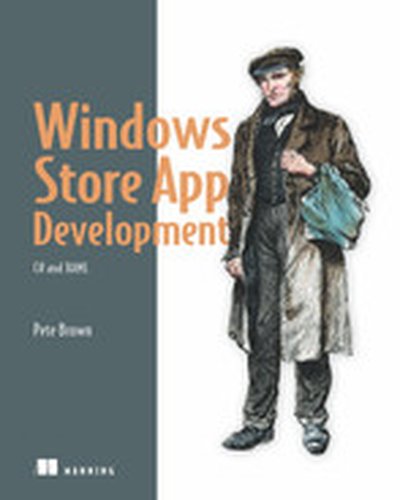
Windows Store App Development: C# and XAML

Windows Store App Development introduces C# developers to working with Windows Store apps. It provides full coverage of XAML, and addresses both app design and development. Following numerous carefully crafted examples, you'll learn about new Windows 8 features, the WinRT API, and .NET 4.5. Along the way, you'll pick up tips for deploying apps, including sale through the Windows Store. And, of course, you'll find the same deep and unique insights Pete provides in his Silverlight books. About the Technology The Windows Store provides an amazing array of productivity tools, games, and other apps directly to the millions of customers already using Windows 8.x or Surface. Windows Store apps boast new features like touch and pen input, standardized app-to-app communication, and tight integration with the web. And, you can build Windows Store apps using the tools you already know: C# and XAML. About the Book Windows Store App Development introduces the Windows 8.x app model to readers familiar with traditional desktop development. You'll explore dozens of carefully crafted examples as you master Windows features, the Windows Runtime, and the best practices of app design. Along the way, you'll pick up tips for deploying apps, including selling through the Windows Store. What's Inside Designing, creating, and selling Windows Store apps Developing touch and sensor-centric apps Working C# examples, from feature-level techniques to complete app design Making apps that talk to each other Mixing in C++ for even more features About the Reader This book requires some knowledge of C#. No experience with Windows 8 is needed. About the Author Pete Brown is a Developer Evangelist at Microsoft and author of Silverlight 4 in Action and Silverlight 5 in Action. Quotes Informative, fun, and easy to read. - Todd Miranda, NxtDimension Solutions Broad coverage of all aspects of W8 XAML development. - Roland Civet, iSolutions For You! Pete is a consistently great author, and once again he nails his subject. - Gordon Mackie, Openfeatured Ltd. Your roadmap to modern Windows design. - Patrick Toohey, Mettler-Toledo Hi-Speed Much less a book than a must-have tool for efficient and quality app development. - Dave Campbell, WynApse

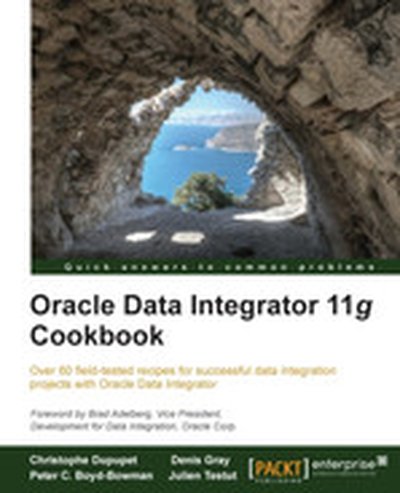
Oracle Data Integrator 11g Cookbook

"Oracle Data Integrator 11g Cookbook" provides an insightful exploration into the advanced features and functions of Oracle Data Integrator. Through practical insights and recipes, it guides you from understanding deployment to mastering advanced development techniques, including using the ODI SDK and web services. By reading this book, you'll enhance your skills and effectively execute data integration solutions. What this Book will help me do Install, configure, and deploy Oracle Data Integrator for effective integration solutions. Develop and utilize Knowledge Modules and leverage ODI Topology for advanced integration needs. Employ variables, interfaces, and packages in innovative ways to streamline processes. Understand how to use XML, web services, and the ODI SDK for extending functionality. Incorporate best practices for administration, diagnostics, and maintenance tasks. Author(s) The authors of "Oracle Data Integrator 11g Cookbook" are experienced data integration professionals with a profound understanding of Oracle technologies. With hands-on expertise and years of consulting experience, they bring practical knowledge and actionable insights to the book. Their approach emphasizes clarity, practical application, and fostering understanding through real-world examples. Who is it for? The ideal reader for "Oracle Data Integrator 11g Cookbook" includes data integration specialists and developers with a foundational understanding of Oracle Data Integrator. The book caters to those looking to deepen their expertise, enhance deployment practices, and utilize advanced capabilities. It is suitable for professionals aiming to solve complex integration challenges or streamline the implementation of enterprise solutions.

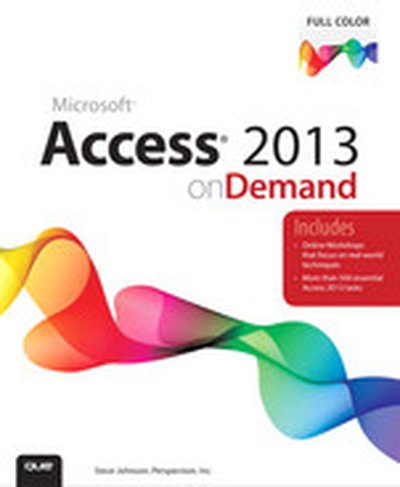
Access® 2013 on Demand

Need answers quickly? Access 2013 on Demand provides those answers in a visual step-by-step format. We will show you exactly what to do through lots of full color illustrations and easy-to-follow instructions. Inside the Book • Create desktop databases or web apps for traditional and online users to gather, organize, and share data • Use professional templates to help you create desktop databases or web apps • Create web apps on SharePoint Team Services to collaborate and share information • Use tools for building a database or web app that makes information easier to find and use • Import data from other programs, HTML, XML files, and other databases • Use forms, filters, queries, and reports to capture and analyze data • Organize information and add impact with themes, pictures, tables, and charts • Add hyperlinks and web pages to forms and reports to use content on the Internet • Use macros and Visual Basic for Applications (VBA) to automate and add functionality to databases • Prepare for the Microsoft Office Specialist (MOS) exam Numbered Steps guide you through each task See Also points you to related information in the book Did You Know? alerts you to tips and techniques Illustrations with matching steps Tasks are presented on one or two pages Register your book at queondemand.com to gain access to: • Workshops and related files • Keyboard shortcuts Visit the author site: perspection.com

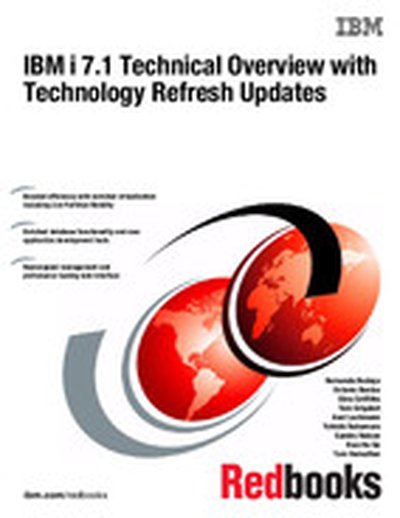
IBM i 7.1 Technical Overview with Technology Refresh Updates

This IBM® Redbooks® publication introduces a technical overview of the new features, functions, and enhancements available in IBM i 7.1. It provides a summary and brief explanation of new capabilities and what changed in the operating system. This publication also describes many of the licensed programs and application development tools that are associated with IBM i. This publication includes all the enhancements that were delivered with the Technology Refresh 4 and 5 that were made available in 2012. Many new and enhanced functions are described: IBM DB2® for i support for XML and column level encryption IBM PowerHA® for i asynchronous Geographic Mirroring and LUN-level switching Virtualization enhancements for IBM i hosted partitions and IBM PowerVM® Storage management enhancements for solid-state drives Systems management enhancements for Systems Director Navigator for i IBM Rational® software development product enhancements Zend PHP Enhancements Web Application Serving enhancements The information that is provided in this book is useful for clients, IBM Business Partners, and IBM service professionals that are involved with planning, supporting, upgrading, and implementing IBM i 7.1 solutions.

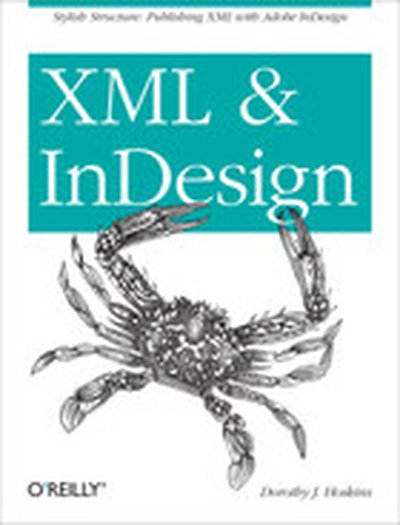
XML and InDesign

Discover the power of XML publishing with InDesign, and create content for multiple applications—including digital-first publishing workflows. With this book, XML evangelist Dorothy Hoskins teaches you several techniques for working with the built-in XML capabilities of InDesign CS6, using real examples from a college course-catalog project. Learn how to import database content into InDesign, and tag existing InDesign content as XML for export to other applications. InDesign also lets you apply attractive styling to XML content that can’t be done with XSL-FO. Through step-by-step instructions, code examples, and lots of screen shots, you’ll discover how using XML with InDesign increases the value of your content. Get an overview of structured (XML) content Learn InDesign’s XML import options, including XML image information Mingle XML and non-XML content in a text flow Use InDesign as an XML "skin" by making templates with new style definitions Put content in "XML order" for export to EPUB, with InDesign CS5.5 and CS6 Dive into advanced topics, such as how to transform XML with XSL Understand InDesign’s potential and limitations with complex content models such as DocBook and DITA

Web Technology, Theory and Practice

This book introduces the keyset technologies that are currently used to create applications on web. It explains the principal HTML concept, the client-side used JavaScript and the server-side used JSP with relevant coding examples. Emphasis is given on XML with examples including XML Transformations (XSTL). Apart from this, the book also dwells into the alternatives to XML such as the JSON.

SQL Server 2012 Data Integration Recipes: Solutions for Integration Services and Other ETL Tools

SQL Server 2012 Data Integration Recipes provides focused and practical solutions to real world problems of data integration. Need to import data into SQL Server from an outside source? Need to export data and send it to another system? SQL Server 2012 Data Integration Recipes has your back. You'll find solutions for importing from Microsoft Office data stores such as Excel and Access, from text files such as CSV files, from XML, from other database brands such as Oracle and MySQL, and even from other SQL Server databases. You'll learn techniques for managing metadata, transforming data to meet the needs of the target system, handling exceptions and errors, and much more. What DBA or developer isn't faced with the need to move data back and forth? Author Adam Aspin brings 10 years of extensive ETL experience involving SQL Server, and especially satellite products such as Data Transformation Services and SQL Server Integration Services. Extensive coverage is given to Integration Services, Microsoft's flagship tool for data integration in SQL Server environments. Coverage is also given to the broader range of tools such as OPENDATASOURCE, linked servers, OPENROWSET, Migration Assistant for Access, BCP Import, and BULK INSERT just to name a few. If you're looking for a resource to cover data integration and ETL across the gamut of Microsoft's SQL Server toolset, SQL Server 2012 Data Integration Recipes is the one book that will meet your needs. Provides practical and proven solutions towards creating resilient ETL environments Clearly answers the tough questions which professionals ask Goes beyond the tools to a thorough discussion of the underlying techniques Covers the gamut of data integration, beyond just SSIS Includes example databases and files to allow readers to test the recipes What you'll learn Import and export to and from CSV files, XML files, and other text-based sources. Move data between SQL databases, including SQL Server and others such as Oracle Database and MySQL. Discover and manage metadata held in various database systems. Remove duplicates and consolidate from multiple sources. Transform data to meet the needs of target systems. Profile source data as part of the discovery process. Log and manage errors and exceptions during an ETL process. Improve efficiency by detecting and processing only changed data. Who this book is for SQL Server 2012 Data Integration Recipes is written for developers wishing to find fast and reliable solutions for importing and exporting to and from SQL Server. The book appeals to DBAs as well, who are often tasked with implementing ETL processes. Developers and DBAs moving to SQL Server from other platforms will find the succinct, example-based approach ideal for quickly applying their general ETL knowledge to the specific tools provided as part of a SQL Server environment.

Building Windows 8 Apps with C# and XAML

“Jeremy builds real apps for real customers. That’s why I can heartily recommend this book. Go out and write some great apps…and keep this book handy.” —From the Foreword by Jeff Prosise Build Exceptionally Immersive and Responsive Touch-Based Windows Store Apps for Windows 8 with C# and XAML This is the first practical guide to building breakthrough applications for Windows 8 from project templates through publication to the new Windows Store. Microsoft “MVP of the Year” Jeremy Likness helps you combine your existing developer skills with new Visual Studio 2012 tools and best practices to create apps that are intuitive and innovative. His guidance and insight will help you dive into Windows 8 development—and gain a powerful competitive advantage for years to come. Likness illuminates the entire apps lifecycle, from planning and Model-View-View Model (MVVM) based design through coding, testing, packaging, and deployment. He covers both business and consumer apps, showing how Windows 8/WinRT development builds upon and contrasts with older WPF and Silverlight approaches. Using carefully crafted downloadable code examples and sample projects, Likness shows how to make the most of new platform features, including integrated social networking, search, contracts, charms, and tiles. Throughout, he addresses crucial development challenges that have only been discussed on MSDN, blog posts, and Twitter feeds—and never with this depth and clarity before. Coverage includes • Mastering real-world Windows 8 development for all devices and form factors • Understanding the new WinRT framework and the unique characteristics of Windows 8 apps • Designing apps that are faster, more responsive, do more with less, and maximize battery life • Creating exceptionally fluid interfaces with VS 2012 templates, built-in animations, and XAML • Building apps that respond consistently to multiple forms of input, including complex touch manipulations • Using contracts and charms to expose services or enable users to do so • Providing information to users through Live Tiles even when your app isn’t running • Connecting your app seamlessly to multiple data sources, including social networks and cloud storage • Syndicating rich, network-based content • Using Model-View-ViewModel (MVVM) • Securing Windows 8 apps through authentication and authorization • Efficiently testing, debugging, packaging, and deploying apps

Pro T-SQL 2012 Programmer's Guide, Third Edition

Pro T-SQL 2012 Programmer's Guide is every developer's key to making full use of SQL Server 2012's powerful, built-in Transact-SQL language. Discussing new and existing features, the book takes you on an expert guided tour of Transact-SQL functionality. Fully functioning examples and downloadable source code bring technically accurate and engaging treatment of Transact-SQL into your own hands. Step-by-step explanations ensure clarity, and an advocacy of best-practices will steer you down the road to success. Transact-SQL is the language developers and DBAs use to interact with SQL Server. It's used for everything from querying data, to writing stored procedures, to managing the database. New features in T-SQL 2012 include full support for window functions, stored sequences, the ability to throw errors, data paging, and more. All these important new features are covered in this book. Developers and DBAs alike can benefit from the expressive power of Transact-SQL, and Pro T-SQL 2012 Programmer's Guide provides the gateway to success in applying this increasingly important database language to everyday business and technical tasks. What you'll learn Take full advantage of window functions and other new features in T-SQL 2012 Move business logic into the database via procedures and functions Develop using advanced features such as encryption and full-text search Store and retrieve XML data using XQuery and XPath Debug and Optimize T-SQL Execution Build ADO.NET Client Applications Who this book is for Pro T-SQL 2012 Programmer's Guide is written for SQL Server and Transact-SQL developers who want to implement best-practices and take full advantage of all that SQL Server has to offer. NET programmers will find the book helpful in showing how to run .NET code within SQL Server. Database administrators who need to write triggers and the occasional stored procedure will also benefit from the book.

SQL Server 2012 T-SQL Recipes: A Problem-Solution Approach

SQL Server 2012 T-SQL Recipes is an example-based guide to the Transact-SQL language that is at the core of SQL Server 2012. It provides ready-to-implement solutions to common programming and database administration tasks. Learn to create databases, insert and update data, generate reports, secure your data, and more. Tasks and their solutions are broken down into a problem/solution format that is quick and easy to read so that you can get the job done fast when the pressure is on. Solutions in this book are divided into chapters by problem domain. Each chapter is a collection of solutions around a single facet of the language such as writing queries, developing triggers, and applying aggregate functions. Each solution is presented code-first, giving you a working code example to copy from and implement immediately in your own environment. Following each example is an in-depth description of how and why the given solution works. Tradeoffs and alternative approaches are also discussed. Focused on solutions: Look up what you need to do. Learn how to do it. Do it. Current: Newly updated for SQL Server 2012 Comprehensive: Covers all common T-SQL problem domains What you'll learn Create databases, tables, and indexes Query and manipulate data Store and manage XML inside the database Move business logic into the database Resolve common performance problems. Build reports that matter to your business. Perform common backup and recovery tasks. Who this book is for SQL Server 2012 T-SQL Recipes is aimed at technically-oriented users of SQL Server desiring to extract the full power of the platform through it's powerful, built-in programming and scripting language. Target readers include developers who use Microsoft SQL Server 2012 as their back-end database, and the database administrators who create, manage, and secure those databases.

XML in Scientific Computing

This book introduces XML to scientists and engineers in a way that illustrates the similarities and differences with traditional programming languages and suggests new ways of saving and sharing the results of scientific calculations. The author discusses XML in the context of scientific computing, demonstrates how XSL can be used to perform various calculations, and explains how to create and navigate through XML documents using traditional languages such as Fortran, C++, and MATLAB. A suite of computer programs are available on the author's website.

SQL Server 2012 Integration Services Design Patterns

SQL Server 2012 Integration Services Design Patterns is a book of recipes for SQL Server Integration Services (SSIS). Design patterns in the book show how to solve common problems encountered when developing data integration solutions. Because you do not have to build the code from scratch each time, using design patterns improves your efficiency as an SSIS developer. In SSIS Design Patterns, we take you through several of these snippets in detail, providing the technical details of the resolution. SQL Server 2012 Integration Services Design Patterns does not focus on the problems to be solved; instead, the book delves into why particular problems should be solved in certain ways. You'll learn more about SSIS as a result, and you'll learn by practical example. Where appropriate, SQL Server 2012 Integration Services Design Patterns provides examples of alternative patterns and discusses when and where they should be used. Highlights of the book include sections on ETL Instrumentation, SSIS Frameworks, and Dependency Services. Takes you through solutions to several common data integration challenges Demonstrates new features in SQL Server 2012 Integration Services Teaches SSIS using practical examples What you'll learn Load data from flat file formats Explore patterns for executing SSIS packages Discover a pattern for loading XML data Migrate SSIS packages through your application lifecycle without editing connections Take advantage of SSIS 2012 Dependency Services Build an SSIS Framework to support your application needs Who this book is for SQL Server 2012 Integration Services Design Patterns is for the data integration developer who is ready to take their SQL Server Integration Services (SSIS) skills to a more efficient level. It's for the developer interested in locating a previously-tested solution quickly. SQL Server 2012 Integration Services Design Patterns is a great book for ETL (extract, transform, and load) specialists and those seeking practical uses for new features in SQL Server 2012 Integration Services. It's an excellent choice for business intelligence and data warehouse developers.