talk-data.com talk-data.com

Event

O'Reilly Data Engineering Books

2001-10-19 – 2027-05-25 Oreilly Visit website ↗

Activities tracked

3377

Collection of O'Reilly books on Data Engineering.

Filtering by: data-engineering ×

Sessions & talks

Showing 526–550 of 3377 · Newest first

Search within this event →
Database Design for Mere Mortals: 25th Anniversary Edition, 4th Edition

The #1 Easy, Commonsense Guide to Database DesignNow Updated Foreword by Michelle Poolet, Mount Vernon Data Systems LLC Database Design for Mere Mortals has earned worldwide respect as the simplest way to learn relational database design. Now, this hands-on, software independent tutorial is even clearer and easier to use. Step by step, this new 25th Anniversary Edition shows you how to design modern databases that are soundly structured, reliable, and flexible, even in the latest online applications. Michael Hernandez guides you through everything from planning to defining tables, fields, keys, table relationships, business rules, and views. You will learn practical ways to improve data integrity, how to avoid common mistakes, and when to break the rules. Updated review questions and figures help you learn these techniques more easily and effectively. Understand database types, models, and design terminology Perform interviews to efficiently capture requirementseven if everyone works remotely Set clear design objectives and transform them into effective designs Analyze a current database so you can identify ways to improve it Establish table structures and relationships, assign primary keys, set field specifications, and set up views Ensure the correct level of data integrity for each database Identify and establish business rules Preview and prepare for the future of relational databases Whatever relational database systems you use, Hernandez will help you design databases that are robust and trustworthy. Never designed a database before? Settling for inadequate generic designs? Running existing databases that need improvement? Start here.
IBM DS8900F Product Guide Release 9.1

Built on over 50 years of enterprise storage expertise, the IBM® DS8000® series is the flagship of disk storage systems within the IBM System Storage portfolio. As of October 2020, the DS8900F with DS8000 Release 9.1 is the latest addition. The DS8900F is an all-flash system exclusively, and it offers two classes: DS8910F: Flexibility Class The flexibility class delivers significant performance improvements compared to the previous IBM DS8880F generation. DS8950F: Agility Class The agility class is efficiently designed to consolidate all your mission-critical workloads for IBM Z®, IBM LinuxONE, IBM Power Systems, and distributed environments under a single all-flash storage solution. This IBM Redbooks® Product Guide gives an overview of the features and functions that are available with the IBM DS8900F models running microcode Release 9.1 (Bundle 89.10 / Licensed Machine Code 7.9.10).

Pro SQL Server Relational Database Design and Implementation: Best Practices for Scalability and Performance

Learn effective and scalable database design techniques in SQL Server 2019 and other recent SQL Server versions. This book is revised to cover additions to SQL Server that include SQL graph enhancements, in-memory online transaction processing, temporal data storage, row-level security, and other design-related features. This book will help you design OLTP databases that are high-quality, protect the integrity of your data, and perform fast on-premises, in the cloud, or in hybrid configurations. Designing an effective and scalable database using SQL Server is a task requiring skills that have been around for well over 30 years, using technology that is constantly changing. This book covers everything from design logic that business users will understand to the physical implementation of design in a SQL Server database. Grounded in best practices and a solid understanding of the underlying theory, author Louis Davidson shows you how to "getit right" in SQL Server database design and lay a solid groundwork for the future use of valuable business data. What You Will Learn Develop conceptual models of client data using interviews and client documentation Implement designs that work on premises, in the cloud, or in a hybrid approach Recognize and apply common database design patterns Normalize data models to enhance integrity and scalability of your databases for the long-term use of valuable data Translate conceptual models into high-performing SQL Server databases Secure and protect data integrity as part of meeting regulatory requirements Create effective indexing to speed query performance Understand the concepts of concurrency Who This Book Is For Programmers and database administrators of all types who want to use SQL Server to store transactional data. The book is especially useful to those wanting to learn the latest database design features in SQL Server 2019 (features that include graph objects, in-memory OLTP, temporal data support, and more). Chapters on fundamental concepts, the language of database modeling, SQL implementation, and the normalization process lay a solid groundwork for readers who are just entering the field of database design. More advanced chapters serve the seasoned veteran by tackling the latest in physical implementation features that SQL Server has to offer. The book has been carefully revised to cover all the design-related features that are new in SQL Server 2019.

Implementation Guide for IBM Elastic Storage System 5000

This IBM® Redbooks® publication introduces and describes the IBM Elastic Storage® Server 5000 (ESS 5000) as a scalable, high-performance data and file management solution. The solution is built on proven IBM Spectrum® Scale technology, formerly IBM General Parallel File System (IBM GPFS). ESS is a modern implementation of software-defined storage, making it easier for you to deploy fast, highly scalable storage for AI and big data. With the lightning-fast NVMe storage technology and industry-leading file management capabilities of IBM Spectrum Scale, the ESS 3000 and ESS 5000 nodes can grow to over YB scalability and can be integrated into a federated global storage system. By consolidating storage requirements from the edge to the core data center — including kubernetes and Red Hat OpenShift — IBM ESS can reduce inefficiency, lower acquisition costs, simplify storage management, eliminate data silos, support multiple demanding workloads, and deliver high performance throughout your organization. This book provides a technical overview of the ESS 5000 solution and helps you to plan the installation of the environment. We also explain the use cases where we believe it fits best. Our goal is to position this book as the starting point document for customers that would use the ESS 5000 as part of their IBM Spectrum Scale setups. This book is targeted toward technical professionals (consultants, technical support staff, IT Architects, and IT Specialists) who are responsible for delivering cost-effective storage solutions with ESS 5000.

IBM System Storage SAN Volume Controller, IBM Storwize V7000, and IBM FlashSystem 7200 Best Practices and Performance Guidelines

This IBM® Redbooks® publication captures several of the preferred practices and describes the performance gains that can be achieved by implementing the IBM System Storage® SAN Volume Controller and IBM Storwize® V7000 powered by IBM Spectrum Virtualize™ V8.2.1. These practices are based on field experience. This book highlights configuration guidelines and preferred practices for the storage area network (SAN) topology, clustered system, back-end storage, storage pools and managed disks, volumes, remote copy services, and hosts. Then it provides performance guidelines for SAN Volume Controller, back-end storage, and applications. It explains how you can optimize disk performance with the IBM System Storage Easy Tier® function. It also provides preferred practices for monitoring, maintaining, and troubleshooting SAN Volume Controller and Storwize V7000. This book is intended for experienced storage, SAN, and SAN Volume Controller administrators and technicians. Understanding his book requires advanced knowledge of the SAN Volume Controller and Storwize V7000 and SAN environments. Important: On 11th February 2020 IBM announced the arrival of SAN Volume Controller SA2 and SV2, and IBM FlashSystem® 7200 to the family. This book was written specifically for prior versions of SVC and Storwize V7000; however, most of the general principles will apply. If you are in any doubt as to their applicability then you should work with your local IBM representative. This book will be updated to comprehensively include SAN Volume Controller SA2 and SV2 and FlashSystem 7200 in due course.

Blown to Bits: Your Life, Liberty, and Happiness After the Digital Explosion, 2nd Edition

What you must know to protect yourself today The digital technology explosion has blown everything to bits--and the blast has provided new challenges and opportunities. This second edition of Blown to Bits delivers the knowledge you need to take greater control of your information environment and thrive in a world thats coming whether you like it or not. Straight from internationally respected Harvard/MIT experts, this plain-English bestseller has been fully revised for the latest controversies over social media, fake news, big data, cyberthreats, privacy, artificial intelligence and machine learning, self-driving cars, the Internet of Things, and much more. Discover who owns all that data about youand what they can infer from it Learn to challenge algorithmic decisions See how close you can get to sending truly secure messages Decide whether you really want always-on cameras and microphones Explore the realities of Internet free speech Protect yourself against out-of-control technologies (and the powerful organizations that wield them) You will find clear explanations, practical examples, and real insight into what digital tech means to you--as an individual, and as a citizen.

IBM DS8910F Model 993 Rack Mounted Storage System

This IBM® Redpaper publication presents and positions the DS8910F Model 993. The modular system can be integrated into 15U contiguous space of a standard 19-inch wide rack, or 16U contiguous space when placed in an IBM z14® Model ZR1 (z14 Model ZR1), or IBM LinuxONE Rockhopper II (z14 Model LR1). The DS8910F Model 993 allows you to take advantage of the performance boost of all-flash systems and advanced features while limiting datacenter footprint and power infrastructure requirements.

IBM FlashSystem 9100 Architecture, Performance, and Implementation

IBM® FlashSystem 9100 combines the performance of flash and Non-Volatile Memory Express (NVMe) with the reliability and innovation of IBM FlashCore® technology and the rich features of IBM Spectrum™ Virtualize — all in a powerful 2U storage system. Providing intensive data driven multi-cloud storage capacity, FlashSystem 9100 is deeply integrated with the software-defined capabilities of IBM Spectrum Storage™, which allows you to easily add the multi-cloud solutions that best support your business. In this IBM Redbooks® publication, we discuss the product's features and planning steps, architecture, installation, configuration, and hints and tips.

Custom Fiori Applications in SAP HANA: Design, Develop, and Deploy Fiori Applications for the Enterprise

Get started building custom Fiori applications for your enterprise. This book teaches you how to design, build, and deploy enterprise-ready, custom Fiori applications in SAP HANA. Tips and tricks collected from projects using Fiori applications (built consuming OData models and REST APIs) and integrating third-party JS libraries are presented. Also included are examples using Fiori templates from different tools such as the SAP Web IDE and the new Visual Studio Code extensions. This book explains the 5 design principles that all Fiori applications are built upon: Role-based, Responsive, Coherent, Simple, and Delightful. The book expands on consuming OData services and REST APIs internal and external to SAP HANA. The Fiori application exercise demonstrates the use of the MVC pattern, JavaScript modularization, reuse of SAP UI5 controls, debugging, and the tools required for a complete scenario. The book closes with an exercise showcasing a finished single page application with multiple views and layouts, navigation between the views, and deployment of the application to AWS. This book is simple enough for entry-level developers getting started in web frameworks but also highlights integration points from the data models being consumed from the application, and shows how the application communicates with back-end services, resulting in a complete front-end custom Fiori application. What You Will Learn Know the 5 Fiori design principles Understand how to consume OData and REST API models Apply the MVC pattern using XML views and the SAP UI5 controls along with controller behavior in JavaScript Debug and deploy the application Who This Book is For Web developers and application leads who have some experience in JavaScript frameworks and web development and understand web protocol communication

How the Internet Really Works

The internet has profoundly changed interpersonal communication, but most of us don’t really understand how it works. What enables information to travel across the internet? Can we really be anonymous and private online? Who controls the internet, and why is that important? And… what’s with all the cats? How the Internet Really Works answers these questions and more. Using clear language and whimsical illustrations, the authors translate highly technical topics into accessible, engaging prose that demystifies the world’s most intricately linked computer network. Alongside a feline guide named Catnip, you’ll learn about: •The “How-What-Why” of nodes, packets, and internet protocols •Cryptographic techniques to ensure the secrecy and integrity of your data •Censorship, ways to monitor it, and means for circumventing it •Cybernetics, algorithms, and how computers make decisions •Centralization of internet power, its impact on democracy, and how it hurts human rights •Internet governance, and ways to get involved This book is also a call to action, laying out a roadmap for using your newfound knowledge to influence the evolution of digitally inclusive, rights-respecting internet laws and policies. Whether you’re a citizen concerned about staying safe online, a civil servant seeking to address censorship, an advocate addressing worldwide freedom of expression issues, or simply someone with a cat-like curiosity about network infrastructure, you will be delighted — and enlightened — by Catnip’s felicitously fun guide to understanding how the internet really works!

Legal and Privacy Issues in Information Security, 3rd Edition

Thoroughly revised and updated to address the many changes in this evolving field, the third edition of Legal and Privacy Issues in Information Security addresses the complex relationship between the law and the practice of information security. Information systems security and legal compliance are required to protect critical governmental and corporate infrastructure, intellectual property created by individuals and organizations alike, and information that individuals believe should be protected from unreasonable intrusion. Organizations must build numerous information security and privacy responses into their daily operations to protect the business itself, fully meet legal requirements, and to meet the expectations of employees and customers.

Instructor Materials for Legal Issues in Information Security include:

PowerPoint Lecture Slides
Instructor's Guide
Sample Course Syllabus
Quiz & Exam Questions
Case Scenarios/Handouts

New to the third Edition:

• Includes discussions of amendments in several relevant federal and state laws and regulations since 2011 • Reviews relevant court decisions that have come to light since the publication of the first edition • Includes numerous information security data breaches highlighting new vulnerabilities

Deployment and Usage Guide for Running AI Workloads on Red Hat OpenShift and NVIDIA DGX Systems with IBM Spectrum Scale

This IBM® Redpaper publication describes the architecture, installation procedure, and results for running a typical training application that works on an automotive data set in an orchestrated and secured environment that provides horizontal scalability of GPU resources across physical node boundaries for deep neural network (DNN) workloads. This paper is mostly relevant for systems engineers, system administrators, or system architects that are responsible for data center infrastructure management and typical day-to-day operations such as system monitoring, operational control, asset management, and security audits. This paper also describes IBM Spectrum® LSF® as a workload manager and IBM Spectrum Discover as a metadata search engine to find the right data for an inference job and automate the data science workflow. With the help of this solution, the data location, which may be on different storage systems, and time of availability for the AI job can be fully abstracted, which provides valuable information for data scientists.

What Is a Data Lake?

A revolution is occurring in data management regarding how data is collected, stored, processed, governed, managed, and provided to decision makers. The data lake is a popular approach that harnesses the power of big data and marries it with the agility of self-service. With this report, IT executives and data architects will focus on the technical aspects of building a data lake for your organization. Alex Gorelik from Facebook explains the requirements for building a successful data lake that business users can easily access whenever they have a need. You'll learn the phases of data lake maturity, common mistakes that lead to data swamps, and the importance of aligning data with your company's business strategy and gaining executive sponsorship. You'll explore: The ingredients of modern data lakes, such as the use of different ingestion methods for different data formats, and the importance of the three Vs: volume, variety, and velocity Building blocks of successful data lakes, including data ingestion, integration, persistence, data governance, and business intelligence and self-service analytics State-of-the-art data lake architectures offered by Amazon Web Services, Microsoft Azure, and Google Cloud

Exposed

Discover why privacy is a counterproductive, if not obsolete, concept in this startling new book It's only a matter of time-- the modern notion of privacy is quickly evaporating because of technological advancement and social engagement. Whether we like it or not, all our actions and communications are going to be revealed for everyone to see. Exposed: How Revealing Your Data and Eliminating Privacy Increases Trust and Liberates Humanity takes a controversial and insightful look at the concept of privacy and persuasively argues that preparing for a post-private future is better than exacerbating the painful transition by attempting to delay the inevitable. Security expert and author Ben Malisow systematically dismantles common notions of privacy and explains how: Most arguments in favor of increased privacy are wrong Privacy in our personal lives leaves us more susceptible to being bullied or blackmailed Governmental and military privacy leads to an imbalance of power between citizen and state Military supremacy based on privacy is an obsolete concept Perfect for anyone interested in the currently raging debates about governmental, institutional, corporate, and personal privacy, and the proper balance between the public and the private, Exposed also belongs on the shelves of security practitioners and policymakers everywhere.

SUSE and IBM Power Systems for SAP HANA

For organizations charting their way forward in today's digital economy, the clear imperative is to find better ways of extracting more value from data. By gleaning insight from data regarding customer preferences and business operations, organizations can respond to demand more effectively and better deliver the experiences that today's customers want. To this end, many organizations running SAP solutions seek to make the move to the SAP HANA database. SAP HANA offers the speed of in-memory data processing and the ability to combine transactions and analytics on a single platform for insight in real time. However, considerations at the level of IT infrastructure can make or break the success of an SAP HANA implementation. What the database runs on, in other words, matters significantly. This IBM® Redguide publication explores the value of deploying SAP HANA on SUSE Linux Enterprise Server for SAP Applications and the IBM Power platform with IBM POWER9™ processors. Both offerings are optimized to help your organization reap the rewards of SAP HANA while also transforming IT service delivery more generally. Designed for enterprise-grade operations, SUSE Linux Enterprise Server for SAP Applications offers an open-source software-defined infrastructure (SDI) that is optimized for SAP workloads. Reliable, fast, and secure, it also supports the automation that is needed to substantially free up IT staff from service deployment and management duties. Power Systems servers support SAP HANA implementations according to the SAP Tailored Data Center Integration (TDI) 5.0 specification. Optimized for scale-up and scale-out scenarios and built to support virtual persistent memory, Power Systems serves help you provision faster, scale affordably, and maximize uptime by persisting memory across virtual machines (VMs) and multiple SAP HANA instances. Both SUSE and IBM have partnered with SAP for decades to fine-tune these offerings. Together, SUSE and IBM solutions offer a way forward for deploying, optimizing, and running SAP HANA implementations that is proven to be successful. This publication looks at various aspects of this combined offering in greater detail.

Multi-Paradigm Modelling Approaches for Cyber-Physical Systems

Multi-Paradigm Modelling for Cyber-Physical Systems explores modeling and analysis as crucial activities in the development of Cyber-Physical Systems, which are inherently cross-disciplinary in nature and require distinct modeling techniques related to different disciplines, as well as a common background knowledge. This book will serve as a reference for anyone starting in the field of CPS who needs a solid foundation of modeling, including a comprehensive introduction to existing techniques and a clear explanation of their advantages and limitations. This book is aimed at both researchers and practitioners who are interested in various modeling paradigms across computer science and engineering. Identifies key problems and offers solution approaches as well as tools which have been developed or are necessary for modeling paradigms across cyber physical systems Explores basic theory and current research topics, related challenges, and research directions for multi-paradigm modeling Provides a complete, conceptual overview and framework of the research done by the MPM4CPS working groups and the different types of modeling paradigms developed

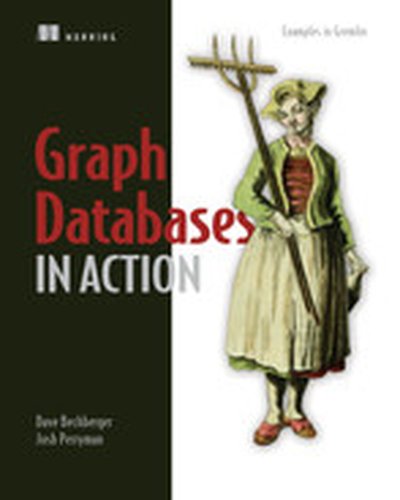
Graph Databases in Action

Relationships in data often look far more like a web than an orderly set of rows and columns. Graph databases shine when it comes to revealing valuable insights within complex, interconnected data such as demographics, financial records, or computer networks. In Graph Databases in Action, experts Dave Bechberger and Josh Perryman illuminate the design and implementation of graph databases in real-world applications. You'll learn how to choose the right database solutions for your tasks, and how to use your new knowledge to build agile, flexible, and high-performing graph-powered applications! About the Technology Isolated data is a thing of the past! Now, data is connected, and graph databases—like Amazon Neptune, Microsoft Cosmos DB, and Neo4j—are the essential tools of this new reality. Graph databases represent relationships naturally, speeding the discovery of insights and driving business value. About the Book Graph Databases in Action introduces you to graph database concepts by comparing them with relational database constructs. You'll learn just enough theory to get started, then progress to hands-on development. Discover use cases involving social networking, recommendation engines, and personalization. What's Inside Graph databases vs. relational databases Systematic graph data modeling Querying and navigating a graph Graph patterns Pitfalls and antipatterns About the Reader For software developers. No experience with graph databases required. About the Authors Dave Bechberger and Josh Perryman have decades of experience building complex data-driven systems and have worked with graph databases since 2014. Quotes A comprehensive overview of graph databases and how to build them using Apache tools. - Richard Vaughan, Purple Monkey Collective A well-written and thorough introduction to the topic of graph databases. - Luis Moux, EMO A great guide in your journey towards graph databases and exploiting the new possibilities for data processing. - Mladen Knežić, CROZ A great introduction to graph databases and how you should approach designing systems that leverage graph databases. - Ron Sher, Intuit

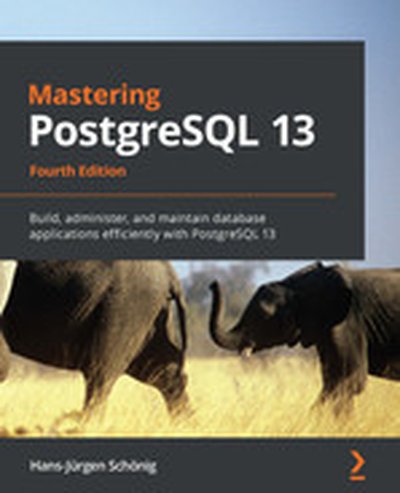
Mastering PostgreSQL 13 - Fourth Edition

Dive into PostgreSQL 13 with this comprehensive guide that equips you to build, manage, and optimize database applications using state-of-the-art features. With a strong focus on hands-on insights, this book covers everything from SQL functions to advanced replication, helping you to enhance your database management expertise. What this Book will help me do Understand and utilize advanced SQL features to increase database efficiency. Optimize your PostgreSQL queries for improved performance in applications. Implement robust backup, recovery, and replication strategies for data integrity. Migrate seamlessly from Oracle to PostgreSQL using proven strategies. Strengthen server security to safeguard sensitive data in your PostgreSQL system. Author(s) Hans-Jürgen Schönig is a renowned PostgreSQL expert with decades of experience in database administration and consulting. He has guided companies across the globe to leverage the power of PostgreSQL, achieving high performance and reliability in their applications. His clear, methodical, and practical approach makes complex topics accessible to database professionals. Who is it for? This book is crafted for PostgreSQL database administrators and developers with some prior experience. If you are looking to refine your skills and adopt advanced features in PostgreSQL 13 to enhance performance and manageability, this book is ideal for you. It is best suited for individuals who aim to make their database applications more secure and robust.

Cyber Resilience Solution Across Hybrid Cloud Using IBM Storage Solutions

In today's data driven world, the information and data of an organization is considered as the most important asset to its business. It can serve as key asset for growth of an organization. As more data are collected by organizations, it is growing at a staggering pace. With this exponential data growth, there is an increase need to protect the data from the various cyberattacks in the form of malware and ransomware that is trying to steal precious data and information. These cyberattacks can have catastrophic impact on the organization and result in devastating financial losses and affect the organization's reputation for years. This document is intended to facilitate the deployment of the Hybrid Cloud Cyber Resilience solution for storage system data that it backed up in IBM Spectrum Protect Plus from external cyberattacks or insider attacks by using its integration with IBM Cloud Object Storage. You must understand IBM FlashSystem, IBM Spectrum Protect Plus, and IBM Cloud Object Storage architecture concepts and its configuration across hybrid cloud. The information in this document is distributed on an as-is basis without any warranty that is either expressed or implied. Support assistance for the use of this material is limited to situations where IBM FlashSystem, IBM Spectrum Protect Plus or IBM Cloud Object Storage are supported and entitled, and where the issues are specific to a solution technical paper implementation.

Introducing IBM Z System Recovery Boost

This IBM® Redpaper publication introduces System Recovery Boost, which is a new function of the IBM z15™ system. System Recovery Boost delivers substantially faster system shutdown and restart, short duration recovery process boosts for sysplex events, and fast catch-up of an accumulated backlog of work after specific events (such as system restart).

SQL Server 2019 AlwaysOn: Supporting 24x7 Applications with Continuous Uptime

Get a fast start to using AlwaysOn, the SQL Server solution to high-availability and disaster recovery. This third edition is newly-updated to cover the 2019 editions of both SQL Server and Windows Server and includes strong coverage of implementing AlwaysOn Availability Groups on both Windows and Linux operating systems. The book provides a solid and accurate understanding of how to implement systems requiring consistent and continuous uptime, as well as how to troubleshoot those systems in order to keep them running and reliable. This edition is updated to account for all new major functionality and also includes coverage of implementing atypical configurations, such as clusterless and domain-independent Availability Groups, distributed Availability Groups, and implementing Availability Groups on Azure. The book begins with an introduction to high-availability and disaster recovery concepts such as Recovery Point Objectives (RPOs), Recovery Time Objectives (RTOs), availability levels, and the cost of downtime. You’ll then move into detailed coverage of implementing and configuring the AlwaysOn feature set in order to meet the business objectives set by your organization. Content includes coverage on implementing clusters, building AlwaysOn failover clustered instances, and configuring AlwaysOn Availability Groups. SQL Server 2019 AlwaysOn is chock full of real-world advice on how to build and configure the most appropriate topology to meet the high-availability and disaster recovery requirements you are faced with, as well as how to use AlwaysOn Availability Groups to scale-out read-only workloads. This is a practical and hands-on book to get you started quickly in using one of the most talked-about SQL Server feature sets. What You Will Learn Understand high availability and disaster recovery in SQL Server 2019 Build and configure a Windows Cluster in Windows Server 2019 Create and configure an AlwaysOn failover clustered instance Implement AlwaysOn Availability Groups and appropriately configure them Implement AlwaysOn Availability Groups on Linux servers Configure Availability Groups on Azure IaaS Administer AlwaysOn technologies post implementation Understand typical configurations, such as clusterless and distributed Availability Groups Who This Book Is For For Microsoft SQL Server database administrators who interested in growing their knowledge and skills in SQL Server’s high-availability and disaster recovery feature set.

Big Data Management

Data analytics is core to business and decision making. The rapid increase in data volume, velocity and variety offers both opportunities and challenges. While open source solutions to store big data, like Hadoop, offer platforms for exploring value and insight from big data, they were not originally developed with data security and governance in mind. Big Data Management discusses numerous policies, strategies and recipes for managing big data. It addresses data security, privacy, controls and life cycle management offering modern principles and open source architectures for successful governance of big data. The author has collected best practices from the world’s leading organizations that have successfully implemented big data platforms. The topics discussed cover the entire data management life cycle, data quality, data stewardship, regulatory considerations, data council, architectural and operational models are presented for successful management of big data. The book is a must-read for data scientists, data engineers and corporate leaders who are implementing big data platforms in their organizations.

Practical Azure SQL Database for Modern Developers: Building Applications in the Microsoft Cloud

Here is the expert-level, insider guidance you need on using Azure SQL Database as your back-end data store. This book highlights best practices in everything ranging from full-stack projects to mobile applications to critical, back-end APIs. The book provides instruction on accessing your data from any language and platform. And you learn how to push processing-intensive work into the database engine to be near the data and avoid undue networking traffic. Azure SQL is explained from a developer's point of view, helping you master its feature set and create applications that perform well and delight users. Core to the book is showing you how Azure SQL Database provides relational and post-relational support so that any workload can be managed with easy accessibility from any platform and any language. You will learn about features ranging from lock-free tables to columnstore indexes, and about support for data formats ranging from JSON and key-values to the nodes and edges in the graph database paradigm. Reading this book prepares you to deal with almost all data management challenges, allowing you to create lean and specialized solutions having the elasticity and scalability that are needed in the modern world. What You Will Learn Master Azure SQL Database in your development projects from design to the CI/CD pipeline Access your data from any programming language and platform Combine key-value, JSON, and relational data in the same database Push data-intensive compute work into the database for improved efficiency Delight your customers by detecting and improving poorly performing queries Enhance performance through features such as columnstore indexes and lock-free tables Build confidence in your mastery of Azure SQL Database's feature set Who This Book Is For Developers of applications and APIs that benefit from cloud database support, developers who wish to master their tools (including Azure SQL Database, and those who want their applications to be known for speedy performance and the elegance of their code

Practical Apache Lucene 8: Uncover the Search Capabilities of Your Application

Gain a thorough knowledge of Lucene's capabilities and use it to develop your own search applications. This book explores the Java-based, high-performance text search engine library used to build search capabilities in your applications. Starting with the basics of Lucene and searching, you will learn about the types of queries used in it and also take a look at scoring models. Applying this basic knowledge, you will develop a hello world app using basic Lucene queries and explore functions like scoring and document level boosting. Along the way you will also uncover the concepts of partial searching and matching in Lucene and then learn how to integrate geographical information (geospatial data) in Lucene using spatial queries and n-dimensional indexing. This will prepare you to build a location-aware search engine with a representative data set that allows location constraints to be specified during a search. You’ll also develop atext classifier using Lucene and Apache Mahout, a popular machine learning framework. After a detailed review of performance bench-marking and common issues associated with it, you’ll learn some of the best practices of tuning the performance of your application. By the end of the book you’ll be able to build your first Lucene patch, where you will not only write your patch, but also test it and ensure it adheres to community coding standards. What You’ll Learn Master the basics of Apache Lucene Utilize different query types in Apache Lucene Explore scoring and document level boosting Integrate geospatial data into your application Who This Book Is For Developers wanting to learn the finer details of Apache Lucene by developing a series of projects with it.

Azure SQL Revealed: A Guide to the Cloud for SQL Server Professionals

Access detailed content and examples on Azure SQL, a set of cloud services that allows for SQL Server to be deployed in the cloud. This book teaches the fundamentals of deployment, configuration, security, performance, and availability of Azure SQL from the perspective of these same tasks and capabilities in SQL Server. This distinct approach makes this book an ideal learning platform for readers familiar with SQL Server on-premises who want to migrate their skills toward providing cloud solutions to an enterprise market that is increasingly cloud-focused. If you know SQL Server, you will love this book. You will be able to take your existing knowledge of SQL Server and translate that knowledge into the world of cloud services from the Microsoft Azure platform, and in particular into Azure SQL. This book provides information never seen before about the history and architecture of Azure SQL. Author Bob Ward is a leading expert with access to and support fromthe Microsoft engineering team that built Azure SQL and related database cloud services. He presents powerful, behind-the-scenes insights into the workings of one of the most popular database cloud services in the industry. What You Will Learn Know the history of Azure SQL Deploy, configure, and connect to Azure SQL Choose the correct way to deploy SQL Server in Azure Migrate existing SQL Server instances to Azure SQL Monitor and tune Azure SQL’s performance to meet your needs Ensure your data and application are highly available Secure your data from attack and theft Who This Book Is For This book is designed to teach SQL Server in the Azure cloud to the SQL Server professional. Anyone who operates, manages, or develops applications for SQL Server will benefit from this book. Readers will be able to translate their current knowledge of SQL Server—especially of SQL Server 2019—directly to Azure. This book is ideal for database professionals looking to remain relevant as their customer base moves into the cloud.