talk-data.com talk-data.com

Event

O'Reilly Data Engineering Books

2001-10-19 – 2027-05-25 Oreilly Visit website ↗

Activities tracked

3432

Collection of O'Reilly books on Data Engineering.

Sessions & talks

Showing 2151–2175 of 3432 · Newest first

Search within this event →
Unleashing DB2 10 for Linux, UNIX, and Windows

This IBM® Redbooks® publication provides a broad understanding of the key features in IBM DB2® 10 and how to use these features to get more value from business applications. It includes information about the following features: Time Travel Query, which you use to store and retrieve time-based data by using capability built into DB2 10, without needing to build your own solution Adaptive compression, an enhanced compression technology that adapts to changing data patterns, yielding extremely high compression ratios Multi-temperature storage, which you may use to optimize storage costs by identifying and managing data based on its “temperature” or access requirements Row and column access control, which offers security access enforcement on your data, at the row or column level, or both Availability enhancements, which provide different DB2 availability features for different enterprise needs; high availability disaster recovery (HADR) multiple-standby databases provide availability and data recovery in one technology, and the IBM DB2 pureScale® Feature provides continuous availability and scalability that is transparent to applications Oracle compatibility, which allows many applications written for Oracle to run on DB2, virtually unchanged Ingest utility, a feature-rich data movement utility that allows queries to run concurrently with minimal impact on data availability
FileMaker® 12 Developers Reference: Functions, Scripts, Commands, and Grammars

The new FileMaker 12 allows you to build unparalleled databases for a wide variety of devices, from Windows and Mac desktops to iPhones and iPad. With 10 million registered customers, FileMaker's users are "average Joes" who are knowledge workers, subject matter experts, and business users from all walks of life. The community extends well beyond the pool of professional software developers. FileMaker's legendary ease-of-use has led to its wide adoption and has allowed non-programmers an avenue into creating sophisticated software solutions. FileMaker 12 Developer’s Reference will serve to help bridge the gaps in these people's understanding of FileMaker's hundreds of calculation functions, script steps, and operations. They know FileMaker, they've used it for years, but they need a quick reference, immediately accessible while not interrupting their work on screen. There is no other book like this on the market. All FileMaker books include information on calculation formulas, scripting, etc., but none have expressly focused on giving readers one simple thing: a quick reference to be used in conjunction with their programming efforts. Some books teach, others explain, still others explore specific in-depth topics. This book will appeal to the entire FileMaker Pro community and be a great extension of their library. This edition is updated for the many new features coming with FileMaker 12, including the product's design functionality and the file format, and a new section dedicated to FileMaker Go, which is the iOS client.

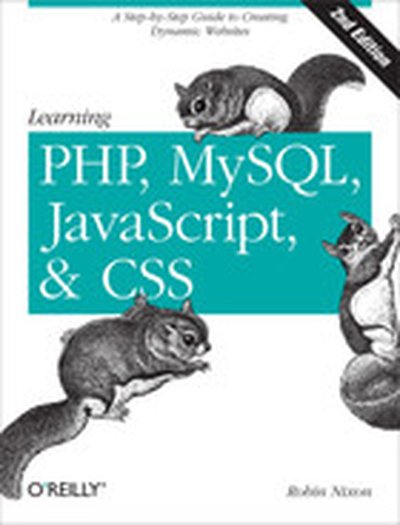
Learning PHP, MySQL, JavaScript, and CSS, 2nd Edition

Learn how to build interactive, data-driven websites—even if you don’t have any previous programming experience. If you know how to build static sites with HTML, this popular guide will help you tackle dynamic web programming. You’ll get a thorough grounding in today’s core open source technologies: PHP, MySQL, JavaScript, and CSS. Explore each technology separately, learn how to combine them, and pick up valuable web programming concepts along the way, including objects, XHTML, cookies, and session management. This book provides review questions in each chapter to help you apply what you’ve learned. Learn PHP essentials and the basics of object-oriented programming Master MySQL, from database structure to complex queries Create web pages with PHP and MySQL by integrating forms and other HTML features Learn JavaScript fundamentals, from functions and event handling to accessing the Document Object Model Pick up CSS basics for formatting and styling your web pages Turn your website into a highly dynamic environment with Ajax calls Upload and manipulate files and images, validate user input, and secure your applications Explore a working example that brings all of the ingredients together

Oracle SOA Suite 11g Administrator's Handbook

Dive into the world of Oracle SOA Suite 11g with this comprehensive administrator's guide. You will learn to effectively manage and secure your Oracle SOA Suite services and applications, from deployment to troubleshooting. This book provides clear, step-by-step instructions on key administrative tasks, ensuring you can confidently handle day-to-day challenges. What this Book will help me do Understand the core principles of managing composite applications and their lifecycle. Automate deployments through configuration plans and optimize performance within SOA environments. Develop skills in troubleshooting exceptions and identifying faults within Oracle SOA Suite. Gain practical knowledge in securing components, managing policies, and configuring MBeans. Master the essential backup and recovery procedures, patching, and scripting techniques for Oracle SOA Suite. Author(s) The authors bring extensive experience in Oracle technologies, particularly in administrative roles within service-oriented architecture environments. They focus on an approachable, clear teaching method, blending theory with practical, actionable insights to equip readers with real-world skills. Who is it for? Ideal for Oracle SOA Suite administrators looking to deepen their expertise, this book is also useful for WebLogic Server admins and developers eager to manage SOA Suite services. Whether you're seasoned in basic SOA administration or starting afresh, this book suits all levels seeking practical knowledge in this domain.

Endpoint Security and Compliance Management Design Guide Using IBM Tivoli Endpoint Manager

Organizations today are more widely distributed than ever before, which can make systems management tasks, such as distributing software, patches, and security policies, extremely challenging. The IBM® Tivoli® Endpoint Manager platform is architected for today's highly diverse, distributed, and complex IT environments. It provides real-time visibility and control through a single infrastructure, single agent, and single console for systems lifecycle management, endpoint protection, and security configuration and vulnerability management. This platform enables organizations to securely manage their global IT infrastructures faster and more accurately, resulting in improved governance, control, visibility, and business agility. Plus, it gives organizations the ability to handle tomorrow's unforeseen challenges. In this IBM Redbooks® publication, we provide IT security professionals with a better understanding around the challenging topic of endpoint management in the IT security domain. We focus on IBM Tivoli Endpoint Manager for Security and Compliance and describe the product architecture and provide a hands-on design guide for deploying the solution. This book is a valuable resource for security professionals and architects who want to understand and implement a centralized endpoint management infrastructure and endpoint protection to better handle security and compliance challenges.

Complete Analytics with IBM DB2 Query Management Facility: Accelerating Well-Informed Decisions Across the Enterprise

There is enormous pressure today for businesses across all industries to cut costs, enhance business performance, and deliver greater value with fewer resources. To take business analytics to the next level and drive tangible improvements to the bottom line, it is important to manage not only the volume of data, but the speed with which actionable findings can be drawn from a wide variety of disparate sources. The findings must be easily communicated to those responsible for making both strategic and tactical decisions. At the same time, strained IT budgets require that the solution be self-service for everyone from DBAs to business users, and easily deployed to thin, browser-based clients. Business analytics hosted in the Query Management Facility™ (QMF™) on DB2® and System z® allow you to tackle these challenges in a practical way, using new features and functions that are easily deployed across the enterprise and easily consumed by business users who do not have prior IT experience. This IBM® Redbooks® publication provides step-by-step instructions on using these new features: Access to data that resides in any JDBC-compliant data source OLAP access through XMLA 150+ new analytical functions Graphical query interfaces and graphical reports Graphical, interactive dashboards Ability to integrate QMF functions with third-party applications Support for the IBM DB2 Analytics Accelerator A new QMF Classic perspective in QMF for Workstation Ability to start QMF for TSO as a DB2 for z/OS stored procedure New metadata capabilities, including ER diagrams and capability to federate data into a single virtual source

HBase Administration Cookbook

The "HBase Administration Cookbook" is your hands-on guide to mastering HBase administration and configuration. Through practical recipes, this book covers the essential tasks like setting up clusters, optimizing performance, and integrating with the Hadoop ecosystem to manage vast amounts of data effectively. What this Book will help me do Set up and administer HBase clusters for scalability and high availability. Perform routine HBase management tasks confidently and efficiently. Optimize HBase and Hadoop ecosystem settings for maximum performance. Understand troubleshooting to address and resolve typical HBase issues. Leverage advanced configurations for specific read/write-heavy use cases. Author(s) Yifeng Jiang is a seasoned software engineer and database expert with deep experience in working with distributed databases like HBase. He is passionate about teaching and conveying complex concepts through approachable explanations and actionable steps. Yifeng's writing style reflects his hands-on expertise and focus on practical application. Who is it for? This book is designed for system administrators, database managers, and developers looking to master HBase administration and configuration. Whether you are relatively new to HBase with basic familiarity with Hadoop or are an experienced Hadoop administrator wanting to enhance your database management skills, this book provides valuable insights and thorough guidance.

Optimizing DB2 Queries with IBM DB2 Analytics Accelerator for z/OS

The IBM® DB2® Analytics Accelerator Version 2.1 for IBM z/OS® (also called DB2 Analytics Accelerator or Query Accelerator in this book and in DB2 for z/OS documentation) is a marriage of the IBM System z® Quality of Service and Netezza® technology to accelerate complex queries in a DB2 for z/OS highly secure and available environment. Superior performance and scalability with rapid appliance deployment provide an ideal solution for complex analysis. This IBM Redbooks® publication provides technical decision-makers with a broad understanding of the IBM DB2 Analytics Accelerator architecture and its exploitation by documenting the steps for the installation of this solution in an existing DB2 10 for z/OS environment. In this book we define a business analytics scenario, evaluate the potential benefits of the DB2 Analytics Accelerator appliance, describe the installation and integration steps with the DB2 environment, evaluate performance, and show the advantages to existing business intelligence processes. Please note that the additional material referenced in the text is not available from IBM.

IBM CSM to IBM Systems Director Transformation Guide

For many years, IBM® Cluster Systems Management (CSM) provided a single point of management for IBM Power Systems™ servers running the AIX® operating system. Now you can transform your environment to IBM Systems Director®, which provides CSM clients with the next generation of Cluster Systems Management for their Power Systems servers.

IBM System Blue Gene Solution: Blue Gene/Q Hardware Overview and Installation Planning

This document is one of a series of IBM® Redbooks® written specifically for the IBM System Blue Gene® supercomputer, IBM Blue Gene/Q®. Blue Gene/Q is the third generation of massively parallel supercomputers from IBM in the Blue Gene series. This document provides an overview of components that comprise a Blue Gene/Q system. It helps System Planners and Customer Engineers plan for the installation of the Blue Gene/Q system. Information is provided about the physical requirements for the machine room where the Blue Gene/Q system is to be located. Examples of these requirements include floor (weight and cutouts), cooling, and electrical specifications.

NoSQL Distilled: A Brief Guide to the Emerging World of Polyglot Persistence

The need to handle increasingly larger data volumes is one factor driving the adoption of a new class of nonrelational “NoSQL” databases. Advocates of NoSQL databases claim they can be used to build systems that are more performant, scale better, and are easier to program. NoSQL Distilled is a concise but thorough introduction to this rapidly emerging technology. Pramod J. Sadalage and Martin Fowler explain how NoSQL databases work and the ways that they may be a superior alternative to a traditional RDBMS. The authors provide a fast-paced guide to the concepts you need to know in order to evaluate whether NoSQL databases are right for your needs and, if so, which technologies you should explore further. The first part of the book concentrates on core concepts, including schemaless data models, aggregates, new distribution models, the CAP theorem, and map-reduce. In the second part, the authors explore architectural and design issues associated with implementing NoSQL. They also present realistic use cases that demonstrate NoSQL databases at work and feature representative examples using Riak, MongoDB, Cassandra, and Neo4j. In addition, by drawing on Pramod Sadalage’s pioneering work, NoSQL Distilled shows how to implement evolutionary design with schema migration: an essential technique for applying NoSQL databases. The book concludes by describing how NoSQL is ushering in a new age of Polyglot Persistence, where multiple data-storage worlds coexist, and architects can choose the technology best optimized for each type of data access.

Pro SQL Server 2012 Reporting Services, Third Edition

Pro SQL Server 2012 Reporting Services opens the door to delivering customizable, web-enabled reports across your business at reasonable cost. Reporting Services is Microsoft's enterprise-level reporting platform. It is included with many editions of SQL Server, and is something you'll want to take advantage of if you're running SQL Server as your database engine. Reporting Services provides a full set of tools with which to create and deploy reports. Create interactive reports for business users. Define reporting models from which business users can generate their own ad hoc reports. Pull data from relational databases, from XML, and from other sources. Present that data to users in tabular and graphical forms, and more. Reporting Services experts Brian McDonald, Rodney Landrum, and Shawn McGehee show how to do all this and much more in this third edition of their longstanding book on the topic. Provides best practices for using Reporting Services Covers the very latest in new features for SQL Server 2012 Your key to delivering business intelligence across the enterprise

Microsoft SQL Server 2012 Performance Tuning Cookbook

If you've ever faced a sluggish application running on SQL Server 2012, this book is your go-to resource for resolving such issues. Diving deep into performance monitoring, tuning, and management, this cookbook provides concise, practical recipes to help you diagnose, improve, and maintain database performance effectively. What this Book will help me do Develop skills in monitoring SQL Server performance using tools like SQL Profiler and Execution Plans. Learn to diagnose bottlenecks and optimize system resources for better database efficiency. Acquire methods for effective indexing and query tuning to ensure fast application response. Understand techniques to prevent and resolve concurrency issues such as deadlocks. Master the management of database performance with tools like Policy-Based Management and Resource Governor. Author(s) The author(s) bring a wealth of experience in database administration and optimization for SQL Server environments. They have extensive backgrounds in addressing performance challenges and crafting efficient solutions. Their approachable and informative writing style ensures that even complex topics are accessible. Passionate about empowering professionals, the author(s) aim to provide actionable insights and practical approaches. Who is it for? This book is tailored for SQL Server Database Developers, Database Administrators, and Database Architects seeking to enhance their performance tuning skills. It is ideal for professionals who understand SQL Server basics but wish to dive deeper into performance optimization. Readers aiming to identify and resolve performance challenges in their SQL Server 2012 systems will greatly benefit. Whether you're an experienced professional or newly involved in SQL tuning, this book has valuable insights to offer.

The Service-Oriented Media Enterprise

Companies worldwide are rapidly adopting Service-Oriented Architecture (SOA), a design methodology used to connect systems as services, and Business Process Management (BPM), the art of orchestrating these services. Media organizations from news organizations to music and media download services to movie studios are adapting to SOA-style architectures, but have run into roadblocks unique to the media and entertainment industry. These challenges include incorporating real-time data, moving large amounts of data at one time, non-linearity and flexibility for workflow, and unique metrics and data gathering. The Service-Oriented Media Enterprise details the challenges and presents solutions for media technology professionals. By addressing both the IT and media aspects, it helps individuals improve current enterprise technologies and operations.

End-to-end Integration with IBM Sterling B2B Integration and Managed File Transfer solutions

Across numerous vertical industries, enterprises are challenged to improve processing efficiency as transactions flow from their business communities to their internal systems and vice versa, simplify management and expansion of the external communities, accommodate customer and supplier preferences, govern the flow of information, enforce policy and standards, and protect sensitive information. Throughout this process, external partners must be on-boarded and off-boarded, information must flow across multiple communications infrastructures, and data must be mapped and transformed for consumption across multiple applications. Some transactions require synchronous or real-time processing while others are of a more periodic nature. For some classes of customer or supplier, the enterprise might prefer a locally-managed, on-premise solution. For some types of communities (often small businesses), an as-a-Service solution might be the best option. Many large enterprises combine the on-premise and as-a-Service approach to serve different categories of business partners (customers or suppliers). This IBM® Redbooks® publication focuses on solutions for end-to-end integration in complex value chains and presents several end-to-end common integration scenarios with IBM Sterling and IBM WebSphere® portfolios. We believe that this publication will be a reference for IT Specialists and IT Architects implementing an integration solution architecture involving IBM Sterling and IBM WebSphere portfolios. Please note that the additional material referenced in the text is not available from IBM.

FileMaker Pro 12: The Missing Manual

You don’t have to be a techie to use FileMaker Pro 12, but you do need to know what you’re doing. With this crystal-clear guide, you’ll learn how to create a powerful database that lets you do almost anything with your data. Whether you’re running a business, printing a catalog, or planning a wedding, you’ll learn how to customize your database and put it to work. The important stuff you need to know: Get started. Tour FileMaker Pro’s features and create your first database in minutes. Catalog your data. View, sort, and shape information in dozens of ways. Create professional documents. Publish reports, invoices, and other documents with ease. Harness processing power. Use calculations and scripts to crunch numbers, search text, and automate tasks. Add visual power and clarity. Create colorful charts to illustrate and summarize your data. Think like a developer. Dive into the high-level features of FileMaker Pro Advanced.

IBM Real Time Compression Appliance Application Integration Guide

Continuing its commitment to developing and delivering industry-leading storage technologies, IBM® is introducing the IBM Real-time Compression Appliances for NAS, an innovative new storage offering that delivers essential storage efficiency technologies, combined with exceptional ease of use and performance. In an era when the amount of information, particularly in unstructured files, is exploding, but budgets for storing that information are stagnant, IBM Real-time Compression technology offers a powerful tool for better information management, protection, and access. IBM Real-time Compression can help slow the growth of storage acquisition, reducing storage costs while simplifying both operations and management. It also enables organizations to keep more data available for use rather than storing it offsite or on harder-to-access tape, so they can support improved analytics and decision making. IBM Real-time Compression Appliances provide online storage optimization through real-time data compression, delivering dramatic cost reduction without performance degradation. This IBM Redbooks® publication is an easy-to-follow guide that describes how to design solutions successfully using IBM Real-time Compression Appliances (IBM RTCAs). It explains best practices for RTCA solution design, application integration, and practical RTCA use cases. This is a companion book to Introduction to IBM Real-time Compression Appliances, SG24-7953.

Securing SQL Server, 2nd Edition

SQL server is the most widely used database platform in the world, and a large percentage of these databases are not properly secured, exposing sensitive customer and business data to attack. In Securing SQL Server, 2e, readers learn about the potential attack vectors that can be used to break into SQL server databases as well as how to protect databases from these attacks. In this book written by Denny Cherry, a Microsoft SQL MVP and one of the biggest names in SQL server today, readers learn how to properly secure a SQL server database from internal and external threats using best practices as well as specific tricks the authors employ in their roles as database administrators for some of the largest SQL server deployments in the world. "Denny Cherry is what would happen if Bill Gates and AC/DC got together to create a sibling. He's a bare-knuckles, no holds-barred technologist, and you can bet that if he tells you that something does or doesn't work, he's speaking from experience. Active in the community, his passion is sharing. You'll enjoy this book."--Buck Woody, Senior Technology Specialist, Microsoft Presents hands-on techniques for protecting your SQL Server database from intrusion and attack Provides the most in-depth coverage of all aspects of SQL Server database security, including a wealth of new material on Microsoft SQL Server 2012 (Denali) Explains how to set up your database securely, how to determine when someone tries to break in, what the intruder has accessed or damaged, and how to respond and mitigate damage if an intrusion occurs

Microsoft® SQL Server® 2012 Analysis Services: The BISM Tabular Model

Build agile and responsive Business Intelligence solutions Analyze tabular data using the BI Semantic Model (BISM) in Microsoft SQL Server 2012 Analysis Services—and discover a simpler method for creating corporate-level BI solutions. Led by three BI experts, you’ll learn how to build, deploy, and query a BISM tabular model with step-by-step guides, examples, and best practices. This hands-on book shows you how the tabular model’s in-memory database enables you to perform rapid analytics—whether you’re a professional BI developer new to Analysis Services or familiar with its multidimensional model. Discover how to: Determine when a tabular or multidimensional model is right for your project Build a tabular model using SQL Server Data Tools in Microsoft Visual Studio 2010 Integrate data from multiple sources into a single, coherent view of company information Use the Data Analysis eXpressions (DAX) language to create calculated columns, measures, and queries Choose a data modeling technique that meets your organization’s performance and usability requirements Optimize your data model for better performance with xVelocity storage engine Manage complex data relationships, such as multicolumn, banding, and many-to-many Implement security by establishing administrative and data user roles

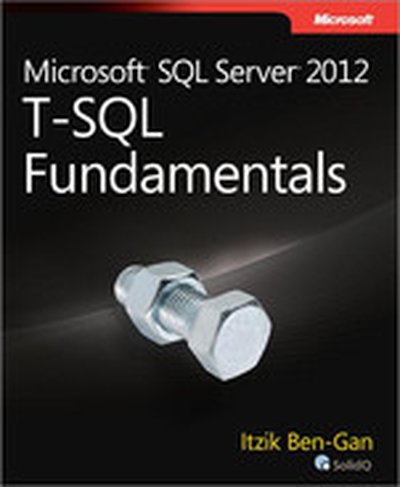
Microsoft® SQL Server® 2012 T-SQL Fundamentals

Gain a solid understanding of T-SQL—and write better queries Master the fundamentals of Transact-SQL—and develop your own code for querying and modifying data in Microsoft SQL Server 2012. Led by a SQL Server expert, you’ll learn the concepts behind T-SQL querying and programming, and then apply your knowledge with exercises in each chapter. Once you understand the logic behind T-SQL, you’ll quickly learn how to write effective code—whether you’re a programmer or database administrator. Discover how to: Work with programming practices unique to T-SQL Create database tables and define data integrity Query multiple tables using joins and subqueries Simplify code and improve maintainability with table expressions Implement insert, update, delete, and merge data modification strategies Tackle advanced techniques such as window functions, pivoting and grouping sets Control data consistency using isolation levels, and mitigate deadlocks and blocking Take T-SQL to the next level with programmable objects

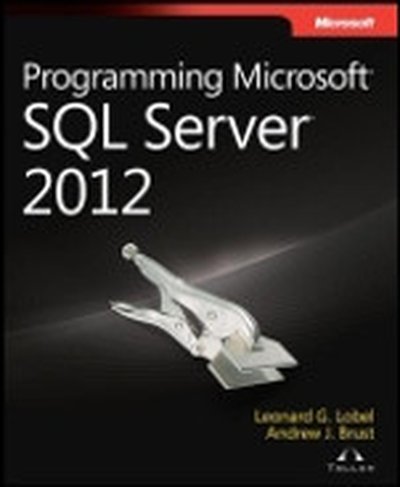
Programming Microsoft® SQL Server® 2012

Your essential guide to key programming features in Microsoft SQL Server 2012 Take your database programming skills to a new level—and build customized applications using the developer tools introduced with SQL Server 2012. This hands-on reference shows you how to design, test, and deploy SQL Server databases through tutorials, practical examples, and code samples. If you’re an experienced SQL Server developer, this book is a must-read for learning how to design and build effective SQL Server 2012 applications. Discover how to: Build and deploy databases using the SQL Server Data Tools IDE Query and manipulate complex data with powerful Transact-SQL enhancements Integrate non-relational features, including native file streaming and geospatial data types Consume data with Microsoft ADO.NET, LINQ, and Entity Framework Deliver data using Windows Communication Foundation (WCF) Data Services and WCF RIA Services Move your database to the cloud with Windows Azure SQL Database Develop Windows Phone cloud applications using SQL Data Sync Use SQL Server BI components, including xVelocity in-memory technologies

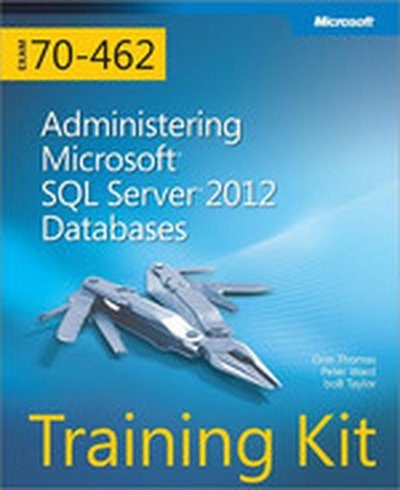
Training Kit Exam 70-462: Administering Microsoft® SQL Sever® 2012 Databases

EXAM PREP GUIDE Ace your preparation for the skills measured by Exam 70-462—and on the job—with this official Microsoft study guide. Work at your own pace through a series of lessons and reviews that fully cover each exam objective. Then, reinforce and apply what you’ve learned through real-world case scenarios and practice exercises. Maximize your performance on the exam by mastering the skills and experience measured by these objectives: Install and configure SQL Server Maintain instances and databases Optimize and troubleshoot SQL Server Manage data Implement security Implement high availability PRACTICE TESTS A Note Regarding Practice Tests Assess your skills with practice tests. You can work through hundreds of questions using multiple testing modes to meet your specific learning needs. You get detailed explanations for right and wrong answers—including a customized learning path that describes how and where to focus your studies. For customers who purchase an ebook version of this title, instructions for downloading the CD files can be found in the ebook.

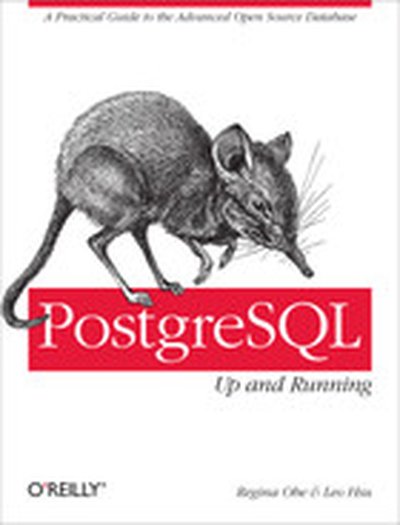
PostgreSQL: Up and Running

If you’re thinking about migrating to the PostgreSQL open source database system, this guide provides a concise overview to help you quickly understand and use PostgreSQL’s unique features. Not only will you learn about the enterprise class features in the 9.2 release, you’ll also discover that PostgeSQL is more than just a database system—it’s also an impressive application platform. With numerous examples throughout this book, you’ll learn how to achieve tasks that are difficult or impossible in other databases.

Pro SQL Server 2012 Relational Database Design and Implementation

Learn effective and scalable database design techniques in a SQL Server environment. Pro SQL Server 2012 Relational Database Design and Implementation covers everything from design logic that business users will understand, all the way to the physical implementation of design in a SQL Server database. Grounded in best practices and a solid understanding of the underlying theory, Louis Davidson shows how to "get it right" in SQL Server database design and lay a solid groundwork for the future use of valuable business data. Gives a solid foundation in best practices and relational theory Covers the latest implementation features in SQL Server Takes you from conceptual design to an effective, physical implementation What you'll learn How to develop conceptual models of client data using interviews and client documentation How to recognize and apply common database design patterns How to normalize data models to enhance scalability and the long term use of valuable data How to translate conceptual models into high-performing SQL Server databases How to secure and protect data integrity as part of meeting regulatory requirements How to create effective indexing to speed query performance Who this book is for Pro SQL Server 2012 Relational Database Design and Implementation is designed for programmers of all types who want to use SQL Server 2012 to store data. Chapters on fundamental concepts, the language of database modeling, SQL implementation, and of course, the normalization process, lay a solid groundwork for readers who are just entering the field of database design. More advanced chapters serve the seasoned veteran by tackling the very latest in physical implementation features that SQL Server has to offer.

Beginning XML, 5th Edition

A complete update covering the many advances to the XML language The XML language has become the standard for writing documents on the Internet and is constantly improving and evolving. This new edition covers all the many new XML-based technologies that have appeared since the previous edition four years ago, providing you with an up-to-date introductory guide and reference. Packed with real-world code examples, best practices, and in-depth coverage of the most important and relevant topics, this authoritative resource explores both the advantages and disadvantages of XML and addresses the most current standards and uses of XML. Features the most updated content built on audience feedback from the previous edition as well as the vast knowledge from XML developer teams Boasts new chapters on RELAX NG and Schematron, XML functionality in databases, LINQ to XML, Jabber and XMLPP, XHTML, HTML5, and more Offers in-depth coverage on extracting data from XML and updated material on Web Services Beginning XML, Fifth Edition delivers the most important aspects of XML in regard to what it is, how it works, what technologies surround it, and how it can best be used in a variety of situations.