talk-data.com talk-data.com

Event

O'Reilly Data Science Books

2013-08-09 – 2026-02-25 Oreilly Visit website ↗

Activities tracked

2118

Collection of O'Reilly books on Data Science.

Sessions & talks

Showing 401–425 of 2118 · Newest first

Search within this event →
Econometrics and Data Science: Apply Data Science Techniques to Model Complex Problems and Implement Solutions for Economic Problems

Get up to speed on the application of machine learning approaches in macroeconomic research. This book brings together economics and data science. Author Tshepo Chris Nokeri begins by introducing you to covariance analysis, correlation analysis, cross-validation, hyperparameter optimization, regression analysis, and residual analysis. In addition, he presents an approach to contend with multi-collinearity. He then debunks a time series model recognized as the additive model. He reveals a technique for binarizing an economic feature to perform classification analysis using logistic regression. He brings in the Hidden Markov Model, used to discover hidden patterns and growth in the world economy. The author demonstrates unsupervised machine learning techniques such as principal component analysis and cluster analysis. Key deep learning concepts and ways of structuring artificial neural networks are explored along with training them and assessing their performance. The Monte Carlo simulation technique is applied to stimulate the purchasing power of money in an economy. Lastly, the Structural Equation Model (SEM) is considered to integrate correlation analysis, factor analysis, multivariate analysis, causal analysis, and path analysis. After reading this book, you should be able to recognize the connection between econometrics and data science. You will know how to apply a machine learning approach to modeling complex economic problems and others beyond this book. You will know how to circumvent and enhance model performance, together with the practical implications of a machine learning approach in econometrics, and you will be able to deal with pressing economic problems. What You Will Learn Examine complex, multivariate, linear-causal structures through the path and structural analysis technique, including non-linearity and hidden states Be familiar with practical applications of machine learning and deep learning in econometrics Understand theoretical framework and hypothesis development, and techniques for selecting appropriate models Develop, test, validate, and improve key supervised (i.e., regression and classification) and unsupervised (i.e., dimension reduction and cluster analysis) machine learning models, alongside neural networks, Markov, and SEM models Represent and interpret data and models Who This Book Is For Beginning and intermediate data scientists, economists, machine learning engineers, statisticians, and business executives
Practical Biomedical Signal Analysis Using MATLAB®, 2nd Edition

Fully updated and with exclusive new content, this second edition presents a coherent treatment of various signal processing methods and applications. The book not only covers the current techniques of biomedical signal processing, but it also offers guidance on which methods are appropriate for a given task and different types of data.

Automating Analytics

Do you have a method for seeing all the data that passes through your organization? The need to democratize access to data and analytics, automate complex and tedious business processes, and amplify human output has led to analytic process automation (APA). Thousands of organizations across nearly every business and industry vertical use this software to accelerate data-driven business outcomes. This report examines the power of APA using technology, business, and real-world examples. If you're a technical business, analytics, or business intelligence leader, you'll learn how to use APA to tackle complex problems, increase productivity, and improve efficiency. You'll discover what APA means for your business and for you. This report explores: The importance of data: understand how data is transformed into information and insights for making business decisions Gathering data with APA: learn how APA differs from your current process Data democratization: grant data access to employees and empower them to analyze specific tasks and performance Data reporting: learn how APA blends data tables, fields, and values to help you search for insights at a granular level Analytics: explore new tools that use AI and ML to improve the analytic process

Modern Analytics Platforms

From a global pandemic to extreme weather, the events of 2020 and 2021 have caused organizations to make quick and constant adjustments to their strategy and operations. This transformation is likely to continue and have a major impact on analytics. Not only do responders to Experian's annual Global Data Management survey confirm more demand for data insights, but most of them also believe the lack of agility hurt their organization's responses to fast-changing business needs. With this O'Reilly report, you'll learn how organizations have begun to take new approaches to analytics for business reinvention and digital transformation. Chief analytics and data officers and data analytics, data science, data visualization leaders will explore converged analytics and find out how it differs from legacy and current analytics approaches. You'll see where your organization stands in its journey to convergence--and what you need to do next. This report helps you: Examine how three organizations in different industries and with different objectives have benefited from modern analytics Learn how analytics has evolved to support greater business agility at scale Examine the alignment of people, processes, tools, and data in converged analytics Learn the five stages of analytical competition and six dimensions for benchmarking maturity Explore practices that you can adopt to improve your analytics capabilities and your agility

Computational Intelligence and Healthcare Informatics

COMPUTATIONAL INTELLIGENCE and HEALTHCARE INFORMATICS The book provides the state-of-the-art innovation, research, design, and implements methodological and algorithmic solutions to data processing problems, designing and analysing evolving trends in health informatics, intelligent disease prediction, and computer-aided diagnosis. Computational intelligence (CI) refers to the ability of computers to accomplish tasks that are normally completed by intelligent beings such as humans and animals. With the rapid advance of technology, artificial intelligence (AI) techniques are being effectively used in the fields of health to improve the efficiency of treatments, avoid the risk of false diagnoses, make therapeutic decisions, and predict the outcome in many clinical scenarios. Modern health treatments are faced with the challenge of acquiring, analyzing and applying the large amount of knowledge necessary to solve complex problems. Computational intelligence in healthcare mainly uses computer techniques to perform clinical diagnoses and suggest treatments. In the present scenario of computing, CI tools present adaptive mechanisms that permit the understanding of data in difficult and changing environments. The desired results of CI technologies profit medical fields by assembling patients with the same types of diseases or fitness problems so that healthcare facilities can provide effectual treatments. This book starts with the fundamentals of computer intelligence and the techniques and procedures associated with it. Contained in this book are state-of-the-art methods of computational intelligence and other allied techniques used in the healthcare system, as well as advances in different CI methods that will confront the problem of effective data analysis and storage faced by healthcare institutions. The objective of this book is to provide researchers with a platform encompassing state-of-the-art innovations; research and design; implementation of methodological and algorithmic solutions to data processing problems; and the design and analysis of evolving trends in health informatics, intelligent disease prediction and computer-aided diagnosis. Audience The book is of interest to artificial intelligence and biomedical scientists, researchers, engineers and students in various settings such as pharmaceutical & biotechnology companies, virtual assistants developing companies, medical imaging & diagnostics centers, wearable device designers, healthcare assistance robot manufacturers, precision medicine testers, hospital management, and researchers working in healthcare system.

Computation in BioInformatics

COMPUTATION IN BIOINFORMATICS Bioinformatics is a platform between the biology and information technology and this book provides readers with an understanding of the use of bioinformatics tools in new drug design. The discovery of new solutions to pandemics is facilitated through the use of promising bioinformatics techniques and integrated approaches. This book covers a broad spectrum of the bioinformatics field, starting with the basic principles, concepts, and application areas. Also covered is the role of bioinformatics in drug design and discovery, including aspects of molecular modeling. Some of the chapters provide detailed information on bioinformatics related topics, such as silicon design, protein modeling, DNA microarray analysis, DNA-RNA barcoding, and gene sequencing, all of which are currently needed in the industry. Also included are specialized topics, such as bioinformatics in cancer detection, genomics, and proteomics. Moreover, a few chapters explain highly advanced topics, like machine learning and covalent approaches to drug design and discovery, all of which are significant in pharma and biotech research and development. Audience Researchers and engineers in computation biology, information technology, bioinformatics, drug design, biotechnology, pharmaceutical sciences.

Power Query Cookbook

The "Power Query Cookbook" is your comprehensive guide to mastering data preparation and transformation using Power Query. With this book, you'll learn to connect to data sources, reshape data to fit business requirements, and use both no-code transformations and custom M code solutions to unlock the full potential of your data. Step-by-step examples will guide you through optimizing dataflows in Power BI. What this Book will help me do Master connecting to various data sources and performing intuitive transformations using Power Query. Learn to reshape and enrich data to meet complex business requirements efficiently. Explore advanced capabilities of Power Query, including M code and online dataflows. Develop custom data transformations with a blend of GUI-based and M code techniques. Optimize the performance of Power BI Dataflows using best practices and diagnostics tools. Author(s) None Janicijevic is a seasoned expert in data analytics, specializing in Microsoft Power BI and Power Query. With years of experience in data engineering and a passion for teaching, None brings a clear, actionable, and results-driven approach to demystifying complex technical concepts. Their work empowers professionals with the tools they need to excel in data-driven decision-making. Who is it for? This book is designed for data analysts, business intelligence developers, and data engineers aiming to enhance their skills in data preparation using Power Query. If you have a basic understanding of Power BI and want to delve into integrating and optimizing data from multiple sources, this book is for you. It's ideal for professionals seeking practical insights and techniques to improve data transformations. Novices with some exposure to BI tools will also find the material accessible and rewarding.

2021 Data/AI Salary Survey

Curious about what technologies will have the biggest impact on salaries in the coming year? Want to determine whether a particular certification is worth going for? Looking for the most lucrative programming language to learn next? Are you hiring for a data team? Or do you just want to see how your skills and salary compare to others in the field? Get answers to your salary questions in the 2021 Data/AI Salary Survey .

Building Data Science Applications with FastAPI

This comprehensive guide to FastAPI walks readers through developing modern web backends optimized for data science applications. By mastering key concepts like dependency injection and asynchronous programming, you will create high-performing REST APIs and machine learning powered systems. What this Book will help me do Master asynchronous programming and type hinting in Python for efficient coding. Design comprehensive RESTful APIs for machine learning with FastAPI. Build, test, and maintain scalable data science applications. Integrate Python libraries like NumPy and scikit-learn into web backends. Deploy modular and efficient FastAPI-backed systems to production. Author(s) None Voron is a seasoned software developer specialized in web frameworks and data science applications. With a strong background in building scalable systems, they bring invaluable insights on utilizing FastAPI. Voron emphasizes clarity and hands-on learning, sharing their expertise to help developers master the technology efficiently. Who is it for? This book is ideal for data scientists and Python developers interested in creating efficient data science backends. If you have groundwork knowledge of machine learning concepts and Python programming, this book will enhance your ability to deploy and manage APIs for data-driven applications.

Text as Data

Text As Data: Combining qualitative and quantitative algorithms within the SAS system for accurate, effective and understandable text analytics The need for powerful, accurate and increasingly automatic text analysis software in modern information technology has dramatically increased. Fields as diverse as financial management, fraud and cybercrime prevention, Pharmaceutical R&D, social media marketing, customer care, and health services are implementing more comprehensive text-inclusive, analytics strategies. Text as Data: Computational Methods of Understanding Written Expression Using SAS presents an overview of text analytics and the critical role SAS software plays in combining linguistic and quantitative algorithms in the evolution of this dynamic field. Drawing on over two decades of experience in text analytics, authors Barry deVille and Gurpreet Singh Bawa examine the evolution of text mining and cloud-based solutions, and the development of SAS Visual Text Analytics. By integrating quantitative data and textual analysis with advanced computer learning principles, the authors demonstrate the combined advantages of SAS compared to standard approaches, and show how approaching text as qualitative data within a quantitative analytics framework produces more detailed, accurate, and explanatory results. Understand the role of linguistics, machine learning, and multiple data sources in the text analytics workflow Understand how a range of quantitative algorithms and data representations reflect contextual effects to shape meaning and understanding Access online data and code repositories, videos, tutorials, and case studies Learn how SAS extends quantitative algorithms to produce expanded text analytics capabilities Redefine text in terms of data for more accurate analysis This book offers a thorough introduction to the framework and dynamics of text analytics—and the underlying principles at work—and provides an in-depth examination of the interplay between qualitative-linguistic and quantitative, data-driven aspects of data analysis. The treatment begins with a discussion on expression parsing and detection and provides insight into the core principles and practices of text parsing, theme, and topic detection. It includes advanced topics such as contextual effects in numeric and textual data manipulation, fine-tuning text meaning and disambiguation. As the first resource to leverage the power of SAS for text analytics, Text as Data is an essential resource for SAS users and data scientists in any industry or academic application.

Microsoft Power BI Cookbook - Second Edition

"Microsoft Power BI Cookbook" is an advanced reference for professionals working with Power BI. Featuring over 90 practical, hands-on recipes, this book allows you to master Power BI for data modeling, creating dashboards, and optimizing queries. You will learn practical tips and techniques, enabling you to create effective and customized Power BI solutions for various business needs. What this Book will help me do Master advanced data cleansing and integration techniques in Power BI's Power Query Editor. Develop intuitive, efficient dashboards and reports using best practices for data visualization. Optimize performance for large datasets using aggregation tables and efficient query techniques. Implement sophisticated analysis and business logic using the power of DAX programming language. Deploy and manage Power BI solutions leveraging integration with Microsoft ecosystem tools. Author(s) Greg Deckler and None Powell are seasoned Power BI experts with extensive backgrounds in business intelligence and data solutions. Greg is a recognized Power BI consultant and author with a focus on delivering impactful BI solutions. None brings their experience in utilizing Power BI for diverse organizational needs. Together, they emphasize hands-on learning and actionable insights in their collaborative writing. Who is it for? This book is aimed at business intelligence professionals who already have a basic understanding of Power BI. Ideal readers are those seeking to deepen their knowledge of advanced features and apply best practices in their projects. Whether you're enhancing your existing Power BI skills or managing complex datasets, this book will provide the techniques and insights to excel in your role.

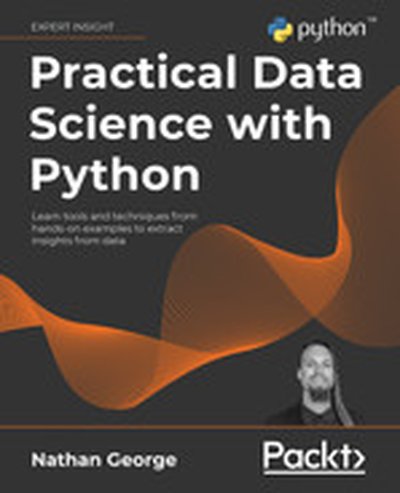
Practical Data Science with Python

Practical Data Science with Python guides you through the entire process of leveraging Python tools to analyze and gain insights from data. You'll start with foundational concepts and coding essentials, progressing through statistical analysis, machine learning techniques, and ethical considerations. What this Book will help me do Clean, prepare, and explore data using pandas and NumPy. Understand and implement machine learning models such as random forests and support vector machines. Perform statistical tests and analyze distributions to enhance data insights. Utilize SQL with Python for efficient data interaction. Generate automated reports and dashboards for data storytelling. Author(s) Nathan George has extensive professional experience as a data scientist and Python developer. He specializes in the application of machine learning and statistical methods to solve real-world problems. His writing combines technical depth with an approachable style, aiming to provide readers with actionable knowledge and skills. Who is it for? This book is perfect for data science beginners who have a basic understanding of Python and want to build practical data analysis skills. Students in analytics programs or professionals looking to transition into a data science role will find value in its approachable yet comprehensive coverage. Aspiring data analysts and career changers will gain firsthand exposure to Python-based data science best practices. If you're eager to develop practical, hands-on experience in the data science field, this is the guide for you.

Pandas in Action

Take the next steps in your data science career! This friendly and hands-on guide shows you how to start mastering Pandas with skills you already know from spreadsheet software. In Pandas in Action you will learn how to: Import datasets, identify issues with their data structures, and optimize them for efficiency Sort, filter, pivot, and draw conclusions from a dataset and its subsets Identify trends from text-based and time-based data Organize, group, merge, and join separate datasets Use a GroupBy object to store multiple DataFrames Pandas has rapidly become one of Python's most popular data analysis libraries. In Pandas in Action, a friendly and example-rich introduction, author Boris Paskhaver shows you how to master this versatile tool and take the next steps in your data science career. You’ll learn how easy Pandas makes it to efficiently sort, analyze, filter and munge almost any type of data. About the Technology Data analysis with Python doesn’t have to be hard. If you can use a spreadsheet, you can learn pandas! While its grid-style layouts may remind you of Excel, pandas is far more flexible and powerful. This Python library quickly performs operations on millions of rows, and it interfaces easily with other tools in the Python data ecosystem. It’s a perfect way to up your data game. About the Book Pandas in Action introduces Python-based data analysis using the amazing pandas library. You’ll learn to automate repetitive operations and gain deeper insights into your data that would be impractical—or impossible—in Excel. Each chapter is a self-contained tutorial. Realistic downloadable datasets help you learn from the kind of messy data you’ll find in the real world. What's Inside Organize, group, merge, split, and join datasets Find trends in text-based and time-based data Sort, filter, pivot, optimize, and draw conclusions Apply aggregate operations About the Reader For readers experienced with spreadsheets and basic Python programming. About the Author Boris Paskhaver is a software engineer, Agile consultant, and online educator. His programming courses have been taken by 300,000 students across 190 countries. Quotes Of all the introductory pandas books I’ve read—and I did read a few—this is the best, by a mile. - Erico Lendzian, idibu.com This approachable guide will get you up and running quickly with all the basics you need to analyze your data. - Jonathan Sharley, SiriusXM Media Understanding and putting in practice the concepts of this book will help you increase productivity and make you look like a pro. - Jose Apablaza, Steadfast Networks Teaches both novice and expert Python users the essential concepts required for data analysis and data science. - Ben McNamara, DataGeek

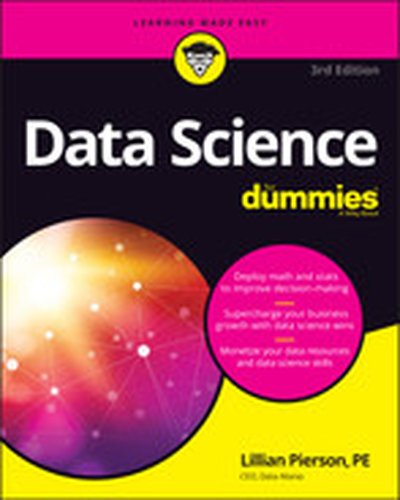
Data Science For Dummies, 3rd Edition

Monetize your company’s data and data science expertise without spending a fortune on hiring independent strategy consultants to help What if there was one simple, clear process for ensuring that all your company’s data science projects achieve a high a return on investment? What if you could validate your ideas for future data science projects, and select the one idea that’s most prime for achieving profitability while also moving your company closer to its business vision? There is. Industry-acclaimed data science consultant, Lillian Pierson, shares her proprietary STAR Framework – A simple, proven process for leading profit-forming data science projects. Not sure what data science is yet? Don’t worry! Parts 1 and 2 of Data Science For Dummies will get all the bases covered for you. And if you’re already a data science expert? Then you really won’t want to miss the data science strategy and data monetization gems that are shared in Part 3 onward throughout this book. Data Science For Dummies demonstrates: The only process you’ll ever need to lead profitable data science projects Secret, reverse-engineered data monetization tactics that no one’s talking about The shocking truth about how simple natural language processing can be How to beat the crowd of data professionals by cultivating your own unique blend of data science expertise Whether you’re new to the data science field or already a decade in, you’re sure to learn something new and incredibly valuable from Data Science For Dummies. Discover how to generate massive business wins from your company’s data by picking up your copy today.

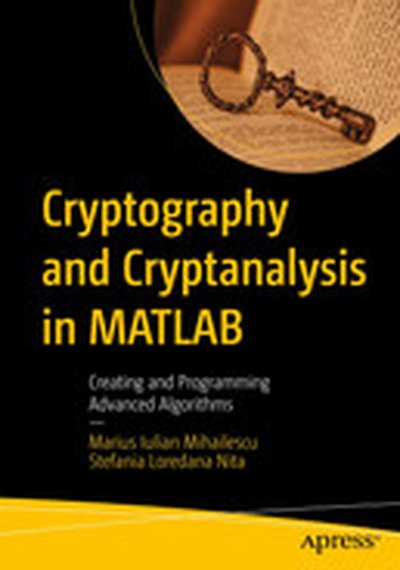
Cryptography and Cryptanalysis in MATLAB: Creating and Programming Advanced Algorithms

Master the essentials of cryptography and cryptanalysis and learn how to put them to practical use. Each chapter of this book starts with an introduction to the concepts on which cryptographic algorithms are based and how they are used in practice, providing fully working examples for each of the algorithms presented. Implementation sections will guide you through the entire process of writing your own applications and programs using MATLAB. Cryptography and Cryptanalysis in MATLAB will serve as your definitive go-to cryptography reference, whether you are a student, professional developer, or researcher, showing how a multitude of cryptographic challenges can be overcome using the powerful tools of MATLAB. What You Will Learn Discover MATLAB’s cryptography functions Work with conversion mechanisms in MATLAB Implement cryptographic algorithms using arithmetic operations Understand the classical, simple cryptosystems that form the basis of modern cryptography Develop fully working solutions (encryption/decryption operations) Study pseudo-random generators and their real-life implementations Utilize hash functions by way of practical examples Implement solutions to defend against practical cryptanalysis methods and attacks Understand asymmetric and symmetric encryption systems and how to use them Leverage visual cryptography, steganography, and chaos-based cryptography Who This Book Is For Those who are new to cryptography/analysis. Some prior exposure to MATLAB recommended.

Brownian Motion, 3rd Edition

Stochastic processes occur everywhere in the sciences, economics and engineering, and they need to be understood by (applied) mathematicians, engineers and scientists alike. This book gives a gentle introduction to Brownian motion and stochastic processes, in general. Brownian motion plays a special role, since it shaped the whole subject, displays most random phenomena while being still easy to treat, and is used in many real-life models. Im this new edition, much material is added, and there are new chapters on ''Wiener Chaos and Iterated Itô Integrals'' and ''Brownian Local Times''.

Data Science for Marketing Analytics - Second Edition

In 'Data Science for Marketing Analytics', you'll embark on a journey that integrates the power of data analytics with strategic marketing. With a focus on practical application, this guide walks you through using Python to analyze datasets, implement machine learning models, and derive data-driven insights. What this Book will help me do Gain expertise in cleaning, exploring, and visualizing marketing data using Python. Build machine learning models to predict customer behavior and sales outcomes. Leverage unsupervised learning techniques for effective customer segmentation. Compare and optimize predictive models using advanced evaluation methods. Master Python libraries like pandas and Matplotlib for data manipulation and visualization. Author(s) Mirza Rahim Baig, Gururajan Govindan, and Vishwesh Ravi Shrimali combine their extensive expertise in data analytics and marketing to bring you this comprehensive guide. Drawing from years of applying analytics in real-world marketing scenarios, they provide a hands-on approach to learning data science tools and techniques. Who is it for? This book is perfect for marketing professionals and analysts eager to harness the capabilities of Python to enhance their data-driven strategies. It is also ideal for data scientists looking to apply their skills in marketing across various roles. While a basic understanding of data analysis and Python will help, all key concepts are introduced comprehensively for beginners.

Tableau Desktop Cookbook

Whether you're a beginner just learning how to create data visualizations or a Jedi who's already used Tableau for years, this cookbook has a recipe for everyone. Author Lorna Brown provides more than 100 practical recipes to enhance the way you build Tableau dashboards--and helps you understand your data through the power of Tableau Desktop's interactive datavisualizations. With this cookbook, Tableau beginners will learn hands-on how this unique self-serve tool works, while experienced users will find this book to be an ideal reference guide on how to employ specific techniques. It also links you to online resources and community features, such as Tableau Tip Tuesday and Workout Wednesday. By the time you reach the end, you'll be a competent user of Tableau Desktop. You'll learn how to: Build both basic and complex data visualizations with Tableau Desktop Gain hands-on experience with Tableau's latest features, including set and parameter actions Create interactive dashboards to support business questions Improve your analytical skills to enhance the visualizations you've already created Learn data visualization skills and best practices to help you and your organization

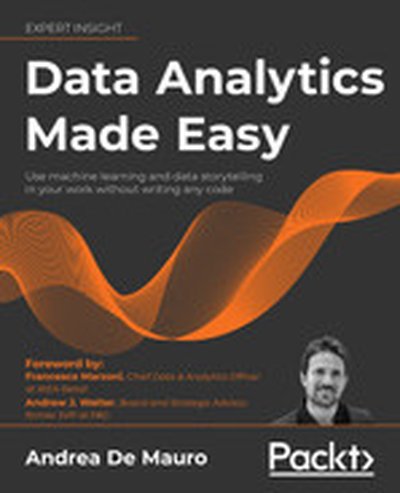
Data Analytics Made Easy

By reading "Data Analytics Made Easy," you'll gain a solid understanding of data analysis and visualization without requiring coding skills. This book emphasizes practical knowledge and use cases, covering storytelling, automation, machine learning, and business dashboards with tools like KNIME and Power BI. What this Book will help me do Understand the fundamentals of data analytics and how to leverage data for business insights. Create and automate data workflows using the no-code KNIME Analytics Platform. Develop interactive dashboards and data visualizations with Microsoft Power BI. Learn the basics of machine learning and how to apply models for business use. Enhance presentations and influence decisions through effective data storytelling. Author(s) None De Mauro is an experienced author and professional in the field of data analytics. Passionate about making complex topics approachable, None specializes in explaining technical concepts in simpler terms, ensuring readers can easily grasp and apply them in their work. Who is it for? This book is perfect for professionals or beginners who want to work with and interpret data effectively. Ideal for individuals in business roles or management positions looking to enhance their skills in data analytics and build a foundational understanding of machine learning and visualization.

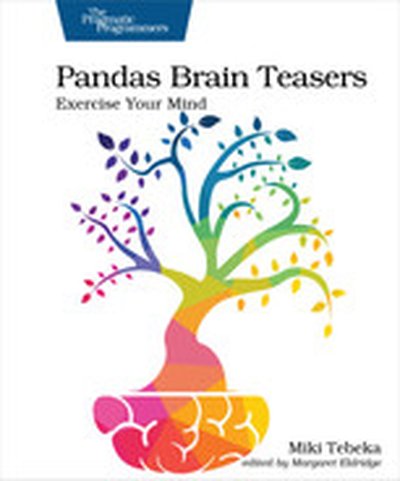
Pandas Brain Teasers

This book contains 25 short programs that will challenge your understanding of Pandas. Like any big project, the Pandas developers had to make some design decisions that at times seem surprising. This book uses those quirks as a teaching opportunity. By understanding the gaps in your knowledge, you'll become better at what you do. Some of the teasers are from the author's experience shipping bugs to production, and some from others doing the same. Teasers and puzzles are fun, and learning how to solve them can teach you to avoid programming mistakes and maybe even impress your colleagues and future employers. Working with data is central to nearly everything we do, from disease contact tracing and analyzing health records to smart meters that track utility consumption behavior. With the power of Python's pandas library, you can process and analyze this data in a highly efficient and simple-to-understand way. And with 25 brain teasers designed to turn this technology's quirks into a teaching opportunity, you'll be honing your data science skills while having fun at the same time. Following a simple format, you'll challenge yourself and your understanding of pandas. Read a short Python program that uses pandas, try to guess the output, run the code yourself, and then go to the next page for an explanation of the solution. From common pitfalls and hidden gotchas to unexpected twists and turns, you'll deepen your understanding of pandas, learn to write more efficient code, and reduce the number of bugs in the software you develop. You may even impress your colleagues and your employers, both present and future. Learn the tricks of the trade with Python's pandas, in one of the most fun and creative ways around. What You Need: To run the code you'll need Python version 3.8 or upper and Pandas version 1.0 or upper installed. We use Python version 3.8.3 and Pandas version 1.0.5; the output might change in future versions.

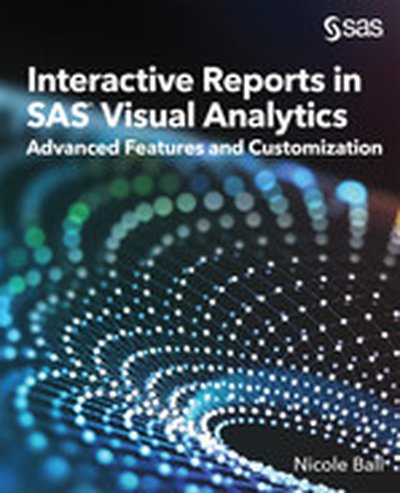
Interactive Reports in SAS® Visual Analytics

Elevate your reports with more user control and interactive elements Want to create exciting, user-friendly visualizations to bring greater intelligence to your organization? By mastering the full power of SAS Visual Analytics, you can add features that will enhance your reports and bring more depth and insight to your data. Interactive Reports in SAS Visual Analytics: Advanced Features and Customization is for experienced users who want to harness the advanced functionality of Visual Analytics on SAS Viya to create visualizations or augment existing reports. The book is full of real-world examples and step-by-step instructions to help you unlock the full potential of your reports. In this book, you will learn how to create interactive URL links to external websites use parameters to give the viewer more control add custom graphs and maps execute SAS code using SAS Viya jobs and more!

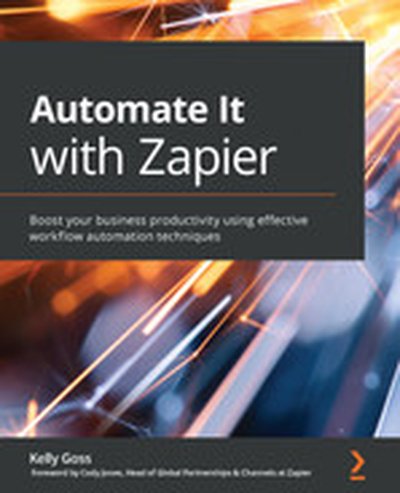
Automate It with Zapier

Unlock the power of automation with Zapier by learning how to streamline and optimize your workflows with this thorough guide. By mastering Zapier's tools, you can connect various applications and automate data flows, saving time and improving efficiency. What this Book will help me do Plan and design efficient workflow automations addressing specific business problems. Gain expertise in Zapier's native features and its integrations with third-party apps. Create optimal workflows to automate repetitive tasks efficiently. Utilize Zapier's pre-configured workflows while also designing advanced custom ones. Effectively troubleshoot issues and manage automation workflows with ease. Author(s) Kelly Goss is an experienced automation specialist with a deep understanding of business applications and processes. She has helped numerous organizations optimize their workflows by implementing no-code solutions like Zapier. Her writing focuses on making complex concepts accessible through relatable examples and actionable advice. Who is it for? This book is ideal for professionals in business process fields, such as consultants, analysts, and marketers, as well as SMB owners seeking to implement workflow automation. It caters to beginners with no prior automation experience and to those wanting to enhance their Zapier skills. By addressing key real-world problems, it helps readers achieve practical productivity gains.