talk-data.com talk-data.com

Event

O'Reilly Data Science Books

2013-08-09 – 2026-02-25 Oreilly Visit website ↗

Activities tracked

2118

Collection of O'Reilly books on Data Science.

Sessions & talks

Showing 1901–1925 of 2118 · Newest first

Search within this event →
Combined Analysis

This book introduces and details the key facets of Combined Analysis - an x-ray and/or neutron scattering methodology which combines structural, textural, stress, microstructural, phase, layer, or other relevant variable or property analyses in a single approach. The text starts with basic theories related to diffraction by polycrystals and some of the most common combined analysis instrumental set-ups are detailed. Also discussed are microstructures of powder diffraction profiles; quantitative phase analysis from the Rietveld analysis; residual stress analysis for isotropic and anisotropic materials; specular x-ray reflectivity, and the various associated models.

Microsoft Visio 2010 Business Process Diagramming and Validation

In the book 'Microsoft Visio 2010 Business Process Diagramming and Validation', you'll master the specialized features of Microsoft Visio 2010 Premium. This guide focuses on creating structured diagrams and validation rules, helping you enhance the accuracy and clarity of your business data visualization. What this Book will help me do Gain expertise in leveraging Visio's structured diagram tools for business process mapping. Learn how to build, customize, and apply Validation Rules for ensuring diagram accuracy. Develop skills in using the Visio Object Model and ShapeSheet to create advanced diagramming solutions. Understand and implement enhanced diagramming templates and rules, including BPMN and custom workflows. Acquire techniques for creating add-ins and publishing templates to establish company-wide diagramming standards. Author(s) David Parker, the author of this insightful book, is a seasoned professional with extensive experience in Microsoft Visio. His expertise includes creating complex diagramming solutions and training professionals in maximizing Visio's features. David's hands-on approach and understanding of business process needs make this a practical and enriching guide. Who is it for? This book is for users and developers of Microsoft Visio 2010 Premium Edition who want to master diagram validation and structured diagrams. Beginners with basic Visio knowledge and experienced users aiming to develop advanced applications will both benefit from this resource. It is especially useful for professionals seeking to enforce accuracy and compliance in their diagrams.

Sams Teach Yourself Google Analytics™ in 10 Minutes

Sams Teach Yourself Google Analytics™ in 10 Minutes gives you straightforward, practical answers when you need fast results. By working through its 10-minute lessons, you’ll learn everything you need to use Google Analytics to accurately measure your website’s performance–and improve it! 10 minutes is all you need to learn how to… Quickly create a Google Analytics account and add Google Analytics to your site Define goals and measure how well your site is achieving them Track visitors from search engines, pay-per-click advertising, email, and other sources Discover the pages your visitors view, how long they stay, and where they exit Monitor specific user actions, such as playing embedded video, selecting Flash menu items, or downloading files Identify your best and worst content, and fix poorly performing pages Improve your site by tracking error pages and broken links Measure AdWords traffic, position, and e-commerce performance Manage Google Analytics through the Dashboard Customize Google Analytics to work more effectively with your site Capture more accurate information by filtering out internal traffic Choose the right reports and data, understand them, and act on what you learn

JMP® Essentials: An Illustrated Step-by-Step Guide for New Users

Time is a scarce commodity in today's business environment. Curt Hinrichs and Chuck Boiler's JMP Essentials: An Illustrated Step-by-Step Guide for New Users is designed for the new or occasional JMP user who needs to generate meaningful graphs or results quickly. The authors, drawing on their own extensive experience working with customers with little or no background in JMP, provide a good survey and just what new users typically need. The format of the book is unique. It adopts a show-and-tell design with essential steps on the left-hand side and extensive illustrations on the right, which is very similar to the software's own philosophy of producing graphs alongside results. In most cases, each page or two-page spread completes a JMP task, which maximizes the book's utility as a reference. In addition, each chapter contains a family of features that are carefully crafted to first introduce basic features and progress to more advanced ones. For new users, JMP Essentials is the most accessible and fastest reference available.

JMP® Means Business: Statistical Models for Management

JMP Means Business: Statistical Models for Management, by Josef Schmee and Jane Oppenlander, covers basic methods and models of classical statistics. Designed for business and MBA students, as well as industry professionals who need to use and interpret statistics, JMP Means Business covers data collection, descriptive statistics, distributions, confidence intervals and hypothesis tests, analysis of variance, contingency tables, simple and multiple regression, and exponential smoothing of time series. The easy-to-use format includes verbal and graphical explanations and promotes standard problem-solving techniques, with a limited use of formulas. Examples from business and industry serve to introduce each topic. Each example starts with a problem definition and data requirements, followed by a step-by-step analysis with JMP. Relevant output from this analysis is used to explain each method and to provide the basis for interpretation. Each chapter ends with a summary and a collection of problems for further study.

Statistical Programming in SAS®

In Statistical Programming in SAS, author A. John Bailer integrates SAS tools with interesting statistical applications and uses SAS 9.2 as a platform to introduce programming ideas for statistical analysis, data management, and data display and simulation. Written using a reader-friendly and narrative style, the book includes extensive examples and case studies to present a well-structured introduction to programming issues. This book has two parts. The first part addresses the nuts and bolts of programming, including fostering good programming habits, getting external data sets into SAS to construct an analysis data set, generating basic descriptive statistical summaries, producing customized tables, generating more attractive output, and producing high-quality graphical displays. The second part emphasizes programming in the context of a DATA step, in macros, and in SAS/IML software. Examples of statistical methods and concepts not always encountered in basic statistics courses (for example, bootstrapping, randomization tests, and jittering) are used to illustrate programming ideas. This book provides extensive illustrations of the new ODS Statistical Graphics procedures in SAS, a description of the new ODS Graphics Editor, and a brief introduction to some of the capabilities of SAS/IML Studio, such as producing dynamically linked data displays and invoking R from SAS.

Professional Microsoft® PowerPivot for Excel® and SharePoint®

With PowerPivot, Microsoft brings the power of Microsoft's business intelligence tools to Excel and SharePoint users. Self-service business intelligence today augments traditional BI methods, allowing faster response time and greater flexibility. If you're a business decision-maker who uses Microsoft Office or an IT professional responsible for deploying and managing your organization's business intelligence systems, this guide will help you make the most of PowerPivot. Professional Microsoft PowerPivot for Excel and SharePoint describes all aspects of PowerPivot and shows you how to use each of its major features. By the time you are finished with this book, you will be well on your way to becoming a PowerPivot expert. This book is for people who want to learn about PowerPivot from end to end. You should have some rudimentary knowledge of databases and data analysis. Familiarity with Microsoft Excel and Microsoft SharePoint is helpful, since PowerPivot builds on those two products. This book covers the first version of PowerPivot, which ships with SQL Server 2008 R2 and enhances Microsoft Office 2010. It provides an overview of PowerPivot and a detailed look its two components: PowerPivot for Excel and PowerPivot for SharePoint. It explains the technologies that make up these two components, and gives some insight into why these components were implemented the way they were. Through an extended example, it shows how to build a PowerPivot application from end to end. The companion Web site includes all the sample applications and reports discussed. What This Book Covers After discussing self-service BI and the motivation for creating PowerPivot, the book presents a quick, end-to-end tutorial showing how to create and publish a simple PowerPivot application. It then drilsl into the features of PowerPivot for Excel in detail and, in the process, builds a more complex PowerPivot application based on a real-world case study. Finally, it discusses the server side of PowerPivot (PowerPivot for SharePoint) and provides detailed information about its installation and maintenance. Chapter 1, "Self-Service Business Intelligence and Microsoft PowerPivot," begins Part I of the book. This chapter describes self-service BI and introduces PowerPivot, Microsoft's first self-service BI tool. It provides a high-level look at the two components that make up PowerPivot - PowerPivot for Excel and PowerPivot for SharePoint. Chapter 2, "A First Look at PowerPivot," walks you through a simple example of creating a PowerPivot application from end to end. In the process, it shows how to set up the two components of PowerPivot, and describes the normal workflow of creating a simple PowerPivot application. Chapter 3, "Assembling Data," starts off Part II of the book, and explains how to bring data into PowerPivot from various external data sources. It also introduces the extended example that you will build in this and subsequent chapters. Chapter 4, "Enriching Data," shows how to enhance the data you brought into your application by creating relationships and using PowerPivot's expression language, Data Analysis Expressions (DAX). Chapter 5, "Self-Service Analysis," describes how to use your PowerPivot data with various Excel features, such as PivotTables, PivotCharts, and slicers to do analysis. Chapter 5 also delves further into DAX, showing how to create and use DAX measures. Chapter 6, "Self-Service Reporting," shows how to publish your PowerPivot workbook to the server side of PowerPivot (PowerPivot for SharePoint), and make use of its features to view and update PowerPivot reports. It also shows how to use the data in a PowerPivot workbook as a data source for reports created in other tools such as Report Builder 3.0 and Excel. Chapter 7, "Preparing for SharePoint 2010," is the first chapter in Part III of the book. It describes the components of SharePoint 2010 that are relevant for PowerPivot, and looks at how PowerPivot for SharePoint interacts with those components. Chapter 8, "PowerPivot for SharePoint Setup and Configuration," provides instructions on how to set up and configure a multi-machine SharePoint farm that contains PowerPivot for SharePoint. Chapter 9, "Troubleshooting, Monitoring, and Securing PowerPivot Services," gives tips on how to troubleshoot PowerPivot for SharePoint issues. It also shows how to monitor the health of your PowerPivot for SharePoint environment, and discusses relevant security issues. Chapter 10, "Diving into the PowerPivot Architecture," describes at a deeper level the architecture of PowerPivot, both client and server. It also explains the Windows Identity Foundation and discusses the use of Kerberos in the context of PowerPivot for SharePoint. Chapter 11, "Enterprise Considerations," talks about common PowerPivot for SharePoint enterprise considerations: capacity planning, optimizing the environment, upgrade considerations, and uploading performance. Appendix A provides instructions for setting up the data sources that are used to build the SDR Healthcare extended example in Chapters 3 through 6. Additionally, two "bonus" elements are available online at this book's companion Web site: Appendix B is a comprehensive DAX reference that describes all the DAX functions and provides code snippets that show how to use them. A special chapter describes real-world scenarios in which PowerPivot is used to solve common problems.


PowerPivot for the Data Analyst: Microsoft® Excel 2010

ANALYZE HUGE AMOUNTS OF BUSINESS DATA FASTER, MORE EASILY, AND MORE ACCURATELY! Use Microsoft’s free PowerPivot add-in for Excel 2010 to analyze immense amounts of data from any source, perform state-of-the-art business analysis far more easily, and make better decisions in less time! Simple, step-by-step instructions walk you through installing PowerPivot, importing data, using PivotTables with PowerPivot, using super-powerful DAX functions and measures, reporting to print or SharePoint, and a whole lot more. Whatever your Excel data analysis experience, this book will help you use PowerPivot to get the right answers, right now—without IT’s help! • Import and integrate data from spreadsheets, SQL Server, Access, Oracle, text files, Atom data feeds, and other sources • Analyze multiple tables together, without complicated VLOOKUPs • Format, sort, and filter data in the PowerPivot window • Add calculated columns using new DAX functions • Create powerful reports from PowerPivot data–and format them so executives instantly get your point • Discover PivotTable tricks that work even better in PowerPivot • Control multiple PivotTable elements on one worksheet, with one set of Excel 2010 Slicers • Use DAX Measures to quickly perform tasks that were difficult or impossible with Calculated Fields • Compare today’s sales to yesterday’s–or to sales from the parallel period last fiscal year. • Use Named Sets to prepare asymmetric reports, show actuals for past months and plan for future months. About MrExcel Library: Every book in the MrExcel Library pinpoints a specific set of crucial Excel tasks and presents focused skills and examples for performing them rapidly and effectively. Selected by Bill Jelen, Microsoft Excel MVP and mastermind behind the leading Excel solutions website MrExcel.com, these books will • Dramatically increase your productivity–saving you 50 hours a year, or more • Present proven, creative strategies for solving real-world problems • Show you how to get great results, no matter how much data you have • Help you avoid critical mistakes that even experienced users make

IBM Cognos 8 Report Studio Cookbook

The "IBM Cognos 8 Report Studio Cookbook" by Abhishek Sanghani provides over 80 hands-on recipes to enhance your proficiency in creating business reports using Cognos 8 Report Studio. From mastering basic techniques to leveraging advanced features, this book is your guide to developing reports that meet real-world business demands. What this Book will help me do Understand and utilize advanced techniques for sorting, filtering, and aggregating data in reports. Implement features like conditional formatting, cascaded prompts, and master-detail queries to enhance report functionality. Create dynamic, user-friendly business reports tailored to specific requirements. Make use of XML specifications to customize reports beyond the capabilities of the default tools. Adopt best practices in report development such as version control and regression testing. Author(s) Abhishek Sanghani is an experienced Business Intelligence professional specializing in IBM Cognos and data analytics. With practical knowledge from implementing solutions for various industries, he brings a wealth of insight into creating powerful business reports. Abhishek's approachable writing makes advanced Report Studio concepts accessible to readers. Who is it for? This book is ideally suited for Business Intelligence or MIS developers working with Cognos Report Studio, seeking advanced guidance for creating reports. Business analysts and power users wanting to extend beyond basic report authoring will also benefit greatly. The book assumes a functional understanding of Cognos Studio and familiarity with its ecosystem.

Knowledge Discovery from Data Streams

Exploring how to extract knowledge structures from evolving and time-changing data, this book presents a coherent overview of state-of-the-art research in learning from data streams. It covers the fundamentals that are imperative to understanding data streams and describes important applications, such as TCP/IP traffic, GPS data, sensor networks, and customer click streams. It also explores advanced areas, such as ubiquitous data stream mining; addresses several challenges of data mining in the future, when stream mining will be at the core of many applications; and includes pseudo-code of more than 30 streaming-like algorithms.

Statistics for Business

Statistical analysis is essential to business decision-making and management, but the underlying theory of data collection, organization and analysis is one of the most challenging topics for business students and practitioners. This user-friendly text and CD-ROM package will help you to develop strong skills in presenting and interpreting statistical information in a business or management environment. Based entirely on using Microsoft Excel rather than more complicated applications, it includes a clear guide to using Excel with the key functions employed in the book, a glossary of terms and equations, plus a section specifically for those readers who feel rusty in basic maths. Each chapter has worked examples and explanations to illustrate the use of statistics in real life scenarios, with databases for the worked examples, cases and answers on the accompanying CD-ROM.

Mathematica Cookbook

Visit the catalog page for Mathematica CookbookVisit the errata page for Mathematica Cookbook Mathematica Cookbook helps you master the application's core principles by walking you through real-world problems. Ideal for browsing, this book includes recipes for working with numerics, data structures, algebraic equations, calculus, and statistics. You'll also venture into exotic territory with recipes for data visualization using 2D and 3D graphic tools, image processing, and music. Although Mathematica 7 is a highly advanced computational platform, the recipes in this book make it accessible to everyone -- whether you're working on high school algebra, simple graphs, PhD-level computation, financial analysis, or advanced engineering models. Learn how to use Mathematica at a higher level with functional programming and pattern matching Delve into the rich library of functions for string and structured text manipulation Learn how to apply the tools to physics and engineering problems Draw on Mathematica's access to physics, chemistry, and biology data Get techniques for solving equations in computational finance Learn how to use Mathematica for sophisticated image processing Process music and audio as musical notes, analog waveforms, or digital sound samples

Introduction to Stochastic Models

This book provides a pedagogical examination of the way in which stochastic models are encountered in applied sciences and techniques such as physics, engineering, biology and genetics, economics and social sciences. It covers Markov and semi-Markov models, as well as their particular cases: Poisson, renewal processes, branching processes, Ehrenfest models, genetic models, optimal stopping, reliability, reservoir theory, storage models, and queuing systems. Given this comprehensive treatment of the subject, students and researchers in applied sciences, as well as anyone looking for an introduction to stochastic models, will find this title of invaluable use.

Performance Marketing with Google™ Analytics: Practical Strategies for Maximizing Online ROI

An unparalleled author trio shares valuable advice for using Google Analytics to achieve your business goals Google Analytics is a free tool used by millions of Web site owners across the globe to track how visitors interact with their Web sites, where they arrive from, and which visitors drive the most revenue and sales leads. This book offers clear explanations of practical applications drawn from the real world. The author trio of Google Analytics veterans starts with a broad explanation of performance marketing and gets progressively more specific, closing with step-by-step analysis and applications. Features in-depth examples and case studies on how to increase revenue from search advertising, optimize an existing website, prioritize channels and campaigns, access brand health and more Discusses how to communicate with a webmaster or developer to assist with installation Addresses Google's conversion-oriented tools, including AdWords and AdSense, Google trends, Webmaster tools, search-based keyword tools, and more Touches on brand tracking studies, usability research, competitive analysis, and statistical tools Throughout the book, the main emphasis is demonstrating how you can best use Google Analytics to achieve your business objectives.

Pentaho 3.2 Data Integration Beginner's Guide

Explore, transform, validate, and integrate your data with ease Get started with Pentaho Data Integration from scratch. Enrich your data transformation operations by embedding Java and JavaScript code in PDI transformations. Create a simple but complete Datamart Project that will cover all key features of PDI. Part of Packt's Beginner's Guide series: Each task gradually develops from the previous task with an organized sequence of instructions accompanied with relevant explanation and a set of challenging tasks that the reader will be able to accomplish. In Detail Pentaho Data Integration (a.k.a. Kettle) is a full-featured open source ETL (Extract, Transform, and Load) solution. Although PDI is a feature-rich tool, effectively capturing, manipulating, cleansing, transferring, and loading data can get complicated. This book is full of practical examples that will help you to take advantage of Pentaho Data Integration's graphical, drag-and-drop design environment. You will quickly get started with Pentaho Data Integration by following the step-by-step guidance in this book. The useful tips in this book will encourage you to exploit powerful features of Pentaho Data Integration and perform ETL operations with ease. Starting with the installation of the PDI software, this book will teach you all the key PDI concepts. Each chapter introduces new features, allowing you to gradually get involved with the tool. First, you will learn to work with plain files, and to do all kinds of data manipulation. Then, the book gives you a primer on databases and teaches you how to work with databases inside PDI. Not only that, you'll be given an introduction to data warehouse concepts and you will learn to load data in a data warehouse. After that, you will learn to implement simple and complex processes. Once you've learned all the basics, you will build a simple datamart that will serve to reinforce all the concepts learned through the book. A practical, easy-to-read guide that gives you full understanding of the Pentaho Data Integration tool and shows you how to use it to your advantage to manipulate data

The Little SAS Book for Enterprise Guide 4.2
Whether you are using SAS Enterprise Guide for the first time or transitioning to the newest release, this is the book for you! With The Little SAS Book for Enterprise Guide 4.2, award-winning authors Susan Slaughter and Lora Delwiche help you quickly become productive in the SAS Enterprise Guide point-and-click environment. A series of carefully designed tutorials help you master the basics of the tasks you'll want to do most frequently. The reference section of the book expands on the tutorial topics, covering specific features in more depth. Completely rewritten and updated with new features for SAS Enterprise Guide 4.2, this edition supports SAS Enterprise Guide 4.2, SAS Enterprise Guide 4.3, and SAS Enterprise Guide 5.1.

This book is part of the SAS Press program.

Wrong Numbers in Sports: Painting a Bigger Picture with Stats that Matter

This Element is an excerpt from Stumbling On Wins: Two Economists Expose the Pitfalls on the Road to Victory in Professional Sports (9780132357784) by David J. Berri and Martin B. Schmidt. Available in print and digital formats. Why sports decision-makers are wrong so often — and why they keep making the same mistakes, year after year. When Bill James introduced his findings on the importance of on-base percentage–and the unimportance of steals–decision-makers in baseball didn’t embrace his work. Their initial reaction fully reflects the lessons of behavioral economics: people have trouble accepting information that contradicts their viewpoints. The same story has been seen again and again across the North American professional sports world.

Survival Analysis Using SAS

Easy to read and comprehensive, Survival Analysis Using SAS: A Practical Guide, Second Edition, by Paul D. Allison, is an accessible, data-based introduction to methods of survival analysis. Researchers who want to analyze survival data with SAS will find just what they need with this fully updated new edition that incorporates the many enhancements in SAS procedures for survival analysis in SAS 9. Although the book assumes only a minimal knowledge of SAS, more experienced users will learn new techniques of data input and manipulation. Numerous examples of SAS code and output make this an eminently practical book, ensuring that even the uninitiated become sophisticated users of survival analysis. The main topics presented include censoring, survival curves, Kaplan-Meier estimation, accelerated failure time models, Cox regression models, and discrete-time analysis. Also included are topics not usually covered in survival analysis books, such as time-dependent covariates, competing risks, and repeated events.

Survival Analysis Using SAS: A Practical Guide, Second Edition, has been thoroughly updated for SAS 9, and all figures are presented using ODS Graphics. This new edition also documents major enhancements to the STRATA statement in the LIFETEST procedure; includes a section on the PROBPLOT command, which offers graphical methods to evaluate the fit of each parametric regression model; introduces the new BAYES statement for both parametric and Cox models, which allows the user to do a Bayesian analysis using MCMC methods; demonstrates the use of the counting process syntax as an alternative method for handling time-dependent covariates; contains a section on cumulative incidence functions; and describes the use of the new GLIMMIX procedure to estimate random-effects models for discrete-time data.

This book is part of the SAS Press program.

Applied Statistics and Probability for Engineers, 5th Edition

Montgomery and Runger's best-selling engineering statistics text provides a practical approach oriented to engineering as well as chemical and physical sciences. By providing unique problem sets that reflect realistic situations, students learn how the material will be relevant in their careers and is suitable for a one- or two-term course in probability and statistics. With a focus on how statistical tools are integrated into the engineering problem-solving process, all major aspects of engineering statistics are covered, including descriptive statistics, probability and probability distributions, statistical test and confidence intervals for one and two samples, building regression models, designing and analyzing engineering experiments, and statistical process control. Developed with sponsorship from the National Science Foundation, this text incorporates many insights from the authors' teaching experience along with feedback from numerous adopters of previous editions.

Bioinformatics and Biomarker Discovery: "Omic" Data Analysis for Personalized Medicine

This book is designed to introduce biologists, clinicians and computational researchers to fundamental data analysis principles, techniques and tools for supporting the discovery of biomarkers and the implementation of diagnostic/prognostic systems. The focus of the book is on how fundamental statistical and data mining approaches can support biomarker discovery and evaluation, emphasising applications based on different types of "omic" data. The book also discusses design factors, requirements and techniques for disease screening, diagnostic and prognostic applications. Readers are provided with the knowledge needed to assess the requirements, computational approaches and outputs in disease biomarker research. Commentaries from guest experts are also included, containing detailed discussions of methodologies and applications based on specific types of "omic" data, as well as their integration. Covers the main range of data sources currently used for biomarker discovery Covers the main range of data sources currently used for biomarker discovery Puts emphasis on concepts, design principles and methodologies that can be extended or tailored to more specific applications Offers principles and methods for assessing the bioinformatic/biostatistic limitations, strengths and challenges in biomarker discovery studies Discusses systems biology approaches and applications Includes expert chapter commentaries to further discuss relevance of techniques, summarize biological/clinical implications and provide alternative interpretations

Advanced Web Metrics with Google Analytics™, Second Edition

Valuable tips and tricks for using the latest version of Google Analytics Packed with insider tips and tricks, this how-to guide is fully revised to cover the latest version of Google Analytics and shows you how to implement proven Web analytics methods and concepts. This second edition of the bestselling Advanced Web Metrics with Google Analytics is the perfect book for marketers, vendors, consultants, and Webmasters who want to learn the installation, configuration, tracking techniques, and best practices of Google Analytics. Google Analytics is a free tool that measures Web site effectiveness and helps users better understand how web site performance; this book is a detailed usage guide written by one of the software's original creators Explains what filters keep data accurate, how to measure Flash usage and tag for e-mail marketing, and what visitor segmentation provides the most useful feedback Examines principles and practices of Web analytics, then shows how to use GA's reports and how to track dynamic Web pages, banners, outgoing links, and contact forms Discusses advanced setups for configuring goals and filters, how to integrate GA with third-party systems, and how to leverage the new API Advanced Web Metrics with Google Analytics, Second Edition is valuable for both novice and experienced users of Google Analytics.

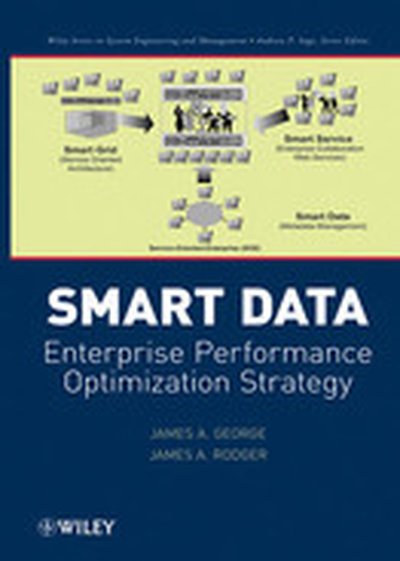
Smart Data: Enterprise Performance Optimization Strategy

The authors advocate attention to smart data strategy as an organizing element of enterprise performance optimization. They believe that "smart data" as a corporate priority could revolutionize government or commercial enterprise performance much like "six sigma" or "total quality" as organizing paradigms have done in the past. This revolution has not yet taken place because data historically resides in the province of the information resources organization. Solutions that render data smart are articulated in "technoid" terms versus the language of the board room. While books such as Adaptive Information by Pollock and Hodgson ably describe the current state of the art, their necessarily technical tone is not conducive to corporate or agency wide qualitative change.

SAS Functions by Example, Second Edition, 2nd Edition

Fully updated for SAS 9.2, Ron Cody's SAS Functions by Example, Second Edition, is a must-have reference for anyone who programs in Base SAS. With the addition of functions new to SAS 9.2, this comprehensive reference manual now includes more than 200 functions, including new character, date and time, distance, probability, sort, and special functions. This new edition also contains more examples for existing functions and more details concerning optional arguments.

Like the first edition, the new edition also includes a list of SAS programs, an alphabetic list of all the functions in the book, and a comprehensive index of functions and tasks. Beginning and experienced SAS users will benefit from this useful reference guide to SAS functions.

This book is part of the SAS Press program.