talk-data.com talk-data.com

Topic

analytics-platforms

402

tagged

Activity Trend

1 peak/qtr
2020-Q1 2026-Q1

Activities

402 activities · Newest first

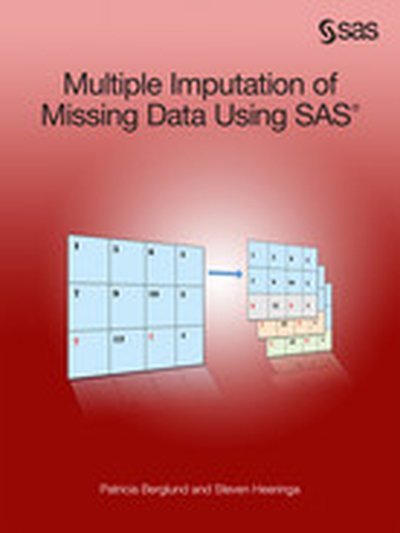
Multiple Imputation of Missing Data Using SAS

Find guidance on using SAS for multiple imputation and solving common missing data issues.

Multiple Imputation of Missing Data Using SAS provides both theoretical background and constructive solutions for those working with incomplete data sets in an engaging example-driven format. It offers practical instruction on the use of SAS for multiple imputation and provides numerous examples that use a variety of public release data sets with applications to survey data.

Written for users with an intermediate background in SAS programming and statistics, this book is an excellent resource for anyone seeking guidance on multiple imputation. The authors cover the MI and MIANALYZE procedures in detail, along with other procedures used for analysis of complete data sets. They guide analysts through the multiple imputation process, including evaluation of missing data patterns, choice of an imputation method, execution of the process, and interpretation of results.

Topics discussed include how to deal with missing data problems in a statistically appropriate manner, how to intelligently select an imputation method, how to incorporate the uncertainty introduced by the imputation process, and how to incorporate the complex sample design (if appropriate) through use of the SAS SURVEY procedures.

Discover the theoretical background and see extensive applications of the multiple imputation process in action.

This book is part of the SAS Press program.
Practical Data Analysis with JMP, Second Edition, 2nd Edition

Understand the concepts and techniques of analysis while learning to reason statistically.

Being an effective analyst requires that you know how to properly define a problem and apply suitable statistical techniques, as well as clearly and honestly communicate the results with information-rich visualizations and precise language. Being a well-informed consumer of analyses requires the same set of skills so that you can recognize credible, actionable research when you see it.

Robert Carver's Practical Data Analysis with JMP, Second Edition uses the powerful interactive and visual approach of JMP to introduce readers to the logic and methods of statistical thinking and data analysis. It enables you to discriminate among and to use fundamental techniques of analysis, enabling you to engage in statistical thinking by analyzing real-world problems. “Application Scenarios” at the end of each chapter challenge you to put your knowledge and skills to use with data sets that go beyond mere repetition of chapter examples, and three new review chapters help readers integrate ideas and techniques. In addition, the scope and sequence of the chapters have been updated with more coverage of data management and analysis of data.

The book can stand on its own as a learning resource for professionals or be used to supplement a standard college-level introduction-to-statistics textbook. It includes varied examples and problems that rely on real sets of data, typically starting with an important or interesting research question that an investigator has pursued. Reflective of the broad applicability of statistical reasoning, the problems come from a wide variety of disciplines, including engineering, life sciences, business, economics, among

Practical Data Analysis with JMP, Second Edition introduces you to the major platforms and essential features of JMP and will leave you with a sufficient background and the confidence to continue your exploration independently.

This book is part of the SAS Press program.
Risk-Based Monitoring and Fraud Detection in Clinical Trials Using JMP and SAS

Improve efficiency while reducing costs in clinical trials with centralized monitoring techniques using JMP and SAS.

International guidelines recommend that clinical trial data should be actively reviewed or monitored; the well-being of trial participants and the validity and integrity of the final analysis results are at stake. Traditional interpretation of this guidance for pharmaceutical trials has led to extensive on-site monitoring, including 100% source data verification. On-site review is time consuming, expensive (estimated at up to a third of the cost of a clinical trial), prone to error, and limited in its ability to provide insight for data trends across time, patients, and clinical sites. In contrast, risk-based monitoring (RBM) makes use of central computerized review of clinical trial data and site metrics to determine if and when clinical sites should receive more extensive quality review or intervention.

Risk-Based Monitoring and Fraud Detection in Clinical Trials Using JMP and SAS presents a practical implementation of methodologies within JMP Clinical for the centralized monitoring of clinical trials. Focused on intermediate users, this book describes analyses for RBM that incorporate and extend the recommendations of TransCelerate Biopharm Inc., methods to detect potential patient-or investigator misconduct, snapshot comparisons to more easily identify new or modified data, and other novel visual and analytical techniques to enhance safety and quality reviews. Further discussion highlights recent regulatory guidance documents on risk-based approaches, addresses the requirements for CDISC data, and describes methods to supplement analyses with data captured external to the study database.

Given the interactive, dynamic, and graphical nature of JMP Clinical, any individual from the clinical trial team - including clinicians, statisticians, data managers, programmers, regulatory associates, and monitors - can make use of this book and the numerous examples contained within to streamline, accelerate, and enrich their reviews of clinical trial data.

The analytical methods described in Risk-Based Monitoring and Fraud Detection in Clinical Trials Using JMP and SAS enable the clinical trial team to take a proactive approach to data quality and safety to streamline clinical development activities and address shortcomings while the study is ongoing.

This book is part of the SAS Press

SAS Macro Programming Made Easy, Third Edition, 3rd Edition

This book provides beginners with a thorough foundation in SAS macro programming.

The macro facility is a popular part of SAS. Macro programming is a required skill for many SAS programming jobs, and the SAS Advanced Programming Certification Exam tests macro processing concepts. Whether you're looking to become certified, land a job, or increase your skills, you'll benefit from SAS Macro Programming Made Easy, Third Edition.

By following Michele Burlew's examples and step-by-step instructions, you'll be able to rapidly perform repetitive programming tasks, to pass information between programming steps more easily, and to make your programming easier to read.

Updated for SAS 9.4, this book teaches you the elements of the macro facility (macro variables, macro programs, macro language), how to write a macro program, techniques for macro programming, tips on using the macro facility, how the macro facility fits into SAS, and about the interfaces between the macro facility and other components of SAS.

Beginning macro programmers will learn to write SAS macro programs quickly and efficiently. More experienced programmers will find this book useful to refresh their conceptual knowledge and expand on their macro programming skills. Ultimately, any user interested in automating their programs—including analysts, programmers, and report writers—will find Michele Burlew's book an excellent tutorial.

This book is part of the SAS Press program.
SAS Programming with Medicare Administrative Data, 2nd Edition

SAS Programming with Medicare Administrative Data is the most comprehensive resource available for using Medicare data with SAS. This book teaches you how to access Medicare data and, more importantly, how to apply this data to your research.

Knowing how to use Medicare data to answer common research and business questions is a critical skill for many SAS users. Due to its complexity, Medicare data requires specific programming knowledge in order to be applied accurately. Programmers need to understand the Medicare program in order to interpret and utilize its data.

With this book, you'll learn the entire process of programming with Medicare data—from obtaining access to data; to measuring cost, utilization, and quality; to overcoming common challenges. Each chapter includes exercises that challenge you to apply concepts to real-world programming tasks.

SAS Programming with Medicare Administrative Data offers beginners a programming project template to follow from beginning to end. It also includes more complex questions and discussions that are appropriate for advanced users. Matthew Gillingham has created a book that is both a foundation for programmers new to Medicare data and a comprehensive reference for experienced programmers.

This book is part of the SAS Press program.
ODS Techniques

Enhance your SAS ODS output with this collection of basic to novel ideas.

SAS Output Delivery System (ODS) expert Kevin D. Smith has compiled a cookbook-style collection of his top ODS tips and techniques to teach you how to bring your reports to a new level and inspire you to see ODS in a new light.

This collection of code techniques showcases some of the most interesting and unusual methods you can use to enhance your reports within the SAS Output Delivery System. It includes general ODS tips, as well as techniques for styles, enhancing tabular output, ODS HTML, ODS PDF, ODS Microsoft Excel destinations, and ODS DOCUMENT.

Smith offers tips based on his own extensive knowledge of ODS, as well as those inspired by questions that frequently come up in his interactions with SAS users. There are simple techniques for beginners who have a minimal amount of ODS knowledge and advanced tips for the more adventurous SAS user. Together, these helpful methods provide a strong foundation for your ODS development and inspiration for building on and creating new, even more advanced techniques on your own.

This book is part of the SAS Press program.
SAS Programming in the Pharmaceutical Industry, Second Edition, 2nd Edition

This comprehensive resource provides on-the-job training for statistical programmers who use SAS in the pharmaceutical industry

This one-stop resource offers a complete review of what entry- to intermediate-level statistical programmers need to know in order to help with the analysis and reporting of clinical trial data in the pharmaceutical industry.

SAS Programming in the Pharmaceutical Industry, Second Edition begins with an introduction to the pharmaceutical industry and the work environment of a statistical programmer. Then it gives a chronological explanation of what you need to know to do the job. It includes information on importing and massaging data into analysis data sets, producing clinical trial output, and exporting data. This edition has been updated for SAS 9.4, and it features new graphics as well as all new examples using CDISC SDTM or ADaM model data structures.

Whether you're a novice seeking an introduction to SAS programming in the pharmaceutical industry or a junior-level programmer exploring new approaches to problem solving, this real-world reference guide offers a wealth of practical suggestions to help you sharpen your skills.

This book is part of the SAS Press program.
Expert Cube Development with SSAS Multidimensional Models

"Expert Cube Development with SSAS Multidimensional Models" is a comprehensive guide designed for professionals looking to elevate their competence in creating and optimizing SSAS cube solutions. Focused on the multidimensional model, this book provides a detailed, pragmatic approach to delivering high-performance Business Intelligence solutions. What this Book will help me do Master the core features of multidimensional modeling with SSAS. Develop efficient and scalable OLAP cubes for business analysis. Implement advanced calculations and measures using MDX. Optimize and troubleshoot SSAS performance for real-world scenarios. Integrate SSAS models for insightful data visualization. Author(s) The authors of this book are seasoned SSAS consultants and developers, each with years of hands-on experience working with Microsoft Analysis Services in enterprise environments. Their deep understanding of multidimensional modeling shines through in this detailed and well-structured book, providing readers with not only practical guidance but also invaluable tips drawn from real-world projects. Who is it for? This book is tailored for BI developers and data professionals who already have some familiarity with Microsoft Analysis Services and want to deepen their expertise in SSAS multidimensional models. It is ideal for those looking to enhance their ability to design, implement, and optimize robust cube solutions for complex business scenarios. With step-by-step tutorials, it caters to intermediate to advanced learners seeking to take their SSAS skills to the next level.

QlikView Server and Publisher

This book, "QlikView Server and Publisher," serves as a comprehensive guide for implementing and managing QlikView Server and Publisher in enterprise environments. It walks you through the entire process, highlighting vital configuration techniques, and best practices necessary to maximize the potential of QlikView for your data solutions. What this Book will help me do Understand the best practices for configuring QlikView Server and Publisher in your organization's IT environment. Master the process of installing and maintaining QlikView Server to ensure optimal performance. Learning how to deploy enterprise-grade QlikView Server setups effectively. Gain expertise in setting up and leveraging QlikView Publisher for task scheduling and automation. Acquire the skills to integrate QlikView with advanced security solutions and monitor system efficiency. Author(s) Stephen Redmond is a renowned author and expert on data visualization platforms, particularly QlikView. With years of experience in implementing enterprise data solutions, Stephen brings practical insights to complex technical concepts. He focuses on guiding readers with systematic and approachable methods to master Qlik technologies. Who is it for? This book is designed for IT professionals and system administrators who are tasked with deploying or maintaining QlikView systems. Whether you're new to QlikView or have some experience, you'll find the material clear and beneficial to mastering enterprise implementations. The content suits individuals aiming to improve data-driven decision-making systems in their organization.

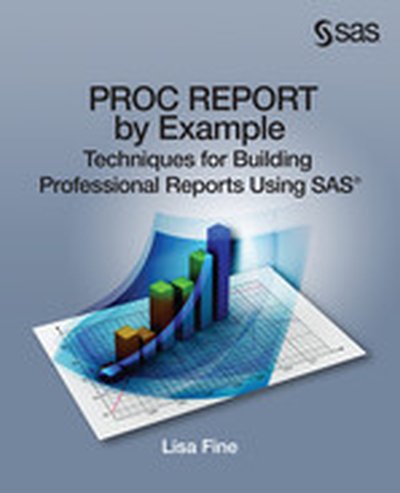
PROC REPORT by Example

PROC REPORT by Example: Techniques for Building Professional Reports Using SAS provides real-world examples using PROC REPORT to create a wide variety of professional reports. Written from the point of view of the programmer who produces the reports, this book explains and illustrates creative techniques used to achieve the desired results.

Each chapter focuses on a different concrete example, shows an image of the final report, and then takes you through the process of creating that report. You will be able to break each report down to find out how it was produced, including any data manipulation you have to do.

The book clarifies solutions to common, everyday programming challenges and typical daily tasks that programmers encounter. For example: obtaining desired report formats using style templates supplied by SAS and PROC TEMPLATE, PROC REPORT STYLE options, and COMPUTE block features employing different usage options (DISPLAY, ORDER, GROUP, ANALYSIS, COMPUTED) to create a variety of detail and summary reports using BREAK statements and COMPUTE blocks to summarize and report key findings producing reports in various Output Delivery System (ODS) destinations including RTF, PDF, XML, TAGSETS.RTF embedding images in a report and combining graphical and tabular data with SAS 9.2 and beyond

Applicable to SAS users from all disciplines, the real-life scenarios will help elevate your reporting skills learned from other books to the next level.

With PROC REPORT by Example: Techniques for Building Professional Reports Using SAS, what seemed complex will become a matter of practice.

This book is part of the SAS Press program.
Predictive Modeling with SAS Enterprise Miner, 2nd Edition

Learn the theory behind and methods for predictive modeling using SAS Enterprise Miner.

Learn how to produce predictive models and prepare presentation-quality graphics in record time with Predictive Modeling with SAS Enterprise Miner: Practical Solutions for Business Applications, Second Edition.

If you are a graduate student, researcher, or statistician interested in predictive modeling; a data mining expert who wants to learn SAS Enterprise Miner; or a business analyst looking for an introduction to predictive modeling using SAS Enterprise Miner, you'll be able to develop predictive models quickly and effectively using the theory and examples presented in this book.

Author Kattamuri Sarma offers the theory behind, programming steps for, and examples of predictive modeling with SAS Enterprise Miner, along with exercises at the end of each chapter. You'll gain a comprehensive awareness of how to find solutions for your business needs. This second edition features expanded coverage of the SAS Enterprise Miner nodes, now including File Import, Time Series, Variable Clustering, Cluster, Interactive Binning, Principal Components, AutoNeural, DMNeural, Dmine Regression, Gradient Boosting, Ensemble, and Text Mining.

Develop predictive models quickly, learn how to test numerous models and compare the results, gain an in-depth understanding of predictive models and multivariate methods, and discover how to do in-depth analysis. Do it all with Predictive Modeling with SAS Enterprise Miner.

This book is part of the SAS Press program.
Pentaho Data Integration Cookbook - Second Edition - Second Edition

This cookbook is a comprehensive guide to using Pentaho Data Integration (Kettle) for executing ETL processes effectively. With step-by-step recipes, it covers everything from connecting to diverse data sources to implementing advanced data handling workflows. This book is a valuable resource to streamline and enhance your data integration tasks. What this Book will help me do Learn to configure Kettle to connect with various databases and applications. Understand how to embed Java code for optimized transformations. Discover techniques to reuse and manage transformations and jobs. Master the integration of Kettle with other Pentaho Suite components. Explore advanced data flow control and manipulation tactics. Author(s) The authors of this book are experienced professionals in data integration and Pentaho tools. They bring years of practical industry experience and have a passion for sharing knowledge through clear, hands-on tutorials. Their approach to writing ensures readers can take actionable insights directly to their work. Who is it for? This book is ideal for developers familiar with the fundamental concepts of Kettle who aim to delve deeper into advanced functionalities. Readers should have basic ETL knowledge and the ambition to master Pentaho Data Integration. Experienced users will find valuable tips and learn about new features to automate and enhance their processes.