talk-data.com talk-data.com

Topic

analytics-platforms

402

tagged

Activity Trend

1 peak/qtr
2020-Q1 2026-Q1

Activities

402 activities · Newest first

Learning Informatica PowerCenter 9.x

Master the essentials of Informatica PowerCenter 9.x with this comprehensive guide. Whether you are new to the platform or an experienced user, this book provides the knowledge and techniques needed to extract, integrate, and manage data effectively across diverse systems. By learning key functionalities and advanced techniques, you'll become proficient in creating and optimizing data integration workflows. What this Book will help me do Install, configure, and customize Informatica PowerCenter to suit your project requirements. Understand graphical interfaces such as the Designer and Workflow Manager for effective development. Implement data warehousing concepts like Slowly Changing Dimensions (SCDs) using Informatica tools. Optimize data integration workflows through performance tuning and advanced debugging techniques. Execute seamless migrations of components across environments using repository management features. Author(s) Rahul Malewar is an experienced data integration specialist with a strong background in Informatica and data warehousing. With years of practical experience in implementing and deploying complex Informatica solutions, Rahul brings technical expertise combined with a clear and accessible teaching style. His books and courses are widely recognized for helping readers efficiently tackle real-world data challenges. Who is it for? This book is best suited for IT professionals, data analysts, and developers interested in mastering data integration concepts and tools through Informatica PowerCenter. If you work in data warehousing or are stepping into the field, this book provides essential knowledge. Beginner users will find step-by-step guidance, while experienced professionals will deepen their expertise. Prior knowledge in programming and data warehousing is beneficial.
Developing Credit Risk Models Using SAS Enterprise Miner and SAS/STAT

Combine complex concepts facing the financial sector with the software toolsets available to analysts.

The credit decisions you make are dependent on the data, models, and tools that you use to determine them. Developing Credit Risk Models Using SAS Enterprise Miner and SAS/STAT: Theory and Applications combines both theoretical explanation and practical applications to define as well as demonstrate how you can build credit risk models using SAS Enterprise Miner and SAS/STAT and apply them into practice.

The ultimate goal of credit risk is to reduce losses through better and more reliable credit decisions that can be developed and deployed quickly. In this example-driven book, Dr. Brown breaks down the required modeling steps and details how this would be achieved through the implementation of SAS Enterprise Miner and SAS/STAT.

Users will solve real-world risk problems as well as comprehensively walk through model development while addressing key concepts in credit risk modeling. The book is aimed at credit risk analysts in retail banking, but its applications apply to risk modeling outside of the retail banking sphere. Those who would benefit from this book include credit risk analysts and managers alike, as well as analysts working in fraud, Basel compliancy, and marketing analytics. It is targeted for intermediate users with a specific business focus and some programming background is required.

Efficient and effective management of the entire credit risk model lifecycle process enables you to make better credit decisions. Developing Credit Risk Models Using SAS Enterprise Miner and SAS/STAT: Theory and Applications demonstrates how practitioners can more accurately develop credit risk models as well as implement them in a timely fashion.

This book is part of the SAS Press Program.

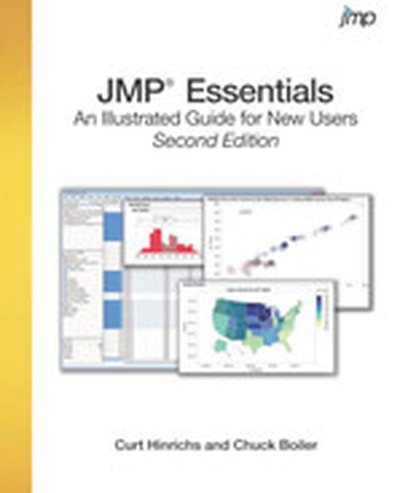
JMP Essentials, 2nd Edition

Grasp essential steps in order to generate meaningful results quickly with JMP.

JMP Essentials: An Illustrated Step-by-Step Guide for New Users, Second Edition is designed for the new or occasional JMP user who needs to generate meaningful graphs or results quickly. Drawing on their own experience working with these customers, the authors provide essential steps for what new users typically need to carry out with JMP. This newest edition has all new instructions and screen shots reflecting the latest release of JMP software. In addition, it has eight new detailed sections and 10 new subsections that include creating maps, filtering data, creating dashboards, and working with Excel data, all of which highlight new, useful and basic level enhancements to JMP.

The format of the book is unique. It adopts a show-and-tell design with essential step-by-step instructions and corresponding screen illustrations, which help users quickly see how to generate the desired results. In most cases, each section completes a JMP task, which maximizes the book's utility as a reference. In addition, each chapter contains a family of features that are carefully crafted to first introduce you to basic features and then on to more advanced ones. JMP Essentials: An Illustrated Step-by-Step Guide for New Users, Second Edition is the quickest and most accessible reference book available.

This is part of the SAS Press program.

SAS Certification Prep Guide, 4th Edition
Businesses rely on career professionals with strong SAS knowledge and skills. Set yourself apart from the competition by earning the only globally recognized credential endorsed by SAS.

The SAS Certification Prep Guide: Advanced Programming for SAS 9, Fourth Edition, prepares you to take the Advanced Programming for SAS 9 exam. Major topics include SQL processing with SAS, the SAS macro language, advanced SAS programming techniques, and optimizing SAS programs, as well as a new chapter on creating functions with PROC FCMP. You will also become familiar with the enhancements and new functionality that are available in SAS 9.

New or experienced SAS users will find this guide to be an invaluable resource that covers the objectives tested on the exam. The text contains quizzes that enable you to test your understanding of material in each chapter. Quiz solutions are included at the end of the book. Candidates must earn the SAS Certified Base Programmer for SAS 9 Credential before taking the SAS Advanced Programming for SAS 9 exam.

You’ll find instructions on how to obtain sample data when accessing SAS through SAS Enterprise Guide, SAS Studio, SAS University Edition, and the SAS windowing environment. This edition provides significant improvements to numerous examples, making the code even more efficient.

Experience is a critical component to becoming a SAS Certified Professional. This comprehensive guide along with training in SAS SQL1, SAS Macro Language 1, and SAS Programming 3 are valuable resources designed to help you prepare for the Advanced SAS Certification exam.

Test Scoring and Analysis Using SAS

Develop your own multiple-choice tests, score students, produce student rosters (in print form or Excel), and explore item response theory (IRT).

Aimed at nonstatisticians working in education or training, Test Scoring and Analysis Using SAS describes item analysis and test reliability in easy-to-understand terms, and teaches you SAS programming to score tests, perform item analysis, and estimate reliability. Maximizing flexibility, the scoring and analysis programs enable you to analyze tests with multiple versions, define alternate correct responses for selected items, and repeat the scoring with selected items deleted.

You will be guided step-by-step on how to design multiple-choice items, use analysis to improve your tests, and even detect cheating on students’ submitted multiple-choice tests. Other subjects addressed include reading in data from a variety of sources (text files and Excel workbooks, for example), detecting errors in the input data, and producing class rosters in printed form or Excel workbooks. Also included is a chapter on IRT—widely used in education to calibrate and evaluate items in tests in education such as the SAT and GRE—with instructions for running the new SAS procedure PROC IRT.

This book is part of the SAS Press program.

The Essential Guide to SAS Dates and Times, Second Edition, 2nd Edition

Why does SAS use January 1, 1960 as its arbitrary reference date? How do you convert a value such as 27 January 2003 into a SAS date? How do you put a date into a filename, or label an Excel worksheet with the date?

You'll find the answers to these questions and much more in Derek Morgan's Essential Guide to SAS Dates and Times, Second Edition, which makes it easy to understand how to use and manipulate dates, times, and datetimes in SAS. Updated for SAS 9.4, with additional functions, formats, and capabilities, the Second Edition has a new chapter dedicated to the ISO 8601 standard and the formats and functions that are new to SAS, including how SAS works with Universal Coordinated Time (UTC).

Novice users will appreciate the new "Troubleshooting" appendix, which discusses questions common to newer SAS users in a conversational way and provides clear examples of simple solutions to these questions. Both novice and intermediate users will find the clear, task-based examples on how to accomplish date-related tasks and the detailed explanations of standard formats and functions invaluable. Users working with intervals will appreciate the expanded discussion of the topic, which details the new custom interval capability, among other enhancements to intervals.

Users working with international dates and times will benefit from the detailed discussion of the NLS facility as it relates to dates and times. Included are bonus "Quick Reference Guides" that list both the standard date and time formats and the NLS date and time formats with examples. These guides illustrate how each format displays the same date, time, or datetime, so you can find the format you want to use at a glance.

The Essential Guide to SAS Dates and Times, Second Edition is the most complete and up-to-date collection of examples on how to write complex programs involving dates, times, or datetime values.

This book is part of the SAS Press Program.

Predictive Analytics and Data Mining

Put Predictive Analytics into ActionLearn the basics of Predictive Analysis and Data Mining through an easy to understand conceptual framework and immediately practice the concepts learned using the open source RapidMiner tool. Whether you are brand new to Data Mining or working on your tenth project, this book will show you how to analyze data, uncover hidden patterns and relationships to aid important decisions and predictions. Data Mining has become an essential tool for any enterprise that collects, stores and processes data as part of its operations. This book is ideal for business users, data analysts, business analysts, business intelligence and data warehousing professionals and for anyone who wants to learn Data Mining.You’ll be able to:1. Gain the necessary knowledge of different data mining techniques, so that you can select the right technique for a given data problem and create a general purpose analytics process.2. Get up and running fast with more than two dozen commonly used powerful algorithms for predictive analytics using practical use cases.3. Implement a simple step-by-step process for predicting an outcome or discovering hidden relationships from the data using RapidMiner, an open source GUI based data mining tool Predictive analytics and Data Mining techniques covered: Exploratory Data Analysis, Visualization, Decision trees, Rule induction, k-Nearest Neighbors, Naïve Bayesian, Artificial Neural Networks, Support Vector machines, Ensemble models, Bagging, Boosting, Random Forests, Linear regression, Logistic regression, Association analysis using Apriori and FP Growth, K-Means clustering, Density based clustering, Self Organizing Maps, Text Mining, Time series forecasting, Anomaly detection and Feature selection. Implementation files can be downloaded from the book companion site at www.LearnPredictiveAnalytics.com Demystifies data mining concepts with easy to understand language Shows how to get up and running fast with 20 commonly used powerful techniques for predictive analysis Explains the process of using open source RapidMiner tools Discusses a simple 5 step process for implementing algorithms that can be used for performing predictive analytics Includes practical use cases and examples

Mastering QlikView

"Mastering QlikView" is your advanced guide to unlocking the potential of business intelligence through QlikView. Dive deep into powerful data modeling, performance tuning, and visualization techniques, crafted to empower you in making data-driven decisions and optimizing your BI workflows. What this Book will help me do Understand and implement advanced QlikView data modeling techniques for efficient analysis. Master performance tuning methods to ensure your QlikView applications are fast and scalable. Apply industry best practices for ETL and data loading using QVDs and other QlikView features. Create advanced visualizations and dashboards that distill analytics into actionable insights. Leverage metadata management tools and governance techniques to maintain data integrity and consistency. Author(s) Stephen Redmond, an expert in business intelligence and data visualization, brings years of hands-on experience with QlikView and Qlik Sense. As a seasoned developer and thought leader, Stephen specializes in distilling complex BI methodologies into practical skills. His approachable style makes advanced topics accessible and engaging to readers. Who is it for? This book is tailored for business application developers and system analysts already familiar with QlikView. Ideal for professionals seeking to enhance their BI proficiency with advanced QlikView capabilities. If you're aiming to solve complex data challenges or refine your visualization skills, this book provides the expert guidance to take your knowledge further.

Design and Analysis of Experiments by Douglas Montgomery: A Supplement for Using JMP

With a growing number of scientists and engineers using JMP software for design of experiments, there is a need for an example-driven book that supports the most widely used textbook on the subject, Design and Analysis of Experiments by Douglas C. Montgomery. Design and Analysis of Experiments by Douglas Montgomery: A Supplement for Using JMP meets this need and demonstrates all of the examples from the Montgomery text using JMP. In addition to scientists and engineers, undergraduate and graduate students will benefit greatly from this book.
While users need to learn the theory, they also need to learn how to implement this theory efficiently on their academic projects and industry problems. In this first book of its kind using JMP software, Rushing, Karl and Wisnowski demonstrate how to design and analyze experiments for improving the quality, efficiency, and performance of working systems using JMP. Topics include JMP software, two-sample t-test, ANOVA, regression, design of experiments, blocking, factorial designs, fractional-factorial designs, central composite designs, Box-Behnken designs, split-plot designs, optimal designs, mixture designs, and 2 k factorial designs. JMP platforms used include Custom Design, Screening Design, Response Surface Design, Mixture Design, Distribution, Fit Y by X, Matched Pairs, Fit Model, and Profiler.
With JMP software, Montgomery’s textbook, and Design and Analysis of Experiments by Douglas Montgomery: A Supplement for Using JMP, users will be able to fit the design to the problem, instead of fitting the problem to the design. This book is part of the SAS Press program.

Analysis of Observational Health Care Data Using SAS

This book guides researchers in performing and presenting high-quality analyses of all kinds of non-randomized studies, including analyses of observational studies, claims database analyses, assessment of registry data, survey data, pharmaco-economic data, and many more applications. The text is sufficiently detailed to provide not only general guidance, but to help the researcher through all of the standard issues that arise in such analyses. Just enough theory is included to allow the reader to understand the pros and cons of alternative approaches and when to use each method. The numerous contributors to this book illustrate, via real-world numerical examples and SAS code, appropriate implementations of alternative methods. The end result is that researchers will learn how to present high-quality and transparent analyses that will lead to fair and objective decisions from observational data.

This book is part of the SAS Press program.

Business Analytics Using SAS Enterprise Guide and SAS Enterprise Miner

This tutorial for data analysts new to SAS Enterprise Guide and SAS Enterprise Miner provides valuable experience using powerful statistical software to complete the kinds of business analytics common to most industries.

Today’s businesses increasingly use data to drive decisions that keep them competitive. Especially with the influx of big data, the importance of data analysis to improve every dimension of business cannot be overstated. Data analysts are therefore in demand; however, many hires and prospective hires, although talented with respect to business and statistics, lack the know-how to perform business analytics with advanced statistical software.

Business Analytics Using SAS Enterprise Guide and SAS Enterprise Miner is a beginner’s guide with clear, illustrated, step-by-step instructions that will lead you through examples based on business case studies. You will formulate the business objective, manage the data, and perform analyses that you can use to optimize marketing, risk, and customer relationship management, as well as business processes and human resources. Topics include descriptive analysis, predictive modeling and analytics, customer segmentation, market analysis, share-of-wallet analysis, penetration analysis, and business intelligence.

This book is part of the SAS Press program.

Data Mining For Dummies

Delve into your data for the key to success Data mining is quickly becoming integral to creating value and business momentum. The ability to detect unseen patterns hidden in the numbers exhaustively generated by day-to-day operations allows savvy decision-makers to exploit every tool at their disposal in the pursuit of better business. By creating models and testing whether patterns hold up, it is possible to discover new intelligence that could change your business's entire paradigm for a more successful outcome. Data Mining for Dummies shows you why it doesn't take a data scientist to gain this advantage, and empowers average business people to start shaping a process relevant to their business's needs. In this book, you'll learn the hows and whys of mining to the depths of your data, and how to make the case for heavier investment into data mining capabilities. The book explains the details of the knowledge discovery process including: Model creation, validity testing, and interpretation Effective communication of findings Available tools, both paid and open-source Data selection, transformation, and evaluation Data Mining for Dummies takes you step-by-step through a real-world data-mining project using open-source tools that allow you to get immediate hands-on experience working with large amounts of data. You'll gain the confidence you need to start making data mining practices a routine part of your successful business. If you're serious about doing everything you can to push your company to the top, Data Mining for Dummies is your ticket to effective data mining.

The Analytics Revolution

Lead your organization into the industrial revolution of analytics with The Analytics Revolution The topics of big data and analytics continue to be among the most discussed and pursued in the business world today. While a decade ago many people still questioned whether or not data and analytics would help improve their businesses, today virtually no one questions the value that analytics brings to the table. The Analytics Revolution focuses on how this evolution has come to pass and explores the next wave of evolution that is underway. Making analytics operational involves automating and embedding analytics directly into business processes and allowing the analytics to prescribe and make decisions. It is already occurring all around us whether we know it or not. The Analytics Revolution delves into the requirements for laying a solid technical and organizational foundation that is capable of supporting operational analytics at scale, and covers factors to consider if an organization is to succeed in making analytics operational. Along the way, you'll learn how changes in technology and the business environment have led to the necessity of both incorporating big data into analytic processes and making them operational. The book cuts straight through the considerable marketplace hype and focuses on what is really important. The book includes: An overview of what operational analytics are and what trends lead us to them Tips on structuring technology infrastructure and analytics organizations to succeed A discussion of how to change corporate culture to enable both faster discovery of important new analytics and quicker implementation cycles of what is discovered Guidance on how to justify, implement, and govern operational analytics The Analytics Revolution gives you everything you need to implement operational analytic processes with big data.

Analytics and Big Data: The Davenport Collection (6 Items)

The Analytics and Big Data collection offers a “greatest hits” digital compilation of ideas from world-renowned thought leader Thomas Davenport, who helped popularize the terms analytics and big data in the workplace. An agile and prolific thinker, Davenport has written or coauthored more than a dozen bestselling books. Several of these titles are offered together for the first time in this curated digital bundle, including: Big Data at Work, Competing on Analytics, Analytics at Work, and Keeping Up with the Quants. The collection also includes Davenport’s popular Harvard Business Review articles, “Data Scientist: The Sexiest Job of the 21st Century” (2012) and “Analytics 3.0” (2013). Combined, these works cover all the bases on analytics and big data: what each term means; the ramifications of each from a technical, consumer, and management perspective; and where each can have the biggest impact on your business. Whether you’re an executive, a manager, or a student wanting to learn more, Analytics and Big Data is the most comprehensive collection you’ll find on the ever-growing phenomenon of digital data and analysis—and how you can make this rising business trend work for you. Named one of the ten “Masters of the New Economy” by CIO magazine, Thomas Davenport has helped hundreds of companies revitalize their management practices. He combines his interests in research, teaching, and business management as the President’s Distinguished Professor of Information Technology & Management at Babson College. Davenport has also taught at Harvard Business School, the University of Chicago, Dartmouth’s Tuck School of Business, and the University of Texas at Austin and has directed research centers at Accenture, McKinsey & Company, Ernst & Young, and CSC. He is also an independent Senior Advisor to Deloitte Analytics.

SAS 9.4 Graph Template Language, 3rd Edition

Provides usage information and examples for the Graph Template Language (GTL). The GTL is the underlying language for the default templates that are provided by SAS for procedures that use ODS Graphics. You can use the GTL either to modify these templates or to create your own highly customized charts and plots. Information covered includes how to combine language elements to build a custom graph, creating panels that contain multiple graphs, managing plot axes, using legends, modifying style elements to control appearance characteristics, and using functions, expressions, and conditional processing.