talk-data.com talk-data.com

Topic

analytics-platforms

402

tagged

Activity Trend

1 peak/qtr
2020-Q1 2026-Q1

Activities

402 activities · Newest first

Hands-On SAS for Data Analysis

"Hands-On SAS for Data Analysis" is a practical guide that introduces you to the fundamentals of using SAS for managing and analyzing data effectively. Through a hands-on approach, you'll explore key topics such as data manipulation with SAS 4GL, SQL querying, and creating insightful visualizations and reports. By the end of the book, you'll not only have a robust understanding of SAS but also be prepared for the SAS certification exam. What this Book will help me do Effectively use SAS modules and tools for comprehensive data analysis tasks. Master SAS 4GL functions to perform advanced data manipulation and transformation. Leverage advanced SQL options within SAS to query and analyze datasets. Become proficient in writing SAS Macros to automate repetitive tasks efficiently. Produce professional reports and visualizations using SAS Output Delivery System. Author(s) None Gulati is a renowned expert in data analysis and business intelligence, with years of professional experience in leveraging SAS for enterprise solutions. An experienced trainer and technical author, None has a unique ability to simplify complex concepts. Through this book, None shares practical knowledge that aligns with industry needs and certification goals. Who is it for? This book is designed for data professionals seeking to enhance their skills in SAS programming and data analysis. Whether you're just starting out with SAS or aiming to pass the SAS certification exam, this book will provide valuable insights. Readers with basic knowledge of data management will find this guide especially beneficial.
SAS for R Users

BRIDGES THE GAP BETWEEN SAS AND R, ALLOWING USERS TRAINED IN ONE LANGUAGE TO EASILY LEARN THE OTHER SAS and R are widely-used, very different software environments. Prized for its statistical and graphical tools, R is an open-source programming language that is popular with statisticians and data miners who develop statistical software and analyze data. SAS (Statistical Analysis System) is the leading corporate software in analytics thanks to its faster data handling and smaller learning curve. SAS for R Users enables entry-level data scientists to take advantage of the best aspects of both tools by providing a cross-functional framework for users who already know R but may need to work with SAS. Those with knowledge of both R and SAS are of far greater value to employers, particularly in corporate settings. Using a clear, step-by-step approach, this book presents an analytics workflow that mirrors that of the everyday data scientist. This up-to-date guide is compatible with the latest R packages as well as SAS University Edition. Useful for anyone seeking employment in data science, this book: Instructs both practitioners and students fluent in one language seeking to learn the other Provides command-by-command translations of R to SAS and SAS to R Offers examples and applications in both R and SAS Presents step-by-step guidance on workflows, color illustrations, sample code, chapter quizzes, and more Includes sections on advanced methods and applications Designed for professionals, researchers, and students, SAS for R Users is a valuable resource for those with some knowledge of coding and basic statistics who wish to enter the realm of data science and business analytics. AJAY OHRI is the founder of analytics startup Decisionstats.com. His research interests include spreading open source analytics, analyzing social media manipulation with mechanism design, simpler interfaces to cloud computing, investigating climate change, and knowledge flows. He currently advises startups in analytics off shoring, analytics services, and analytics. He is the author of Python for R Users: A Data Science Approach (Wiley), R for Business Analytics, and R for Cloud Computing.

Fundamentals of Programming in SAS

Unlock the essentials of SAS programming! Fundamentals of Programming in SAS: A Case Studies Approach gives a complete introduction to SAS programming. Perfect for students, novice SAS users, and programmers studying for their Base SAS certification, this book covers all the basics, including: working with data creating visualizations data validation good programming practices Experienced programmers know that real-world scenarios require practical solutions. Designed for use in the classroom and for self-guided learners, this book takes a novel approach to learning SAS programming by following a single case study throughout the text and circling back to previous concepts to reinforce material. Readers will benefit from the variety of exercises, including both multiple choice questions and in-depth case studies. Additional case studies are also provided online for extra practice. This approach mirrors the way good SAS programmers develop their skills—through hands-on work with an eye toward developing the knowledge necessary to tackle more difficult tasks. After reading this book, you will gain the skills and confidence to take on larger challenges with the power of SAS.

Implementing CDISC Using SAS, 2nd Edition

For decades researchers and programmers have used SAS to analyze, summarize, and report clinical trial data. Now Chris Holland and Jack Shostak have updated their popular Implementing CDISC Using SAS, the first comprehensive book on applying clinical research data and metadata to the Clinical Data Interchange Standards Consortium (CDISC) standards. Implementing CDISC Using SAS: An End-to-End Guide, Revised Second Edition, is an all-inclusive guide on how to implement and analyze the Study Data Tabulation Model (SDTM) and the Analysis Data Model (ADaM) data and prepare clinical trial data for regulatory submission. Updated to reflect the 2017 FDA mandate for adherence to CDISC standards, this new edition covers creating and using metadata, developing conversion specifications, implementing and validating SDTM and ADaM data, determining solutions for legacy data conversions, and preparing data for regulatory submission. The book covers products such as Base SAS, SAS Clinical Data Integration, and the SAS Clinical Standards Toolkit, as well as JMP Clinical. Topics included in this edition include an implementation of the Define-XML 2.0 standard, new SDTM domains, validation with Pinnacle 21 software, event narratives in JMP Clinical, STDM and ADAM metadata spreadsheets, and of course new versions of SAS and JMP software. The second edition was revised to add the latest C-Codes from the most recent release as well as update the make_define macro that accompanies this book in order to add the capability to handle C-Codes. The metadata spreadsheets were updated accordingly. Any manager or user of clinical trial data in this day and age is likely to benefit from knowing how to either put data into a CDISC standard or analyzing and finding data once it is in a CDISC format. If you are one such person--a data manager, clinical and/or statistical programmer, biostatistician, or even a clinician--then this book is for you.

TIBCO Spotfire: A Comprehensive Primer - Second Edition

Explore the possibilities of TIBCO Spotfire with this comprehensive guide. You'll start with fundamental data visualization principles and progress to creating powerful, professional-grade analytics dashboards and applications. By following this book, you'll master both basic usage and advanced features such as predictive and spatial analytics. What this Book will help me do Understand the fundamentals of TIBCO Spotfire and its various interfaces including web and desktop clients. Utilize Spotfire's range of visualization tools to effectively analyze and present data. Develop robust analytics dashboards and applications tailored for enterprise needs. Implement advanced features like predictive analytics and location-based data representations. Learn strategies for deploying and administrating Spotfire in a scalable, enterprise-oriented environment. Author(s) The authors, None Berridge and None Phillips, bring years of experience in business intelligence and data analytics. Their practical knowledge and real-world perspective shape the book into a practical resource for learning Spotfire. Their approach ensures that concepts are clearly explained with relatable examples, improving accessibility for all readers. Who is it for? This book is intended for business intelligence professionals, data analysts, and developers who aim to enhance their analytics skills using TIBCO Spotfire. It is suitable for beginners as no prior experience with Spotfire or advanced analytics is required. Readers looking to develop enterprise-grade visualization and analytical solutions will find it valuable.

SAS Text Analytics for Business Applications

Extract actionable insights from text and unstructured data. Information extraction is the task of automatically extracting structured information from unstructured or semi-structured text. SAS Text Analytics for Business Applications: Concept Rules for Information Extraction Models focuses on this key element of natural language processing (NLP) and provides real-world guidance on the effective application of text analytics. Using scenarios and data based on business cases across many different domains and industries, the book includes many helpful tips and best practices from SAS text analytics experts to ensure fast, valuable insight from your textual data. Written for a broad audience of beginning, intermediate, and advanced users of SAS text analytics products, including SAS Visual Text Analytics, SAS Contextual Analysis, and SAS Enterprise Content Categorization, this book provides a solid technical reference. You will learn the SAS information extraction toolkit, broaden your knowledge of rule-based methods, and answer new business questions. As your practical experience grows, this book will serve as a reference to deepen your expertise.

Hands-On Dashboard Development with QlikView

"Hands-On Dashboard Development with QlikView" is a practical guide that will teach you how to create interactive and visually appealing business intelligence dashboards using QlikView. You will learn to connect data from various sources, build effective data models, and craft dynamic visualizations to communicate critical insights with stakeholders. What this Book will help me do Learn the latest features of QlikView and how to effectively apply them. Connect QlikView to diverse data sources, including databases and websites. Develop comprehensive data models that avoid circular references. Utilize advanced visualization techniques to create maps, charts, and dashboards. Implement robust security measures and manage user access efficiently. Author(s) None Agarwal is a seasoned Business Intelligence professional with extensive experience in building and managing BI solutions for different industries. Having a passion for data visualization, None dedicates themselves to empowering others through clear, actionable, and concise tutorials. Their warm, instructive style makes advanced concepts approachable for learners of all levels. Who is it for? This book is ideal for business intelligence professionals, data analysts, and aspiring QlikView developers with fundamental knowledge of data visualization and BI concepts. It is designed for those looking to enhance their skills in QlikView and create impactful dashboards to leverage their data effectively. Beginners who are eager to learn QlikView will also find this book to be a great resource.

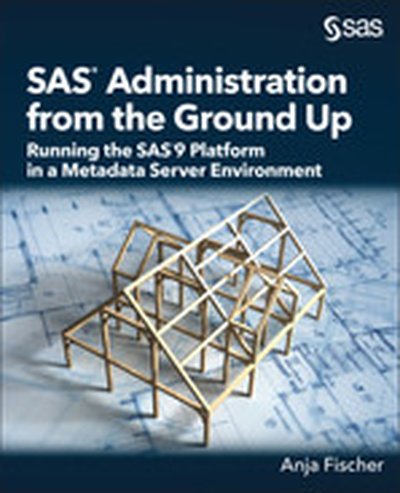
SAS Administration from the Ground Up

Learn SAS® administration from the ground up! Those who are new to SAS platform administration may find themselves full of questions. SAS® Administration from the Ground Up: Running the SAS®9 Platform in a Metadata Server Environment will save you time, money and frustration. This book walks the reader through setting up and maintaining a SAS platform from scratch. The author includes tips on best practices and troubleshooting to show you simple ways to streamline your SAS environment and make your work more manageable. Written for both new administrators and seasoned professionals, this book covers: Also included is a master administration checklist, with helpful resources provided for each task. SAS® 9.4 architecture SAS administration tools such as SAS® Management Console, SAS® Environment Manager and SAS® Deployment Manager Users, groups, and roles Metadata library administration Security

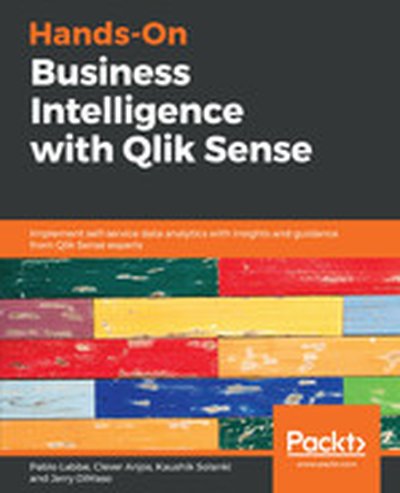
Hands-On Business Intelligence with Qlik Sense

"Hands-On Business Intelligence with Qlik Sense" teaches you how to harness the powerful capabilities of Qlik Sense to build dynamic, interactive dashboards and analyze data effectively. This book provides comprehensive guidance, from data modeling to creating visualizations, geospatial analysis, forecasting, and sharing insights across your organization. What this Book will help me do Understand the core concepts of Qlik Sense for building business intelligence dashboards. Master the process of loading, reshaping, and modeling data for analysis and reporting. Create impactful visual representations of data using Qlik Sense visualization tools. Leverage advanced analytics techniques, including Python and R integration, for deeper insights. Utilize Qlik Sense GeoAnalytics to perform geospatial analysis and produce location-based insights. Author(s) The authors of "Hands-On Business Intelligence with Qlik Sense" are experts in Qlik Sense and data analysis. They collectively bring decades of experience in business intelligence development and implementation. Their practical approach ensures that readers not only learn the theory but can also apply the techniques in real-world scenarios. Who is it for? This book is designed for business intelligence developers, data analysts, and anyone interested in exploring Qlik Sense for their data analysis tasks. If you're aiming to start with Qlik Sense and want a practical and hands-on guide, this book is ideal. No prior experience with Qlik Sense is necessary, but familiarity with data analysis concepts is helpful.

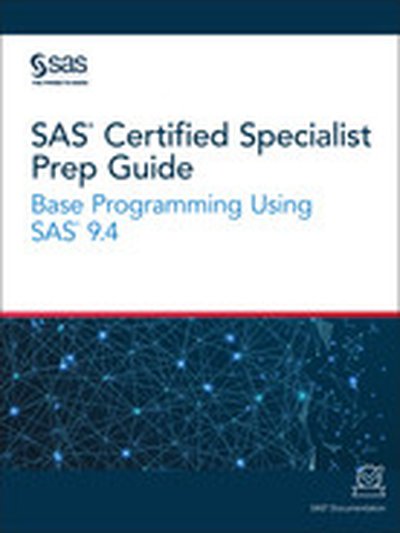
SAS Certified Specialist Prep Guide

The SAS® Certified Specialist Prep Guide: Base Programming Using SAS® 9.4 prepares you to take the new SAS 9.4 Base Programming -- Performance-Based Exam. This is the official guide by the SAS Global Certification Program. This prep guide is for both new and experienced SAS users, and it covers all the objectives that are tested on the exam. New in this edition is a workbook whose sample scenarios require you to write code to solve problems and answer questions. Answers for the chapter quizzes and solutions for the sample scenarios in the workbook are included. You will also find links to exam objectives, practice exams, and other resources such as the Base SAS® glossary and a list of practice data sets. Major topics include importing data, creating and modifying SAS data sets, and identifying and correcting both data syntax and programming logic errors. All exam topics are covered in these chapters: Setting Up Practice Data Basic Concepts Accessing Your Data Creating SAS Data Sets Identifying and Correcting SAS Language Errors Creating Reports Understanding DATA Step Processing BY-Group Processing Creating and Managing Variables Combining SAS Data Sets Processing Data with DO Loops SAS Formats and Informats SAS Date, Time, and Datetime Values Using Functions to Manipulate Data Producing Descriptive Statistics Creating Output Practice Programming Scenarios (Workbook)

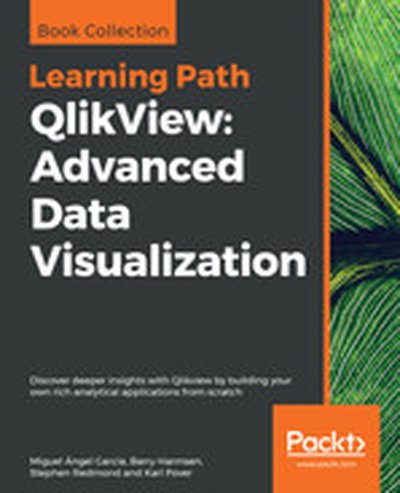
QlikView: Advanced Data Visualization

Build powerful data analytics applications with this business intelligence tool and overcome all your business challenges Key Features Master time-saving techniques and make your QlikView development more efficient Perform geographical analysis and sentiment analysis in your QlikView applications Explore advanced QlikView techniques, tips, and tricks to deliver complex business requirements Book Description QlikView is one of the most flexible and powerful business intelligence platforms around, and if you want to transform data into insights, it is one of the best options you have at hand. Use this Learning Path, to explore the many features of QlikView to realize the potential of your data and present it as impactful and engaging visualizations. Each chapter in this Learning Path starts with an understanding of a business requirement and its associated data model and then helps you create insightful analysis and data visualizations around it. You will look at problems that you might encounter while visualizing complex data insights using QlikView, and learn how to troubleshoot these and other not-so-common errors. This Learning Path contains real-world examples from a variety of business domains, such as sales, finance, marketing, and human resources. With all the knowledge that you gain from this Learning Path, you will have all the experience you need to implement your next QlikView project like a pro. This Learning Path includes content from the following Packt products: QlikView for Developers by Miguel Angel Garcia, Barry Harmsen Mastering QlikView by Stephen Redmond Mastering QlikView Data Visualization by Karl Pover What you will learn Deliver common business requirements using advanced techniques Load data from disparate sources to build associative data models Understand when to apply more advanced data visualization Utilize the built-in aggregation functions for complex calculations Build a data architecture that supports scalable QlikView deployments Troubleshoot common data visualization errors in QlikView Protect your QlikView applications and data Who this book is for This Learning Path is designed for developers who want to go beyond their technical knowledge of QlikView and understand how to create analysis and data visualizations that solve real business needs. To grasp the concepts explained in this Learning Path, you should have a basic understanding of the common QlikView functions and some hands-on experience with the tool. Downloading the example code for this book You can download the example code files for all Packt books you have purchased from your account at http://www.PacktPub.com. If you purchased this book elsewhere, you can visit http://www.PacktPub.com/support and register to have the files e-mailed directly to you.

SAS Certification Prep Guide

Must-have study guide for the SAS® Certified Statistical Business Analyst Using SAS®9: Regression and Modeling exam! Written for both new and experienced SAS programmers, the SAS® Certification Prep Guide: Statistical Business Analysis Using SAS®9 is an in-depth prep guide for the SAS® Certified Statistical Business Analyst Using SAS®9: Regression and Modeling exam. The authors step through identifying the business question, generating results with SAS, and interpreting the output in a business context. The case study approach uses both real and simulated data to master the content of the certification exam. Each chapter also includes a quiz aimed at testing the reader’s comprehension of the material presented. Major topics include: ANOVA Linear Regression Logistic Regression Inputs for Predictive Modeling Model Performance For those new to statistical topics or those needing a review of statistical foundations, this book also serves as an excellent reference guide for understanding descriptive and inferential statistics. This book is part of the SAS Press program.

SAS for Mixed Models

This book expands coverage of mixed models for non-normal data and mixed-model-based precision and power analysis, including the following topics: Discover the power of mixed models with SAS. Mixed models—now the mainstream vehicle for analyzing most research data—are part of the core curriculum in most master’s degree programs in statistics and data science. In a single volume, this book updates both SAS® for Linear Models, Fourth Edition, and SAS® for Mixed Models, Second Edition, covering the latest capabilities for a variety of applications featuring the SAS GLIMMIX and MIXED procedures. Written for instructors of statistics, graduate students, scientists, statisticians in business or government, and other decision makers, SAS® for Mixed Models is the perfect entry for those with a background in two-way analysis of variance, regression, and intermediate-level use of SAS. This book is part of the SAS Press program. Random-effect-only and random-coefficients models Multilevel, split-plot, multilocation, and repeated measures models Hierarchical models with nested random effects Analysis of covariance models Generalized linear mixed models

Learning Apache Drill

Get up to speed with Apache Drill, an extensible distributed SQL query engine that reads massive datasets in many popular file formats such as Parquet, JSON, and CSV. Drill reads data in HDFS or in cloud-native storage such as S3 and works with Hive metastores along with distributed databases such as HBase, MongoDB, and relational databases. Drill works everywhere: on your laptop or in your largest cluster. In this practical book, Drill committers Charles Givre and Paul Rogers show analysts and data scientists how to query and analyze raw data using this powerful tool. Data scientists today spend about 80% of their time just gathering and cleaning data. With this book, you’ll learn how Drill helps you analyze data more effectively to drive down time to insight. Use Drill to clean, prepare, and summarize delimited data for further analysis Query file types including logfiles, Parquet, JSON, and other complex formats Query Hadoop, relational databases, MongoDB, and Kafka with standard SQL Connect to Drill programmatically using a variety of languages Use Drill even with challenging or ambiguous file formats Perform sophisticated analysis by extending Drill’s functionality with user-defined functions Facilitate data analysis for network security, image metadata, and machine learning

INFORMS Analytics Body of Knowledge

Standardizes the definition and framework of analytics ABOK stands for Analytics Body of Knowledge. Based on the authors’ definition of analytics—which is “a process by which a team of people helps an organization make better decisions (the objective) through the analysis of data (the activity)”— this book from Institute for Operations Research and the Management Sciences (INFORMS) represents the perspectives of some of the most respected experts on analytics. The INFORMS ABOK documents the core concepts and skills with which an analytics professional should be familiar; establishes a dynamic resource that will be used by practitioners to increase their understanding of analytics; and, presents instructors with a framework for developing academic courses and programs in analytics. The INFORMS ABOK offers in-depth insight from peer-reviewed chapters that provide readers with a better understanding of the dynamic field of analytics. Chapters cover: Introduction to Analytics; Getting Started with Analytics; The Analytics Team; The Data; Solution Methodology; Model Building; Machine Learning; Deployment and Life Cycle Management; and The Blossoming Analytics Talent Pool: An Overview of the Analytics Ecosystem. Across industries and academia, readers with various backgrounds in analytics – from novices who are interested in learning more about the basics of analytics to experienced professionals who want a different perspective on some aspect of analytics – will benefit from reading about and implementing the concepts and methods covered by the INFORMS ABOK.

Jump into JMP Scripting, Second Edition, 2nd Edition

Learn the essentials of the JMP Scripting Language with this beginner’s guide. Written in an easy-to-understand style based on the authors’ extensive experience, Jump into JMP Scripting, Second Edition teaches beginner scripters how to take advantage of the robust JMP Scripting Language (JSL) using step-by-step instructions and real-world situations. The authors demonstrate how JSL offers the freedom to create scripts from the very simple and specific to the most generic and complex. With a new chapter on JSL language foundations, the first half of the book explains the fundamentals of JSL and walks you through creating your first scripts, such as opening a data table, adding columns, or selecting rows. A new chapter on the Dashboard and Application Builders provides helpful tips on creating custom dashboards and learning how to build applications. Also new to this edition, a chapter on advanced topics introduces more helpful tools and concepts in JSL. After learning the basics, you are ready to tackle specific tasks using JSL. The second half of the book provides more than 50 examples using a unique question-and-answer format. This book is part of the SAS Press program.

Pharmaceutical Quality by Design Using JMP

Solve your pharmaceutical product development and manufacturing problems using JMP . Pharmaceutical Quality by Design Using JMP : Solving Product Development and Manufacturing Problems provides broad-based techniques available in JMP to visualize data and run statistical analyses for areas common in healthcare product manufacturing. As international regulatory agencies push the concept of Quality by Design (QbD), there is a growing emphasis to optimize the processing of products. This book uses practical examples from the pharmaceutical and medical device industries to illustrate easy-to-understand ways of incorporating QbD elements using JMP. Pharmaceutical Quality by Design Using JMP opens by demonstrating the easy navigation of JMP to visualize data through the distribution function and the graph builder and then highlights the following: the powerful dynamic nature of data visualization that enables users to be able to quickly extract meaningful information tools and techniques designed for the use of structured, multivariate sets of experiments examples of complex analysis unique to healthcare products such as particle size distributions/drug dissolution, stability of drug products over time, and blend uniformity/content uniformity. Scientists, engineers, and technicians involved throughout the pharmaceutical and medical device product life cycles will find this book invaluable. This book is part of the SAS Press program.

MicroStrategy Quick Start Guide

In 'MicroStrategy Quick Start Guide,' you'll learn how to transform your raw business data into actionable insights using MicroStrategy. The book covers everything from setting up and configuring MicroStrategy tools to creating insightful dashboards and managing BI solutions from start to finish. What this Book will help me do Configure the MicroStrategy Intelligence Server and essential tools. Create and utilize MicroStrategy Projects and manage metadata repositories. Design effective MicroStrategy Reports to retrieve key business insights. Develop engaging dashboards for advanced data visualization and storytelling. Administer and secure your MicroStrategy BI solutions for stable operation. Author(s) None Rivero Esqueda brings their extensive experience in Business Intelligence solutions to this practical guide. Known for their expertise in MicroStrategy, they are passionate about empowering data analysts and BI professionals to leverage data for better decisions. Their professional insight and accessible approach make this book a valuable resource for readers at all levels. Who is it for? This book is ideal for Business Intelligence professionals or data analysts looking to explore MicroStrategy as their primary BI tool. Readers should have a basic understanding of BI concepts and data analysis. It is tailored to suit beginners as well as professionals transitioning to MicroStrategy. If you are eager to create impactful visualizations and dashboards while mastering MicroStrategy, this is the perfect guide for you.

Unstructured Data Analysis

Unstructured data is the most voluminous form of data in the world, and several elements are critical for any advanced analytics practitioner leveraging SAS software to effectively address the challenge of deriving value from that data. This book covers the five critical elements of entity extraction, unstructured data, entity resolution, entity network mapping and analysis, and entity management. By following examples of how to apply processing to unstructured data, readers will derive tremendous long-term value from this book as they enhance the value they realize from SAS products.

SAS Certification Prep Guide, 5th Edition

Prepare for the SAS Base Programming for SAS 9 exam with the official guide by the SAS Global Certification Program. New and experienced SAS users who want to prepare for the SAS Base Programming for SAS 9 exam will find this guide to be a valuable resource that covers all of the objectives tested on the exam. Now in its fifth edition, the guide has been extensively updated and revised to streamline explanations. Major topics include importing data, creating and modifying SAS data sets, and identifying and correcting data syntax and programming logic errors. The chapter quizzes have been thoroughly updated and full solutions are included at the back of the book. In addition, links are provided to the exam objectives, practice exams, and other helpful resources, such as the updated Base SAS glossary and an expanded collection of practice data sets.