talk-data.com talk-data.com

Topic

analytics-platforms

402

tagged

Activity Trend

1 peak/qtr
2020-Q1 2026-Q1

Activities

402 activities · Newest first

Pentaho Data Integration Quick Start Guide

Pentaho Data Integration Quick Start Guide offers a comprehensive introduction to Pentaho's Extract-Transform-Load (ETL) tools. Through this book, you will learn to design, execute, and monitor data transformations and seamlessly integrate data across various sources. It is designed to simplify and streamline the process for developers and analysts. What this Book will help me do Understand the functionality and usage of Pentaho Data Integration tools to manage your ETL workflows. Utilize tools like Spoon to design, execute, and manage transformations effectively. Learn to connect to and process data from diverse data sources, including files and databases. Develop skills in transforming data using various techniques provided by PDI to create meaningful outcomes. Master creating jobs to sequence tasks and automate data workflows efficiently. Author(s) The author, Carina Roldán, is an experienced professional specializing in data integration and ETL processes using Pentaho tools. She leverages her extensive experience to craft this book with clarity and accessibility, making it simple for readers to grasp key concepts. Her instructional style is straightforward and geared toward minimizing beginners' challenges. Who is it for? This book is ideal for data analysts, business intelligence developers, and software engineers who want to utilize Pentaho Data Integration for ETL tasks and data workflows. No prior in-depth experience with Pentaho is necessary, but familiarity with basic data concepts is recommended. Readers will benefit most if they are seeking practical skills in data integration to solve real-world problems and streamline data processes.
Qlik Sense Cookbook - Second Edition

With "Qlik Sense Cookbook," you will gain practical knowledge to harness the capabilities of Qlik Sense for effective business intelligence. This book is packed with step-by-step recipes that guide you in leveraging this powerful tool's data analytics features to create intuitive interactive dashboards and derive actionable insights. What this Book will help me do Master the process of sourcing, previewing, and distributing data through efficient interactive dashboards. Utilize the latest visualization options and learn best practices for creating impactful visuals. Develop scripts for automation and customize functionality using Qlik Sense subroutines. Enhance your Qlik Sense dashboard with advanced UI customizations and interactive elements. Leverage Qlik Sense's advanced aggregation functions like AGGR to perform multidimensional insights. Author(s) The authors of "Qlik Sense Cookbook" bring years of professional expertise in business intelligence and analytics. They have extensive experience working with Qlik platforms and have authored numerous industry-relevant resources. With a practical and accessible writing style, they thrive in breaking down complex concepts into manageable, actionable knowledge. Who is it for? This book is perfect for data analysts, business intelligence specialists, and Qlik Sense practitioners who want to advance their skills. It's suitable for beginners aiming to develop proficiency in Qlik Sense, as well as for professionals experienced with other tools like QlikView. Basic business intelligence knowledge is recommended for getting the most out of this book.

Applied Analytics through Case Studies Using SAS and R: Implementing Predictive Models and Machine Learning Techniques

Examine business problems and use a practical analytical approach to solve them by implementing predictive models and machine learning techniques using SAS and the R analytical language. This book is ideal for those who are well-versed in writing code and have a basic understanding of statistics, but have limited experience in implementing predictive models and machine learning techniques for analyzing real world data. The most challenging part of solving industrial business problems is the practical and hands-on knowledge of building and deploying advanced predictive models and machine learning algorithms. Applied Analytics through Case Studies Using SAS and R is your answer to solving these business problems by sharpening your analytical skills. What You'll Learn Understand analytics and basic data concepts Use an analytical approach to solve Industrial business problems Build predictive model with machine learning techniques Create and apply analytical strategies Who This Book Is For Data scientists, developers, statisticians, engineers, and research students with a great theoretical understanding of data and statistics who would like to enhance their skills by getting practical exposure in data modeling.

Data Management Solutions Using SAS Hash Table Operations

Hash tables can do a lot more than you might think! Data Management Solutions Using SAS Hash Table Operations: A Business Intelligence Case Study concentrates on solving your challenging data management and analysis problems via the power of the SAS hash object, whose environment and tools make it possible to create complete dynamic solutions. To this end, this book provides an in-depth overview of the hash table as an in-memory database with the CRUD (Create, Retrieve, Update, Delete) cycle rendered by the hash object tools. By using this concept and focusing on real-world problems exemplified by sports data sets and statistics, this book seeks to help you take advantage of the hash object productively, in particular, but not limited to, the following tasks: Using this book, you will be able to answer your toughest questions quickly and in the most efficient way possible! select proper hash tools to perform hash table operations use proper hash table operations to support specific data management tasks use the dynamic, run-time nature of hash object programming understand the algorithmic principles behind hash table data look-up, retrieval, and aggregation learn how to perform data aggregation, for which the hash object is exceptionally well suited manage the hash table memory footprint, especially when processing big data use hash object techniques for other data processing tasks, such as filtering, combining, splitting, sorting, and unduplicating.

Learning SAS by Example

Learn to program SAS by example! Learning SAS by Example, A Programmer’s Guide, Second Edition, teaches SAS programming from very basic concepts to more advanced topics. Because most programmers prefer examples rather than reference-type syntax, this book uses short examples to explain each topic. The second edition has brought this classic book on SAS programming up to the latest SAS version, with new chapters that cover topics such as PROC SGPLOT and Perl regular expressions. This book belongs on the shelf (or e-book reader) of anyone who programs in SAS, from those with little programming experience who want to learn SAS to intermediate and even advanced SAS programmers who want to learn new techniques or identify new ways to accomplish existing tasks. In an instructive and conversational tone, author Ron Cody clearly explains each programming technique and then illustrates it with one or more real-life examples, followed by a detailed description of how the program works. The text is divided into four major sections: Getting Started, DATA Step Processing, Presenting and Summarizing Your Data, and Advanced Topics. Subjects addressed include Reading data from external sources Learning details of DATA step programming Subsetting and combining SAS data sets Understanding SAS functions and working with arrays Creating reports with PROC REPORT and PROC TABULATE Getting started with the SAS macro language Leveraging PROC SQL Generating high-quality graphics Using advanced features of user-defined formats and informats Restructuring SAS data sets Working with multiple observations per subject Getting started with Perl regular expressions You can test your knowledge and hone your skills by solving the problems at the end of each chapter.

SAS for Finance

SAS for Finance introduces readers to utilizing SAS software for robust financial data analysis and model construction. Through hands-on examples and industry-focused techniques, this book demonstrates how to harness the power of SAS to develop effective analytical models, allowing you to uncover deeper insights and facilitate data-informed decision-making. What this Book will help me do Master the fundamentals of financial time series analysis using SAS effectively. Develop advanced forecasting models utilizing econometric techniques with SAS. Use clustering and similarity analysis in SAS to understand customer behavior. Create and interpret survival models for customer loyalty analysis. Gain proficiency in financial risk assessment using SAS for diversified applications. Author(s) None Gulati brings years of expertise in financial analytics and technical instruction to this publication. With a rich background in leveraging statistical software, the author has guided financial analysts and data scientists in building data models that solve real-world challenges. Known for practical insights, None's approach makes advanced concepts accessible and actionable. Who is it for? This book is tailored for financial analysts and data scientists aspiring to enhance their analytical capabilities with SAS. While prior familiarity with SAS software provides an advantage, beginners can also find value, provided they have a foundational understanding of finance. Ideal for professionals aiming to model data, forecast trends, and derive actionable insights in the financial domain.

Infographics Powered by SAS

Create compelling business infographics with SAS and familiar office productivity tools. A picture is worth a thousand words, but what if there are a billion words? When analyzing big data, you need a picture that cuts through the noise. This is where infographics come in. Infographics are a representation of information in a graphic format designed to make the data easily understandable. With infographics, you don’t need deep knowledge of the data. The infographic combines story telling with data and provides the user with an approachable entry point into business data. Infographics Powered by SAS : Data Visualization Techniques for Business Reporting shows you how to create graphics to communicate information and insight from big data in the boardroom and on social media. Learn how to create business infographics for all occasions with SAS and learn how to build a workflow that lets you get the most from your SAS system without having to code anything, unless you want to! This book combines the perfect blend of creative freedom and data governance that comes from leveraging the power of SAS and the familiarity of Microsoft Office. Topics covered in this book include: SAS Visual Analytics SAS Office Analytics SAS/GRAPH software (SAS code examples) Data visualization with SAS Creating reports with SAS Using reports and graphs from SAS to create business presentations Using SAS within Microsoft Office

Beginning DAX with Power BI: The SQL Pro’s Guide to Better Business Intelligence

Attention all SQL Pros, DAX is not just for writing Excel-based formulas! Get hands-on learning and expert advice on how to use the vast capabilities of the DAX language to solve common data modeling challenges. Beginning DAX with Power BI teaches key concepts such as mapping techniques from SQL to DAX, filtering, grouping, joining, pivoting, and using temporary tables, all aimed at the SQL professional. Join author Philip Seamark as he guides you on a journey through typical business data transformation scenarios and challenges, and teaches you, step-by-step, how to resolve challenges using DAX. Tips, tricks, and shortcuts are included and explained, along with examples of the SQL equivalent, in order to accelerate learning. Examples in the book range from beginner to advanced, with plenty of detailed explanation when walking through each scenario. What You’ll Learn Turbocharge your Power BI model by adding advanced DAX programming techniques Know when to use calculated measures versus calculated columns Generate new tables on the fly from existing data Optimize, monitor, and tune Power BI to improve performance of your models Discover new ideas, tricks, and time-saving techniques for better models Who This Book Is For Business intelligence developers, business analysts, or any SQL user who wants to use Power BI as a reporting tool. A solid understanding of SQL is recommended, as examples throughout the book include the DAX equivalents to SQL problem/solution scenarios.

Mastering the SAS DS2 Procedure

Enhance your SAS data-wrangling skills with high-precision and parallel data manipulation using the DS2 programming language. Now in its second edition, this book addresses the DS2 programming language from SAS, which combines the precise procedural power and control of the Base SAS DATA step language with the simplicity and flexibility of SQL. DS2 provides simple, safe syntax for performing complex data transformations in parallel and enables manipulation of native database data types at full precision. It also covers PROC FEDSQL, a modernized SQL language that blends perfectly with DS2. You will learn to harness the power of parallel processing to speed up CPU-intensive computing processes in Base SAS and how to achieve even more speed by processing DS2 programs on massively parallel database systems. Techniques for leveraging internet APIs to acquire data, avoiding large data movements when working with data from disparate sources, and leveraging DS2's new data types for full-precision numeric calculations are presented, with examples of why these techniques are essential for the modern data wrangler. Here's what's new in this edition: how to significantly improve performance by using the new SAS Viya architecture with its SAS Cloud Analytic Services (CAS) how to declare private variables and methods in a package the new PROC DSTODS2 the PCRXFIND and PCRXREPLACE packages While working though the code samples provided with this book, you will build a library of custom, reusable, and easily shareable DS2 program modules, execute parallelized DATA step programs to speed up a CPU-intensive process, and conduct advanced data transformations using hash objects and matrix math operations. This book is part of the SAS Press Series.

Mastering Qlik Sense

Mastering Qlik Sense is a comprehensive guide designed to empower you to utilize Qlik Sense for advanced data analytics and dynamic visualizations. This book provides detailed insights into creating seamless Business Intelligence solutions tailored to your needs. Whether you're building dashboards, optimizing data models, or exploring Qlik Cloud functionalities, this book has you covered. What this Book will help me do Build interactive and insightful dashboards using Qlik Sense's intuitive tools. Learn to model data efficiently and apply best practices for optimized performance. Master the Qlik Sense APIs and create advanced custom extensions. Understand enterprise security measures including role-based access controls. Gain expertise in migrating from QlikView to Qlik Sense effectively Author(s) Juan Ignacio Vitantonio is an experienced expert in Business Intelligence solutions and data analytics. With a profound understanding of Qlik technologies, Juan has developed and implemented impactful BI solutions across various industries. His writing reflects his practical knowledge and passion for empowering users with actionable insights into data. Who is it for? This book is perfect for BI professionals, data analysts, and organizations aiming to leverage Qlik Sense for advanced analytics. Ideal for those with a foundational grasp of Qlik Sense, it also provides comprehensive guidance for QlikView users transitioning to Qlik Sense. If you want to improve your BI solutions and data-driven decision-making skills, this book is for you.

The SAS Programmer's PROC REPORT Handbook

Generate reports with style! The SAS Programmer's PROC REPORT Handbook: ODS Companion explains how to use style elements within a style template to customize reports generated by PROC REPORT, leading to more appealing and effective business reports. Many programmers are faced with generating reports that are easy to read and comprehend for a wide variety of audiences, which is where the ODS destinations and style changes come into play. This book teaches you how to use style elements in PROC REPORT, a versatile reporting procedure, to customize your output. Mastering style elements allows you to change visual aspects of reports, such as borders, column widths, fonts, backgrounds, and more. This companion to The SAS Programmer’s PROC REPORT Handbook: Basic to Advanced Reporting Techniques explores how the style elements within a style template affect the output generated by PROC REPORT. It provides examples of altering the style elements and the effect on the main ODS destinations, while also discussing common pitfalls that programmers can avoid while working with tables, Microsoft Excel, Microsoft Power Point, and PDF output.

SAS Viya

Learn how to access analytics from SAS Cloud Analytic Services (CAS) using Python and the SAS Viya platform. SAS Viya : The Python Perspective is an introduction to using the Python client on the SAS Viya platform. SAS Viya is a high-performance, fault-tolerant analytics architecture that can be deployed on both public and private cloud infrastructures. While SAS Viya can be used by various SAS applications, it also enables you to access analytic methods from SAS, Python, Lua, and Java, as well as through a REST interface using HTTP or HTTPS. This book focuses on the perspective of SAS Viya from Python. SAS Viya is made up of multiple components. The central piece of this ecosystem is SAS Cloud Analytic Services (CAS). CAS is the cloud-based server that all clients communicate with to run analytical methods. The Python client is used to drive the CAS component directly using objects and constructs that are familiar to Python programmers. Some knowledge of Python would be helpful before using this book; however, there is an appendix that covers the features of Python that are used in the CAS Python client. Knowledge of CAS is not required to use this book. However, you will need to have a CAS server set up and running to execute the examples in this book. With this book, you will learn how to: Install the required components for accessing CAS from Python Connect to CAS, load data, and run simple analyses Work with CAS using APIs familiar to Python users Grasp general CAS workflows and advanced features of the CAS Python client SAS Viya : The Python Perspective covers topics that will be useful to beginners as well as experienced CAS users. It includes examples from creating connections to CAS all the way to simple statistics and machine learning, but it is also useful as a desktop reference.

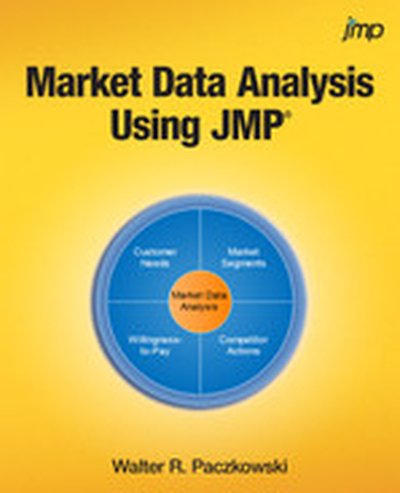
Market Data Analysis Using JMP

With the powerful interactive and visual functionality of JMP, you can dynamically analyze market data to transform it into actionable and useful information with clear, concise, and insightful reports and displays. Market Data Analysis Using JMP is a unique example-driven book because it has a specific application focus: market data analysis. A working knowledge of JMP will help you turn your market data into vital knowledge that will help you succeed in a highly competitive, fast-moving, and dynamic business world. This book can be used as a stand-alone resource for working professionals, or as a supplement to a business school course in market data research. Anyone who works with market data will benefit from reading and studying this book, then using JMP to apply the dynamic analytical concepts to their market data. After reading this book, you will be able to quickly and effortlessly use JMP to: prepare market data for analysis use and interpret sophisticated statistical methods build choice models estimate regression models to turn data into useful and actionable information Market Data Analysis Using JMP will teach you how to use dynamic graphics to illustrate your market data analysis and explore the vast possibilities that your data can offer!

An Introduction to SAS University Edition

SAS ® OnDemand for Academics is now the primary software choice for learners. SAS OnDemand for Academics is available for free access to SAS for individual learners as well as university educators and students. Access to SAS University Edition will end Aug. 2, 2021; users will no longer be able to download it after Apr. 30, 2021. Get up and running with the SAS University Edition using Ron Cody’s easy-to-follow, step-by-step guide. Aimed at beginners who have downloaded the free SAS University Edition and want to either use the point-and-click interactive environment of SAS Studio, or who want to write their own SAS programs, or both, An Introduction to SAS University Edition, begins by showing you how to obtain the SAS University Edition, and how you can run SAS on a PC or Macintosh computer. The first part of the book shows you how to perform basic tasks, such as producing a report, summarizing data, producing charts and graphs, and using the SAS Studio built-in tasks. The first part also describes how you can perform basic statistical tests using the interactive point-and-click environment. The second part of the book shows you how to write your own SAS programs, and how to use SAS procedures to perform a variety of tasks. This part of the book also explains how to read data from a variety of sources: text files, Excel workbooks, and CSV files. In order to get familiar with the SAS Studio environment, this book also shows you how to access dozens of interesting data sets that are included with the product.

SAS Certification Prep Guide, 4th Edition

Prepare for the SAS Base Programming for SAS 9 exam with the official guide by the SAS Global Certification Program. New and experienced SAS users who want to prepare for the SAS Base Programming for SAS 9 exam will find this guide to be an invaluable, convenient, and comprehensive resource that covers all of the objectives tested on the exam. Now in its fourth edition, the guide has been extensively updated, and revised to streamline explanations. Major topics include importing and exporting raw data files, creating and modifying SAS data sets, and identifying and correcting data syntax and programming logic errors. The chapter quizzes have been thoroughly updated and full solutions are included at the back of the book. In addition, links are provided to the exam objectives, practice exams, and other helpful resources, such as the updated Base SAS glossary and an expanded collection of practice data sets. Content updates are available here.

Qlik Sense: Advanced Data Visualization for Your Organization

Perform Interactive Data Analysis with Smarter Visualizations and Support your Enterprise-wide Analytical Needs About This Book Get a practical demonstration of discovering data for sales, human resources, and more using Qlik Sense Create dynamic dashboards for business intelligence and predictive analytics Create and collaborate comprehensive analytical solutions using Rattle and Qlik Sense Who This Book Is For This course is for anyone who wishes to understand and utilize the various new approaches to business intelligence actively in their business practice. Knowing the basics of business intelligence concepts would be helpful when picking up this course, but is not mandatory. What You Will Learn Build simple visualization models with Rattle and Qlik Sense Desktop Get to grips with the life cycle and new visualization functions of a Qlik Sense application Discover simple ways to examine data and get it ready for analysis Visualize your data with Qlik Sense's engaging and informative graphs Build efficient and responsive Associative Models Optimize Qlik Sense for sales, human resources, and demographic data discovery Explore various tips and tricks of navigation for the Qlik Sense® front end Develop creative extensions for your Qlik Sense® dashboard In Detail Qlik Sense is powerful and creative visual analytics software that allows users to discover data, explore it, and dig out meaningful insights in order to make a profit and make decisions for your business. This course begins by introducing you to the features and functions of the most modern edition of Qlik Sense so you get to grips with the application. The course will teach you how to administer the data architecture in Qlik Sense, enabling you to customize your own Qlik Sense application for your business intelligence needs. It also contains numerous recipes to help you overcome challenging situations while creating fully featured desktop applications in Qlik Sense. It explains how to combine Rattle and Qlik Sense Desktop to apply predictive analytics to your data to develop real-world interactive data applications. The course includes premium content from three of our most popular books: Learning Qlik Sense: The Official Guide Second Edition Qlik Sense Cookbook Predictive Analytics using Rattle and Qlik Sense On completion of this course, you will be self-sufficient in improving your data analysis and will know how to apply predictive analytics to your datasets. Through this course, you will be able to create predictive models and data applications, allowing you to explore your data insights much deeper. Style and approach The course will follow a practical approach with rich set of examples through which it will demonstrate its concepts, features and its implementation. The course will also feature numerous solutions which will cover entire spectrum of BI use cases.

Learning Alteryx

Learning Alteryx introduces you to using the powerful Alteryx platform for self-service analytics, helping you master key features like data preparation and predictive analytics without needing to code. With this book, you'll gain the skills to create workflows that generate actionable insights, empowering your business to make data-driven decisions. What this Book will help me do Master creating and optimizing workflows in Alteryx to address complex analytical problems. Learn how to clean, prepare, and blend data from various sources efficiently. Understand advanced Alteryx expressions for processing large datasets effectively. Develop meaningful reports and visualizations to communicate insights clearly. Leverage predictive analytics capabilities in Alteryx to make informed decisions. Author(s) The authors of Learning Alteryx collectively bring years of expertise in data analytics and business intelligence. Having worked on diverse projects across multiple industries, they understand the challenges faced by data professionals and are skilled in simplifying complex concepts. They focus on providing practical insights and step-by-step guides to empower learners. Who is it for? Learning Alteryx is ideal for professionals aspiring to enhance their data analytics capabilities or explore self-service analytics. It caters to beginners unfamiliar with analytics platforms, as well as intermediate users seeking to deepen their Alteryx knowledge. Readers should have a basic understanding of data analysis principles.

Learning Pentaho Data Integration 8 CE - Third Edition

"Learning Pentaho Data Integration 8 CE" is your comprehensive guide to mastering data manipulation and integration using Pentaho Data Integration (PDI) 8 Community Edition. Through step-by-step instructions and practical examples, you'll learn to explore, transform, validate, and integrate data from multiple sources, equipping you to handle real-world data challenges efficiently. What this Book will help me do Effectively install and understand the foundational concepts of Pentaho Data Integration 8 Community Edition. Efficiently organize, clean, and transform raw data from various sources into useful formats. Perform advanced data operations like metadata injection, managing relational databases, and implementing ETL solutions. Design, create, and deploy comprehensive data warehouse solutions using modern best practices. Streamline daily data processing tasks with flexibility and accuracy while handling errors gracefully. Author(s) The author, Carina Roldán, is an experienced professional in the field of data science and ETL (Extract, Transform, Load) development. Her expertise in leveraging tools like Pentaho Data Integration has allowed her to contribute significantly to BI and data management projects. Her approach in writing this book reflects her commitment to simplifying complex topics for aspiring professionals. Who is it for? This book is ideal for software developers, data analysts, business intelligence professionals, and IT students aiming to enhance their skills in ETL processes using Pentaho Data Integration. Beginners who wish to learn PDI comprehensively and professionals looking to deepen their expertise will both find value in this resource. It's also suitable for individuals involved in data warehouse design and implementation. This book will equip you with the skills to handle diverse data transformation tasks effectively.

Big Data Analytics with SAS

Discover how to leverage the power of SAS for big data analytics in 'Big Data Analytics with SAS.' This book helps you unlock key techniques for preparing, analyzing, and reporting on big data effectively using SAS. Whether you're exploring integration with Hadoop and Python or mastering SAS Studio, you'll advance your analytics capabilities. What this Book will help me do Set up a SAS environment for performing hands-on data analytics tasks efficiently. Master the fundamentals of SAS programming for data manipulation and analysis. Use SAS Studio and Jupyter Notebook to interface with SAS efficiently and effectively. Perform preparatory data workflows and advanced analytics, including predictive modeling and reporting. Integrate SAS with platforms like Hadoop, SAP HANA, and Cloud Foundry for scaling analytics processes. Author(s) None Pope is a seasoned data analytics expert with extensive experience in SAS and big data platforms. With a passion for demystifying complex data workflows, None teaches SAS techniques in an approachable way. Their expert insights and practical examples empower readers to confidently analyze and report on data. Who is it for? If you're a SAS professional or a data analyst looking to expand your skills in big data analysis, this book is for you. It suits readers aiming to integrate SAS into diverse tech ecosystems or seeking to learn predictive modeling and reporting with SAS. Both beginners and those familiar with SAS can benefit.