talk-data.com talk-data.com

Topic

Analytics

data_analysis insights metrics

4552

tagged

Activity Trend

398 peak/qtr
2020-Q1 2026-Q1

Activities

4552 activities · Newest first

Today I’m chatting with Peter Everill, who is the Head of Data Products for Analytics and ML Designs at the UK grocery brand, Sainsbury’s. Peter is also a founding member of the Data Product Leadership Community. Peter shares insights on why his team spends so much time conducting discovery work with users, and how that leads to higher adoption and in turn, business value. Peter also gives us his in-depth definition of a data product, including the three components of a data product and the four types of data products he’s encountered. He also shares the 8-step product management methodology that his team uses to develop data products that truly deliver value to end users. Pete also shares the #1 resource he would invest in right now to make things better for his team and their work.

Highlights/ Skip to:

I introduce Peter, who I met through the Data Product Leadership Community (00:37) What the data team structure at Sainsbury’s looks like and how Peter wound up working there (01:54) Peter shares the 8-step product management methodology that has been developed by his team and where in that process he spends most of his time (04:54) How involved the users are in Peter’s process when it comes to developing data products (06:13) How Peter was able to ensure that enough time is taken on discovery throughout the design process (10:03) Who on Peter’s team is doing the core user research for product development (14:52) Peter shares the three things that he feels make data product teams successful (17:09) How Peter defines a data product, including the three components of a data product and the four types of data products (18:34) Peter and I discuss the importance of spending time in discovery (24:25) Peter explains why he measures reach and impact as metrics of success when looking at implementation (26:18) How Peter solves for the gap when handing off a product to the end users to implement and adopt (29:20) How Peter hires for data product management roles and what he looks for in a candidate (33:31) Peter talks about what roles or skills he’d be looking for if he was to add a new person to his team (37:26)

Quotes from Today’s Episode “I’m a big believer that the majority of analytics in its simplest form is improving business processes and decisions. A big part of our discovery work is that we align to business areas, business divisions, or business processes, and we spend time in that discovery space actually mapping the business process. What is the goal of this process? Ultimately, how does it support the P&L?” — Peter Everill (12:29)

“There’s three things that are successful for any organization that will make this work and make it stick. The first is defining what you mean by a data product. The second is the role of a data product manager in the organization and really being clear what it is that they do and what they don’t do. … And the third thing is their methodology, from discovery through to delivery. The more work you put upfront defining those and getting everyone trained and clear on that, I think the quicker you’ll get to an organization that’s really clear about what it’s delivering, how it delivers, and who does what.” – Peter Everill (17:31)

“The important way that data and analytics can help an organization firstly is, understanding how that organization is performing. And essentially, performance is how well processes and decisions within the organization are being executed, and the impact that has on the P&L.” – Peter Everill (20:24)

“The great majority of organizations don’t allocate that percentage [20-25%] of time to discovery; they are jumping straight into solution. And also, this is where organizations typically then actually just migrate what already exists from, maybe, legacy service into a shiny new cloud platform, which might be good from a defensive data strategy point of view, but doesn’t offer new net value—apart from speed, security and et cetera of the cloud. Ultimately, this is why analytics organizations aren’t generally delivering value to organizations.” – Peter Everill (25:37)

“The only time that value is delivered, is from a user taking action. So, the two metrics that we really focus on with all four data products [are] reach [and impact].” – Peter Everill (27:44)

“In terms of benefits realization, that is owned by the business unit. Because ultimately, you’re asking them to take the action. And if they do, it’s their part of the P&L that’s improving because they own the business, they own the performance. So, you really need to get them engaged on the release, and for them to have the superusers, the champions of the product, and be driving voice of the release just as much as the product team.” – Peter Everill (30:30)

On hiring DPMs: “Are [candidates] showing the aptitude, do they understand what the role is, rather than the experience? I think data and analytics and machine learning product management is a relatively new role. You can’t go on LinkedIn necessarily, and be exhausted with a number of candidates that have got years and years of data and analytics product management.” – Peter Everill (36:40)

Links LinkedIn: https://www.linkedin.com/in/petereverill/
Summary

For business analytics the way that you model the data in your warehouse has a lasting impact on what types of questions can be answered quickly and easily. The major strategies in use today were created decades ago when the software and hardware for warehouse databases were far more constrained. In this episode Maxime Beauchemin of Airflow and Superset fame shares his vision for the entity-centric data model and how you can incorporate it into your own warehouse design.

Announcements

Hello and welcome to the Data Engineering Podcast, the show about modern data management Introducing RudderStack Profiles. RudderStack Profiles takes the SaaS guesswork and SQL grunt work out of building complete customer profiles so you can quickly ship actionable, enriched data to every downstream team. You specify the customer traits, then Profiles runs the joins and computations for you to create complete customer profiles. Get all of the details and try the new product today at dataengineeringpodcast.com/rudderstack Your host is Tobias Macey and today I'm interviewing Max Beauchemin about the concept of entity-centric data modeling for analytical use cases

Interview

Introduction How did you get involved in the area of data management? Can you describe what entity-centric modeling (ECM) is and the story behind it?

How does it compare to dimensional modeling strategies? What are some of the other competing methods Comparison to activity schema

What impact does this have on ML teams? (e.g. feature engineering)

What role does the tooling of a team have in the ways that they end up thinking about modeling? (e.g. dbt vs. informatica vs. ETL scripts, etc.)

What is the impact on the underlying compute engine on the modeling strategies used?

What are some examples of data sources or problem domains for which this approach is well suited?

What are some cases where entity centric modeling techniques might be counterproductive?

What are the ways that the benefits of ECM manifest in use cases that are down-stream from the warehouse?

What are some concrete tactical steps that teams should be thinking about to implement a workable domain model using entity-centric principles?

How does this work across business domains within a given organization (especially at "enterprise" scale)?

What are the most interesting, innovative, or unexpected ways that you have seen ECM used?

What are the most interesting, unexpected, or challenging lessons that you have learned while working on ECM?

When is ECM the wrong choice?

What are your predictions for the future direction/adoption of ECM or other modeling techniques?

Contact Info

mistercrunch on GitHub LinkedIn

Parting Question

From your perspective, what is the biggest gap in the tooling or technology for data management today?

Closing Announcements

Thank you for listening! Don't forget to check out our other shows. Podcast.init covers the Python language, its community, and the innovative ways it is being used. The Machine Learning Podcast helps you go from idea to production with machine learning. Visit the site to subscribe to the show, sign up for the mailing list, and read the show notes. If you've learned something or tried out a project from the show then tell us about it! Email [email protected]) with your story. To help other people find the show please leave a review on Apple Podcasts and tell your friends and co-workers

Links

Entity Centric Modeling Blog Post Max's Previous Apperances

Defining Data Engineering with Maxime Beauchemin Self Service Data Exploration And Dashboarding With Superset Exploring The Evolving Role Of Data Engineers Alumni Of AirBnB's Early Years Reflect On What They Learned About Building Data Driven Organizations

Apache Airflow Apache Superset Preset Ubisoft Ralph Kimball The Rise Of The Data Engineer The Downfall Of The Data Engineer The Rise Of The Data Scientist Dimensional Data Modeling Star Schema Databas

podcast_episode
by Dante DeAntonio (Moody's Analytics) , Cris deRitis , Mark Zandi (Moody's Analytics) , Marisa DiNatale (Moody's Analytics)

Mark, Cris & Marisa are joined by Jobs Day regular Dante DeAntonio to discuss the June employment report. Job growth is slowing to script but wage growth is still stubbornly high. The group discusses full employment, the probabilities of recession in the next year and what this all means for the Fed’s upcoming meetings. For the full transcript, click here Follow Mark Zandi @MarkZandi, Cris deRitis @MiddleWayEcon, and Marisa DiNatale on LinkedIn for additional insight.

Questions or Comments, please email us at [email protected]. We would love to hear from you.    To stay informed and follow the insights of Moody's Analytics economists, visit Economic View.

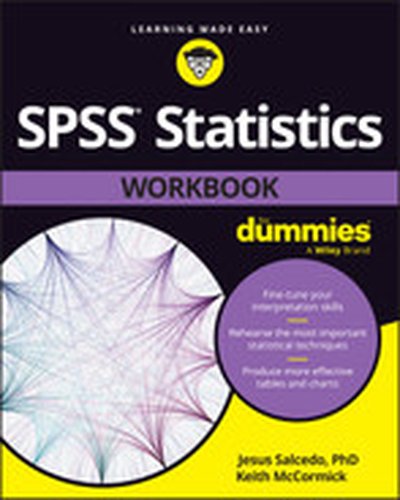
SPSS Statistics Workbook For Dummies

Practice making sense of data with IBM’s SPSS Statistics software SPSS Statistics Workbook For Dummies gives you the practice you need to navigate the leading statistical software suite. Data management and analysis, advanced analytics, business intelligence—SPSS is a powerhouse of a research platform, and this book helps you master the fundamentals and analyze data more effectively. You’ll work through practice problems that help you understand the calculations you need to perform, complete predictive analyses, and produce informative graphs. This workbook gives you hands-on exercises to hone your statistical analysis skills with SPSS Statistics 28. Plus, explanations and insider tips help you navigate the software with ease. Practical and easy-to-understand, in classic Dummies style. Practice organizing, analyzing, and graphing data Learn to write, edit, and format SPSS syntax Explore the upgrades and features new to SPSS 28 Try your hand at advanced data analysis procedures For academics using SPSS for research, business analysts and market researchers looking to extract valuable insights from data, and anyone with a hankering for more stats practice.

Join us as we interview my bootcamp student Erin Shina who recently pivoted her career from music therapy to a financial analyst role at Fortune 50 company Humana.

⁠🏫 Check out my 10-week data analytics bootcamp⁠

📊 Come to my next free “How to Land Your First Data Job” training

Timestamps:

(2:49) - Hybrid work is the new norm, combining office and remote setups. 💼🏠

(6:00) - A supportive boss is crucial in advancing your data career. 👩‍💼🚀

(9:00) - Music therapy offers a fulfilling career path in healthcare. 🎵⚕️

(10:11) - Discover how the Data Analytics Accelerator helped Erin secure a data job. 📊🔍

(14:16) - Showcase your project effectively to increase your interview chances. 📂🎯

(17:25) - Put extra effort into crafting an impactful resume. 📄💪

(21:41) - Your current network could become a valuable referral for your next job opportunity. 🌐🔗

Connect with Avery:

📺 Subscribe on YouTube

🎙Listen to My Podcast

👔 Connect with me on LinkedIn

📸 Instagram

🎵 TikTok

Mentioned in this episode: Join the last cohort of 2025! The LAST cohort of The Data Analytics Accelerator for 2025 kicks off on Monday, December 8th and enrollment is officially open!

To celebrate the end of the year, we’re running a special End-of-Year Sale, where you’ll get: ✅ A discount on your enrollment 🎁 6 bonus gifts, including job listings, interview prep, AI tools + more

If your goal is to land a data job in 2026, this is your chance to get ahead of the competition and start strong.

👉 Join the December Cohort & Claim Your Bonuses: https://DataCareerJumpstart.com/daa https://www.datacareerjumpstart.com/daa

Leveraging Computer Vision for People Tracking and Object Detection. The application tracks and analyze people’s movements in various environments such as retail stores, shopping malls, warehouses, public spaces, airports, etc The Key Features: count people, create heatmaps, detect queues, track movement patterns, space occupancy analysis, zone-specific analytics, and customer movement patterns, providing valuable insights.

Generative AI brings a promise to improve lives in a blistering innovation race, but also a threat to people, corporations, and even nations. Data analytics leaders must understand the risks of generative AI, both societal and business-related, to use it positively and avoid the destructive consequences seen with nuclear energy development. Published at: https://www.eckerson.com/articles/the-opportunity-and-risk-of-generative-ai-part-i-a-nuclear-explosion

Ever thought how airflow could play a pivotal role in data mesh architecture, hosting thousands of DAGs and hundreds of thousands daily running tasks, let’s find out! Delivery Hero delivers food in 70 countries with 12 different brands and platforms. With thousands of engineers, analysts and data scientists spread across many countries running analytics and ML services for all these orders delivered. Serving the workflow orchestration needs for such a massive group becomes a challenge. This is where airflow and data mesh comes to rescue, by running more than 500 airflow instances to empower different teams to own and curate data products. This presentation will explain how to efficiently setup and monitor airflow at massive scale. New feature of launching dynamic airflow staging and development environments dedicated for each developer. Demo about “Workspace” concept in direction of multi-tenancy management.

OpenTelemetry is a vendor-neutral open-source (CNCF) observability framework that is supported by many vendors industry-wide. It is used for instrumenting, generation, collection, and exporting of data within systems which then are ingested by analytics tools that can provide tracing, metrics, and logs. It has long been the plan to adopt the OTel standard within Airflow, allowing builders and users to take advantage of valuable data that could help improve the efficiency, cost and performance of their systems. Let us talk about the journey that started a few years ago to bring this dream to reality.

Airflow, traditionally used by Data Engineers, is now popular among Analytics Engineers who aim to provide analysts with high-quality tooling while adhering to software engineering best practices. dbt, an open-source project that uses SQL to create data transformation pipelines, is one such tool. One approach to orchestrating dbt using Airflow is using dynamic task mapping to automatically create a task for each sub-directory inside dbt’s staging, intermediate, and marts directories. This enables analysts to write SQL code that is automatically added as a dedicated task in Airflow at runtime. Combining this new Airflow feature with dbt best practices offers several benefits, such as analysts not needing to make Airflow changes and engineers being able to re-run subsets of dbt models should errors occur. In this talk, I would like to share some lessons I have learned while successfully implementing this approach for several clients.

podcast_episode
by Stephen Roach (China Center of Yale Law School) , Cris deRitis , Mark Zandi (Moody's Analytics) , Marisa DiNatale (Moody's Analytics)

Stephen Roach, Senior Fellow at the China Center of Yale Law School, discusses China’s near and longer-term economic prospects with Mark, Cris and Marisa. Steve explains why he has evolved from a bull to a bear on China’s economy, why the critical relationship between China and the U.S. has gone sideways, and how to get the relationship moving in a positive direction. For more on Stephen Roach, click here For more information on Stephen Roach's book, Accidental Conflict: America, China, and the Clash of False Narratives, click here For the full transcript, click here Follow Mark Zandi @MarkZandi, Cris deRitis @MiddleWayEcon, and Marisa DiNatale on LinkedIn for additional insight.

Questions or Comments, please email us at [email protected]. We would love to hear from you.    To stay informed and follow the insights of Moody's Analytics economists, visit Economic View.

Solomon Kahn has led data teams at startups and big companies. We talk about the advantages of being a data person in a big company, what makes a good data team, why he thinks embedded analytics suck, his new startup Delivery Layer, and much more.

Delivery Layer: https://www.deliverylayer.com/

Solomon's LinkedIn: https://www.linkedin.com/in/solomonkahn/


If you like this show, give it a 5-star rating on your favorite podcast platform.

Purchase Fundamentals of Data Engineering at your favorite bookseller.

Subscribe to my Substack: https://joereis.substack.com/

Data Engineering with dbt

Data Engineering with dbt provides a comprehensive guide to building modern, reliable data platforms using dbt and SQL. You'll gain hands-on experience building automated ELT pipelines, using dbt Cloud with Snowflake, and embracing patterns for scalable and maintainable data solutions. What this Book will help me do Set up and manage a dbt Cloud environment and create reliable ELT pipelines. Integrate Snowflake with dbt to implement robust data engineering workflows. Transform raw data into analytics-ready data using dbt's features and SQL. Apply advanced dbt functionality such as macros and Jinja for efficient coding. Ensure data accuracy and platform reliability with built-in testing and monitoring. Author(s) None Zagni is a seasoned data engineering professional with a wealth of experience in designing scalable data platforms. Through practical insights and real-world applications, Zagni demystifies complex data engineering practices. Their approachable teaching style makes technical concepts accessible and actionable. Who is it for? This book is perfect for data engineers, analysts, and analytics engineers looking to leverage dbt for data platform development. If you're a manager or decision maker interested in fostering efficient data workflows or a professional with basic SQL knowledge aiming to deepen your expertise, this resource will be invaluable.

Geospatial Data Analytics on AWS

In "Geospatial Data Analytics on AWS," you will learn how to store, manage, and analyze geospatial data effectively using various AWS services. This book provides insight into building geospatial data lakes, leveraging AWS databases, and applying best practices to derive insights from spatial data in the cloud. What this Book will help me do Design and manage geospatial data lakes on AWS leveraging S3 and other storage solutions. Analyze geospatial data using AWS services such as Athena and Redshift. Utilize machine learning models for geospatial data processing and analytics using SageMaker. Visualize geospatial data through services like Amazon QuickSight and OpenStreetMap integration. Avoid common pitfalls when managing geospatial data in the cloud. Author(s) Scott Bateman, Janahan Gnanachandran, and Jeff DeMuth bring their extensive experience in cloud computing and geospatial analytics to this book. With backgrounds in cloud architecture, data science, and geospatial applications, they aim to make complex topics accessible. Their collaborative approach ensures readers can practically apply concepts to real-world challenges. Who is it for? This book is ideal for GIS and data professionals, including developers, analysts, and scientists. It suits readers with a basic understanding of geographical concepts but no prior AWS experience. If you're aiming to enhance your cloud-based geospatial data management and analytics skills, this is the guide for you.

Visual Analytics Fundamentals: Creating Compelling Data Narratives with Tableau

Master the Fundamentals of Modern Visual Analytics--and Craft Compelling Visual Narratives in Tableau! Do you need to persuade or inform people? Do you have data? Then you need to master visual analytics and visual storytelling. Today, the #1 tool for telling visual stories with data is Tableau, and demand for Tableau skills is soaring. In Visual Analytics Fundamentals, renowned visual storyteller and analytics professor Lindy Ryan introduces all the fundamental visual analytics knowledge, cognitive and perceptual concepts, and hands-on Tableau techniques you'll need. Ryan puts core analytics and visual concepts upfront, so you'll always know exactly what you're trying to accomplish and can apply this knowledge with any tool. Building on this foundation, she presents classroom-proven guided exercises for translating ideas into reality with Tableau 2022. Youll learn how to organize data and structure analysis with stories in mind, embrace exploration and visual discovery, and articulate your findings with rich data, well-curated visualizations, and skillfully crafted narrative frameworks. Ryan's insider tips take you far beyond the basics--and you'll rely on her expert checklists for years to come. Communicate more powerfully by applying scientific knowledge of the human brain Get started with the Tableau platform and Tableau Desktop 2022 Connect data and quickly prepare it for analysis Ask questions that help you keep data firmly in context Choose the right charts, graphs, and maps for each project--and avoid the wrong ones Craft storyboards that reflect your message and audience Direct attention to what matters most Build data dashboards that guide people towards meaningful outcomes Master advanced visualizations, including timelines, Likert scales, and lollipop charts This book has only one prerequisite: your desire to communicate insights from data in ways that are memorable and actionable. It's for executives and professionals sharing important results, students writing reports or presentations, teachers cultivating data literacy, journalists making sense of complex trends. . . . practically everyone! Don't even have Tableau? Download your free trial of Tableau Desktop and let's get started! ...

In this episode, Avery took a unique approach by going live on LinkedIn and letting the audience ask any question they wanted.

Join us as we dive deep into Avery's insights and practical tips to help you navigate the world of data.

🏫 Check out my 10-week data analytics bootcamp

📊 Come to my next free “How to Land Your First Data Job” training

Timestamps:

(3:09) - What should I have on my portfolio?

(05:24) - How to build a project?

(06:11) - How to stay organized?

(07:08) - Starting w/ Data Science Projects

(16:00) - How to become a better storyteller?

(21:18) - What to do if you're not landing any interviews?

Connect with Avery:

📺 Subscribe on YouTube

🎙Listen to My Podcast

👔 Connect with me on LinkedIn

📸 Instagram

🎵 TikTok

Mentioned in this episode: Join the last cohort of 2025! The LAST cohort of The Data Analytics Accelerator for 2025 kicks off on Monday, December 8th and enrollment is officially open!

To celebrate the end of the year, we’re running a special End-of-Year Sale, where you’ll get: ✅ A discount on your enrollment 🎁 6 bonus gifts, including job listings, interview prep, AI tools + more

If your goal is to land a data job in 2026, this is your chance to get ahead of the competition and start strong.

👉 Join the December Cohort & Claim Your Bonuses: https://DataCareerJumpstart.com/daa https://www.datacareerjumpstart.com/daa

Data for All

Do you know what happens to your personal data when you are browsing, buying, or using apps? Discover how your data is harvested and exploited, and what you can do to access, delete, and monetize it. Data for All empowers everyone—from tech experts to the general public—to control how third parties use personal data. Read this eye-opening book to learn: The types of data you generate with every action, every day Where your data is stored, who controls it, and how much money they make from it How you can manage access and monetization of your own data Restricting data access to only companies and organizations you want to support The history of how we think about data, and why that is changing The new data ecosystem being built right now for your benefit The data you generate every day is the lifeblood of many large companies—and they make billions of dollars using it. In Data for All, bestselling author John K. Thompson outlines how this one-sided data economy is about to undergo a dramatic change. Thompson pulls back the curtain to reveal the true nature of data ownership, and how you can turn your data from a revenue stream for companies into a financial asset for your benefit. About the Technology Do you know what happens to your personal data when you’re browsing and buying? New global laws are turning the tide on companies who make billions from your clicks, searches, and likes. This eye-opening book provides an inspiring vision of how you can take back control of the data you generate every day. About the Book Data for All gives you a step-by-step plan to transform your relationship with data and start earning a “data dividend”—hundreds or thousands of dollars paid out simply for your online activities. You’ll learn how to oversee who accesses your data, how much different types of data are worth, and how to keep private details private. What's Inside The types of data you generate with every action, every day How you can manage access and monetization of your own data The history of how we think about data, and why that is changing The new data ecosystem being built right now for your benefit About the Reader For anyone who is curious or concerned about how their data is used. No technical knowledge required. About the Author John K. Thompson is an international technology executive with over 37 years of experience in the fields of data, advanced analytics, and artificial intelligence. Quotes An honest, direct, pull-no-punches source on one of the most important personal issues of our time....I changed some of my own behaviors after reading the book, and I suggest you do so as well. You have more to lose than you may think. - From the Foreword by Thomas H. Davenport, author of Competing on Analytics and The AI Advantage A must-read for anyone interested in the future of data. It helped me understand the reasons behind the current data ecosystem and the laws that are shaping its future. A great resource for both professionals and individuals. I highly recommend it. - Ravit Jain, Founder & Host of The Ravit Show, Data Science Evangelist

podcast_episode
by Val Kroll , Julie Hoyer , Tim Wilson (Analytics Power Hour - Columbus (OH) , Bob Morris (Bravery Group) , Moe Kiss (Canva) , Michael Helbling (Search Discovery)

There comes a time in every analyst's career where they consider starting up their own consultancy. Or, if not that, then at least joining an agency or a consultancy. The nature of most businesses is to grow, and with growth comes the potential for an "exit." This episode dives into that world in an attempt to demystify some of the ins and outs of the acquisition of analytics consultancies, from the owners' perspectives, employees' perspectives, and acquiring companies' perspectives. Since these are all perspectives that none of your dear co-hosts really have, Bob Morris, the co-founder and managing partner for Bravery Group, joined us for a discussion of EBITDA, TTM, CIMs, and even aspects of the space that are not captured by acronyms! For complete show notes, including links to items mentioned in this episode and a transcript of the show, visit the show page.