Every year we become increasingly aware of the urgency of the climate crisis, and with that, the need to usher in renewable energies and scale their adoption has never been more important. However, as we look at the ways to scale the adoption of renewable energy, data stands out as a key lever to accelerate a greener future. Today’s guest is Jean-Pierre Pélicier, CDO at ENGIE. ENGIE is one of the largest energy producers in the world and definitely one of the largest in Europe. They operate in more than 48 countries and have committed to becoming carbon neutral by 2045. Data plays a crucial part in these plans. In the episode, Jean-Pierre shares his unique perspective on how data is not just transforming the renewable energy industry but also redefining the way we approach the climate crisis. From harnessing the power of data to optimize energy production and distribution to leveraging advanced analytics to predict and mitigate environmental impacts, Jean-Pierre highlights the ways data continues to be an invaluable tool in our quest for a sustainable future. Also discussed in the episode are the challenges of data collection and quality in the energy sector, the importance of fostering a data culture within an organization, and aligning data strategy with a company's strategic objectives.
 talk-data.com
Topic
Analytics
4552
tagged
Activity Trend
Top Events
Mark, Cris and Marisa weigh whether or not to change the forecast for the Fed funds rate and dig deep to play the statistics game. Later they are joined by Professor Glenn Mueller of the University of Denver to talk all things commercial real estate. Professor Mueller ranks the segments of the CRE market from worst to best performing and explains why the legalization of marijuana has disrupted the retail market. For more on Glenn Mueller, click here For the full transcript, click here Follow Mark Zandi @MarkZandi, Cris deRitis @MiddleWayEcon, and Marisa DiNatale on LinkedIn for additional insight.
Questions or Comments, please email us at [email protected]. We would love to hear from you. To stay informed and follow the insights of Moody's Analytics economists, visit Economic View.
In a world where data is the new oil, being able to understand, analyse and interpret it is a vital skill. As the saying goes, "knowledge is power," and in this case, data literacy is the key to unlocking that power. I argue that data literacy is as important to individual and organisational success as computer literacy, but unfortunately that is not a consensus view. For many organisations and their leaders, low data literacy is hampering their ability to make effective, data-driven decisions. What is the key to creating a data literate organisation and unlocking the true potential of your data? Who better to guide us through the many aspects of this question than data literacy expert Kevin Hanegan. Kevin is the Chief Learning Officer at Qlik and a renowned author of the books “Data Literacy in Practice” and “Turning Data into Wisdom”. In this episode of Leaders of Analytics, Kevin will be sharing invaluable insights and expertise from his books and his work at Qlik. Listen in as we explore: How data literacy can transform businesses, boost individual careers, and help us make better-informed decisionsPractical tips and strategies for developing data literacy skillsCommon misconceptions or challenges that hold people back from becoming data literate, and how to overcome theseHow to foster a data-driven culture within organisations, and much more.Kevin's website: https://www.kevinhanegan.com/ Connect with Kevin on LinkedIn. Learn more about the Data Literacy Project.
Paul Blankley and Ryan Janssen are the co-founders of Zenlytic. They started a BI company with an LLM-first approach (back before LLM's were insanely cool). We talk about the future of BI, and how LLM's will change the face of data and analytics.
Zenlytic: https://www.zenlytic.com/
Paul's LinkedIn: https://www.linkedin.com/in/paulblankley/
Ryan's LinkedIn: https://www.linkedin.com/in/janssenryan/
If you like this show, give it a 5-star rating on your favorite podcast platform.
Purchase Fundamentals of Data Engineering at your favorite bookseller.
Subscribe to my Substack: https://joereis.substack.com/
Over the past 5 years, I’ve taught 1000’s about data analytics.
What have I learned as a teacher?
Where have I seen the most success?
What’s the biggest secret to people who succeed?
In this episode, I’ll share it all :)
🏫 Check out my 10-week data analytics bootcamp
📊 Come to my next free “How to Land Your First Data Job” training
Timestamps:
(3:30) Journey: Teaching data analytics full-time for the past year and a half. 📊
(8:58) Lesson: Skills alone aren't enough to land data jobs. 🎓
(13:06) Focus: Guiding students to low-barrier, rewarding data positions. 🔍
(18:25) Success: Marketing, portfolio, and networking are crucial for data job seekers. 🌟
Connect with Avery:
📺 Subscribe on YouTube
🎙Listen to My Podcast
👔 Connect with me on LinkedIn
🎵 TikTok
Mentioned in this episode: Join the last cohort of 2025! The LAST cohort of The Data Analytics Accelerator for 2025 kicks off on Monday, December 8th and enrollment is officially open!
To celebrate the end of the year, we’re running a special End-of-Year Sale, where you’ll get: ✅ A discount on your enrollment 🎁 6 bonus gifts, including job listings, interview prep, AI tools + more
If your goal is to land a data job in 2026, this is your chance to get ahead of the competition and start strong.
👉 Join the December Cohort & Claim Your Bonuses: https://DataCareerJumpstart.com/daa https://www.datacareerjumpstart.com/daa
About 10 years ago, Thomas Davenport & DJ Patil published the article "Data Scientist: The Sexiest Job of the 21st Century" in the Harvard Business Review. In this piece, they described the bourgeoning role of the data scientist and what it will mean for organizations and individuals in the coming decade. As time has passed, data science has become increasingly institutionalized. Once seen as a luxury, it is now deemed a necessity in every modern boardroom. Moreover as technologies like AI and systems like ChatGPT keep astonishing us with their capabilities in handling data science tasks, it raises a pertinent question: Is Data Science Still the Sexiest Job of the 21st Century? In this episode, we invited Thomas Davenport on the show to share his perspective on where data science & AI are at today, and where they are headed. Thomas Davenport is the President’s Distinguished Professor of Information Technology and Management at Babson College, the co-founder of the International Institute for Analytics, a Fellow of the MIT Initiative for the Digital Economy, and a Senior Advisor to Deloitte Analytics. He has written or edited twenty books and over 250 print or digital articles for Harvard Business Review (HBR), Sloan Management Review, the Financial Times, and many other publications. One of HBR’s most frequently published authors, Thomas has been at the forefront of the Process Innovation, Knowledge Management, and Analytics and Big Data movements. He pioneered the concept of “competing on analytics” with his 2006 Harvard Business Review article and his 2007 book by the same name. Since then, he has continued to provide cutting-edge insights on how companies can use analytics and big data to their advantage, and then on artificial intelligence. Throughout the episode, we discuss how data science has changed since he first published his article, how it has become more institutionalized, how data leaders can drive value with data science, the importance of data culture, his views on AI and where he thinks its going, and a lot more. Links from the Show: Working with AI by Thomas Davenport The AI Advantage: How to Put the Artificial Intelligence Revolution to Work by Thomas Davenport Harvard Business Review New Vantage Partners CCC Intelligent Solutions Radar AI
The Inside Economics team takes shelter from a tornado (true story), and Mark Calabria, senior advisor to the Cato Institute and former director of the Federal Housing Finance Agency, describes the FHFA’s efforts to provide shelter to the housing and mortgage finance markets during the pandemic. His new book “Shelter from the Storm,” is a fascinating telling of that difficult period. For more on Mark Calabria, click here. For more information on Mark Calabria's book "Shelter from the Storm," click here. For the full transcript, click here. Follow Mark Zandi @MarkZandi, Cris deRitis @MiddleWayEcon, and Marisa DiNatale on LinkedIn for additional insight.
Questions or Comments, please email us at [email protected]. We would love to hear from you. To stay informed and follow the insights of Moody's Analytics economists, visit Economic View.
Hosted by Simplecast, an AdsWizz company. See pcm.adswizz.com for information about our collection and use of personal data for advertising.
An Analytics Center of Excellence empowers business teams to meet their own data needs by changing the role of IT from developer to facilitator. The reality, however, is that IT needs be both a facilitator and a developer. Published at: https://www.eckerson.com/articles/analytics-center-of-excellence-part-i-how-to-shape-the-organization
Unravel the secret sauce behind starting with dummy projects and paving your way to extraordinary success.
Come and join Avery answered Muhammad’s question on how to get create good data portfolio, and how dummy projects are helpful for upskilling.
📊 Come to my next free “How to Land Your First Data Job” training
🏫 Check out my 10-week data analytics bootcamp
Timestamps:
(5:06) - Stepping stone: Dummy projects lead to advancement. 💡
(6:20) - Explore: Find intriguing online project ideas. 🌐
(6:45) - Learn: Embrace initial challenges for growth. ⚽
(7:20) - Mindset: Start, improve, conquer data projects. 🚀
(8:00) - Resources: YouTube, webinars, podcast - career boost.
Connect with Avery:
📺 Subscribe on YouTube
🎙Listen to My Podcast
👔 Connect with me on LinkedIn
🎵 TikTok
Mentioned in this episode: Join the last cohort of 2025! The LAST cohort of The Data Analytics Accelerator for 2025 kicks off on Monday, December 8th and enrollment is officially open!
To celebrate the end of the year, we’re running a special End-of-Year Sale, where you’ll get: ✅ A discount on your enrollment 🎁 6 bonus gifts, including job listings, interview prep, AI tools + more
If your goal is to land a data job in 2026, this is your chance to get ahead of the competition and start strong.
👉 Join the December Cohort & Claim Your Bonuses: https://DataCareerJumpstart.com/daa https://www.datacareerjumpstart.com/daa
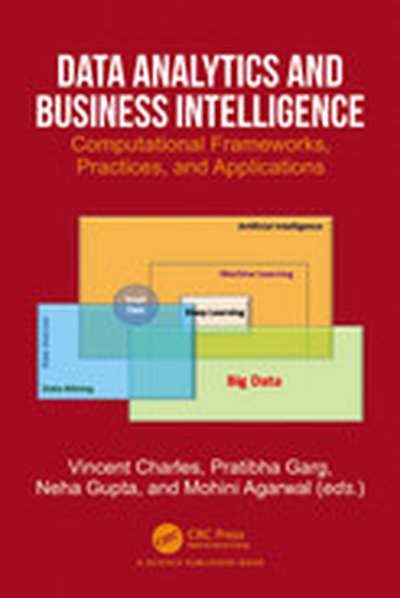
Business Analytics, is driven by an increasing demand from the real world. This book reviews advances in data analytics and business intelligence that assists industries in problem-solving exercises, with a view to driving competitive advantage.
Despite innovations in data architecture, infrastructure, and analytics, most organizations today still struggle to realize the promised value of data. Learn how the data mesh principle of data as a product can help, as part of a data mesh initiative or as a stand-alone strategy. Published at: https://www.eckerson.com/articles/data-products-part-of-a-data-mesh-initiative-or-a-stand-alone-strategy
The conversation with my next guest was going so deep and so well…it became a two part episode! Today I’m chatting with Nadiem von Heydebrand, CEO of Mindfuel. Nadiem’s career journey led him from data science to data product management, and in this first, we will focus on the skills of data product management (DPM), including design. In part 2, we jump more into Nadiem’s take on the role of the DPM. Nadiem gives actionable insights into the realities of data product management, from the challenges of actually being able to talk to your end users, to focusing on the problems and unarticulated needs of your users rather than solutions. Nadiem and I also discuss how data product managers oversee a portfolio of initiatives, and why it’s important to view that portfolio as a series of investments. Nadiem also emphasizes the value of having designers on a data team, and why he hopes we see more designers in the industry.
Highlights/ Skip to:
Brian introduces Nadiem and his background going from data science to data product management (00:36) Nadiem gives not only his definition of a data product, but also his related definitions of ‘data as product,’ ‘data as information,’ and ‘data as a model’ products (02:19) Nadiem outlines the skill set and activities he finds most valuable in a data product manager (05:15) How a data organization typically functions and the challenges a data team faces to prove their value (11:20) Brian and Nadiem discuss the challenges and realities of being able to do discovery with the end users of data products (17:42) Nadiem outlines how a portfolio of data initiatives has a certain investment attached to it and why it’s important to generate a good result from those investments (21:30) Why Nadiem wants to see more designers in the data product space and the problems designers solve for data teams (25:37) Nadiem shares a story about a time when he wished he had a designer to convert the expressed needs of the business into the true need of the customer (30:10) The value of solving for the unarticulated needs of your product users, and Nadiem shares how focusing on problems rather than solutions helped him (32:32) Nadiem shares how you can connect with him and find out more about his company, Mindfuel (36:07)
Quotes from Today’s Episode “The product mindset already says it quite well. When you look into classical product management, you have something called the viability, the desirability, the feasibility—so these are three very classic dimensions of product management—and the fourth dimension, we at Mindfuel define for ourselves and for applications are, is the datability.” — Nadiem von Heydebrand (06:51)
“We can only prove our [data team’s] value if we unlock business opportunities in their [clients’] lines of businesses. So, our value contribution is indirect. And measuring indirect value contribution is very difficult in organizations.” — Nadiem von Heydebrand (11:57)
“Whenever we think about data and analytics, we put a lot of investment and efforts in the delivery piece. I saw a study once where it said 3% of investments go into discovery and 90% of investments go into delivery and the rest is operations and a little bit overhead and all around. So, we have to balance and we have to do proper discovery to understand what problem do we want to solve.” — Nadiem von Heydebrand (13:59)
“The best initiatives I delivered in my career, and also now within Mindfuel, are the ones where we try to build an end responsibility from the lines of businesses, among the product managers, to PO, the product owner, and then the delivery team.” – Nadiem von Heydebrand (17:00)
“As a consultant, I typically think in solutions. And when we founded Mindfuel, my co-founder forced me to avoid talking about the solution for an entire ten months. So, in whatever meeting we were sitting, I was not allowed to talk about the solution, but only about the problem space.” – Nadiem von Heydebrand (34:12)
“In scaled organizations, data product managers, they typically run a portfolio of data products, and each single product can be seen a little bit like from an investment point of view, this is where we putting our money in, so that’s the reason why we also have to prioritize the right use cases or product initiatives because typically we have limited resources, either it is investment money, people, resources or our time.” – Nadiem von Heydebrand (24:02)
“Unfortunately, we don’t see enough designers in data organizations yet. So, I would love to have more design people around me in the data organizations, not only from a delivery perspective, having people building amazing dashboards, but also, like, truly helping me in this kind of discovery space.” – Nadiem von Heydebrand (26:28)
Links Mindfuel: https://mindfuel.ai/ Personal LinkedIn: https://www.linkedin.com/in/nadiemvh/ Mindfuel LinkedIn: https://www.linkedin.com/company/mindfuelai/
Historically in elite team sports, there has often been a dynamic between players and their inherent abilities, and the vision of the coach. In many sports, we’ve seen coaching strategies influence the future of how the game is played. As the era of professionalism swept across many elite sports in the 90s, we saw the highest-level sports teams achieve a competitive edge by looking at the data, with sports fans often noticing a difference in the ‘feel’ of the way their team plays. In Basketball specifically, we have recently seen the rise of the 3-pointer, a riskier and much more difficult shot to accurately hit, even for professional players. But what has driven the rise of the 3-pointer? Is it another trend among coaches, or does the answer lie with data-based insights and the analysts producing these insights? Seth Partnow is the Director of North American Sports at StatsBomb, where he previously served as their Director of Basketball Analytics. Prior to joining StatsBomb in 2021, Seth was the Director of Basketball Research for the Milwaukee Bucks basketball team. Seth is also an accomplished Analyst and Author, having worked as an NBA Analyst for The Athletic since 2019 and having published his own book on basketball analytics, The Midrange Theory. Seth’s knowledge and insight bridges the gap between data analytics and elite US sport. In the episode, Seth and Richie look into the intricate dynamics of elite basketball. Seth explores the challenges of attributing individual contributions in a sport where the outcome is significantly influenced by the complex interplay between players. Drawing from his extensive experience in the field, Seth discusses the complexities of analyzing player performance, the nuances of determining why certain players get easier or harder shots, and the difficulty of attributing credit for defensive achievements to individual players. Seth provides a comprehensive overview of the various roles within sports analytics, from data engineers to analysts, and highlights the importance of finding one's niche within these roles, particularly in the context of elite basketball. Seth also shares his personal journey into basketball analytics, offering valuable insights and advice for those interested in pursuing a career in this field, stressing the importance of introspection and understanding the unique lifestyle associated with working for a sports team, while also offering industry-agnostic advice on how to approach analyzing and using data in any context.
Send us a text Datatopics is a podcast presented by Kevin Missoorten to talk about the fuzzy and misunderstood concepts in the world of data, analytics, and AI and get to the bottom of things.
In another thought-provoking episode of the Datatopics podcast we embark on a captivating exploration of data monetization. Join us as we gather two distinguished guests, Bart Hamers, head of the center of expertise of analytics and AI at a large bank, and Ben Mellaerts, a dataroots data strategist with Dataroots, to untangle the complex web of generating value from data.
Throughout the episode, together we engage in a though debate, attempting to pinpoint the true essence of data monetization. Addressing common misconceptions, explore the challenges and opportunities associated with data monetization, today and in an ever increasing digital world.
Is data monetization limited to opportunities to sell data or data products or is it more? If so, does this word bring any added value to our lives? (pun intended) How does data privacy fit in? Tune in for our perspective to these and many more questions! Datatopics is brought to you by Dataroots Music: The Gentlemen - DivKidThe thumbnail is generated by Midjourney
🎙️ Get ready for an exclusive, behind-the-scenes episode! 🚀
Dive into our members-only content, where you'll learn and gain invaluable insights on the expectations, workings, and fantastic resources of our data career bootcamp.
Take advantage of this incredible opportunity!
📊 Come to my next free “How to Land Your First Data Job” training
🏫 Check out my 10-week data analytics bootcamp
Timestamps:
(3:28) - 🏗️ Laying the Foundation: Build your data career from scratch!
(4:54) - 🤝 Community Support: Join a like-minded community to land data jobs!
(7:10) - 🎯 Learn and Upskill: Master data at your own pace!
(9:20) - 🙌 Stay Accountable: Achieve your data goals with our support!
(10:57) - ❤️ Love Data Work: Experience the thrill of working with data!
(11:52) - 🌍 Make an Impact: Change the world with the power of data!
(12:33) - 💰 Lucrative Careers: Earn big with your data skills!
(12:46) - ⏰ Flexible Work: Work on your terms!
(16:28) - 🎮 Project Power: Boost your skills with hands-on projects!
(21:57) - 🤝 Network for Success: Unlock data job opportunities through networking!
Connect with Avery:
📺 Subscribe on YouTube
🎙Listen to My Podcast
👔 Connect with me on LinkedIn
🎵 TikTok
Mentioned in this episode: Join the last cohort of 2025! The LAST cohort of The Data Analytics Accelerator for 2025 kicks off on Monday, December 8th and enrollment is officially open!
To celebrate the end of the year, we’re running a special End-of-Year Sale, where you’ll get: ✅ A discount on your enrollment 🎁 6 bonus gifts, including job listings, interview prep, AI tools + more
If your goal is to land a data job in 2026, this is your chance to get ahead of the competition and start strong.
👉 Join the December Cohort & Claim Your Bonuses: https://DataCareerJumpstart.com/daa https://www.datacareerjumpstart.com/daa
We talked about;
Antonis' background The pros and cons of working for a startup Useful skills for working at a startup and the Lean way to work How Antonis joined the DataTalks.Club community Suggestions for students joining the MLOps course Antonis contributing to Evidently AI How Antonis started freelancing Getting your first clients on Upwork Pricing your work as a freelancer The process after getting approved by a client Wearing many hats as a freelancer and while working at a startup Other suggestions for getting clients as a freelancer Antonis' thoughts on the Data Engineering course Antonis' resource recommendations
Links:
Lean Startup by Eric Ries: https://theleanstartup.com/ Lean Analytics: https://leananalyticsbook.com/ Designing Machine Learning Systems by Chip Huyen: https://www.oreilly.com/library/view/designing-machine-learning/9781098107956/ Kafka Streaming with python by Khris Jenkins tutorial video: https://youtu.be/jItIQ-UvFI4
Free MLOps course: https://github.com/DataTalksClub/mlops-zoomcamp Join DataTalks.Club: https://datatalks.club/slack.html Our events: https://datatalks.club/events.html
Amid mounting geopolitical tensions over the independence of Taiwan, Mark and team consider various scenarios regarding how this is ultimately resolved. China appears to be taking a long-term perspective in its goal to unify Taiwan with the mainland, and thus the most likely scenario assumes the current uncomfortable, but peaceful status quo. But much darker scenarios can’t be ruled out. For the full report on the China-Taiwan Scenarios, click here. For the full transcript, click here Follow Mark Zandi @MarkZandi, Cris deRitis @MiddleWayEcon, and Marisa DiNatale on LinkedIn for additional insight.
Questions or Comments, please email us at [email protected]. We would love to hear from you. To stay informed and follow the insights of Moody's Analytics economists, visit Economic View.
In Industry 4.0, intelligent analytics has a broader scope in terms of descriptive, predictive, and prescriptive sub-domains. To this end, the book will aim to review and highlight the challenges faced by Intelligent Analytics in Industry 4.0 and present the recent developments done to address those challenges.
In the realm of Applied Intelligence, Accenture leads the way in harnessing the power of data and AI to transform industries. From consumer products to life sciences, retail, and aerospace, Accenture's influence is far-reaching. But what drives the organization? How does it navigate the complex landscape of data modernization and transformation? And more importantly, how does it leverage technology not just as an enabler, but as a catalyst for innovation? Tracy Ring leads Accenture’s Applied Intelligence Products Category Group, in this role she has leadership across Consumer and Industrial Products, Automotive, Life Sciences, Retail and Aerospace and Defense. As the CDO and Global Generative AI lead for Life Sciences, she personally anchors the NA Applied Intelligence Life Sciences practice of more than 500 practitioners. Tracy has created solutions for Generative AI, Data led transformation, Artificial Intelligence, Data and Cloud Modernization, Analytics, and the organization and operating model strategies for next-generation adoption and AI fluency. In the episode, Tracy initially clarifies the difference between data modernization and data transformation, highlighting their distinct meanings and why the terms aren’t interchangeable. Tracy also emphasizes the importance of involving business end-users from the outset of data projects as well as advocating for a product-oriented approach to data. The discussion also covers the topic of team diversity and inclusivity. Tracy shares practical advice on how to build diverse teams and create an environment that encourages curiosity and open dialogue. Tracy also shares her perspective on the future of work and the importance of fostering meaningful conversations in the workplace. She advocates for an attitude of infinite curiosity within teams. In the context of life sciences, Tracy highlights the high stakes involved and underscores the need for responsible AI, data sharing, and data privacy. She also points out that the challenges in this field are more similar than dissimilar to those in other industries. Tune in for a wealth of insights from a seasoned leader in the field of Applied Intelligence.
Summary
A significant portion of the time spent by data engineering teams is on managing the workflows and operations of their pipelines. DataOps has arisen as a parallel set of practices to that of DevOps teams as a means of reducing wasted effort. Agile Data Engine is a platform designed to handle the infrastructure side of the DataOps equation, as well as providing the insights that you need to manage the human side of the workflow. In this episode Tevje Olin explains how the platform is implemented, the features that it provides to reduce the amount of effort required to keep your pipelines running, and how you can start using it in your own team.
Announcements
Hello and welcome to the Data Engineering Podcast, the show about modern data management RudderStack helps you build a customer data platform on your warehouse or data lake. Instead of trapping data in a black box, they enable you to easily collect customer data from the entire stack and build an identity graph on your warehouse, giving you full visibility and control. Their SDKs make event streaming from any app or website easy, and their extensive library of integrations enable you to automatically send data to hundreds of downstream tools. Sign up free at dataengineeringpodcast.com/rudderstack Your host is Tobias Macey and today I'm interviewing Tevje Olin about Agile Data Engine, a platform that combines data modeling, transformations, continuous delivery and workload orchestration to help you manage your data products and the whole lifecycle of your warehouse
Interview
Introduction How did you get involved in the area of data management? Can you describe what Agile Data Engine is and the story behind it? What are some of the tools and architectures that an organization might be able to replace with Agile Data Engine?
How does the unified experience of Agile Data Engine change the way that teams think about the lifecycle of their data? What are some of the types of experiments that are enabled by reduced operational overhead?
What does CI/CD look like for a data warehouse?
How is it different from CI/CD for software applications?
Can you describe how Agile Data Engine is architected?
How have the design and goals of the system changed since you first started working on it? What are the components that you needed to develop in-house to enable your platform goals?
What are the changes in the broader data ecosystem that have had the most influence on your product goals and customer adoption? Can you describe the workflow for a team that is using Agile Data Engine to power their business analytics?
What are some of the insights that you generate to help your customers understand how to improve their processes or identify new opportunities?
In your "about" page it mentions the unique approaches that you take for warehouse automation. How do your practices differ from the rest of the industry? How have changes in the adoption/implementation of ML and AI impacted the ways that your customers exercise your platform? What are the most interesting, innovative, or unexpected ways that you have seen the Agile Data Engine platform used? What are the most interesting, unexpected, or challenging lessons that you have learned while working on Agile Data Engine? When is Agile Data Engine the wrong choice? What do you have planned for the future of Agile Data Engine?
Guest Contact Info
Parting Question
From your perspective, what is the biggest gap in the tooling or technology for data management today?
About Agile Data Engine
Agile Data Engine unlocks the potential of your data to drive business value - in a rapidly changing world. Agile Data Engine is a DataOps Management platform for designing, deploying, operating and managing data products, and managing the whole lifecycle of a data warehouse. It combines data modeling, transformations, continuous delivery and workload orchestration into the same platform.
Links
Agile Data Engine Bill Inmon Ralph Kimball Snowflake Redshift BigQuery Azure Synapse Airflow
The intro and outro music is from The Hug by The Freak Fandango Orchestra / CC BY-SA
Sponsored By:
Rudderstack: 
RudderStack provides all your customer data pipelines in one platform. You can collect, transform, and route data across your entire stack with its event streaming, ETL, and reverse ETL pipelines.
RudderStack’s warehouse-first approach means it does not store sensitive information, and it allows you to leverage your existing data warehouse/data lake infrastructure to build a single source of truth for every team.
RudderStack also supports real-time use cases. You can Implement RudderStack SDKs once, then automatically send events to your warehouse and 150+ business tools, and you’ll never have to worry about API changes again.
Visit dataengineeringpodcast.com/rudderstack to sign up for free today, and snag a free T-Shirt just for being a Data Engineering Podcast listener.Support Data Engineering Podcast