talk-data.com talk-data.com

Topic

API

Application Programming Interface (API)

integration software_development data_exchange

856

tagged

Activity Trend

65 peak/qtr
2020-Q1 2026-Q1

Activities

856 activities · Newest first

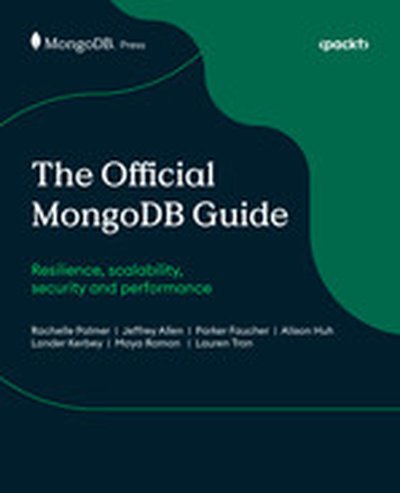
The Official MongoDB Guide

The official guide to MongoDB architecture, tools, and cloud features, written by leading MongoDB subject matter experts to help you build secure, scalable, high-performance applications Key Features Design resilient, secure solutions with high performance and scalability Streamline development with modern tooling, indexing, and AI-powered workflows Deploy and optimize in the cloud using advanced MongoDB Atlas features Purchase of the print or Kindle book includes a free PDF eBook Book Description Delivering secure, scalable, and high-performance applications is never easy, especially when systems must handle growth, protect sensitive data, and perform reliably under pressure. The Official MongoDB Guide addresses these challenges with guidance from MongoDB’s top subject matter experts, so you learn proven best practices directly from those who know the technology inside out. This book takes you from core concepts and architecture through to advanced techniques for data modeling, indexing, and query optimization, supported by real-world patterns that improve performance and resilience. It offers practical coverage of developer tooling, IDE integrations, and AI-assisted workflows that will help you work faster and more effectively. Security-focused chapters walk you through authentication, authorization, encryption, and compliance, while chapters dedicated to MongoDB Atlas showcase its robust security features and demonstrate how to deploy, scale, and leverage platform-native capabilities such as Atlas Search and Atlas Vector Search. By the end of this book, you’ll be able to design, build, and manage MongoDB applications with the confidence that comes from learning directly from the experts shaping the technology. What you will learn Build secure, scalable, and high-performance applications Design efficient data models and indexes for real workloads Write powerful queries to sort, filter, and project data Protect applications with authentication and encryption Accelerate coding with AI-powered and IDE-based tools Launch, scale, and manage MongoDB Atlas with confidence Unlock advanced features like Atlas Search and Atlas Vector Search Apply proven techniques from MongoDB's own engineering leaders Who this book is for This book is for developers, database professionals, architects, and platform teams who want to get the most out of MongoDB. Whether you’re building web apps, APIs, mobile services, or backend systems, the concepts covered here will help you structure data, improve performance, and deliver value to your users. No prior experience with MongoDB is required, but familiarity with databases and programming will be helpful.
From Manual to LLMs: Scaling Product Categorization

How to use LLMs to categorize hundreds of thousands of products into 1,000 categories at scale? Learn about our journey from manual/rule-based methods, via fine-tuned semantic models, to a robust multi-step process which uses embeddings and LLMs via the OpenAI APIs. This talk offers data scientists and AI practitioners learnings and best practices for putting such a complex LLM-based system into production. This includes prompt development, balancing cost vs. accuracy via model selection, testing mult-case vs. single-case prompts, and saving costs by using the OpenAI Batch API and a smart early-stopping approach. We also describe our automation and monitoring in a PySpark environment.

One API to Rule Them All? LiteLLM in Production

Using LiteLLM in a Real-World RAG System: What Worked and What Didn’t

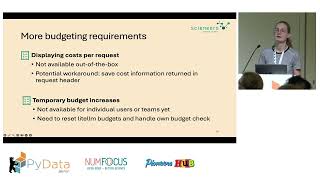
LiteLLM provides a unified interface to work with multiple LLM providers—but how well does it hold up in practice? In this talk, I’ll share how we used LiteLLM in a production system to simplify model access and handle token budgets. I’ll outline the benefits, the hidden trade-offs, and the situations where the abstraction helped—or got in the way. This is a practical, developer-focused session on integrating LiteLLM into real workflows, including lessons learned and limitations. If you’re considering LiteLLM, this talk offers a grounded look at using it beyond simple prototypes.

Automating Content Creation with LLMs: A Journey from Manual to AI-Driven Excellence

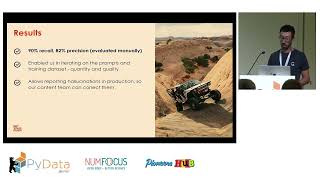
In the fast-paced realm of travel experiences, GetYourGuide encountered the challenge of maintaining consistent, high-quality content across its global marketplace. Manual content creation by suppliers often resulted in inconsistencies and errors, negatively impacting conversion rates. To address this, we leveraged large language models (LLMs) to automate content generation, ensuring uniformity and accuracy. This talk will explore our innovative approach, including the development of fine-tuned models for generating key text sections and the use of Function Calling GPT API for structured data. A pivotal aspect of our solution was the creation of an LLM evaluator to detect and correct hallucinations, thereby improving factual accuracy. Through A/B testing, we demonstrated that AI-driven content led to fewer defects and increased bookings. Attendees will gain insights into training data refinement, prompt engineering, and deploying AI at scale, offering valuable lessons for automating content creation across industries.

Democratizing Experimentation: How GetYourGuide Built a Flexible and Scalable A/B Testing Platform

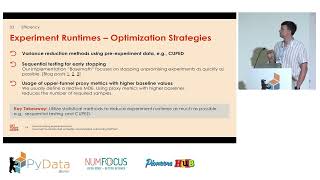
At GetYourGuide, we transformed experimentation from a centralized, closed system into a democratized, self-service platform accessible to all analysts, engineers, and product teams. In this talk, we'll share our journey to empower individuals across the company to define metrics, create dimensions, and easily extend statistical methods. We'll discuss how we built a Python-based Analyzer toolkit enabling standardized, reusable calculations, and how our experimentation platform provides ad-hoc analytical capabilities through a flexible API. Attendees will gain practical insights into creating scalable, maintainable, and user-friendly experimentation infrastructure, along with access to our open-source sequential testing implementation.

Democratizing Digital Maps: How Protomaps Changes the Game

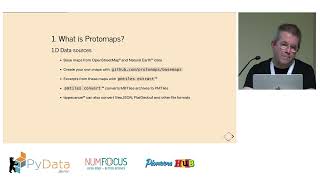
Digital mapping has long been dominated by commercial providers, creating barriers of cost, complexity, and privacy concerns. This talk introduces Protomaps, an open-source project that reimagines how web maps are delivered and consumed. Using the innovative PMTiles format – a single-file approach to vector tiles – Protomaps eliminates complex server infrastructure while reducing bandwidth usage and improving performance. We'll explore how this technology democratizes cartography by making self-hosted maps accessible without API keys, usage quotas, or recurring costs. The presentation will demonstrate implementations with Leaflet and MapLibre, showcase customization options, and highlight cases where Protomaps enables privacy-conscious, offline-capable mapping solutions. Discover how this technology puts mapping control back in the hands of developers while maintaining the rich experiences modern applications demand.

Discover the fundamentals of delivering API management as a platform service with Kong Konnect. In this introductory workshop, we’ll explore essential concepts and methodologies that Platform Providers use to provide scalable, self-service API management capabilities to Platform Consumers. Who should attend? Platform Engineers, Platform Owners, SREs, and anyone building an internal API platform. Design for Federation - Map the “Provider - Consumer” contract so platform teams and product teams can work autonomously. Navigate Kong Konnect’s multi-tenant architecture to isolate teams while sharing global policies. Model RBAC and system accounts for fully programmatic workflows—no ticket queues. Operationalize at Scale - Onboard new teams in minutes using templated provisioning and GitOps pipelines. Give teams Infrastructure autonomy with governed self-provisioning of Platform resources. Integrate external systems (e.g. S3, Vault) for secrets and artifacts. Throughout live demos and in-depth walkthroughs, you’ll build a reference blueprint you can take back to your org. Ready to go deeper? This session sets you up for our 201 Workshop and Automations Developer Day.

This session introduces Dana, a local-first agent programming language designed for building AI agents. Get a working expert agent in minutes. Features include long running, multi-step agent workflows on a single line; built-in concurrency for parallel LLM calls with zero async keywords; and deterministic execution with learning loops to improve reliability over time. Ideal for sensitive data, air-gapped environments, or cloud API limitations.

Async Python for Data Science: Speeding Up IO - Bound Workflows\nMost Python scripts in data science are synchronous — fetching one record at a time, waiting for APIs, or slowly scraping websites. In this talk, we’ll introduce Python’s asyncio ecosystem and show how it transforms IO - heavy data workflows. You'll see how httpx , aiofiles , and async constructs speed up tasks like web scraping and batch API calls. We’ll compare async vs threading, walk through a real - world case study, and wrap with performance benchmarks that demonstrate async's value.\nKeywords: p ython 3.x , AsyncIO, Web Scraping, API, Concurrency, Performance, Optimization

Formation immersive animée en direct par un formateur expert. En 3 heures, passez de novice à explorateur du code en créant des logiciels concrets (calculatrice, outil de tirage au sort, convertisseur d’image, et bien plus). Vous découvrirez les bases du développement web, les API et même l’intelligence artificielle et le deep learning, le tout avec des outils accessibles et ludiques. Une approche humaine et interactive pour gagner en autonomie.

Formation immersive en direct animée par un formateur expert. En 3 heures, passez de novice à explorateur du code en créant des logiciels concrets (calculatrice, outil de tirage au sort, convertisseur d’image, et bien plus). Vous découvrirez les bases du développement web, des API et même l’intelligence artificielle et le deep learning, le tout avec des outils accessibles et ludiques. Challenge après challenge, vous gagnerez en autonomie et comprendrez enfin comment fonctionnent les logiciels !

Contract-driven development puts a shared API contract at the center of the engineering process, enabling teams to work in parallel from day one. Your entire Engineering team can all move faster with mocks, generated clients, and automated tooling derived from a single source of truth. This talk shows how a simple contract can streamline collaboration, reduce integration issues, and speed up delivery — all with minimal upfront effort.

This session introduces the AI Gateway pattern—a central control plane for enterprise AI ecosystems. We'll explore how AI gateways solve real-world challenges through unified API abstraction, intelligent failover mechanisms, semantic caching, centralized guardrails, and granular cost controls. You'll learn practical architectural patterns for building high-availability gateways that handle thousands of concurrent requests while maintaining sub-millisecond decision-making through in-memory operations. The session covers separation of control and data planes, asynchronous logging patterns, and horizontal scaling strategies. It also discusses Model Context Protocol (MCP) integration for managing model access and tool ecosystems to enable natural language automation across enterprise software. Key takeaways include gateway design principles, performance optimization strategies, multi-provider management patterns, and a framework for evaluating AI infrastructure needs.

Most Python scripts in data science are synchronous — fetching one record at a time, waiting for APIs, or slowly scraping websites. In this talk, we’ll introduce Python’s asyncio ecosystem and show how it transforms IO-heavy data workflows. You'll see how httpx, aiofiles, and async constructs speed up tasks like web scraping and batch API calls. We’ll compare async vs threading, walk through a real-world case study, and wrap with performance benchmarks that demonstrate async's value.

As scientific computing increasingly relies on diverse hardware (CPUs, GPUs, etc) and data structures, libraries face pressure to support multiple backends while maintaining a consistent API. This talk presents practical considerations for adding dispatching to existing libraries, enabling seamless integration with external backends. Using NetworkX and scikit-image as case studies, we demonstrate how they evolved to become a common API with multiple implementations, handle backend-specific behaviors, and ensure robustness through testing and documentation. We also discuss technical challenges, differences in approaches, community adoption strategies, and the broader implications for the SciPy ecosystem.

The rapidly evolving Python ecosystem presents increasing challenges for adapting code using traditional methods. Developers frequently need to rewrite applications to leverage new libraries, hardware architectures, and optimization techniques. To address this challenge, the Numba team is developing a superoptimizing compiler built on equality saturation-based term rewriting. This innovative approach enables domain experts to express and share optimizations without requiring extensive compiler expertise. This talk explores how Numba v2 enables sophisticated optimizations—from floating-point approximation and automatic GPU acceleration to energy-efficient multiplication for deep learning models—all through the familiar NumPy API. Join us to discover how Numba v2 is bringing superoptimization capabilities to the Python ecosystem.

This talk explores various methods to accelerate traditional machine learning pipelines using scikit-learn, UMAP, and HDBSCAN on GPUs. We will contrast the experimental Array API Standard support layer in scikit-learn with the cuML library from the NVIDIA RAPIDS Data Science stack, including its zero-code change acceleration capability. ML and data science practitioners will learn how to seamlessly accelerate machine learning workflows, highlight performance benefits, and receive practical guidance for different problem types and sizes. Insights into minimizing cost and runtime by effectively mixing hardware for various tasks, as well as the current implementation status and future plans for these acceleration methods, will be provided.