talk-data.com talk-data.com

Topic

API

Application Programming Interface (API)

integration software_development data_exchange

856

tagged

Activity Trend

65 peak/qtr
2020-Q1 2026-Q1

Activities

856 activities · Newest first

Pro Oracle GoldenGate 23ai for the DBA: Powering the Foundation of Data Integration and AI

Transform your data replication strategy into a competitive advantage with Oracle GoldenGate 23ai. This comprehensive guide delivers the practical knowledge DBAs and architects need to implement, optimize , and scale Oracle GoldenGate 23ai in production environments. Written by Oracle ACE Director Bobby Curtis, it blends deep technical expertise with real-world business insights from hundreds of implementations across manufacturing, financial services, and technology sectors. Beyond traditional replication, this book explores the groundbreaking capabilities that make GoldenGate 23ai essential for modern AI initiatives. Learn how to implement real-time vector replication for RAG systems, integrate with cloud platforms like GCP and Snowflake, and automate deployments using REST APIs and Python. Each chapter offers proven strategies to deliver measurable ROI while reducing operational risk. Whether you're upgrading from Classic GoldenGate , deploying your first cloud data pipeline, or building AI-ready data architectures, this book provides the strategic guidance and technical depth to succeed. With Bobby's signature direct approach, you'll avoid common pitfalls and implement best practices that scale with your business. What You Will Learn Master the microservices architecture and new capabilities of Oracle GoldenGate 23ai Implement secure, high-performance data replication across Oracle, PostgreSQL, and cloud databases Configure vector replication for AI and machine learning workloads, including RAG systems Design and build multi-master replication models with automatic conflict resolution Automate deployments and management using RESTful APIs and Python Optimize performance for sub-second replication lag in production environments Secure your replication environment with enterprise-grade features and compliance Upgrade from Classic to Microservices architecture with zero downtime Integrate with cloud platforms including OCI, GCP, AWS, and Azure Implement real-time data pipelines to BigQuery , Snowflake, and other cloud targets Navigate Oracle licensing models and optimize costs Who This Book Is For Database administrators, architects, and IT leaders working with Oracle GoldenGate —whether deploying for the first time, migrating from Classic architecture, or enabling AI-driven replication—will find actionable guidance on implementation, performance tuning, automation, and cloud integration. Covers unidirectional and multi-master replication and is packed with real-world use cases.
API testing includes so many things in it - functionality, data, performance, security. We'd like to know as much as we can about our APIs, but we've got so little time. Can AI help? You bet. It can help in planning, case suggestions, preparations for testing, documenting the tests and help with integration with our favorite tools. Things that took hours now take seconds. API Testing is changing. We want to take advantage of AI's power, and make sure that our testing is not only productive, but effective. I'll show you how.

Datamaps are ML-powered visualizations of high-dimensional data, and in this talk the data is collections of embedding vectors. Interactive datamaps run in-browser as web-apps, potentially without any code running on the web server. Datamap tech can be used to visualize, say, the entire collection of chunks in a RAG vector database.

The best-of-breed tools of this new datamap technique are liberally licensed open source. This presentation is an introduction to building with those repos. The maths will be mentioned only in passing; the topic here is simply how-to with specific tools. Talk attendees will be learning about Python tools, which produce high-quality web UIs.

DataMapPlot is the premiere tool for rendering a datamap as a web-app. Here is a live demo thereof: https://connoiter.com/datamap/cff30bc1-0576-44f0-a07c-60456e131b7b

00-25: Intro to datamaps 25-45: Pipeline architecture 45-55: demos touring such tools as UMAP, HDBSCAN, DataMapPlot, Toponomy, etc. 55-90: Group coding

A Google account is required to log in to Google Colab, where participants can run the workshop notebooks. A Hugging Face API key (token) is needed to download Gemma models.

Building Inference Workflows with Tile Languages

The world of generative AI is expanding. New models are hitting the market daily. The field has bifurcated between model training and model inference. The need for fast inference has led to numerous Tile languages to be developed. These languages use concepts from linear algebra and borrow common numpy apis. In this talk we will show how tiling works and how to build inference models from scratch in pure Python with embedded tile languages. The goal is to provide attendees with a good overview that can be integrated in common data pipelines.

Building Agents with Agent Bricks and MCP

Want to create AI agents that can do more than just generate text? Join us to explore how combining Databricks' Agent Bricks with the Model Context Protocol (MCP) unlocks powerful tool-calling capabilities. We'll show you how MCP provides a standardized way for AI agents to interact with external tools, data and APIs, solving the headache of fragmented integration approaches. Learn to build agents that can retrieve both structured and unstructured data, execute custom code and tackle real enterprise challenges.

There and back again... by ferry or I-5?

Living on Washington State’s peninsula offers endless beauty, nature, and commuting challenges. In this talk, I’ll share how I built an agentic AI system that creates and compares optimal routes to the mainland, factoring in ferry schedules, costs, driving distances, and live traffic. Originally a testbed for the Model Context Protocol (MCP) framework, this project now manages my travel schedule, generates expense estimates, and sends timely notifications for events. I’ll give a comprehensive overview of MCP, show how to quickly turn ideas into working agentic AI, and discuss practical integration with real-world APIs. Attendees will leave with actionable insights and a roadmap for building their own agentic AI solutions.

Real-TIme Context Engineering for Agents

Agents need timely and relevant context data to work effectively in an interactive environment. If an agent takes more than a few seconds to react to an action in a client applicatoin, users will not perceive it as intelligent - just laggy.

Real-time context engineering involves building real-time data pipelines to pre-process application data and serve relevant and timely context to agents. This talk will focus on how you can leverage application identifiers (user ID, session ID, article ID, order ID, etc) to identify which real-time context data to provide to agents. We will contrast this approach with the more traditional RAG approach of using vector indexes to retrieve chunks of relevent text using the user query. Our approach will necessitate the introduction of the Agent-to-Agent protocol, an emerging standard for defining APIs for agents.

We will also demonstrate how we provide real-time context data from applications inside Python agents using the Hopsworks feature store. We will walk through an example of an interactive application (TikTok clone).

Start with a dataset in Motherduck and build a production-ready analytics app using Omni’s semantic model and APIs. We’ll cover practical data modeling techniques, share lessons learned from building AI features, and walk through how to give AI the context it needs to answer questions accurately. You’ll leave with a working app and the skills to build your next one.

Every sprint consumed by fixing parsers is a sprint spent not shipping product- brittle parsing kills velocity. This workshop is about retiring that cycle so you can move from messy, unstructured inputs to production-ready data in seconds. bem ingests and transforms any unstructured input at any volume — PDFs, emails, Excel, Word, CSV, text, JSON, images (PNG, JPEG, HEIC, HEIF, WebP), HTML, and audio (WAV, MP3, M4A) — into clean JSON instantly via API. With primitives like Transform, Join, Split, Route, and Analyze, you define the exact workflow your product needs. Built-in Evals measure + enforce accuracy automatically so quality doesn’t drop as you scale. Flow outputs straight into MotherDuck so you can go from chaos to query without manual cleanup — and your team can focus on shipping, not scraping.

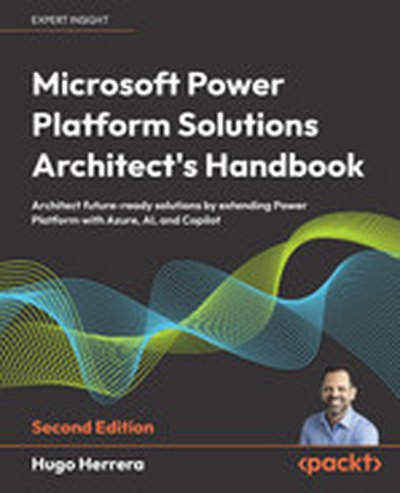
Microsoft Power Platform Solutions Architect's Handbook - Second Edition

Dive into 'Microsoft Power Platform Solution Architect's Handbook' to master the art of designing and delivering enterprise-grade solutions using Microsoft's cutting-edge Power Platform. Through a mix of practical examples and hands-on tutorials, this book equips you to harness tools like AI, Copilot, and DevOps for building innovative, scalable applications tailored to enterprise needs. What this Book will help me do Acquire the knowledge to effectively utilize AI tools such as Power Platform Copilot and ChatGPT to enhance application intelligence. Understand and apply enterprise-grade solution architecture principles for scalable and secure application development. Gain expertise in integrating heterogenous systems with Power Platform Pipes and third-party APIs. Develop proficiency in creating and maintaining reusable Dataverse data models. Learn to establish and manage a Center of Excellence to govern and scale Power Platform solutions. Author(s) Hugo Herrera is an experienced solution architect specializing in the Microsoft Power Platform with a deep focus on integrating AI and cloud-native strategies. With years of hands-on experience in enterprise software development and architectural design, Hugo brings real-world insights into his writing, emphasizing practical application of advanced concepts. His approach is clear, structured, and aimed at empowering readers to excel. Who is it for? This book is tailored for IT professionals like solution architects, enterprise architects, and technical consultants who are looking to elevate their capabilities in Power Platform development. It is also suitable for individuals with an intermediate understanding of Power Platform seeking to spearhead enterprise-level digital transformation projects. Ideal readers are those ready to deepen their integration, data modeling, and AI usage skills within the Microsoft ecosystem, particularly for enterprise applications.

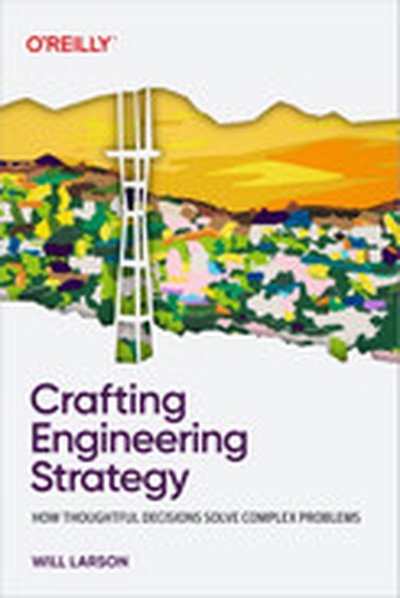
Crafting Engineering Strategy

Many engineers assume their organization doesn't have an engineering strategy—when in fact, they often do. It just may not be working. In Crafting Engineering Strategy, Will Larson (author of An Elegant Puzzle, Staff Engineer, and The Engineering Executive's Primer) offers a practical, example-rich guide to navigating technical and organizational complexity through structured, intentional strategy. Written for senior engineers, engineering leaders, architects, and curious collaborators, this book lays out a repeatable process for building effective, actionable strategies—from early diagnosis to rollout. With lessons drawn from real-world case studies at companies like Stripe, Uber, and Calm, Larson provides a framework for shaping critical decisions around system migrations, API deprecations, platform investments, and more. Along the way, you'll learn to augment technical planning with communication, governance, and systems thinking. Whether you're shaping your team's direction or leading a company-wide initiative, Crafting Engineering Strategy will help you make thoughtful decisions that stick. Build durable engineering strategies from first principles Apply methods like Wardley mapping and systems modeling Lead strategy as a staff+ engineer or executive Learn from detailed case studies across industries Improve your strategic fluency and influence over time

The journey from startup to billion-dollar enterprise requires more than just a great product—it demands strategic alignment between sales and marketing. How do you identify your ideal customer profile when you're just starting out? What data signals help you find the twins of your successful early adopters? With AI now automating everything from competitive analysis to content creation, the traditional boundaries between departments are blurring. But what personality traits should you look for when building teams that can scale with your growth? And how do you ensure your data strategy supports rather than hinders your AI ambitions in this rapidly evolving landscape? Denise Persson is CMO at Snowflake and has 20 years of technology marketing experience at high-growth companies. Prior to joining Snowflake, she served as CMO for Apigee, an API platform company that went public in 2015 and Google acquired in 2016. She began her career at collaboration software company Genesys, where she built and led a global marketing organization. Denise also helped lead Genesys through its expansion to become a successful IPO and acquired company. Denise holds a BA in Business Administration and Economics from Stockholm University, and holds an MBA from Georgetown University. Chris Degnan is the former CRO at Snowflake and has over 15 years of enterprise technology sales experience. Before working at Snowflake, Chris served as the AVP of the West at EMC, and prior to that as VP Western Region at Aveksa, where he helped grow the business 250% year-over-year. Before Aveksa, Chris spent eight years at EMC and managed a team responsible for 175 select accounts. Prior to EMC, Chris worked in enterprise sales at Informatica and Covalent Technologies (acquired by VMware). He holds a BA from the University of Delaware. In the episode, Richie, Denise, and Chris explore the journey to a billion-dollar ARR, the importance of customer obsession, aligning sales and marketing, leveraging data for decision-making, and the role of AI in scaling operations, and much more. Links Mentioned in the Show: SnowflakeSnowflake BUILDConnect with Denise and ChrisSnowflake is FREE on DataCamp this weekRelated Episode: Adding AI to the Data Warehouse with Sridhar Ramaswamy, CEO at SnowflakeRewatch RADAR AI  New to DataCamp? Learn on the go using the DataCamp mobile appEmpower your business with world-class data and AI skills with DataCamp for business

SQL Server 2025 Unveiled: The AI-Ready Enterprise Database with Microsoft Fabric Integration

Unveil the data platform of the future with SQL Server 2025—guided by one of its key architects . With built-in AI for application development and advanced analytics powered by Microsoft Fabric, SQL Server 2025 empowers you to innovate—securely and confidently. This book shows you how. Author Bob Ward, Principal Architect for the Microsoft Azure Data team, shares exclusive insights drawn from over three decades at Microsoft. Having worked on every version of SQL Server since OS/2 1.1, Ward brings unmatched expertise and practical guidance to help you navigate this transformative release. Ward covers everything from setup and upgrades to advanced features in performance, high availability, and security. He also highlights what makes this the most developer-friendly release in a decade: support for JSON, RegEx, REST APIs, and event streaming. Most critically, Ward explores SQL Server 2025’s advanced, scalable AI integrations, showing you how to build AI-powered applications deeply integrated with the SQL engine—and elevate your analytics to the next level. But innovation doesn’t come at the cost of safety: this release is built on a foundation of enterprise-grade security, helping you adopt AI safely and responsibly. You control which models to use, how they interact with your data, and where they run—from ground to cloud, or integrated with Microsoft Fabric. With built-in features like Row-Level Security (RLS), Transparent Data Encryption (TDE), Dynamic Data Masking, and SQL Server Auditing, your data remains protected at every layer. The AI age is here. Make sure your SQL Server databases are ready—and built for secure, scalable innovation . What You Will Learn [if !supportLists] · [endif]Grasp the fundamentals of AI to leverage AI with your data, using the industry-proven security and scale of SQL Server [if !supportLists] · [endif]Utilize AI models of your choice, services, and frameworks to build new AI applications [if !supportLists] · [endif]Explore new developer features such as JSON, Regular Expressions, REST API, and Change Event Streaming [if !supportLists] · [endif]Discover SQL Server 2025's powerful new engine capabilities to increase application concurrency [if !supportLists] · [endif]Examine new high availability features to enhance uptime and diagnose complex HADR configurations [if !supportLists] · Use new query processing capabilities to extend the performance of your application [if !supportLists] · [endif]Connect SQL Server to Azure with Arc for advanced management and security capabilities [if !supportLists] · [endif]Secure and govern your data using Microsoft Entra [if !supportLists] · [endif]Achieve near-real-time analytics with the unified data platform Microsoft Fabric [if !supportLists] · [endif]Integrate AI capabilities with SQL Server for enterprise AI [if !supportLists] · [endif]Leverage new tools such as SQL Server Management Studio and Copilot experiences to assist your SQL Server journey Who This Book Is For The SQL Server community, including DBAs, architects, and developers eager to stay ahead with the latest advancements in SQL Server 2025, and those interested in the intersection of AI and data, particularly how artificial intelligence (AI) can be seamlessly integrated with SQL Server to unlock deeper insights and smarter solutions

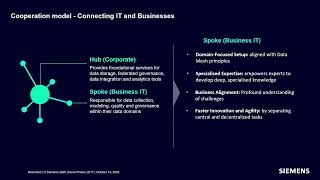
Scaling data transformation: Siemens DI approach with dbt

Siemens Data Cloud runs over 1500 dbt Platform projects across teams and domains. But more projects can mean more silos and less visibility. Because dbt is designed to be project-scoped, getting a birds-eye view isn’t easy. That’s where the dbt Platform Admin API comes in. We’ll show how we used it to extract metadata and build a unified monitoring dashboard. You’ll learn how to track deployments, spot anomalies, and compare project health across your dbt landscape.

Generative AI for Software Developers

Master Generative AI in software development with hands-on guidance, from coding and debugging to testing and deployment, using GitHub Copilot, Amazon Q Developer, and OpenAI APIs to build scalable, AI-powered applications Key Features Hands-on guidance for mastering AI-powered coding, debugging, and deployment with real-world examples Comprehensive coverage of GenAI concepts, prompt engineering, fine-tuning, and SDLC integration Practical strategies for architecting and scaling production-ready AI-driven applications Book Description Generative AI for Software Developers is your practical guide to mastering AI-powered development and staying ahead in a fast-changing industry. Through a structured, hands-on approach, this book helps you understand, implement, and optimize Generative AI in modern software engineering. From AI-assisted coding, debugging, and documentation to testing, deployment, and system design, it equips you with the skills to integrate AI seamlessly into your workflows. You’ll work with tools such as GitHub Copilot, Amazon Q Developer, and OpenAI APIs while learning strategies for prompt engineering, fine-tuning, and building scalable AI-powered applications. Featuring real-world use cases, best practices, and expert insights, this book bridges the gap between experimenting with AI and production deployment. Whether you’re an aspiring AI developer, experienced engineer, or solutions architect, this guide gives you the clarity, confidence, and tactical knowledge to thrive in the GenAI-driven future of software development. Armed with these insights, you’ll be ready to build, integrate, and scale intelligent solutions that enhance every stage of the software development lifecycle. What you will learn Build a secure GenAI application with expert guidance Understand the fundamentals of GenAI and its applications in software engineering Automate coding tasks with tools like GitHub Copilot, Amazon Q Developer, and OpenAI APIs Apply AI for debugging, testing, documentation, and deployment workflows Get to grips with prompt engineering and fine-tuning techniques to optimize AI outputs Implement best practices for architecting and scaling AI-powered applications Build end-to-end GenAI projects, moving from experimentation to production Who this book is for This book is for software developers, engineers, architects, and tech professionals who want to understand the core concepts of Generative AI and its real-world applications, master AI-driven development workflows to improve efficiency and code quality, and leverage tools like GitHub Copilot, Amazon Q Developer, and OpenAI APIs to automate coding tasks.

Modern data engineering leverages Python to build robust, scalable, end-to-end workflows. In this talk, we will cover how Snowflake offers you a flexible development environment for developing Python data pipelines, performing transformation at scale, orchestrating and deploying your pipelines at scale. Topics we’ll cover include:

•Ingest: Data source APIs, Snowflake file-to-read and ingest data of any format when files arrive, with sources outside Snowflake •Develop: Packaging (artifact repo), Python runtimes, IDE (Notebook, vscode) •Transform: Snowpark pandas, UDFs, UDAFs •Deploy: Tasks, Notebook scheduling

Transformer vos assets tech en leviers business durables grâce au Platform Engineering. Programme: pourquoi maintenant, comment ça marche (orchestration de services internes et externes, mise en place de socles technologiques réutilisables, data sharing, API, IA et automatisation), bénéfices concrets et cas réels (Retour d’expérience Bpifrance Digital).

• Nous présenterons les enjeux du déploiement d’une IA générative et d’un pipeline de RAG dans un environnement industriel sensible, en garantissant la plus stricte confidentialité des données.

• Découvrez l’approche innovante choisie par Sodern : déploiement on-premise de la plateforme LightOn, vectorisation de la base documentaire et intégration des fonctionnalités via API.

• Nous expliquerons comment ces technologies sont utilisées concrètement pour la génération et la correction de code, la création de user stories et le knowledge management, avec les premiers résultats observés.

• Enfin, nous partagerons la valeur ajoutée apportée à l’organisation et les axes d’évolution envisagés pour renforcer l’usage de l’IA sécurisée dans l’industrie.