talk-data.com talk-data.com

Topic

business-intelligence

356

tagged

Activity Trend

46 peak/qtr
2020-Q1 2026-Q2

Activities

356 activities · Newest first

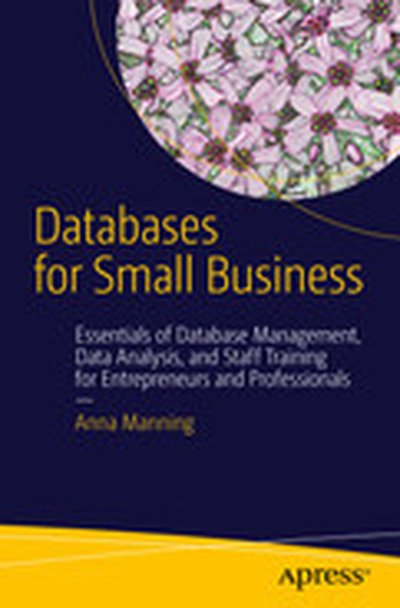
Databases for Small Business: Essentials of Database Management, Data Analysis,and Staff Training for Entrepreneurs and Professionals

This book covers the practical aspects of database design, data cleansing, data analysis, and data protection , among others. The focus is on what you really need to know to create the right database for your small business and to leverage it most effectively to spur growth and revenue. Databases for Small Business is a practical handbook for entrepreneurs, managers, staff, and professionals in small organizations who are not IT specialists but who recognize the need to ramp up their small organizations’ use of data and to round out their own business expertise and office skills with basic database proficiency. Anna Manning—a data scientist who has worked on database design and data analysis in a computer science university research lab, her own small business, and a nonprofit—walks you through the progression of steps that will enable you to extract actionable intelligence and maximum value from your business data in terms of marketing, sales, customer relations, decision making, and business strategy. Dr. Manning illustrates the steps in the book with four running case studies of a small online business, an engineering startup, a small legal firm, and a nonprofit organization.

Strategic Analytics

More than ever, data drives decisions in organizations—and we have more data, and more ways to analyze it, than ever. Yet strategic initiatives continue to fail as often as they did when computers ran on punch cards. Economist and research scientist Alec Levenson says we need a new approach. The problem, Levenson says, is that the business people who devise the strategies and the human resources people who get employees to implement them use completely different analytics. Business analytics can determine if operational priorities aren't being achieved but can't explain why. HR analytics reveal potentially helpful policy and process improvements but can't identify which would have the greatest strategic impact. This book shows how to use an integrated approach to bring these two pieces together. Levenson presents a thorough and realistic treatment of the reasons for and challenges of taking an integrated approach. He provides details on the different parts of both enterprise and human capital analytics that have to be conducted for integration to be successful and includes specific questions to ask, along with examples of applying integrated analytics to address particular organizational challenges. Effective analytics is a team sport. Levenson's approach allows you to get the deepest insights by bringing people together from both the business and HR perspectives to assess what's going on and determine the right solution.

The Definitive Guide to DAX: Business intelligence with Microsoft Excel, SQL Server Analysis Services, and Power BI

This comprehensive and authoritative guide will teach you the DAX language for business intelligence, data modeling, and analytics. Leading Microsoft BI consultants Marco Russo and Alberto Ferrari help you master everything from table functions through advanced code and model optimization. You’ll learn exactly what happens under the hood when you run a DAX expression, how DAX behaves differently from other languages, and how to use this knowledge to write fast, robust code. If you want to leverage all of DAX’s remarkable power and flexibility, this no-compromise “deep dive” is exactly what you need. Perform powerful data analysis with DAX for Microsoft SQL Server Analysis Services, Excel, and Power BI Master core DAX concepts, including calculated columns, measures, and error handling Understand evaluation contexts and the CALCULATE and CALCULATETABLE functions Perform time-based calculations: YTD, MTD, previous year, working days, and more Work with expanded tables, complex functions, and elaborate DAX expressions Perform calculations over hierarchies, including parent/child hierarchies Use DAX to express diverse and unusual relationships Measure DAX query performance with SQL Server Profiler and DAX Studio

Beginning Big Data with Power BI and Excel 2013

In Beginning Big Data with Power BI and Excel 2013, you will learn to solve business problems by tapping the power of Microsoft’s Excel and Power BI to import data from NoSQL and SQL databases and other sources, create relational data models, and analyze business problems through sophisticated dashboards and data-driven maps. While Beginning Big Data with Power BI and Excel 2013 covers prominent tools such as Hadoop and the NoSQL databases, it recognizes that most small and medium-sized businesses don’t have the Big Data processing needs of a Netflix, Target, or Facebook. Instead, it shows how to import data and use the self-service analytics available in Excel with Power BI. As you’ll see through the book’s numerous case examples, these tools—which you already know how to use—can perform many of the same functions as the higher-end Apache tools many people believe are required to carry out in Big Data projects. Through instruction, insight, advice, and case studies, Beginning Big Data with Power BI and Excel 2013 will show you how to: Import and mash up data from web pages, SQL and NoSQL databases, the Azure Marketplace and other sources. Tap into the analytical power of PivotTables and PivotCharts and develop relational data models to track trends and make predictions based on a wide range of data. Understand basic statistics and use Excel with PowerBI to do sophisticated statistical analysis—including identifying trends and correlations. Use SQL within Excel to do sophisticated queries across multiple tables, including NoSQL databases. Create complex formulas to solve real-world business problems using Data Analysis Expressions (DAX).

Search-Driven Business Analytics

Compared to the speed and convenience of major web search engines, most business intelligence (BI) products are slow, stiff, and unresponsive. Business leaders today often wait days or weeks to get BI reports on inquiries about customers, products, or markets. But the latest BI products show that a significant change is taking place—a change led by search. This O’Reilly report examines three recent products with intelligent search capabilities: the ThoughtSpot Analytical Search Appliance, Microsoft’s Power BI service, and an offering from Adatao. You’ll learn how these products can provide you with answers and visualizations as quickly as questions come to mind. You’ll investigate: The convergence of BI and search What a search-driven user experience looks like The intelligence required for analytical search Data sources and their associated data modeling requirements Turning on-the-fly calculations into visualizations Applying enterprise scale and security to search

Learning SAP Business Objects Dashboards

"Learning SAP Business Objects Dashboards" is your definitive guide to mastering the creation of professional, interactive dashboards tailored for both desktop and mobile use. Whether you are starting with basics or looking to enhance your existing BI skill set, this book offers step-by-step guidance to build customizing and visually appealing dashboards using SAP Business Objects. What this Book will help me do Gain proficiency in using SAP BO Dashboard Designer to create compelling BI dashboards. Learn how to integrate data seamlessly into SAP dashboards for dynamic insights. Master the art of building interactive and responsive dashboards suitable for various devices. Explore advanced visualization techniques including maps, selectors, and styling. Understand how to ensure data security and successfully deploy your dashboards. Author(s) Taha Mahmoud is an experienced Business Intelligence consultant specializing in SAP technologies. With years of experience in crafting custom BI solutions, Taha brings a practical and approachable teaching style to the complex realm of dashboard design. His goal in writing this book is to impart practical skills to learners so they can confidently excel in their BI careers. Who is it for? This book is ideal for business analysts, BI developers, and data visualization enthusiasts aiming to learn or improve their SAP Business Objects dashboard skills. It requires basic knowledge of MS Excel and an analytical mindset. If you're tasked with presenting data in clear, impactful visuals or making interactive dashboards for your organization, this book is for you.

The Last Mile of Analytics: Making the Leap from Platforms to Tools

Here's the net takeaway: Businesses want insights from data they can translate into meaningful actions and real results. Software vendors are beginning to deliver a new generation of advanced analytics packages that address business issues directly. In this O'Reilly report, Mike Barlow reveals how this new user-friendly software is helping businesses go beyond data analysis and straight to decision-making—without requiring data science expertise or truckloads of cash. How has advanced analytics progressed from lab project to commercial product so quickly? Through interviews with data analysts, you'll understand the role that machine learning plays in specialized analytics packages, and how this software alone can make decisions based on what's likely to happen next. When you have these capabilities, you’ve reached "the last mile of analytics."

Applied Microsoft Business Intelligence

Leverage the integration of SQL Server and Office for more effective BI Applied Microsoft Business Intelligence shows you how to leverage the complete set of Microsoft tools—including Microsoft Office and SQL Server—to better analyze business data. This book provides best practices for building complete BI solutions using the full Microsoft toolset. You will learn how to effectively use SQL Server Analysis and Reporting Services, along with Excel, SharePoint, and other tools to provide effective and cohesive solutions for the enterprise. Coverage includes BI architecture, data queries, semantic models, multidimensional modeling, data analysis and visualization, performance monitoring, data mining, and more, to help you learn to perform practical business analysis and reporting. Written by an author team that includes a key member of the BI product team at Microsoft, this useful reference provides expert instruction for more effective use of the Microsoft BI toolset. Use Microsoft BI suite cohesively for more effective enterprise solutions Search, analyze, and visualize data more efficiently and completely Develop flexible and scalable tabular and multidimensional models Monitor performance, build a BI portal, and deploy and manage the BI Solution

Business Intelligence with SQL Server Reporting Services

Business Intelligence with SQL Server Reporting Services helps you deliver business intelligence with panache. Harness the power of the Reporting Services toolkit to combine charts, gauges, sparklines, indicators, and maps into compelling dashboards and scorecards. Create compelling visualizations that seize your audience’s attention and help business users identify and react swiftly to changing business conditions. Best of all, you'll do all these things by creating new value from software that is already installed and paid for – SQL Server and the included SQL Server Reporting Services. Businesses run on numbers, and good business intelligence systems make the critical numbers immediately and conveniently accessible. Business users want access to key performance indicators in the office, at the beach, and while riding the subway home after a day's work. Business Intelligence with SQL Server Reporting Services helps you meet these need for anywhere/anytime access by including chapters specifically showing how to deliver on modern devices such as smart phones and tablets. You'll learn to deliver the same information, with similar look-and-feel, across the entire range of devices used in business today. Key performance indicators give fast notification of business unit performance Polished dashboards deliver essential metrics and strategic comparisons Visually arresting output on multiple devices focuses attention

Data Visualization for Oracle Business Intelligence 11g

The only Oracle Press guide to creating effective visual presentations of business intelligence data quickly and easily Data Visualization for Oracle Business Intelligence 11g reveals the best practices for creating graphs, tables, maps, and other methodologies for presenting data-driven insights using one of the most common business intelligence front-end systems in the world, Oracle Business Intelligence 11 g. This information-rich guide offers clear instructions for building top-quality dashboards, analyses, and visualizations from real-world implementers and respected data visualization experts. You’ll learn everything from improving the readability of your tables to implementing the latest Advanced Trellis Chart features and from adding native map views of BI data to designing optimal dashboard layout strategies. You’ll see how to produce accurate, compelling, and professional graphics that will immediately enhance corporate decision making. Shows proven steps for extracting maximum impact from native features that are little known to the majority of BI users Covers dashboard strategy, including layout, design, navigation, master detail linking, action links, and prompts Addresses how to extend Oracle Business Intelligence 11 g with advanced languages and visualization systems such as JavaScript-based D3 and JQuery, R, and Oracle Application Development Framework Includes an associated web gallery showcasing the colors and graphics that render best digitally

Business Intelligence and Data Mining

“This book is a splendid and valuable addition to this subject. The whole book is well written and I have no hesitation to recommend that this can be adapted as a textbook for graduate courses in Business Intelligence and Data Mining.” Dr. Edi Shivaji, Des Moines, Iowa “As a complete novice to this area just starting out on a MBA course I found the book incredibly useful and very easy to follow and understand. The concepts are clearly explained and make it an easy task to gain an understanding of the subject matter.” -- Mr. Craig Domoney, South Africa. Business Intelligence and Data Mining is a conversational and informative book in the exploding area of Business Analytics. Using this book, one can easily gain the intuition about the area, along with a solid toolset of major data mining techniques and platforms. This book can thus be gainfully used as a textbook for a college course. It is also short and accessible enough for a busy executive to become a quasi-expert in this area in a couple of hours. Every chapter begins with a case-let from the real world, and ends with a case study that runs across the chapters.

Enterprise Business Intelligence and Data Warehousing

Corporations and governmental agencies of all sizes are embracing a new generation of enterprise-scale business intelligence (BI) and data warehousing (DW), and very often appoint a single senior-level individual to serve as the Enterprise BI/DW Program Manager. This book is the essential guide to the incremental and iterative build-out of a successful enterprise-scale BI/DW program comprised of multiple underlying projects, and what the Enterprise Program Manager must successfully accomplish to orchestrate the many moving parts in the quest for true enterprise-scale business intelligence and data warehousing. Author Alan Simon has served as an enterprise business intelligence and data warehousing program management advisor to many of his clients, and spent an entire year with a single client as the adjunct consulting director for a $10 million enterprise data warehousing (EDW) initiative. He brings a wealth of knowledge about best practices, risk management, organizational culture alignment, and other Critical Success Factors (CSFs) to the discipline of enterprise-scale business intelligence and data warehousing.

Social Data Analytics

Social Data Analytics is the first practical guide for professionals who want to employ social data for analytics and business intelligence (BI). This book provides a comprehensive overview of the technologies and platforms and shows you how to access and analyze the data. You'll explore the five major types of social data and learn from cases and platform examples to help you make the most of sentiment, behavioral, social graph, location, and rich media data. A four-step approach to the social BI process will help you access, evaluate, collaborate, and share social data with ease. You'll learn everything you need to know to monitor social media and get an overview of the leading vendors in a crowded space of BI applications. By the end of this book, you will be well prepared for your organization’s next social data analytics project. Provides foundational understanding of new and emerging technologies—social data, collaboration, big data, advanced analytics Includes case studies and practical examples of success and failures Will prepare you to lead projects and advance initiatives that will benefit you and your organization

The Four Intelligences of the Business Mind: How to Rewire Your Brain and Your Business for Success

I highly recommend that you look at your organization through the lens of The Four Intelligences of the Business Mind. If you do so, your business will improve in unexpected ways." —Mark Waldman, Executive MBA Faculty, Loyola Marymount University "A new pragmatic synthesis of organizational psychology, business analytics, and multiple intelligences theory, The Four Intelligences of the Business Mind uses a revolutionary four-quadrant-based approach to teach you how to retrain your brain to optimize and transform your business. Valeh Nazemoff has written an excellent book with a commonsense approach and clear guidance." —Shaun Khalfan, Chief of Cyber Infrastructure, Department of the Navy The Four Intelligences of the Business Mind lays out a scheme of four discrete but interlocking types of intelligence essential to business success. These intelligences are scalable and transferable from the individual leader to the organizational ecosystem. This short book teaches executives first to analyze and train their own brains in these four intelligences; then to transform their organizations by applying their sharpened quadruplex intelligence to their business analyses and decisions; and finally to train and incentivize their companies to map onto a collective organizational scale the mental transformation modeled by the "mastermind" leader. The four essential business intelligences identified by IT executive and organizational psychologist Valeh Nazemoff are financial intelligence, customer intelligence, data intelligence, and mastermind intelligence. Financial intelligence informs your ability to reinvest and regrow your business boldly but prudently in the light of predictive, risk, and business analytics. Customer intelligence informs your ability to rethink your approaches to attracting and keeping customers using customer, web, mobile, social, big data, and behavioral analytics. Data intelligence informs your ability to reinvent and recreate information in automated graphical representations to enable rapid decision-making using visual, cloud, web, and operational analytics, AI, and distance collaboration platforms. Finally, mastermind intelligence involves your ability through leadership and team exercises to impart to your employees and organization the same transformative honing and integration of business intelligences as you have undergone yourself. "Practical, relevant, insightful, engaging, and a pleasant read, The Four Intelligences of the Business Mind puts human decision making into a whole new light, revealing practical steps that will allow you to reinvent your business and customer relationships!" —James Brady, PhD, FHIMSS, Chief Information Officer, Kaiser Permanente Orange County "An invaluable book that shows you how to harness the inevitable transformations in business by understanding your mind better." —Alan Komet, Vice President, Global Sales Operations, FalconStor Software, Inc. "A must-read book for every business person." —Chuck Corjay, Ret. Chairman, AFCEA International "Valeh Nazemoff has written an intelligent, thoughtful book full of insight and practical advice. The Four Intelligences of the Business Mind reframes the way our minds work, and in doing so transforms how we drive business forward. This book is a must-read!" —Joe DiStefano, Senior Vice President and Market Executive, Cardinal Bank

Business Intelligence Guidebook

Between the high-level concepts of business intelligence and the nitty-gritty instructions for using vendors’ tools lies the essential, yet poorly-understood layer of architecture, design and process. Without this knowledge, Big Data is belittled – projects flounder, are late and go over budget. Business Intelligence Guidebook: From Data Integration to Analytics shines a bright light on an often neglected topic, arming you with the knowledge you need to design rock-solid business intelligence and data integration processes. Practicing consultant and adjunct BI professor Rick Sherman takes the guesswork out of creating systems that are cost-effective, reusable and essential for transforming raw data into valuable information for business decision-makers. After reading this book, you will be able to design the overall architecture for functioning business intelligence systems with the supporting data warehousing and data-integration applications. You will have the information you need to get a project launched, developed, managed and delivered on time and on budget – turning the deluge of data into actionable information that fuels business knowledge. Finally, you’ll give your career a boost by demonstrating an essential knowledge that puts corporate BI projects on a fast-track to success. Provides practical guidelines for building successful BI, DW and data integration solutions. Explains underlying BI, DW and data integration design, architecture and processes in clear, accessible language. Includes the complete project development lifecycle that can be applied at large enterprises as well as at small to medium-sized businesses Describes best practices and pragmatic approaches so readers can put them into action. Companion website includes templates and examples, further discussion of key topics, instructor materials, and references to trusted industry sources.

Business Analytics Principles, Concepts, and Applications with SAS: What, Why, and How

Learn everything you need to know to start using business analytics and integrating it throughout your organization. brings together a complete, integrated package of knowledge for newcomers to the subject. The authors present an up-to-date view of what business analytics is, why it is so valuable, and most importantly, how it is used. They combine essential conceptual content with clear explanations of the tools, techniques, and methodologies actually used to implement modern business analytics initiatives. Business Analytics Principles, Concepts, and Applications with SAS They offer a proven step-wise approach to designing an analytics program, and successfully integrating it into your organization, so it effectively provides intelligence for competitive advantage in decision making. Using step-by-step examples, the authors identify common challenges that can be addressed by business analytics, illustrate each type of analytics (descriptive, prescriptive, and predictive), and guide users in undertaking their own projects. Illustrating the real-world use of statistical, information systems, and management science methodologies, these examples help readers successfully apply the methods they are learning. Unlike most competitive guides, this text demonstrates the use of SAS software, permitting instructors to spend less time teaching software and more time focusing on business analytics itself. will be a valuable resource for all beginning-to-intermediate level business analysts and business analytics managers; for MBA/Masters' degree students in the field; and for advanced undergraduates majoring in statistics, applied mathematics, or engineering/operations research. Business Analytics Principles, Concepts, and Applications with SAS

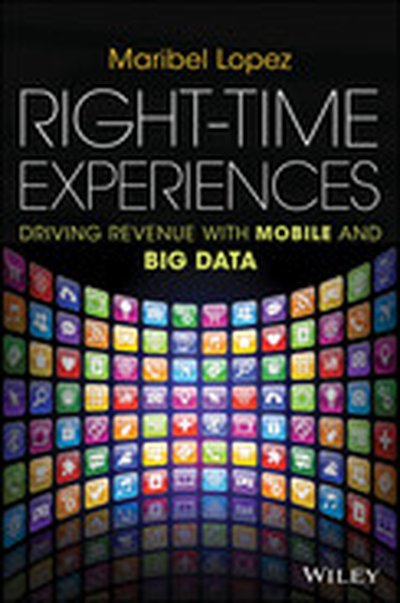
Right-Time Experiences: Driving Revenue with Mobile and Big Data

Grasp how mobile, big data, and analytics are combining to change business processes Right Experience, Right Results: Improving Profits, Margin, and Engagement with Mobile and Big Data illustrates how businesses can use mobility, big data, and analytics to enhance or change business processes, improve margins through better insight, transform customer experiences, empower employees with real-time, actionable insight, and more. The book depicts how companies can create competitive differentiation using mobile, cloud computing big data, and analytics to improve commerce, customer service, and communications with employees and consumers. In the past, the technologies used to deliver personalized and contextual services were either unavailable, unaffordable, or reserved solely for the consumer market. Today, however, the next wave of computing—mobile, cloud computing. big data, and analytics—has provided the foundation for businesses to create adaptive, personalized applications and services. Delivered point-of-need, these smarter services allow enterprise products and services to meet the burgeoning demand for always-connected, accurate, and real-time information. Right Experience, Right Results: Improving Profits, Margin, and Engagement with Mobile and Big Data is your guide to the new way of doing things. The book includes: Real world examples that illustrate how companies across various industries are creating better business processes by integrating new technologies A three step action plan for getting started and overcoming obstacles An electronic checklist with numerous actions that help get you up and running with incorporating mobile, big data, and analytics A guide to drawing insight from mobile, social, and other sources to create richer experiences If you're a CEO, chief marketing officer, marketing director, or business manager, Right Experience, Right Results gives you everything you need to harness technology to breathe new life into your business.

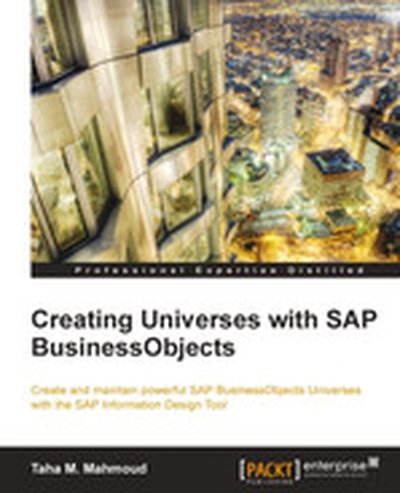
Creating Universes with SAP BusinessObjects

Dive into the world of SAP BusinessObjects Universe creation with this comprehensive guide. This book explains how to leverage the SAP Information Design Tool to design and maintain Universes effectively. Whether you're a beginner starting out or an experienced developer transitioning to new tools, you'll find practical insights and guided tutorials to enhance your abilities. What this Book will help me do Understand the fundamental concepts of SAP BusinessObjects Universes and how they facilitate Business Intelligence. Gain expertise in using the SAP Information Design Tool effectively for creating and managing Universes. Learn to build a solid and scalable Data Foundation layer tailored to your organization's needs. Explore methods to ensure the security of Universes using the Security Profile Editor. Master the skills to test, troubleshoot, and refine Universes for reliable reporting outcomes. Author(s) Taha Mahmoud is an experienced SAP consultant specializing in Business Intelligence. With a strong background in SAP BusinessObjects solutions, Taha brings years of hands-on expertise to teaching and technical writing. He focuses on creating precise and practical content to empower readers to solve real-world challenges. Who is it for? This book is tailored for SAP BusinessObjects Universe developers of all skill levels. Beginners will gain structured guidance on how to start and advance in Universe design. Experienced developers will find great value in mapping their knowledge to the newer tools and techniques. If you are responsible for business reporting or strive to optimize your organization's BI infrastructure, this resource is ideal for you.

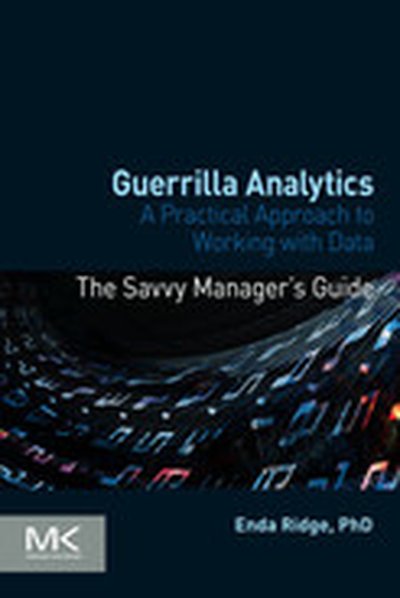
Guerrilla Analytics

Doing data science is difficult. Projects are typically very dynamic with requirements that change as data understanding grows. The data itself arrives piecemeal, is added to, replaced, contains undiscovered flaws and comes from a variety of sources. Teams also have mixed skill sets and tooling is often limited. Despite these disruptions, a data science team must get off the ground fast and begin demonstrating value with traceable, tested work products. This is when you need Guerrilla Analytics. In this book, you will learn about: The Guerrilla Analytics Principles: simple rules of thumb for maintaining data provenance across the entire analytics life cycle from data extraction, through analysis to reporting. Reproducible, traceable analytics: how to design and implement work products that are reproducible, testable and stand up to external scrutiny. Practice tips and war stories: 90 practice tips and 16 war stories based on real-world project challenges encountered in consulting, pre-sales and research. Preparing for battle: how to set up your team's analytics environment in terms of tooling, skill sets, workflows and conventions. Data gymnastics: over a dozen analytics patterns that your team will encounter again and again in projects The Guerrilla Analytics Principles: simple rules of thumb for maintaining data provenance across the entire analytics life cycle from data extraction, through analysis to reporting Reproducible, traceable analytics: how to design and implement work products that are reproducible, testable and stand up to external scrutiny Practice tips and war stories: 90 practice tips and 16 war stories based on real-world project challenges encountered in consulting, pre-sales and research Preparing for battle: how to set up your team's analytics environment in terms of tooling, skill sets, workflows and conventions Data gymnastics: over a dozen analytics patterns that your team will encounter again and again in projects