talk-data.com talk-data.com

Topic

data-engineering

3395

tagged

Activity Trend

1 peak/qtr
2020-Q1 2026-Q1

Activities

3395 activities · Newest first

Handbook for SAP PP in S/4HANA: Production Planning and Execution in SAP S/4HANA

If you're looking to increase your knowledge of one of the core modules of SAP S/4HANA, this is the book for you. Settle in and let a long-time SAP professional guide you through the SAP Production Planning and Execution module. Author Himanshu Goel begins by explaining the nuts and bolts of production planning in SAP S/4HANA, before delving into various manufacturing methodologies such as discrete manufacturing, repetitive manufacturing, and process industry. He'll then walk you through setting up master data such as the material master, bill of material, work center, routing, and production version. You'll then learn, step-by-step, how SAP PP processes are established from production order-based manufacturing to process order-based manufacturing. This book explains the complex concepts of production planning and execution in a straightforward manner and makes for an invaluable guide for SAP PP users from production plannersto shop floor managers and even junior/mid-level SAP PP consultants. After reading this book, you'll fully understand the concepts of SAP PP, and have insight into the latest developments in S/4HANA. What You Will Learn Understand master data in SAP PP Study production planning; i.e., SOP and demand management Explore discrete and repetitive manufacturing Acquire knowledge on Process Industry Who Is This Book For Production planners, shop floor managers, and junior or mid-level SAP PP consultants who are looking to understand the concepts of SAP PP in SAP S/4HANA.
Azure Data Engineering Cookbook - Second Edition

Azure Data Engineering Cookbook is your ultimate guide to mastering data engineering on Microsoft's Azure platform. Through an engaging collection of recipes, this book breaks down procedures to build sophisticated data pipelines, leveraging tools like Azure Data Factory, Data Lake, Databricks, and Synapse Analytics. What this Book will help me do Efficiently process large datasets using Azure Synapse analytics and Azure Databricks pipelines. Transform and shape data within systems by leveraging Azure Synapse data flows. Implement and manage relational databases in Azure with performance tuning and administration. Configure data pipeline solutions integrated with Power BI for insightful reporting. Monitor, optimize, and ensure lineage tracking for your data systems efficiently with Purview and Log analytics. Author(s) Nagaraj Venkatesan is an experienced cloud architect specializing in Microsoft Azure, with years of hands-on data engineering expertise. Ahmad Osama is a seasoned data professional and author's shared emphasis is on practical learning and bridging this with actionable skills effectively. Who is it for? This book is essential for data engineers seeking expertise in Azure's rich engineering capabilities. It's tailored for professionals with a foundational knowledge of cloud services, looking to achieve advanced proficiency in Azure data engineering pipelines.

The Privacy Mission

Future-proof yourself and your organization against known threats to privacy and online safety The subject of data ethics has never been more urgent. This is no longer an academic or niche geek issue as it has been since the inception of the internet and the world wide web. Data ethics is an issue that affects all of us now as our personal and professional lives increasingly take place online. Who controls access to the hardware, who runs the software, who can spy on us, hack us, data farm us? What are the threats that we need to mitigate against democratically, societally, and personally? How can corporations protect us and how can that help their bottom line? The Privacy Mission aims to answer these questions and summarise both the overarching concepts and principles about why data ethics is important. It offers practical solutions for companies, policy makers and individuals to push back against known threats and future proof themselves going forward.

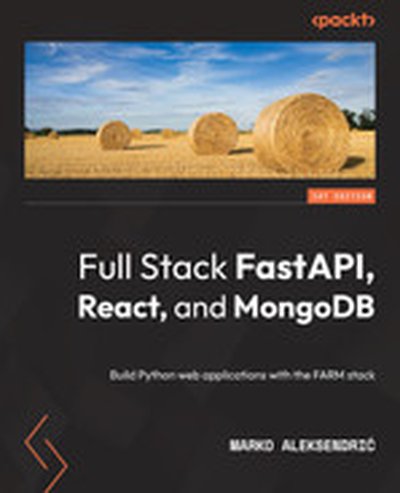
Full Stack FastAPI, React, and MongoDB

Master web development with the FARM stack in this comprehensive guide. You'll learn to harness FastAPI for a secure and efficient backend, React for a dynamic frontend, and MongoDB for flexible data storage. Gain practical experience by building fully functional projects that you can deploy and fine-tune, opening doors to enhanced proficiency in modern web technologies. What this Book will help me do Build secure and performant backends using FastAPI and understand its integration with MongoDB. Develop responsive and dynamic user interfaces with React and incorporate server-side rendering for improved SEO. Explore the intricacies of deploying full-stack applications on platforms like Heroku and Netlify. Implement robust user authentication systems with JSON Web Tokens for securing your applications. Apply caching strategies with Redis to enhance the performance and scalability of applications. Author(s) Marko Aleksendrić, the author of this book, combines years of experience in software development with a passion for teaching. Specializing in full-stack web technologies, Marko has a track record of guiding developers in mastering modern tools like FastAPI and React. His practical approach focuses on equipping readers with real-world skills through projects and best practices. Who is it for? This book is ideal for developers with foundational knowledge in Python, JavaScript, and web basics who want to expand their expertise into full-stack development. Whether you're a professional seeking to enhance your project toolkit or a beginner aiming to tackle modern web applications, this guide provides a step-by-step approach tailored to your growth.

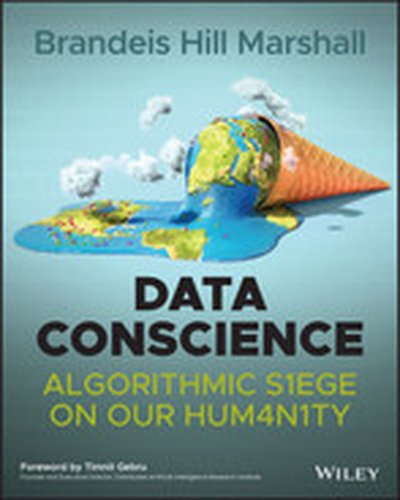
Data Conscience

DATA CONSCIENCE ALGORITHMIC S1EGE ON OUR HUM4N1TY EXPLORE HOW D4TA STRUCTURES C4N HELP OR H1NDER SOC1AL EQU1TY Data has enjoyed ‘bystander’ status as we’ve attempted to digitize responsibility and morality in tech. In fact, data’s importance should earn it a spot at the center of our thinking and strategy around building a better, more ethical world. It’s use—and misuse—lies at the heart of many of the racist, gendered, classist, and otherwise oppressive practices of modern tech. In Data Conscience: Algorithmic Siege on our Humanity, computer science and data inclusivity thought leader Dr. Brandeis Hill Marshall delivers a call to action for rebel tech leaders, who acknowledge and are prepared to address the current limitations of software development. In the book, Dr. Brandeis Hill Marshall discusses how the philosophy of “move fast and break things” is, itself, broken, and requires change. You’ll learn about the ways that discrimination rears its ugly head in the digital data space and how to address them with several known algorithms, including social network analysis, and linear regression A can’t-miss resource for junior-level to senior-level software developers who have gotten their hands dirty with at least a handful of significant software development projects, Data Conscience also provides readers with: Discussions of the importance of transparency Explorations of computational thinking in practice Strategies for encouraging accountability in tech Ways to avoid double-edged data visualization Schemes for governing data structures with law and algorithms

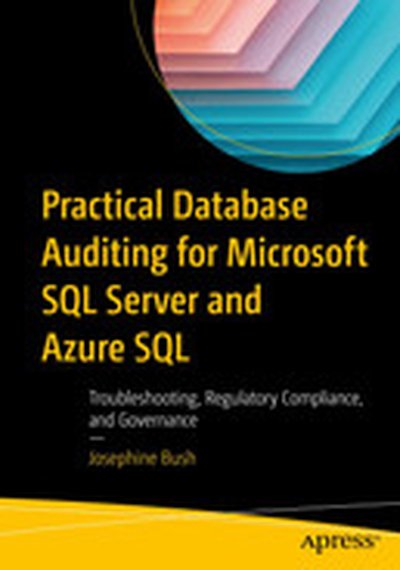
Practical Database Auditing for Microsoft SQL Server and Azure SQL: Troubleshooting, Regulatory Compliance, and Governance

Know how to track changes and key events in your SQL Server databases in support of application troubleshooting, regulatory compliance, and governance. This book shows how to use key features in SQL Server ,such as SQL Server Audit and Extended Events, to track schema changes, permission changes, and changes to your data. You’ll even learn how to track queries run against specific tables in a database. Not all changes and events can be captured and tracked using SQL Server Audit and Extended Events, and the book goes beyond those features to also show what can be captured using common criteria compliance, change data capture, temporal tables, or querying the SQL Server log. You will learn how to audit just what you need to audit, and how to audit pretty much anything that happens on a SQL Server instance. This book will also help you set up cloud auditing with an emphasis on Azure SQL Database, Azure SQL Managed Instance, and AWS RDS SQL Server. You don’t need expensive, third-party auditing tools to make auditing work for you, and to demonstrate and provide value back to your business. This book will help you set up an auditing solution that works for you and your needs. It shows how to collect the audit data that you need, centralize that data for easy reporting, and generate audit reports using built-in SQL Server functionality for use by your own team, developers, and organization’s auditors. What You Will Learn Understand why auditing is important for troubleshooting, compliance, and governance Track changes and key events using SQL Server Audit and Extended Events Track SQL Server configuration changes for governance and troubleshooting Utilize change data capture and temporal tables to track data changes in SQL Server tables Centralize auditing data from all yourdatabases for easy querying and reporting Configure auditing on Azure SQL, Azure SQL Managed Instance, and AWS RDS SQL Server Who This Book Is For Database administrators who need to know what’s changing on their database servers, and those who are making the changes; database-savvy DevOps engineers and developers who are charged with troubleshooting processes and applications; developers and administrators who are responsible for generating reports in support of regulatory compliance reporting and auditing

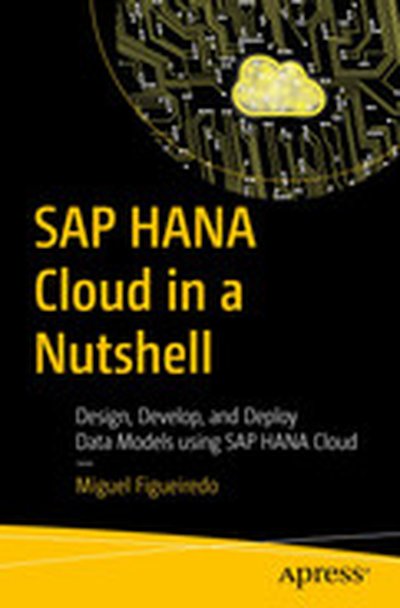
SAP HANA Cloud in a Nutshell: Design, Develop, and Deploy Data Models using SAP HANA Cloud

This book introduces SAP HANA Cloud and helps you develop an understanding of its key features, including technology, architecture, and data modeling. SAP HANA Cloud in a Nutshell will help you develop the skills needed to use the core features of the completely managed and in-memory cloud-based data foundation available in the SAP Business Technology Platform. The book covers modern modeling concepts and equips you with practical knowledge to unleash the best use of SAP HANA Cloud. As you progress, you will learn how to provision your own SAP HANA Cloud instance, understand how to work with different roles, and work with data modeling for analytical and transactional use cases. Additionally, you will learn how to pilot SAP BTP Cockpit and work with entitlements, quotas, account structure, spaces, instances, and cloud providers. You will learn how to perform administration tasks such as stop and start an SAP HANA Cloud instance and make it available for use. To fully leverage the knowledge this book offers, you will find practical step-by-step instructions for how to establish a cloud account model and create your first SAP HANA Cloud artifacts. The book is an important prerequisite for those who want to take full advantage of SAP HANA Cloud. What You Will Learn Master the concepts and terminology of SAP Business Technology Platform (BTP) and SAP HANA Cloud Understand the key roles of an SAP HANA Cloud implementation Become familiar with the key tools used by administrators, architects, and application developers Upgrade an SAP HANA Cloud database Understand how to work with SAP HANA Cloud modeling supporting analytical and transactional use cases Who This Book Is For SAP consultants, cloud engineers, and architects; application consultants and developers; and project stakeholders

SAP Enterprise Architecture: A Blueprint for Executing Digital Transformation

Does digital transformation ever stop? The answer is a resounding “no" and this book guides you in developing an SAP enterprise architecture that prepares you for constant technology changes. The book introduces enterprise architecture, the role it plays in executing successful business strategy, and its application in SAP. A detailed step-by-step guide teaches you how to utilize SAP Enterprise Architecture Designer to model the four key areas: business, data, landscape, and requirements. Executives will gain insight into the considerations that will aid them in building their digital transformation road map while remaining agile to adapt to unforeseen circumstances. and adapting to the new normal. SAP partners and consultants will find their place in SAP’s future. By the end of this book, you will learn what SAP enterprise architecture is and how to develop it along with its best practices. You Will Understand Thefundamentals of enterprise architecture SAP enterprise architecture How SAP Enterprise Architecture Designer helps your enterprise Business, information, and infrastructure architecture Enterprise architecture best practices How enterprise architecture can prepare your business for the future Who This Book Is For Executives who currently run SAP implementations or are considering SAP implementations, SAP partners and consultants along with aspiring SAP consultants, and technology enthusiasts interested in understanding and articulating IT and business alignment through enterprise architecture

Introducing IBM Z System Recovery Boost

This IBM® Redpaper publication introduces System Recovery Boost (SRB), which is a firmware feature that was introduced with IBM z15™ and enhanced on IBM z16™. SRB delivers substantially faster system shutdown and restart, short duration Recovery Process Boosts (RPBs) for sysplex events, and fast catch-up of an accumulated backlog of mission-critical workloads after specific events (such as system restart). SRB is a firmware feature that is available on IBM z15 and IBM z16 central processor complexes (CPCs), and it requires operating system support for use. It is available on older systems. Always check the latest firmware and software for available SRB functions. The IBM Z server generations that are described in this paper are available as the following machine types and models (MTMs): Machine Type 3931 (M/T 3931) Model A01, which is identified as IBM z16 Model A01. Machine Type 8561 (M/T 8561) Model T01, which is identified as IBM z15 Model T01. Machine Type 8562 (M/T 8562) Model T02, which is identified as IBM z15 model T02.

Practical CockroachDB: Building Fault-Tolerant Distributed SQL Databases

Get a practical introduction to CockroachDB. This book starts with installation and foundational concepts and takes you through to creating clusters that are ready for production environments. You will learn how to create, optimize, and operate CockroarchDB clusters in single and multi-region environments. You will encounter anti-patterns to avoid, as well as testing techniques for integration and load testing. The book explains why CockroachDB exists, goes over its major benefits, and quickly transitions into installing and configuring CockroachDB. Just as quickly, you’ll be creating databases, getting data into those databases, and querying that data from your applications. You’ll progress to data privacy laws such as GDPR and CCPA, and learn how CockroachDB’s global distribution features can help you comply with ever-shifting data sovereignty regulations. From there, you’ll move into deployment topologies, guidance on integration testing and load testing, best practices, and a readiness checklist for production deployments. What You Will Learn Deploy and interact with CockroachDB Design and optimize databases and tables Choose the correct data types for modeling your data Protect data with database and table encryption Achieve compliance with international data privacy regulations Scale your databases in a way that enhances their performance Monitor changes to the data and health of your databases Who This Book Is For Developers and database administrators who want to provide a secure, reliable, and effortlessly distributed home for their data; those who wish to use a modern tool to tackle the kinds of scaling challenges that have previously required dedicated teams of people to solve; anyone who wants to leverage their database to solve non-trivial, real-world challenges while protecting their data and users

Database Design Using Entity-Relationship Diagrams, 3rd Edition

Thoroughly revised and updated, this third edition covers, in an intuitive, way, the database design process, from the inception of a database to effectively mapping the design to a relational model, which can then be implemented in any relational software. Students also learn how to reverse engineer a database from relational mappings.

Mastering MongoDB 6.x - Third Edition

Mastering MongoDB 6.x is your complete guide to understanding MongoDB at depth and fully leveraging its capabilities. Learn to design, develop, and administer MongoDB databases that are high-performing, scalable, and secure. From schema modeling to using MongoDB Atlas tools, this book ensures you are well-equipped to build robust applications backed by MongoDB. What this Book will help me do Understand and apply advanced data modeling techniques for MongoDB to optimize data access. Utilize advanced querying capabilities, including aggregation, indexing, and transactions. Implement scalable and distributed systems using MongoDB features like replication and sharding. Administer MongoDB databases securely and efficiently using monitoring and backup tools. Master cloud-based solutions with MongoDB Atlas tools such as Serverless, Atlas Search, and Compass. Author(s) Alex Giamas, the author of Mastering MongoDB 6.x, is a seasoned expert in database systems and software engineering. With a deep knowledge of MongoDB gained through years of practical experience, Alex has contributed to numerous projects that utilize MongoDB to power large-scale applications. Passionate about sharing knowledge, Alex creates thorough, accessible guides to empower developers and administrators alike. Who is it for? This book is perfect for MongoDB developers and database administrators seeking to deepen their skills. If you're involved in designing, deploying, or managing greenfield or existing projects using MongoDB, this book is invaluable. Basic familiarity with MongoDB, shell commands, and database design concepts is recommended to fully benefit from the insights provided.

Serverless ETL and Analytics with AWS Glue

Discover how to harness AWS Glue for your ETL and data analysis workflows with "Serverless ETL and Analytics with AWS Glue." This comprehensive guide introduces readers to the capabilities of AWS Glue, from building data lakes to performing advanced ETL tasks, allowing you to create efficient, secure, and scalable data pipelines with serverless technology. What this Book will help me do Understand and utilize various AWS Glue features for data lake and ETL pipeline creation. Leverage AWS Glue Studio and DataBrew for intuitive data preparation workflows. Implement effective storage optimization techniques for enhanced data analytics. Apply robust data security measures, including encryption and access control, to protect data. Integrate AWS Glue with machine learning tools like SageMaker to build intelligent models. Author(s) The authors of this book include experts across the fields of data engineering and AWS technologies. With backgrounds in data analytics, software development, and cloud architecture, they bring a depth of practical experience. Their approach combines hands-on tutorials with conceptual clarity, ensuring a blend of foundational knowledge and actionable insights. Who is it for? This book is designed for ETL developers, data engineers, and data analysts who are familiar with data management concepts and want to extend their skills into serverless cloud solutions. If you're looking to master AWS Glue for building scalable and efficient ETL pipelines or are transitioning existing systems to the cloud, this book is ideal for you.

Building the Snowflake Data Cloud: Monetizing and Democratizing Your Data

Implement the Snowflake Data Cloud using best practices and reap the benefits of scalability and low-cost from the industry-leading, cloud-based, data warehousing platform. This book provides a detailed how-to explanation, and assumes familiarity with Snowflake core concepts and principles. It is a project-oriented book with a hands-on approach to designing, developing, and implementing your Data Cloud with security at the center. As you work through the examples, you will develop the skill, knowledge, and expertise to expand your capability by incorporating additional Snowflake features, tools, and techniques. Your Snowflake Data Cloud will be fit for purpose, extensible, and at the forefront of both Direct Share, Data Exchange, and Snowflake Marketplace. Building the Snowflake Data Cloud helps you transform your organization into monetizing the value locked up within your data. As the digital economy takes hold, with data volume, velocity, and variety growing at exponential rates, you need tools and techniques to quickly categorize, collate, summarize, and aggregate data. You also need the means to seamlessly distribute to release value. This book shows how Snowflake provides all these things and how to use them to your advantage. The book helps you succeed by delivering faster than you can deliver with legacy products and techniques. You will learn how to leverage what you already know, and what you don’t, all applied in a Snowflake Data Cloud context. After reading this book, you will discover and embrace the future where the Data Cloud is central. You will be able to position your organization to take advantage by identifying, adopting, and preparing your tooling for the coming wave of opportunity around sharing and monetizing valuable, corporate data. What You Will Learn Understand why Data Cloud is important tothe success of your organization Up-skill and adopt Snowflake, leveraging the benefits of cloud platforms Articulate the Snowflake Marketplace and identify opportunities to monetize data Identify tools and techniques to accelerate integration with Data Cloud Manage data consumption by monitoring and controlling access to datasets Develop data load and transform capabilities for use in future projects Who This Book Is For Solution architects seeking implementation patterns to integrate with a Data Cloud; data warehouse developers looking for tips, tools, and techniques to rapidly deliver data pipelines; sales managers who want to monetize their datasets and understand the opportunities that Data Cloud presents; and anyone who wishes to unlock value contained within their data silos

IBM Power Systems S922, S914, and S924 Technical Overview and Introduction

This IBM® Redpaper™ publication is a comprehensive guide that covers the IBM Power System S922 (9009-22A), IBM Power System S914 (9009-41A), and IBM Power System S924 (9009-42A) servers that support IBM AIX®, IBM i, and Linux operating systems. The objective of this paper is to introduce the major innovative Power S914, Power S922, and Power 924 offerings and their relevant functions: The new IBM POWER9™ processor, which is available at frequencies of 2.3 - 3.8 GHz, 2.8 - 3.8 GHz, 2.9 - 3.8 GHz, 3.4 - 3.9 GHz, 3.5 - 3.9 GHz, and 3.8 - 4.0 GHz. Significantly strengthened cores and larger caches. Two integrated memory controllers that double the memory footprint of IBM POWER8® servers. Integrated I/O subsystem and hot-pluggable Peripheral Component Interconnect Express (PCIe) Gen4 and Gen3 I/O slots. I/O drawer expansion options offer greater flexibility. Support for Coherent Accelerator Processor Interface (CAPI) 2.0. New IBM EnergyScale™ technology offers new variable processor frequency modes that provide a significant performance boost beyond the static nominal frequency. This publication is for professionals who want to acquire a better understanding of IBM Power Systems™ products. The intended audience includes the following roles: Clients Sales and marketing professionals Technical support professionals IBM Business Partners Independent software vendors (ISVs) This paper expands the current set of IBM Power Systems documentation by providing a desktop reference that offers a detailed technical description of the Power S914, Power S922, and Power S924 systems. This paper does not replace the current marketing materials and configuration tools. It is intended as an extra source of information that, together with existing sources, can be used to enhance your knowledge of IBM server solutions.

VSAM Demystified

Virtual Storage Access Method (VSAM) is one of the access methods used to process data. Many of us have used VSAM and work with VSAM data sets daily, but exactly how it works and why we use it instead of another access method is a mystery. This book helps to demystify VSAM and gives you the information necessary to understand, evaluate, and use VSAM properly. This book also builds upon the subject of Record Level Sharing and DFSMStvs. It clarifies VSAM functions for application programmers who work with VSAM. The practical, straightforward approach should dispel much of the complexity associated with VSAM. Wherever possible an example is used to reinforce a description of a VSAM function. This IBM® Redbooks® publication is intended as a supplement to existing product manuals. It is intended to be used as an initial point of reference for VSAM functions.

Vertical Growth

Learn the secrets to self-awareness, life-changing growth and happy, high-performing teams—from the bestselling author of The Mindful Leader Great leaders and teams don’t know everything, and they don’t get it right every time. What sets them apart is their commitment to continual learning and vertical growth. Vertical growth is about cultivating the self-awareness to see our self-defeating thoughts, assumptions and behaviours, and then consciously creating new behaviours that are aligned with our best intentions and aspirations. By embracing the deliberate practices and processes for vertical growth laid out in this book, you’ll not only radically improve your leadership and personal wellbeing—you’ll also foster the highest levels of trust, psychological safety, motivation, and creativity in the teams and groups you work with. You’ll to discover how to: Identify when, where and how to develop new leadership behaviours to get better results Regulate your emotional responses in real time and handle the most difficult challenges with balance, wisdom and accountability Cultivate practices for self-awareness that foster lifelong internal growth and personal happiness Uncover and change the limiting assumptions and beliefs that keep you, your team and organisation locked in unproductive habits and behaviours Create practices and rituals that enable the highest levels of psychological safety, innovation and growth Filled with fascinating real-life case studies as well as practical tools and strategies, this is your handbook for mastering vertical growth in yourself, your team and your organisation.

Snowflake: The Definitive Guide

Snowflake's ability to eliminate data silos and run workloads from a single platform creates opportunities to democratize data analytics, allowing users at all levels within an organization to make data-driven decisions. Whether you're an IT professional working in data warehousing or data science, a business analyst or technical manager, or an aspiring data professional wanting to get more hands-on experience with the Snowflake platform, this book is for you. You'll learn how Snowflake users can build modern integrated data applications and develop new revenue streams based on data. Using hands-on SQL examples, you'll also discover how the Snowflake Data Cloud helps you accelerate data science by avoiding replatforming or migrating data unnecessarily. You'll be able to: Efficiently capture, store, and process large amounts of data at an amazing speed Ingest and transform real-time data feeds in both structured and semistructured formats and deliver meaningful data insights within minutes Use Snowflake Time Travel and zero-copy cloning to produce a sensible data recovery strategy that balances system resilience with ongoing storage costs Securely share data and reduce or eliminate data integration costs by accessing ready-to-query datasets available in the Snowflake Marketplace

Building a Red Hat OpenShift Environment on IBM Z

Cybersecurity is the most important arm of defense against cyberattacks. With the recent increase in cyberattacks, corporations must focus on how they are combating these new high-tech threats. When establishing best practices, a corporation must focus on employees' access to specific workspaces and information. IBM Z® focuses on allowing high processing virtual environments while maintaining a high level of security in each workspace. Organizations not only need to adjust their approach to security, but also their approach to IT environments. To meet new customer needs and expectations, organizations must take a more agile approach to their business. IBM® Z allows companies to work with hybrid and multi-cloud environments that allows more ease of use for the user and efficiency overall. Working with IBM Z, organizations can also work with many databases that are included in IBM Cloud Pak® for Data. IBM Cloud Pak for Data allows organizations to make more informed decisions with improved data usage. Along with the improved data usage, organizations can see the effects from working in a Red Hat OpenShift environment. Red Hat OpenShift is compatible across many hardware services and allows the user to run applications in the most efficient manner. The purpose of this IBM Redbooks® publication is to: Introduce IBM Z and LinuxONE platforms and how they work with the Red Hat OpenShift environment and IBMCloud Pak for Data Provide examples and the uses of IBM Z with Cloud Paks for Data that show data gravity, consistent development experience, and consolidation and business resiliency The target audience for this book is IBM Z Technical Specialists, IT Architects, and System Administrators.

Proactive EarlyThreat Detection and Securing Oracle Database with IBM QRadar, IBM Security Guardium Data Protection, and IBM Copy Services Manager by using IBM FlashSystem Safeguarded Copy

This IBM® blueprint publication focuses on early threat detection within a database environment by using IBM Security Guardium® Data Protection and IBM QRadar®. It also highlights how to proactively start a cyber resilience workflow in response to a cyberattack or potential malicious user actions. The workflow that is presented here uses IBM Copy Services Manager as orchestration software to start IBM FlashSystem® Safeguarded Copy functions. The Safeguarded Copy creates an immutable copy of the data in an air-gapped form on the same IBM FlashSystem for isolation and eventual quick recovery. This document describes how to enable and forward Oracle database user activities (by using IBM Security Guardium Data Protection) and IBM FlashSystem audit logs by using IBM FlashSystem to IBM QRadar. This document also describes how to create various rules to determine a threat, and configure and launch a suitable response to the detected threat in IBM QRadar. The document also outlines the steps that are involved to create a Scheduled Task by using IBM Copy Services Manager with various actions.