talk-data.com talk-data.com

Topic

data-science-tasks

849

tagged

Activity Trend

1 peak/qtr
2020-Q1 2026-Q1

Activities

849 activities · Newest first

Understanding Uncertainty, Revised Edition

Praise for the First Edition "...a reference for everyone who is interested in knowing and handling uncertainty." —Journal of Applied Statistics The critically acclaimed First Edition of Understanding Uncertainty provided a study of uncertainty addressed to scholars in all fields, showing that uncertainty could be measured by probability, and that probability obeyed three basic rules that enabled uncertainty to be handled sensibly in everyday life. These ideas were extended to embrace the scientific method and to show how decisions, containing an uncertain element, could be rationally made. Featuring new material, the Revised Edition remains the go-to guide for uncertainty and decision making, providing further applications at an accessible level including: A critical study of transitivity, a basic concept in probability A discussion of how the failure of the financial sector to use the proper approach to uncertainty may have contributed to the recent recession A consideration of betting, showing that a bookmaker's odds are not expressions of probability Applications of the book's thesis to statistics A demonstration that some techniques currently popular in statistics, like significance tests, may be unsound, even seriously misleading, because they violate the rules of probability Understanding Uncertainty, Revised Edition is ideal for students studying probability or statistics and for anyone interested in one of the most fascinating and vibrant fields of study in contemporary science and mathematics.
Image Statistics in Visual Computing

To achieve the complex task of interpreting what we see, our brains rely on statistical regularities and patterns in visual data. Knowledge of these regularities can also be considerably useful in visual computing disciplines, such as computer vision, computer graphics, and image processing. The field of natural image statistics studies the regularities to exploit their potential and better understand human vision. With numerous color figures throughout, Image Statistics in Visual Computing The authors keep the material accessible, providing mathematical definitions where appropriate to help readers understand the transforms that highlight statistical regularities present in images. The book also describes patterns that arise once the images are transformed and gives examples of applications that have successfully used statistical regularities. Numerous references enable readers to easily look up more information about a specific concept or application. A supporting website also offers additional information, including descriptions of various image databases suitable for statistics. Collecting state-of-the-art, interdisciplinary knowledge in one source, this book explores the relation of natural image statistics to human vision and shows how natural image statistics can be applied to visual computing. It encourages readers in both academic and industrial settings to develop novel insights and applications in all disciplines that relate to visual computing.

Nonparametric Statistics for Social and Behavioral Sciences

Incorporating a hands-on pedagogical approach, this text presents the concepts, principles, and methods used in performing many nonparametric procedures. It also demonstrates practical applications of the most common nonparametric procedures using IBM's SPSS software. The text is the only current nonparametric book written specifically for students in the behavioral and social sciences. With examples of real-life research problems, it emphasizes sound research designs, appropriate statistical analyses, and accurate interpretations of results.

Understanding Business Statistics

Written in a conversational tone, presents topics in a systematic and organized manner to help students navigate the material. Demonstration problems appear alongside the concepts, which makes the content easier to understand. By explaining the reasoning behind each exercise, students are more inclined to engage with the material and gain a clear understanding of how to apply statistics to the business world. Freed, Understanding Business Statistics is accompanied by Freed, Understanding Business Statistics WileyPLUS, a research-based, online environment for effective teaching and learning. This online learning system gives students instant feedback on homework assignments, provides video tutorials and variety of study tools, and offers instructors thousands of reliable, accurate problems (including every problem from the book) to deliver automatically graded assignments or tests. Available in or outside of the Blackboard Learn Environment, WileyPLUS resources help reach all types of learners and give instructors the tools they need to enhance course material. WileyPLUS sold separately from text.

Early Estimation of Project Determinants

The study initiated with underlying principles of construction production which is an impetus to ill-conditioned prediction of project determinants at the early phases of building projects. To enhance the precision of these estimations, unique solutions relying on the statistical evidences were offered. Two alternative methods of analysis, namely linear regression and artificial neural networks, were employed to recognize the patterns in the sampled projects. Comparison was conducted on the basis of prediction measurements that were computed with the help of unseen test sample. The evidences of the empirical investigation suggest offered solutions provide superior prediction accuracy when compared to current practices. Last but not least, implementation of the solutions was illustrated on a random office development.

Fast Sequential Monte Carlo Methods for Counting and Optimization

A comprehensive account of the theory and application of Monte Carlo methods Based on years of research in efficient Monte Carlo methods for estimation of rare-event probabilities, counting problems, and combinatorial optimization, Fast Sequential Monte Carlo Methods for Counting and Optimization is a complete illustration of fast sequential Monte Carlo techniques. The book provides an accessible overview of current work in the field of Monte Carlo methods, specifically sequential Monte Carlo techniques, for solving abstract counting and optimization problems. Written by authorities in the field, the book places emphasis on cross-entropy, minimum cross-entropy, splitting, and stochastic enumeration. Focusing on the concepts and application of Monte Carlo techniques, Fast Sequential Monte Carlo Methods for Counting and Optimization includes: Detailed algorithms needed to practice solving real-world problems Numerous examples with Monte Carlo method produced solutions within the 1-2% limit of relative error A new generic sequential importance sampling algorithm alongside extensive numerical results An appendix focused on review material to provide additional background information Fast Sequential Monte Carlo Methods for Counting and Optimization is an excellent resource for engineers, computer scientists, mathematicians, statisticians, and readers interested in efficient simulation techniques. The book is also useful for upper-undergraduate and graduate-level courses on Monte Carlo methods.

Microsoft Visio 2013 Business Process Diagramming and Validation - Second Edition

This book, "Microsoft Visio 2013 Business Process Diagramming and Validation," is your comprehensive guide to leveraging the features of Microsoft Visio 2013 Professional for creating and validating structured diagrams. Through practical tutorials and code examples, it helps you master process diagramming and validation techniques for a range of business needs. What this Book will help me do Understand and utilize structured diagram functionality including basic and cross-functional flowcharts. Develop and apply custom validation rules to ensure diagram correctness and compliance using Visio 2013. Create and use advanced tools such as the Rules Tools add-on to enhance diagram validation. Learn to integrate Visio with platforms like SharePoint 2013 and Office365. Gain technical skills to build, publish, and share Visio templates and rule sets. Author(s) The authors of this book bring rich technical expertise in Microsoft Visio and business process management. They have extensive experience developing user-focused tutorials and tools, ensuring you gain both theoretical knowledge and practical skills. Their accessible writing makes complex topics approachable for a variety of learners. Who is it for? This book is for Microsoft Visio 2013 Professional Edition users who want to advance their skills in diagramming and validation. It's ideal for professionals who seek to improve diagram compliance and efficiency, including developers, analysts, and project managers. If you're already familiar with Visio basics, this book will take your skills to the next level by introducing advanced techniques for automation and standardization.

Nonparametric Statistical Methods, 3rd Edition

Praise for the Second Edition "This book should be an essential part of the personal library of every practicing statistician."—Technometrics Thoroughly revised and updated, the new edition of Nonparametric Statistical Methods includes additional modern topics and procedures, more practical data sets, and new problems from real-life situations. The book continues to emphasize the importance of nonparametric methods as a significant branch of modern statistics and equips readers with the conceptual and technical skills necessary to select and apply the appropriate procedures for any given situation. Written by leading statisticians, Nonparametric Statistical Methods, Third Edition provides readers with crucial nonparametric techniques in a variety of settings, emphasizing the assumptions underlying the methods. The book provides an extensive array of examples that clearly illustrate how to use nonparametric approaches for handling one- or two-sample location and dispersion problems, dichotomous data, and one-way and two-way layout problems. In addition, the Third Edition features: The use of the freely available R software to aid in computation and simulation, including many new R programs written explicitly for this new edition New chapters that address density estimation, wavelets, smoothing, ranked set sampling, and Bayesian nonparametrics Problems that illustrate examples from agricultural science, astronomy, biology, criminology, education, engineering, environmental science, geology, home economics, medicine, oceanography, physics, psychology, sociology, and space science Nonparametric Statistical Methods, Third Edition is an excellent reference for applied statisticians and practitioners who seek a review of nonparametric methods and their relevant applications. The book is also an ideal textbook for upper-undergraduate and first-year graduate courses in applied nonparametric statistics.

Financial and Actuarial Statistics, 2nd Edition

This work enables readers to obtain the mathematical and statistical background required in the current financial and actuarial industries. It also advances the application and theory of statistics in modern financial and actuarial modeling. This second edition adds a substantial amount of new material, including Excel exercises with solutions; nomenclature and notations standard to the actuarial field; a new chapter on Markov chains and actuarial applications; expanded discussions on simulation, surplus models, and ruin computations; and much more.

Applied Statistics and Probability for Engineers, 6th Edition

This best-selling engineering statistics text provides a practical approach that is more oriented to engineering and the chemical and physical sciences than many similar texts. It is packed with unique problem sets that reflect realistic situations engineers will encounter in their working lives. This text shows how statistics, the science of data is just as important for engineers as the mechanical, electrical, and materials sciences.

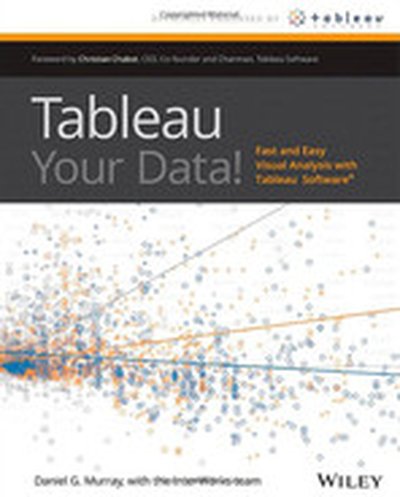
Tableau Your Data!: Fast and Easy Visual Analysis with Tableau Software

Best practices and step-by-step instructions for using the Tableau Software toolset Although the Tableau Desktop interface is relatively intuitive, this book goes beyond the simple mechanics of the interface to show best practices for creating effective visualizations for specific business intelligence objectives. It illustrates little-known features and techniques for getting the most from the Tableau toolset, supporting the needs of the business analysts who use the product as well as the data and IT managers who support it. This comprehensive guide covers the core feature set for data analytics, illustrating best practices for creating and sharing specific types of dynamic data visualizations. Featuring a helpful full-color layout, the book covers analyzing data with Tableau Desktop, sharing information with Tableau Server, understanding Tableau functions and calculations, and Use Cases for Tableau Software. Includes little-known, as well as more advanced features and techniques, using detailed, real-world case studies that the author has developed as part of his consulting and training practice Explains why and how Tableau differs from traditional business information analysis tools Shows you how to deploy dashboards and visualizations throughout the enterprise Provides a detailed reference resource that is aimed at users of all skill levels Depicts ways to leverage Tableau across the value chain in the enterprise through case studies that target common business requirements Endorsed by Tableau Software Tableau Your Data shows you how to build dynamic, best-of-breed visualizations using the Tableau Software toolset.

Handbook of Probability

THE COMPLETE COLLECTION NECESSARY FOR A CONCRETE UNDERSTANDING OF PROBABILITY Written in a clear, accessible, and comprehensive manner, the Handbook of Probability presents the fundamentals of probability with an emphasis on the balance of theory, application, and methodology. Utilizing basic examples throughout, the handbook expertly transitions between concepts and practice to allow readers an inclusive introduction to the field of probability. The book provides a useful format with self-contained chapters, allowing the reader easy and quick reference. Each chapter includes an introduction, historical background, theory and applications, algorithms, and exercises. The Handbook of Probability offers coverage of: Probability Space Probability Measure Random Variables Random Vectors in Rn Characteristic Function Moment Generating Function Gaussian Random Vectors Convergence Types Limit Theorems The Handbook of Probability is an ideal resource for researchers and practitioners in numerous fields, such as mathematics, statistics, operations research, engineering, medicine, and finance, as well as a useful text for graduate students.

Business Statistics: For Contemporary Decision Making, 8th Edition

This text is an unbound, binder-ready edition. Business Statistics: For Contemporary Decision Making, 8th Edition continues the tradition of presenting and explaining the wonders of business statistics through the use of clear, complete, student-friendly pedagogy. Ken Black's text equips readers with the quantitative decision-making skills and analysis techniques you need to make smart decisions based on real-world data.

Data Visualization with D3.js Cookbook

Dive into the world of data visualization with 'Data Visualization with D3.js Cookbook'. This book provides a hands-on approach to mastering data visualization using D3.js, a powerful JavaScript library that brings data to life using HTML, SVG, and CSS. Through step-by-step recipes, you'll learn everything you need to create stunning, interactive, and effective visualizations. What this Book will help me do Develop expertise in functional JavaScript to create elegant D3 visualizations. Learn to work with HTML and SVG elements efficiently to design effective visuals. Master the use of D3 scales and interpolators to represent data accurately. Enhance your understanding of D3 layouts and force-directed visuals for complex data. Create interactive and responsive visualizations for web applications. Author(s) Nick Zhu is an experienced software engineer and data visualization enthusiast with extensive expertise in JavaScript and web development. Authoring 'Data Visualization with D3.js Cookbook', Nick adeptly shares his knowledge, making complex topics approachable. His passion for clear communication shines in his instructive writing style. Who is it for? This book is designed for developers who have some knowledge of HTML, CSS, and JavaScript and aim to excel in data visualization using D3.js. If you strive for deeper mastery of D3 and wish to enhance your ability to create compelling graphics, this book is ideal for you. It serves both as a learning resource for newcomers and a quick reference for experienced practitioners. Your goal to transform data into impactful visuals aligns perfectly with the insights offered.

IBM SPSS Modeler Cookbook

"IBM SPSS Modeler Cookbook" is your practical guide to mastering data mining with IBM SPSS Modeler. This comprehensive book takes you beyond the basics, offering expert insights, time-saving techniques, and powerful workflows to grow your skills and elevate your analytical abilities. You will learn to apply the CRISP-DM methodology, efficiently prepare and explore data, build advanced models, and confidently incorporate analytical results into your business decisions. What this Book will help me do Effectively apply the CRISP-DM standard process to organize your data mining projects. Leverage efficient techniques for data extraction, transformation, and preparation. Develop and evaluate predictive models for practical applications in your organization. Enhance your models by utilizing advanced features and expert tips. Automate and streamline your data mining process with scripting for ultimate control. Author(s) Keith McCormick and None Abbott are seasoned data mining professionals with deep expertise in IBM SPSS Modeler and predictive analytics. Together, they have extensive experience in consulting, training, and applying advanced analytical techniques across industries. Through their approachable and insightful writing style, they share practical knowledge and expert workflows to empower readers. Who is it for? This book is designed for individuals who have basic experience with IBM SPSS Modeler and aspire to deepen their expertise. Whether you are a data analyst looking to advance your analytical capabilities or a professional aiming to integrate data-driven solutions into your organization, this book provides the knowledge and practical guidance you need to take the next step in your data mining journey.

Introduction to Statistical Process Control

A major tool for quality control and management, statistical process control (SPC) monitors sequential processes, such as production lines and Internet traffic, to ensure that they work stably and satisfactorily. Along with covering traditional methods, Introduction to Statistical Process Control describes many recent SPC methods that improve upon the more established techniques. The author—a leading researcher on SPC—shows how these methods can handle new applications. After exploring the role of SPC and other statistical methods in quality control and management, the book covers basic statistical concepts and methods useful in SPC. It then systematically describes traditional SPC charts, including the Shewhart, CUSUM, and EWMA charts, as well as recent control charts based on change-point detection and fundamental multivariate SPC charts under the normality assumption. The text also introduces novel univariate and multivariate control charts for cases when the normality assumption is invalid and discusses control charts for profile monitoring. All computations in the examples are solved using R, with R functions and datasets available for download on the author’s website. Offering a systematic description of both traditional and newer SPC methods, this book is ideal as a primary textbook for a one-semester course in disciplines concerned with process quality control, such as statistics, industrial and systems engineering, and management sciences. It can also be used as a supplemental textbook for courses on quality improvement and system management. In addition, the book provides researchers with many useful, recent research results on SPC and gives quality control practitioners helpful guidelines on implementing up-to-date SPC techniques.

Risk Scoring for a Loan Application on IBM System z: Running IBM SPSS Real-Time Analytics

When ricocheting a solution that involves analytics, the mainframe might not be the first platform that comes to mind. However, the IBM® System z® group has developed some innovative solutions that include the well-respected mainframe benefits. This book describes a workshop that demonstrates the use of real-time advanced analytics for enhancing core banking decisions using a loan origination example. The workshop is a live hands-on experience of the entire process from analytics modeling to deployment of real-time scoring services for use on IBM z/OS®. In this IBM Redbooks® publication, we include a facilitator guide chapter as well as a participant guide chapter. The facilitator guide includes information about the preparation, such as the needed material, resources, and steps to set up and run this workshop. The participant guide shows step-by-step the tasks for a successful learning experience. The goal of the first hands-on exercise is to learn how to use IBM SPSS® Modeler for Analytics modeling. This provides the basis for the next exercise "Configuring risk assessment in SPSS Decision Management". In the third exercise, the participant experiences how real-time scoring can be implemented on a System z. This publication is written for consultants, IT architects, and IT administrators who want to become familiar with SPSS and analytics solutions on the System z.

Using OpenRefine

Using OpenRefine provides a comprehensive guide to managing and cleaning large datasets efficiently. By following a practical, recipe-based approach, this book ensures readers can quickly master OpenRefine's features to enhance their data handling skills. Whether dealing with transformations, entity recognition, or dataset linking, you'll gain the tools to make your data work for you. What this Book will help me do Import and structure various formats of data for seamless processing. Apply both basic and advanced transformations to optimize data quality. Utilize regular expressions for sophisticated filtering and partitioning. Perform named-entity extraction and advanced reconciliation tasks. Master the General Refine Expression Language for powerful data operations. Author(s) The author is an experienced data analyst and educator, specializing in data preparation and transformation for real-world applications. Their approach combines a thorough technical understanding with an accessible teaching style, ensuring that complex concepts are easy to grasp. Who is it for? This book is crafted for anyone working with large datasets, from novices learning to handle and clean data to experienced practitioners seeking advanced techniques. If you aim to improve your data management skills or deliver quality insights from messy data, this book is for you.