talk-data.com talk-data.com

Topic

data-science-tasks

849

tagged

Activity Trend

1 peak/qtr
2020-Q1 2026-Q1

Activities

849 activities · Newest first

Excel® 2007 Dashboards & Reports For Dummies®

What’s the use of putting out reports that no one reads? Properly created dashboards are graphical representations that put data in a context for your audience, and they look really cool! How cool? You’ll find out when you see the dazzling examples in Excel 2007 Dashboards & Reports For Dummies. And, before long, everyone’s eyes will be riveted to your dashboards and reports too! This revolutionary guide shows you how to turn Excel into your own personal Business Intelligence tool. You’ll learn the fundamentals of using Excel 2007 to go beyond simple tables to creating dashboard-studded reports that wow management. Get ready to catch dashboard fever as you find out how to use basic analysis techniques, build advanced dashboard components, implement advanced reporting techniques, and import external date into your Excel reports. Discover how to: Unleash the power of Excel as a business intelligence tool Create dashboards that communicate and get noticed Think about your data in a new way Present data more effectively and increase the value of your reports Create dynamic labels that support visualization Represent time and seasonal trending Group and bucket data Display and measure values versus goals Implement macro-charged reporting Using Excel 2007 as a BI tool is the most cost-efficient way for organizations of any size create powerful and insightful reports and distribute throughout the enterprise. And Excel 2007 Dashboards and Reports for Dummies is the fastest you for you to catch dashboard fever!
Deployment Guide Series: ITCAM for Response Time V6.2

This IBM® Redbooks® publication is written as part of the deployment guide series. This book provides a step-by-step guide for deploying ITCAM for Response Time V6.2. This deployment guide can help an IBM or business partner service person plan and perform the deployment of the product. The discussion of ITCAM for Response Time includes the explanation of product architecture and its components. We discuss planning and sizing considerations before you implement the product and some guidelines on setting up service engagement for the product. The deployment explained in the book would fit for a demonstration or a small deployment system, although the information is highly relevant for larger deployment engagements. This book also explains some usage scenario that can be performed for demonstrating the product.

Special Edition Using Microsoft® Office Visio® 2007

THE ONLY VISIO 2007 BOOK YOU NEED “This book makes Visio as much fun as a video game.” Bob and Joy Schwabach, “On Computers,” Universal Press Syndicate We crafted this book to grow with you, providing the reference material you need as you move toward Visio® 2007 proficiency and the use of more advanced features. If you buy only one book on Visio® 2007, Special Edition Using Microsoft Office Visio® 2007 is the only book you need. • Working with shapes, stencils, and themes • Using the Data Graphics feature for extra customization • Importing content from Microsoft Excel and Microsoft Project • Displaying data as text, data bars, icons, and color-coding using Data Graphics • Creating custom stencils, icons, and templates • Storing and displaying employee information in organization charts • Customizing the layout of organization charts • Creating database models, flowcharts, and Gantt charts • Connecting shapes in network drawings • Using digital ink and animation • Creating macros • Handling guides and rulers • Working with layers • Getting the most from ShapeSheets

JMP® Start Statistics: A Guide to Statistics and Data Analysis Using JMP®, 4th Edition

JMP Start Statistics: A Guide to Statistics and Data Analysis Using JMP, Fourth Edition, is a complete and orderly introduction to analyzing data using JMP statistical discovery software from SAS. A mix of software manual and statistics text, this book provides hands-on tutorials with just the right amount of conceptual and motivational material to illustrate how to use JMP's intuitive interface for data analysis. Each chapter features concept-specific tutorials, examples, brief reviews of concepts, step-by-step illustrations, and exercises. Written by John Sall, Lee Creighton, and Ann Lehman, this book is a great tool for statistics students or practitioners needing a software-related statistics review.

Forecasting Expected Returns in the Financial Markets

Forecasting returns is as important as forecasting volatility in multiple areas of finance. This topic, essential to practitioners, is also studied by academics. In this new book, Dr Stephen Satchell brings together a collection of leading thinkers and practitioners from around the world who address this complex problem using the latest quantitative techniques. Forecasting expected returns is an essential aspect of finance and highly technical The first collection of papers to present new and developing techniques *International authors present both academic and practitioner perspectives

Visualizing Information with Microsoft® Office Visio® 2007

Create and distribute data-connected Microsoft Office Visio diagrams and reports Get full details on the powerful features of Microsoft Office Visio 2007 inside this comprehensive volume. Written by Visio expert David Parker, Visualizing Information with Microsoft Office Visio 2007 demonstrates how to effectively visualize, explore, and communicate complex business information. Learn to use PivotDiagrams, Data Graphics, and Smart Tags, as well as link data to shapes and create meaningful Visio documents and reports. Plus, you'll get vital security information, time-saving tips, troubleshooting techniques, and downloadable macros and code samples. Essential Skills for Database Users and Professionals Create shapes and link them to data Summarize and analyze information using PivotDiagrams Use Data Graphics, Smart Tags, and SmartShapes to reinforce information Generate robust Excel, HTML, and XML reports Create custom, reusable templates, stencils, and masters Update and enhance diagrams with Reviewer's comments and markups Integrate Visio diagrams with other Windows applications Publish and securely distribute Visio documents and summaries Extend functionality using VBA macros, add-ins, and wrapper applications

Forecasting Oracle Performance

What makes seasoned IT professionals run for cover? Answer: Forecasting Oracle Performance! Craig Shallahamer is an Oracle performance expert with over 18 years of experience. His book is the first to focus not on the problem of solving today's problem, but squarely on the problem of forecasting the future performance of an Oracle database. Other Oracle performance books are good for putting out fires; Craig's book helps you avoid all the heat in the first place. If you’re an IT practioner who appreciates application over mathematical proofs than you’ll be pleasantly surprised! Each chapter is filled with examples to transform the theory, mathematics, and methods into something you can practically apply. Craig's goal is to teach you about real-word Oracle performance forecasting. Period. There is no hidden agenda. This book is a kind of training course. After reading, studying, and practicing the material covered in this book, you to be able to confidently, responsibly, and professionally forecast performance and system capacity in a wide variety of real-life situations. If you are more management-minded (or want to be), you will be delighted with the service level management focus. Forecasting makes good business sense because it maximizes the return on IT investment and minimizes unplanned down time. To those who think forecasting is a waste of money: well...obviously, they’ve never been on the evening news because their company lost millions of dollars in revenue and brand destruction because of poorly performing or unavailable systems. Without a doubt, you will be equipped to deal with the realities of forecasting Oracle performance. But this book gives you more. Not only will you receive a technical and mathematical perspective, but also a communication, a presentation, and a management perspective. This is career building stuff and immensely satisfying! What you'll learn This book is a “how-to” book filled with examples to transform theory and mathematics into something you can practically apply. You will learn how to use a variety of forecasting models, which will enable you to methodically: Help manage service levels from a business value perspective Identify the risk of over utilized resources Predict what component of an architecture is at risk Predict when a system will be at risk Develop multiple risk mitigating strategies to ensure service levels are maintained Characterize a complex Oracle workload Who this book is for IT professionals who must ensure their production Oracle systems are meeting service levels, in part, through forecasting performance, identifying risk, and developing solutions to ensure systems are available without wasting budget. Readers include database administrators, IT managers, developers, capacity planners, systems architects, systems integrators.

Visio® 2007 Bible

Whether you're designing a network, a business plan, or an office building, Visio 2007 can transform your vision into sophisticated diagrams and drawings and this comprehensive reference shows you how. You'll discover how to use Visio for IT, architecture, engineering, and business projects; explore the new features of Visio 2007; learn to publish Visio diagrams to the Web; and much more. If you want to develop your skills in Visio, this is the book you need to succeed.

Webbots, Spiders, and Screen Scrapers

The Internet is bigger and better than what a mere browser allows. Webbots, Spiders, and Screen Scrapers is for programmers and businesspeople who want to take full advantage of the vast resources available on the Web. There's no reason to let browsers limit your online experience-especially when you can easily automate online tasks to suit your individual needs. Learn how to write webbots and spiders that do all this and more: Programmatically download entire websites Effectively parse data from web pages Manage cookies Decode encrypted files Automate form submissions Send and receive email Send SMS alerts to your cell phone Unlock password-protected websites Automatically bid in online auctions Exchange data with FTP and NNTP servers Sample projects using standard code libraries reinforce these new skills. You'll learn how to create your own webbots and spiders that track online prices, aggregate different data sources into a single web page, and archive the online data you just can't live without. You'll learn inside information from an experienced webbot developer on how and when to write stealthy webbots that mimic human behavior, tips for developing fault-tolerant designs, and various methods for launching and scheduling webbots. You'll also get advice on how to write webbots and spiders that respect website owner property rights, plus techniques for shielding websites from unwanted robots. As a bonus, visit the author's website to test your webbots on sample target pages, and to download the scripts and code libraries used in the book. Some tasks are just too tedious-or too important!- to leave to humans. Once you've automated your online life, you'll never let a browser limit the way you use the Internet again.

QuickBase: The Missing Manual

Ready to put Intuit's QuickBase to work? Our new Missing Manual shows you how to capture, modify, share, and manage data and documents with this web-based data-sharing program quickly and easily. No longer do you have to coordinate your team through a blizzard of emails or play frustrating games of "guess which document is the right one." QuickBase saves your organization time and money, letting you manage and share the information that makes your business tick: sales figures, project timelines, drafts of documents, purchase or work requests--whatever information you need to keep business flowing smoothly. QuickBase: The Missing Manual shows you how to choose among QuickBase's dozens of ready-made applications (mini-databases, essentially) and how to customize one to fit your needs exactly. You'll also learn to assign people different roles within the application. The guide also shows you how to: Capture and modify data: Whatever kind of data you need to store--sales leads, catalog listings, project milestones, workflow checklists--you can use QuickBase's forms to record and organize that data so it makes sense to you. Filter, sort, and group data: Easily find the records that match your criteria, and then sort those records into groups that make their relationships clear. Display your data: QuickBase uses different views (Table, Grid Edit, Summary/Crosstab, Calendar, Chart, and Timeline) to display and summarize data. Switching between them is easy, like taking tasks listed in a table and displaying them as a timeline. Create reports: Print out a hard copy, embed charts in the annual report, or email this month's sales numbers. Because Intuit frequently introduces new features to QuickBase, you'll find updates to this book at our Missing Manual web site so you can benefit from the latest technology and user suggestions right away.

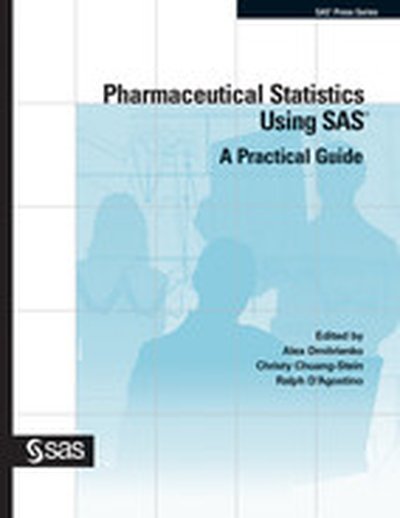
Pharmaceutical Statistics Using SAS

Pharmaceutical Statistics Using SAS: A Practical Guide offers extensive coverage of cutting-edge biostatistical methodology used in drug development and the practical problems facing today's drug developers. Written by well-known experts in the pharmaceutical industry Alex Dmitrienko, Christy Chuang-Stein, and Ralph D'Agostino, it provides relevant tutorial material and SAS examples to help readers new to a certain area of drug development quickly understand and learn popular data analysis methods and apply them to real-life problems. Step-by-step, the book introduces a wide range of data analysis problems encountered in drug development and illustrates them using a wealth of case studies from actual pre-clinical experiments and clinical studies. The book also provides SAS code for solving the problems. Among the topics addressed are these:

drug discovery experiments to identify promising chemical compounds animal studies to assess the toxicological profile of these compounds clinical pharmacology studies to examine the properties of new drugs in healthy human subjects Phase II and Phase III clinical trials to establish therapeutic benefits of experimental drugs.

Additional features include a discussion of methodological issues, practical advice from subject-matter experts, and review of relevant regulatory guidelines. Most chapters are self-contained and include a fair amount of high-level introductory material to make them accessible to a broad audience of pharmaceutical scientists. This book will also serve as a useful reference for regulatory scientists as well as academic researchers and graduate students.

This book is part of the SAS Press program.

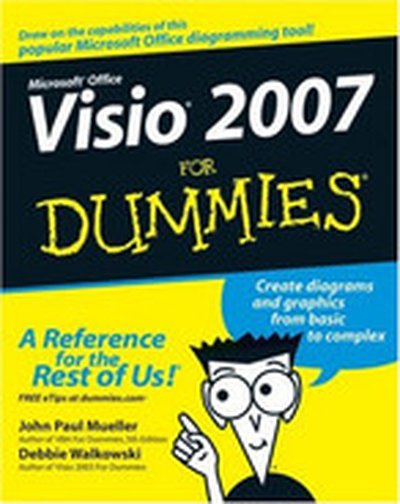
Visio® 2007 For Dummies®

Reveal your inner business artist with Visio Turn your ideas into diagrams and drawings with Visio's stencils and templates If you have an idea you want to get down on electronic paper, Visio 2007 is for you, and so is this book! They're both flexible and user-friendly. Here's how to use Visio to capture ideas from simple to intricate, update data in a drawing with a single click, add and manipulate text, work with connectors, and more. Discover how to Create business, engineering, software, or network diagrams Format an entire drawing using themes Analyze "what-if" scenarios with PivotDiagrams Produce layered multipage drawings Save drawings to publish on the Web

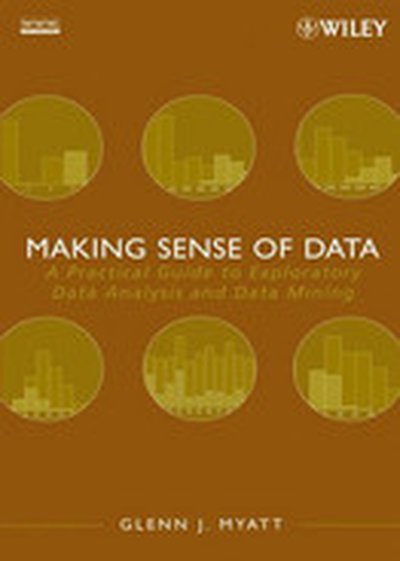
Making Sense of Data: A Practical Guide to Exploratory Data Analysis and Data Mining

A practical, step-by-step approach to making sense out of data Making Sense of Data educates readers on the steps and issues that need to be considered in order to successfully complete a data analysis or data mining project. The author provides clear explanations that guide the reader to make timely and accurate decisions from data in almost every field of study. A step-by-step approach aids professionals in carefully analyzing data and implementing results, leading to the development of smarter business decisions. With a comprehensive collection of methods from both data analysis and data mining disciplines, this book successfully describes the issues that need to be considered, the steps that need to be taken, and appropriately treats technical topics to accomplish effective decision making from data. Readers are given a solid foundation in the procedures associated with complex data analysis or data mining projects and are provided with concrete discussions of the most universal tasks and technical solutions related to the analysis of data, including: Problem definitions Data preparation Data visualization Data mining Statistics Grouping methods Predictive modeling Deployment issues and applications Throughout the book, the author examines why these multiple approaches are needed and how these methods will solve different problems. Processes, along with methods, are carefully and meticulously outlined for use in any data analysis or data mining project. From summarizing and interpreting data, to identifying non-trivial facts, patterns, and relationships in the data, to making predictions from the data, Making Sense of Data addresses the many issues that need to be considered as well as the steps that need to be taken to master data analysis and mining.

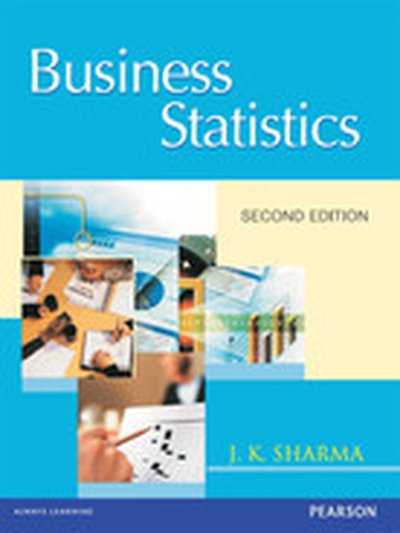
Business Statistics, Second Edition

The second edition of Business Statistics, continues to retain the clear, crisp pedagogy of the first edition. It now adds new features and an even stronger emphasis on practical, applied statistics that will enhance the text's ability in developing decision-making ability of the reader. In this edition, efforts have been made to assist readers in converting data into useful information that can be used by decision-makers in making more thoughtful, information-based decisions.

Basic Statistics for Trainers

The field of statistics is broad and complex, but this Infoline will help training professionals use statistics to execute their jobs even better. Why statistics? First, they allow you to make better decisions because data can be analyzed using proven mathematical principles and logic. Second, data are generated each moment across all business functions, and statistics allows the trainer quickly relate to business processes. Third, repetition is important for learner comprehension, and incorporating statistics and measures into training delivery helps learners acquire knowledge better and faster. And finally, the judicious use of statistics in presentations is a powerful way to support your case at higher organizational levels

Regression Analysis by Example, 4th Edition

The essentials of regression analysis through practical applications Regression analysis is a conceptually simple method for investigating relationships among variables. Carrying out a successful application of regression analysis, however, requires a balance of theoretical results, empirical rules, and subjective judgement. Regression Analysis by Example, Fourth Edition has been expanded and thoroughly updated to reflect recent advances in the field. The emphasis continues to be on exploratory data analysis rather than statistical theory. The book offers in-depth treatment of regression diagnostics, transformation, multicollinearity, logistic regression, and robust regression. This new edition features the following enhancements: Chapter 12, Logistic Regression, is expanded to reflect the increased use of the logit models in statistical analysis A new chapter entitled Further Topics discusses advanced areas of regression analysis Reorganized, expanded, and upgraded exercises appear at the end of each chapter A fully integrated Web page provides data sets Numerous graphical displays highlight the significance of visual appeal Regression Analysis by Example, Fourth Edition is suitable for anyone with an understanding of elementary statistics. Methods of regression analysis are clearly demonstrated, and examples containing the types of irregularities commonly encountered in the real world are provided. Each example isolates one or two techniques and features detailed discussions of the techniques themselves, the required assumptions, and the evaluated success of each technique. The methods described throughout the book can be carried out with most of the currently available statistical software packages, such as the software package R.