talk-data.com talk-data.com

Topic

data-science-tools

326

tagged

Activity Trend

1 peak/qtr
2020-Q1 2026-Q1

Activities

Showing filtered results

Filtering by: O'Reilly Data Science Books ×
Essential MATLAB for Engineers and Scientists, 6th Edition

Essential MATLAB for Engineers and Scientists, Sixth Edition, provides a concise, balanced overview of MATLAB's functionality that facilitates independent learning, with coverage of both the fundamentals and applications. The essentials of MATLAB are illustrated throughout, featuring complete coverage of the software's windows and menus. Program design and algorithm development are presented clearly and intuitively, along with many examples from a wide range of familiar scientific and engineering areas. This updated edition includes the latest MATLAB versions through 2016a, and is an ideal book for a first course on MATLAB, or for an engineering problem-solving course using MATLAB, as well as a self-learning tutorial for professionals and students expected to learn and apply MATLAB. Updated to include all the newer features through MATLAB R2016a Includes new chapter on complex variables analysis Presents a comparison of execution time between compiled and un-compiled code that includes examples Describes the new H2 graphics features

GPU Programming in MATLAB

GPU programming in MATLAB is intended for scientists, engineers, or students who develop or maintain applications in MATLAB and would like to accelerate their codes using GPU programming without losing the many benefits of MATLAB. The book starts with coverage of the Parallel Computing Toolbox and other MATLAB toolboxes for GPU computing, which allow applications to be ported straightforwardly onto GPUs without extensive knowledge of GPU programming. The next part covers built-in, GPU-enabled features of MATLAB, including options to leverage GPUs across multicore or different computer systems. Finally, advanced material includes CUDA code in MATLAB and optimizing existing GPU applications. Throughout the book, examples and source codes illustrate every concept so that readers can immediately apply them to their own development. Provides in-depth, comprehensive coverage of GPUs with MATLAB, including the parallel computing toolbox and built-in features for other MATLAB toolboxes Explains how to accelerate computationally heavy applications in MATLAB without the need to re-write them in another language Presents case studies illustrating key concepts across multiple fields Includes source code, sample datasets, and lecture slides

Writing code for R packages

R packages are a great way to share and create code that you and others can use over and over again. Why is it important? Developing R code for inclusion in a package is different than simply writing R scripts. What you'll learn—and how you can apply it Learn best practices for writing R code for packages: organizing your functions, code style recommendations, understanding and planning for how code will be run. Plan for the "unknowns" once you release a package to the world. Also includes hints for submitting a package to CRAN. This lesson is for you because… You're an R developer and need to package code so that others can reuse it You want to prepare a package to submit to CRAN Prerequisites Some familiarity with the R language Materials or downloads needed in advance Install R Install RStudio This lesson is taken from by Hadley Wickham. R Packages

Big Data Analytics with R

Unlock the potential of big data analytics by mastering R programming with this comprehensive guide. This book takes you step-by-step through real-world scenarios where R's capabilities shine, providing you with practical skills to handle, process, and analyze large and complex datasets effectively. What this Book will help me do Understand the latest big data processing methods and how R can enhance their application. Set up and use big data platforms such as Hadoop and Spark in conjunction with R. Utilize R for practical big data problems, such as analyzing consumption and behavioral datasets. Integrate R with SQL and NoSQL databases to maximize its versatility in data management. Discover advanced machine learning implementations using R and Spark MLlib for predictive analytics. Author(s) None Walkowiak is an experienced data analyst and R programming expert with a passion for data engineering and machine learning. With a deep knowledge of big data platforms and extensive teaching experience, they bring a clear and approachable writing style to help learners excel. Who is it for? Ideal for data analysts, scientists, and engineers with fundamental data analysis knowledge looking to enhance their big data capabilities using R. If you aim to adapt R for large-scale data management and analysis workflows, this book is your ideal companion to bridge the gap.

R for Data Science Cookbook

The "R for Data Science Cookbook" is your comprehensive guide to tackling data problems using R. Focusing on practical applications, you will learn data manipulation, visualization, statistical inference, and machine learning with a hands-on approach using popular R packages. What this Book will help me do Master the use of R's functional programming features to streamline your analysis workflows. Extract, transform, and visualize data effectively using robust R packages like dplyr and ggplot2. Learn to create intuitive and professional visualizations and reports that communicate insights effectively. Implement key statistical modeling and machine learning techniques to solve real-world problems. Acquire expertise in data mining techniques, including clustering and association rule mining. Author(s) Yu-Wei Chiu, also known as David Chiu, is an experienced data scientist and educator. With a solid technical background in using R for data science, he combines theory with practical applications in his writing. David's approachable style and rich examples make complex topics accessible and engaging for learners. Who is it for? This book is perfect for individuals who already have a foundation in R and are looking to deepen their expertise in applying R to data science tasks. Ideal readers are analysts and statisticians eager to solve real-world problems using practical tools. If you're aspiring to work effectively with large data sets or want to learn versatile data analysis techniques, this book is designed for you. It bridges the gap between theoretical knowledge and actionable skills, making it invaluable for professionals and learners alike.

The Book of R

The Book of R is a comprehensive, beginner-friendly guide to R, the world's most popular programming language for statistical analysis. Even if you have no programming experience and little more than a grounding in the basics of mathematics, you'll find everything you need to begin using R effectively for statistical analysis. You'll start with the basics, like how to handle data and write simple programs, before moving on to more advanced topics, like producing statistical summaries of your data and performing statistical tests and modeling. You'll even learn how to create impressive data visualizations with R's basic graphics tools and contributed packages, like ggplot2 and ggvis, as well as interactive 3D visualizations using the rgl package. Dozens of hands-on exercises (with downloadable solutions) take you from theory to practice, as you learn: The fundamentals of programming in R, including how to write data frames, create functions, and use variables, statements, and loops Statistical concepts like exploratory data analysis, probabilities, hypothesis tests, and regression modeling, and how to execute them in R How to access R's thousands of functions, libraries, and data sets How to draw valid and useful conclusions from your data How to create publication-quality graphics of your resultsCombining detailed explanations with real-world examples and exercises, this book will provide you with a solid understanding of both statistics and the depth of R's functionality. Make The Book of R your doorway into the growing world of data analysis.

Learning Probabilistic Graphical Models in R

Explore the fundamentals of probabilistic graphical models (PGM) with hands-on examples using R. This book helps you translate theoretical concepts into practical solutions, addressing complex problems with Bayesian and Markov networks. It's written to demystify PGMs, equipping you to create robust models for inference, learning, and prediction. What this Book will help me do Understand and implement probabilistic graphical models, including Bayesian and Markov networks, directly in R. Learn to use various R packages for performing inference and analyzing probabilistic models. Master the essentials of Bayesian methods, transitioning to advanced concepts with clear, step-by-step guidance. Familiarize yourself with methods like PCA and ICA for analyzing and reducing complex data dimensions. Develop practical skills to apply PGM techniques to machine learning challenges and real-world data problems. Author(s) The authors bring diverse expertise in probabilistic modeling, R programming, and applied machine learning. They are passionate educators and technical writers, focusing on breaking down complex theories into accessible knowledge. Their writing emphasizes practical demonstration, leveraging their industry and academic experiences. Who is it for? This book is designed for data scientists, engineers, and machine learning enthusiasts who wish to enhance their understanding of probabilistic graphical models. Whether you're curious about Bayesian methods or looking to apply PGM approaches to data-rich challenges, this guide is perfect for learners at an intermediate level, offering practical insights and real-world applications.

Practical Data Analysis Cookbook

Practical Data Analysis Cookbook takes you on a comprehensive journey to mastering data exploration and analysis using Python. From data cleaning and transformation to building predictive and classification models, this book provides practical recipes for tackling real-world data challenges and extracting valuable insights. What this Book will help me do Efficiently clean, transform, and explore datasets using tools like pandas and OpenRefine. Develop predictive models for time series and other datasets using Python libraries such as scikit-learn and Statsmodels. Apply clustering and classification techniques to real-world data problems to gain actionable insights. Explore advanced topics like natural language processing and graph theory concepts using specialized tools. Build the skills to solve practical data modeling problems encountered in a data science role. Author(s) None Drabas is an experienced data scientist and author who specializes in Python-based data analysis. With a background in tackling intricate data-driven problems, None brings real-world experience to the readers. In creating this Cookbook, None adopts a step-by-step approach, making complex techniques accessible to learners of all backgrounds. Who is it for? If you are a data analyst, data scientist, or someone interested in exploring Python for practical data problems, this book is for you. It suits beginners starting their data journey and intermediate professionals looking to enhance their toolset. With clear instructions, it's ideal for anyone willing to build practical skills and tackle real-world challenges in data analysis.

RStudio for R Statistical Computing Cookbook

Dive into the practical applications of RStudio with this comprehensive cookbook, designed to help analysts and data scientists unlock the full potential of RStudio's features. You'll enhance your statistical computing, data visualization, and reporting skills through over 50 carefully curated recipes-each seamlessly blending conceptual understanding with hands-on implementation. What this Book will help me do Master the latest advanced R console features for a smooth coding experience. Create dynamic and interactive visualizations to effectively represent data insights. Improve R project management to organize and maintain reproducibility in your analyses. Apply statistical and predictive modeling techniques tailored for diverse application domains. Develop interactive web applications and detailed reports with R Markdown and Shiny. Author(s) Andrea Cirillo is an experienced data scientist with a deep knowledge of statistical computing and data analysis. Through his professional and academic career, Andrea has developed a knack for teaching and simplifying complex programming and statistics concepts. His passion is helping others advance their skills with practical, hands-on resources. Who is it for? This book is tailored for data scientists, statisticians, and R programmers with foundational R programming skills. It is ideal for professionals who aim to enhance their fluency with RStudio and improve their statistical analysis capabilities. Whether you're structuring your first analytical project or refining your data visualization techniques, this book is designed to assist your growth. Overall, the audience includes anyone seeking practical expertise in RStudio for impactful data analysis.

NumPy Essentials

NumPy Essentials is your guide to mastering NumPy, the powerful Python library for scientific computing. In this book, you'll discover how to manipulate arrays, perform mathematical operations, and create advanced models. With its clear examples and practical exercises, you'll build the skills needed to efficiently tackle analytical challenges. What this Book will help me do Learn to manipulate data efficiently with NumPy array objects and universal functions. Gain proficiency in solving linear algebra problems using NumPy's powerful modules. Master regression techniques and curve fitting for statistical modeling. Apply Fourier Transform and spectral analysis in solving real-world problems. Integrate and optimize Python code using Cython and the NumPy C API for higher performance. Author(s) Jaidev Deshpande, None Chin, Tanmay Dutta, and Shane Holloway are seasoned developers passionate about Python and scientific computing. With experience across diverse projects, they bring practical insights and accessible explanations to their writing. Who is it for? This book is ideal for Python developers seeking to sharpen their numerical computing skills. Prior experience with Python is expected, as the content progresses quickly to advanced topics. Whether you're working in data analysis, scientific research, or machine learning, this book will provide valuable tools and insights.

Electromagnetic Waves, Materials, and Computation with MATLAB®

This book is for senior undergraduate/first-year graduate students specializing in one or more of the technologies based on electromagnetics. Composed of three parts, it begins with the electromagnetics of bounded simple media, moves on to electromagnetic equations of complex media, and then covers electromagnetic computation. The author takes a modern approach by using commercial software such as MATLAB and FDTD methods and provides a strong base of conceptual mathematical aspects. The material strikes a balance between theory, intuitive approximate solutions, and the use of commercial software and interpretation of solutions. Case studies and practical examples are presented throughout the text.

Multi-Label Dimensionality Reduction

The data mining and machine learning literature currently lacks a unified treatment of multi-label dimensionality reduction that incorporates both algorithmic developments and applications. Addressing this shortfall, this book covers the methodological developments, theoretical properties, computational aspects, and applications of many multi-label dimensionality reduction algorithms, including existing dimensionality reduction algorithms and new developments of traditional algorithms. It illustrates how to apply the algorithms to solve real-world problems. A supplementary website provides a MATLAB package for implementing popular dimensionality reduction algorithms.

Radar Systems Analysis and Design Using MATLAB, 3rd Edition

Developed from the author's graduate-level courses, the first edition of this book filled the need for a comprehensive, self-contained, and hands-on treatment of radar systems analysis and design. It quickly became a bestseller and was widely adopted by many professors. The second edition built on this successful format by rearranging and updating

Signals and Systems

This text employs MATLAB both computationally and pedagogically to provide interactive visual reinforcement of the fundamentals, including the characteristics of signals, operations used on signals, time and frequency domain analyses of systems, continuous-time and discrete-time signals and systems, and more. The book includes hands-on MATLAB modules linked to specific segments of the text to ensure seamless integration between learning and doing. A solutions manual, MATLAB code, figures, presentation slides, and other ancillary materials are available on an author-supported website or with qualifying course adoption.

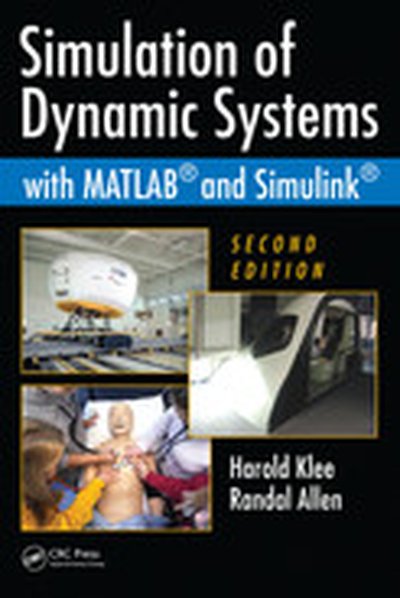
Simulation of Dynamic Systems with MATLAB and Simulink, 2nd Edition

"… a seminal text covering the simulation design and analysis of a broad variety of systems using two of the most modern software packages available today. … particularly adept [at] enabling students new to the field to gain a thorough understanding of the basics of continuous simulation in a single semester, and [also provides] a more advanced treatment of the subject for researchers and simulation professionals." —From the Foreword by Chris Bauer, PhD, PE, CMSP Continuous-system simulation is an increasingly important tool for optimizing the performance of real-world systems, and a massive transformation has occurred in the application of simulation in fields ranging from engineering and physical sciences to medicine, biology, economics, and applied mathematics. As with most things, simulation is best learned through practice—but explosive growth in the field requires a new learning approach. A response to changes in the field, Simulation of Dynamic Systems with MATLAB® and Simulink®, Second Edition has been extensively updated to help readers build an in-depth and intuitive understanding of basic concepts, mathematical tools, and the common principles of various simulation models for different phenomena. Includes an abundance of case studies, real-world examples, homework problems, and equations to develop a practical understanding of concepts Accomplished experts Harold Klee and Randal Allen take readers through a gradual and natural progression of important topics in simulation, introducing advanced concepts only after they construct complete examples using fundamental methods. Presented exercises incorporate MATLAB® and Simulink®—including access to downloadable M-files and model files—enabling both students and professionals to gain experience with these industry-standard tools and more easily design, implement, and adjust simulation models in their particular field of study. More universities are offering courses—as well as masters and Ph.D programs—in both continuous-time and discrete-time simulation, promoting a new interdisciplinary focus that appeals to undergraduates and beginning graduates from a wide range of fields. Ideal for such courses, this classroom-tested introductory text presents a flexible, multifaceted approach through which simulation can play a prominent role in validating system design and training personnel involved.

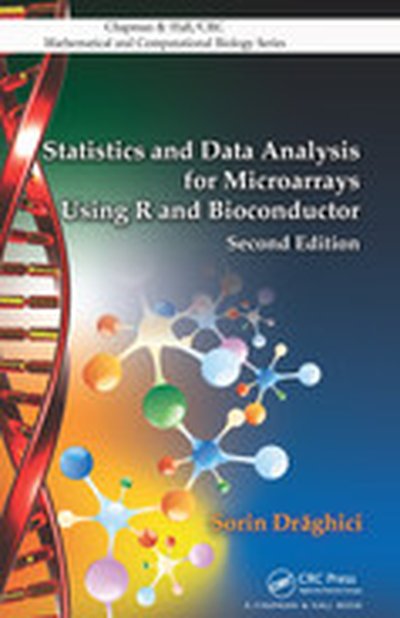
Statistics and Data Analysis for Microarrays Using R and Bioconductor, 2nd Edition

Richly illustrated in color, this bestselling text provides a clear and rigorous description of powerful analysis techniques and algorithms for mining and interpreting biological information. Omitting tedious details, heavy formalisms, and cryptic notations, the text takes a hands-on, example-based approach that explains the basics of R and micr

R Machine Learning By Example

This book, 'R Machine Learning by Example,' offers a hands-on approach to learning about machine learning using R. You will not only understand the theoretical aspects but also learn to apply machine learning algorithms to solve real-world problems. Through guided examples, you'll explore predictive modeling, data analysis, and other machine learning techniques implemented in R. What this Book will help me do Master the use of R for advanced data handling and exploration. Visualize multidimensional data effectively to derive insights. Understand and implement key machine learning algorithms in R. Solve practical, industry-relevant problems across multiple domains using R. Learn to optimize and fine-tune machine learning models for better results. Author(s) Raghav Bali, the author, is a seasoned data scientist with expertise in machine learning. With years of experience using R in data science, he has taught both professionals and enthusiasts how to use machine learning effectively. His approachable and clear writing style ensures that learners of various skill levels can benefit from his insights and guidance. Who is it for? This book is perfect for analysts, data scientists, or enthusiasts who want to leverage R for machine learning. It is suitable for beginners familiar with basic R concepts and intermediate learners looking to deepen their understanding of machine learning applications. If you are aiming to solve practical problems using data, this book will serve as a comprehensive guide.

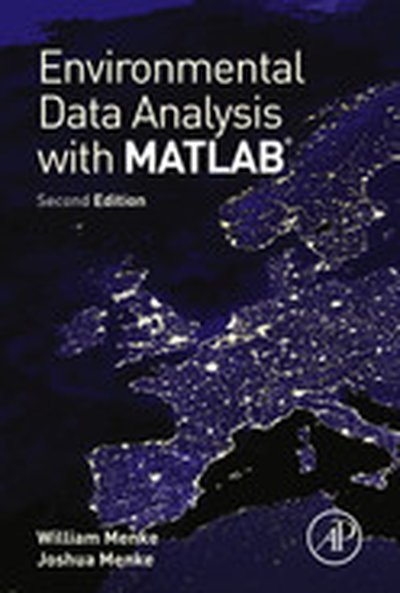
Environmental Data Analysis with MatLab, 2nd Edition

Environmental Data Analysis with MatLab is a new edition that expands fundamentally on the original with an expanded tutorial approach, new crib sheets, and problem sets providing a clear learning path for students and researchers working to analyze real data sets in the environmental sciences. Since publication of the bestselling Environmental Data Analysis with MATLAB®, many advances have been made in environmental data analysis. One only has to consider the global warming debate to realize how critically important it is to be able to derive clear conclusions from often noisy data drawn from a broad range of sources. The work teaches the basics of the underlying theory of data analysis and then reinforces that knowledge with carefully chosen, realistic scenarios. MATLAB®, a commercial data processing environment, is used in these scenarios. Significant content is devoted to teaching how it can be effectively used in an environmental data analysis setting. This new edition, though written in a self-contained way, is supplemented with data and MATLAB® scripts that can be used as a data analysis tutorial. New features include boxed crib sheets to help identify major results and important formulas and give brief advice on how and when they should be used. Numerical derivatives and integrals are derived and illustrated. Includes log-log plots with further examples of their use. Discusses new datasets on precipitation and stream flow. Topical enhancement applies the chi-squared test to the results of the generalized least squares method. New coverage of cluster analysis and approximation techniques that are widely applied in data analysis, including Taylor Series and low-order polynomial approximations; non-linear least-squares with Newton’s method; and pre-calculation and updating techniques applicable to real time data acquisition. Provides a clear learning path for researchers and students using data analysis techniques which build upon one another, choosing the right order of presentation to substantially aid the reader in learning material Includes crib sheets to summarize the most important data analysis techniques, results, procedures, and formulas, serving to organize the material in such a way that its sequence is more apparent Uses real-world environmental examples and case studies formulated using the readily-available software environment in MATLAB® Includes log-log plots with further examples of their use

Dynamics of structures with MATLAB® applications

This book is designed for undergraduate and graduate students taking a first course in Dynamics of Structures, Structural Dynamics or Earthquake Engineering. It includes several topics on the theory of structural dynamics and the applications of this theory to the analysis of buildings, bridges, towers and other structures subjected to dynamic and earthquake forces. This comprehensive text demonstrates the applications of numerical solution techniques to a large variety of practical, real-world problems under dynamic loads.

R for Programmers

Unlike other books about R, written from the perspective of statistics, this book is written from the perspective of programmers, providing a channel for programmers with expertise in other programming languages to quickly understand R. The contents are divided into four parts: the basics of R, the server of R, databases and big data, and the appendices, which introduce the installation of Java, various databases, and Hadoop. Because this is a reference book, there is no special sequence for reading all the chapters. Anyone new to the subject who wishes to master R comprehensively can simply follow the chapters in sequence.