An Introduction to Economic Dynamics provides a framework for students to appreciate and understand the basic intuition behind economic models and to experiment with those models using simulation techniques in MATLAB.
 talk-data.com
Topic
333
tagged
An Introduction to Economic Dynamics provides a framework for students to appreciate and understand the basic intuition behind economic models and to experiment with those models using simulation techniques in MATLAB.
Data Wrangling with R guides you through mastering data preparation in the R programming language using tidyverse libraries. You will learn techniques to load, explore, transform, and visualize data effectively, gaining the skills needed for data modeling and insights extraction. What this Book will help me do Understand how to use R and tidyverse libraries to handle data wrangling tasks. Learn methods to work with diverse data types like numbers, strings, and dates. Gain proficiency in building visual representations of data using ggplot2. Build and validate your first predictive model for useful insights. Create an interactive web application with Shiny in R. Author(s) Gustavo Santos is an experienced data scientist specializing in R programming and data visualization. With a background in statistics and several years of professional experience in industry and academia, Gustavo excels at translating complex data analytics concepts into practical skills. His approach to teaching is hands-on and example-driven, aiming to empower readers to excel in real-world applications. Who is it for? If you are a data scientist, data analyst, or even a beginner programmer who wants to enhance their data manipulation and visualization skills, this book is perfect for you. Familiarity with R or a general understanding of programming concepts is suggested but not mandatory. It caters to professionals looking to refine their data wrangling workflow and to students aspiring to break into data-centered fields. By the end, you'll be ready to apply data wrangling and visualization tools in your projects.
A deep dive into the programming language of choice for statistics and data With R All-in-One For Dummies, you get five mini-books in one, offering a complete and thorough resource on the R programming language and a road map for making sense of the sea of data we're all swimming in. Maybe you're pursuing a career in data science, maybe you're looking to infuse a little statistics know-how into your existing career, or maybe you're just R-curious. This book has your back. Along with providing an overview of coding in R and how to work with the language, this book delves into the types of projects and applications R programmers tend to tackle the most. You'll find coverage of statistical analysis, machine learning, and data management with R. Grasp the basics of the R programming language and write your first lines of code Understand how R programmers use code to analyze data and perform statistical analysis Use R to create data visualizations and machine learning programs Work through sample projects to hone your R coding skill This is an excellent all-in-one resource for beginning coders who'd like to move into the data space by knowing more about R.
Introduction to SYSTEM SCIENCE with MATLAB Explores the mathematical basis for developing and evaluating continuous and discrete systems In this revised Second Edition of Introduction to System Science with MATLAB®, the authors Gary Sandquist and Zakary Wilde provide a comprehensive exploration of essential concepts, mathematical framework, analytical resources, and productive skills required to address any rational system confidently and adequately for quantitative evaluation. This Second Edition is supplemented with new updates to the mathematical and technical materials from the first edition. A new chapter to assist readers to generalize and execute algorithms for systems development and analysis, as well as an expansion of the chapter covering specific system science applications, is included. The book provides the mathematical basis for developing and evaluating single and multiple input/output systems that are continuous or discrete. It offers the mathematical basis for the recognition, definition, quantitative modeling, analysis, and evaluation in system science. The book also provides: A comprehensive introduction to system science and the principles of causality and cause and effect operations, including their historical and scientific background A complete exploration of fundamental systems concepts and basic system equations, including definitions and classifications Practical applications and discussions of single-input systems, multiple-input systems, and system modeling and evaluation An in-depth examination of generalized system analysis methods and specific system science applications Perfect for upper-level undergraduate and graduate students in engineering, mathematics, and physical sciences, Introduction to System Science with MATLAB® will also earn a prominent place in libraries of researchers in the life and social sciences.
Manage and Automate Data Analysis with Pandas in Python Today, analysts must manage data characterized by extraordinary variety, velocity, and volume. Using the open source Pandas library, you can use Python to rapidly automate and perform virtually any data analysis task, no matter how large or complex. Pandas can help you ensure the veracity of your data, visualize it for effective decision-making, and reliably reproduce analyses across multiple data sets. Pandas for Everyone, 2nd Edition, brings together practical knowledge and insight for solving real problems with Pandas, even if youre new to Python data analysis. Daniel Y. Chen introduces key concepts through simple but practical examples, incrementally building on them to solve more difficult, real-world data science problems such as using regularization to prevent data overfitting, or when to use unsupervised machine learning methods to find the underlying structure in a data set. New features to the second edition include: Extended coverage of plotting and the seaborn data visualization library Expanded examples and resources Updated Python 3.9 code and packages coverage, including statsmodels and scikit-learn libraries Online bonus material on geopandas, Dask, and creating interactive graphics with Altair Chen gives you a jumpstart on using Pandas with a realistic data set and covers combining data sets, handling missing data, and structuring data sets for easier analysis and visualization. He demonstrates powerful data cleaning techniques, from basic string manipulation to applying functions simultaneously across dataframes. Once your data is ready, Chen guides you through fitting models for prediction, clustering, inference, and exploration. He provides tips on performance and scalability and introduces you to the wider Python data analysis ecosystem. Work with DataFrames and Series, and import or export data Create plots with matplotlib, seaborn, and pandas Combine data sets and handle missing data Reshape, tidy, and clean data sets so theyre easier to work with Convert data types and manipulate text strings Apply functions to scale data manipulations Aggregate, transform, and filter large data sets with groupby Leverage Pandas advanced date and time capabilities Fit linear models using statsmodels and scikit-learn libraries Use generalized linear modeling to fit models with different response variables Compare multiple models to select the best one Regularize to overcome overfitting and improve performance Use clustering in unsupervised machine learning ...
Updated throughout for the third edition, Kinematics and Dynamics of Mechanical Systems: Implementation in MATLAB® and Simscape Multibody™ offers step-by-step instruction on the fundamentals of mechanism kinematics, synthesis, statics and dynamics, alongside demonstrating its real-world applications.
Learn how to integrate data-driven methodologies and machine learning into your business decision-making processes with 'The Art of Data-Driven Business.' This comprehensive guide shows you how to apply Python-based machine learning techniques to real-world challenges, transforming your organization into an innovative and well-informed enterprise. What this Book will help me do Create professional-quality data visualizations using Python's seaborn library to derive business insights. Analyze customer behavior, including predicting churn, with machine learning techniques. Apply clustering algorithms to segment customers for targeted marketing campaigns. Utilize pandas effectively for pricing and sales analytics to optimize your pricing strategies. Forecast outcomes of promotional strategies to determine costs and benefits and maximize performance. Author(s) None Palacio is an experienced data scientist and educator who specializes in the application of machine learning to solve business problems. With extensive real-world industry experience, Palacio brings practical insights and methodologies to learners. Their teaching connects technical knowledge to actionable business strategies. Who is it for? This book is ideal for business professionals aiming to incorporate data science into their strategies and technical experts seeking to leverage machine learning for business scenarios. Beginners to Python can find foundational help, while data scientists will appreciate the focused practical applications. It's perfect for individuals seeking a strong data-driven perspective in marketing, sales, and customer management.
Employ essential tools and functions of the MATLAB and Simulink packages, which are explained and demonstrated via interactive examples and case studies. This revised edition covers features from the latest MATLAB 2022b release, as well as other features that have been released since the first edition published. This book contains dozens of simulation models and solved problems via m-files/scripts and Simulink models which will help you to learn programming and modelling essentials. You’ll become efficient with many of the built-in tools and functions of MATLAB/Simulink while solving engineering and scientific computing problems. Beginning MATLAB and Simulink, Second Edition explains various practical issues of programming and modelling in parallel by comparing MATLAB and Simulink. After studying and using this book, you'll be proficient at using MATLAB and Simulink and applying the source code and models from the book's examples as templates for your own projects in data science or engineering. What You Will Learn Master the programming and modelling essentials of MATLAB and Simulink Carry out data visualization with MATLAB Build a GUI and develop App with MATLAB Work with integration and numerical root finding methods Apply MATLAB to differential equations-based models and simulations Use MATLAB and Simulink for data science projects Who This Book Is For Engineers, programmers, data scientists, and students majoring in engineering and scientific computing who are new to MATLAB and Simulink.
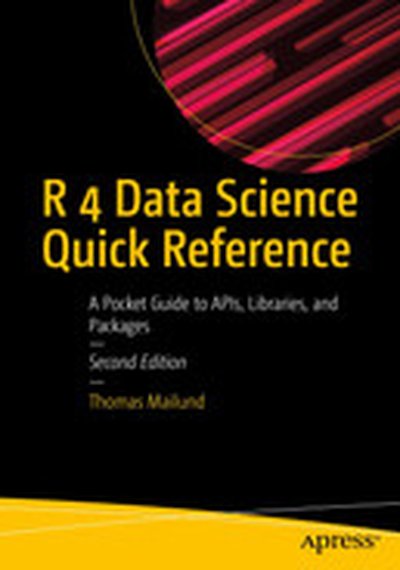
In this handy, quick reference book you'll be introduced to several R data science packages, with examples of how to use each of them. All concepts will be covered concisely, with many illustrative examples using the following APIs: readr, dibble, forecasts, lubridate, stringr, tidyr, magnittr, dplyr, purrr, ggplot2, modelr, and more. With R 4 Data Science Quick Reference, you'll have the code, APIs, and insights to write data science-based applications in the R programming language. You'll also be able to carry out data analysis. All source code used in the book is freely available on GitHub.. What You'll Learn Implement applicable R 4 programming language specification features Import data with readr Work with categories using forcats, time and dates with lubridate, and strings with stringr Format data using tidyr and then transform that data using magrittr and dplyr Write functions with R for data science, data mining, and analytics-based applications Visualize data with ggplot2 and fit data to models using modelr Who This Book Is For Programmers new to R's data science, data mining, and analytics packages. Some prior coding experience with R in general is recommended.
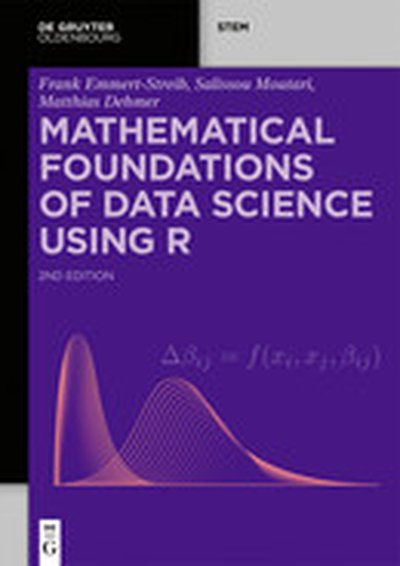
The aim of the book is to help students become data scientists. Since this requires a series of courses over a considerable period of time, the book intends to accompany students from the beginning to an advanced understanding of the knowledge and skills that define a modern data scientist. The book presents a comprehensive overview of the mathematical foundations of the programming language R and of its applications to data science.
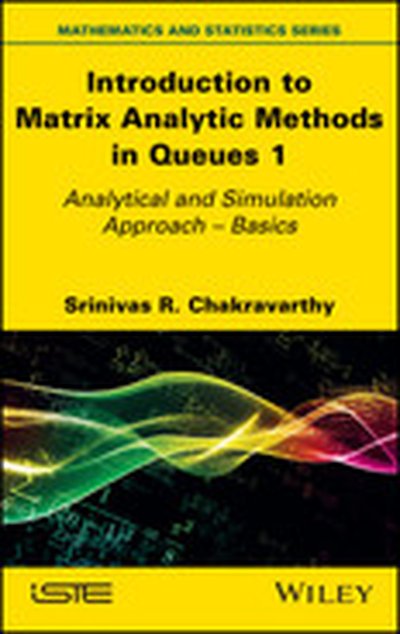
Matrix-analytic methods (MAM) were introduced by Professor Marcel Neuts and have been applied to a variety of stochastic models since. In order to provide a clear and deep understanding of MAM while showing their power, this book presents MAM concepts and explains the results using a number of worked-out examples. This book’s approach will inform and kindle the interest of researchers attracted to this fertile field. To allow readers to practice and gain experience in the algorithmic and computational procedures of MAM, Introduction to Matrix Analytic Methods in Queues 1 provides a number of computational exercises. It also incorporates simulation as another tool for studying complex stochastic models, especially when the state space of the underlying stochastic models under analytic study grows exponentially. The book’s detailed approach will make it more accessible for readers interested in learning about MAM in stochastic models.
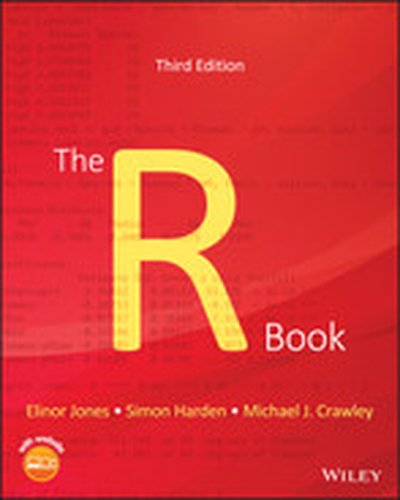
A start-to-finish guide to one of the most useful programming languages for researchers in a variety of fields In the newly revised Third Edition of The R Book, a team of distinguished teachers and researchers delivers a user-friendly and comprehensive discussion of foundational and advanced topics in the R software language, which is used widely in science, engineering, medicine, economics, and other fields. The book is designed to be used as both a complete text—readable from cover to cover—and as a reference manual for practitioners seeking authoritative guidance on particular topics. This latest edition offers instruction on the use of the RStudio GUI, an easy-to-use environment for those new to R. It provides readers with a complete walkthrough of the R language, beginning at a point that assumes no prior knowledge of R and very little previous knowledge of statistics. Readers will also find: A thorough introduction to fundamental concepts in statistics and step-by-step roadmaps to their implementation in R; Comprehensive explorations of worked examples in R; A complementary companion website with downloadable datasets that are used in the book; In-depth examination of essential R packages. Perfect for undergraduate and postgraduate students of science, engineering, medicine economics, and geography, The R Book will also earn a place in the libraries of social sciences professionals.
SOFR Futures and Options is the practical guide through the maze of the transition from LIBOR. In the first section, it provides an in-depth explanation of the concepts involved: The repo market and the construction of SOFR SOFR-based lending markets and the term rate The secured-unsecured basis SOFR futures and options and their spread contracts Margin and convexity Applying these insights, the second section offers detailed worked-through examples of hedging loans, swaps, bonds, and floors with SOFR futures and options, supported by interactive spreadsheets accessible on the web. The gold standard resource for professionals working at financial institutions, SOFR Futures and Options also belongs in the libraries of students of finance and business, as well as those preparing for the Chartered Financial Analyst exam.
Harness the power of MATLAB for deep-learning challenges. Practical MATLAB Deep Learning, Second Edition, remains a one-of a-kind book that provides an introduction to deep learning and using MATLAB's deep-learning toolboxes. In this book, you’ll see how these toolboxes provide the complete set of functions needed to implement all aspects of deep learning. This edition includes new and expanded projects, and covers generative deep learning and reinforcement learning. Over the course of the book, you'll learn to model complex systems and apply deep learning to problems in those areas. Applications include: Aircraft navigation An aircraft that lands on Titan, the moon of Saturn, using reinforcement learning Stock market prediction Natural language processing Music creation usng generative deep learning Plasma control Earth sensor processing for spacecraft MATLAB Bluetooth data acquisition applied to dance physics What You Will Learn Explore deep learning using MATLAB and compare it to algorithms Write a deep learning function in MATLAB and train it with examples Use MATLAB toolboxes related to deep learning Implement tokamak disruption prediction Now includes reinforcement learning Who This Book Is For Engineers, data scientists, and students wanting a book rich in examples on deep learning using MATLAB.
Design and analyze electronic components and systems with the help of powerful software and effective skillsets. Balancing theory with practical exploration of the relevant software, you'll start solving power electronics problems like a pro. Using MATLAB®/Simulink®, you'll analyze the circuit in a laptop charger; interface with the power electronics converter controlling a washing machine's motor; turn on lamps with an electronic ballast; convert AC into DC power; and more! Power electronics are at the bedrock of all the wonderful devices simplifying our daily life. Designing them isn't just about understanding schematics. It also requires measuring twice and cutting once. In order to save time and money, a power electronics circuit must be simulated before construction. So you'll learn how to work with one of the most powerful simulation tools for this purpose. That way you'll know before you even go to make it whether the circuit works as expected. Learnto work with MATLAB®/Simulink® by directly applying and building the projects in this book. Or use it as a lab manual for power electronics and industrial electronics. Either way, using strong simulations and solid design theory, you'll be able to build power electronics that don't fail. What You'll Learn Simulate power electronics effectively before building them Select suitable semiconductor components for your circuit based on simulation waveforms Extract dynamic models of converters and design suitable controllers for them Who This Book Is For Engineers and students who want to simulate power electronics circuits in MATLAB®/Simulink®.
Discover best practices for data analysis and software development in R and start on the path to becoming a fully-fledged data scientist. Updated for the R 4.0 release, this book teaches you techniques for both data manipulation and visualization and shows you the best way for developing new software packages for R. Beginning Data Science in R 4, Second Edition details how data science is a combination of statistics, computational science, and machine learning. You’ll see how to efficiently structure and mine data to extract useful patterns and build mathematical models. This requires computational methods and programming, and R is an ideal programming language for this. Modern data analysis requires computational skills and usually a minimum of programming. After reading and using this book, you'll have what you need to get started with R programming with data science applications. Source code will be available to support your next projects as well. Source code is available at github.com/Apress/beg-data-science-r4. What You Will Learn Perform data science and analytics using statistics and the R programming language Visualize and explore data, including working with large data sets found in big data Build an R package Test and check your code Practice version control Profile and optimize your code Who This Book Is For Those with some data science or analytics background, but not necessarily experience with the R programming language.
The Pandas Workshop offers a detailed journey into the world of data analysis using Python and the pandas library. Throughout the book, you'll build skills in accessing, transforming, visualizing, and modeling data, all while focusing on real-world data science challenges. You will gain the knowledge and confidence needed to dissect and derive insights from complex datasets. What this Book will help me do Understand how to access and load data from various formats including databases and web-based sources. Manipulate and transform data for analysis using efficient pandas techniques. Create insightful visualizations using Matplotlib integrated with pandas for clearer data presentation. Build predictive and descriptive data models and glean data-driven insights. Handle and analyze time-series data to uncover trends and seasonal effects in data patterns. Author(s) Blaine Bateman, Saikat Basak, Thomas Joseph, and William So collectively bring diverse expertise in data analysis, programming, and teaching. Their goal is to make cutting-edge data science techniques accessible through clear explanations and practical exercises, helping learners from varied backgrounds master the pandas library. Who is it for? This book is best suited for novice to intermediate programmers and data enthusiasts who are already familiar with Python but are new to the pandas library. Ideal readers are those interested in honing their skills in data analysis and visualization, as well as leveraging data for informed decision-making. Whether you're an analyst, aspiring data scientist, or business professional seeking to strengthen your analytical toolkit, this book provides beneficial insights and techniques.
R is the most powerful tool you can use for statistical analysis. This definitive guide smooths R’s steep learning curve with practical solutions and real-world applications for commercial environments. In R in Action, Third Edition you will learn how to: Set up and install R and RStudio Clean, manage, and analyze data with R Use the ggplot2 package for graphs and visualizations Solve data management problems using R functions Fit and interpret regression models Test hypotheses and estimate confidence Simplify complex multivariate data with principal components and exploratory factor analysis Make predictions using time series forecasting Create dynamic reports and stunning visualizations Techniques for debugging programs and creating packages R in Action, Third Edition makes learning R quick and easy. That’s why thousands of data scientists have chosen this guide to help them master the powerful language. Far from being a dry academic tome, every example you’ll encounter in this book is relevant to scientific and business developers, and helps you solve common data challenges. R expert Rob Kabacoff takes you on a crash course in statistics, from dealing with messy and incomplete data to creating stunning visualizations. This revised and expanded third edition contains fresh coverage of the new tidyverse approach to data analysis and R’s state-of-the-art graphing capabilities with the ggplot2 package. About the Technology Used daily by data scientists, researchers, and quants of all types, R is the gold standard for statistical data analysis. This free and open source language includes packages for everything from advanced data visualization to deep learning. Instantly comfortable for mathematically minded users, R easily handles practical problems without forcing you to think like a software engineer. About the Book R in Action, Third Edition teaches you how to do statistical analysis and data visualization using R and its popular tidyverse packages. In it, you’ll investigate real-world data challenges, including forecasting, data mining, and dynamic report writing. This revised third edition adds new coverage for graphing with ggplot2, along with examples for machine learning topics like clustering, classification, and time series analysis. What's Inside Clean, manage, and analyze data Use the ggplot2 package for graphs and visualizations Techniques for debugging programs and creating packages A complete learning resource for R and tidyverse About the Reader Requires basic math and statistics. No prior experience with R needed. About the Author Dr. Robert I Kabacoff is a professor of quantitative analytics at Wesleyan University and a seasoned data scientist with more than 20 years of experience. Quotes Kabacoff has outdone himself by significantly improving on the already excellent previous edition. - Alain Lompo, ISO-Gruppe R in Action has been my go-to reference on R for years. The third edition contains timely updates on the tidyverse and other new tools. I would recommend this book without hesitation. - Daniel Kenney-Jung MD, Department of Pediatrics, Duke University Outstandingly well-written. The best book on R programming that I have ever read. - Kelvin Meeks, International Technology Ventures Takes the reader through a series of essential methods from basic to complex. The only R book you will ever need. - Martin Perry, Microsoft
This book aims to provide theoretical and empirical frameworks and highlights the challenges and solutions with using Big Data for Corporate Social Responsibility (CSR) and Sustainability in the field of digital transformation and tourism.
This handy reference book detailing the intricacies of R covers version 4.x features, including numerous and significant changes to syntax, strings, reference counting, grid units, and more. Starting with the basic structure of R, the book takes you on a journey through the terminology used in R and the syntax required to make R work. You will find looking up the correct form for an expression quick and easy. Some of the new material includes information on RStudio, S4 syntax, working with character strings, and an example using the Twitter API. With a copy of the R 4 Quick Syntax Reference in hand, you will find that you are able to use the multitude of functions available in R and are even able to write your own functions to explore and analyze data. What You Will Learn Discover the modes and classes of R objects and how to use them Use both packaged and user-created functions in R Import/export data and create new data objects in R Create descriptive functions and manipulate objects in R Take advantage of flow control and conditional statements Work with packages such as base, stats, and graphics Who This Book Is For Those with programming experience, either new to R, or those with at least some exposure to R but who are new to the latest version.