talk-data.com talk-data.com

Topic

data-science-tools

333

tagged

Activity Trend

1 peak/qtr
2020-Q1 2026-Q1

Activities

333 activities · Newest first

Advanced R 4 Data Programming and the Cloud: Using PostgreSQL, AWS, and Shiny

Program for data analysis using R and learn practical skills to make your work more efficient. This revised book explores how to automate running code and the creation of reports to share your results, as well as writing functions and packages. It includes key R 4 features such as a new color palette for charts, an enhanced reference counting system, and normalization of matrix and array types where matrix objects now formally inherit from the array class, eliminating inconsistencies. Advanced R 4 Data Programming and the Cloud is not designed to teach advanced R programming nor to teach the theory behind statistical procedures. Rather, it is designed to be a practical guide moving beyond merely using R; it shows you how to program in R to automate tasks. This book will teach you how to manipulate data in modern R structures and includes connecting R to databases such as PostgreSQL, cloud services such as Amazon Web Services (AWS), and digital dashboards such as Shiny. Each chapter also includes a detailed bibliography with references to research articles and other resources that cover relevant conceptual and theoretical topics. What You Will Learn Write and document R functions using R 4 Make an R package and share it via GitHub or privately Add tests to R code to ensure it works as intended Use R to talk directly to databases and do complex data management Run R in the Amazon cloud Deploy a Shiny digital dashboard Generate presentation-ready tables and reports using R Who This Book Is For Working professionals, researchers, and students who are familiar with R and basic statistical techniques such as linear regression and who want to learn how to take their R coding and programming to the next level.
Practical R 4: Applying R to Data Manipulation, Processing and Integration

Get started with an accelerated introduction to the R ecosystem, programming language, and tools including R script and RStudio. Utilizing many examples and projects, this book teaches you how to get data into R and how to work with that data using R. Once grounded in the fundamentals, the rest of Practical R 4 dives into specific projects and examples starting with running and analyzing a survey using R and LimeSurvey. Next, you'll carry out advanced statistical analysis using R and MouselabWeb. Then, you’ll see how R can work for you without statistics, including how R can be used to automate data formatting, manipulation, reporting, and custom functions. The final part of this book discusses using R on a server; you’ll build a script with R that can run an RStudio Server and monitor a report source for changes to alert the user when something has changed. This project includes both regular email alerting and push notification. And, finally, you’ll use R to create a customized daily rundown report of a person's most important information such as a weather report, daily calendar, to-do's and more. This demonstrates how to automate such a process so that every morning, the user navigates to the same web page and gets the updated report. What You Will Learn Set up and run an R script, including installation on a new machine and downloading and configuring R Turn any machine into a powerful data analytics platform accessible from anywhere with RStudio Server Write basic R scripts and modify existing scripts to suit your own needs Create basic HTML reports in R, inserting information as needed Build a basic R package and distribute it Who This Book Is For Some prior exposure to statistics, programming, and maybe SAS is recommended but not required.

Mathematical Foundations of Data Science Using R

In order best exploit the incredible quantities of data being generated in most diverse disciplines data sciences increasingly gain worldwide importance. The book gives the mathematical foundations to handle data properly. It introduces basics and functionalities of the R programming language which has become the indispensable tool for data sciences. Thus it delivers the reader the skills needed to build own tool kits of a modern data scientist.

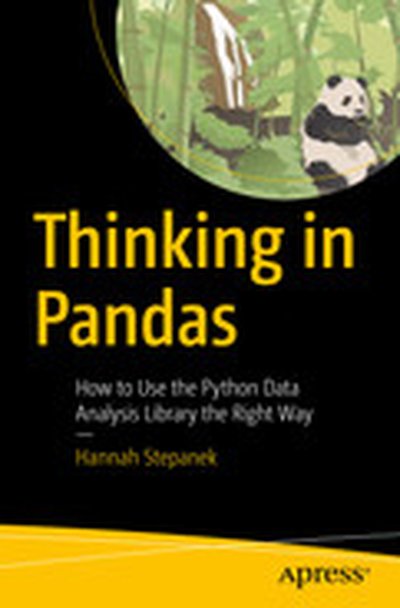
Thinking in Pandas: How to Use the Python Data Analysis Library the Right Way

Understand and implement big data analysis solutions in pandas with an emphasis on performance. This book strengthens your intuition for working with pandas, the Python data analysis library, by exploring its underlying implementation and data structures. Thinking in Pandas introduces the topic of big data and demonstrates concepts by looking at exciting and impactful projects that pandas helped to solve. From there, you will learn to assess your own projects by size and type to see if pandas is the appropriate library for your needs. Author Hannah Stepanek explains how to load and normalize data in pandas efficiently, and reviews some of the most commonly used loaders and several of their most powerful options. You will then learn how to access and transform data efficiently, what methods to avoid, and when to employ more advanced performance techniques. You will also go over basic data access and munging in pandas and the intuitive dictionary syntax. Choosing the right DataFrame format, working with multi-level DataFrames, and how pandas might be improved upon in the future are also covered. By the end of the book, you will have a solid understanding of how the pandas library works under the hood. Get ready to make confident decisions in your own projects by utilizing pandas—the right way. What You Will Learn Understand the underlying data structure of pandas and why it performs the way it does under certain circumstances Discover how to use pandas to extract, transform, and load data correctly with an emphasis on performance Choose the right DataFrame so that the data analysis is simple and efficient. Improve performance of pandas operations with other Python libraries Who This Book Is For Software engineers with basic programming skills in Python keen on using pandas for a big data analysis project. Python software developers interested in big data.

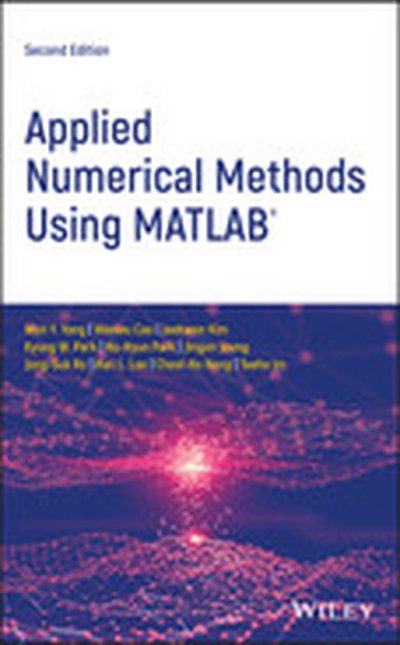
Applied Numerical Methods Using MATLAB, 2nd Edition

This new edition provides an updated approach for students, engineers, and researchers to apply numerical methods for solving problems using MATLAB® This accessible book makes use of MATLAB® software to teach the fundamental concepts for applying numerical methods to solve practical engineering and/or science problems. It presents programs in a complete form so that readers can run them instantly with no programming skill, allowing them to focus on understanding the mathematical manipulation process and making interpretations of the results. Applied Numerical Methods Using MATLAB®, Second Edition begins with an introduction to MATLAB usage and computational errors, covering everything from input/output of data, to various kinds of computing errors, and on to parameter sharing and passing, and more. The system of linear equations is covered next, followed by a chapter on the interpolation by Lagrange polynomial. The next sections look at interpolation and curve fitting, nonlinear equations, numerical differentiation/integration, ordinary differential equations, and optimization. Numerous methods such as the Simpson, Euler, Heun, Runge-kutta, Golden Search, Nelder-Mead, and more are all covered in those chapters. The eighth chapter provides readers with matrices and Eigenvalues and Eigenvectors. The book finishes with a complete overview of differential equations. Provides examples and problems of solving electronic circuits and neural networks Includes new sections on adaptive filters, recursive least-squares estimation, Bairstow's method for a polynomial equation, and more Explains Mixed Integer Linear Programing (MILP) and DOA (Direction of Arrival) estimation with eigenvectors Aimed at students who do not like and/or do not have time to derive and prove mathematical results Applied Numerical Methods Using MATLAB®, Second Edition is an excellent text for students who wish to develop their problem-solving capability without being involved in details about the MATLAB codes. It will also be useful to those who want to delve deeper into understanding underlying algorithms and equations.

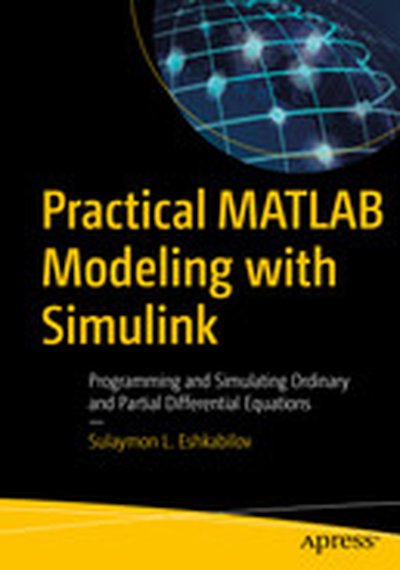
Practical MATLAB Modeling with Simulink: Programming and Simulating Ordinary and Partial Differential Equations

Employ the essential and hands-on tools and functions of MATLAB's ordinary differential equation (ODE) and partial differential equation (PDE) packages, which are explained and demonstrated via interactive examples and case studies. This book contains dozens of simulations and solved problems via m-files/scripts and Simulink models which help you to learn programming and modeling of more difficult, complex problems that involve the use of ODEs and PDEs. You’ll become efficient with many of the built-in tools and functions of MATLAB/Simulink while solving more complex engineering and scientific computing problems that require and use differential equations. Practical MATLAB Modeling with Simulink explains various practical issues of programming and modelling. After reading and using this book, you'll be proficient at using MATLAB and applying the source code from the book's examples as templates for your own projects in data science or engineering. What You Will Learn Model complex problems using MATLAB and Simulink Gain the programming and modeling essentials of MATLAB using ODEs and PDEs Use numerical methods to solve 1st and 2nd order ODEs Solve stiff, higher order, coupled, and implicit ODEs Employ numerical methods to solve 1st and 2nd order linear PDEs Solve stiff, higher order, coupled, and implicit PDEs Who This Book Is For Engineers, programmers, data scientists, and students majoring in engineering, applied/industrial math, data science, and scientific computing. This book continues where Apress' Beginning MATLAB and Simulink leaves off.

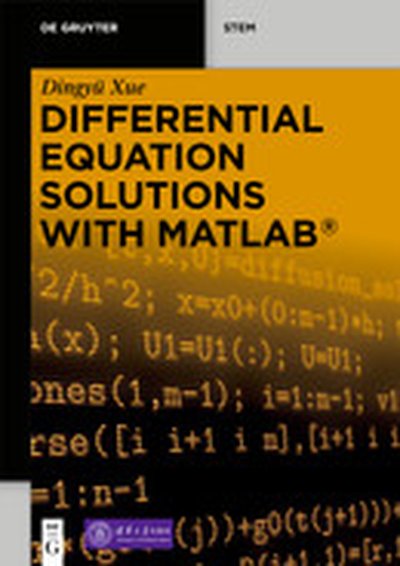
Differential Equation Solutions with MATLAB®

This book focuses the solutions of differential equations with MATLAB. Analytical solutions of differential equations are explored first, followed by the numerical solutions of different types of ordinary differential equations (ODEs), as well as the universal block diagram based schemes for ODEs. Boundary value ODEs, fractional-order ODEs and partial differential equations are also discussed.

Solving Optimization Problems with MATLAB®

This book focuses on solving optimization problems with MATLAB. Descriptions and solutions of nonlinear equations of any form are studied first. Focuses are made on the solutions of various types of optimization problems, including unconstrained and constrained optimizations, mixed integer, multiobjective and dynamic programming problems. Comparative studies and conclusions on intelligent global solvers are also provided.

MATLAB Programming

This book presents fundamentals in MATLAB programming, including data and statement structures, control structures, function writing and bugging in MATLAB programming, followed by the presentations of algebraic computation, transcendental function evaluations and data processing. Advanced topics such as MATLAB interfacing, object-oriented programming and graphical user interface design are also addressed.

Pandas 1.x Cookbook - Second Edition

The 'Pandas 1.x Cookbook' offers a recipe-based guide for mastering the powerful Python library, pandas. You will gain practical knowledge for handling and manipulating data efficiently, from the fundamentals to advanced techniques. The book is an essential resource for exploring and analyzing datasets with pandas. What this Book will help me do Understand and apply data exploration techniques in pandas. Use pandas to manipulate, aggregate, and clean datasets to extract meaningful insights. Combine pandas with Matplotlib and Seaborn to create effective visualizations. Perform time series analysis and transform datasets for machine learning. Implement workflows for handling large-scale data that exceeds your computer's memory. Author(s) Matthew Harrison and Theodore Petrou are highly experienced educators and practitioners in data science and Python programming. With their extensive expertise in using pandas, they provide insights through practical exercises and approachable narratives. Their aim is to make complex concepts accessible to learners of varying skill levels. Who is it for? This book is ideal for Python programmers, analysts, and data scientists seeking to expand their data handling and analysis capabilities. It caters to both beginners who are new to pandas and those looking to deepen their understanding of its advanced features. If your goal is to explore, clean, and analyze complex datasets efficiently, this book is tailored for you.

Practical MATLAB Deep Learning: A Project-Based Approach

Harness the power of MATLAB for deep-learning challenges. This book provides an introduction to deep learning and using MATLAB's deep-learning toolboxes. You’ll see how these toolboxes provide the complete set of functions needed to implement all aspects of deep learning. Along the way, you'll learn to model complex systems, including the stock market, natural language, and angles-only orbit determination. You’ll cover dynamics and control, and integrate deep-learning algorithms and approaches using MATLAB. You'll also apply deep learning to aircraft navigation using images. Finally, you'll carry out classification of ballet pirouettes using an inertial measurement unit to experiment with MATLAB's hardware capabilities. What You Will Learn Explore deep learning using MATLAB and compare it to algorithms Write a deep learning function in MATLAB and train it with examples Use MATLAB toolboxes related to deep learning Implement tokamak disruption prediction Who This Book Is For Engineers, data scientists, and students wanting a book rich in examples on deep learning using MATLAB.

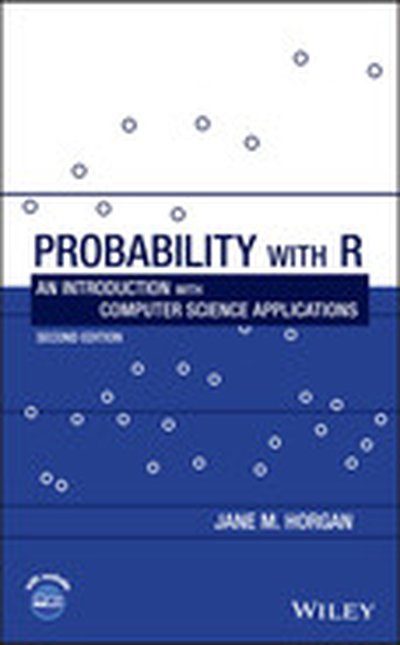
Probability with R, 2nd Edition

Provides a comprehensive introduction to probability with an emphasis on computing-related applications This self-contained new and extended edition outlines a first course in probability applied to computer-related disciplines. As in the first edition, experimentation and simulation are favoured over mathematical proofs. The freely down-loadable statistical programming language R is used throughout the text, not only as a tool for calculation and data analysis, but also to illustrate concepts of probability and to simulate distributions. The examples in Probability with R: An Introduction with Computer Science Applications, Second Edition cover a wide range of computer science applications, including: testing program performance; measuring response time and CPU time; estimating the reliability of components and systems; evaluating algorithms and queuing systems. Chapters cover: The R language; summarizing statistical data; graphical displays; the fundamentals of probability; reliability; discrete and continuous distributions; and more. This second edition includes: improved R code throughout the text, as well as new procedures, packages and interfaces; updated and additional examples, exercises and projects covering recent developments of computing; an introduction to bivariate discrete distributions together with the R functions used to handle large matrices of conditional probabilities, which are often needed in machine translation; an introduction to linear regression with particular emphasis on its application to machine learning using testing and training data; a new section on spam filtering using Bayes theorem to develop the filters; an extended range of Poisson applications such as network failures, website hits, virus attacks and accessing the cloud; use of new allocation functions in R to deal with hash table collision, server overload and the general allocation problem. The book is supplemented with a Wiley Book Companion Site featuring data and solutions to exercises within the book. Primarily addressed to students of computer science and related areas, Probability with R: An Introduction with Computer Science Applications, Second Edition is also an excellent text for students of engineering and the general sciences. Computing professionals who need to understand the relevance of probability in their areas of practice will find it useful.

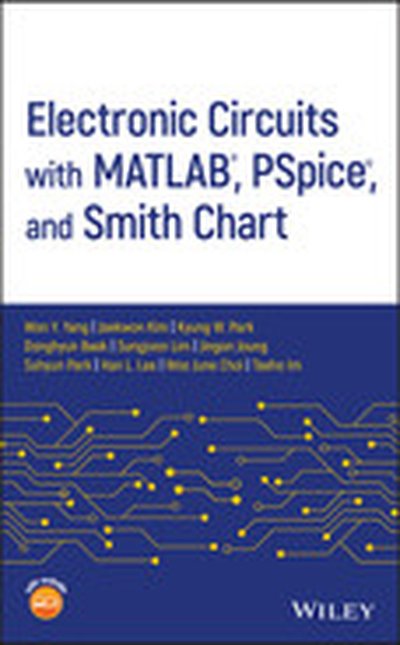
Electronic Circuits with MATLAB, PSpice, and Smith Chart

Provides practical examples of circuit design and analysis using PSpice, MATLAB, and the Smith Chart This book presents the three technologies used to deal with electronic circuits: MATLAB, PSpice, and Smith chart. It gives students, researchers, and practicing engineers the necessary design and modelling tools for validating electronic design concepts involving bipolar junction transistors (BJTs), field-effect transistors (FET), OP Amp circuits, and analog filters. Electronic Circuits with MATLAB®, PSpice®, and Smith Chart presents analytical solutions with the results of MATLAB analysis and PSpice simulation. This gives the reader information about the state of the art and confidence in the legitimacy of the solution, as long as the solutions obtained by using the two software tools agree with each other. For representative examples of impedance matching and filter design, the solution using MATLAB and Smith chart (Smith V4.1) are presented for comparison and crosscheck. This approach is expected to give the reader confidence in, and a deeper understanding of, the solution. In addition, this text: Increases the reader's understanding of the underlying processes and related equations for the design and analysis of circuits Provides a stepping stone to RF (radio frequency) circuit design by demonstrating how MATLAB can be used for the design and implementation of microstrip filters Features two chapters dedicated to the application of Smith charts and two-port network theory Electronic Circuits with MATLAB®, PSpice®, and Smith Chart will be of great benefit to practicing engineers and graduate students interested in circuit theory and RF circuits.

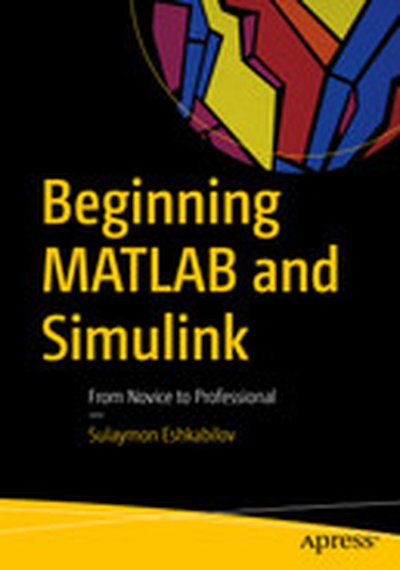
Beginning MATLAB and Simulink: From Novice to Professional

Employ essential and hands-on tools and functions of the MATLAB and Simulink packages, which are explained and demonstrated via interactive examples and case studies. This book contains dozens of simulation models and solved problems via m-files/scripts and Simulink models which help you to learn programming and modeling essentials. You’ll become efficient with many of the built-in tools and functions of MATLAB/Simulink while solving engineering and scientific computing problems. Beginning MATLAB and Simulink explains various practical issues of programming and modelling in parallel by comparing MATLAB and Simulink. After reading and using this book, you'll be proficient at using MATLAB and applying the source code from the book's examples as templates for your own projects in data science or engineering. What You Will Learn Get started using MATLAB and Simulink Carry out data visualization with MATLAB Gain the programming and modeling essentials of MATLAB Build a GUI with MATLAB Work with integration and numerical root finding methods Apply MATLAB to differential equations-based models and simulations Use MATLAB for data science projects Who This Book Is For Engineers, programmers, data scientists, and students majoring in engineering and scientific computing.

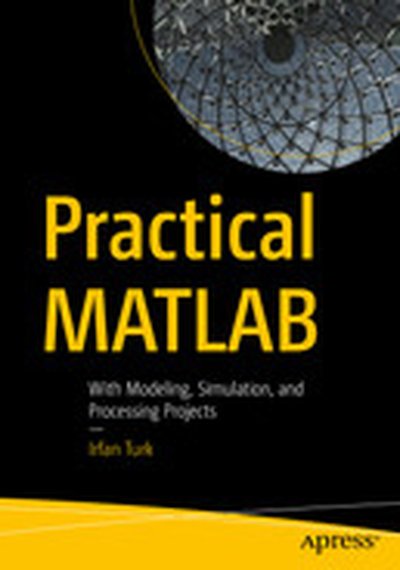
Practical MATLAB: With Modeling, Simulation, and Processing Projects

Apply MATLAB programming to the mathematical modeling of real-life problems from a wide range of topics. This pragmatic book shows you how to solve your programming problems, starting with a brief primer on MATLAB and the fundamentals of the MATLAB programming language. Then, you’ll build fully working examples and computational models found in the financial, engineering, and scientific sectors. As part of this section, you’ll cover signal and image processing, as well as GUIs. After reading and using Practical MATLAB and its accompanying source code, you’ll have the practical know-how and code to apply to your own MATLAB programming projects. What You Will Learn Discover the fundamentals of MATLAB and how to get started with it for problem solving Apply MATLAB to a variety of problems and case studies Carry out economic and financial modeling with MATLAB, including option pricing and compound interest Use MATLAB for simulation problems such as coin flips, dice rolling, random walks, and traffic flows Solve computational biology problems with MATLAB Implement signal processing with MATLAB, including currents, Fast Fourier Transforms (FFTs), and harmonic analysis Process images with filters and edge detection Build applications with GUIs Who This Book Is For People with some prior experience with programming and MATLAB.

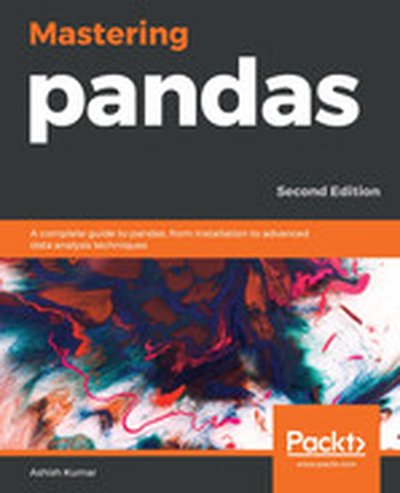
Mastering pandas - Second Edition

Mastering pandas is the ultimate guide to harnessing the power of the pandas library for data analysis. Covering everything from installation to advanced techniques, this book provides comprehensive instructions and examples to help you perform efficient data manipulation and visualization. Explore key features of pandas, such as multi-indexing and time series analysis, and become proficient in actionable analytics. What this Book will help me do Master importing and managing datasets of various formats using pandas. Expertly handle missing data and clean datasets for robust analysis. Create powerful visualizations and reports using pandas and Jupyter notebooks. Leverage advanced indexing and grouping techniques to derive insights. Utilize pandas for time series analysis to analyze trends and patterns. Author(s) None Kumar is an experienced data scientist specializing in data analysis and visualization using Python. With a deep understanding of the pandas library, None has been helping professionals and enthusiasts alike to make data-driven decisions. Known for an example-driven teaching style, None bridges complex theoretical concepts with practical applications in data science. Who is it for? If you're a data scientist, analyst, or Python developer seeking to enhance your data analysis capabilities, this book is for you. Prior knowledge of Python is beneficial but not mandatory, as foundational concepts are explained. This guide spans beginner to advanced topics, accommodating users looking to deepen their skills and those aiming to start with pandas.

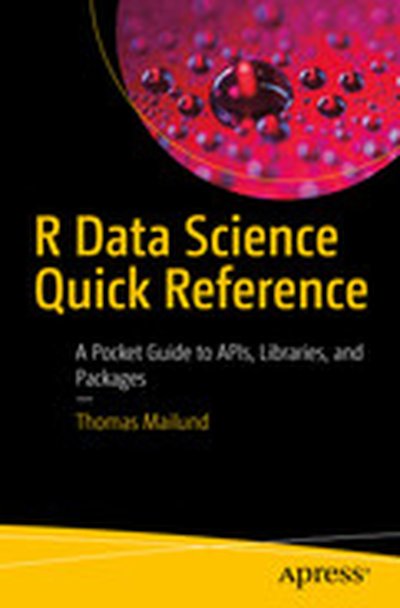
R Data Science Quick Reference: A Pocket Guide to APIs, Libraries, and Packages

In this handy, practical book you will cover each concept concisely, with many illustrative examples. You'll be introduced to several R data science packages, with examples of how to use each of them. In this book, you’ll learn about the following APIs and packages that deal specifically with data science applications: readr, dibble, forecasts, lubridate, stringr, tidyr, magnittr, dplyr, purrr, ggplot2, modelr, and more. After using this handy quick reference guide, you'll have the code, APIs, and insights to write data science-based applications in the R programming language. You'll also be able to carry out data analysis. What You Will Learn Import data with readr Work with categories using forcats, time and dates with lubridate, and strings with stringr Format data using tidyr and then transform that data using magrittr and dplyrWrite functions with R for data science, data mining, and analytics-based applications Visualize data with ggplot2 and fit data to models using modelr Who This Book Is For Programmers new to R's data science, data mining, and analytics packages. Some prior coding experience with R in general is recommended.

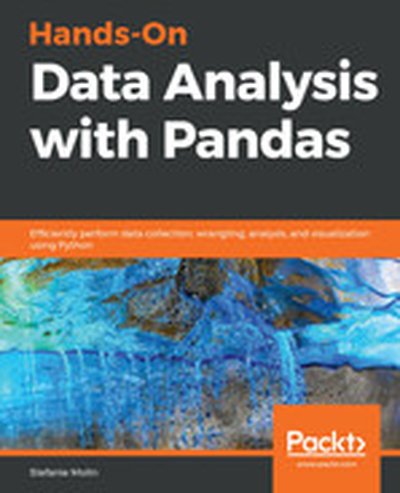
Hands-On Data Analysis with Pandas

Hands-On Data Analysis with Pandas provides an intensive dive into mastering the pandas library for data science and analysis using Python. Through a combination of conceptual explanations and practical demonstrations, readers will learn how to manipulate, visualize, and analyze data efficiently. What this Book will help me do Understand and apply the pandas library for efficient data manipulation. Learn to perform data wrangling tasks such as cleaning and reshaping datasets. Create effective visualizations using pandas and libraries like matplotlib and seaborn. Grasp the basics of machine learning and implement solutions with scikit-learn. Develop reusable data analysis scripts and modules in Python. Author(s) Stefanie Molin is a seasoned data scientist and software engineer with extensive experience in Python and data analytics. She specializes in leveraging the latest data science techniques to solve real-world problems. Her engaging and detailed writing draws from her practical expertise, aiming to make complex concepts accessible to all. Who is it for? This book is ideal for data analysts and aspiring data scientists who are at the beginning stages of their careers or looking to enhance their toolset with pandas and Python. It caters to Python developers eager to delve into data analysis workflows. Readers should have some programming knowledge to fully benefit from the examples and exercises.

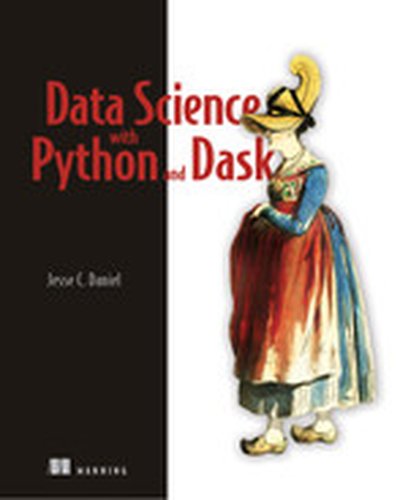
Data Science with Python and Dask

Dask is a native parallel analytics tool designed to integrate seamlessly with the libraries you’re already using, including Pandas, NumPy, and Scikit-Learn. With Dask you can crunch and work with huge datasets, using the tools you already have. And Data Science with Python and Dask is your guide to using Dask for your data projects without changing the way you work! About the Technology An efficient data pipeline means everything for the success of a data science project. Dask is a flexible library for parallel computing in Python that makes it easy to build intuitive workflows for ingesting and analyzing large, distributed datasets. Dask provides dynamic task scheduling and parallel collections that extend the functionality of NumPy, Pandas, and Scikit-learn, enabling users to scale their code from a single laptop to a cluster of hundreds of machines with ease. About the Book Data Science with Python and Dask teaches you to build scalable projects that can handle massive datasets. After meeting the Dask framework, you’ll analyze data in the NYC Parking Ticket database and use DataFrames to streamline your process. Then, you’ll create machine learning models using Dask-ML, build interactive visualizations, and build clusters using AWS and Docker. What's Inside Working with large, structured and unstructured datasets Visualization with Seaborn and Datashader Implementing your own algorithms Building distributed apps with Dask Distributed Packaging and deploying Dask apps About the Reader For data scientists and developers with experience using Python and the PyData stack. About the Author Jesse Daniel is an experienced Python developer. He taught Python for Data Science at the University of Denver and leads a team of data scientists at a Denver-based media technology company. We interviewed Jesse as a part of our Six Questions series. Check it out here. Quotes The most comprehensive coverage of Dask to date, with real-world examples that made a difference in my daily work. - Al Krinker, United States Patent and Trademark Office An excellent alternative to PySpark for those who are not on a cloud platform. The author introduces Dask in a way that speaks directly to an analyst. - Jeremy Loscheider, Panera Bread A greatly paced introduction to Dask with real-world datasets. - George Thomas, R&D Architecture Manhattan Associates The ultimate resource to quickly get up and running with Dask and parallel processing in Python. - Gustavo Patino, Oakland University William Beaumont School of Medicine

R Cookbook, 2nd Edition

Perform data analysis with R quickly and efficiently with more than 275 practical recipes in this expanded second edition. The R language provides everything you need to do statistical work, but its structure can be difficult to master. These task-oriented recipes make you productive with R immediately. Solutions range from basic tasks to input and output, general statistics, graphics, and linear regression. Each recipe addresses a specific problem and includes a discussion that explains the solution and provides insight into how it works. If you’re a beginner, R Cookbook will help get you started. If you’re an intermediate user, this book will jog your memory and expand your horizons. You’ll get the job done faster and learn more about R in the process. Create vectors, handle variables, and perform basic functions Simplify data input and output Tackle data structures such as matrices, lists, factors, and data frames Work with probability, probability distributions, and random variables Calculate statistics and confidence intervals and perform statistical tests Create a variety of graphic displays Build statistical models with linear regressions and analysis of variance (ANOVA) Explore advanced statistical techniques, such as finding clusters in your data