talk-data.com talk-data.com

Topic

data-science

2091

tagged

Activity Trend

1 peak/qtr
2020-Q1 2026-Q1

Activities

Showing filtered results

Filtering by: O'Reilly Data Science Books ×
Statistical Methods for Quality Improvement, Third Edition

Praise for the Second Edition "As a comprehensive statistics reference book for quality improvement, it certainly is one of the best books available." — Technometrics This new edition continues to provide the most current, proven statistical methods for quality control and quality improvement The use of quantitative methods offers numerous benefits in the fields of industry and business, both through identifying existing trouble spots and alerting management and technical personnel to potential problems. Statistical Methods for Quality Improvement, Third Edition guides readers through a broad range of tools and techniques that make it possible to quickly identify and resolve both current and potential trouble spots within almost any manufacturing or nonmanufacturing process. The book provides detailed coverage of the application of control charts, while also exploring critical topics such as regression, design of experiments, and Taguchi methods. In this new edition, the author continues to explain how to combine the many statistical methods explored in the book in order to optimize quality control and improvement. The book has been thoroughly revised and updated to reflect the latest research and practices in statistical methods and quality control, and new features include: Updated coverage of control charts, with newly added tools The latest research on the monitoring of linear profiles and other types of profiles Sections on generalized likelihood ratio charts and the effects of parameter estimation on the properties of CUSUM and EWMA procedures New discussions on design of experiments that include conditional effects and fraction of design space plots New material on Lean Six Sigma and Six Sigma programs and training Incorporating the latest software applications, the author has added coverage on how to use Minitab software to obtain probability limits for attribute charts. new exercises have been added throughout the book, allowing readers to put the latest statistical methods into practice. Updated references are also provided, shedding light on the current literature and providing resources for further study of the topic. Statistical Methods for Quality Improvement, Third Edition is an excellent book for courses on quality control and design of experiments at the upper-undergraduate and graduate levels. the book also serves as a valuable reference for practicing statisticians, engineers, and physical scientists interested in statistical quality improvement.
Statistical Analysis for Business Using JMP(R): A Student's Guide

A complete and thorough introduction to business statistics using JMP. While the book is designed for introductory business statistics courses at the undergraduate or MBA level, industry professionals wanting to brush up on their knowledge of statistics and those wanting an introduction to using JMP for statistical analysis will also find it useful.

Signal Processing for Intelligent Sensor Systems with MATLAB, 2nd Edition

Building on the unique features that made the first edition a bestseller, this second edition includes additional solved problems and web access to the large collection of MATLAB scripts that are highlighted throughout the text. The book offers expanded coverage of audio engineering, transducers, and sensor networking technology. It also includes new chapters on digital audio processing, as well as acoustics and vibrations transducers. The text addresses the use of meta-data architectures using XML and agent-based automated data mining and control. The numerous algorithms presented can be applied locally or network-based to solve complex detection problems.

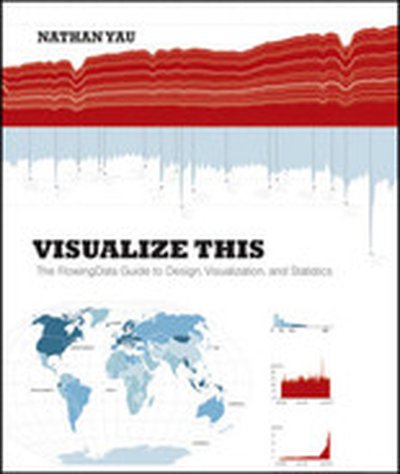
Visualize This: The FlowingData Guide to Design, Visualization, and Statistics

Practical data design tips from a data visualization expert of the modern age Data doesn't decrease; it is ever-increasing and can be overwhelming to organize in a way that makes sense to its intended audience. Wouldn't it be wonderful if we could actually visualize data in such a way that we could maximize its potential and tell a story in a clear, concise manner? Thanks to the creative genius of Nathan Yau, we can. With this full-color book, data visualization guru and author Nathan Yau uses step-by-step tutorials to show you how to visualize and tell stories with data. He explains how to gather, parse, and format data and then design high quality graphics that help you explore and present patterns, outliers, and relationships. Presents a unique approach to visualizing and telling stories with data, from a data visualization expert and the creator of flowingdata.com, Nathan Yau Offers step-by-step tutorials and practical design tips for creating statistical graphics, geographical maps, and information design to find meaning in the numbers Details tools that can be used to visualize data-native graphics for the Web, such as ActionScript, Flash libraries, PHP, and JavaScript and tools to design graphics for print, such as R and Illustrator Contains numerous examples and descriptions of patterns and outliers and explains how to show them Visualize This demonstrates how to explain data visually so that you can present your information in a way that is easy to understand and appealing.

Exposure and Understanding the Histogram

What does a histogram tell you about contrast, dynamic range, underexposure, and overexposure? Why does exposure differ for digital photography versus film photography? What happens when the exposure is wrong? The exposure triangle: ISO, aperture, and shutter speed Differences between exposing for raw files and JPEG files Exposing to the right to obtain an optimum raw file Shooting in automatic mode–when to do so and how to use exposure compensation Shooting in manual mode–when to do so and how to adjust exposure

Forecasting and Management of Technology, Second Edition

Published in 1991, the first edition of Forecasting and Management of Technology was one of the leading handful of books to deal with the topic of forecasting of technology and technology management as this discipline was emerging. The new, revised edition of this book will build on this knowledge in the context of business organizations that now place a greater emphasis on technology to stay on the cutting edge of development. The scope of this edition has broadened to include management of technology content that is relevant to now to executives in organizations while updating and strengthening the technology forecasting and analysis content that the first edition is reputed for. Updated by the original author team, plus new author Scott Cunningham, the book takes into account what the authors see as the innovations to technology management in the last 17 years: the Internet; the greater focus on group decision-making including process management and mechanism design; and desktop software that has transformed the analytical capabilities of technology managers. Included in this book will be 5 case studies from various industries that show how technology management is applied in the real world.

SAS Certification Prep Guide: Base Programming for SAS 9, Third Edition
New and experienced SAS users who want to prepare for the Base Programming for SAS 9 exam will find the SAS Certification Prep Guide: Base Programming for SAS 9 to be an invaluable, convenient, and comprehensive resource that covers all of the objectives tested on the exam. Major topics include importing and exporting raw data files, creating and modifying SAS data sets, and identifying and correcting data syntax and programming logic errors. You will also become familiar with the enhancements and new functionality that are available in SAS 9.

Each chapter includes a quiz on the chapter's contents. This guide provides you with a solid study resource as well as a go-to reference for your library.

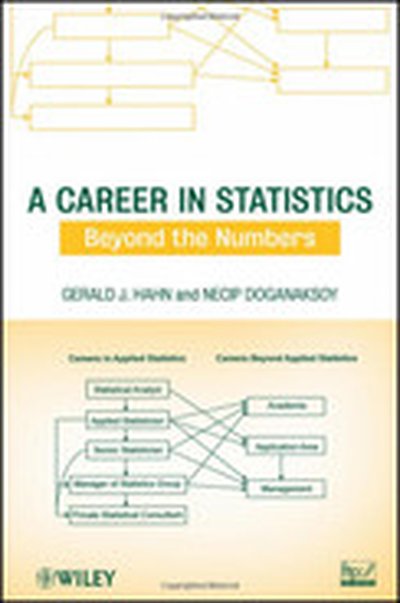
A Career in Statistics: Beyond the Numbers

A valuable guide to a successful career as a statistician A Career in Statistics: Beyond the Numbers prepares readers for careers in statistics by emphasizing essential concepts and practices beyond the technical tools provided in standard courses and texts. This insider's guide from internationally recognized applied statisticians helps readers decide whether a career in statistics is right for them, provides hands-on guidance on how to prepare for such a career, and shows how to succeed on the job. The book provides non-technical guidance for a successful career. The authors' extensive industrial experience is supplemented by insights from contributing authors from government and academia, Carol Joyce Blumberg, Leonard M. Gaines, Lynne B. Hare, William Q. Meeker, and Josef Schmee. Following an introductory chapter that provides an overview of the field, the authors discuss the various dimensions of a career in applied statistics in three succinct parts: The Work of a Statistician describes the day-to-day activities of applied statisticians in business and industry, official government, and various other application areas, highlighting the work environment and major on-the-job challenges Preparing for a Successful Career in Statistics describes the personal traits that characterize successful statisticians, the education that they need to acquire, and approaches for securing the right job Building a Successful Career as a Statistician offers practical guidance for addressing key challenges that statisticians face on the job, such as project initiation and execution, effective communication, publicizing successes, ethical considerations, and gathering good data; alternative career paths are also described The book concludes with an in-depth examination of careers for statisticians in academia as well as tips to help them stay on top of their field throughout their careers. Each chapter includes thought-provoking discussion questions and a Major Takeaways section that outlines key concepts. Real-world examples illustrate key points, and an FTP site provides additional information on selected topics. A Career in Statistics is an invaluable guide for individuals who are considering or have decided on a career in statistics as well as for statisticians already on the job who want to accelerate their path to success. It also serves as a suitable book for courses on statistical consulting, statistical practice, and statistics in the workplace at the undergraduate and graduate levels.

Improving Quality in Outpatient Services

A valuable reference for those involved in the field of ambulatory patient care, Improving Quality in Outpatient Services offers time-tested instruction on how to create a world-class outpatient program. It supplies a high-level overview of current opportunities, national quality programs, and challenges—outlining the policies, procedures, and plans required for success. Stimulating readers with a wealth of practical applications, stories, and examples, the book details the governance, medical staff, and quality structures required to create, implement, and maintain a safe and efficient outpatient program. It introduces powerful techniques for infection control, medication management, risk prevention, and the elimination of medication errors. It also: Lists mandatory policies and procedures Contains practice drills to prepare you for real-world scenarios Explains how to create a report card to measure quality at all levels Includes a sample curriculum that outlines the courseware required by OSHA and other licensing and regulatory agencies The authors address documentation and human resources factors and supply an abundance of information and resources in the appendices, including how and where to apply for certification, medical record review tools, policy and procedure checklists, and a state-by-state listing of resources available for outpatient and ambulatory programs. Explaining how to involve patients in the decision making process, the text details a proven system for evaluating quality at all levels of your organization.

Smoothing Splines

With many real-world examples, this book shows how to apply the powerful methods of smoothing splines in practice. It covers basic smoothing spline models as well as more advanced models, such as spline smoothing with correlated random errors. It also presents methods for model selection and inference. The author makes the advanced smoothing spline methodology based on reproducing kernel Hilbert space (RKHS) accessible to practitioners and students by keeping theory to a minimum. R is used throughout to implement the methods, with code available for download on the book's web page.

GNU Octave Beginner's Guide

This book serves as an accessible and comprehensive introduction to GNU Octave, a high-level programming environment widely used for numerical computing. It guides readers through essential concepts and core functionalities, from basic vector and matrix operations to more advanced topics like creating customized toolboxes and integrating with C code. With practical examples and exercises, this guide enables users to harness Octave effectively for diverse scientific applications. What this Book will help me do Understand and utilize GNU Octave's syntax and core concepts. Perform data analysis operations on vectors and matrices efficiently. Write and debug Octave scripts to automate computational tasks. Create and implement customized functions and an Octave toolbox. Optimize and integrate Octave code with external libraries for more challenging computations. Author(s) Jesper Schmidt Hansen is an experienced educator and practitioner in numerical methods and computational tools. With a strong background in applying software to solve real-world scientific problems, Hansen brings practical insights to this guide. His clear teaching style ensures concepts are accessible and applicable, making complex topics approachable for beginners. Who is it for? This book is ideal for students, engineers, scientists, and professionals interested in learning GNU Octave for scientific computing. Beginners with basic mathematics knowledge will find the content approachable, while programmers seeking an alternative tool for numerical tasks can benefit too. Anyone eager to handle data processing with Octave will find this a helpful resource.

Data Mining: Concepts and Techniques, 3rd Edition

Data Mining: Concepts and Techniques provides the concepts and techniques in processing gathered data or information, which will be used in various applications. Specifically, it explains data mining and the tools used in discovering knowledge from the collected data. This book is referred as the knowledge discovery from data (KDD). It focuses on the feasibility, usefulness, effectiveness, and scalability of techniques of large data sets. After describing data mining, this edition explains the methods of knowing, preprocessing, processing, and warehousing data. It then presents information about data warehouses, online analytical processing (OLAP), and data cube technology. Then, the methods involved in mining frequent patterns, associations, and correlations for large data sets are described. The book details the methods for data classification and introduces the concepts and methods for data clustering. The remaining chapters discuss the outlier detection and the trends, applications, and research frontiers in data mining. This book is intended for Computer Science students, application developers, business professionals, and researchers who seek information on data mining. Presents dozens of algorithms and implementation examples, all in pseudo-code and suitable for use in real-world, large-scale data mining projects Addresses advanced topics such as mining object-relational databases, spatial databases, multimedia databases, time-series databases, text databases, the World Wide Web, and applications in several fields Provides a comprehensive, practical look at the concepts and techniques you need to get the most out of your data

Using Microsoft® Visio® 2010

Using Microsoft Visio 2010 is a customized, media-rich learning experience designed to help new users master Microsoft Visio 2010 quickly, and get the most out of it, fast! It starts with a concise, friendly, straight-to-the-point guide to Microsoft Visio 2010. This exceptional book is fully integrated with an unprecedented collection of online learning resources: online video, screencasts, podcasts, and additional web content, all designed to reinforce key concepts and help users achieve real mastery. The book and online content work together to teach everything mainstream Microsoft Visio 2010 users need to know. This practical, approachable coverage guides readers through all facets of working with Visio 2010, and adds coverage on new features and capabilities including: Visio's brand-new Ribbon interface, Live Preview, Auto size, align and adjust, Containers, status bar navigation tools, and data graphics legends. The 2010 edition also includes coverage on Visio services, processes management tools, new diagram types, and much more. Practical, approachable coverage that completely flattens the Microsoft Visio 2010 learning curve Tightly integrated with online video, screencast tutorials, podcasts, and more: the total learning experience for new Microsoft Visio 2010 users Companion website offers supplemental media including video, screencast tutorials, podcasts, and much more

Matlab® in Bioscience and Biotechnology

MATLAB® in bioscience and biotechnology presents an introductory Matlab course oriented towards various collaborative areas of biotechnology and bioscience. It concentrates on Matlab fundamentals and gives examples of its application to a wide range of current bioengineering problems in computational biology, molecular biology, bio-kinetics, biomedicine, bioinformatics, and biotechnology. In the last decade Matlab has been presented to students as the first computer program they learn. Consequently, many non-programmer students, engineers and scientists have come to regard it as user-friendly and highly convenient in solving their specific problems. Numerous books are available on programming in Matlab for engineers in general, irrespective of their specialization, or for those specializing in some specific area, but none have been designed especially for such a wide, interdisciplinary, and topical area as bioengineering. Thus, in this book, Matlab is presented with examples and applications to various school-level and advanced bioengineering problems - from growing populations of microorganisms and population dynamics, reaction kinetics and reagent concentrations, predator-prey models, mass-transfer and flow problems, to sequence analysis and sequence statistics. This is the first book intended as a manual introducing biologists and other biotechnology engineers to work with Matlab It is suitable for beginners and inexperienced users; however, applications of Matlab to advanced problems such as the Monte Carlo method, curve fitting, and reliable machine diagnostics make the book relevant to university teachers as well The book is different in that it assumes a modest mathematical background for the reader and introduces the mathematical or technical concepts with a somewhat traditional approach; Matlab is then used as a tool for subsequent computer solution

Numeric Data Services and Sources for the General Reference Librarian

The proliferation of online access to social science statistical and numeric data sources, such as the U.S. Census Bureau’s American Fact Finder, has lead to an increased interest in supporting these sources in academic libraries. Many large libraries have been able to devote staff to data services for years, and recently smaller academic libraries have recognized the need to provide numeric data services and support. This guidebook serves as a primer to developing and supporting social science statistical and numerical data sources in the academic library. It provides strategies for the establishment of data services and offers short descriptions of the essential sources of free and commercial social science statistical and numeric data. Finally, it discusses the future of numeric data services, including the integration of statistics and data into library instruction and the use of Web 2.0 tools to visualize data. Written for a general reference audience with little knowledge of data services and sources who would like to incorporate support into their general reference practice Combines information on establishing data services with an introduction to available statistical and numeric data sources Provides insight into the integration of statistics and data into library instruction and the social science research process

Biological Computation

The area of biologically inspired computing, or biological computation, involves the development of new, biologically based techniques for solving difficult computational problems. A unified overview of computer science ideas inspired by biology, Biological Computation presents the most fundamental and significant concepts in this area. In the book, students discover that bacteria communicate, that DNA can be used for performing computations, how evolution solves optimization problems, that the way ants organize their nests can be applied to solve clustering problems, and what the human immune system can teach us about protecting computer networks. The authors discuss more biological examples such as these, along with the computational techniques developed from these scenarios. The text focuses on cellular automata, evolutionary computation, neural networks, and molecular computation. Each chapter explores the biological background, describes the computational techniques, gives examples of applications, discusses possible variants of the techniques, and includes exercises and solutions. The authors use the examples and exercises to illustrate key ideas and techniques. Clearly conveying the essence of the major computational approaches in the field, this book brings students to the point where they can either produce a working implementation of the techniques or effectively use one of the many available implementations. Moreover, the techniques discussed reflect fundamental principles that can be applied beyond bio-inspired computing. Supplementary material is available on Dr. Unger's website.