talk-data.com talk-data.com

Topic

data-science

72

tagged

Activity Trend

1 peak/qtr
2020-Q1 2026-Q1

Activities

Showing filtered results

Filtering by: O'Reilly Data Visualization Books ×
Learn R for Applied Statistics: With Data Visualizations, Regressions, and Statistics

Gain the R programming language fundamentals for doing the applied statistics useful for data exploration and analysis in data science and data mining. This book covers topics ranging from R syntax basics, descriptive statistics, and data visualizations to inferential statistics and regressions. After learning R’s syntax, you will work through data visualizations such as histograms and boxplot charting, descriptive statistics, and inferential statistics such as t-test, chi-square test, ANOVA, non-parametric test, and linear regressions. Learn R for Applied Statistics is a timely skills-migration book that equips you with the R programming fundamentals and introduces you to applied statistics for data explorations. What You Will Learn Discover R, statistics, data science, data mining, and big data Master the fundamentals of R programming, including variables and arithmetic, vectors, lists, data frames, conditional statements, loops, and functions Work with descriptive statistics Create data visualizations, including bar charts, line charts, scatter plots, boxplots, histograms, and scatterplots Use inferential statistics including t-tests, chi-square tests, ANOVA, non-parametric tests, linear regressions, and multiple linear regressions Who This Book Is For Those who are interested in data science, in particular data exploration using applied statistics, and the use of R programming for data visualizations.
Data Analysis and Visualization Using Python: Analyze Data to Create Visualizations for BI Systems

Look at Python from a data science point of view and learn proven techniques for data visualization as used in making critical business decisions. Starting with an introduction to data science with Python, you will take a closer look at the Python environment and get acquainted with editors such as Jupyter Notebook and Spyder. After going through a primer on Python programming, you will grasp fundamental Python programming techniques used in data science. Moving on to data visualization, you will see how it caters to modern business needs and forms a key factor in decision-making. You will also take a look at some popular data visualization libraries in Python. Shifting focus to data structures, you will learn the various aspects of data structures from a data science perspective. You will then work with file I/O and regular expressions in Python, followed by gathering and cleaning data. Moving on to exploring and analyzing data, you will look at advanced data structures in Python. Then, you will take a deep dive into data visualization techniques, going through a number of plotting systems in Python. In conclusion, you will complete a detailed case study, where you’ll get a chance to revisit the concepts you’ve covered so far. What You Will Learn Use Python programming techniques for data science Master data collections in Python Create engaging visualizations for BI systems Deploy effective strategies for gathering and cleaning data Integrate the Seaborn and Matplotlib plotting systems Who This Book Is For Developers with basic Python programming knowledge looking to adopt key strategies for data analysis and visualizations using Python.

Applied Data Visualization with R and ggplot2

Applied Data Visualization with R and ggplot2 introduces the crucial concepts of creating compelling data visualizations using R's powerful ggplot2 library in a straightforward and efficient manner. Through engaging explanations and practical exercises, you'll learn to set up your R environment, understand the components of the grammar of graphics, and design visualizations that bring your data to life. What this Book will help me do Master the setup of RStudio and the application of ggplot2's core structure. Harness the grammar of graphics to create meaningful data visualizations. Design visually appealing and informative custom plots with various ggplot2 features. Understand and apply advanced visualization techniques such as density plots and facet plotting. Develop the ability to communicate insights effectively through data visualizations. Author(s) Dr. Tania Moulik is a respected data visualization practitioner and educator, with years of experience using R and ggplot2. She channels her passion for teaching to enable data professionals to enhance their practice through improved visualizations. Dr. Moulik's clear and systematic approach ensures that learners at any level can unlock the potential of their data with ease. Who is it for? This book is ideal for data professionals looking to enhance their visualization skills with R and ggplot2. If you're a student aiming to delve deeper into data analysis using advanced plotting techniques, this book was written for you. It assumes a foundational knowledge of R programming, but is accessible whether you're building your skills or honing your craft. This book aligns perfectly with anyone driven to transform data into actionable insights and compelling visual narratives.
Power BI Data Analysis and Visualization

Power BI Data Analysis and Visualization provides a roadmap to vendor choices and highlights why Microsoft’s Power BI is a very viable, cost effective option for data visualization. The book covers the fundamentals and most commonly used features of Power BI, but also includes an in-depth discussion of advanced Power BI features such as natural language queries; embedding Power BI dashboards; and live streaming data. It discusses real solutions to extract data from the ERP application, Microsoft Dynamics CRM, and also offers ways to host the Power BI Dashboard as an Azure application, extracting data from popular data sources like Microsoft SQL Server and open-source PostgreSQL. Authored by Microsoft experts, this book uses real-world coding samples and screenshots to spotlight how to create reports, embed them in a webpage, view them across multiple platforms, and more. Business owners, IT professionals, data scientists, and analysts will benefit from this thorough presentation of Power BI and its functions.

Hands-On Data Visualization with Bokeh

Dive into the world of interactive data visualization with the Python library Bokeh. In this book, you will learn to create dynamic, engaging visualizations that communicate your data insights effectively. Starting with the basics of installation and setup, you will be guided through progressively advanced techniques to build visually appealing and interactive plots, concluding with hosting your Bokeh applications. What this Book will help me do Install and configure the Bokeh Python library for interactive data visualization projects. Create visually appealing and informative plots using Bokeh's glyph model. Leverage data structures like Pandas and NumPy to efficiently visualize data. Enhance the interactivity and functionality of plots using widgets and layouts in Bokeh. Build and deploy professional-grade data visualization applications using the Bokeh Server. Author(s) None Jolly is an experienced data visualization expert and Python programmer specializing in creating interactive and insightful visualizations. With a passion for teaching and a knack for simplifying complex concepts, they bring a practical and hands-on approach to technical education. Their work empowers professionals to effectively communicate complex data through visually intuitive designs. Who is it for? This book is intended for data professionals like analysts and scientists who seek to add interactivity to their visualizations using Python. Ideal readers will have basic Python knowledge but are new to Bokeh. It's also for anyone curious about building data visualization web applications, moving beyond static charts to impactful interactive tools, and extending their data storytelling skills.

Exam Ref 70-778 Analyzing and Visualizing Data by Using Microsoft Power BI

Prepare for Microsoft Exam 70-778-and help demonstrate your real-world mastery of Power BI data analysis and visualization. Designed for experienced BI professionals and data analysts ready to advance their status, Exam Ref focuses on the critical thinking and decision-making acumen needed for success at the MCSA level. Focus on the expertise measured by these objectives: Consume and transform data by using Power BI Desktop Model and visualize data Configure dashboards, reports, and apps in the Power BI Service This Microsoft Exam Ref: Organizes its coverage by exam objectives Features strategic, what-if scenarios to challenge you Assumes you have experience consuming and transforming data, modeling and visualizing data, and configuring dashboards using Excel and Power BI

Visual Data Storytelling with Tableau, First edition

Tell Insightful, Actionable Business Stories with Tableau, the World’s Leading Data Visualization Tool! Visual Data Storytelling with Tableau brings together knowledge, context, and hands-on skills for telling powerful, actionable data stories with Tableau. This full-color guide shows how to organize data and structure analysis with storytelling in mind, embrace exploration and visual discovery, and articulate findings with rich data, carefully curated visualizations, and skillfully crafted narrative. You don’t need any visualization experience. Each chapter illuminates key aspects of design practice and data visualization, and guides you step-by-step through applying them in Tableau. Through realistic examples and classroom-tested exercises, Professor Lindy Ryan helps you use Tableau to analyze data, visualize it, and help people connect more intuitively and emotionally with it. Whether you’re an analyst, executive, student, instructor, or journalist, you won’t just master the tools: you’ll learn to craft data stories that make an immediate impact--and inspire action. Learn how to: Craft more powerful stories by blending data science, genre, and visual design Ask the right questions upfront to plan data collection and analysis Build storyboards and choose charts based on your message and audience Direct audience attention to the points that matter most Showcase your data stories in high-impact presentations Integrate Tableau storytelling throughout your business communication Explore case studies that show what to do--and what not to do Discover visualization best practices, tricks, and hacks you can use with any tool Includes coverage up through Tableau 10

Qlik Sense: Advanced Data Visualization for Your Organization

Perform Interactive Data Analysis with Smarter Visualizations and Support your Enterprise-wide Analytical Needs About This Book Get a practical demonstration of discovering data for sales, human resources, and more using Qlik Sense Create dynamic dashboards for business intelligence and predictive analytics Create and collaborate comprehensive analytical solutions using Rattle and Qlik Sense Who This Book Is For This course is for anyone who wishes to understand and utilize the various new approaches to business intelligence actively in their business practice. Knowing the basics of business intelligence concepts would be helpful when picking up this course, but is not mandatory. What You Will Learn Build simple visualization models with Rattle and Qlik Sense Desktop Get to grips with the life cycle and new visualization functions of a Qlik Sense application Discover simple ways to examine data and get it ready for analysis Visualize your data with Qlik Sense's engaging and informative graphs Build efficient and responsive Associative Models Optimize Qlik Sense for sales, human resources, and demographic data discovery Explore various tips and tricks of navigation for the Qlik Sense® front end Develop creative extensions for your Qlik Sense® dashboard In Detail Qlik Sense is powerful and creative visual analytics software that allows users to discover data, explore it, and dig out meaningful insights in order to make a profit and make decisions for your business. This course begins by introducing you to the features and functions of the most modern edition of Qlik Sense so you get to grips with the application. The course will teach you how to administer the data architecture in Qlik Sense, enabling you to customize your own Qlik Sense application for your business intelligence needs. It also contains numerous recipes to help you overcome challenging situations while creating fully featured desktop applications in Qlik Sense. It explains how to combine Rattle and Qlik Sense Desktop to apply predictive analytics to your data to develop real-world interactive data applications. The course includes premium content from three of our most popular books: Learning Qlik Sense: The Official Guide Second Edition Qlik Sense Cookbook Predictive Analytics using Rattle and Qlik Sense On completion of this course, you will be self-sufficient in improving your data analysis and will know how to apply predictive analytics to your datasets. Through this course, you will be able to create predictive models and data applications, allowing you to explore your data insights much deeper. Style and approach The course will follow a practical approach with rich set of examples through which it will demonstrate its concepts, features and its implementation. The course will also feature numerous solutions which will cover entire spectrum of BI use cases.

Making Data Visual

You have a mound of data front of you and a suite of computation tools at your disposal. Which parts of the data actually matter? Where is the insight hiding? If you’re a data scientist trying to navigate the murky space between data and insight, this practical book shows you how to make sense of your data through high-level questions, well-defined data analysis tasks, and visualizations to clarify understanding and gain insights along the way. When incorporated into the process early and often, iterative visualization can help you refine the questions you ask of your data. Authors Danyel Fisher and Miriah Meyer provide detailed case studies that demonstrate how this process can evolve in the real world. You’ll learn: The data counseling process for moving from general to more precise questions about your data, and arriving at a working visualization The role that visual representations play in data discovery Common visualization types by the tasks they fulfill and the data they use Visualization techniques that use multiple views and interaction to support analysis of large, complex data sets

R Data Visualization Recipes

"R Data Visualization Recipes" is a valuable resource for data professionals who want to create clear and effective data visualizations using R. Through a series of practical recipes, the book walks you through various techniques, from mastering the basics to creating advanced, interactive dashboards. By following these recipes, you'll be equipped to use R's visualization packages to their full potential. What this Book will help me do Understand and effectively use R's diverse data visualization libraries. Create polished and informative graphics with ggplot2, ggvis, and plotly. Enhance plots with interactive and animated elements to tell a compelling story. Develop expertise in creating three-dimensional and multivariate visualizations. Design custom interactive dashboards using the power of Shiny. Author(s) None Bianchi Lanzetta is an expert in data visualization and programming, bringing years of experience in using R for applications in data analysis and graphics. With a background in software development, data science, and teaching, the author shares practical insights and clear instructions. Lanzetta's approachable and methodical writing style makes even complex topics accessible. Who is it for? This book is perfect for data professionals, analysts, and scientists who know the basics of R and want to enhance their ability to communicate findings visually. Even if you are a beginner with some exposure to R's ggplot2 package or similar, you'll find the recipes approachable and methodical. The book is ideal for readers who want practical, directly applicable techniques. Whether you're looking to augment your reporting abilities or explore advanced data visualization, you'll gain valuable skills.

Interactive Data Visualization for the Web, 2nd Edition

Create and publish your own interactive data visualization projects on the webâ??even if you have little or no experience with data visualization or web development. Itâ??s inspiring and fun with this friendly, accessible, and practical hands-on introduction. This fully updated and expanded second edition takes you through the fundamental concepts and methods of D3, the most powerful JavaScript library for expressing data visually in a web browser. Ideal for designers with no coding experience, reporters exploring data journalism, and anyone who wants to visualize and share data, this step-by-step guide will also help you expand your web programming skills by teaching you the basics of HTML, CSS, JavaScript, and SVG. Learn D3 4.xâ??the latest D3 versionâ??with downloadable code and over 140 examples Create bar charts, scatter plots, pie charts, stacked bar charts, and force-directed graphs Use smooth, animated transitions to show changes in your data Introduce interactivity to help users explore your data Create custom geographic maps with panning, zooming, labels, and tooltips Walk through the creation of a complete visualization project, from start to finish Explore inspiring case studies with nine accomplished designers talking about their D3-based projects

SPSS Statistics for Data Analysis and Visualization

Dive deeper into SPSS Statistics for more efficient, accurate, and sophisticated data analysis and visualization SPSS Statistics for Data Analysis and Visualization goes beyond the basics of SPSS Statistics to show you advanced techniques that exploit the full capabilities of SPSS. The authors explain when and why to use each technique, and then walk you through the execution with a pragmatic, nuts and bolts example. Coverage includes extensive, in-depth discussion of advanced statistical techniques, data visualization, predictive analytics, and SPSS programming, including automation and integration with other languages like R and Python. You'll learn the best methods to power through an analysis, with more efficient, elegant, and accurate code. IBM SPSS Statistics is complex: true mastery requires a deep understanding of statistical theory, the user interface, and programming. Most users don't encounter all of the methods SPSS offers, leaving many little-known modules undiscovered. This book walks you through tools you may have never noticed, and shows you how they can be used to streamline your workflow and enable you to produce more accurate results. Conduct a more efficient and accurate analysis Display complex relationships and create better visualizations Model complex interactions and master predictive analytics Integrate R and Python with SPSS Statistics for more efficient, more powerful code These "hidden tools" can help you produce charts that simply wouldn't be possible any other way, and the support for other programming languages gives you better options for solving complex problems. If you're ready to take advantage of everything this powerful software package has to offer, SPSS Statistics for Data Analysis and Visualization is the expert-led training you need.

D3.js 4.x Data Visualization - Third Edition

Learn to build beautiful and interactive data visualizations with D3.js 4.x in this approachable and practical guide. From setting up the basics to mastering advanced techniques, this book empowers you to create engaging, sophisticated graphics and charts to communicate information effectively. What this Book will help me do Effectively map data sets to visual representations using D3.js scales. Generate dynamic and interactive SVG elements with D3's shape generators. Develop reusable D3 components for extensible and testing-friendly charts. Leverage advanced D3 layout patterns for large-scale data visualization. Write modern, efficient JavaScript for web-based data visualization systems. Author(s) Aendrew Rininsland, an experienced data visualization developer, and co-author bring a wealth of expertise to this book, drawing from years of implementing interactive solutions in professional contexts. Their engaging way of explaining concepts and demonstrating techniques with practical examples makes learning straightforward and impactful. Who is it for? This book is ideal for web developers, data analysts, and designers who are interested in enhancing their web-based data visualization skills with D3.js. Some familiarity with JavaScript is beneficial but not strictly required, as the book provides clear guidance to bring readers up to speed. If you aspire to effectively present data through captivating visuals and improve your technical proficiency, this book is a great fit for you.

D3.js: Cutting-edge Data Visualization

Turn your raw data into real knowledge by creating and deploying complex data visualizations with D3.js About This Book Understand how to best represent your data by developing the right kind of visualization Explore the concepts of D3.js through examples that enable you to quickly create visualizations including charts, network diagrams, and maps Get practical examples of visualizations using real-world data sets that show you how to use D3.js to visualize and interact with information to glean its underlying meaning Who This Book Is For Whether you are new to data and data visualization, a seasoned data scientist, or a computer graphics specialist, this Learning Path will provide you with the skills you need to create web-based and interactive data visualizations. Some basic JavaScript knowledge is expected, but no prior experience with data visualization or D3 is required What You Will Learn Gain a solid understanding of the common D3 development idioms Find out how to write basic D3 code for servers using Node.js Install and use D3.js to create HTML elements within a document Create and style graphical elements such as circles, ellipses, rectangles, lines, paths, and text using SVG Turn your data into bar and scatter charts, and add margins, axes, labels, and legends Use D3.js generators to perform the magic of creating complex visualizations from data Add interactivity to your visualizations, including tool-tips, sorting, hover-to-highlight, and grouping and dragging of visuals Write, test, and distribute a D3-based charting package Make a real-time application with Node and D3 In Detail D3 has emerged as one of the leading platforms to develop beautiful, interactive visualizations over the web. We begin the course by setting up a strong foundation, then build on this foundation as we take you through the entire world of reimagining data using interactive, animated visualizations created in D3.js. In the first module, we cover the various features of D3.js to build a wide range of visualizations. We also focus on the entire process of representing data through visualizations. By the end of this module, you will be ready to use D3 to transform any data into a more engaging and sophisticated visualization. In the next module, you will learn to master the creation of graphical elements from data. Using practical examples provided, you will quickly get to grips with the features of D3.js and use this learning to create your own spectacular data visualizations with D3.js. Over the last leg of this course, you will get acquainted with how to integrate D3 with mapping libraries to provide reverse geocoding and interactive maps among many other advanced features of D3. This module culminates by showing you how to create enterprise-level dashboards to display real-time data. This Learning Path combines some of the best that Packt has to offer in one complete, curated package. It includes content from the following Packt products: Learning D3.js Data Visualization, Second Edition by Andrew H. Rininsland D3.js By Example by Michael Heydt Mastering D3.js by Pablo Navarro Castillo Style and approach This course provides a comprehensive explanation of how to leverage the power of D3.js to create powerful and creative visualizations through step-by-step instructions in the form of modules. Each module help you skill up a level in creating meaningful visualizations. Downloading the example code for this book. You can download the example code files for all Packt books you have purchased from your account at http://www.PacktPub.com. If you purchased this book elsewhere, you can visit http://www.PacktPub.com/support and register to have the code file.

Data Visualization, Volume II

This book discusses data and information visualization techniques-the decision-making tools with applications in health care, finance, manufacturing engineering, process improvement, product design, and others. These tools are an excellent means of viewing the current state of the process and improving them. The initial chapters discuss data analysis, the current trends in visualization, the concepts of systems and processes from which data are collected. The second part is devoted to quality tools-a set of graphical and information visualization tools in data analysis, decision-making, and Lean Six-Sigma quality. The eight basic tools of quality discussed are the Process Maps, Check Sheets, Histograms, Scatter Diagrams, Run Charts, Control Charts, Cause-and-Effect Diagrams, and Pareto Charts. The new quality tools presented are the Affinity, Tree, and Matrix Diagrams, Interrelationship Digraph, Prioritizing Matrices, Process Decision Program Chart, and Activity Network Diagram along with Quality Function Deployment (QFD) and Multivari Charts.

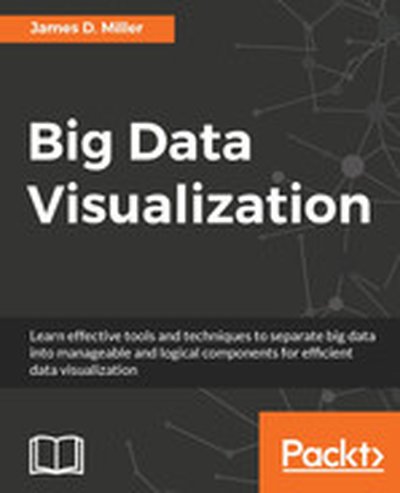
Big Data Visualization

Dive into 'Big Data Visualization' and uncover how to tackle the challenges of visualizing vast quantities of complex data. With a focus on scalable and dynamic techniques, this guide explores the nuances of effective data analysis. You'll master tools and approaches to display, interpret, and communicate data in impactful ways. What this Book will help me do Understand the fundamentals of big data visualization, including unique challenges and solutions. Explore practical techniques for using D3 and Python to visualize and detect anomalies in big data. Learn to leverage dashboards like Tableau to present data insights effectively. Address and improve data quality issues to enhance analysis accuracy. Gain hands-on experience with real-world use cases for tools such as Hadoop and Splunk. Author(s) James D. Miller is an IBM-certified expert specializing in data analytics and visualization. With years of experience handling massive datasets and extracting actionable insights, he is dedicated to sharing his expertise. His practical approach is evident in how he combines tool mastery with a clear understanding of data complexities. Who is it for? This book is designed for data analysts, data scientists, and others involved in interpreting and presenting big datasets. Whether you are a beginner looking to understand big data visualization or an experienced professional seeking advanced tools and techniques, this guide suits your needs perfectly. A foundational knowledge in programming languages like R and big data platforms such as Hadoop is recommended to maximize your learning.

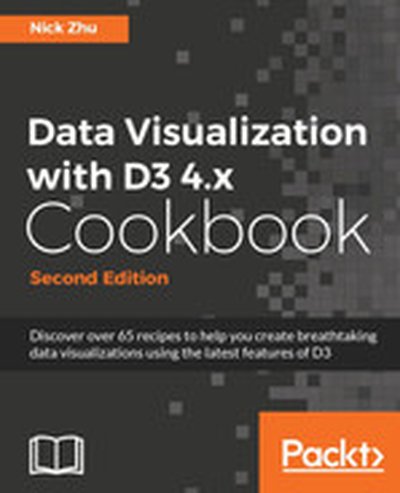
Data Visualization with D3 4.x Cookbook - Second Edition

This book, 'Data Visualization with D3 4.x Cookbook' by Nick Zhu, is your ultimate guide to mastering data visualization using D3.js. Through practical recipes, you'll learn to create dynamic, data-driven visualizations and tackle real-world visualization challenges. The book also introduces techniques to manage and present data powerfully. What this Book will help me do Master D3.js 4.x features to create efficient data visualizations. Utilize pre-built recipes to generate diverse charts and graphs. Acquire expertise in manipulating datasets for visualization. Develop interactive, dynamic web applications with D3. Overcome common visualization challenges with practical solutions. Author(s) Nick Zhu is a professional data engineer and an expert in creating data-driven applications. With years of experience using D3.js, Nick brings his wealth of knowledge to writing, making complex concepts accessible to learners. He creates resources to help others enhance their data visualization skills. Who is it for? This book is ideal for developers and data analysts familiar with web technologies like HTML, CSS, and JavaScript, aiming to expand their skills with D3.js. Whether you're new to D3 or experienced and looking for a comprehensive reference, this book will empower you to create professional-grade visualizations.

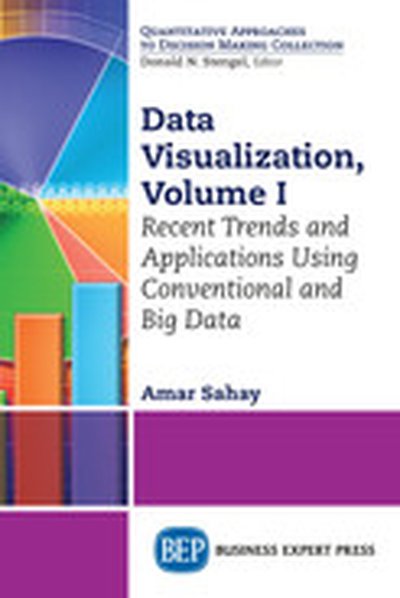
Data Visualization, Volume I

Data visualization involves graphical and visual tools used in data analysis and decision making. The emphasis in this book is on recent trends and applications of visualization tools using conventional and big data. These tools are widely used in data visualization and quality improvement to analyze, enhance, and improve the quality of products and services. Data visualization is an easy way to obtain a first look at the data visually. The book provides a collection of visual and graphical tools widely used to gain an insight into the data before applying more complex analysis. The focus is on the key application areas of these tools including business process improvement, business data analysis, health care, finance, manufacturing, engineering, process improvement, and Lean Six Sigma. The key areas of application include data and data analysis concepts, recent trends in data visualization and ÒBig Data,Ó widely used charts and graphs and their applications, analysis of the relationships between two or more variables graphically using scatterplots, bubble graphs, matrix plots, etc., data visualization with big data, computer applications and implementation of widely used graphical and visual tools, and computer instructions to create the graphics presented along with the data files.

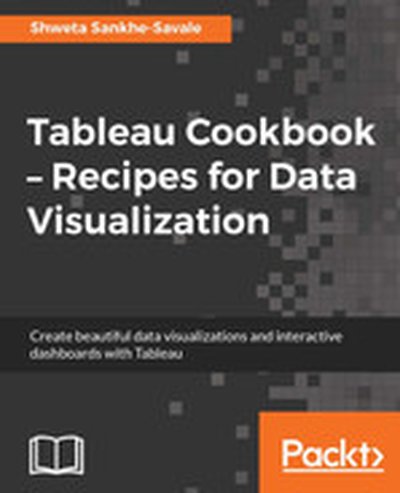
Tableau Cookbook - Recipes for Data Visualization

"Tableau Cookbook - Recipes for Data Visualization" walks you through the features and tools of Tableau, one of the industry-leading platforms for building data visualizations. Using over 50 hands-on recipes, you'll learn to create professional dashboards and storyboards to effectively present data trends and patterns. What this Book will help me do Understand the Tableau interface and connect it to various data sources. Build basic and advanced charts, from bar graphs to histograms and maps. Design interactive dashboards that link multiple visual components. Utilize parameters and calculations for advanced data visualizations. Integrate multiple data sources and leverage Tableau's data blending features. Author(s) Shweta Savale brings years of experience in data visualization and analytics to her writing of this cookbook. As a Tableau expert, Shweta has taught and consulted with professionals across industries, empowering them to gain insights from data. Her step-by-step instructional style makes learning both engaging and approachable. Who is it for? This book caters to both beginners looking to learn Tableau from scratch and advanced users needing a quick reference guide. It's perfect for data professionals, analysts, and anyone seeking to visualize and interpret data effectively. If you're looking to simplify Tableau's functions or sharpen your visualization skills, this book is for you.

Visualizing Graph Data

Visualizing Graph Data teaches you not only how to build graph data structures, but also how to create your own dynamic and interactive visualizations using a variety of tools. This book is loaded with fascinating examples and case studies to show you the real-world value of graph visualizations. About the Technology Assume you are doing a great job collecting data about your customers and products. Are you able to turn your rich data into important insight? Complex relationships in large data sets can be difficult to recognize. Visualizing these connections as graphs makes it possible to see the patterns, so you can find meaning in an otherwise over-whelming sea of facts. About the Book Visualizing Graph Data teaches you how to understand graph data, build graph data structures, and create meaningful visualizations. This engaging book gently introduces graph data visualization through fascinating examples and compelling case studies. You'll discover simple, but effective, techniques to model your data, handle big data, and depict temporal and spatial data. By the end, you'll have a conceptual foundation as well as the practical skills to explore your own data with confidence. What's Inside Techniques for creating effective visualizations Examples using the Gephi and KeyLines visualization packages Real-world case studies About the Reader No prior experience with graph data is required. About the Author Corey Lanum has decades of experience building visualization and analysis applications for companies and government agencies around the globe. Quotes Shows you how to solve visualization problems and explore complex data sets. A pragmatic introduction. - John D. Lewis, DDN Excellent! Hands-on! Shows you how to kick-start your graph data visualization. - Rocio Chongtay, University of Southern Denmark A clear and concise guide to both graph theory and visualization. - Jonathan Suever, PhD, Georgia Institute of Technology Great coverage, with real-life business use cases. - Sumit Pal, Big Data consultant