talk-data.com talk-data.com

Topic

data-science

2252

tagged

Activity Trend

1 peak/qtr
2020-Q1 2026-Q1

Activities

2252 activities · Newest first

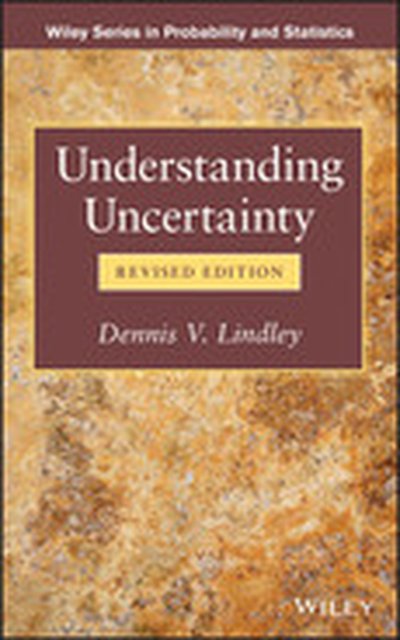
Understanding Uncertainty, Revised Edition

Praise for the First Edition "...a reference for everyone who is interested in knowing and handling uncertainty." —Journal of Applied Statistics The critically acclaimed First Edition of Understanding Uncertainty provided a study of uncertainty addressed to scholars in all fields, showing that uncertainty could be measured by probability, and that probability obeyed three basic rules that enabled uncertainty to be handled sensibly in everyday life. These ideas were extended to embrace the scientific method and to show how decisions, containing an uncertain element, could be rationally made. Featuring new material, the Revised Edition remains the go-to guide for uncertainty and decision making, providing further applications at an accessible level including: A critical study of transitivity, a basic concept in probability A discussion of how the failure of the financial sector to use the proper approach to uncertainty may have contributed to the recent recession A consideration of betting, showing that a bookmaker's odds are not expressions of probability Applications of the book's thesis to statistics A demonstration that some techniques currently popular in statistics, like significance tests, may be unsound, even seriously misleading, because they violate the rules of probability Understanding Uncertainty, Revised Edition is ideal for students studying probability or statistics and for anyone interested in one of the most fascinating and vibrant fields of study in contemporary science and mathematics.

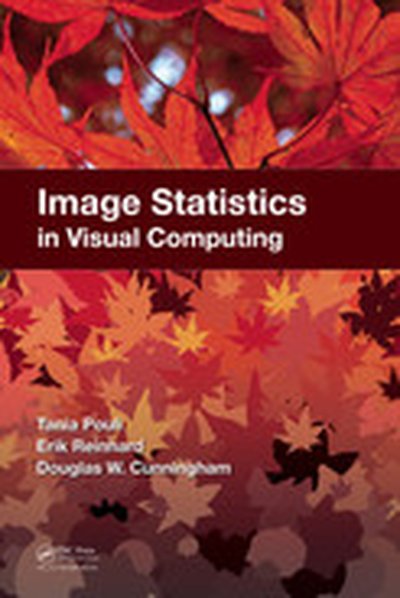
Image Statistics in Visual Computing

To achieve the complex task of interpreting what we see, our brains rely on statistical regularities and patterns in visual data. Knowledge of these regularities can also be considerably useful in visual computing disciplines, such as computer vision, computer graphics, and image processing. The field of natural image statistics studies the regularities to exploit their potential and better understand human vision. With numerous color figures throughout, Image Statistics in Visual Computing The authors keep the material accessible, providing mathematical definitions where appropriate to help readers understand the transforms that highlight statistical regularities present in images. The book also describes patterns that arise once the images are transformed and gives examples of applications that have successfully used statistical regularities. Numerous references enable readers to easily look up more information about a specific concept or application. A supporting website also offers additional information, including descriptions of various image databases suitable for statistics. Collecting state-of-the-art, interdisciplinary knowledge in one source, this book explores the relation of natural image statistics to human vision and shows how natural image statistics can be applied to visual computing. It encourages readers in both academic and industrial settings to develop novel insights and applications in all disciplines that relate to visual computing.

Nonparametric Statistics for Social and Behavioral Sciences

Incorporating a hands-on pedagogical approach, this text presents the concepts, principles, and methods used in performing many nonparametric procedures. It also demonstrates practical applications of the most common nonparametric procedures using IBM's SPSS software. The text is the only current nonparametric book written specifically for students in the behavioral and social sciences. With examples of real-life research problems, it emphasizes sound research designs, appropriate statistical analyses, and accurate interpretations of results.

Understanding Business Statistics

Written in a conversational tone, presents topics in a systematic and organized manner to help students navigate the material. Demonstration problems appear alongside the concepts, which makes the content easier to understand. By explaining the reasoning behind each exercise, students are more inclined to engage with the material and gain a clear understanding of how to apply statistics to the business world. Freed, Understanding Business Statistics is accompanied by Freed, Understanding Business Statistics WileyPLUS, a research-based, online environment for effective teaching and learning. This online learning system gives students instant feedback on homework assignments, provides video tutorials and variety of study tools, and offers instructors thousands of reliable, accurate problems (including every problem from the book) to deliver automatically graded assignments or tests. Available in or outside of the Blackboard Learn Environment, WileyPLUS resources help reach all types of learners and give instructors the tools they need to enhance course material. WileyPLUS sold separately from text.

Early Estimation of Project Determinants

The study initiated with underlying principles of construction production which is an impetus to ill-conditioned prediction of project determinants at the early phases of building projects. To enhance the precision of these estimations, unique solutions relying on the statistical evidences were offered. Two alternative methods of analysis, namely linear regression and artificial neural networks, were employed to recognize the patterns in the sampled projects. Comparison was conducted on the basis of prediction measurements that were computed with the help of unseen test sample. The evidences of the empirical investigation suggest offered solutions provide superior prediction accuracy when compared to current practices. Last but not least, implementation of the solutions was illustrated on a random office development.

Fast Sequential Monte Carlo Methods for Counting and Optimization

A comprehensive account of the theory and application of Monte Carlo methods Based on years of research in efficient Monte Carlo methods for estimation of rare-event probabilities, counting problems, and combinatorial optimization, Fast Sequential Monte Carlo Methods for Counting and Optimization is a complete illustration of fast sequential Monte Carlo techniques. The book provides an accessible overview of current work in the field of Monte Carlo methods, specifically sequential Monte Carlo techniques, for solving abstract counting and optimization problems. Written by authorities in the field, the book places emphasis on cross-entropy, minimum cross-entropy, splitting, and stochastic enumeration. Focusing on the concepts and application of Monte Carlo techniques, Fast Sequential Monte Carlo Methods for Counting and Optimization includes: Detailed algorithms needed to practice solving real-world problems Numerous examples with Monte Carlo method produced solutions within the 1-2% limit of relative error A new generic sequential importance sampling algorithm alongside extensive numerical results An appendix focused on review material to provide additional background information Fast Sequential Monte Carlo Methods for Counting and Optimization is an excellent resource for engineers, computer scientists, mathematicians, statisticians, and readers interested in efficient simulation techniques. The book is also useful for upper-undergraduate and graduate-level courses on Monte Carlo methods.

Pentaho Data Integration Cookbook - Second Edition - Second Edition

This cookbook is a comprehensive guide to using Pentaho Data Integration (Kettle) for executing ETL processes effectively. With step-by-step recipes, it covers everything from connecting to diverse data sources to implementing advanced data handling workflows. This book is a valuable resource to streamline and enhance your data integration tasks. What this Book will help me do Learn to configure Kettle to connect with various databases and applications. Understand how to embed Java code for optimized transformations. Discover techniques to reuse and manage transformations and jobs. Master the integration of Kettle with other Pentaho Suite components. Explore advanced data flow control and manipulation tactics. Author(s) The authors of this book are experienced professionals in data integration and Pentaho tools. They bring years of practical industry experience and have a passion for sharing knowledge through clear, hands-on tutorials. Their approach to writing ensures readers can take actionable insights directly to their work. Who is it for? This book is ideal for developers familiar with the fundamental concepts of Kettle who aim to delve deeper into advanced functionalities. Readers should have basic ETL knowledge and the ambition to master Pentaho Data Integration. Experienced users will find valuable tips and learn about new features to automate and enhance their processes.

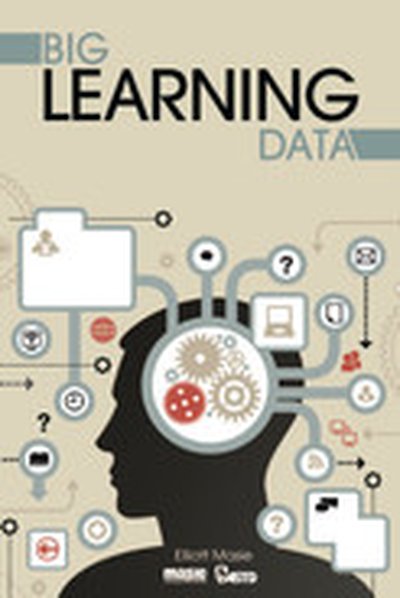
Big Learning Data

In today’s wired world, we interact with millions of pieces of information every day. Capturing that information and making sense of it is the revolutionary impact of big data on business—and on learning. Thought leader Elliott Masie and Learning CONSORTIUM Members bring a powerful new book to the T&D profession. They provide a SWOT analysis of big data and implications for learning and development professionals. Big learning data is at your fingertips. You need to know why it matters. Find out where to start with big learning data. Think differently about the data you have. Understand the risks that come with big data. Solve problems using the new perspectives and measurement support that big learning data provides.

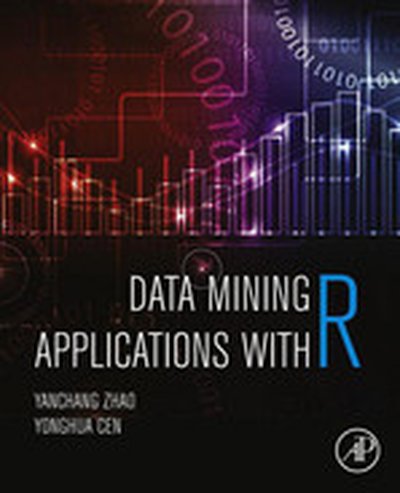
Data Mining Applications with R

Data Mining Applications with R is a great resource for researchers and professionals to understand the wide use of R, a free software environment for statistical computing and graphics, in solving different problems in industry. R is widely used in leveraging data mining techniques across many different industries, including government, finance, insurance, medicine, scientific research and more. This book presents 15 different real-world case studies illustrating various techniques in rapidly growing areas. It is an ideal companion for data mining researchers in academia and industry looking for ways to turn this versatile software into a powerful analytic tool. R code, Data and color figures for the book are provided at the RDataMining.com website. Helps data miners to learn to use R in their specific area of work and see how R can apply in different industries Presents various case studies in real-world applications, which will help readers to apply the techniques in their work Provides code examples and sample data for readers to easily learn the techniques by running the code by themselves

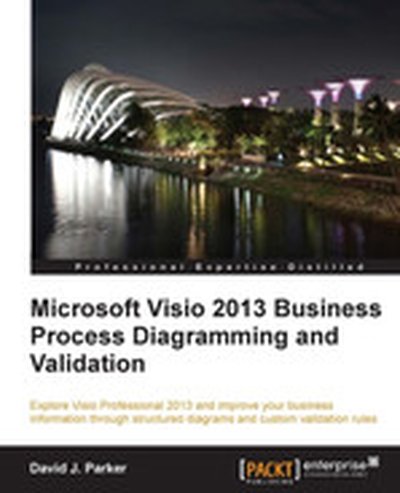
Microsoft Visio 2013 Business Process Diagramming and Validation - Second Edition

This book, "Microsoft Visio 2013 Business Process Diagramming and Validation," is your comprehensive guide to leveraging the features of Microsoft Visio 2013 Professional for creating and validating structured diagrams. Through practical tutorials and code examples, it helps you master process diagramming and validation techniques for a range of business needs. What this Book will help me do Understand and utilize structured diagram functionality including basic and cross-functional flowcharts. Develop and apply custom validation rules to ensure diagram correctness and compliance using Visio 2013. Create and use advanced tools such as the Rules Tools add-on to enhance diagram validation. Learn to integrate Visio with platforms like SharePoint 2013 and Office365. Gain technical skills to build, publish, and share Visio templates and rule sets. Author(s) The authors of this book bring rich technical expertise in Microsoft Visio and business process management. They have extensive experience developing user-focused tutorials and tools, ensuring you gain both theoretical knowledge and practical skills. Their accessible writing makes complex topics approachable for a variety of learners. Who is it for? This book is for Microsoft Visio 2013 Professional Edition users who want to advance their skills in diagramming and validation. It's ideal for professionals who seek to improve diagram compliance and efficiency, including developers, analysts, and project managers. If you're already familiar with Visio basics, this book will take your skills to the next level by introducing advanced techniques for automation and standardization.

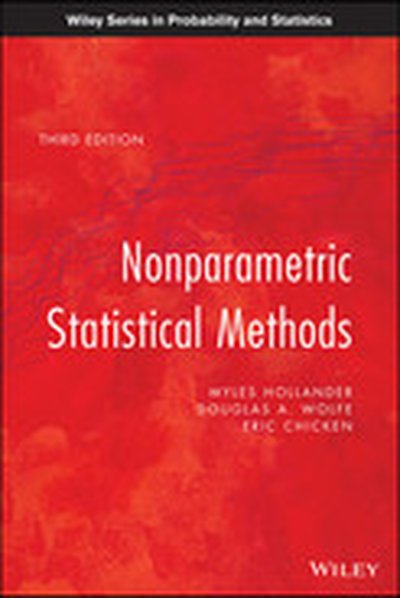
Nonparametric Statistical Methods, 3rd Edition

Praise for the Second Edition "This book should be an essential part of the personal library of every practicing statistician."—Technometrics Thoroughly revised and updated, the new edition of Nonparametric Statistical Methods includes additional modern topics and procedures, more practical data sets, and new problems from real-life situations. The book continues to emphasize the importance of nonparametric methods as a significant branch of modern statistics and equips readers with the conceptual and technical skills necessary to select and apply the appropriate procedures for any given situation. Written by leading statisticians, Nonparametric Statistical Methods, Third Edition provides readers with crucial nonparametric techniques in a variety of settings, emphasizing the assumptions underlying the methods. The book provides an extensive array of examples that clearly illustrate how to use nonparametric approaches for handling one- or two-sample location and dispersion problems, dichotomous data, and one-way and two-way layout problems. In addition, the Third Edition features: The use of the freely available R software to aid in computation and simulation, including many new R programs written explicitly for this new edition New chapters that address density estimation, wavelets, smoothing, ranked set sampling, and Bayesian nonparametrics Problems that illustrate examples from agricultural science, astronomy, biology, criminology, education, engineering, environmental science, geology, home economics, medicine, oceanography, physics, psychology, sociology, and space science Nonparametric Statistical Methods, Third Edition is an excellent reference for applied statisticians and practitioners who seek a review of nonparametric methods and their relevant applications. The book is also an ideal textbook for upper-undergraduate and first-year graduate courses in applied nonparametric statistics.

Introduction to R for Quantitative Finance

Explore how to use the statistical computing language R to solve complex quantitative finance problems with "Introduction to R for Quantitative Finance." This book offers a blend of theory and practice, empowering readers with both the foundational understanding and practical skills to tackle real-world challenges using R, making it an ideal resource for beginners and seasoned professionals alike. What this Book will help me do Utilize time series analysis in R to model and forecast financial and economic data. Apply key portfolio selection theories to analyze and optimize investment portfolios. Understand and implement a variety of pricing models, including the Capital Asset Pricing Model in R. Analyze and interpret fixed income instruments and derivatives, focusing on practical applications in finance. Leverage R for risk analysis through techniques such as Extreme Value Theory and copula-based modeling. Author(s) The authors of "Introduction to R for Quantitative Finance" are seasoned experts in the fields of quantitative finance and computational statistics. They bring a wealth of industry and academic experience to the table, having applied R to solve intricate financial problems in practical settings. Their approachable writing style ensures complex subjects remain accessible and engaging. Who is it for? This book is ideal for quantitative analysts, data scientists, or finance professionals eager to leverage R for financial analysis. It caters to individuals with a foundation in finance but new to the R programming language. Readers who aim to model, predict, and interpret financial phenomena using advanced statistical tools will particularly benefit from this guide.

Analytics in Healthcare and the Life Sciences: Strategies, Implementation Methods, and Best Practices

Make healthcare analytics work: leverage its powerful opportunities for improving outcomes, cost, and efficiency.This book gives you thepractical frameworks, strategies, tactics, and case studies you need to go beyond talk to action. The contributing healthcare analytics innovators survey the field’s current state, present start-to-finish guidance for planning and implementation, and help decision-makers prepare for tomorrow’s advances. They present in-depth case studies revealing how leading organizations have organized and executed analytic strategies that work, and fully cover the primary applications of analytics in all three sectors of the healthcare ecosystem: Provider, Payer, and Life Sciences. Co-published with the International Institute for Analytics (IIA), this book features the combined expertise of IIA’s team of leading health analytics practitioners and researchers. Each chapter is written by a member of the IIA faculty, and bridges the latest research findings with proven best practices. This book will be valuable to professionals and decision-makers throughout the healthcare ecosystem, including provider organization clinicians and managers; life sciences researchers and practitioners; and informaticists, actuaries, and managers at payer organizations. It will also be valuable in diverse analytics, operations, and IT courses in business, engineering, and healthcare certificate programs.

Accelerating MATLAB with GPU Computing

Beyond simulation and algorithm development, many developers increasingly use MATLAB even for product deployment in computationally heavy fields. This often demands that MATLAB codes run faster by leveraging the distributed parallelism of Graphics Processing Units (GPUs). While MATLAB successfully provides high-level functions as a simulation tool for rapid prototyping, the underlying details and knowledge needed for utilizing GPUs make MATLAB users hesitate to step into it. Accelerating MATLAB with GPUs offers a primer on bridging this gap. Starting with the basics, setting up MATLAB for CUDA (in Windows, Linux and Mac OS X) and profiling, it then guides users through advanced topics such as CUDA libraries. The authors share their experience developing algorithms using MATLAB, C++ and GPUs for huge datasets, modifying MATLAB codes to better utilize the computational power of GPUs, and integrating them into commercial software products. Throughout the book, they demonstrate many example codes that can be used as templates of C-MEX and CUDA codes for readers’ projects. Download example codes from the publisher's website: http://booksite.elsevier.com/9780124080805/ Shows how to accelerate MATLAB codes through the GPU for parallel processing, with minimal hardware knowledge Explains the related background on hardware, architecture and programming for ease of use Provides simple worked examples of MATLAB and CUDA C codes as well as templates that can be reused in real-world projects

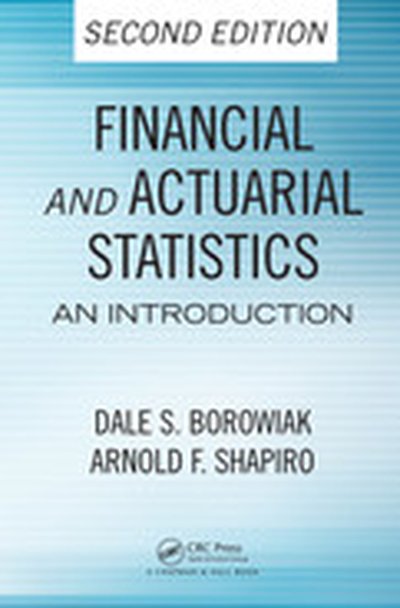
Financial and Actuarial Statistics, 2nd Edition

This work enables readers to obtain the mathematical and statistical background required in the current financial and actuarial industries. It also advances the application and theory of statistics in modern financial and actuarial modeling. This second edition adds a substantial amount of new material, including Excel exercises with solutions; nomenclature and notations standard to the actuarial field; a new chapter on Markov chains and actuarial applications; expanded discussions on simulation, surplus models, and ruin computations; and much more.

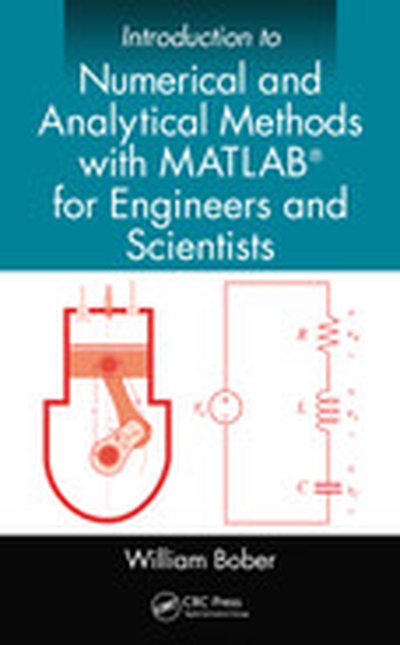
Introduction to Numerical and Analytical Methods with MATLAB® for Engineers and Scientists

Introduction to Numerical and Analytical Methods with MATLAB® for Engineers and Scientists provides the basic concepts of programming in MATLAB for engineering applications. • Teaches engineering students how to write computer programs on the MATLAB platform • Examines the selection and use of numerical and analytical methods through examples and case studies • Demonstrates mathematical concepts that can be used to help solve engineering problems, including matrices, roots of equations, integration, ordinary differential equations, curve fitting, algebraic linear equations, and more The text covers useful numerical methods, including interpolation, Simpson’s rule on integration, the Gauss elimination method for solving systems of linear algebraic equations, the Runge-Kutta method for solving ordinary differential equations, and the search method in combination with the bisection method for obtaining the roots of transcendental and polynomial equations. It also highlights MATLAB’s built-in functions. These include interp1 function, the quad and dblquad functions, the inv function, the ode45 function, the fzero function, and many others. The second half of the text covers more advanced topics, including the iteration method for solving pipe flow problems, the Hardy-Cross method for solving flow rates in a pipe network, separation of variables for solving partial differential equations, and the use of Laplace transforms to solve both ordinary and partial differential equations. This book serves as a textbook for a first course in numerical methods using MATLAB to solve problems in mechanical, civil, aeronautical, and electrical engineering. It can also be used as a textbook or as a reference book in higher level courses.