talk-data.com talk-data.com

Topic

data-science

2252

tagged

Activity Trend

1 peak/qtr
2020-Q1 2026-Q1

Activities

2252 activities · Newest first

Applied Statistics and Probability for Engineers, 6th Edition

This best-selling engineering statistics text provides a practical approach that is more oriented to engineering and the chemical and physical sciences than many similar texts. It is packed with unique problem sets that reflect realistic situations engineers will encounter in their working lives. This text shows how statistics, the science of data is just as important for engineers as the mechanical, electrical, and materials sciences.

Tableau Your Data!: Fast and Easy Visual Analysis with Tableau Software

Best practices and step-by-step instructions for using the Tableau Software toolset Although the Tableau Desktop interface is relatively intuitive, this book goes beyond the simple mechanics of the interface to show best practices for creating effective visualizations for specific business intelligence objectives. It illustrates little-known features and techniques for getting the most from the Tableau toolset, supporting the needs of the business analysts who use the product as well as the data and IT managers who support it. This comprehensive guide covers the core feature set for data analytics, illustrating best practices for creating and sharing specific types of dynamic data visualizations. Featuring a helpful full-color layout, the book covers analyzing data with Tableau Desktop, sharing information with Tableau Server, understanding Tableau functions and calculations, and Use Cases for Tableau Software. Includes little-known, as well as more advanced features and techniques, using detailed, real-world case studies that the author has developed as part of his consulting and training practice Explains why and how Tableau differs from traditional business information analysis tools Shows you how to deploy dashboards and visualizations throughout the enterprise Provides a detailed reference resource that is aimed at users of all skill levels Depicts ways to leverage Tableau across the value chain in the enterprise through case studies that target common business requirements Endorsed by Tableau Software Tableau Your Data shows you how to build dynamic, best-of-breed visualizations using the Tableau Software toolset.

Successful Business Intelligence, Second Edition, 2nd Edition

Revised to cover new advances in business intelligence—big data, cloud, mobile, and more—this fully updated bestseller reveals the latest techniques to exploit BI for the highest ROI. “Cindi has created, with her typical attention to details that matter, a contemporary forward-looking guide that organizations could use to evaluate existing or create a foundation for evolving business intelligence / analytics programs. The book touches on strategy, value, people, process, and technology, all of which must be considered for program success. Among other topics, the data, data warehousing, and ROI comments were spot on. The ‘technobabble’ chapter was brilliant!” — Bill Frank, Business Intelligence and Data Warehousing Program Manager, Johnson & Johnson “If you want to be an analytical competitor, you’ve got to go well beyond business intelligence technology. Cindi Howson has wrapped up the needed advice on technology, organization, strategy, and even culture in a neat package. It’s required reading for quantitatively oriented strategists and the technologists who support them.” — Thomas H. Davenport, President’s Distinguished Professor, Babson College and co-author, Competing on Analytics “Cindi has created an exceptional, authoritative description of the end-to-end business intelligence ecosystem. This is a great read for those who are just trying to better understand the business intelligence space, as well as for the seasoned BI practitioner.” — Sully McConnell, Vice President, Business Intelligence and Information Management, Time Warner Cable “Cindi’s book succinctly yet completely lays out what it takes to deliver BI successfully. IT and business leaders will benefit from Cindi’s deep BI experience, which she shares through helpful, real-world definitions, frameworks, examples, and stories. This is a must-read for companies engaged in – or considering – BI.” — Barbara Wixom, PhD, Principal Research Scientist, MIT Sloan Center for Information Systems Research Expanded to cover the latest advances in business intelligence such as big data, cloud, mobile, visual data discovery, and in-memory computing, this fully updated bestseller by BI guru Cindi Howson provides cutting-edge techniques to exploit BI for maximum value. Successful Business Intelligence: Unlock the Value of BI & Big Data, Second Edition describes best practices for an effective BI strategy. Find out how to: Garner executive support to foster an analytic culture Align the BI strategy with business goals Develop an analytic ecosystem to exploit data warehousing, analytic appliances, and Hadoop for the right BI workload Continuously improve the quality, breadth, and timeliness of data Find the relevance of BI for everyone in the company Use agile development processes to deliver BI capabilities and improvements at the pace of business change Select the right BI tools to meet user and business needs Measure success in multiple ways Embrace innovation, promote successes and applications, and invest in training Monitor your evolution and maturity across various factors for impact Exclusive industry survey data and real-world case studies from Medtronic, Macy’s, 1-800 CONTACTS, The Dow Chemical Company, Netflix, Constant Contact, and other companies show successful BI initiatives in action. From Moneyball to Nate Silver, BI and big data have permeated our cultural, political, and economic landscape. This timely, up-to-date guide reveals how to plan and deploy an agile, state-of-the-art BI solution that links insight to action and delivers a sustained competitive advantage.

Algorithmic and Artificial Intelligence Methods for Protein Bioinformatics

An in-depth look at the latest research, methods, and applications in the field of protein bioinformatics This book presents the latest developments in protein bioinformatics, introducing for the first time cutting-edge research results alongside novel algorithmic and AI methods for the analysis of protein data. In one complete, self-contained volume, Algorithmic and Artificial Intelligence Methods for Protein Bioinformatics addresses key challenges facing both computer scientists and biologists, arming readers with tools and techniques for analyzing and interpreting protein data and solving a variety of biological problems. Featuring a collection of authoritative articles by leaders in the field, this work focuses on the analysis of protein sequences, structures, and interaction networks using both traditional algorithms and AI methods. It also examines, in great detail, data preparation, simulation, experiments, evaluation methods, and applications. Algorithmic and Artificial Intelligence Methods for Protein Bioinformatics: Highlights protein analysis applications such as protein-related drug activity comparison Incorporates salient case studies illustrating how to apply the methods outlined in the book Tackles the complex relationship between proteins from a systems biology point of view Relates the topic to other emerging technologies such as data mining and visualization Includes many tables and illustrations demonstrating concepts and performance figures Algorithmic and Artificial Intelligence Methods for Protein Bioinformatics is an essential reference for bioinformatics specialists in research and industry, and for anyone wishing to better understand the rich field of protein bioinformatics.

Data Smart: Using Data Science to Transform Information into Insight

Data Science gets thrown around in the press like it's magic. Major retailers are predicting everything from when their customers are pregnant to when they want a new pair of Chuck Taylors. It's a brave new world where seemingly meaningless data can be transformed into valuable insight to drive smart business decisions. But how does one exactly do data science? Do you have to hire one of these priests of the dark arts, the "data scientist," to extract this gold from your data? Nope. Data science is little more than using straight-forward steps to process raw data into actionable insight. And in Data Smart, author and data scientist John Foreman will show you how that's done within the familiar environment of a spreadsheet. Why a spreadsheet? It's comfortable! You get to look at the data every step of the way, building confidence as you learn the tricks of the trade. Plus, spreadsheets are a vendor-neutral place to learn data science without the hype. But don't let the Excel sheets fool you. This is a book for those serious about learning the analytic techniques, the math and the magic, behind big data. Each chapter will cover a different technique in a spreadsheet so you can follow along: Mathematical optimization, including non-linear programming and genetic algorithms Clustering via k-means, spherical k-means, and graph modularity Data mining in graphs, such as outlier detection Supervised AI through logistic regression, ensemble models, and bag-of-words models Forecasting, seasonal adjustments, and prediction intervals through monte carlo simulation Moving from spreadsheets into the R programming language You get your hands dirty as you work alongside John through each technique. But never fear, the topics are readily applicable and the author laces humor throughout. You'll even learn what a dead squirrel has to do with optimization modeling, which you no doubt are dying to know.

Handbook of Probability

THE COMPLETE COLLECTION NECESSARY FOR A CONCRETE UNDERSTANDING OF PROBABILITY Written in a clear, accessible, and comprehensive manner, the Handbook of Probability presents the fundamentals of probability with an emphasis on the balance of theory, application, and methodology. Utilizing basic examples throughout, the handbook expertly transitions between concepts and practice to allow readers an inclusive introduction to the field of probability. The book provides a useful format with self-contained chapters, allowing the reader easy and quick reference. Each chapter includes an introduction, historical background, theory and applications, algorithms, and exercises. The Handbook of Probability offers coverage of: Probability Space Probability Measure Random Variables Random Vectors in Rn Characteristic Function Moment Generating Function Gaussian Random Vectors Convergence Types Limit Theorems The Handbook of Probability is an ideal resource for researchers and practitioners in numerous fields, such as mathematics, statistics, operations research, engineering, medicine, and finance, as well as a useful text for graduate students.

PROC DOCUMENT by Example Using SAS
PROC DOCUMENT by Example Using SAS demonstrates the practical uses of the DOCUMENT procedure, a part of the Output Delivery System, in SAS 9.3. Michael Tuchman explains how to work with PROC DOCUMENT, which is designed to store your SAS procedure output for replay at a later time without having to rerun your original SAS code. You’ll learn how to:

save a collection of procedure output, descriptive text, and supporting graphs that can be replayed as a single unit save output once and distribute that same output in a variety of ODS formats such as HTML, CSV, and PDF create custom reports by comparing output from the same procedure run at different points in time create a table of contents for your output modify the appearance of both textual and graphical ODS output even if the original data is no longer available or easily accessible manage your tabular and graphical output by using descriptive labels, titles, and footnotes rearrange the original order of output in a procedure to suit your needs

After using this book, you’ll be able to quickly and easily create libraries of professional-looking output that are accessible at any time.

This book is part of the SAS Press program.

PROC SQL: Beyond the Basics Using SAS, Second Edition

Kirk Lafler's PROC SQL: Beyond the Basics Using SAS, Second Edition, offers a step-by-step example-driven guide that helps readers master the language of PROC SQL. Packed with analysis and examples illustrating an assortment of PROC SQL options, statements, and clauses, this book can be approached in a number of ways. Users can read it cover-to-cover or selectively by chapter; they can use the extensive index to find content of interest or refer to the helpful "Summary" that precede each chapter to look for help on a specific topic.

The second edition explores new and powerful features in SAS 9.3, and includes such topics as adding data to a table with a SET clause; bulk loading data from Microsoft Excel; distinguishing between DATA step merges and PROC SQL joins; rules for designing indexes; cardinality and index selectivity; and demystifying join algorithms. It also features an expanded discussion of CASE expressions, and new sections on complex query applications, and grouping and performance. Delving into the workings of PROC SQL with greater analysis and discussion, PROC SQL: Beyond the Basic Using SAS, Second Edition, examines a broad range of topics and provides greater detail about this powerful database language using discussion and numerous real-world examples.

This book is part of the SAS Press program.

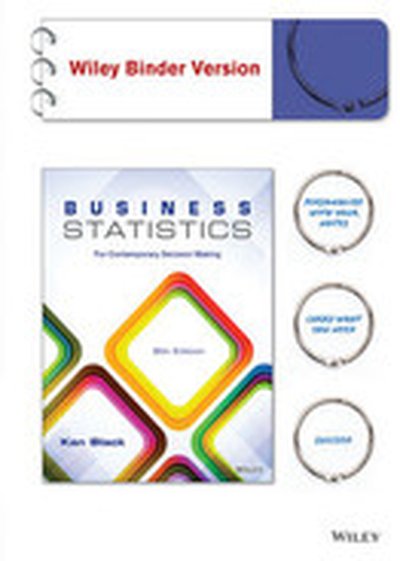
Business Statistics: For Contemporary Decision Making, 8th Edition

This text is an unbound, binder-ready edition. Business Statistics: For Contemporary Decision Making, 8th Edition continues the tradition of presenting and explaining the wonders of business statistics through the use of clear, complete, student-friendly pedagogy. Ken Black's text equips readers with the quantitative decision-making skills and analysis techniques you need to make smart decisions based on real-world data.

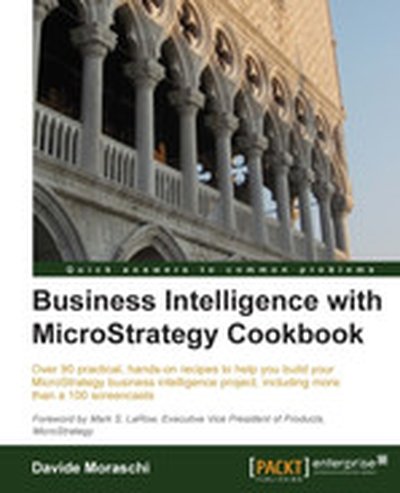
Business Intelligence with MicroStrategy Cookbook

This comprehensive guide introduces you to the functionalities of MicroStrategy for business intelligence, empowering you to build dashboards, reports, and visualizations using hands-on, practical recipes with clear examples. You'll learn how to use MicroStrategy for the entire BI lifecycle, making data actionable and insights accessible. What this Book will help me do Install and configure the MicroStrategy platform, including setting up a fully operational BI environment. Create interactive dashboards and web reports to visualize and analyze data effectively. Learn to use MicroStrategy on mobile devices, enabling access to data-driven insights anywhere. Discover advanced analytics techniques using Visual Insight and MicroStrategy Cloud Express. Master practical skills with real-life examples to implement robust BI solutions. Author(s) Davide Moraschi, an experienced professional in business intelligence and data analytics, brings his expertise to guiding readers through the MicroStrategy platform. He has years of experience implementing and developing BI solutions in diverse industries, offering practical perspectives. Davide's approachable teaching style and clear examples make technical concepts accessible and engaging. Who is it for? This book is tailored for BI developers and data analysts who want to deepen their expertise in MicroStrategy. It's also suitable for IT professionals and business users aiming to leverage MicroStrategy for data insights. Some existing knowledge of BI concepts, such as dimensional modeling, will enrich your learning experience. You need no prior experience with MicroStrategy to benefit from this book.

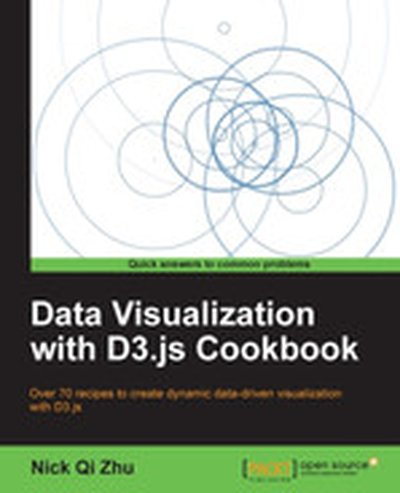
Data Visualization with D3.js Cookbook

Dive into the world of data visualization with 'Data Visualization with D3.js Cookbook'. This book provides a hands-on approach to mastering data visualization using D3.js, a powerful JavaScript library that brings data to life using HTML, SVG, and CSS. Through step-by-step recipes, you'll learn everything you need to create stunning, interactive, and effective visualizations. What this Book will help me do Develop expertise in functional JavaScript to create elegant D3 visualizations. Learn to work with HTML and SVG elements efficiently to design effective visuals. Master the use of D3 scales and interpolators to represent data accurately. Enhance your understanding of D3 layouts and force-directed visuals for complex data. Create interactive and responsive visualizations for web applications. Author(s) Nick Zhu is an experienced software engineer and data visualization enthusiast with extensive expertise in JavaScript and web development. Authoring 'Data Visualization with D3.js Cookbook', Nick adeptly shares his knowledge, making complex topics approachable. His passion for clear communication shines in his instructive writing style. Who is it for? This book is designed for developers who have some knowledge of HTML, CSS, and JavaScript and aim to excel in data visualization using D3.js. If you strive for deeper mastery of D3 and wish to enhance your ability to create compelling graphics, this book is ideal for you. It serves both as a learning resource for newcomers and a quick reference for experienced practitioners. Your goal to transform data into impactful visuals aligns perfectly with the insights offered.

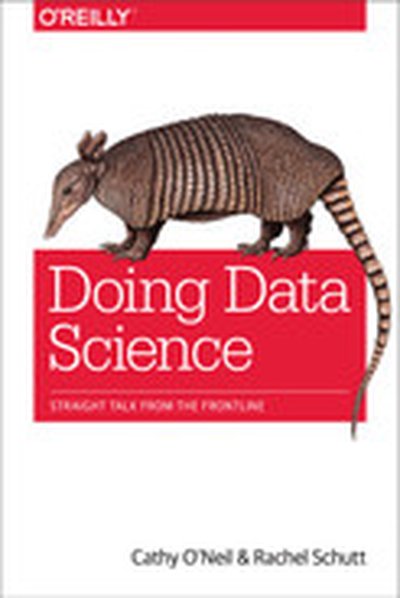
Doing Data Science

Now that people are aware that data can make the difference in an election or a business model, data science as an occupation is gaining ground. But how can you get started working in a wide-ranging, interdisciplinary field that’s so clouded in hype? This insightful book, based on Columbia University’s Introduction to Data Science class, tells you what you need to know. In many of these chapter-long lectures, data scientists from companies such as Google, Microsoft, and eBay share new algorithms, methods, and models by presenting case studies and the code they use. If you’re familiar with linear algebra, probability, and statistics, and have programming experience, this book is an ideal introduction to data science. Topics include: Statistical inference, exploratory data analysis, and the data science process Algorithms Spam filters, Naive Bayes, and data wrangling Logistic regression Financial modeling Recommendation engines and causality Data visualization Social networks and data journalism Data engineering, MapReduce, Pregel, and Hadoop Doing Data Science is collaboration between course instructor Rachel Schutt, Senior VP of Data Science at News Corp, and data science consultant Cathy O’Neil, a senior data scientist at Johnson Research Labs, who attended and blogged about the course.

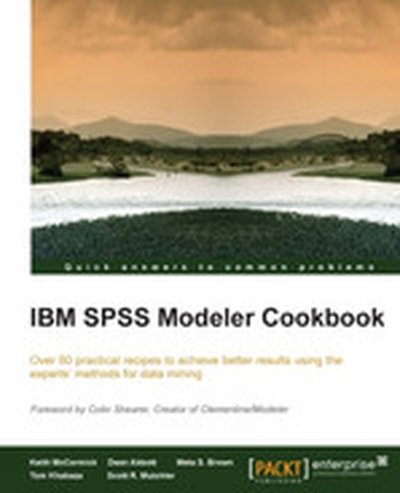
IBM SPSS Modeler Cookbook

"IBM SPSS Modeler Cookbook" is your practical guide to mastering data mining with IBM SPSS Modeler. This comprehensive book takes you beyond the basics, offering expert insights, time-saving techniques, and powerful workflows to grow your skills and elevate your analytical abilities. You will learn to apply the CRISP-DM methodology, efficiently prepare and explore data, build advanced models, and confidently incorporate analytical results into your business decisions. What this Book will help me do Effectively apply the CRISP-DM standard process to organize your data mining projects. Leverage efficient techniques for data extraction, transformation, and preparation. Develop and evaluate predictive models for practical applications in your organization. Enhance your models by utilizing advanced features and expert tips. Automate and streamline your data mining process with scripting for ultimate control. Author(s) Keith McCormick and None Abbott are seasoned data mining professionals with deep expertise in IBM SPSS Modeler and predictive analytics. Together, they have extensive experience in consulting, training, and applying advanced analytical techniques across industries. Through their approachable and insightful writing style, they share practical knowledge and expert workflows to empower readers. Who is it for? This book is designed for individuals who have basic experience with IBM SPSS Modeler and aspire to deepen their expertise. Whether you are a data analyst looking to advance your analytical capabilities or a professional aiming to integrate data-driven solutions into your organization, this book provides the knowledge and practical guidance you need to take the next step in your data mining journey.

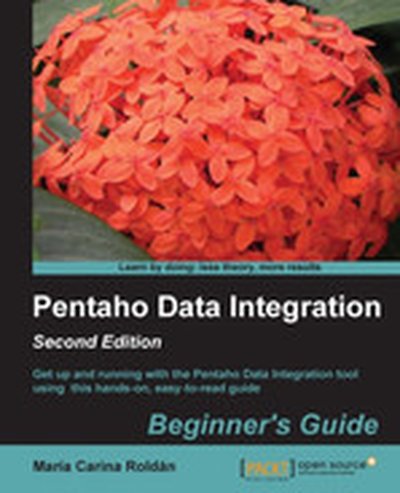
Pentaho Data Integration Beginner's Guide - Second Edition

This book is a comprehensive guide designed for those new to Pentaho Data Integration. With a focus on practical application and step-by-step learning, this book covers everything from installation to complex data manipulation. By following along, you will acquire the skills you need to efficiently manage and transform data using Pentaho. What this Book will help me do Understand how to install and set up Pentaho Data Integration for professional data manipulation. Master data transformation tasks such as cleaning, sorting, and integrating different data sources. Learn to configure and operate databases within the Pentaho environment, including CRUD operations. Gain hands-on experience with data warehousing concepts and using Pentaho to populate data warehouses. Develop workflows and schedules for automated data processes using Pentaho's advanced tools. Author(s) Carina Roldán is an experienced data professional with extensive expertise in the field of ETL and data integration. Her teaching style is clear, approachable, and heavily reliant on practical examples. She focuses on enabling learners to build real-world skills in a supportive and engaging manner, making complex topics accessible to everyone. Who is it for? This book is perfect for developers, database administrators, and IT professionals looking to venture into ETL tools or seeking a deeper understanding of Pentaho Data Integration. Beginners without prior exposure to Pentaho Data Integration will find it an excellent entry point, while those with some experience will benefit from its in-depth insights. It is also valuable for data warehouse designers and architects aiming to streamline their workflows.

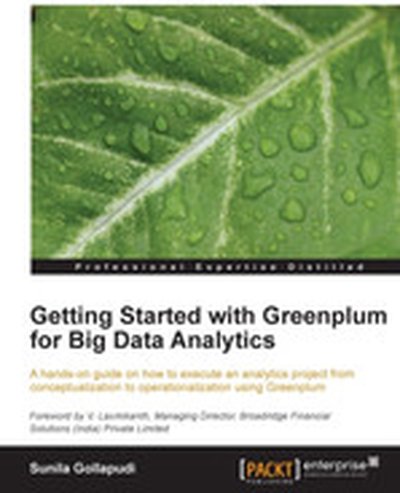
Getting Started with Greenplum for Big Data Analytics

This book serves as a thorough introduction to using the Greenplum platform for big data analytics. It explores key concepts for processing, analyzing, and deriving insights from big data using Greenplum, covering aspects from data integration to advanced analytics techniques like programming with R and MADlib. What this Book will help me do Understand the architecture and core components of the Greenplum platform. Learn how to design and execute data science projects using Greenplum. Master loading, processing, and querying big data in Greenplum efficiently. Explore programming with R and integrating it with Greenplum for analytics. Gain skills in high-availability configurations, backups, and recovery within Greenplum. Author(s) Sunila Gollapudi is a seasoned expert in the field of big data analytics and has multiple years of experience working with platforms like Greenplum. Her real-world problem-solving expertise shapes her practical and approachable writing style, making this book not only educational but enjoyable to read. Who is it for? This book is ideal for data scientists or analysts aiming to explore the capabilities of big data platforms like Greenplum. It suits readers with basic knowledge of data warehousing, programming, and analytics tools who want to deepen their expertise and effectively harness Greenplum for analytics.

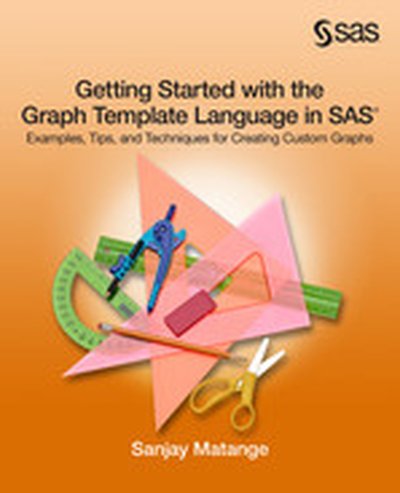
Getting Started with the Graph Template Language in SAS

You've just received a new survey of study results, and you need to quickly create custom graphical views of the data. Or, you've completed your analysis, and you need graphs to present the results to your audience, in the style that they prefer. Now, you can create custom graphs quickly and easily with Getting Started with the Graph Template Language in SAS, without having to understand all of the Graph Template Language (GTL) features first.

This book will get you started building graphs immediately and will guide you toward a better understanding of the GTL, one step at a time. It shows you the most common approaches to a variety of graphs along with information that you can use to build more complex graphs from there. Sanjay Matange offers expert tips, examples, and techniques, with a goal of providing you with a solid foundation in using the GTL so that you can progress to more sophisticated, adaptable graphs as you need them.

Ultimately, Getting Started with the Graph Template Language in SAS allows you to bypass the learning curve. It teaches you how to quickly create custom, aesthetically pleasing graphs that present your data with maximum clarity and minimum clutter.

This book is part of the SAS Press program.

Agile Data Science

Mining big data requires a deep investment in people and time. How can you be sure you’re building the right models? With this hands-on book, you’ll learn a flexible toolset and methodology for building effective analytics applications with Hadoop. Using lightweight tools such as Python, Apache Pig, and the D3.js library, your team will create an agile environment for exploring data, starting with an example application to mine your own email inboxes. You’ll learn an iterative approach that enables you to quickly change the kind of analysis you’re doing, depending on what the data is telling you. All example code in this book is available as working Heroku apps. Create analytics applications by using the agile big data development methodology Build value from your data in a series of agile sprints, using the data-value stack Gain insight by using several data structures to extract multiple features from a single dataset Visualize data with charts, and expose different aspects through interactive reports Use historical data to predict the future, and translate predictions into action Get feedback from users after each sprint to keep your project on track

KNIME Essentials

KNIME Essentials is a comprehensive guide to mastering KNIME, an open-source data analytics platform. Through this book, you'll discover how to process, visualize, and report on data effectively. Whether you're new to KNIME or data analytics in general, this resource is designed to equip you with the skills needed to handle data challenges confidently. What this Book will help me do Understand how to install and set up KNIME for data analysis tasks. Learn to create workflows to efficiently process data. Explore methods for importing and pre-processing data from various sources. Master techniques for visualizing and analyzing processed data. Generate professional-grade reports based on your data visualizations. Author(s) Gábor Bakos, the author of KNIME Essentials, leverages his expertise in data analytics and software tools to provide readers with a practical guide to mastering KNIME. With years of experience in working with analytics platforms, he crafts content that is accessible and focused on delivering real-world results. His user-focused approach helps readers quickly grasp complex concepts. Who is it for? This book is ideal for data analysts and professionals seeking to enhance their data processing skills with KNIME. No prior knowledge of KNIME is expected, but a foundational understanding of data analytics concepts would be beneficial. If you're looking to produce insightful analytics and reports efficiently, this guide is tailored for you.

Introduction to Statistical Process Control

A major tool for quality control and management, statistical process control (SPC) monitors sequential processes, such as production lines and Internet traffic, to ensure that they work stably and satisfactorily. Along with covering traditional methods, Introduction to Statistical Process Control describes many recent SPC methods that improve upon the more established techniques. The author—a leading researcher on SPC—shows how these methods can handle new applications. After exploring the role of SPC and other statistical methods in quality control and management, the book covers basic statistical concepts and methods useful in SPC. It then systematically describes traditional SPC charts, including the Shewhart, CUSUM, and EWMA charts, as well as recent control charts based on change-point detection and fundamental multivariate SPC charts under the normality assumption. The text also introduces novel univariate and multivariate control charts for cases when the normality assumption is invalid and discusses control charts for profile monitoring. All computations in the examples are solved using R, with R functions and datasets available for download on the author’s website. Offering a systematic description of both traditional and newer SPC methods, this book is ideal as a primary textbook for a one-semester course in disciplines concerned with process quality control, such as statistics, industrial and systems engineering, and management sciences. It can also be used as a supplemental textbook for courses on quality improvement and system management. In addition, the book provides researchers with many useful, recent research results on SPC and gives quality control practitioners helpful guidelines on implementing up-to-date SPC techniques.