talk-data.com talk-data.com

Topic

data

2093

tagged

Activity Trend

3 peak/qtr
2020-Q1 2026-Q1

Activities

Showing filtered results

Filtering by: O'Reilly Data Science Books ×
Smarter Data Science

Organizations can make data science a repeatable, predictable tool, which business professionals use to get more value from their data Enterprise data and AI projects are often scattershot, underbaked, siloed, and not adaptable to predictable business changes. As a result, the vast majority fail. These expensive quagmires can be avoided, and this book explains precisely how. Data science is emerging as a hands-on tool for not just data scientists, but business professionals as well. Managers, directors, IT leaders, and analysts must expand their use of data science capabilities for the organization to stay competitive. Smarter Data Science helps them achieve their enterprise-grade data projects and AI goals. It serves as a guide to building a robust and comprehensive information architecture program that enables sustainable and scalable AI deployments. When an organization manages its data effectively, its data science program becomes a fully scalable function that’s both prescriptive and repeatable. With an understanding of data science principles, practitioners are also empowered to lead their organizations in establishing and deploying viable AI. They employ the tools of machine learning, deep learning, and AI to extract greater value from data for the benefit of the enterprise. By following a ladder framework that promotes prescriptive capabilities, organizations can make data science accessible to a range of team members, democratizing data science throughout the organization. Companies that collect, organize, and analyze data can move forward to additional data science achievements: Improving time-to-value with infused AI models for common use cases Optimizing knowledge work and business processes Utilizing AI-based business intelligence and data visualization Establishing a data topology to support general or highly specialized needs Successfully completing AI projects in a predictable manner Coordinating the use of AI from any compute node. From inner edges to outer edges: cloud, fog, and mist computing When they climb the ladder presented in this book, businesspeople and data scientists alike will be able to improve and foster repeatable capabilities. They will have the knowledge to maximize their AI and data assets for the benefit of their organizations.
Machine Learning with SAS Viya

Master machine learning with SAS Viya! Machine learning can feel intimidating for new practitioners. Machine Learning with SAS Viya provides everything you need to know to get started with machine learning in SAS Viya, including decision trees, neural networks, and support vector machines. The analytics life cycle is covered from data preparation and discovery to deployment. Working with open-source code? Machine Learning with SAS Viya has you covered – step-by-step instructions are given on how to use SAS Model Manager tools with open source. SAS Model Studio features are highlighted to show how to carry out machine learning in SAS Viya. Demonstrations, practice tasks, and quizzes are included to help sharpen your skills. In this book, you will learn about: Supervised and unsupervised machine learning Data preparation and dealing with missing and unstructured data Model building and selection Improving and optimizing models Model deployment and monitoring performance

CCBA® and CBAP® Certifications Study Guide

This comprehensive study guide is your companion to passing the CCBA® and CBAP® certification exams on your first attempt. Covering all knowledge areas from the BABOK Guide v3 in depth, it uses real-world scenarios to make concepts relatable and practical. You'll gain the skills and confidence needed to excel in business analysis and advance your career. What this Book will help me do Understand and apply the core topics of the BABOK® Guide v3 effectively. Acquire skills for planning, monitoring, and managing business analysis tasks. Learn techniques to handle elicitation, collaboration, and stakeholder engagement. Gain practical experience through case studies and mock exam questions. Prepare for the IIBA certification exams with guidance tailored to ensure your success. Author(s) Esta Lessing is a seasoned business analysis trainer and practitioner with over 18 years of experience in the field. As a licensed CBAP® trainer, she has helped numerous professionals achieve their certification goals. Her teaching approach integrates clear explanations, practical examples, and actionable advice to ensure a deep understanding of business analysis principles. Who is it for? This book is perfect for business analysts, consultants, and professionals aspiring to earn their IIBA certifications. It caters to those with foundation-level business analysis experience seeking structured guidance to enhance their skills and career opportunities. If you're preparing for the CCBA® or CBAP® certification exams, this guide is tailored for you.

Analytical Skills for AI and Data Science

While several market-leading companies have successfully transformed their business models by following data- and AI-driven paths, the vast majority have yet to reap the benefits. How can your business and analytics units gain a competitive advantage by capturing the full potential of this predictive revolution? This practical guide presents a battle-tested end-to-end method to help you translate business decisions into tractable prescriptive solutions using data and AI as fundamental inputs. Author Daniel Vaughan shows data scientists, analytics practitioners, and others interested in using AI to transform their businesses not only how to ask the right questions but also how to generate value using modern AI technologies and decision-making principles. You’ll explore several use cases common to many enterprises, complete with examples you can apply when working to solve your own issues. Break business decisions into stages that can be tackled using different skills from the analytical toolbox Identify and embrace uncertainty in decision making and protect against common human biases Customize optimal decisions to different customers using predictive and prescriptive methods and technologies Ask business questions that create high value through AI- and data-driven technologies

Evolutionary Computation in Scheduling

Presents current developments in the field of evolutionary scheduling and demonstrates the applicability of evolutionary computational techniques to solving scheduling problems This book provides insight into the use of evolutionary computations (EC) in real-world scheduling, showing readers how to choose a specific evolutionary computation and how to validate the results using metrics and statistics. It offers a spectrum of real-world optimization problems, including applications of EC in industry and service organizations such as healthcare scheduling, aircraft industry, school timetabling, manufacturing systems, and transportation scheduling in the supply chain. It also features problems with different degrees of complexity, practical requirements, user constraints, and MOEC solution approaches. Evolutionary Computation in Scheduling starts with a chapter on scientometric analysis to analyze scientific literature in evolutionary computation in scheduling. It then examines the role and impacts of ant colony optimization (ACO) in job shop scheduling problems, before presenting the application of the ACO algorithm in healthcare scheduling. Other chapters explore task scheduling in heterogeneous computing systems and truck scheduling using swarm intelligence, application of sub-population scheduling algorithm in multi-population evolutionary dynamic optimization, task scheduling in cloud environments, scheduling of robotic disassembly in remanufacturing using the bees algorithm, and more. This book: Provides a representative sampling of real-world problems currently being tackled by practitioners Examines a variety of single-, multi-, and many-objective problems that have been solved using evolutionary computations, including evolutionary algorithms and swarm intelligence Consists of four main parts: Introduction to Scheduling Problems, Computational Issues in Scheduling Problems, Evolutionary Computation, and Evolutionary Computations for Scheduling Problems Evolutionary Computation in Scheduling is ideal for engineers in industries, research scholars, advanced undergraduates and graduate students, and faculty teaching and conducting research in Operations Research and Industrial Engineering.

Practical Synthetic Data Generation

Building and testing machine learning models requires access to large and diverse data. But where can you find usable datasets without running into privacy issues? This practical book introduces techniques for generating synthetic data—fake data generated from real data—so you can perform secondary analysis to do research, understand customer behaviors, develop new products, or generate new revenue. Data scientists will learn how synthetic data generation provides a way to make such data broadly available for secondary purposes while addressing many privacy concerns. Analysts will learn the principles and steps for generating synthetic data from real datasets. And business leaders will see how synthetic data can help accelerate time to a product or solution. This book describes: Steps for generating synthetic data using multivariate normal distributions Methods for distribution fitting covering different goodness-of-fit metrics How to replicate the simple structure of original data An approach for modeling data structure to consider complex relationships Multiple approaches and metrics you can use to assess data utility How analysis performed on real data can be replicated with synthetic data Privacy implications of synthetic data and methods to assess identity disclosure

Applied Numerical Methods Using MATLAB, 2nd Edition

This new edition provides an updated approach for students, engineers, and researchers to apply numerical methods for solving problems using MATLAB® This accessible book makes use of MATLAB® software to teach the fundamental concepts for applying numerical methods to solve practical engineering and/or science problems. It presents programs in a complete form so that readers can run them instantly with no programming skill, allowing them to focus on understanding the mathematical manipulation process and making interpretations of the results. Applied Numerical Methods Using MATLAB®, Second Edition begins with an introduction to MATLAB usage and computational errors, covering everything from input/output of data, to various kinds of computing errors, and on to parameter sharing and passing, and more. The system of linear equations is covered next, followed by a chapter on the interpolation by Lagrange polynomial. The next sections look at interpolation and curve fitting, nonlinear equations, numerical differentiation/integration, ordinary differential equations, and optimization. Numerous methods such as the Simpson, Euler, Heun, Runge-kutta, Golden Search, Nelder-Mead, and more are all covered in those chapters. The eighth chapter provides readers with matrices and Eigenvalues and Eigenvectors. The book finishes with a complete overview of differential equations. Provides examples and problems of solving electronic circuits and neural networks Includes new sections on adaptive filters, recursive least-squares estimation, Bairstow's method for a polynomial equation, and more Explains Mixed Integer Linear Programing (MILP) and DOA (Direction of Arrival) estimation with eigenvectors Aimed at students who do not like and/or do not have time to derive and prove mathematical results Applied Numerical Methods Using MATLAB®, Second Edition is an excellent text for students who wish to develop their problem-solving capability without being involved in details about the MATLAB codes. It will also be useful to those who want to delve deeper into understanding underlying algorithms and equations.

Forensic Analytics, 2nd Edition

Become the forensic analytics expert in your organization using effective and efficient data analysis tests to find anomalies, biases, and potential fraud—the updated new edition Forensic Analytics reviews the methods and techniques that forensic accountants can use to detect intentional and unintentional errors, fraud, and biases. This updated second edition shows accountants and auditors how analyzing their corporate or public sector data can highlight transactions, balances, or subsets of transactions or balances in need of attention. These tests are made up of a set of initial high-level overview tests followed by a series of more focused tests. These focused tests use a variety of quantitative methods including Benford’s Law, outlier detection, the detection of duplicates, a comparison to benchmarks, time-series methods, risk-scoring, and sometimes simply statistical logic. The tests in the new edition include the newly developed vector variation score that quantifies the change in an array of data from one period to the next. The goals of the tests are to either produce a small sample of suspicious transactions, a small set of transaction groups, or a risk score related to individual transactions or a group of items. The new edition includes over two hundred figures. Each chapter, where applicable, includes one or more cases showing how the tests under discussion could have detected the fraud or anomalies. The new edition also includes two chapters each describing multi-million-dollar fraud schemes and the insights that can be learned from those examples. These interesting real-world examples help to make the text accessible and understandable for accounting professionals and accounting students without rigorous backgrounds in mathematics and statistics. Emphasizing practical applications, the new edition shows how to use either Excel or Access to run these analytics tests. The book also has some coverage on using Minitab, IDEA, R, and Tableau to run forensic-focused tests. The use of SAS and Power BI rounds out the software coverage. The software screenshots use the latest versions of the software available at the time of writing. This authoritative book: Describes the use of statistically-based techniques including Benford’s Law, descriptive statistics, and the vector variation score to detect errors and anomalies Shows how to run most of the tests in Access and Excel, and other data analysis software packages for a small sample of the tests Applies the tests under review in each chapter to the same purchasing card data from a government entity Includes interesting cases studies throughout that are linked to the tests being reviewed. Includes two comprehensive case studies where data analytics could have detected the frauds before they reached multi-million-dollar levels Includes a continually-updated companion website with the data sets used in the chapters, the queries used in the chapters, extra coverage of some topics or cases, end of chapter questions, and end of chapter cases. Written by a prominent educator and researcher in forensic accounting and auditing, the new edition of Forensic Analytics: Methods and Techniques for Forensic Accounting Investigations is an essential resource for forensic accountants, auditors, comptrollers, fraud investigators, and graduate students.

Innovative Tableau

Level up with Tableau to build eye-catching, easy-to-interpret data visualizations. In this follow-up guide to Practical Tableau, author Ryan Sleeper takes you through a collection of unique tips and tutorials for using this popular software. Beginning to advanced Tableau users will learn how to go beyond Show Me to make better charts and learn dozens of tricks to improve both the author and user experience. Featuring many approaches he developed himself, Ryan shows you how to create charts that empower Tableau users to explore, understand, and derive value from their data. He also shares many of his favorite tricks that enabled him to become a Tableau Zen Master, Tableau Public Visualization of the Year author, and Tableau Global Iron Viz Champion. Learn what’s new in Tableau since Practical Tableau was released Examine unique new charts—timelines, custom gauges, and leapfrog charts—plus innovations to traditional charts such as highlight tables, scatter plots, and maps Get tips that can help make a Tableau developer’s life easier Understand what developers can do to make users’ lives easier

Practical Statistics for Data Scientists, 2nd Edition

Statistical methods are a key part of data science, yet few data scientists have formal statistical training. Courses and books on basic statistics rarely cover the topic from a data science perspective. The second edition of this popular guide adds comprehensive examples in Python, provides practical guidance on applying statistical methods to data science, tells you how to avoid their misuse, and gives you advice on what’s important and what’s not. Many data science resources incorporate statistical methods but lack a deeper statistical perspective. If you’re familiar with the R or Python programming languages and have some exposure to statistics, this quick reference bridges the gap in an accessible, readable format. With this book, you’ll learn: Why exploratory data analysis is a key preliminary step in data science How random sampling can reduce bias and yield a higher-quality dataset, even with big data How the principles of experimental design yield definitive answers to questions How to use regression to estimate outcomes and detect anomalies Key classification techniques for predicting which categories a record belongs to Statistical machine learning methods that "learn" from data Unsupervised learning methods for extracting meaning from unlabeled data

ML Ops: Operationalizing Data Science

More than half of the analytics and machine learning (ML) models created by organizations today never make it into production. Instead, many of these ML models do nothing more than provide static insights in a slideshow. If they aren’t truly operational, these models can’t possibly do what you’ve trained them to do. This report introduces practical concepts to help data scientists and application engineers operationalize ML models to drive real business change. Through lessons based on numerous projects around the world, six experts in data analytics provide an applied four-step approach—Build, Manage, Deploy and Integrate, and Monitor—for creating ML-infused applications within your organization. You’ll learn how to: Fulfill data science value by reducing friction throughout ML pipelines and workflows Constantly refine ML models through retraining, periodic tuning, and even complete remodeling to ensure long-term accuracy Design the ML Ops lifecycle to ensure that people-facing models are unbiased, fair, and explainable Operationalize ML models not only for pipeline deployment but also for external business systems that are more complex and less standardized Put the four-step Build, Manage, Deploy and Integrate, and Monitor approach into action

Strategic Analytics: The Insights You Need from Harvard Business Review

Is your company ready for the next wave of analytics? Data analytics offer the opportunity to predict the future, use advanced technologies, and gain valuable insights about your business. But unless you're staying on top of the latest developments, your company is wasting that potential--and your competitors will be gaining speed while you fall behind. Strategic Analytics: The Insights You Need from Harvard Business Review will provide you with today's essential thinking about what data analytics are capable of, what critical talents your company needs to reap their benefits, and how to adopt analytics throughout your organization--before it's too late. Business is changing. Will you adapt or be left behind? Get up to speed and deepen your understanding of the topics that are shaping your company's future with the Insights You Need from Harvard Business Review series. Featuring HBR's smartest thinking on fast-moving issues--blockchain, cybersecurity, AI, and more--each book provides the foundational introduction and practical case studies your organization needs to compete today and collects the best research, interviews, and analysis to get it ready for tomorrow. You can't afford to ignore how these issues will transform the landscape of business and society. The Insights You Need series will help you grasp these critical ideas--and prepare you and your company for the future.

Practical MATLAB Modeling with Simulink: Programming and Simulating Ordinary and Partial Differential Equations

Employ the essential and hands-on tools and functions of MATLAB's ordinary differential equation (ODE) and partial differential equation (PDE) packages, which are explained and demonstrated via interactive examples and case studies. This book contains dozens of simulations and solved problems via m-files/scripts and Simulink models which help you to learn programming and modeling of more difficult, complex problems that involve the use of ODEs and PDEs. You’ll become efficient with many of the built-in tools and functions of MATLAB/Simulink while solving more complex engineering and scientific computing problems that require and use differential equations. Practical MATLAB Modeling with Simulink explains various practical issues of programming and modelling. After reading and using this book, you'll be proficient at using MATLAB and applying the source code from the book's examples as templates for your own projects in data science or engineering. What You Will Learn Model complex problems using MATLAB and Simulink Gain the programming and modeling essentials of MATLAB using ODEs and PDEs Use numerical methods to solve 1st and 2nd order ODEs Solve stiff, higher order, coupled, and implicit ODEs Employ numerical methods to solve 1st and 2nd order linear PDEs Solve stiff, higher order, coupled, and implicit PDEs Who This Book Is For Engineers, programmers, data scientists, and students majoring in engineering, applied/industrial math, data science, and scientific computing. This book continues where Apress' Beginning MATLAB and Simulink leaves off.

Differential Equation Solutions with MATLAB®

This book focuses the solutions of differential equations with MATLAB. Analytical solutions of differential equations are explored first, followed by the numerical solutions of different types of ordinary differential equations (ODEs), as well as the universal block diagram based schemes for ODEs. Boundary value ODEs, fractional-order ODEs and partial differential equations are also discussed.

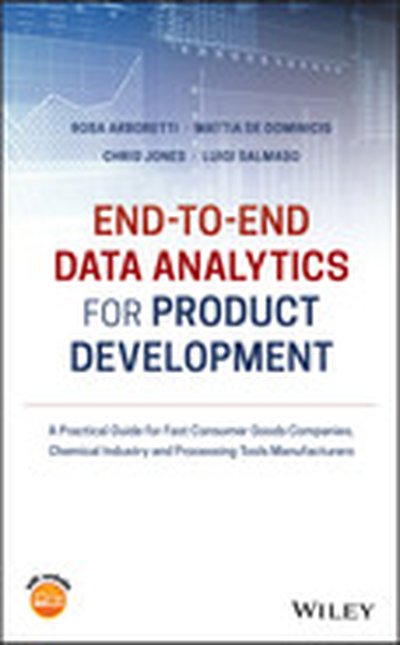
End-to-end Data Analytics for Product Development

An interactive guide to the statistical tools used to solve problems during product and process innovation End to End Data Analytics for Product Development is an accessible guide designed for practitioners in the industrial field. It offers an introduction to data analytics and the design of experiments (DoE) whilst covering the basic statistical concepts useful to an understanding of DoE. The text supports product innovation and development across a range of consumer goods and pharmaceutical organizations in order to improve the quality and speed of implementation through data analytics, statistical design and data prediction. The book reviews information on feasibility screening, formulation and packaging development, sensory tests, and more. The authors – noted experts in the field – explore relevant techniques for data analytics and present the guidelines for data interpretation. In addition, the book contains information on process development and product validation that can be optimized through data understanding, analysis and validation. The authors present an accessible, hands-on approach that uses MINITAB and JMP software. The book: • Presents a guide to innovation feasibility and formulation and process development • Contains the statistical tools used to solve challenges faced during product innovation and feasibility • Offers information on stability studies which are common especially in chemical or pharmaceutical fields • Includes a companion website which contains videos summarizing main concepts Written for undergraduate students and practitioners in industry, End to End Data Analytics for Product Development offers resources for the planning, conducting, analyzing and interpreting of controlled tests in order to develop effective products and processes.

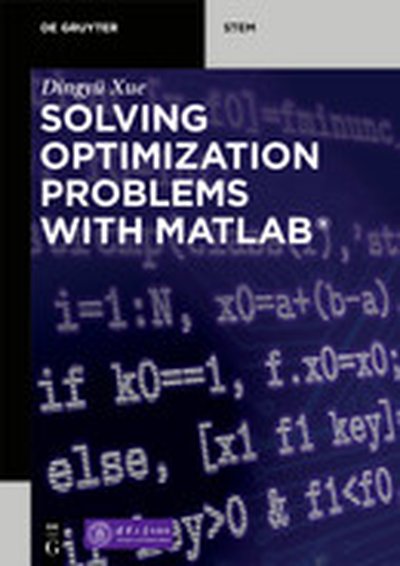
Solving Optimization Problems with MATLAB®

This book focuses on solving optimization problems with MATLAB. Descriptions and solutions of nonlinear equations of any form are studied first. Focuses are made on the solutions of various types of optimization problems, including unconstrained and constrained optimizations, mixed integer, multiobjective and dynamic programming problems. Comparative studies and conclusions on intelligent global solvers are also provided.

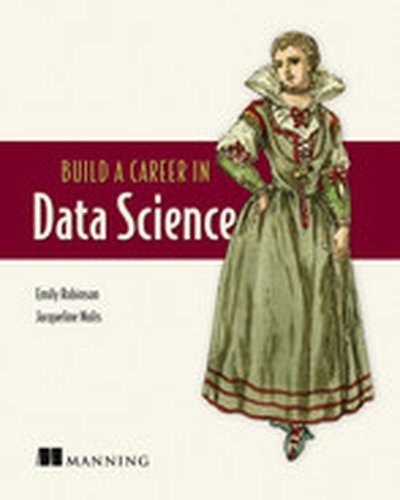
Build a Career in Data Science

You are going to need more than technical knowledge to succeed as a data scientist. Build a Career in Data Science teaches you what school leaves out, from how to land your first job to the lifecycle of a data science project, and even how to become a manager. About the Technology What are the keys to a data scientist’s long-term success? Blending your technical know-how with the right “soft skills” turns out to be a central ingredient of a rewarding career. About the Book Build a Career in Data Science is your guide to landing your first data science job and developing into a valued senior employee. By following clear and simple instructions, you’ll learn to craft an amazing resume and ace your interviews. In this demanding, rapidly changing field, it can be challenging to keep projects on track, adapt to company needs, and manage tricky stakeholders. You’ll love the insights on how to handle expectations, deal with failures, and plan your career path in the stories from seasoned data scientists included in the book. What's Inside Creating a portfolio of data science projects Assessing and negotiating an offer Leaving gracefully and moving up the ladder Interviews with professional data scientists About the Reader For readers who want to begin or advance a data science career. About the Authors Emily Robinson is a data scientist at Warby Parker. Jacqueline Nolis is a data science consultant and mentor. Quotes Full of useful advice, real-case scenarios, and contributions from professionals in the industry. - Sebastián Palma Mardones, ArchDaily The perfect companion for someone who wants to be a successful data scientist! - Gustavo Gomes, Brightcove Insightful overview of all aspects of a data science career. - Krzysztof Jędrzejewski, Pearson Highly recommended. - Hagai Luger, Clarizen

The Practitioner's Guide to Graph Data

Graph data closes the gap between the way humans and computers view the world. While computers rely on static rows and columns of data, people navigate and reason about life through relationships. This practical guide demonstrates how graph data brings these two approaches together. By working with concepts from graph theory, database schema, distributed systems, and data analysis, you’ll arrive at a unique intersection known as graph thinking. Authors Denise Koessler Gosnell and Matthias Broecheler show data engineers, data scientists, and data analysts how to solve complex problems with graph databases. You’ll explore templates for building with graph technology, along with examples that demonstrate how teams think about graph data within an application. Build an example application architecture with relational and graph technologies Use graph technology to build a Customer 360 application, the most popular graph data pattern today Dive into hierarchical data and troubleshoot a new paradigm that comes from working with graph data Find paths in graph data and learn why your trust in different paths motivates and informs your preferences Use collaborative filtering to design a Netflix-inspired recommendation system