talk-data.com talk-data.com

Topic

data

2093

tagged

Activity Trend

3 peak/qtr
2020-Q1 2026-Q1

Activities

Showing filtered results

Filtering by: O'Reilly Data Science Books ×
SAP BusinessObjects Reporting Cookbook

The SAP BusinessObjects Reporting Cookbook is a detailed guide designed to teach you the essential and advanced skills for creating and enhancing reports using SAP BusinessObjects. You will uncover hands-on recipes to build, customize, and optimize reports efficiently. With this book, you will enhance your abilities in leveraging Business Intelligence for meaningful report creation. What this Book will help me do Master the use of SAP BusinessObjects tools for advanced report creation. Learn how to personalize and customize reports to meet organizational requirements. Understand the application of filters and input controls to refine data views. Gain proficiency in creating variables and formulas for advanced calculations. Develop the ability to manage, organize, and distribute reports effectively in a BI environment. Author(s) Yoav Yohav is a seasoned expert in Business Intelligence with extensive experience in SAP BusinessObjects. He has spent years designing reporting solutions for a variety of industries and possesses deep knowledge of report customization techniques. Passionate about empowering professionals, Yoav shares practical insights and clear guidance to help readers excel. Who is it for? This book is perfect for business analysts, BI developers, and IT professionals looking to enhance their SAP BusinessObjects skills. If you have a foundational understanding of Business Intelligence and data concepts, this book will expand your expertise. It suits those aiming to master report creation and customization. Ideal for both beginners and professionals who wish to deepen their knowledge.
Advanced Electric Drives: Analysis, Control, and Modeling Using MATLAB/Simulink

With nearly two-thirds of global electricity consumed by electric motors, it should come as no surprise that their proper control represents appreciable energy savings. The efficient use of electric drives also has far-reaching applications in such areas as factory automation (robotics), clean transportation (hybrid-electric vehicles), and renewable (wind and solar) energy resource management. Advanced Electric Drives utilizes a physics-based approach to explain the fundamental concepts of modern electric drive control and its operation under dynamic conditions. Author Ned Mohan, a decades-long leader in Electrical Energy Systems (EES) education and research, reveals how the investment of proper controls, advanced MATLAB and Simulink simulations, and careful forethought in the design of energy systems translates to significant savings in energy and dollars. Offering students a fresh alternative to standard mathematical treatments of dq-axis transformation of a-b-c phase quantities, Mohan's unique physics-based approach "visualizes" a set of representative dq windings along an orthogonal set of axes and then relates their currents and voltages to the a-b-c phase quantities. Advanced Electric Drives is an invaluable resource to facilitate an understanding of the analysis, control, and modelling of electric machines. Gives readers a "physical" picture of electric machines and drives without resorting to mathematical transformations for easy visualization Confirms the physics-based analysis of electric drives mathematically Provides readers with an analysis of electric machines in a way that can be easily interfaced to common power electronic converters and controlled using any control scheme Makes the MATLAB/Simulink files used in examples available to anyone in an accompanying website Reinforces fundamentals with a variety of discussion questions, concept quizzes, and homework problems

Nonparametric Hypothesis Testing: Rank and Permutation Methods with Applications in R

A novel presentation of rank and permutation tests, with accessible guidance to applications in R Nonparametric testing problems are frequently encountered in many scientific disciplines, such as engineering, medicine and the social sciences. This book summarizes traditional rank techniques and more recent developments in permutation testing as robust tools for dealing with complex data with low sample size. Key Features: Examines the most widely used methodologies of nonparametric testing. Includes extensive software codes in R featuring worked examples, and uses real case studies from both experimental and observational studies. Presents and discusses solutions to the most important and frequently encountered real problems in different fields. Features a supporting website ( www.wiley.com/go/hypothesis_testing) containing all of the data sets examined in the book along with ready to use R software codes. Nonparametric Hypothesis Testing combines an up to date overview with useful practical guidance to applications in R, and will be a valuable resource for practitioners and researchers working in a wide range of scientific fields including engineering, biostatistics, psychology and medicine.

Age-Period-Cohort Models

This book presents an introduction to the problems and strategies for modeling age, period, and cohort (APC) effects for aggregate-level data. These strategies include constrained estimation, the use of age and/or period and/or cohort characteristics, estimable functions, variance decomposition and a new technique called the s-constraint approach.

Understanding the Predictive Analytics Lifecycle

A high-level, informal look at the different stages of the predictive analytics cycle Understanding the Predictive Analytics Lifecycle covers each phase of the development of a predictive analytics initiative. Through the use of illuminating case studies across a range of industries that include banking, megaresorts, mobile operators, healthcare, manufacturing, and retail, the book successfully illustrates each phase of the predictive analytics cycle to create a playbook for future projects. Predictive business analytics involves a wide variety of inputs that include individuals' skills, technologies, tools, and processes. To create a successful analytics program or project to gain forward-looking insight into making business decisions and actions, all of these factors must properly align. The book focuses on developing new insights and understanding business performance based on extensive use of data, statistical and quantitative analysis, explanatory and predictive modeling, and fact-based management as input for human decisions. The book includes: An overview of all relevant phases: design, prepare, explore, model, communicate, and measure Coverage of the stages of the predictive analytics cycle across different industries and countries A chapter dedicated to each of the phases of the development of a predictive initiative A comprehensive overview of the entire analytic process lifecycle If you're an executive looking to understand the predictive analytics lifecycle, this is a must-read resource and reference guide.

Analytics and Big Data: The Davenport Collection (6 Items)

The Analytics and Big Data collection offers a “greatest hits” digital compilation of ideas from world-renowned thought leader Thomas Davenport, who helped popularize the terms analytics and big data in the workplace. An agile and prolific thinker, Davenport has written or coauthored more than a dozen bestselling books. Several of these titles are offered together for the first time in this curated digital bundle, including: Big Data at Work, Competing on Analytics, Analytics at Work, and Keeping Up with the Quants. The collection also includes Davenport’s popular Harvard Business Review articles, “Data Scientist: The Sexiest Job of the 21st Century” (2012) and “Analytics 3.0” (2013). Combined, these works cover all the bases on analytics and big data: what each term means; the ramifications of each from a technical, consumer, and management perspective; and where each can have the biggest impact on your business. Whether you’re an executive, a manager, or a student wanting to learn more, Analytics and Big Data is the most comprehensive collection you’ll find on the ever-growing phenomenon of digital data and analysis—and how you can make this rising business trend work for you. Named one of the ten “Masters of the New Economy” by CIO magazine, Thomas Davenport has helped hundreds of companies revitalize their management practices. He combines his interests in research, teaching, and business management as the President’s Distinguished Professor of Information Technology & Management at Babson College. Davenport has also taught at Harvard Business School, the University of Chicago, Dartmouth’s Tuck School of Business, and the University of Texas at Austin and has directed research centers at Accenture, McKinsey & Company, Ernst & Young, and CSC. He is also an independent Senior Advisor to Deloitte Analytics.

Making Sense of Data I: A Practical Guide to Exploratory Data Analysis and Data Mining, 2nd Edition

Praise for the First Edition "...a well-written book on data analysis and data mining that provides an excellent foundation..." —CHOICE "This is a must-read book for learning practical statistics and data analysis..." —Computing Reviews.com A proven go-to guide for data analysis, Making Sense of Data I: A Practical Guide to Exploratory Data Analysis and Data Mining, Second Edition focuses on basic data analysis approaches that are necessary to make timely and accurate decisions in a diverse range of projects. Based on the authors' practical experience in implementing data analysis and data mining, the new edition provides clear explanations that guide readers from almost every field of study. In order to facilitate the needed steps when handling a data analysis or data mining project, a step-by-step approach aids professionals in carefully analyzing data and implementing results, leading to the development of smarter business decisions. The tools to summarize and interpret data in order to master data analysis are integrated throughout, and the Second Edition also features: Updated exercises for both manual and computer-aided implementation with accompanying worked examples New appendices with coverage on the freely available Traceis" software, including tutorials using data from a variety of disciplines such as the social sciences, engineering, and finance New topical coverage on multiple linear regression and logistic regression to provide a range of widely used and transparent approaches Additional real-world examples of data preparation to establish a practical background for making decisions from data Making Sense of Data I: A Practical Guide to Exploratory Data Analysis and Data Mining, Second Edition is an excellent reference for researchers and professionals who need to achieve effective decision making from data. The Second Edition is also an ideal textbook for undergraduate and graduate-level courses in data analysis and data mining and is appropriate for cross-disciplinary courses found within computer science and engineering departments.

Modern Analytics Methodologies: Driving Business Value with Analytics

Create a complete roadmap for capitalizing on analytics to grow topline revenue and build shareholder value in your unique organization! Modern Analytics Methodologies goes far beyond the classic Analytics Maturity Model to help you overcome the gaps between your current analytics capabilities and where you need to go. Pioneering analytics experts Michele Chambers and Thomas Dinsmore help you implement analytics that supports your strategy, aligns with your culture, and serves your customers and stakeholders. Drawing on work with dozens of leading enterprises, Michele Chambers and Thomas Dinsmore describe high-value applications from many industries, and help you systematically identify and deliver on your company's best opportunities. Writing for both professionals and students, they show how to: Leverage the convergence of macro trends ranging from "flattening" and "green" to Big Data and machine learning Go beyond the Analytics Maturity Model: power your unique business strategy with an equally focused analytics strategy Link key business objectives with core characteristics of your organization, value chain, and stakeholders Take advantage of game changing opportunities before competitors do Effectively integrate the managerial and operational aspects of analytics Measure performance with dashboards, scorecards, visualization, simulation, and more Prioritize and score prospective analytics projects Identify "Quick Wins" you can implement while you're planning for the long-term Build an effective Analytic Program Office to make your roadmap persistent Update and revise your roadmap for new needs and technologies Modern Analytics Methodologies will be an indispensable resource for any executive or professional concerned with analytics, including Chief Analytics Officers; Chief Data Officers; Chief Scientists; Chief Marketing Officers; Chief Risk Officers; Chief Strategy Officers; VPs of Analytics or Big Data; data scientists; business strategists; and line-of-business executives.

SAS 9.4 Graph Template Language, 3rd Edition

Provides usage information and examples for the Graph Template Language (GTL). The GTL is the underlying language for the default templates that are provided by SAS for procedures that use ODS Graphics. You can use the GTL either to modify these templates or to create your own highly customized charts and plots. Information covered includes how to combine language elements to build a custom graph, creating panels that contain multiple graphs, managing plot axes, using legends, modifying style elements to control appearance characteristics, and using functions, expressions, and conditional processing.

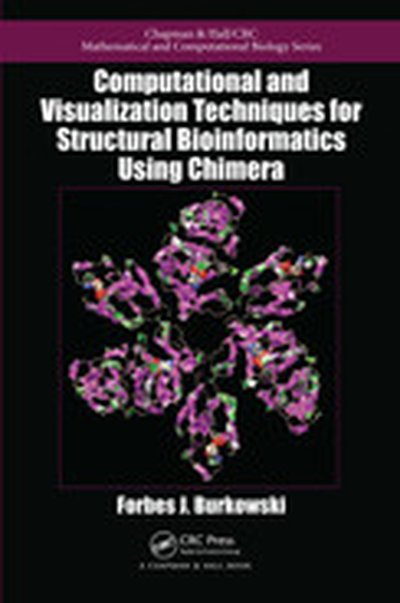
Computational and Visualization Techniques for Structural Bioinformatics Using Chimera

A Step-by-Step Guide to Describing Biomolecular Structure Computational and Visualization Techniques for Structural Bioinformatics Using Chimera shows how to perform computations with Python scripts in the Chimera environment. It focuses on the three core areas needed to study structural bioinformatics: biochemistry, mathematics, and computation. Understand Important Concepts of Structural Bioinformatics The book covers topics that deal primarily with protein structure and includes many exercises that are grounded in biological problems at the molecular level. The text encourages mathematical analysis by providing a firm foundation for computations. It analyzes numerous Python scripts for the Chimera environment, with the scripts and other material available on a supplementary website. Build Python Scripts to Extend the Capabilities of Chimera Through more than 60 exercises that involve the development of Python scripts, the book gives you concrete guidance on using the scripting capabilities of Chimera. You’ll gain experience in solving real problems as well as understand the various applications of linear algebra. You can also use the scripts as starting points for the development of similar applications and use classes from the StructBio toolkit for computations, such as structure overlap, data plotting, scenographics, and display of residue networks.

Big Data Analytics Strategies for the Smart Grid

By implementing a comprehensive data analytics program, utility companies can meet the continually evolving challenges of modern grids that are operationally efficient, while reconciling the demands of greenhouse gas legislation and establishing a meaningful return on investment from smart grid deployments. Readable and accessible, Big Data Analytics Strategies for the Smart Grid addresses the needs of applying big data technologies and approaches, including Big Data cybersecurity, to the critical infrastructure that makes up the electrical utility grid. It supplies industry stakeholders with an in-depth understanding of the engineering, business, and customer domains within the power delivery market. The book explores the unique needs of electrical utility grids, including operational technology, IT, storage, processing, and how to transform grid assets for the benefit of both the utility business and energy consumers. It not only provides specific examples that illustrate how analytics work and how they are best applied, but also describes how to avoid potential problems and pitfalls. Discussing security and data privacy, it explores the role of the utility in protecting their customers’ right to privacy while still engaging in forward-looking business practices. The book includes discussions of: SAS for asset management tools The AutoGrid approach to commercial analytics Space-Time Insight’s work at the California ISO (CAISO) This book is an ideal resource for mid- to upper-level utility executives who need to understand the business value of smart grid data analytics. It explains critical concepts in a manner that will better position executives to make the right decisions about building their analytics programs. At the same time, the book provides sufficient technical depth that it is useful for data analytics professionals who need to better understand the nuances of the engineering and business challenges unique to the utilities industry.

Hands-On Programming with R

Learn how to program by diving into the R language, and then use your newfound skills to solve practical data science problems. With this book, you’ll learn how to load data, assemble and disassemble data objects, navigate R’s environment system, write your own functions, and use all of R’s programming tools. RStudio Master Instructor Garrett Grolemund not only teaches you how to program, but also shows you how to get more from R than just visualizing and modeling data. You’ll gain valuable programming skills and support your work as a data scientist at the same time. Work hands-on with three practical data analysis projects based on casino games Store, retrieve, and change data values in your computer’s memory Write programs and simulations that outperform those written by typical R users Use R programming tools such as if else statements, for loops, and S3 classes Learn how to write lightning-fast vectorized R code Take advantage of R’s package system and debugging tools Practice and apply R programming concepts as you learn them

Big Data, Big Innovation: Enabling Competitive Differentiation through Business Analytics

A practical guide to leveraging your data to spur innovation and growth Your business generates reams of data, but what do you do with it? Reporting is only the beginning. Your data holds the key to innovation and growth - you just need the proper analytics. In Big Data, Big Innovation: Enabling Competitive Differentiation Through Business Analytics, author Evan Stubbs explores the potential gold hiding in your un-mined data. As Chief Analytics Officer for SAS Australia/New Zealand, Stubbs brings an industry insider's perspective to guide you through pattern recognition, analysis, and implementation. Big Data, Big Innovation: Enabling Competitive Differentiation Through Business Analytics details a groundbreaking approach to ensuring your company's upward trajectory. Use this guide to leverage your customer information, financial reports, performance metrics, and more to build a rock-solid foundation for future growth. Build an effective analytics team, and empower them with the right tools Learn how big data drives both evolutionary and revolutionary innovation, and who should be responsible Identify data collection and analysis opportunities and implement action plans Design the platform that suits your company's current and future needs Quantify performance with statistics, programming, and research for a more complete picture of operations Effective management means combining data, people, and analytics to create a synergistic force for innovation and growth. If you want your company to move forward with confidence, Big Data, Big Innovation: Enabling Competitive Differentiation Through Business Analytics can show you how to use what you already have and acquire what you need to succeed.

Developing Human Capital: Using Analytics to Plan and Optimize Your Learning and Development Investments

Don't squander your most valuable resource! Collectively, your workers are your company's most important and most valuable asset. To make the most of this asset, nothing beats quantitative performance and investment measurement. Learning and Development is an 80 billion-dollar industry, and every valuable employee represents a sizable investment on the part of your company. To keep your business moving forward, effective management of human capital is crucial. It generates plenty of data, and deep analysis of this data helps you provide feedback and make adjustments to capitalize on the combined knowledge, skills, and creativity of your workers. Developing Human Capital: Using Analytics to Plan and Optimize Your Learning and Development Investments provides a guidebook for collecting, organizing, and analyzing the data surrounding human capital so you can make the most of your employees' potential. Use predictive analysis to optimize human capital investments Learn effective study design and alignment Get the tools you need for measurement, surveys, and analysis Decide what to measure and how to measure it Outline your company's current and future analytics technology needs Map data sources, and overcome barriers to data collection Authors Gene Pease, Bonnie Beresford, and Lew Walker provide case studies in which major companies applied human capital analytics to guide people decisions, and expand upon the role of analytics in Learning and Development. Developing Human Capital: Using Analytics to Plan and Optimize Your Learning and Development Investments is an essential guide to 21st century human resources and management practices, and can keep you from squandering your company's most valuable resource.

The Boundary Element Method for Plate Analysis

Boundary Element Method for Plate Analysis offers one of the first systematic and detailed treatments of the application of BEM to plate analysis and design. Aiming to fill in the knowledge gaps left by contributed volumes on the topic and increase the accessibility of the extensive journal literature covering BEM applied to plates, author John T. Katsikadelis draws heavily on his pioneering work in the field to provide a complete introduction to theory and application. Beginning with a chapter of preliminary mathematical background to make the book a self-contained resource, Katsikadelis moves on to cover the application of BEM to basic thin plate problems and more advanced problems. Each chapter contains several examples described in detail and closes with problems to solve. Presenting the BEM as an efficient computational method for practical plate analysis and design, Boundary Element Method for Plate Analysis is a valuable reference for researchers, students and engineers working with BEM and plate challenges within mechanical, civil, aerospace and marine engineering. One of the first resources dedicated to boundary element analysis of plates, offering a systematic and accessible introductory to theory and application Authored by a leading figure in the field whose pioneering work has led to the development of BEM as an efficient computational method for practical plate analysis and design Includes mathematical background, examples and problems in one self-contained resource