talk-data.com talk-data.com

Topic

data

89

tagged

Activity Trend

3 peak/qtr
2020-Q1 2026-Q1

Activities

Showing filtered results

Filtering by: O'Reilly Business Intelligence Books ×
Microsoft Business Intelligence Tools for Excel Analysts

Bridge the big data gap with Microsoft Business Intelligence Tools for Excel Analysts The distinction between departmental reporting done by business analysts with Excel and the enterprise reporting done by IT departments with SQL Server and SharePoint tools is more blurry now than ever before. With the introduction of robust new features like PowerPivot and Power View, it is essential for business analysts to get up to speed with big data tools that in the past have been reserved for IT professionals. Written by a team of Business Intelligence experts, Microsoft Business Intelligence Tools for Excel Analysts introduces business analysts to the rich toolset and reporting capabilities that can be leveraged to more effectively source and incorporate large datasets in their analytics while saving them time and simplifying the reporting process. Walks you step-by-step through important BI tools like PowerPivot, SQL Server, and SharePoint and shows you how to move data back and forth between these tools and Excel Shows you how to leverage relational databases, slice data into various views to gain different visibility perspectives, create eye-catching visualizations and dashboards, automate SQL Server data retrieval and integration, and publish dashboards and reports to the web Details how you can use SQL Server's built-in functions to analyze large amounts of data, Excel pivot tables to access and report OLAP data, and PowerPivot to create powerful reporting mechanisms You'll get on top of the Microsoft BI stack and all it can do to enhance Excel data analysis with this one-of-a-kind guide written for Excel analysts just like you.

Successful Business Intelligence, Second Edition, 2nd Edition

Revised to cover new advances in business intelligence—big data, cloud, mobile, and more—this fully updated bestseller reveals the latest techniques to exploit BI for the highest ROI. “Cindi has created, with her typical attention to details that matter, a contemporary forward-looking guide that organizations could use to evaluate existing or create a foundation for evolving business intelligence / analytics programs. The book touches on strategy, value, people, process, and technology, all of which must be considered for program success. Among other topics, the data, data warehousing, and ROI comments were spot on. The ‘technobabble’ chapter was brilliant!” — Bill Frank, Business Intelligence and Data Warehousing Program Manager, Johnson & Johnson “If you want to be an analytical competitor, you’ve got to go well beyond business intelligence technology. Cindi Howson has wrapped up the needed advice on technology, organization, strategy, and even culture in a neat package. It’s required reading for quantitatively oriented strategists and the technologists who support them.” — Thomas H. Davenport, President’s Distinguished Professor, Babson College and co-author, Competing on Analytics “Cindi has created an exceptional, authoritative description of the end-to-end business intelligence ecosystem. This is a great read for those who are just trying to better understand the business intelligence space, as well as for the seasoned BI practitioner.” — Sully McConnell, Vice President, Business Intelligence and Information Management, Time Warner Cable “Cindi’s book succinctly yet completely lays out what it takes to deliver BI successfully. IT and business leaders will benefit from Cindi’s deep BI experience, which she shares through helpful, real-world definitions, frameworks, examples, and stories. This is a must-read for companies engaged in – or considering – BI.” — Barbara Wixom, PhD, Principal Research Scientist, MIT Sloan Center for Information Systems Research Expanded to cover the latest advances in business intelligence such as big data, cloud, mobile, visual data discovery, and in-memory computing, this fully updated bestseller by BI guru Cindi Howson provides cutting-edge techniques to exploit BI for maximum value. Successful Business Intelligence: Unlock the Value of BI & Big Data, Second Edition describes best practices for an effective BI strategy. Find out how to: Garner executive support to foster an analytic culture Align the BI strategy with business goals Develop an analytic ecosystem to exploit data warehousing, analytic appliances, and Hadoop for the right BI workload Continuously improve the quality, breadth, and timeliness of data Find the relevance of BI for everyone in the company Use agile development processes to deliver BI capabilities and improvements at the pace of business change Select the right BI tools to meet user and business needs Measure success in multiple ways Embrace innovation, promote successes and applications, and invest in training Monitor your evolution and maturity across various factors for impact Exclusive industry survey data and real-world case studies from Medtronic, Macy’s, 1-800 CONTACTS, The Dow Chemical Company, Netflix, Constant Contact, and other companies show successful BI initiatives in action. From Moneyball to Nate Silver, BI and big data have permeated our cultural, political, and economic landscape. This timely, up-to-date guide reveals how to plan and deploy an agile, state-of-the-art BI solution that links insight to action and delivers a sustained competitive advantage.

SAS Business Intelligence for the Health Care Industry

SAS Business Intelligence for the Health Care Industry: Practical Applications teaches health care executives, managers, providers, and business analysts how to use SAS Business Intelligence (BI) tools to convert data into knowledge and value at all levels in the health care industry.

This book demonstrates how SAS BI solutions can be applied to the health care industry and offers detailed explanations of code and tasks in an approachable case study format. All applications are created with sample data that has the richness and complexity of operational health care data. Topics include:

using SAS Add-In for Microsoft Office and SAS Stored Processes technology to better track and forecast revenues and margins

creating OLAP and relational web reports that enable care management programs to locate and assist the neediest patients

implementing data access restrictions on OLAP and relational data in accordance with the industry’s need for secure data access

creating dashboards to help executives monitor their health care organization

With its level of depth and perfect blend of technology and business contexts, this book provides health care analysts, researchers, and statisticians with information and examples that can be used effectively and immediately. It is an indispensable aid to the health care professional in keeping up with a fast-changing industry.

This book is part of the SAS Press program.

Pro SharePoint 2013 Business Intelligence Solutions

To get ahead in today's hyper-competitive marketplace, your business has to take advantage of the data you already have and mine that data to give you new insight, metrics, and clues to what drives successful customer interactions. In Pro SharePoint 2013 Business Intelligence Solutions, you'll learn exactly how to unlock that magic, build business intelligence facilities on SharePoint, and glean insights from data to propel your business to the next level. To understand the various business intelligence offerings in SharePoint 2013, you need to understand the core SQL Server business intelligence concepts, and the first part of the book presents a comprehensive tutorial on those fundamentals. Pro SharePoint 2013 Business Intelligence Solutions then focuses on specific SharePoint business intelligence investments including: Visio Services Excel Services SQL Server Reporting Services Business Connectivity Services Power View and PerformancePoint Services Authors Manpreet Singh, Sha Anandan, Sahil Malik, and Steve Wright walk you through all of this material comprehensively in practical, hands-on format, with plenty of examples to empower you to use these products in your real-life projects. As compelling as SharePoint and SQL Server business intelligence are together, the challenge always has been finding people who understand both SharePoint and SQL Server well enough to deliver such business intelligence solutions. With this book in hand, you become part of that select group. Get your copy of Pro SharePoint 2013 Business Intelligence Solutions today!

Developing Business Intelligence Apps for SharePoint

Create dynamic business intelligence (BI) solutions for SharePoint faster and with more capabilities than previously possible. With this book, you’ll learn the entire process—from high-level concepts to development and deployment—for building data-rich BI applications with Visual Studio LightSwitch, SQL Server 2012, and a host of related Microsoft technologies. You’ll learn practical techniques and patterns necessary to use all of these technologies together as you build an example application through the course of the book, step by step. Discover how to solve real problems, using BI solutions that will evolve to meet future needs. Learn the fundamentals of SharePoint, LightSwitch, and SQL Server 2012 Get a solid grounding in BI application basics and database design principles Use LightSwitch to build a help desk app, including data model design and SharePoint data integration Build a tabular cube with Microsoft’s Business Intelligence Semantic Model (BISM) Dive into the data visualization stack, including Excel and SQL Server Reporting Services Create reports with Excel Services, Report Builder, and PowerView Use tips and tricks for setting up your BI application development environment

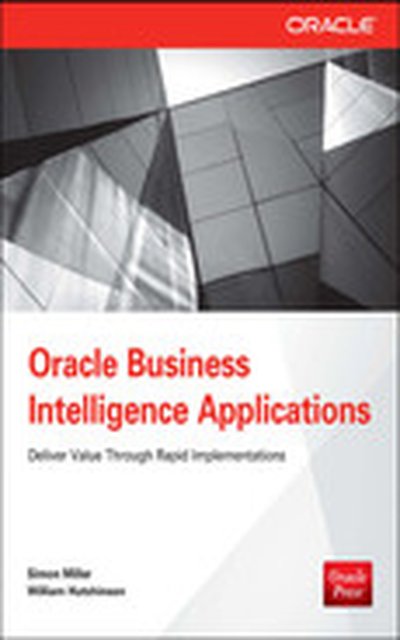
Oracle Business Intelligence Applications

Implement Oracle Business Intelligence Applications Provide actionable business intelligence across the enterprise to enable informed decision-making and streamlined business processes. Oracle Business Intelligence Applications: Deliver Value Through Rapid Implementations shows how to justify, configure, customize, and extend this complete package of BI solutions. You'll get a technical walkthrough of Oracle Business Intelligence Applications architecture--from the dashboard to the data source--followed by best practices for maximizing the powerful features of each application. You will also find out about stakeholders critical to project approval and success. Optimize performance using Oracle Exalytics In-Memory Machine Deliver timely financial information to managers with Oracle Financial Analytics Enable a streamlined, demand-driven supply chain via Oracle Supply Chain and Order Management Analytics Provide end-to-end visibility into manufacturing operations with Oracle Manufacturing Analytics Optimize supply-side performance through Oracle Procurement and Spend Analytics Use Oracle Human Resources Analytics to provide key workforce information to managers and HR professionals Track the costs and labor required to maintain and operate assets with Oracle Enterprise Asset Management Analytics Maintain visibility into project performance via Oracle Project Analytics Provide actionable insight into sales opportunities using Oracle Sales Analytics Enable superior customer service with Oracle Service Analytics

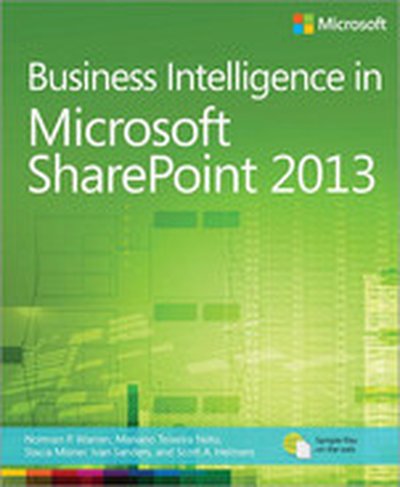
Business Intelligence in Microsoft SharePoint 2013

Dive into the business intelligence features in SharePoint 2013—and use the right combination of tools to deliver compelling solutions. Take control of business intelligence (BI) with the tools offered by SharePoint 2013 and Microsoft SQL Server 2012. Led by a group of BI and SharePoint experts, you’ll get step-by-step instructions for understanding how to use these technologies best in specific BI scenarios—whether you’re a SharePoint administrator, SQL Server developer, or business analyst. Discover how to: Manage the entire BI lifecycle, from determining key performance indicators to building dashboards Use web-based Microsoft Excel services and publish workbooks on a SharePoint Server Mash up data from multiple sources and create Data Analysis Expressions (DAX) using PowerPivot Create data-driven diagrams that provide interactive processes and context with Microsoft Visio Services Use dashboards, scorecards, reports, and key performance indicators to monitor and analyze your business Use SharePoint to view BI reports side by side, no matter which tools were used to produced them

IBM Cognos Business Intelligence

This comprehensive guide to IBM Cognos 10 Business Intelligence tools provides practical, hands-on learning to help you improve your business's data management and analysis capabilities. By mastering key features such as Report Studio, Analysis Studio, and Business Insight, you will be able to make smarter decisions, achieve better results, and gain a deeper understanding of your organization's data. What this Book will help me do Develop advanced reporting skills using IBM Cognos 10 Report Studio and Query Studio. Analyze data effectively with a thorough understanding of Analysis Studio features. Integrate statistical and real-time information into business reports for critical insights. Implement modern strategies to enhance business collaboration and decision-making. Master delivering high-impact business intelligence presentations to broader audiences. Author(s) The authors of this book are experienced IBM Cognos professionals who bring years of business intelligence development and consultancy expertise. They are committed to teaching in a practical and results-driven manner, providing readers with actionable skills. Their insight into IBM Cognos stems from years of real-world application, ensuring the book is rich with valuable advice. Who is it for? This book is ideal for IBM Cognos developers, business intelligence consultants, and analysts with foundational knowledge of Cognos 10 and some experience with Cognos 8. Readers who aim to deepen their understanding of reporting, administration, and analytics will find this guide valuable. It serves as both a learning resource for upgrading skills and a reference for optimizing IBM Cognos environments in professional settings.

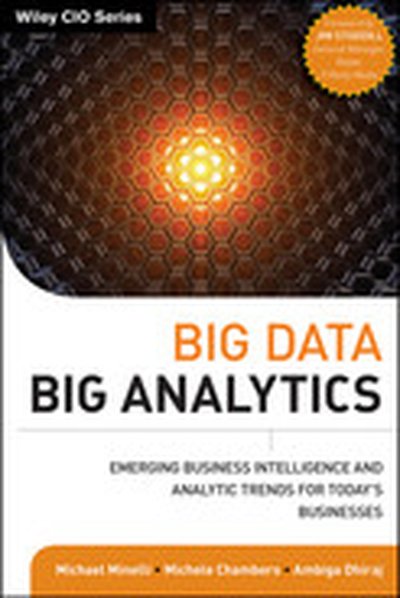
Big Data, Big Analytics: Emerging Business Intelligence and Analytic Trends for Today's Businesses

Unique prospective on the big data analytics phenomenon for both business and IT professionals The availability of Big Data, low-cost commodity hardware and new information management and analytics software has produced a unique moment in the history of business. The convergence of these trends means that we have the capabilities required to analyze astonishing data sets quickly and cost-effectively for the first time in history. These capabilities are neither theoretical nor trivial. They represent a genuine leap forward and a clear opportunity to realize enormous gains in terms of efficiency, productivity, revenue and profitability. The Age of Big Data is here, and these are truly revolutionary times. This timely book looks at cutting-edge companies supporting an exciting new generation of business analytics. Learn more about the trends in big data and how they are impacting the business world (Risk, Marketing, Healthcare, Financial Services, etc.) Explains this new technology and how companies can use them effectively to gather the data that they need and glean critical insights Explores relevant topics such as data privacy, data visualization, unstructured data, crowd sourcing data scientists, cloud computing for big data, and much more.

Business Intelligence, 2nd Edition

Business Intelligence: The Savvy Managers Guide, Second Edition, discusses the objectives and practices for designing and deploying a business intelligence (BI) program. It looks at the basics of a BI program, from the value of information and the mechanics of planning for success to data model infrastructure, data preparation, data analysis, integration, knowledge discovery, and the actual use of discovered knowledge. Organized into 21 chapters, this book begins with an overview of the kind of knowledge that can be exposed and exploited through the use of BI. It then proceeds with a discussion of information use in the context of how value is created within an organization, how BI can improve the ways of doing business, and organizational preparedness for exploiting the results of a BI program. It also looks at some of the critical factors to be taken into account in the planning and execution of a successful BI program. In addition, the reader is introduced to considerations for developing the BI roadmap, the platforms for analysis such as data warehouses, and the concepts of business metadata. Other chapters focus on data preparation and data discovery, the business rules approach, and data mining techniques and predictive analytics. Finally, emerging technologies such as text analytics and sentiment analysis are considered. This book will be valuable to data management and BI professionals, including senior and middle-level managers, Chief Information Officers and Chief Data Officers, senior business executives and business staff members, database or software engineers, and business analysts. Guides managers through developing, administering, or simply understanding business intelligence technology Keeps pace with the changes in best practices, tools, methods and processes used to transform an organization’s data into actionable knowledge Contains a handy, quick-reference to technologies and terminology

IBM Cognos Business Intelligence v10: The Complete Guide

Maximize the Value of Business Intelligence with IBM Cognos v10 -- Hands-on, from Start to Finish This easy-to-use, hands-on guide brings together all the information and insight you need to drive maximum business value from IBM Cognos v10. Long-time IBM Cognos expert and product designer Sangeeta Gautam thoroughly illuminates Cognos BI v10’s key capabilities: analysis, query, reporting, and dashboards. Gautam shows how to take full advantage of each key IBM Cognos feature, including brand-new innovations such as Active Reports and the new IBM Cognos Workspace report consumption environment. She concludes by walking you through successfully planning and implementing an integrated business intelligence solution using IBM’s best-practice methodologies. The first and only guide of its kind, offers expert insights for BI designers, architects, developers, administrators, project managers, nontechnical end-users, and partners throughout all areas of the business—from sales and marketing to operations and lines of business. If you’re pursuing official IBM Cognos certification, you’ll also find Cognos certification sample questions and information to help you with the certification process. IBM Cognos Business Intelligence v10 Coverage Includes • Understanding IBM Cognos BI’s components and open, extensible architecture • Working with IBM Cognos key “studio” tools: Analysis Studio, Query Studio, Report Studio, and Event Studio • Developing and managing powerful reports that draw on the rich capabilities of IBM Cognos Workspace and Workspace Advanced • Designing Star Schema databases and metadata models to answer the questions your organization cares about most • Efficiently maintaining and systematically securing IBM Cognos BI environments and their objects • Using IBM Cognos Connection as your single point of entry to all corporate data • Building interactive, easy-to-manage Active Reports for casual business users • Using new IBM Cognos BI v10.1 Dynamic Query Mode (DQM) to improve performance with complex heterogeneous data • Identifying, exploring, and exploiting hidden data relationships • Creating quick ad hoc queries that deliver fast answers • Establishing user and administrator roles

Business Intelligence Applied: Implementing an Effective Information and Communications Technology Infrastructure

Expert guidance for building an information communication and technology infrastructure that provides best in business intelligence Enterprise performance management (EPM) technology has been rapidly advancing, especially in the areas of predictive analysis and cloud-based solutions. Business intelligence caught on as a concept in the business world as the business strategy application of data warehousing in the early 2000s. With the recent surge in interest in data analytics and big data, it has seen a renewed level of interest as the ability of a business to find the valuable data in a timely—and competitive—fashion. Business Intelligence Applied reveals essential information for building an optimal and effective information and communication technology (ICT) infrastructure. Defines ICT infrastructure Examines best practices for documenting business change and for documenting technology recommendations Includes examples and cases from Europe and Asia Written for business intelligence staff, CIOs, CTOs, and technology managers With examples and cases from Europe and Asia, Business Intelligence Applied expertly covers business intelligence, a hot topic in business today as a key element to business and data analytics.

Solving Operational Business Intelligence with InfoSphere Warehouse Advanced Edition

IBM® InfoSphere® Warehouse is the IBM flagship data warehouse platform for departmental data marts and enterprise data warehouses. It offers leading architecture, performance, backup, and recovery tools that help improve efficiency and reduce time to market through increased understanding of current data assets, while simplifying the daily operations of managing complex warehouse deployments. InfoSphere Warehouse Advanced Enterprise Edition delivers an enhanced set of database performance, management, and design tools. These tools assist companies in maintaining and increasing value from their warehouses, while helping to reduce the total cost of maintaining these complex environments. In this IBM Redbooks® publication we explain how you can build a business intelligence system with InfoSphere Warehouse Advanced Enterprise to manage and support daily business operations for an enterprise, to generate more income with lower cost. We describe the foundation of the business analytics, the Data Warehouse features and functions, and the solutions that can deliver immediate analytics solutions and help you drive better business outcomes. We show you how to use the advanced analytics of InfoSphere Warehouse Advanced Enterprise Edition and integrated tools for data modeling, mining, text analytics, and identifying and meeting the data latency requirements. We describe how the performance and storage optimization features can make building and managing a large data warehouse more affordable, and how they can help significantly reduce the cost of ownership. We also cover data lifecycle management and the key features of IBM Cognos® Business Intelligence. This book is intended for data warehouse professionals who are interested in gaining in-depth knowledge about the operational business intelligence solution for a data warehouse that the IBM InfoSphere Warehouse Advanced Enterprise Edition offers.

Oracle Business Intelligence 11g Developers Guide

Master Oracle Business Intelligence 11 g Reports and Dashboards Deliver meaningful business information to users anytime, anywhere, on any device, using Oracle Business Intelligence 11g. Written by Oracle ACE Director Mark Rittman, Oracle Business Intelligence 11g Developers Guide fully covers the latest BI report design and distribution techniques. Find out how to execute effective queries, build accurate models, use scorecards and KPIs, create dynamic reports, set up dashboards, and publish to smartphones and wireless devices. This Oracle Press guide contains comprehensive details on Oracle Exalytics In-Memory Machine, the best-in-class, preintegrated BI platform. Install or upgrade to Oracle Business Intelligence 11g Develop and manage custom Oracle Business Intelligence repositories Access relational, file, and multidimensional data sources Design print-quality reports with Oracle Business Intelligence Publisher Create web-enabled analyses, dashboards, and visualizations Integrate with other applications using Oracle Business Intelligence 11g Action Framework Employ authentication, authorization, and row-level security Configure and deploy Oracle Exalytics In-Memory Machine

Business Intelligence Cookbook: A Project Lifecycle Approach Using Oracle Technology

Business Intelligence Cookbook: A Project Lifecycle Approach Using Oracle Technology is an expert guide for enhancing your data warehousing and business intelligence skills, specifically targeted at Oracle Database 11g. With over 80 advanced step-by-step recipes, this book walks you through creating, optimizing, and managing actionable business intelligence solutions. What this Book will help me do Understand practical project management approaches specific to business intelligence and data warehousing. Learn to effectively estimate efforts for DW/BI projects using structured methodologies. Model data using Oracle Database and Oracle SQL Data Modeler while aligning it with business requirements. Discover best practices for transitioning BI solutions from development to deployment. Master techniques to secure organizational data as a critical asset. Author(s) John Heaton is an experienced IT professional specializing in data warehousing and business intelligence projects. With extensive knowledge of Oracle technologies, John brings deep technical insights along with a clear writing style, making complex concepts accessible to readers. He is passionate about helping professionals in the IT industry enhance their skills. Who is it for? This book is ideal for IT professionals, data warehouse developers, and project managers working with Oracle Database who seek to advance their expertise in business intelligence. If you have foundational knowledge of DW/BI concepts and want to professionally manage complete lifecycle projects leveraging Oracle tools, this guide is tailored for you.

IBM Cognos Business Intelligence 10: The Official Guide

The only authorized guide to IBM Cognos Business Intelligence v10.1 Updated for the latest release of the software, IBM Cognos Business Intelligence 10: The Official Guide explains how to create, implement, and manage an enterprise BI solution. Maximize all of the new and enhanced features, including the powerful modeling, monitoring, and analytics capabilities. Build and deliver reports that foster informed business decisions and better results. Filled with real-world examples and expert advice, this practical resource is ideal for anyone working with IBM Cognos Business Intelligence v10.1--from administrators to end users. Monitor performance using dashboards and scorecards Assign user roles and privileges Provide a single access point to application-specific data via Cognos Connection Access content from Microsoft Office applications and mobile devices Collect and analyze BI data in an interactive dashboard with Cognos Business Insight Use Cognos Administration tools for system management Implement appropriate security measures Create BI reports with relational and dimensional data using Business Insight Advanced Use Report Studio to build dimensional reports and statistical analyses Identify and deliver mission-critical information using Event Studio Monitor business performance with Metric Studio Create, modify, organize, and publish a model in Framework Manager Ensure report integrity with Lifecycle Manager

Building Business Intelligence Using SAS

Business intelligence (BI) software provides an interface for multiple audiences to dissect, discover, and decide what the data means. These reporting tools make dynamic information available to all users, giving everyone the ability to manipulate results and further understand the business. There is significant power in reducing the data gatekeeper role in your organization so that each person can quickly interact with data and uncover additional value. SAS offers a BI solution that provides mechanisms to reach every level of the organization. Each tool in this solution provides a different amount of complexity and functionality to aid a broad deployment. Building Business Intelligence Using SAS: Content Development Examples, by Tricia Aanderud and Angela Hall, clarifies how you can fully leverage each SAS BI solution component to ensure a successful implementation.

Focusing on the SAS BI Clients, the authors provide a quick-start guide loaded with examples and tips that will help users move quickly from using only one of the SAS BI Clients to using a significant portion of the system. So if you are a SAS BI or SAS Enterprise BI user, but you aren't yet using all the components of the solution, this book is the resource that you need. In addition, the tips and techniques provided in this book will prove invaluable for advanced SAS BI and SAS Enterprise BI users who are studying for SAS Certified BI Content Developer certification.

This book is part of the SAS Press program.

Delivering Business Intelligence with Microsoft SQL Server 2012 3/E, 3rd Edition

Implement a Robust BI Solution with Microsoft SQL Server 2012 Equip your organization for informed, timely decision making using the expert tips and best practices in this practical guide. Delivering Business Intelligence with Microsoft SQL Server 2012, Third Edition explains how to effectively develop, customize, and distribute meaningful information to users enterprise-wide. Learn how to build data marts and create BI Semantic Models, work with the MDX and DAX languages, and share insights using Microsoft client tools. Data mining and forecasting are also covered in this comprehensive resource. Understand the goals and components of successful BI Design, deploy, and manage data marts and OLAP cubes Load and cleanse data with SQL Server Integration Services Manipulate and analyze data using MDX and DAX scripts and queries Work with SQL Server Analysis Services and the BI Semantic Model Author interactive reports using SQL Server Data Tools Create KPIs and digital dashboards Use data mining to identify patterns, correlations, and clusters Implement time-based analytics Embed BI reports in custom applications using ADOMD.NET

Business Intelligence in Microsoft® SharePoint® 2010

Dive into the business intelligence (BI) features in SharePoint 2010—and use the right combination of tools to deliver compelling solutions. This practical guide helps you explore several BI application services available in SharePoint 2010 and Microsoft SQL Server 2008 R2. You’ll learn each technology with step-by-step instructions, and determine which ones work best in specific BI scenarios—whether you’re a SharePoint administrator, SQL Server developer, or business analyst. Choose the BI tools that meet your needs—and learn how they work together Examine the BI lifecycle, from determining key performance indicators to building dashboards Take Microsoft Excel further—gain more control and functionality with web-based Excel Services Mash up data from multiple sources using PowerPivot for Excel 2010 Create data visualizations with objects, context, and metrics using Microsoft Visio Services Build dashboards, scorecards, and other monitoring and analysis tools with PerformancePoint Services Use SharePoint to view BI reports side by side, no matter which tools were used to produced them Your companion web content includes: Interactive exercises that help you try out concepts or techniques Code samples that enable you to work with the exercises

Foundations of SQL Server 2008 R2 Business Intelligence, Second Edition

Foundations of SQL Server 2008 R2 Business Intelligence introduces the exciting gamut of business intelligence tools included with SQL Server 2008. Microsoft has designed SQL Server 2008 to be more than just a database. It's a complete business intelligence (BI) platform. The database is at the core, and surrounding the database are tools for data mining, modeling, reporting, analyzing, charting, and integration with other, enterprise-level software packages. SQL Server 2008 puts an incredible amount of BI functionality at your disposal. But how do you take advantage of it? That's what this book is all about. Authors Guy Fouché and Lynn Langit show how to implement end-to-end BI solutions using SQL Server Analysis Services (SSAS), SQL Server Integration Services (SSIS), SQL Server Reporting Services (SSRS), and other tools in the Microsoft BI toolkit. You'll learn about all-new features such as PowerPivot and Report Builder 3.0. Also provided are clear examples of predictive analysis made possible through powerful data mining features in SQL Server. If you're an analyst or developer working with SQL Server 2008 who is charged with delivering results that drive business success, you can't afford to be without this book; you can't afford to ignore the powerful BI suite that Microsoft has placed at your disposal. Provides the "big picture" of Microsoft's BI tool suite Covers PowerPivot and other game-changing technologies introduced alongside SQL Server 2008 Release 2 Gives a practical analysis of features based on real-world practices What you'll learn Apply dimensional- and fact-based modeling to create OLAP schemas Optimize data extraction and transformation with SQL Server Integration Services Develop OLAP and data-mining solutions using SQL Server Analysis Services Create compelling reports using the new Report Builder 3.0 in SQL Server Reporting Services Deliver self-service business-intelligence via Microsoft PowerPivot Manage and maintain control over your business intelligence environment Who this book is for Foundations of SQL Server 2008 R2 Business Intelligence is for business intelligence analysts and developers wanting to employ the full stack of business intelligence tools that are part of SQL Server. The book also appeals to database administrators managing databases in support of business intelligence efforts.