talk-data.com talk-data.com

Topic

DataViz

Data Visualization

bi charts dashboards

434

tagged

Activity Trend

43 peak/qtr
2020-Q1 2026-Q1

Activities

434 activities · Newest first

Le processus d’allocation des coûts dans Alteryx s’appuie sur des workflows automatisés pour répartir avec précision les coûts des ETP entre les centres d’activités, selon des critères prédéfinis tels que les effectifs ou les volumes, en respectant des règles spécifiques d’allocation des coûts et de calcul des KPI.

1. Ingestion et préparation des données

Alteryx se connecte à plusieurs sources (par exemple, ERP, CRM, stockage cloud) pour extraire les données liées aux ETP, aux coûts et aux volumes. Le processus agrège, prépare et aligne ces ensembles de données disparates afin de créer une base de coûts unifiée.

2.Amélioration de la qualité des données

Des règles de transformation dynamiques sont appliquées pour garantir la cohérence, supprimer les doublons, gérer les valeurs manquantes et standardiser les types de données. Des outils de profilage des données offrent une visibilité sur les anomalies et valeurs aberrantes susceptibles d’impacter la logique d’allocation.

3. Logique d’allocation des coûts

Cela permet de définir des règles d’allocation flexibles et des étapes de validation — allant de ratios simples à des règles dynamiques dictées par les besoins métiers — en fonction des moteurs de coûts, ETP et volumes, pour garantir l’exactitude des calculs de KPI.

4. Intégration de l’IA générative

Les fonctions d’IA générative (par exemple via OpenAI ou les outils Gen AI d’Alteryx) renforcent le workflow en permettant :

La génération automatique de schémas de données adaptés à un format cible.

L’assistance via un outil Copilot pour créer des transformations à partir d’instructions en langage naturel.

La création de règles d’allocation dynamiques.

5. Sortie et visualisation

Les allocations finales peuvent être exportées vers des outils de reporting, des tableaux de bord ou des data lakes. Les utilisateurs peuvent consulter des synthèses d’allocation, des écarts et des vues détaillées pour appuyer la prise de décision via des applications analytiques personnalisées.
Meta-Dashboards: Accelerating Geospatial Web Apps Creation with Voilà

The Joint Research Centre has cultivated significant expertise in developing Voilà dashboards for scientific data visualization, resulting in the design and deployment of many real-world web applications. This presentation will highlight our commitment to building a robust Voilà developer community through dedicated training and resource libraries. We will introduce and demonstrate our innovative meta-dashboards, which streamline the creation of complex, multi-page dashboards by automating framework and code generation. A live demonstration will illustrate the ease of building a geospatial application using this tool. We will conclude with a showcase of recently developed Voilà dashboards in areas such as agricultural/biodiversity surveys and air quality monitoring, demonstrating their effectiveness in data exploration and validation.

Searching for My Next Chart

Abstract

As a data visualization practitioner, I frequently draw inspiration from the diverse and rapidly expanding community, particularly through challenges like #TidyTuesday. However, the sheer volume of remarkable visualizations quickly overwhelmed my manual curation methods—from Pinterest boards to Notion pages. This created a significant bottleneck in my workflow, as I found myself spending more time cataloging charts than actively creating them.

In this talk, I will present a RAG (Retrieval Augmented Generation) based retrieval system that I designed specifically for data visualizations. I will detail the methodology behind this system, illustrating how I addressed my own workflow inefficiencies by transforming a dispersed collection of charts into a semantically searchable knowledge base. This project serves as a practical example of applying advanced AI techniques to enhance creative technical work, demonstrating how a specialized retrieval system can significantly improve the efficiency and quality of data visualization creation process.

Face To Face
by Dr. Joe Perez (NC Dept of Health & Human Services)

What does it mean to bring data to life? Does data take on a “LIFE” of its own, or must it be nurtured along the way? The challenge: turning raw data into valuable insights that drive action, innovation, and transformation. Although it has been said that exabytes of new information are generated daily, how much of it is meaningful? Does volume necessarily translate into value? What vision can we bring to bridge this gap? We must go beyond the surface, push the boundaries of what’s possible, and actively breathe LIFE into data to unlock its true potential.

But data’s value isn’t in the numbers alone; it's in the business decisions they inspire. In this session, we’ll explore four L.I.F.E. pillars of relevant data that will give your data meaning and impact. Blending left-brain logic with right-brain creativity, we’ll unlock powerful insights, drawing inspiration from a stunning example of data visualization ingenuity from the 1850s. This goes beyond answering questions you DO know to include exploring questions you DON'T know, turning obstacles into opportunities, and bringing data to life in a way that transforms your strategy. Are you ready to tap into the full potential of your data and drive real change in your organization? Your journey starts here.

In this session, we will explore how organisations can leverage ArcGIS to analyse spatial data within their data platforms, such as Databricks and Microsoft Fabric. We will discuss the importance of spatial data and its impact on decision-making processes. The session will cover various aspects, including the ingestion of streaming data using ArcGIS Velocity, the processing and management of large volumes of spatial data with ArcGIS GeoAnalytics for Microsoft Fabric, and the use of ArcGIS for visualisation and advanced analytics with GeoAI. Join us to discover how these tools can provide actionable insights and enhance operational efficiency.

The relationship between AI assistants and data professionals is evolving rapidly, creating both opportunities and challenges. These tools can supercharge workflows by generating SQL, assisting with exploratory analysis, and connecting directly to databases—but they're far from perfect. How do you maintain the right balance between leveraging AI capabilities and preserving your fundamental skills? As data teams face mounting pressure to deliver AI-ready data and demonstrate business value, what strategies can ensure your work remains trustworthy? With issues ranging from biased algorithms to poor data quality potentially leading to serious risks, how can organizations implement responsible AI practices while still capitalizing on the positive applications of this technology? Christina Stathopoulos is an international data specialist who regularly serves as an executive advisor, consultant, educator, and public speaker. With expertise in analytics, data strategy, and data visualization, she has built a distinguished career in technology, including roles at Fortune 500 companies. Most recently, she spent over five years at Google and Waze, leading data strategy and driving cross-team projects. Her professional journey has spanned both the United States and Spain, where she has combined her passion for data, technology, and education to make data more accessible and impactful for all. Christina also plays a unique role as a “data translator,” helping to bridge the gap between business and technical teams to unlock the full value of data assets. She is the founder of Dare to Data, a consultancy created to formalize and structure her work with some of the world’s leading companies, supporting and empowering them in their data and AI journeys. Current and past clients include IBM, PepsiCo, PUMA, Shell, Whirlpool, Nitto, and Amazon Web Services.

In the episode, Richie and Christina explore the role of AI agents in data analysis, the evolving workflow with AI assistance, the importance of maintaining foundational skills, the integration of AI in data strategy, the significance of trustworthy AI, and much more.

Links Mentioned in the Show: Dare to DataJulius AIConnect with ChristinaCourse - Introduction to SQL with AIRelated Episode: The Data to AI Journey with Gerrit Kazmaier, VP & GM of Data Analytics at Google CloudRewatch RADAR AI 

New to DataCamp? Learn on the go using the DataCamp mobile app Empower your business with world-class data and AI skills with DataCamp for business

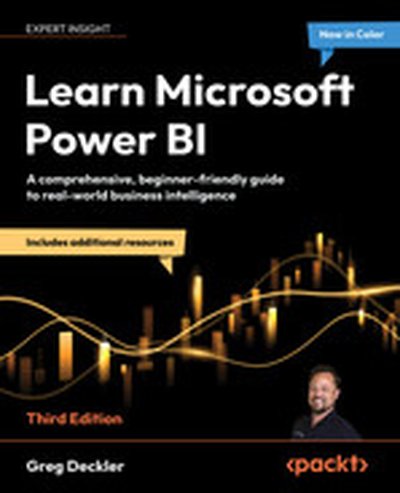
Learn Microsoft Power BI - Third Edition

This comprehensive guide provides the perfect introduction to Microsoft Power BI, offering practical examples to help you learn the key tools and concepts of data visualization and analytics. By exploring real-world use cases, you'll gain the skills necessary to manage data, build interactive dashboards, and unlock valuable business insights. What this Book will help me do Learn the fundamentals of Power BI and business intelligence. Understand advanced features like Microsoft Fabric and Copilot. Transform raw data into meaningful visualizations and reports. Design professional dashboards to convey data insights clearly. Deploy and share reports effectively within your organization. Author(s) Greg Deckler is a recognized authority in Microsoft Power BI, holding the title of a 7-time Microsoft MVP. With extensive experience in business intelligence, Greg is known for his ability to distill complex concepts into clear and practical advice. His approachable teaching style makes technical learning accessible and engaging. Who is it for? This book is ideal for aspiring data analysts or IT professionals looking to gain a solid foundation in Power BI. Beginners with no prior experience in Power BI or business intelligence will find it especially useful. It's also suitable for professionals transitioning from other BI tools. Whether you're looking to enhance your current career or start a new one, this book is for you.

The relationship between AI and data professionals is evolving rapidly, creating both opportunities and challenges. As companies embrace AI-first strategies and experiment with AI agents, the skills needed to thrive in data roles are fundamentally changing. Is coding knowledge still essential when AI can generate code for you? How important is domain expertise when automated tools can handle technical tasks? With data engineering and analytics engineering gaining prominence, the focus is shifting toward ensuring data quality and building reliable pipelines. But where does the human fit in this increasingly automated landscape, and how can you position yourself to thrive amid these transformations? Megan Bowers is Senior Content Manager, Digital Customer Success at Alteryx, where she develops resources for the Maveryx Community. She writes technical blogs and hosts the Alter Everything podcast, spotlighting best practices from data professionals across the industry. Before joining Alteryx, Megan worked as a data analyst at Stanley Black & Decker, where she led ETL and dashboarding projects and trained teams on Alteryx and Power BI. Her transition into data began after earning a degree in Industrial Engineering and completing a data science bootcamp. Today, she focuses on creating accessible, high-impact content that helps data practitioners grow. Her favorite topics include switching career paths after college, building a professional brand on LinkedIn, writing technical blogs people actually want to read, and best practices in Alteryx, data visualization, and data storytelling. Presented by Alteryx, Alter Everything serves as a podcast dedicated to the culture of data science and analytics, showcasing insights from industry specialists. Covering a range of subjects from the use of machine learning to various analytics career trajectories, and all that lies between, Alter Everything stands as a celebration of the critical role of data literacy in a data-driven world. In the episode, Richie and Megan explore the impact of AI on job functions, the rise of AI agents in business, and the importance of domain knowledge and process analytics in data roles. They also discuss strategies for staying updated in the fast-paced world of AI and data science, and much more. Links Mentioned in the Show: Alter EverythingConnect with MeganSkill Track: Alteryx FundamentalsRelated Episode: Scaling Enterprise Analytics with Libby Duane Adams, Chief Advocacy Officer and Co-Founder of AlteryxRewatch RADAR AI  New to DataCamp? Learn on the go using the DataCamp mobile appEmpower your business with world-class data and AI skills with DataCamp for business

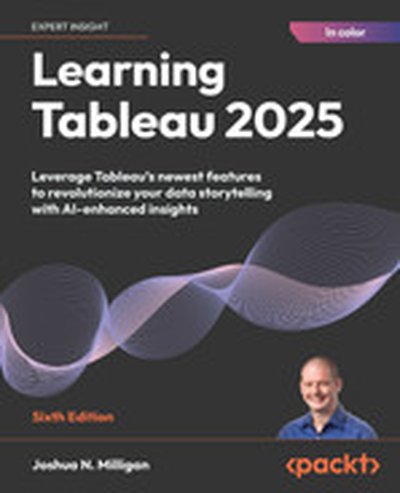
Learning Tableau 2025 - Sixth Edition

"Learning Tableau 2025" provides a comprehensive guide to mastering Tableau's latest features, including advanced AI capabilities like Tableau Pulse and Agent. This book, authored by Tableau expert Joshua N. Milligan, will equip you with the tools to transform complex data into actionable insights and interactive dashboards. What this Book will help me do Learn to use Tableau's advanced AI features, including Tableau Agent and Pulse, to streamline data analysis and automate insights. Develop skills to create and customize dynamic dashboards tailored to interactive data storytelling. Understand and utilize new geospatial functions within Tableau for advanced mapping and analytics. Master Tableau Prep's enhanced data preparation capabilities for efficient data modeling and structuring. Learn to effectively integrate and analyze data from multiple sources, enhancing your ability to extract meaningful insights. Author(s) Joshua N. Milligan, a Tableau Zen Master and Visionary, has years of experience in the field of data visualization and analytics. With a hands-on approach, Joshua combines his expertise and passion for Tableau to make complex topics accessible and engaging. His teaching method ensures that readers gain practical, actionable knowledge. Who is it for? This book is ideal for aspiring business intelligence developers, data analysts, data scientists, and professionals seeking to enhance their data visualization skills. It's suitable for both beginners looking to get started with Tableau and experienced users eager to explore its new features. A Tableau license or access to a 14-day trial is recommended.

Carlo Zapponi—From Data to Narrative: Automating Contextual Annotations with AI (Outlier 2025)

Carlo Zapponi—From Data to Narrative: Automating Contextual Annotations with AI (Outlier 2025)

🌟Outlier is a one-of-a-kind data visualization conference hosted by the Data Visualization Society. Outlier brings together all corners of the data visualization community, from artists to business intelligence developers, working in various tech stacks and media. Attendees stretch their creativity and learn from practitioners who they may not otherwise connect with. Learn more on the Outlier website: https://www.outlierconf.com/


📈About the Data Visualization Society: The Data Visualization Society was founded to serve as a professional home for those working across the discipline. Our mission is to connect data visualizers across tech stacks, subject areas, and experience. Advance your skills and grow your network by joining our community: https://www.datavisualizationsociety.org/

Chandni Naidu—Hands on Data Viz with AI Agents—Create Your Own Multi-agent Studio (Outlier 2025)

Chandni Naidu—Hands on: Data Viz with AI Agents—Create Your Own Multi-agent Studio (Outlier 2025)

🌟Outlier is a one-of-a-kind data visualization conference hosted by the Data Visualization Society. Outlier brings together all corners of the data visualization community, from artists to business intelligence developers, working in various tech stacks and media. Attendees stretch their creativity and learn from practitioners who they may not otherwise connect with. Learn more on the Outlier website: https://www.outlierconf.com/


📈About the Data Visualization Society: The Data Visualization Society was founded to serve as a professional home for those working across the discipline. Our mission is to connect data visualizers across tech stacks, subject areas, and experience. Advance your skills and grow your network by joining our community: https://www.datavisualizationsociety.org/

Marco Hernandez—What it takes to create visual stories at the New York Times (Outlier 2025)

Marco Hernandez—What it takes to create visual stories at the New York Times (Outlier 2025)

🌟Outlier is a one-of-a-kind data visualization conference hosted by the Data Visualization Society. Outlier brings together all corners of the data visualization community, from artists to business intelligence developers, working in various tech stacks and media. Attendees stretch their creativity and learn from practitioners who they may not otherwise connect with. Learn more on the Outlier website: https://www.outlierconf.com/


📈About the Data Visualization Society: The Data Visualization Society was founded to serve as a professional home for those working across the discipline. Our mission is to connect data visualizers across tech stacks, subject areas, and experience. Advance your skills and grow your network by joining our community: https://www.datavisualizationsociety.org/

Obinna Iwuji and Chani Wisdom—A Data-Driven Journey Through Nature’s Numbers (Outlier 2025)

Obinna Iwuji and Chani Wisdom—A Data-Driven Journey Through Nature’s Numbers (Outlier 2025)

🌟Outlier is a one-of-a-kind data visualization conference hosted by the Data Visualization Society. Outlier brings together all corners of the data visualization community, from artists to business intelligence developers, working in various tech stacks and media. Attendees stretch their creativity and learn from practitioners who they may not otherwise connect with. Learn more on the Outlier website: https://www.outlierconf.com/


📈About the Data Visualization Society: The Data Visualization Society was founded to serve as a professional home for those working across the discipline. Our mission is to connect data visualizers across tech stacks, subject areas, and experience. Advance your skills and grow your network by joining our community: https://www.datavisualizationsociety.org/