talk-data.com talk-data.com

Topic

GCP

Google Cloud Platform (GCP)

cloud cloud_provider infrastructure services

16

tagged

Activity Trend

31 peak/qtr
2020-Q1 2026-Q1

Activities

Showing filtered results

Filtering by: O'Reilly Data Engineering Books ×
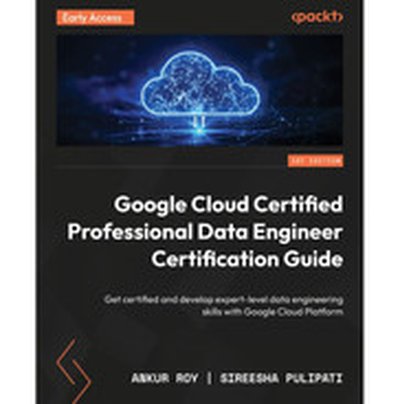
Google Cloud Certified Professional Data Engineer Certification Guide

A guide to pass the GCP Professional Data Engineer exam on your first attempt and upgrade your data engineering skills on GCP. Key Features Fully understand the certification exam content and exam objectives Consolidate your knowledge of all essential exam topics and key concepts Get realistic experience of answering exam-style questions Develop practical skills for everyday use Purchase of this book unlocks access to web-based exam prep resources including mock exams, flashcards, exam tips Book Description The GCP Professional Data Engineer certification validates the fundamental knowledge required to perform data engineering tasks and use GCP services to enhance data engineering processes and further your career in the data engineering/architecting field. This book is a best-in-class study guide that fully covers the GCP Professional Data Engineer exam objectives and helps you pass the exam first time. Complete with clear explanations, chapter review questions, realistic mock exams, and pragmatic solutions, this guide will help you master the core exam concepts and build the understanding you need to go into the exam with the skills and confidence to get the best result you can. With the help of relevant examples, you'll learn fundamental data engineering concepts such as data warehousing and data security. As you progress, you'll delve into the important domains of the exam, including data pipelining, data migration, and data processing. Unlike other study guides, this book contains logical reasoning behind the choice of correct answers based in scenarios and provide you with excellent tips regarding the optimal use of each service, and gives you everything you need to pass the exam and enhance your prospects in the data engineering field. What you will learn Create data solutions and pipelines in GCP Analyze and transform data into useful information Apply data engineering concepts to real scenarios Create secure, cost-effective, valuable GCP workloads Work in the GCP environment with industry best practices Who this book is for This book is for data engineers who want a reliable source for the key concepts and terms present in the most prestigious and highly-sought-after cloud-based data engineering certification. This book will help you improve your data engineering in GCP skills to give you a better chance at earning the GCP Professional Data Engineer Certification. You will already be familiar with the Google Cloud Platform, having either explored it (professionally or personally) for at least a year. You should also have some familiarity with basic data concepts (such as types of data and basic SQL knowledge).
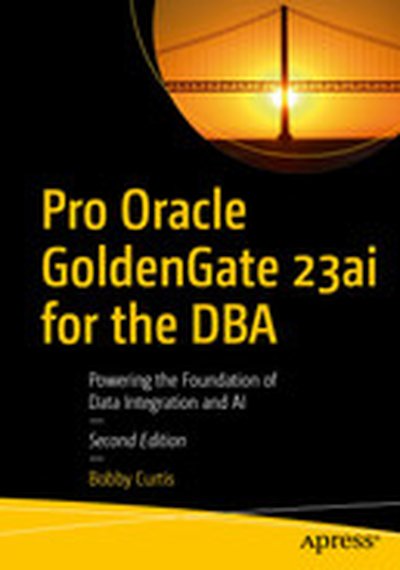
Pro Oracle GoldenGate 23ai for the DBA: Powering the Foundation of Data Integration and AI

Transform your data replication strategy into a competitive advantage with Oracle GoldenGate 23ai. This comprehensive guide delivers the practical knowledge DBAs and architects need to implement, optimize , and scale Oracle GoldenGate 23ai in production environments. Written by Oracle ACE Director Bobby Curtis, it blends deep technical expertise with real-world business insights from hundreds of implementations across manufacturing, financial services, and technology sectors. Beyond traditional replication, this book explores the groundbreaking capabilities that make GoldenGate 23ai essential for modern AI initiatives. Learn how to implement real-time vector replication for RAG systems, integrate with cloud platforms like GCP and Snowflake, and automate deployments using REST APIs and Python. Each chapter offers proven strategies to deliver measurable ROI while reducing operational risk. Whether you're upgrading from Classic GoldenGate , deploying your first cloud data pipeline, or building AI-ready data architectures, this book provides the strategic guidance and technical depth to succeed. With Bobby's signature direct approach, you'll avoid common pitfalls and implement best practices that scale with your business. What You Will Learn Master the microservices architecture and new capabilities of Oracle GoldenGate 23ai Implement secure, high-performance data replication across Oracle, PostgreSQL, and cloud databases Configure vector replication for AI and machine learning workloads, including RAG systems Design and build multi-master replication models with automatic conflict resolution Automate deployments and management using RESTful APIs and Python Optimize performance for sub-second replication lag in production environments Secure your replication environment with enterprise-grade features and compliance Upgrade from Classic to Microservices architecture with zero downtime Integrate with cloud platforms including OCI, GCP, AWS, and Azure Implement real-time data pipelines to BigQuery , Snowflake, and other cloud targets Navigate Oracle licensing models and optimize costs Who This Book Is For Database administrators, architects, and IT leaders working with Oracle GoldenGate —whether deploying for the first time, migrating from Classic architecture, or enabling AI-driven replication—will find actionable guidance on implementation, performance tuning, automation, and cloud integration. Covers unidirectional and multi-master replication and is packed with real-world use cases.

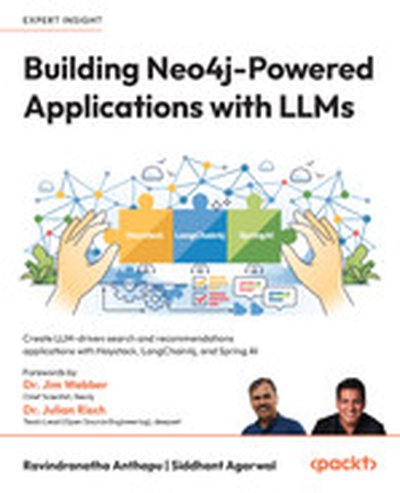
Building Neo4j-Powered Applications with LLMs

Dive into building applications that combine the power of Large Language Models (LLMs) with Neo4j knowledge graphs, Haystack, and Spring AI to deliver intelligent, data-driven recommendations and search outcomes. This book provides actionable insights and techniques to create scalable, robust solutions by leveraging the best-in-class frameworks and a real-world project-oriented approach. What this Book will help me do Understand how to use Neo4j to build knowledge graphs integrated with LLMs for enhanced data insights. Develop skills in creating intelligent search functionalities by combining Haystack and vector-based graph techniques. Learn to design and implement recommendation systems using LangChain4j and Spring AI frameworks. Acquire the ability to optimize graph data architectures for LLM-driven applications. Gain proficiency in deploying and managing applications on platforms like Google Cloud for scalability. Author(s) Ravindranatha Anthapu, a Principal Consultant at Neo4j, and Siddhant Agarwal, a Google Developer Expert in Generative AI, bring together their vast experience to offer practical implementations and cutting-edge techniques in this book. Their combined expertise in Neo4j, graph technology, and real-world AI applications makes them authoritative voices in the field. Who is it for? Designed for database developers and data scientists, this book caters to professionals aiming to leverage the transformational capabilities of knowledge graphs alongside LLMs. Readers should have a working knowledge of Python and Java as well as familiarity with Neo4j and the Cypher query language. If you're looking to enhance search or recommendation functionalities through state-of-the-art AI integrations, this book is for you.

Snowflake Recipes: A Problem-Solution Approach to Implementing Modern Data Pipelines

Explore Snowflake’s core concepts and unique features that differentiates it from industry competitors, such as, Azure Synapse and Google BigQuery. This book provides recipes for architecting and developing modern data pipelines on the Snowflake data platform by employing progressive techniques, agile practices, and repeatable strategies. You’ll walk through step-by-step instructions on ready-to-use recipes covering a wide range of the latest development topics. Then build scalable development pipelines and solve specific scenarios common to all modern data platforms, such as, data masking, object tagging, data monetization, and security best practices. Throughout the book you’ll work with code samples for Amazon Web Services, Microsoft Azure, and Google Cloud Platform. There’s also a chapter devoted to solving machine learning problems with Snowflake. Authors Dillon Dayton and John Eipe are both Snowflake SnowPro Core certified, specializing in data and digital services, and understand the challenges of finding the right solution to complex problems. The recipes in this book are based on real world use cases and examples designed to help you provide quality, performant, and secured data to solve business initiatives. What You’ll Learn Handle structured and un- structured data in Snowflake. Apply best practices and different options for data transformation. Understand data application development. Implement data sharing, data governance and security. Who This book Is For Data engineers, scientists and analysts moving into Snowflake, looking to build data apps. This book expects basic knowledge in Cloud (AWS or Azure or GCP), SQL and Python

Apache Airflow Best Practices

"Apache Airflow Best Practices" is your go-to guide for mastering data workflow orchestration using Apache Airflow. This book introduces you to core concepts and features of Airflow and helps you efficiently design, deploy, and manage workflows. With detailed examples and hands-on tutorials, you'll learn how to tackle real-world challenges in data engineering. What this Book will help me do Understand and utilize the features and updates introduced in Apache Airflow 2.x. Design and implement robust, scalable, and efficient data pipelines and workflows. Learn best practices for deploying Apache Airflow in cloud environments such as AWS and GCP. Extend Airflow's functionality with custom plugins and advanced configuration. Monitor, maintain, and scale your Airflow deployment effectively for high availability. Author(s) Dylan Intorf, Dylan Storey, and Kendrick van Doorn are seasoned professionals in data engineering, data strategy, and software development. Between them, they bring decades of experience working in diverse industries like finance, tech, and life sciences. They bring their expertise into this practical guide to help practitioners understand and master Apache Airflow. Who is it for? This book is tailored for data professionals such as data engineers, scientists, and system administrators, offering valuable insights for new learners and experienced users. If you're starting with workflow orchestration, seeking to optimize your current Airflow implementation, or scaling efforts, this book aligns with your goals. Readers should have a basic knowledge of Python programming and data engineering principles.

Data Engineering for Machine Learning Pipelines: From Python Libraries to ML Pipelines and Cloud Platforms

This book covers modern data engineering functions and important Python libraries, to help you develop state-of-the-art ML pipelines and integration code. The book begins by explaining data analytics and transformation, delving into the Pandas library, its capabilities, and nuances. It then explores emerging libraries such as Polars and CuDF, providing insights into GPU-based computing and cutting-edge data manipulation techniques. The text discusses the importance of data validation in engineering processes, introducing tools such as Great Expectations and Pandera to ensure data quality and reliability. The book delves into API design and development, with a specific focus on leveraging the power of FastAPI. It covers authentication, authorization, and real-world applications, enabling you to construct efficient and secure APIs using FastAPI. Also explored is concurrency in data engineering, examining Dask's capabilities from basic setup to crafting advanced machine learning pipelines. The book includes development and delivery of data engineering pipelines using leading cloud platforms such as AWS, Google Cloud, and Microsoft Azure. The concluding chapters concentrate on real-time and streaming data engineering pipelines, emphasizing Apache Kafka and workflow orchestration in data engineering. Workflow tools such as Airflow and Prefect are introduced to seamlessly manage and automate complex data workflows. What sets this book apart is its blend of theoretical knowledge and practical application, a structured path from basic to advanced concepts, and insights into using state-of-the-art tools. With this book, you gain access to cutting-edge techniques and insights that are reshaping the industry. This book is not just an educational tool. It is a career catalyst, and an investment in your future as a data engineering expert, poised to meet the challenges of today's data-driven world. What You Will Learn Elevate your data wrangling jobs by utilizing the power of both CPU and GPU computing, and learn to process data using Pandas 2.0, Polars, and CuDF at unprecedented speeds Design data validation pipelines, construct efficient data service APIs, develop real-time streaming pipelines and master the art of workflow orchestration to streamline your engineering projects Leverage concurrent programming to develop machine learning pipelines and get hands-on experience in development and deployment of machine learning pipelines across AWS, GCP, and Azure Who This Book Is For Data analysts, data engineers, data scientists, machine learning engineers, and MLOps specialists

Data Engineering with Google Cloud Platform - Second Edition

Data Engineering with Google Cloud Platform is your ultimate guide to building scalable data platforms using Google Cloud technologies. In this book, you will learn how to leverage products such as BigQuery, Cloud Composer, and Dataplex for efficient data engineering. Expand your expertise and gain practical knowledge to excel in managing data pipelines within the Google Cloud ecosystem. What this Book will help me do Understand foundational data engineering concepts using Google Cloud Platform. Learn to build and manage scalable data pipelines with tools such as Dataform and Dataflow. Explore advanced topics like data governance and secure data handling in Google Cloud. Boost readiness for Google Cloud data engineering certification with real-world exam guidance. Master cost-effective strategies and CI/CD practices for data engineering on Google Cloud. Author(s) Adi Wijaya, the author of this book, is a Data Strategic Cloud Engineer at Google with extensive experience in data engineering and the Google Cloud ecosystem. With his hands-on expertise, he emphasizes practical solutions and in-depth knowledge sharing, guiding readers through the intricacies of Google Cloud for data engineering success. Who is it for? This book is ideal for data analysts, IT practitioners, software engineers, and data enthusiasts aiming to excel in data engineering. Whether you're a beginner tackling fundamental concepts or an experienced professional exploring Google Cloud's advanced capabilities, this book is designed for you. It bridges your current skills with modern data engineering practices on Google Cloud, making it a valuable resource at any stage of your career.

Data Exploration and Preparation with BigQuery

In "Data Exploration and Preparation with BigQuery," Michael Kahn provides a hands-on guide to understanding and utilizing Google's powerful data warehouse solution, BigQuery. This comprehensive book equips you with the skills needed to clean, transform, and analyze large datasets for actionable business insights. What this Book will help me do Master the process of exploring and assessing the quality of datasets. Learn SQL for performing efficient and advanced data transformations in BigQuery. Optimize the performance of BigQuery queries for speed and cost-effectiveness. Discover best practices for setting up and managing BigQuery resources. Apply real-world case studies to analyze data and derive meaningful insights. Author(s) Michael Kahn is an experienced data engineer and author specializing in big data solutions and technologies. With years of hands-on experience working with Google Cloud Platform and BigQuery, he has assisted organizations in optimizing their data pipelines for effective decision-making. His accessible writing style ensures complex topics become approachable, enabling readers of various skill levels to succeed. Who is it for? This book is tailored for data analysts, data engineers, and data scientists who want to learn how to effectively use BigQuery for data exploration and preparation. Whether you're new to BigQuery or looking to deepen your expertise in working with large datasets, this book provides clear guidance and practical examples to achieve your goals.

SAP S/4HANA Systems in Hyperscaler Clouds: Deploying SAP S/4HANA in AWS, Google Cloud, and Azure

This book helps SAP architects and SAP Basis administrators deploy and operate SAP S/4HANA systems on the most common public cloud platforms. Market-leading cloud offerings are covered, including Amazon Web Services, Microsoft Azure, and Google Cloud. You will gain an end-to-end understanding of the initial implementation of SAP S/4HANA systems on those platforms. You will learn how to move away from the big monolithic SAP ERP systems and arrive at an environment with a central SAP S/4HANA system as the digital core surrounded by cloud-native services. The book begins by introducing the core concepts of Hyperscaler cloud platforms that are relevant to SAP. You will learn about the architecture of SAP S/4HANA systems on public cloud platforms, with specific content provided for each of the major platforms. The book simplifies the deployment of SAP S/4HANA systems in public clouds by providing step-by-step instructions and helping you deal with thecomplexity of such a deployment. Content in the book is based on best practices, industry lessons learned, and architectural blueprints, helping you develop deep insights into the operations of SAP S/4HANA systems on public cloud platforms. Reading this book enables you to build and operate your own SAP S/4HANA system in the public cloud with a minimum of effort. What You Will Learn Choose the right Hyperscaler platform for your future SAP S/4HANA workloads Start deploying your first SAP S/4HANA system in the public cloud Avoid typical pitfalls during your implementation Apply and leverage cloud-native services for your SAP S/4HANA system Save costs by choosing the right architecture and build a robust architecture for your most critical SAP systems Meet your business’ criteria for availability and performance by having the right sizing in place Identify further use cases whenoperating SAP S/4HANA in the public cloud Who This Book Is For SAP architects looking for an answer on how to move SAP S/4HANA systems from on-premises into the cloud; those planning to deploy to one of the three major platforms from Amazon Web Services, Microsoft Azure, and Google Cloud Platform; and SAP Basis administrators seeking a detailed and realistic description of how to get started on a migration to the cloud and how to drive that cloud implementation to completion

Data Engineering with Google Cloud Platform

In 'Data Engineering with Google Cloud Platform', you'll explore how to construct efficient, scalable data pipelines using GCP services. This hands-on guide covers everything from building data warehouses to deploying machine learning pipelines, helping you master GCP's ecosystem. What this Book will help me do Build comprehensive data ingestion and transformation pipelines using BigQuery, Cloud Storage, and Dataflow. Design end-to-end orchestration flows with Airflow and Cloud Composer for automated data processing. Leverage Pub/Sub for building real-time event-driven systems and streaming architectures. Gain skills to design and manage secure data systems with IAM and governance strategies. Prepare for and pass the Professional Data Engineer certification exam to elevate your career. Author(s) Adi Wijaya is a seasoned data engineer with significant experience in Google Cloud Platform products and services. His expertise in building data systems has equipped him with insights into the real-world challenges data engineers face. Adi aims to demystify technical topics and deliver practical knowledge through his writing, helping tech professionals excel. Who is it for? This book is tailored for data engineers and data analysts who want to leverage GCP for building efficient and scalable data systems. Readers should have a beginner-level understanding of topics like data science, Python, and Linux to fully benefit from the material. It is also suitable for individuals preparing for the Google Professional Data Engineer exam. The book is a practical companion for enhancing cloud and data engineering skills.

What Is a Data Lake?

A revolution is occurring in data management regarding how data is collected, stored, processed, governed, managed, and provided to decision makers. The data lake is a popular approach that harnesses the power of big data and marries it with the agility of self-service. With this report, IT executives and data architects will focus on the technical aspects of building a data lake for your organization. Alex Gorelik from Facebook explains the requirements for building a successful data lake that business users can easily access whenever they have a need. You'll learn the phases of data lake maturity, common mistakes that lead to data swamps, and the importance of aligning data with your company's business strategy and gaining executive sponsorship. You'll explore: The ingredients of modern data lakes, such as the use of different ingestion methods for different data formats, and the importance of the three Vs: volume, variety, and velocity Building blocks of successful data lakes, including data ingestion, integration, persistence, data governance, and business intelligence and self-service analytics State-of-the-art data lake architectures offered by Amazon Web Services, Microsoft Azure, and Google Cloud

BigQuery for Data Warehousing: Managed Data Analysis in the Google Cloud

Create a data warehouse, complete with reporting and dashboards using Google’s BigQuery technology. This book takes you from the basic concepts of data warehousing through the design, build, load, and maintenance phases. You will build capabilities to capture data from the operational environment, and then mine and analyze that data for insight into making your business more successful. You will gain practical knowledge about how to use BigQuery to solve data challenges in your organization. BigQuery is a managed cloud platform from Google that provides enterprise data warehousing and reporting capabilities. Part I of this book shows you how to design and provision a data warehouse in the BigQuery platform. Part II teaches you how to load and stream your operational data into the warehouse to make it ready for analysis and reporting. Parts III and IV cover querying and maintaining, helping you keep your information relevant with other Google Cloud Platform services and advanced BigQuery. Part V takes reporting to the next level by showing you how to create dashboards to provide at-a-glance visual representations of your business situation. Part VI provides an introduction to data science with BigQuery, covering machine learning and Jupyter notebooks. What You Will Learn Design a data warehouse for your project or organization Load data from a variety of external and internal sources Integrate other Google Cloud Platform services for more complex workflows Maintain and scale your data warehouse as your organization grows Analyze, report, and create dashboards on the information in the warehouse Become familiar with machine learning techniques using BigQuery ML Who This Book Is For Developers who want to provide business users with fast, reliable, and insightful analysis from operational data, and data analysts interested in a cloud-based solution that avoids the pain of provisioning their own servers.

Jumpstart Snowflake: A Step-by-Step Guide to Modern Cloud Analytics

Explore the modern market of data analytics platforms and the benefits of using Snowflake computing, the data warehouse built for the cloud. With the rise of cloud technologies, organizations prefer to deploy their analytics using cloud providers such as Amazon Web Services (AWS), Microsoft Azure, or Google Cloud Platform. Cloud vendors are offering modern data platforms for building cloud analytics solutions to collect data and consolidate into single storage solutions that provide insights for business users. The core of any analytics framework is the data warehouse, and previously customers did not have many choices of platform to use. Snowflake was built specifically for the cloud and it is a true game changer for the analytics market. This book will help onboard you to Snowflake, present best practices to deploy, and use the Snowflake data warehouse. In addition, it covers modern analytics architecture and use cases. It provides use cases of integration with leading analytics software such as Matillion ETL, Tableau, and Databricks. Finally, it covers migration scenarios for on-premise legacy data warehouses. What You Will Learn Know the key functionalities of Snowflake Set up security and access with cluster Bulk load data into Snowflake using the COPY command Migrate from a legacy data warehouse to Snowflake integrate the Snowflake data platform with modern business intelligence (BI) and data integration tools Who This Book Is For Those working with data warehouse and business intelligence (BI) technologies, and existing and potential Snowflake users

Hands On Google Cloud SQL and Cloud Spanner: Deployment, Administration and Use Cases with Python

Discover the methodologies and best practices for getting started with Google Cloud Platform relational services – CloudSQL and CloudSpanner. The book begins with the basics of working with the Google Cloud Platform along with an introduction to the database technologies available for developers from Google Cloud. You'll then take an in-depth hands on journey into Google CloudSQL and CloudSpanner, including choosing the right platform for your application needs, planning, provisioning, designing and developing your application. Sample applications are given that use Python to connect to CloudSQL and CloudSpanner, along with helpful features provided by the engines. You''ll also implement practical best practices in the last chapter. Hands On Google Cloud SQL and Cloud Spanner is a great starting point to apply GCP data offerings in your technology stack and the code used allows you to try out the examples and extend them in interestingways. What You'll Learn Get started with Big Data technologies on the Google Cloud Platform Review CloudSQL and Cloud Spanner from basics to administration Apply best practices and use Google’s CloudSQL and CloudSpanner offering Work with code in Python notebooks and scripts Who This Book Is For Application architects, database architects, software developers, data engineers, cloud architects.

Google BigQuery: The Definitive Guide

Work with petabyte-scale datasets while building a collaborative, agile workplace in the process. This practical book is the canonical reference to Google BigQuery, the query engine that lets you conduct interactive analysis of large datasets. BigQuery enables enterprises to efficiently store, query, ingest, and learn from their data in a convenient framework. With this book, you’ll examine how to analyze data at scale to derive insights from large datasets efficiently. Valliappa Lakshmanan, tech lead for Google Cloud Platform, and Jordan Tigani, engineering director for the BigQuery team, provide best practices for modern data warehousing within an autoscaled, serverless public cloud. Whether you want to explore parts of BigQuery you’re not familiar with or prefer to focus on specific tasks, this reference is indispensable.

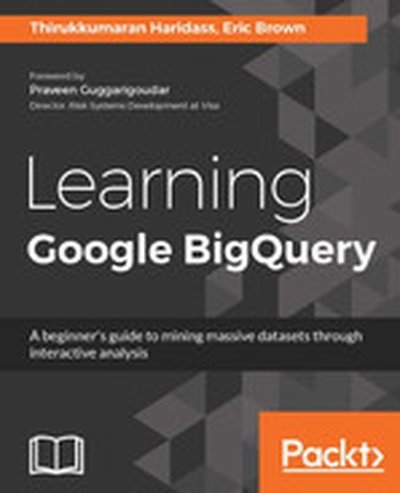
Learning Google BigQuery

If you're ready to untap the potential of data analytics in the cloud, 'Learning Google BigQuery' will take you from understanding foundational concepts to mastering advanced techniques of this powerful platform. Through hands-on examples, you'll learn how to query and analyze massive datasets efficiently, develop custom applications, and integrate your results seamlessly with other tools. What this Book will help me do Understand the fundamentals of Google Cloud Platform and how BigQuery operates within it. Migrate enterprise-scale data seamlessly into BigQuery for further analytics. Master SQL techniques for querying large-scale datasets in BigQuery. Enable real-time data analytics and visualization with tools like Tableau and Python. Learn to create dynamic datasets, manage partition tables and use BigQuery APIs effectively. Author(s) None Berlyant, None Haridass, and None Brown are specialists with years of experience in data science, big data platforms, and cloud technologies. They bring their expertise in data analytics and teaching to make advanced concepts accessible. Their hands-on approach and real-world examples ensure readers can directly apply the skills they acquire to practical scenarios. Who is it for? This book is tailored for developers, analysts, and data scientists eager to leverage cloud-based tools for handling and analyzing large-scale datasets. If you seek to gain hands-on proficiency in working with BigQuery or want to enhance your organization's data capabilities, this book is a fit. No prior BigQuery knowledge is needed, just a willingness to learn.