

talk-data.com talk-data.com

Topic

Keras

deep_learning neural_networks machine_learning

3

tagged

Activity Trend

2 peak/qtr
2020-Q1 2026-Q1

Activities

3 activities · Newest first

Bridging Accessibility and AI: Sign Language Recognition & Inclusive Design with Sheida Rashidi

As AI continues to shape human-computer interaction, there’s a growing opportunity and responsibility to ensure these technologies serve everyone, including people with communication disabilities. In this talk, I will present my ongoing work in developing a real-time American Sign Language (ASL) recognition system, and explore how integrating accessible design principles into AI research can expand both usability and impact.

The core of the talk will cover the Sign Language Recogniser project (available on GitHub), in which I used MediaPipe Studio together with TensorFlow, Keras, and OpenCV to train a model that classifies ASL letters from hand-tracking features.

I’ll share the methodology: data collection, feature extraction via MediaPipe, model training, and demo/testing results. I’ll also discuss challenges encountered, such as dealing with gesture variability, lighting and camera differences, latency constraints, and model generalization.

Beyond the technical implementation, I’ll reflect on the broader implications: how accessibility-focused AI projects can promote inclusion, how design decisions affect trust and usability, and how women in AI & data science can lead innovation that is both rigorous and socially meaningful. Attendees will leave with actionable insights for building inclusive AI systems, especially in domains involving rich human modalities such as gesture or sign.
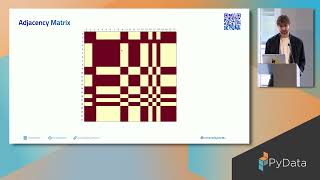

Cutting Edge Football Analytics using Polars, Keras and Spektral

Football analytics has rapidly evolved over the past five years, becoming a crucial part of professional and fan discourse. While much of the cutting-edge research remains hidden behind the fences of club training grounds, a growing ecosystem of open-source tools now enables anyone to develop advanced football analytics models.

In this talk, I'll showcase key open-source libraries—Polars for high-performance data processing, Keras for deep learning, and Spektral for Graph Neural Networks (GNNs)—to analyze millions of player coordinates from publicly available high-frequency positional tracking data. I'll demonstrate how these tools can be used to build in-game prediction models and extract advanced football metrics that only the most advanced football clubs currently use.

US Army Corp of Engineers Enhanced Commerce & National Sec Through Data-Driven Geospatial Insight

The US Army Corps of Engineers (USACE) is responsible for maintaining and improving nearly 12,000 miles of shallow-draft (9'-14') inland and intracoastal waterways, 13,000 miles of deep-draft (14' and greater) coastal channels, and 400 ports, harbors, and turning basins throughout the United States. Because these components of the national waterway network are considered assets to both US commerce and national security, they must be carefully managed to keep marine traffic operating safely and efficiently.

The National DQM Program is tasked with providing USACE a nationally standardized remote monitoring and documentation system across multiple vessel types with timely data access, reporting, dredge certifications, data quality control, and data management. Government systems have often lagged commercial systems in modernization efforts, and the emergence of the cloud and Data Lakehouse Architectures have empowered USACE to successfully move into the modern data era.

This session incorporates aspects of these topics: Data Lakehouse Architecture: Delta Lake, platform security and privacy, serverless, administration, data warehouse, Data Lake, Apache Iceberg, Data Mesh GIS: H3, MOSAIC, spatial analysis data engineering: data pipelines, orchestration, CDC, medallion architecture, Databricks Workflows, data munging, ETL/ELT, lakehouses, data lakes, Parquet, Data Mesh, Apache Spark™ internals. Data Streaming: Apache Spark Structured Streaming, real-time ingestion, real-time ETL, real-time ML, real-time analytics, and real-time applications, Delta Live Tables. ML: PyTorch, TensorFlow, Keras, scikit-learn, Python and R ecosystems data governance: security, compliance, RMF, NIST data sharing: sharing and collaboration, delta sharing, data cleanliness, APIs.

Talk by: Jeff Mroz

Connect with us: Website: https://databricks.com Twitter: https://twitter.com/databricks LinkedIn: https://www.linkedin.com/company/databricks Instagram: https://www.instagram.com/databricksinc Facebook: https://www.facebook.com/databricksinc