Summary Gleb Mezhanskiy, CEO and co-founder of DataFold, joins Tobias Macey to discuss the challenges and innovations in data migrations. Gleb shares his experiences building and scaling data platforms at companies like Autodesk and Lyft, and how these experiences inspired the creation of DataFold to address data quality issues across teams. He outlines the complexities of data migrations, including common pitfalls such as technical debt and the importance of achieving parity between old and new systems. Gleb also discusses DataFold's innovative use of AI and large language models (LLMs) to automate translation and reconciliation processes in data migrations, reducing time and effort required for migrations. Announcements Hello and welcome to the Data Engineering Podcast, the show about modern data managementImagine catching data issues before they snowball into bigger problems. That’s what Datafold’s new Monitors do. With automatic monitoring for cross-database data diffs, schema changes, key metrics, and custom data tests, you can catch discrepancies and anomalies in real time, right at the source. Whether it’s maintaining data integrity or preventing costly mistakes, Datafold Monitors give you the visibility and control you need to keep your entire data stack running smoothly. Want to stop issues before they hit production? Learn more at dataengineeringpodcast.com/datafold today!Your host is Tobias Macey and today I'm welcoming back Gleb Mezhanskiy to talk about Datafold's experience bringing AI to bear on the problem of migrating your data stackInterview IntroductionHow did you get involved in the area of data management?Can you describe what the Data Migration Agent is and the story behind it?What is the core problem that you are targeting with the agent?What are the biggest time sinks in the process of database and tooling migration that teams run into?Can you describe the architecture of your agent?What was your selection and evaluation process for the LLM that you are using?What were some of the main unknowns that you had to discover going into the project?What are some of the evolutions in the ecosystem that occurred either during the development process or since your initial launch that have caused you to second-guess elements of the design?In terms of SQL translation there are libraries such as SQLGlot and the work being done with SDF that aim to address that through AST parsing and subsequent dialect generation. What are the ways that approach is insufficient in the context of a platform migration?How does the approach you are taking with the combination of data-diffing and automated translation help build confidence in the migration target?What are the most interesting, innovative, or unexpected ways that you have seen the Data Migration Agent used?What are the most interesting, unexpected, or challenging lessons that you have learned while working on building an AI powered migration assistant?When is the data migration agent the wrong choice?What do you have planned for the future of applications of AI at Datafold?Contact Info LinkedInParting Question From your perspective, what is the biggest gap in the tooling or technology for data management today?Closing Announcements Thank you for listening! Don't forget to check out our other shows. Podcast.init covers the Python language, its community, and the innovative ways it is being used. The AI Engineering Podcast is your guide to the fast-moving world of building AI systems.Visit the site to subscribe to the show, sign up for the mailing list, and read the show notes.If you've learned something or tried out a project from the show then tell us about it! Email [email protected] with your story.Links DatafoldDatafold Migration AgentDatafold data-diffDatafold Reconciliation Podcast EpisodeSQLGlotLark parserClaude 3.5 SonnetLookerPodcast EpisodeThe intro and outro music is from The Hug by The Freak Fandango Orchestra / CC BY-SA
 talk-data.com
Topic
LLM
Large Language Models (LLM)
1405
tagged
Activity Trend
Top Events
We talked about:
00:00 DataTalks.Club intro
00:00 DataTalks.Club anniversary "Ask Me Anything" event with Alexey Grigorev
02:29 The founding of DataTalks .Club
03:52 Alexey's transition from Java work to DataTalks.Club
04:58 Growth and success of DataTalks.Club courses
12:04 Motivation behind creating a free-to-learn community
24:03 Staying updated in data science through pet projects
26 :37 Hosting a second podcast and maintaining programming skills
28:56 Skepticism about LLMs and their relevance
31:53 Transitioning to DataTalks.Club and personal reflections
33:32 Memorable moments and the first event's success
36:19 Community building during the pandemic
38:31 AI's impact on data analysts and future roles
42:24 Discussion on AI in healthcare
44:37 Age and reflections on personal milestones
47:54 Building communities and personal connections
49:34 Future goals for the community and courses
51:18 Community involvement and engagement strategies
53:46 Ideas for competitions and hackathons
54:20 Inviting guests to the podcast
55:29 Course updates and future workshops
56:27 Podcast preparation and research process
58:30 Career opportunities in data science and transitioning fields
1:01 :10 Book recommendations and personal reading experiences
About the speaker:
Alexey Grigorev is the founder of DataTalks.Club.
Join our slack: https://datatalks.club/slack.html
Send us a text Welcome to the cozy corner of the tech world where ones and zeros mingle with casual chit-chat. Datatopics Unplugged is your go-to spot for relaxed discussions around tech, news, data, and society.
In this episode, we dive into the world of data storytelling with special guest Angelica Lo Duca, a professor, researcher, and author. Pull up a chair as we explore her journey from programming to teaching, and dive into the principles of turning raw data into compelling stories.
Key topics include:
Angelica’s background: From researcher to professor and published author
Why write a book?: The motivation, process, and why she chooses books over blogs
About the book: Data Storytelling with Altair and Generative AI
Overview of the book: Who it’s for and the key insights it offers
What is data storytelling and how it differs from traditional dashboards and reports
Why Altair? Exploring Altair and Vega-Lite for effective visualizations
Generative AI’s role: How tools like ChatGPT and DALL-E fit into the data storytelling process, and potential risks like bias in AI-generated images
DIKW Pyramid: Moving from raw data to actionable wisdom using the Data-Information-Knowledge-Wisdom framework
Where to buy her books: https://www.amazon.com/stores/Angelica-Lo-Duca/author/B0B5BHD5VF https://www.amazon.com/Become-Great-Data-Storyteller-Change/dp/1394283318 https://www.amazon.com/Data-Storytelling-Altair-Angelica-Duca/dp/1633437922/
Snippet: https://livebook.manning.com/book/data-storytelling-with-altair-and-ai/chapter-10/16
Connect with Angelica on Medium for more articles and insights: https://medium.com/@alod83/about
Today's analytics and data science job market seems to be as competitive as it's ever been. So it's more important than ever to know what employers are looking for and have a solid plan of attack in your job search. In this episode, Luke Barousse and Kelly Adams will walk us through their insights from the job market, talk about exactly what employers are looking for, and lay out an actionable plan for you to start building skills that will help you in your career. You'll leave this show with a deeper understanding of the job market, and a concrete roadmap you can use to take your data skills and career to the next level. What You'll Learn: Insights from a deep analysis of the data science and analytics job market The skills employers are looking for, and why they matter A roadmap for building key data science and data analytics skills Register for free to be part of the next live session: https://bit.ly/3XB3A8b About our guests: Luke Barousse is a data analyst, YouTuber, and engineer who helps data nerds be more productive. Follow Luke on LinkedIn Subscribe to Luke's YouTube Channel Luke's Python, SQL, and ChatGPT Courses
Kelly Adams is a data analyst, course creator, and writer. Kelly's Website Follow Kelly on LinkedIn Datanerd.Tech Follow us on Socials: LinkedIn YouTube Instagram (Mavens of Data) Instagram (Maven Analytics) TikTok Facebook Medium X/Twitter
Está no ar, o Data Hackers News !! Os assuntos mais quentes da semana, com as principais notícias da área de Dados, IA e Tecnologia, que você também encontra na nossa Newsletter semanal, agora no Podcast do Data Hackers !!
Aperte o play e ouça agora, o Data Hackers News dessa semana !
Para saber tudo sobre o que está acontecendo na área de dados, se inscreva na Newsletter semanal:
https://www.datahackers.news/
Conheça nossos comentaristas do Data Hackers News:
Monique Femme
Paulo Vasconcellos
Matérias/assuntos comentados:
TikTok vai substituir funcionários por IA;
Meta demite funcionário por causa do vale-alimentação:
OpenAI e Microsoft estariam revendo parceria;
Participe da Live - Potfólio de Dados
Envie seu portifólio para ser analisado ao vivo
Baixe o relatório completo do State of Data Brazil e os highlights da pesquisa :
Demais canais do Data Hackers:
Site
Linkedin
Instagram
Tik Tok
You Tube
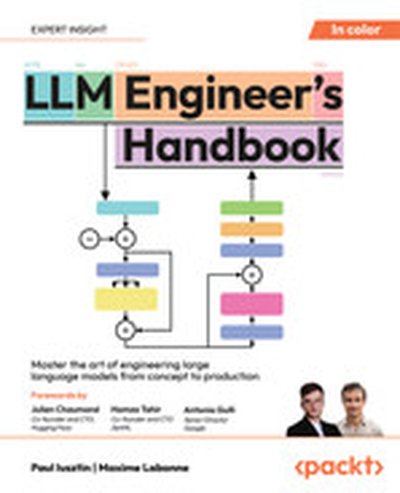
The "LLM Engineer's Handbook" is your comprehensive guide to mastering Large Language Models from concept to deployment. Written by leading experts, it combines theoretical foundations with practical examples to help you build, refine, and deploy LLM-powered solutions that solve real-world problems effectively and efficiently. What this Book will help me do Understand the principles and approaches for training and fine-tuning Large Language Models (LLMs). Apply MLOps practices to design, deploy, and monitor your LLM applications effectively. Implement advanced techniques such as retrieval-augmented generation (RAG) and preference alignment. Optimize inference for high performance, addressing low-latency and high availability for production systems. Develop robust data pipelines and scalable architectures for building modular LLM systems. Author(s) Paul Iusztin and Maxime Labonne are experienced AI professionals specializing in natural language processing and machine learning. With years of industry and academic experience, they are dedicated to making complex AI concepts accessible and actionable. Their collaborative authorship ensures a blend of theoretical rigor and practical insights tailored for modern AI practitioners. Who is it for? This book is tailored for AI engineers, NLP professionals, and LLM practitioners who wish to deepen their understanding of Large Language Models. Ideal readers possess some familiarity with Python, AWS, and general AI concepts. If you aim to apply LLMs to real-world scenarios or enhance your expertise in AI-driven systems, this handbook is designed for you.
Summary: In this episode, we dive into the world of pet health and AI with a focus on an innovative AI-powered pet health chatbot. Inspired by the real-life experience of pet owners, this project tackles the late-night panic every pet parent knows all too well—when your pet gets into something they shouldn’t and you're left searching for answers online. Using the cutting-edge capabilities of GPT-3.5, this chatbot cross-references trusted sources like the ASPCA and AVMA to provide clear, reliable advice on common pet health concerns. While it’s not a replacement for a vet, it’s an invaluable tool for empowering pet owners to take charge of their pet’s health, reducing stress, and improving early detection of potential issues. Join us as we explore how this technology can make a real difference, not just for individual pet owners, but for the entire field of veterinary medicine. Key Takeaways: * The inspiration behind developing an AI-powered pet health chatbot for everyday pet owners. * How GPT-3.5 compares to a human "genius" (think Mike Ross from Suits). * Why trustworthy sources like the ASPCA and AVMA are crucial for providing reliable pet health advice. * A breakdown of how the chatbot works and what it can do for you (or your pet-loving friends). * The future potential of AI in pet health and how it could change the landscape of veterinary care. How do you think having an AI-powered tool like this at your fingertips would change the way we approach pet health? Share your thoughts in the comments or reach out on mukundansankar.substack.com! Links: How I Built an AI-based Chatbot for Diagnosing Pet Health - Blog ASPCA AVMA This is a public episode. If you would like to discuss this with other subscribers or get access to bonus episodes, visit mukundansankar.substack.com
In this session, dbt product manager Jordan Stein will discuss how the dbt Semantic Layer is evolving to provide fast, trusted data for downstream stakeholders. Jordan will cover new features, integrations, and use cases across BI, embedded analytics, and LLMs. Brightside Health will share their experience, showcasing how they use the Semantic Layer to deliver fast, reliable, and secure embedded analytics to their customers.
Speakers: Jordan Stein Product Manager dbt Labs
Hans Nelsen CDO Brightside Health
Read the blog to learn about the latest dbt Cloud features announced at Coalesce, designed to help organizations embrace analytics best practices at scale https://www.getdbt.com/blog/coalesce-2024-product-announcements
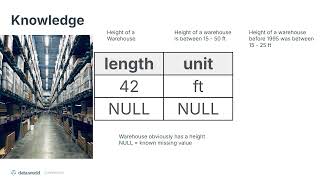
In this talk, we will make the case that the success of enterprise AI depends on an investment in semantics and knowledge, not just data. Our LLM Accuracy benchmark research provided evidence that by layering semantic layers/knowledge graphs on enterprise SQL databases increases the accuracy of LLMs at least 4X for question answering. This work has been reproduced and validated by many others, including dbt labs. It's fantastic that semantics and knowledge are getting the attention it deserves. We need more.
This talk is targeted to 1) those who believe AI accuracy can be improved by simply adding more data to fine-tune/train models, and 2) the believers in semantics and knowledge who need help getting executive buy-in.
We will dive into: - the knowledge engineering work that needs to be done - who should be leading this work (hint: analytics engineers) - what companies lose by not doing this knowledge engineering work
Speaker: Juan Sequeda Principal Scientist and Head of AI Lab data.world
Read the blog to learn about the latest dbt Cloud features announced at Coalesce, designed to help organizations embrace analytics best practices at scale https://www.getdbt.com/blog/coalesce-2024-product-announcements
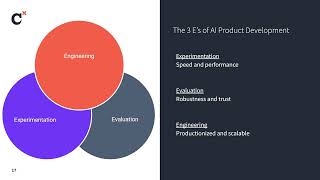
There is a lot of talk when it comes to how LLMs can best be deployed in the analytics space. What are implementation best practices? Are LLMs best suited with text-to-SQL or with a Semantic Layer underneath providing proper constraints?
These are fun discussions to have, but LLMs also present a massive opportunity for companies beyond normal analytics work. The team at Newfront has been building LLM-powered products for clients that are external facing, using a cross-functional group that consists of many data team members.
In this talk, they'll go over where data professionals fit best in building these sorts of products and how to get started in participating in direct value generation for your business.
Speaker: Patrick Miller Head of Data & AI Newfront
Read the blog to learn about the latest dbt Cloud features announced at Coalesce, designed to help organizations embrace analytics best practices at scale https://www.getdbt.com/blog/coalesce-2024-product-announcements
Entities, dimensions, and metrics. These things play crucial roles in allowing companies to create meaningful pictures of their data.
Max has spent the last 2.5 years using dbt with two different cleantech startups, experience he draws on to inform his approach to the challenge of matching and maintaining entities for more robust semantics. This talk will delve into the practical aspects of using the dbt Semantic Layer and Dot an LLM Slack plugin to provide matched insights directly to team members at Topanga.io.
Expect to learn about best practices in self-service, LLMs, data governance, and how to leverage the dbt Semantic Layer effectively. It’s a session geared toward beginners, intermediates, and pros alike
Speaker: Max Richman Head of Data and Financial Analysis Topanga.io
Read the blog to learn about the latest dbt Cloud features announced at Coalesce, designed to help organizations embrace analytics best practices at scale https://www.getdbt.com/blog/coalesce-2024-product-announcements
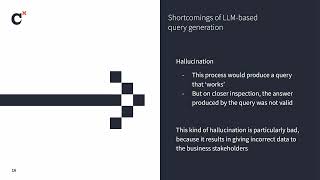
Have you ever wanted to build an AI chatbot to query your data platform? Transforming a business user's natural language question into a valid SQL query that answers their question has huge potential to unlock improved self-service analytics. However, even state-of-the-art LLMs are prone to hallucination, which makes it hard to generate SQL queries that are both conceptually and syntactically correct.
In this talk, you'll learn how the team at M1 Finance tackled this problem using MetricFlow’s rich semantic modeling along with LLM-based tool invocation. This approach enables them to reliably produce valid SQL queries from natural language questions, avoiding issues of hallucination or incorrect metrics.
Speakers: Kelly Wolinetz Senior Data Engineer M1 Finance
Brady Dauzat Machine Learning Engineer M1
Read the blog to learn about the latest dbt Cloud features announced at Coalesce, designed to help organizations embrace analytics best practices at scale https://www.getdbt.com/blog/coalesce-2024-product-announcements
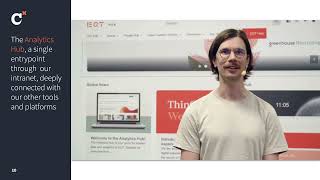
Jonny will showcase how the team at EQT, one of the world's largest private equity firms, is leveraging the dbt Discovery API, data contracts, tagging, and other dbt features to power discovery through their intranet — and by extension, how this also enables the team to support LLMs for live querying of their data.
Speaker: Jonny Reichwald Analytics Lead EQT
Read the blog to learn about the latest dbt Cloud features announced at Coalesce, designed to help organizations embrace analytics best practices at scale https://www.getdbt.com/blog/coalesce-2024-product-announcements
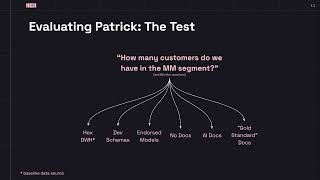
This session is a practical guide to changing how you operate in response to the Cambrian explosion of AI and LLM technologies. In your future, everyone at the company will have access to an LLM with unfettered access to your data warehouse. Do you feel afraid? The Data team at Hex did too. They'll share how they had to change how they worked to adapt, and what data leaders and practitioners need to be thinking about for their own teams.
Speakers: Amanda Fioritto Senior Analytics Engineer Hex Technologies
Erika Pullum Analytics Engineer Hex Technologies
Read the blog to learn about the latest dbt Cloud features announced at Coalesce, designed to help organizations embrace analytics best practices at scale https://www.getdbt.com/blog/coalesce-2024-product-announcements
Vijay Yadav (Director of Data Science at Merck) joins me to chat about a very interesting project he launched at Merck involving LLMs in production. A big part of this discussion is how to make data ready for generative AI.
This is a great example of an LLM-native use case in production, which are rare right now. Lots to learn from here. Enjoy!
LinkedIn: https://www.linkedin.com/in/vijay-yadav-ds/
Está no ar, o Data Hackers News !! Os assuntos mais quentes da semana, com as principais notícias da área de Dados, IA e Tecnologia, que você também encontra na nossa Newsletter semanal, agora no Podcast do Data Hackers !!
Aperte o play e ouça agora, o Data Hackers News dessa semana !
Para saber tudo sobre o que está acontecendo na área de dados, se inscreva na Newsletter semanal:
https://www.datahackers.news/
Conheça nossos comentaristas do Data Hackers News:
Monique Femme
Paulo Vasconcellos
Matérias/assuntos comentados:
State of Data Brazil está no Ar;
A treta da OpenAI e a Amazon;
Amazon vai demitir 14 mil gerentes;
Baixe o relatório completo do State of Data Brazil e os highlights da pesquisa :
Demais canais do Data Hackers:
Site
Linkedin
Instagram
Tik Tok
You Tube
Episode Notes Ever wondered how AI can transform business strategy? In this episode, we dive into the fascinating world of AI-powered SWOT analysis. We are tackling an old problem using a new approach. Using the latest technology, like GPT-3.5, companies can now analyze their strengths, weaknesses, opportunities, and threats with lightning speed. Join us as we explore how AI is reshaping the way we understand market dynamics, financial data, and competitive landscapes, with real-world examples from Google and Meta. Whether you're an investor, entrepreneur, or just curious about the future of business, this episode is packed with insights you won't want to miss! Thanks for reading Data, AI, Productivity & Business with a Little Personality! Subscribe for free to receive new posts and support my work. Key Topics Covered: * What is SWOT Analysis?: A quick refresher on this cornerstone of business strategy (Strengths, Weaknesses, Opportunities, and Threats). * AI Meets Business Strategy: How GPT-3.5 and AI technology are revolutionizing traditional SWOT analysis by speeding up data processing and uncovering deeper insights. * Real-World Examples: AI-driven SWOT analysis of Google and Meta, revealing potential vulnerabilities and opportunities for these tech giants. * Google: Over-reliance on ad revenue and the challenges posed by ad blockers. * Meta: Data privacy issues, regulatory hurdles, and user trust challenges. * Competitive Edge: How AI can give businesses a leg up by performing real-time competitive analysis and market trend predictions. * Beyond Business: Could AI also be used to analyze career paths, personal strengths, and even suggest side hustle ideas? We explore the exciting future possibilities of AI-powered insights. Why Listen? This episode is perfect for anyone interested in how cutting-edge AI tools are transforming not just the business world, but potentially the way we approach decision-making in our own lives. Tune in to find out how AI is making sophisticated analysis more accessible, and what that means for the future. Links & Resources: Blog Post on how AI is changing the SWOT game What is SWOT Analysis? What is Python Programming? More about GPT-3.5 Build and share Python Based Data Apps with Streamlit Thanks for reading Data, AI, Productivity & Business with a Little Personality! Subscribe for free to receive new posts and support my work! This is a public episode. If you would like to discuss this with other subscribers or get access to bonus episodes, visit mukundansankar.substack.com
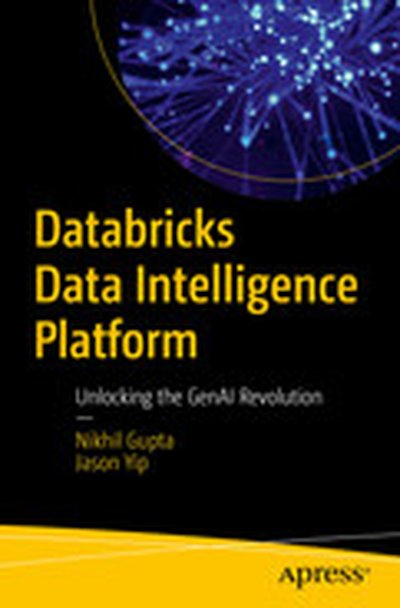
This book is your comprehensive guide to building robust Generative AI solutions using the Databricks Data Intelligence Platform. Databricks is the fastest-growing data platform offering unified analytics and AI capabilities within a single governance framework, enabling organizations to streamline their data processing workflows, from ingestion to visualization. Additionally, Databricks provides features to train a high-quality large language model (LLM), whether you are looking for Retrieval-Augmented Generation (RAG) or fine-tuning. Databricks offers a scalable and efficient solution for processing large volumes of both structured and unstructured data, facilitating advanced analytics, machine learning, and real-time processing. In today's GenAI world, Databricks plays a crucial role in empowering organizations to extract value from their data effectively, driving innovation and gaining a competitive edge in the digital age. This book will not only help you master the Data Intelligence Platform but also help power your enterprise to the next level with a bespoke LLM unique to your organization. Beginning with foundational principles, the book starts with a platform overview and explores features and best practices for ingestion, transformation, and storage with Delta Lake. Advanced topics include leveraging Databricks SQL for querying and visualizing large datasets, ensuring data governance and security with Unity Catalog, and deploying machine learning and LLMs using Databricks MLflow for GenAI. Through practical examples, insights, and best practices, this book equips solution architects and data engineers with the knowledge to design and implement scalable data solutions, making it an indispensable resource for modern enterprises. Whether you are new to Databricks and trying to learn a new platform, a seasoned practitioner building data pipelines, data science models, or GenAI applications, or even an executive who wants to communicate the value of Databricks to customers, this book is for you. With its extensive feature and best practice deep dives, it also serves as an excellent reference guide if you are preparing for Databricks certification exams. What You Will Learn Foundational principles of Lakehouse architecture Key features including Unity Catalog, Databricks SQL (DBSQL), and Delta Live Tables Databricks Intelligence Platform and key functionalities Building and deploying GenAI Applications from data ingestion to model serving Databricks pricing, platform security, DBRX, and many more topics Who This Book Is For Solution architects, data engineers, data scientists, Databricks practitioners, and anyone who wants to deploy their Gen AI solutions with the Data Intelligence Platform. This is also a handbook for senior execs who need to communicate the value of Databricks to customers. People who are new to the Databricks Platform and want comprehensive insights will find the book accessible.
Brought to you by: • Paragon: Build native, customer-facing SaaS integrations 7x faster. • WorkOS: For B2B leaders building enterprise SaaS — On today’s episode of The Pragmatic Engineer, I’m joined by Quinn Slack, CEO and co-founder of Sourcegraph, a leading code search and intelligence platform. Quinn holds a degree in Computer Science from Stanford and is deeply passionate about coding: to the point that he still codes every day! He also serves on the board of Hack Club, a national nonprofit dedicated to bringing coding clubs to high schools nationwide. In this insightful conversation, we discuss: • How Sourcegraph's operations have evolved since 2021 • Why more software engineers should focus on delivering business value • Why Quinn continues to code every day, even as a CEO • Practical AI and LLM use cases and a phased approach to their adoption • The story behind Job Fairs at Sourcegraph and why it’s no longer in use • Quinn’s leadership style and his focus on customers and product excellence • The shift from location-independent pay to zone-based pay at Sourcegraph • And much more! — Where to find Quinn Slack: • X: https://x.com/sqs • LinkedIn: https://www.linkedin.com/in/quinnslack/ • Website: https://slack.org/ Where to find Gergely: • Newsletter: https://www.pragmaticengineer.com/ • YouTube: https://www.youtube.com/c/mrgergelyorosz • LinkedIn: https://www.linkedin.com/in/gergelyorosz/ • X: https://x.com/GergelyOrosz — In this episode, we cover: (01:35) How Sourcegraph started and how it has evolved over the past 11 years (04:14) How scale-ups have changed (08:27) Learnings from 2021 and how Sourcegraph’s operations have streamlined (15:22) Why Quinn is for gradual increases in automation and other thoughts on AI (18:10) The importance of changelogs (19:14) Keeping AI accountable and possible future use cases (22:29) Current limitations of AI (25:08) Why early adopters of AI coding tools have an advantage (27:38) Why AI is not yet capable of understanding existing codebases (31:53) Changes at Sourcegraph since the deep dive on The Pragmatic Engineer blog (40:14) The importance of transparency and understanding the different forms of compensation (40:22) Why Sourcegraph shifted to zone-based pay (47:15) The journey from engineer to CEO (53:28) A comparison of a typical week 11 years ago vs. now (59:20) Rapid fire round The Pragmatic Engineer deepdives relevant for this episode: • Inside Sourcegraph’s engineering culture: Part 1 https://newsletter.pragmaticengineer.com/p/inside-sourcegraphs-engineering-culture• Inside Sourcegraph’s engineering culture: Part 2 https://newsletter.pragmaticengineer.com/p/inside-sourcegraphs-engineering-culture-part-2 — References and Transcript: See the transcript and other references from the episode at https://newsletter.pragmaticengineer.com/podcast — Production and marketing by https://penname.co/. For inquiries about sponsoring the podcast, email [email protected].
Get full access to The Pragmatic Engineer at newsletter.pragmaticengineer.com/subscribe
Está no ar, o Data Hackers News !! Os assuntos mais quentes da semana, com as principais notícias da área de Dados, IA e Tecnologia, que você também encontra na nossa Newsletter semanal, agora no Podcast do Data Hackers !!
Aperte o play e ouça agora, o Data Hackers News dessa semana !
Para saber tudo sobre o que está acontecendo na área de dados, se inscreva na Newsletter semanal:
https://www.datahackers.news/
Conheça nossos comentaristas do Data Hackers News:
Monique Femme
Paulo Vasconcellos
Matérias/assuntos comentados:
OpenAI dobra de valor com novo investimento;
Bots conseguem resolver 100% de CAPTCHAs;
Ferramenta do Google resume videos do Youtube e áudios.
Baixe o relatório completo do State of Data Brazil e os highlights da pesquisa :
Demais canais do Data Hackers:
Site
Linkedin
Instagram
Tik Tok
You Tube