Most generative AI projects look impressive in a demo but fail in the real world. This session moves beyond the hype to offer a practical, engineering-focused playbook on the architectural patterns and hard-won lessons required to take your LLM application from a cool prototype to a scalable product serving thousands of users. We'll uncover the unglamorous but essential truths about observability, routing, and a production-first mindset.
 talk-data.com
Topic
LLM
Large Language Models (LLM)
nlp
ai
machine_learning
1405
tagged
Activity Trend
158
peak/qtr
2020-Q1
2026-Q2
Top Events
What if your job hunt could run like a data system? In this episode, I share the story of how I used three AI agents — Researcher, Writer, and Reviewer — to rebuild my job search from the ground up. These agents read job descriptions, tailor resumes, and even critique tone and clarity — saving hours every week. But this episode isn’t just about automation. It’s about agency. I’ll talk about rejection, burnout, and the mindset shift that changed everything: treating every rejection as a data point, not a defeat. Whether you’re in tech, analytics, or just tired of the job search grind — this one’s for you. 🔹 Learn how I automated resume tailoring with GPT-4 🔹 Understand how to design AI systems that protect your mental energy 🔹 Discover why “efficiency” means doing less of what drains you 🔹 Hear the emotional story behind building these agents from scratch Join the Discussion (comments hub): https://mukundansankar.substack.com/notesTools I use for my Podcast and Affiliate PartnersRecording Partner: Riverside → Sign up here (affiliate)Host Your Podcast: RSS.com (affiliate )Research Tools: Sider.ai (affiliate)Sourcetable AI: Join Here(affiliate)🔗 Connect with Me:Free Email NewsletterWebsite: Data & AI with MukundanGitHub: https://github.com/mukund14Twitter/X: @sankarmukund475LinkedIn: Mukundan SankarYouTube: Subscribe
Summary In this episode of the Data Engineering Podcast Omri Lifshitz (CTO) and Ido Bronstein (CEO) of Upriver talk about the growing gap between AI's demand for high-quality data and organizations' current data practices. They discuss why AI accelerates both the supply and demand sides of data, highlighting that the bottleneck lies in the "middle layer" of curation, semantics, and serving. Omri and Ido outline a three-part framework for making data usable by LLMs and agents: collect, curate, serve, and share challenges of scaling from POCs to production, including compounding error rates and reliability concerns. They also explore organizational shifts, patterns for managing context windows, pragmatic views on schema choices, and Upriver's approach to building autonomous data workflows using determinism and LLMs at the right boundaries. The conversation concludes with a look ahead to AI-first data platforms where engineers supervise business semantics while automation stitches technical details end-to-end.
Announcements Hello and welcome to the Data Engineering Podcast, the show about modern data managementData teams everywhere face the same problem: they're forcing ML models, streaming data, and real-time processing through orchestration tools built for simple ETL. The result? Inflexible infrastructure that can't adapt to different workloads. That's why Cash App and Cisco rely on Prefect. Cash App's fraud detection team got what they needed - flexible compute options, isolated environments for custom packages, and seamless data exchange between workflows. Each model runs on the right infrastructure, whether that's high-memory machines or distributed compute. Orchestration is the foundation that determines whether your data team ships or struggles. ETL, ML model training, AI Engineering, Streaming - Prefect runs it all from ingestion to activation in one platform. Whoop and 1Password also trust Prefect for their data operations. If these industry leaders use Prefect for critical workflows, see what it can do for you at dataengineeringpodcast.com/prefect.Data migrations are brutal. They drag on for months—sometimes years—burning through resources and crushing team morale. Datafold's AI-powered Migration Agent changes all that. Their unique combination of AI code translation and automated data validation has helped companies complete migrations up to 10 times faster than manual approaches. And they're so confident in their solution, they'll actually guarantee your timeline in writing. Ready to turn your year-long migration into weeks? Visit dataengineeringpodcast.com/datafold today for the details.Composable data infrastructure is great, until you spend all of your time gluing it together. Bruin is an open source framework, driven from the command line, that makes integration a breeze. Write Python and SQL to handle the business logic, and let Bruin handle the heavy lifting of data movement, lineage tracking, data quality monitoring, and governance enforcement. Bruin allows you to build end-to-end data workflows using AI, has connectors for hundreds of platforms, and helps data teams deliver faster. Teams that use Bruin need less engineering effort to process data and benefit from a fully integrated data platform. Go to dataengineeringpodcast.com/bruin today to get started. And for dbt Cloud customers, they'll give you $1,000 credit to migrate to Bruin Cloud.Your host is Tobias Macey and today I'm interviewing Omri Lifshitz and Ido Bronstein about the challenges of keeping up with the demand for data when supporting AI systemsInterview IntroductionHow did you get involved in the area of data management?We're here to talk about "The Growing Gap Between Data & AI". From your perspective, what is this gap, and why do you think it's widening so rapidly right now?How does this gap relate to the founding story of Upriver? What problems were you and your co-founders experiencing that led you to build this?The core premise of new AI tools, from RAG pipelines to LLM agents, is that they are only as good as the data they're given. How does this "garbage in, garbage out" problem change when the "in" is not a static file but a complex, high-velocity, and constantly changing data pipeline?Upriver is described as an "intelligent agent system" and an "autonomous data engineer." This is a fascinating "AI to solve for AI" approach. Can you describe this agent-based architecture and how it specifically works to bridge that data-AI gap?Your website mentions a "Data Context Layer" that turns "tribal knowledge" into a "machine-usable mode." This sounds critical for AI. How do you capture that context, and how does it make data "AI-ready" in a way that a traditional data catalog or quality tool doesn't?What are the most innovative or unexpected ways you've seen companies trying to make their data "AI-ready"? And where are the biggest points of failure you observe?What has been the most challenging or unexpected lesson you've learned while building an AI system (Upriver) that is designed to fix the data foundation for other AI systems?When is an autonomous, agent-based approach not the right solution for a team's data quality problems? What organizational or technical maturity is required to even start closing this data-AI gap?What do you have planned for the future of Upriver? And looking more broadly, how do you see this gap between data and AI evolving over the next few years?Contact Info Ido - LinkedInOmri - LinkedInParting Question From your perspective, what is the biggest gap in the tooling or technology for data management today?Closing Announcements Thank you for listening! Don't forget to check out our other shows. Podcast.init covers the Python language, its community, and the innovative ways it is being used. The AI Engineering Podcast is your guide to the fast-moving world of building AI systems.Visit the site to subscribe to the show, sign up for the mailing list, and read the show notes.If you've learned something or tried out a project from the show then tell us about it! Email [email protected] with your story.Links UpriverRAG == Retrieval Augmented GenerationAI Engineering Podcast EpisodeAI AgentContext WindowModel Finetuning)The intro and outro music is from The Hug by The Freak Fandango Orchestra / CC BY-SA
The AI landscape is evolving beyond gigantic models like GPT-4 towards a new generation of small, smart, and specialised models that can run privately, securely and efficiently on everyday devices. In this talk, Mehmood explores how these compact models, trained on domain-specific data, deliver powerful performance while reducing energy costs, improving privacy, and removing the need for constant cloud access. From customer service chatbots that understand regional dialects to intelligent on-device assistants in healthcare and retail, discover how small AI is making intelligence more sustainable, secure, and accessible for businesses of all sizes.
Learn how to build a Data Agent for Snowflake Intelligence using Snowflake Cortex AI that can intelligently respond to questions by reasoning over both structured and unstructured data.
We'll use a custom dataset focused on bikes and skis. This dataset is intentionally artificial, ensuring that no external LLM has prior knowledge of it. This gives us a clean and controlled environment to test and evaluate our data agent. By the end of the session, you'll have a working AI-powered agent capable of understanding and retrieving insights across diverse data types — all securely within Snowflake.
This is a Hands-On workshop, all attendees must bring their own laptop to participate.
Ever wondered what actually happens when you call an LLM API? This talk breaks down the inference pipeline from tokenization to text generation, explaining what's really going on under the hood. He will walk through the key sampling strategies and their parameters - temperature, top-p, top-k, beam search. We'll also cover performance tricks like quantization, KV caching, and prompt caching that can speed things up significantly. If time allows, we will also touch on some use-case-specific techniques like pass@k and majority voting.
Brought to You By: • Statsig — The unified platform for flags, analytics, experiments, and more. • Linear – The system for modern product development. — Addy Osmani is Head of Chrome Developer Experience at Google, where he leads teams focused on improving performance, tooling, and the overall developer experience for building on the web. If you’ve ever opened Chrome’s Developer Tools bar, you’ve definitely used features Addy has built. He’s also the author of several books, including his latest, Beyond Vibe Coding, which explores how AI is changing software development. In this episode of The Pragmatic Engineer, I sit down with Addy to discuss how AI is reshaping software engineering workflows, the tradeoffs between speed and quality, and why understanding generated code remains critical. We dive into his article The 70% Problem, which explains why AI tools accelerate development but struggle with the final 30% of software quality—and why this last 30% is tackled easily by software engineers who understand how the system actually works. — Timestamps (00:00) Intro (02:17) Vibe coding vs. AI-assisted engineering (06:07) How Addy uses AI tools (13:10) Addy’s learnings about applying AI for development (18:47) Addy’s favorite tools (22:15) The 70% Problem (28:15) Tactics for efficient LLM usage (32:58) How AI tools evolved (34:29) The case for keeping expectations low and control high (38:05) Autonomous agents and working with them (42:49) How the EM and PM role changes with AI (47:14) The rise of new roles and shifts in developer education (48:11) The importance of critical thinking when working with AI (54:08) LLMs as a tool for learning (1:03:50) Rapid questions — The Pragmatic Engineer deepdives relevant for this episode: • Vibe Coding as a software engineer • How AI-assisted coding will change software engineering: hard truths • AI Engineering in the real world • The AI Engineering stack • How Claude Code is built — Production and marketing by https://penname.co/. For inquiries about sponsoring the podcast, email [email protected].
Get full access to The Pragmatic Engineer at newsletter.pragmaticengineer.com/subscribe
Jeremiah Lowin, founder of Prefect , returns to the show to discuss the seismic shift in the data and AI landscape since our last conversation a few years ago. He shares the wild origin story of FastMCP, a project he started to create a more "Pythonic" wrapper for Anthropic's Model Context Protocol (MCP).
Jeremiah explains how this side project was incorporated into Anthropic's official SDK and then exploded to over a million downloads a day after MCP gained support from OpenAI and Google. He clarifies why this is an complementary expansion for Prefect, not a pivot , and provides a simple analogy for MCP as the "USB-C for AI agents". Most surprisingly, Jeremiah reveals that the primary adoption of MCP isn't for external products, but internally by data teams who are using it to finally fulfill the promise of the self-serve semantic layer and create a governable, "LLM-free zone" for AI tools.
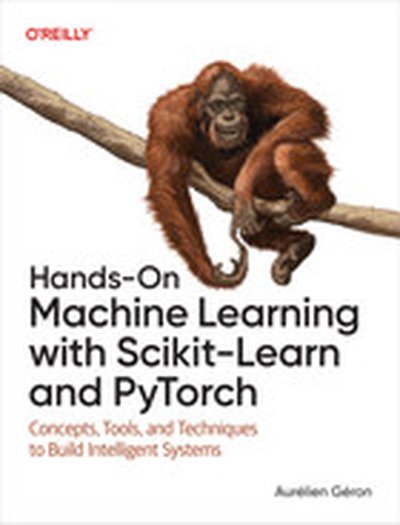
The potential of machine learning today is extraordinary, yet many aspiring developers and tech professionals find themselves daunted by its complexity. Whether you're looking to enhance your skill set and apply machine learning to real-world projects or are simply curious about how AI systems function, this book is your jumping-off place. With an approachable yet deeply informative style, author Aurélien Géron delivers the ultimate introductory guide to machine learning and deep learning. Drawing on the Hugging Face ecosystem, with a focus on clear explanations and real-world examples, the book takes you through cutting-edge tools like Scikit-Learn and PyTorch—from basic regression techniques to advanced neural networks. Whether you're a student, professional, or hobbyist, you'll gain the skills to build intelligent systems. Understand ML basics, including concepts like overfitting and hyperparameter tuning Complete an end-to-end ML project using scikit-Learn, covering everything from data exploration to model evaluation Learn techniques for unsupervised learning, such as clustering and anomaly detection Build advanced architectures like transformers and diffusion models with PyTorch Harness the power of pretrained models—including LLMs—and learn to fine-tune them Train autonomous agents using reinforcement learning
What happens when an AI starts asking better questions than you? In this 60-minute episode, I share the real story behind “The AI That Thinks Like an Analyst” — a Streamlit + GPT-4 project that changed the way I see data, curiosity, and creativity. This isn’t a technical tutorial. It’s a journey into the mind of a data professional learning to think deeper — and how building this AI taught me the most human lesson of all: how to stay curious. We’ll explore: Why the hardest part of analysis isn’t code — it’s curiosity.How I built a privacy-first Streamlit app that generates questions instead of answers.What AI can teach us about slowing down, observing, and thinking like explorers.The moment I realized data analysis and self-reflection are the same skill.If you’ve ever felt stuck staring at your data, unsure what to ask next — this episode is for you. 📖 Read the full story: https://mukundansankar.substack.com/p/the-no-upload-ai-analyst-v4-secure Join the Discussion (comments hub): https://mukundansankar.substack.com/notesTools I use for my Podcast and Affiliate PartnersRecording Partner: Riverside → Sign up here (affiliate)Host Your Podcast: RSS.com (affiliate )Research Tools: Sider.ai (affiliate)Sourcetable AI: Join Here(affiliate)🔗 Connect with Me:Free Email NewsletterWebsite: Data & AI with MukundanGitHub: https://github.com/mukund14Twitter/X: @sankarmukund475LinkedIn: Mukundan SankarYouTube: Subscribe
Discussion on removing speed limits for the development of agentic features, from initial LLM-powered features at Grammarly to a modern, first-class agentic surface.
Keynote speaker from LangChain
Combiner LLM et règles métier pour améliorer la pertinence des correspondances et accélérer les recommandations.
In this talk, Hugo Bowne-Anderson, an independent data and AI consultant, educator, and host of the podcasts Vanishing Gradients and High Signal, shares his journey from academic research and curriculum design at DataCamp to advising teams at Netflix, Meta, and the US Air Force. Together, we explore how to build reliable, production-ready AI systems—from prompt evaluation and dataset design to embedding agents into everyday workflows.
You’ll learn about: How to structure teams and incentives for successful AI adoptionPractical prompting techniques for accurate timestamp and data generationBuilding and maintaining evaluation sets to avoid “prompt overfitting”- Cost-effective methods for LLM evaluation and monitoringTools and frameworks for debugging and observing AI behavior (Logfire, Braintrust, Phoenix Arise)The evolution of AI agents—from simple RAG systems to proactive, embedded assistantsHow to escape “proof of concept purgatory” and prioritize AI projects that drive business valueStep-by-step guidance for building reliable, evaluable AI agents This session is ideal for AI engineers, data scientists, ML product managers, and startup founders looking to move beyond experimentation into robust, scalable AI systems. Whether you’re optimizing RAG pipelines, evaluating prompts, or embedding AI into products, this talk offers actionable frameworks to guide you from concept to production.
LINKS Escaping POC Purgatory: Evaluation-Driven Development for AI Systems - https://www.oreilly.com/radar/escaping-poc-purgatory-evaluation-driven-development-for-ai-systems/Stop Building AI Agents - https://www.decodingai.com/p/stop-building-ai-agentsHow to Evaluate LLM Apps Before You Launch - https://www.youtube.com/watch?si=90fXJJQThSwGCaYv&v=TTr7zPLoTJI&feature=youtu.beMy Vanishing Gradients Substack - https://hugobowne.substack.com/Building LLM Applications for Data Scientists and Software Engineers https://maven.com/hugo-stefan/building-ai-apps-ds-and-swe-from-first-principles?promoCode=datatalksclub TIMECODES: 00:00 Introduction and Expertise 04:04 Transition to Freelance Consulting and Advising 08:49 Restructuring Teams and Incentivizing AI Adoption 12:22 Improving Prompting for Timestamp Generation 17:38 Evaluation Sets and Failure Analysis for Reliable Software 23:00 Evaluating Prompts: The Cost and Size of Gold Test Sets 27:38 Software Tools for Evaluation and Monitoring 33:14 Evolution of AI Tools: Proactivity and Embedded Agents 40:12 The Future of AI is Not Just Chat 44:38 Avoiding Proof of Concept Purgatory: Prioritizing RAG for Business Value 50:19 RAG vs. Agents: Complexity and Power Trade-Offs 56:21 Recommended Steps for Building Agents 59:57 Defining Memory in Multi-Turn Conversations
Connect with Hugo Twitter - https://x.com/hugobowneLinkedin - https://www.linkedin.com/in/hugo-bowne-anderson-045939a5/Github - https://github.com/hugobowneWebsite - https://hugobowne.github.io/ Connect with DataTalks.Club: Join the community - https://datatalks.club/slack.htmlSubscribe to our Google calendar to have all our events in your calendar - https://calendar.google.com/calendar/r?cid=ZjhxaWRqbnEwamhzY3A4ODA5azFlZ2hzNjBAZ3JvdXAuY2FsZW5kYXIuZ29vZ2xlLmNvbQCheck other upcoming events - https://lu.ma/dtc-eventsGitHub: https://github.com/DataTalksClub- LinkedIn - https://www.linkedin.com/company/datatalks-club/ Twitter - https://twitter.com/DataTalksClub - Website - https://datatalks.club/
by
Data Talks Club
(DataTalks.Club)
,
Sebastian Ayala Ruano
(Multiomics Network Analytics Group, DTU Biosustain)
In this talk, Sebastian, a bioinformatics researcher and software engineer, shares his inspiring journey from wet lab biotechnology to computational bioinformatics. Hosted by Data Talks Club, this session explores how data science, AI, and open-source tools are transforming modern biological research — from DNA sequencing to metagenomics and protein structure prediction.
You’ll learn about: - The difference between wet lab and dry lab workflows in biotechnology - How bioinformatics enables faster insights through data-driven modeling - The MCW2 Graph Project and its role in studying wastewater microbiomes - Using co-abundance networks and the CC Lasso algorithm to map microbial interactions - How AlphaFold revolutionized protein structure prediction - Building scientific knowledge graphs to integrate biological metadata - Open-source tools like VueGen and VueCore for automating reports and visualizations - The growing impact of AI and large language models (LLMs) in research and documentation - Key differences between R (BioConductor) and Python ecosystems for bioinformatics
This talk is ideal for data scientists, bioinformaticians, biotech researchers, and AI enthusiasts who want to understand how data science, AI, and biology intersect. Whether you work in genomics, computational biology, or scientific software, you’ll gain insights into real-world tools and workflows shaping the future of bioinformatics.
Links: - MicW2Graph: https://zenodo.org/records/12507444 - VueGen: https://github.com/Multiomics-Analytics-Group/vuegen - Awesome-Bioinformatics: https://github.com/danielecook/Awesome-Bioinformatics
TIMECODES00:00 Sebastian’s Journey into Bioinformatics06:02 From Wet Lab to Computational Biology08:23 Wet Lab vs Dry Lab Explained12:35 Bioinformatics as Data Science for Biology15:30 How DNA Sequencing Works19:29 MCW2 Graph and Wastewater Microbiomes23:10 Building Microbial Networks with CC Lasso26:54 Protein–Ligand Simulation Basics29:58 Predicting Protein Folding in 3D33:30 AlphaFold Revolution in Protein Prediction36:45 Inside the MCW2 Knowledge Graph39:54 VueGen: Automating Scientific Reports43:56 VueCore: Visualizing OMIX Data47:50 Using AI and LLMs in Bioinformatics50:25 R vs Python in Bioinformatics Tools53:17 Closing Thoughts from Ecuador Connect with Sebastian Twitter - https://twitter.com/sayalaruanoLinkedin - https://linkedin.com/in/sayalaruano Github - https://github.com/sayalaruanoWebsite - https://sayalaruano.github.io/ Connect with DataTalks.Club: Join the community - https://datatalks.club/slack.htmlSubscribe to our Google calendar to have all our events in your calendar - https://calendar.google.com/calendar/r?cid=ZjhxaWRqbnEwamhzY3A4ODA5azFlZ2hzNjBAZ3JvdXAuY2FsZW5kYXIuZ29vZ2xlLmNvbQCheck other upcoming events - https://lu.ma/dtc-eventsGitHub: https://github.com/DataTalksClubLinkedIn - https://www.linkedin.com/company/datatalks-club/Twitter - https://twitter.com/DataTalksClub - Website - https://datatalks.club/

Dive into 'Microsoft Power Platform Solution Architect's Handbook' to master the art of designing and delivering enterprise-grade solutions using Microsoft's cutting-edge Power Platform. Through a mix of practical examples and hands-on tutorials, this book equips you to harness tools like AI, Copilot, and DevOps for building innovative, scalable applications tailored to enterprise needs. What this Book will help me do Acquire the knowledge to effectively utilize AI tools such as Power Platform Copilot and ChatGPT to enhance application intelligence. Understand and apply enterprise-grade solution architecture principles for scalable and secure application development. Gain expertise in integrating heterogenous systems with Power Platform Pipes and third-party APIs. Develop proficiency in creating and maintaining reusable Dataverse data models. Learn to establish and manage a Center of Excellence to govern and scale Power Platform solutions. Author(s) Hugo Herrera is an experienced solution architect specializing in the Microsoft Power Platform with a deep focus on integrating AI and cloud-native strategies. With years of hands-on experience in enterprise software development and architectural design, Hugo brings real-world insights into his writing, emphasizing practical application of advanced concepts. His approach is clear, structured, and aimed at empowering readers to excel. Who is it for? This book is tailored for IT professionals like solution architects, enterprise architects, and technical consultants who are looking to elevate their capabilities in Power Platform development. It is also suitable for individuals with an intermediate understanding of Power Platform seeking to spearhead enterprise-level digital transformation projects. Ideal readers are those ready to deepen their integration, data modeling, and AI usage skills within the Microsoft ecosystem, particularly for enterprise applications.