Discussion de la philosophie de Karpathy 'no magic, no black box' et de son influence sur la compréhension des LLMs, dans le cadre de NanoChat et d'un pipeline LLM de bout en bout.
 talk-data.com
Topic
LLM
Large Language Models (LLM)
nlp
ai
machine_learning
1405
tagged
Activity Trend
158
peak/qtr
2020-Q1
2026-Q2
Top Events
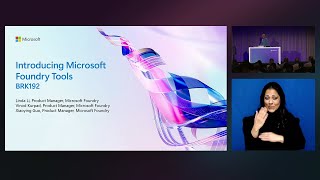
AI agents need tools to take actions and complete their workflow; tools that can parse documents, transcribe call recordings, do custom translation--all with LLMs wrapped within them. In this session, we are introducing a new suite of production-ready tools in Microsoft Foundry, designed to seamlessly plug into your agentic AI apps, either using APIs or as MCP servers.
Data engineering is undergoing a fundamental shift. In this episode, I sit down with Nick Schrock, founder and CTO of Dagster, to discuss why he went from being an "AI moderate" to believing 90% of code will be written by AI. Being hands on also led to a massive pivot in Dagster’s roadmap and a new focus on managing and engineering context. We dive deep into why simply feeding data to LLMs isn't enough. Nick explains why real-time context tools (like MCPs) can become "token hogs" that lack precision and why the future belongs to "context pipelines": offline, batch-computed context that is governed, versioned, and treated like code. We also explore Compass, Dagster’s new collaborative agent that lives in Slack, bridging the gap between business stakeholders and data teams. If you’re wondering how your role as a data engineer will evolve in an agentic world, this conversation maps out the territory Dagster: dagster.io Nick Schrock on X: @schrockn
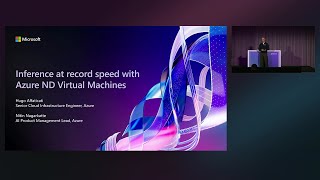
Azure sets new inference records with 865K and 1.1M tokens/sec on ND GB200/GB300 v6 VMs. These results stem from deep stack optimization—from GPU kernels like GEMM and attention to multi-node scaling. Using LLAMA benchmarks, we’ll show how model architecture and hardware codesign drive throughput and efficiency. Customers benefit from faster time-to-value, lower cost per token, and production-ready infrastructure. Attendees can connect with Azure engineers to discuss best practices.
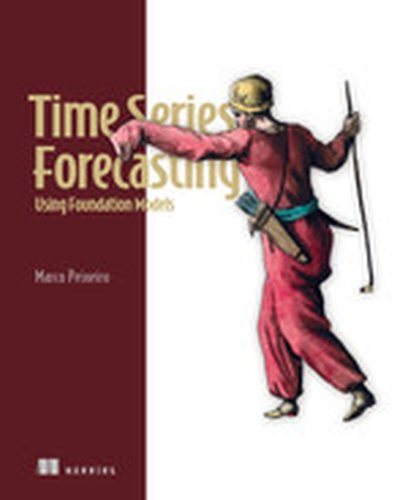
Make accurate time series predictions with powerful pretrained foundation models! You don’t need to spend weeks—or even months—coding and training your own models for time series forecasting. Time Series Forecasting Using Foundation Models shows you how to make accurate predictions using flexible pretrained models. In Time Series Forecasting Using Foundation Models you will discover: The inner workings of large time models Zero-shot forecasting on custom datasets Fine-tuning foundation forecasting models Evaluating large time models Time Series Forecasting Using Foundation Models teaches you how to do efficient forecasting using powerful time series models that have already been pretrained on billions of data points. You’ll appreciate the hands-on examples that show you what you can accomplish with these amazing models. Along the way, you’ll learn how time series foundation models work, how to fine-tune them, and how to use them with your own data. About the Technology Time-series forecasting is the art of analyzing historical, time-stamped data to predict future outcomes. Foundational time series models like TimeGPT and Chronos, pre-trained on billions of data points, can now effectively augment or replace painstakingly-built custom time-series models. About the Book Time Series Forecasting Using Foundation Models explores the architecture of large time models and shows you how to use them to generate fast, accurate predictions. You’ll learn to fine-tune time models on your own data, execute zero-shot probabilistic forecasting, point forecasting, and more. You’ll even find out how to reprogram an LLM into a time series forecaster—all following examples that will run on an ordinary laptop. What's Inside How large time models work Zero-shot forecasting on custom datasets Fine-tuning and evaluating foundation models About the Reader For data scientists and machine learning engineers familiar with the basics of time series forecasting theory. Examples in Python. About the Author Marco Peixeiro builds cutting-edge open-source forecasting Python libraries at Nixtla. He is the author of Time Series Forecasting in Python. Quotes Clear and hands-on, featuring both theory and easy-to-follow examples. - Eryk Lewinson, Author of Python for Finance Cookbook Bridges the gap between classical forecasting methods and the new developments in the foundational models. A fantastic resource. - Juan Orduz, PyMC Labs A foundational guide to forecasting’s next chapter. - Tyler Blume, daybreak An immensely practical introduction to forecasting using foundation models. - Stephan Kolassa, SAP Switzerland
Learn to leverage agent-framework, the new unified platform from Semantic Kernel and AutoGen engineering teams, to build A2A compatible agents similar to magnetic-one. Use SWE Agents (GitHub Copilot coding agent and Codex with Azure OpenAI models) to accelerate development. Implement MCP tools for secure enterprise agentic workflows. Experience hands-on building, deploying, and orchestrating multi-agent systems with pre-release capabilities. Note: Contains embargoed content.
Please RSVP and arrive at least 5 minutes before the start time, at which point remaining spaces are open to standby attendees.
Over the past few years, we’ve explored using large language models with external data and tools, facing many challenges. The Model Context Protocol (MCP) addresses these by standardizing how data and tools connect. In this session, we’ll demystify MCP, its purpose and architecture, and show how it enables precise tuning of models, contextual reuse, and safe delegation. While designed for developers and leads, it will help anyone assess if MCP fits their LLM projects.
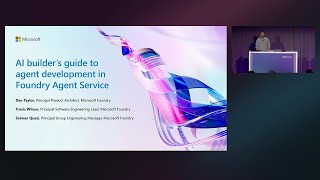
Build, operate, and scale AI agents with Foundry Agent Service. Learn how to author agents, connect tools and data, evaluate performance, and deploy to a secure runtime for production. See how to bring OpenAI API–based projects into Foundry with minimal changes while gaining enterprise-grade governance, observability, and interoperability through the Model Context Protocol and agent-to-agent capabilities.
AI performance extends beyond chip metrics; it relies on integrated hardware, software, and infrastructure. Traditional benchmarks fall short, so NVIDIA DGX Cloud Benchmarking offers a standardized framework to evaluate large-scale AI workloads. NVIDIA and Azure present an end-to-end benchmarking workflow, sharing optimization strategies for deploying and tuning production-ready LLMs on Azure.
Agentic AI is swiftly transforming opportunities and risks in financial services. As banks use AI for secure experiences, criminals exploit these same technologies to create sophisticated scams and expand mule networks. OpenAI’s research underscores the urgency of these challenges. In this keynote, BioCatch will show how behavioral biometrics and fraud analytics, powered by Microsoft Cloud, help banks disrupt scams, dismantle mule networks, and rebuild digital trust worldwide.
Learn how partners can build scalable, secure AI solutions with Microsoft Foundry. Integrate models from OpenAI, Cohere, Mistral, Hugging Face, and Meta Llama using Azure Databricks, Cosmos DB, Snowflake, and SQL. Foundry enables orchestration of agents, model customization, and secure data workflows—all within environments like GitHub, Visual Studio, and Copilot Studio.
With o1, OpenAI ushered a new era: LLMs with reasoning capabilities. This new breed of models broadened the concept of scaling laws, shifting focus from train-time to inference-time compute. But how do these models work? What does "inference-time compute" exactly mean? What data do we use to train these new models? And finally - and perhaps more importantly: how expensive can they get, and what can we use them for?
Build standout AI products fast with Microsoft Foundry—LLMs and Agents. Learn patterns to ship apps grounded on enterprise data via OneLake and connected platforms (Fabric, Snowflake, CosmosDB, SQL, etc.). We’ll cover retrieval, tool-use, guardrails, and evaluation—plus a lean dev loop that turns experiments into production while meeting responsible AI standards.
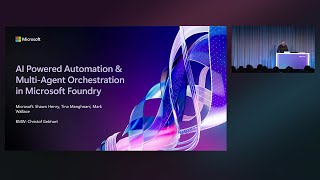
by
Christof Gebhart
(BMW Group)
,
Tina Manghnani
(Microsoft)
,
Mark Wallace
(Microsoft)
,
Shawn Henry
(Microsoft)
Build multi?agent systems the right way with Microsoft Foundry. Go from single?agent prototypes to fleet?level orchestration using the Foundry Agent Framework (Semantic Kernel + AutoGen), shared state, Human in the loop, OpenTel, MCP toolchains, A2A, and the Activity Protocol. Bring frameworks like LangGraph and OpenAI Agents SDK, then deploy as containerized, governed, observable agents on Foundry.
Delivered in a silent stage breakout.
As LLMs grow, efficient inference requires multi-node execution—introducing challenges in orchestration, scheduling, and low-latency GPU-to-GPU data transfers. Hardware like the GB200 NVL72 delivers massive scale-up compute, but truly scalable inference also depends on advanced software. Explore how open-source frameworks like NVIDIA Dynamo, combined with Azure’s AKS managed Kubernetes service, unlock new levels of performance and cost-efficiency.
Brought to You By: • Statsig — The unified platform for flags, analytics, experiments, and more. AI-accelerated development isn’t just about shipping faster: it’s about measuring whether, what you ship, actually delivers value. This is where modern experimentation with Statsig comes in. Check it out. • Linear — The system for modern product development. I had a jaw-dropping experience when I dropped in for the weekly “Quality Wednesdays” meeting at Linear. Every week, every dev fixes at least one quality isse, large or small. Even if it’s one pixel misalignment, like this one. I’ve yet to see a team obsess this much about quality. Read more about how Linear does Quality Wednesdays – it’s fascinating! — Martin Fowler is one of the most influential people within software architecture, and the broader tech industry. He is the Chief Scientist at Thoughtworks and the author of Refactoring and Patterns of Enterprise Application Architecture, and several other books. He has spent decades shaping how engineers think about design, architecture, and process, and regularly publishes on his blog, MartinFowler.com. In this episode, we discuss how AI is changing software development: the shift from deterministic to non-deterministic coding; where generative models help with legacy code; and the narrow but useful cases for vibe coding. Martin explains why LLM output must be tested rigorously, why refactoring is more important than ever, and how combining AI tools with deterministic techniques may be what engineering teams need. We also revisit the origins of the Agile Manifesto and talk about why, despite rapid changes in tooling and workflows, the skills that make a great engineer remain largely unchanged. — Timestamps (00:00) Intro (01:50) How Martin got into software engineering (07:48) Joining Thoughtworks (10:07) The Thoughtworks Technology Radar (16:45) From Assembly to high-level languages (25:08) Non-determinism (33:38) Vibe coding (39:22) StackOverflow vs. coding with AI (43:25) Importance of testing with LLMs (50:45) LLMs for enterprise software (56:38) Why Martin wrote Refactoring (1:02:15) Why refactoring is so relevant today (1:06:10) Using LLMs with deterministic tools (1:07:36) Patterns of Enterprise Application Architecture (1:18:26) The Agile Manifesto (1:28:35) How Martin learns about AI (1:34:58) Advice for junior engineers (1:37:44) The state of the tech industry today (1:42:40) Rapid fire round — The Pragmatic Engineer deepdives relevant for this episode: • Vibe coding as a software engineer • The AI Engineering stack • AI Engineering in the real world • What changed in 50 years of computing — Production and marketing by https://penname.co/. For inquiries about sponsoring the podcast, email [email protected].
Get full access to The Pragmatic Engineer at newsletter.pragmaticengineer.com/subscribe
KPMG’s AI-driven platform transforms insurance claims management using Microsoft Azure and OpenAI. Informed by live client use cases, the solution analyzes large datasets, identifies high-value opportunities, and generates actionable insights. The solution improves operational efficiency, accelerates decision-making, and helps insurers unlock hidden value across complex claims portfolios.
The explosive growth of cloud data—and its importance for analytics and AI—demands a new approach to protection and access. Traditional backup tools weren’t built to handle hyperscale workloads, such as Azure Blob Storage and Cosmos DB, resulting in costly silos. Discover how a cloud-native platform delivers hyperscale protection, automates operations, reduces TCO, and turns backups into a live, queryable data lake for analytics in Azure Synapse, Microsoft Fabric, and Azure OpenAI.
As AI workloads grow, infrastructure must keep pace. This session covers Azure’s silicon-to-systems optimization, hardware-software codesign, and datacenter advances in cooling, power, network, and security. Learn about Azure’s latest AI infrastructure powered by NVIDIA Grace Blackwell Superchips and Quantum-2 InfiniBand, including ND GB200/GB300 VMs with exascale performance and 860K+ tokens/sec on LLAMA 70B. We’ll also cover NC H100 and NC RTX Blackwell VMs for enterprise inferencing.
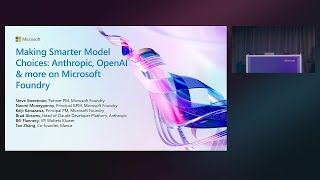
by
Naomi Moneypenny
(Microsoft)
,
Steve Sweetman
(Azure OpenAI)
,
Keiji Kanazawa
(Microsoft)
,
Tao Zhang
(Manus)
,
Bill Flannery
(Wolters Kluwer)
With models from OpenAI, Anthropic, Cohere, Black Forest Labs, Mistral AI, Meta, xAI and more, Microsoft Foundry brings the world’s most advanced AI models together in one secure, unified platform. Learn how to select, evaluate, and intelligently route models to achieve the right balance of cost, latency, and accuracy—all while maintaining enterprise-grade security, responsible AI practices, and built-in governance across every workload.