SRE gets many customer tickets, some of which are answered in the many go links we have on our page that no one will read. RAG trains an LLm on our codebase, internal documentation, forums, issues queries, etc. These contextual resources help the customer get better answers to their questions faster, freeing up time on both the customer, dev, and SRE side. Additionally, this helps train our team more efficiently as well.
 talk-data.com
Topic
observability
41
tagged
Activity Trend
13
peak/qtr
2020-Q1
2026-Q2
Top Events
New Relic User Meetup: Berlin
3
VictoriaMetrics | Criteo - Observability Meetup in Paris 🇫🇷 - Tech Event
3
O'Reilly Data Engineering Books
2
Microsoft Agent 365 Masterclass: Leading the Era of Agentic AI
1
IN PERSON! Apache Kafka® Meetup Paris @ Devoteam - January 2024
1
Astronomer's Airflow Forum
1
GenAI x Chips: Vienna Roundtable — From Silicon to Agents (DACH)
1
GenAI x Chips: Vienna Roundtable — From Silicon to Agents (DACH)
1
AI & Infra – A Full-Stack Observability Showcase + Panel
1
dbt Global Circuit Series: Belgium dbt Meetup #11 (in-person)
1
GenAI x Chips: Vienna Roundtable — From Silicon to Agents (DACH)
1
New Relic Breakfast Club: London
1
Agentic LLM adoption — LangChain and LlamaIndex in production, tools, evaluation and observability, safety and guardrails.
Join us for an insightful session led by Joao, CEO of CrewAI, as he explores how enterprises are putting agentic AI to work in real-world environments. As organizations move beyond experimentation and into full-scale deployment, they’re encountering both immense opportunity and critical operational challenges. In this session, Joao will unpack how leading companies are building and deploying agentic workflows in production—showcasing how autonomous agents are being used to handle complex tasks, coordinate across systems, and deliver tangible business outcomes. He will highlight the practical considerations enterprises must address to succeed at scale, including governance frameworks that ensure agents behave reliably and transparently, and observability techniques that allow teams to monitor, debug, and optimize these dynamic systems in real time. Drawing from real production use cases, Joao will share how organizations across industries—from telecom and financial services to retail and logistics—are leveraging CrewAI’s platform to orchestrate agentic workflows that drive efficiency, enhance decision-making, and improve customer experiences.
With data teams' growing ambition to build business automation, AI systems, or customer-facing products, we must shift our mindset about data quality. Mechanically applied testing will not be enough; we need a more robust strategy similar to software engineering. In this talk, I outline a new approach to data testing and observability anchored in the ‘Data Products’ concept and walk through the practical implementation of a production-grade analytics system with dbt as the backbone. The learnings will apply to data practitioners using dbt whether they're just getting started or working in a large enterprise.
OpenSearch has become a cornerstone of open source search and observability, empowering developers and organizations to derive meaningful insights from unstructured data at scale. This year marks a significant milestone in its journey, with OpenSearch officially joining The Linux Foundation, further cementing its position in the open source ecosystem. In this session we’ll introduce OpenSearch, from indexing and analyzing unstructured logs to full observability capabilities across tracing, monitoring and security. We’ll share latest improvements in query performance and scalability, and real-time analytics, as well as its expanding ecosystem with new plugins and SDKs in multiple programming languages, and its compatibility with cloud-native environments.
Best practices and strategies for maximizing visibility into your data pipelines; including attaching SLAs to workflows in order to ensure timely delivery of reliable data products.
Best practices and strategies for maximizing visibility into your data pipelines; including attaching SLAs to workflows in order to ensure timely delivery of reliable data products.
With dozens of both open and closed source tools available at hand, setting up observability for your applications may seem like a daunting task. In this talk, Aditya will share his experiences with observability, and show some ways to get you a head-start on your journey. With a collection of open-source tooling, we will take a look at how observability can be made easier for Kubernetes and beyond. This talk will conclude with a demo that shows up some of the latest advancements in open-source observability tools.
Services should be tracking those anyway (e.g. how fast does a service respond, how many errors does it generate). When deploying a new version, we're currently (more or less) instantly swapping out the application for everyone. With the Canary Releases, we're starting to roll out a new version to a certain percentage of users and checking the SLOs to automatically.
A live discussion about the .NET Aspire stack and how it aims to make .NET a default, out-of-the-box observable platform, covering the local developer experience, the path to developer observability, and what to expect from the GA release of .NET 8.
Overview of Kafka observability approaches.
What is happening with my microservices?: In the era of microservices, cloud-native applications, and complex infrastructure, understanding the health and performance of our systems is both more challenging and crucial than ever. Observability, distinct from mere monitoring, provides insights into the internal states of systems based on their external outputs. This talk will introduce the core principles of observability, delineate its significance in modern software engineering, and offer a primer on key tools and practices. By harnessing the power of observability, engineers can proactively identify issues, optimize performance, and ensure that their systems are resilient and user-centric.
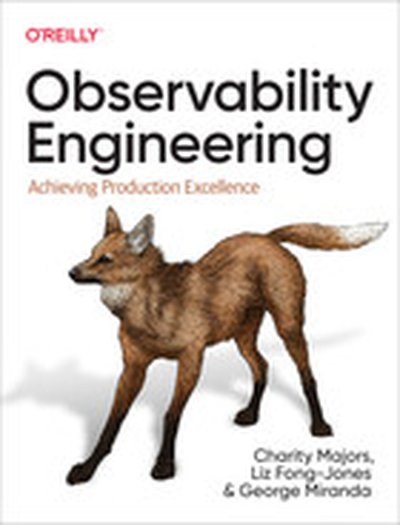
Observability is critical for building, changing, and understanding the software that powers complex modern systems. Teams that adopt observability are much better equipped to ship code swiftly and confidently, identify outliers and aberrant behaviors, and understand the experience of each and every user. This practical book explains the value of observable systems and shows you how to practice observability-driven development. Authors Charity Majors, Liz Fong-Jones, and George Miranda from Honeycomb explain what constitutes good observability, show you how to improve upon what you're doing today, and provide practical dos and don'ts for migrating from legacy tooling, such as metrics, monitoring, and log management. You'll also learn the impact observability has on organizational culture (and vice versa). You'll explore: How the concept of observability applies to managing software at scale The value of practicing observability when delivering complex cloud native applications and systems The impact observability has across the entire software development lifecycle How and why different functional teams use observability with service-level objectives How to instrument your code to help future engineers understand the code you wrote today How to produce quality code for context-aware system debugging and maintenance How data-rich analytics can help you debug elusive issues
Business observability dashboards; Website performance monitoring; Popup handling; Custom visualisations
Business observability dashboards\nWebsite performance monitoring\nPopup handling\nCustom visualisations
Overview of latest developments in observability.
Overview of what's new in observability and AI monitoring, including how New Relic AI Monitoring observes your AI-powered applications, how to optimise LLM selection and manage performance and costs, and building generative AI solutions that adhere to compliance standards.