talk-data.com talk-data.com

Topic

postgresql

332

tagged

Activity Trend

6 peak/qtr
2020-Q1 2026-Q1

Activities

332 activities · Newest first

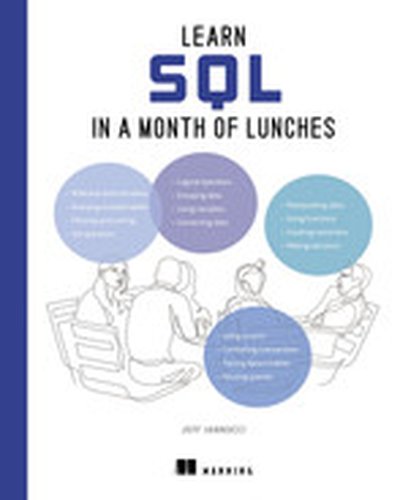
Learn SQL in a Month of Lunches

Use SQL to get the data you need in no time at all! Learn to read and write basic queries, troubleshoot common problems, and control your own business data in just 24 short lessons–no programming experience required! SQL has been designed to be as close to English as possible—anyone can learn it! Learn SQL in a Month of Lunches helps you add this lucrative and highly sought-after skill to your resume in just 24 fun and friendly lessons. The book emphasizes practical uses for the language in the real-world, so you’ll just learn the most useful skills for business data analysis. Inside Learn SQL in a Month of Lunches you’ll discover how to: Set up your first database with MySQL Write your own SQL queries See only the data you need from large datasets Connect different sets of data Analyze data with functions and aggregations Master basic data manipulation techniques Save queries in stored procedures and views Create tables to store data efficiently Read and improve SQL written by others If you use Excel, Tableau, or PowerBI to crunch business data, you’ve probably seen a lot of SQL already. And guess what? It’s easy to master the most useful parts of SQL! In just a few quick lessons, Learn SQL in a Month of Lunches will get you writing your own queries, modifying existing SQL statements, and working with data like a pro. 25-year SQL veteran Jeff Iannucci makes SQL a snap through hands-on lab exercises, relevant code examples, and easy-to-understand language. About the Technology SQL, Structured Query Language, is the standard way to query, create, and manage relational databases like SQL Server, PostgreSQL, and Oracle. It’s also a superpower for data analysts who need to go beyond spreadsheets and BI dashboarding tools. SQL is easy to read and understand, and with this book (and a little practice) you’ll be pulling data, tweaking tables, and cranking out amazing reports and presentations in no time at all! About the Book Learn SQL in a Month of Lunches introduces SQL to data analysts and other aspiring data pros with no prior experience using relational databases. In it, you’ll complete 24 short lessons, each of which teaches an essential SQL skill for retrieving, filtering, and analyzing data. You’ll practice each new technique with a friendly hands-on lab designed to take about 15 minutes, as you learn to write queries that deliver the exact data you need. Along the way, you’ll build a valuable intuition for how databases operate in real business scenarios. What's Inside Get the data you need from any relational database Filter, sort, and group data Combine data from multiple tables Create, update, and delete data About the Reader For students, aspiring data analysts, software developers, and anyone else who wants to work with relational databases. About the Author Jeff Iannucci is a Senior Consultant with Straight Path Solutions. For over 20 years, he has worked extensively with SQL in sectors such as healthcare, finance, retail sales, and government. Quotes An essential guide. Jeff has carefully developed each chapter to ensure clarity and comprehensiveness, making complex concepts accessible and practical. - Buck Woody, Microsoft The fastest and the most effective way to learn SQL, regardless of your background or technical knowledge level. - Kevin Kline, author of SQL in a Nutshell Explains concepts straightforwardly to help the reader grow their skills over a month of sessions. - Steve Jones, SQL Server Central Great selection of bite-sized, digestible courses to complement your lunch arrangement. It leaves you smarter every day. - Simon Tschöke, Databricks
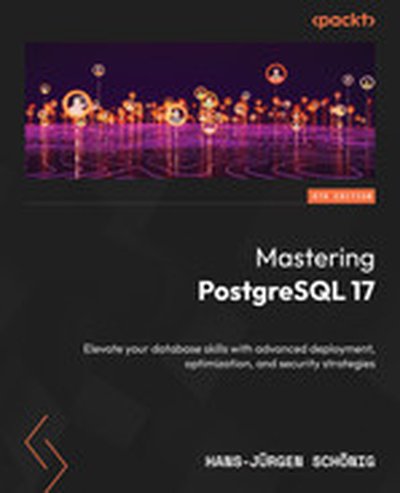
Mastering PostgreSQL 17 - Sixth Edition

Mastering PostgreSQL 17 is your guide to becoming a skilled PostgreSQL database administrator. Learn the latest in PostgreSQL 17, including deployment strategies, optimization approaches, and techniques for secure and high-performing database environments. This book equips you with best practices and actionable steps to elevate your PostgreSQL expertise to a professional level. What this Book will help me do Deploy and manage PostgreSQL 17 databases effectively in production environments. Utilize advanced optimization techniques to ensure queries run efficiently. Implement robust security measures, including encryption and access control. Learn and master database recovery strategies, backups, and replication. Troubleshoot real-world PostgreSQL database issues and performance bottlenecks. Author(s) Hans-Jürgen Schönig is a PostgreSQL expert with over 25 years of hands-on experience as a user and consultant. As the CEO of CYBERTEC PostgreSQL International GmbH, he has contributed extensively to the PostgreSQL community, helping clients worldwide. Hans brings a practical, solutions-focused approach to database administration drawn from supporting countless mission-critical environments. Who is it for? System and database administrators aiming to enhance their PostgreSQL expertise will find this book invaluable. It's also targeted at developers familiar with basic database concepts, seeking to deepen their understanding of PostgreSQL optimization and advanced features. Prior experience with SQL and database management is recommended. Ideal for IT professionals managing production database systems.

AWS re:Invent 2024 - Serverless scaling with Amazon Aurora PostgreSQL Limitless Database (DAT338)

Are you struggling to scale your database to accommodate your application’s growth? Learn how Amazon Aurora PostgreSQL Limitless Database scales to support millions of write transactions per second so you can manage petabytes of data while maintaining the simplicity of operating a single database. Explore the architecture, distributed transaction management, and serverless scaling capabilities of Aurora PostgreSQL Limitless Database. Gain insights into application patterns that excel with Aurora PostgreSQL Limitless Database and learn about patterns to avoid for optimal performance. Discover how to unlock the full potential of your database infrastructure and experience true scalability.

Learn more: AWS re:Invent: https://go.aws/reinvent. More AWS events: https://go.aws/3kss9CP

Subscribe: More AWS videos: http://bit.ly/2O3zS75 More AWS events videos: http://bit.ly/316g9t4

About AWS: Amazon Web Services (AWS) hosts events, both online and in-person, bringing the cloud computing community together to connect, collaborate, and learn from AWS experts. AWS is the world's most comprehensive and broadly adopted cloud platform, offering over 200 fully featured services from data centers globally. Millions of customers—including the fastest-growing startups, largest enterprises, and leading government agencies—are using AWS to lower costs, become more agile, and innovate faster.

AWSreInvent #AWSreInvent2024

AWS re:Invent 2024 - Scaling from monoliths to microservices with Amazon Aurora (DAT325)

In this session, learn to modernize legacy monolithic applications to microservices architectures and migrate large volumes of data using Amazon Aurora PostgreSQL. Features like Aurora Global Database, Optimized Reads, and Query Plan Management are integral to achieving high resilience and scalability. Discover how Intuit uses these capabilities to modernize workloads with hundreds of terabytes of data and tens of millions of tenants.

Learn more: AWS re:Invent: https://go.aws/reinvent. More AWS events: https://go.aws/3kss9CP

Subscribe: More AWS videos: http://bit.ly/2O3zS75 More AWS events videos: http://bit.ly/316g9t4

About AWS: Amazon Web Services (AWS) hosts events, both online and in-person, bringing the cloud computing community together to connect, collaborate, and learn from AWS experts. AWS is the world's most comprehensive and broadly adopted cloud platform, offering over 200 fully featured services from data centers globally. Millions of customers—including the fastest-growing startups, largest enterprises, and leading government agencies—are using AWS to lower costs, become more agile, and innovate faster.

AWSreInvent #AWSreInvent2024

AWS re:Invent 2024 - Build serverless chatbots using Amazon ElastiCache & Aurora PostgreSQL (DAT326)

In this session, learn how to build a serverless-first chatbot application by leveraging Amazon Aurora as a vector store and Amazon ElastiCache Serverless for chat history storage. Discover how to harness these services to create contextually aware chatbots. Explore architectural patterns, implementation strategies, and real-world use cases. Along the way, gain insights into optimizing performance, scalability, and cost-effectiveness for your chatbot solutions. Whether you're a developer, architect, or decision-maker, this session equips you with the knowledge to build cutting-edge, serverless-powered chatbot applications.

Learn more: AWS re:Invent: https://go.aws/reinvent. More AWS events: https://go.aws/3kss9CP

Subscribe: More AWS videos: http://bit.ly/2O3zS75 More AWS events videos: http://bit.ly/316g9t4

About AWS: Amazon Web Services (AWS) hosts events, both online and in-person, bringing the cloud computing community together to connect, collaborate, and learn from AWS experts. AWS is the world's most comprehensive and broadly adopted cloud platform, offering over 200 fully featured services from data centers globally. Millions of customers—including the fastest-growing startups, largest enterprises, and leading government agencies—are using AWS to lower costs, become more agile, and innovate faster.

AWSreInvent #AWSreInvent2024

AWS re:Invent 2024 - Achieving scale with Amazon Aurora PostgreSQL Limitless Database (DAT420)

Amazon Aurora is a relational database service built for the cloud that is designed for unparalleled high performance and availability at global scale, with full MySQL and PostgreSQL compatibility. In this session, learn how Amazon Aurora PostgreSQL Limitless Database enables applications to scale to millions of transactions per second across petabytes of data. Explore the architecture, distributed transaction management, and serverless scaling capabilities of Aurora PostgreSQL Limitless Database. Also, discover application patterns that are a good fit for Aurora PostgreSQL Limitless Database and which patterns to avoid. Learn how Aurora PostgreSQL Limitless Database makes it easier than ever to scale Aurora.

Learn more: AWS re:Invent: https://go.aws/reinvent. More AWS events: https://go.aws/3kss9CP

Subscribe: More AWS videos: http://bit.ly/2O3zS75 More AWS events videos: http://bit.ly/316g9t4

About AWS: Amazon Web Services (AWS) hosts events, both online and in-person, bringing the cloud computing community together to connect, collaborate, and learn from AWS experts. AWS is the world's most comprehensive and broadly adopted cloud platform, offering over 200 fully featured services from data centers globally. Millions of customers—including the fastest-growing startups, largest enterprises, and leading government agencies—are using AWS to lower costs, become more agile, and innovate faster.

AWSreInvent #AWSreInvent2024

AWS re:Invent 2024 - How Vanguard rebuilt its mission-critical trading application on AWS (FSI322)

Learn how Vanguard rebuilt its retail investor trading platform on AWS to achieve higher resiliency, improve performance, and lower costs by scaling to meet demand. Vanguard adopted AWS Fargate for Amazon ECS to run this mission-critical platform, which uses cloud-native services like Amazon Aurora PostgreSQL-Compatible Edition and Amazon DynamoDB to store and replicate data across Regions, achieving 99.99% availability over the past two years. New features that Vanguard needed months or longer to develop on its legacy mainframe monolith now take only weeks or even days, enabling the company to continuously improve the customer experience and compete effectively.

Learn more: AWS re:Invent: https://go.aws/reinvent. More AWS events: https://go.aws/3kss9CP

Subscribe: More AWS videos: http://bit.ly/2O3zS75 More AWS events videos: http://bit.ly/316g9t4

About AWS: Amazon Web Services (AWS) hosts events, both online and in-person, bringing the cloud computing community together to connect, collaborate, and learn from AWS experts. AWS is the world's most comprehensive and broadly adopted cloud platform, offering over 200 fully featured services from data centers globally. Millions of customers—including the fastest-growing startups, largest enterprises, and leading government agencies—are using AWS to lower costs, become more agile, and innovate faster.

AWSreInvent #AWSreInvent2024

AWS re:Invent 2024 - Deep dive into Amazon Aurora and its innovations (DAT405)

With an innovative architecture that decouples compute from storage and advanced features like Global Database and low-latency read replicas, Amazon Aurora reimagines what it means to be a relational database. Aurora is a modern database service offering unparalleled performance and high availability at scale with full open source MySQL and PostgreSQL compatibility. In this session, dive deep into the most exciting new features that Aurora offers, including Aurora Limitless Database, Aurora I/O-Optimized, Aurora zero-ETL integration with Amazon Redshift, and Aurora Serverless v2. Additionally, learn how the addition of the pgvector extension allows for the storage of vector embeddings and support of vector similarity searches for generative AI.

Learn more: AWS re:Invent: https://go.aws/reinvent. More AWS events: https://go.aws/3kss9CP

Subscribe: More AWS videos: http://bit.ly/2O3zS75 More AWS events videos: http://bit.ly/316g9t4

About AWS: Amazon Web Services (AWS) hosts events, both online and in-person, bringing the cloud computing community together to connect, collaborate, and learn from AWS experts. AWS is the world's most comprehensive and broadly adopted cloud platform, offering over 200 fully featured services from data centers globally. Millions of customers—including the fastest-growing startups, largest enterprises, and leading government agencies—are using AWS to lower costs, become more agile, and innovate faster.

AWSreInvent #AWSreInvent2024

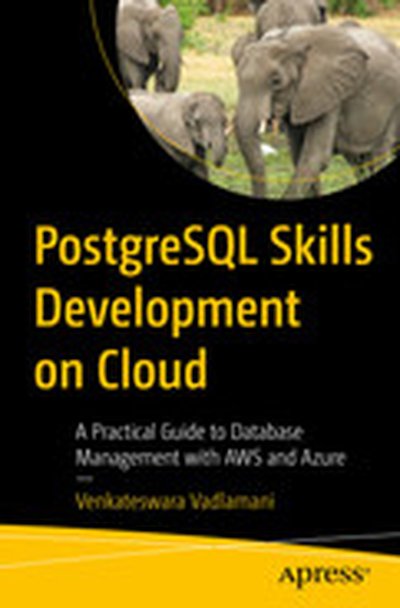
PostgreSQL Skills Development on Cloud: A Practical Guide to Database Management with AWS and Azure

This book provides a comprehensive approach to manage PostgreSQL cluster databases on Amazon Web Services and Azure Web Services on the cloud, as well as in Docker and container environments on a Red Hat operating system. Furthermore, detailed references for managing PostgreSQL on both Windows and Mac are provided. This book condenses all the fundamental and essential concepts you need to manage a PostgreSQL cluster into a one-stop guide that is perfect for newcomers to Postgres database administration. Each chapter of the book provides historical context and documents version changes of the PostgreSQL cluster, elucidates practical "how-to" methods, and includes illustrations and key word definitions, practices for application, a summary of key learnings, and questions to reinforce understanding. The book also outlines a clear study objective with a weekly learning schedule and hundreds of practice exercises, along with questions and answers. With its comprehensive and practical approach, this book will help you gain the confidence to manage all aspects of a PostgreSQL cluster in critical production environments so you can better support your organization's database infrastructure on the cloud and in containers. What You Will Learn Install and configure Postgres clusters on the cloud and in containers, monitor database logs, start and stop databases, troubleshoot, tune performance, backup and recover, and integrate with Amazon S3 and Azure Data Blob Manage Postgres databases on Amazon Web Services and Azure Web Services on the cloud, as well as in Docker and container environments on a Red Hat operating system Access sample references to scripting solutions and database management tools for working with Postgres, Redshift (based on Postgres 8.2), and Docker Create Amazon Machine Images (AMI) and Azure Images for managing a fleet of Postgres clusters on the cloud Reinforce knowledge with a weekly learning schedule and hundreds of practice exercises, along with questions and answers Progress from simple concepts, such as how to choose the correct instance type, to creating complex machine images Gain access to an Amazon AMI with a DBA admin tool, allowing you to learn Postgres, Redshift, and Docker in a cloud environment Refer to a comprehensive summary of documentations of Postgres, Amazon Web services, Azure Web services, and Red Hat Linux for managing all aspects of Postgres cluster management on the cloud Who This Book Is For Newcomers to PostgreSQL database administration and cross-platform support DBAs looking to master PostgreSQL on the cloud.

AWS re:Invent 2024 - Best practices for querying vector data for gen AI apps in PostgreSQL (DAT423)

PostgreSQL makes it easier to store and query vector data for artificial intelligence and machine learning (AI/ML) use cases with the pgvector extension. Learning best practices for vector search will help you deliver a high-performance experience to your customers. In this session, learn how to store data from Amazon Bedrock in an Amazon Aurora PostgreSQL-Compatible Edition database and learn SQL queries and tuning parameters to optimize the performance of your application when working with AI/ML data, vector data types, exact and approximate nearest neighbor search algorithms, and vector-optimized indexing.

Learn more: AWS re:Invent: https://go.aws/reinvent. More AWS events: https://go.aws/3kss9CP

Subscribe: More AWS videos: http://bit.ly/2O3zS75 More AWS events videos: http://bit.ly/316g9t4

About AWS: Amazon Web Services (AWS) hosts events, both online and in-person, bringing the cloud computing community together to connect, collaborate, and learn from AWS experts. AWS is the world's most comprehensive and broadly adopted cloud platform, offering over 200 fully featured services from data centers globally. Millions of customers—including the fastest-growing startups, largest enterprises, and leading government agencies—are using AWS to lower costs, become more agile, and innovate faster.

AWSreInvent #AWSreInvent2024

AWS re:Invent 2024 - Amazon Aurora HA and DR design patterns for global resilience (DAT304)

Amazon Aurora is a fully managed relational database designed for unparalleled high performance and availability at global scale with full MySQL and PostgreSQL compatibility. Aurora provides managed high availability (HA) and disaster recovery (DR) capabilities in and across AWS Regions. In this session, explore the Aurora HA and DR capabilities and discover design patterns that enable the development of resilient applications. Learn how to establish in-Region and cross-Region HA and DR using Aurora features, including Multi-AZ deployments, Aurora Global Database, and Amazon RDS Proxy, and discover how to reduce failover times with a JDBC driver.

Learn more: AWS re:Invent: https://go.aws/reinvent. More AWS events: https://go.aws/3kss9CP

Subscribe: More AWS videos: http://bit.ly/2O3zS75 More AWS events videos: http://bit.ly/316g9t4

About AWS: Amazon Web Services (AWS) hosts events, both online and in-person, bringing the cloud computing community together to connect, collaborate, and learn from AWS experts. AWS is the world's most comprehensive and broadly adopted cloud platform, offering over 200 fully featured services from data centers globally. Millions of customers—including the fastest-growing startups, largest enterprises, and leading government agencies—are using AWS to lower costs, become more agile, and innovate faster.

AWSreInvent #AWSreInvent2024

Summary In this episode of the Data Engineering Podcast Sam Kleinman talks about the pivotal role of databases in software engineering. Sam shares his journey into the world of data and discusses the complexities of database selection, highlighting the trade-offs between different database architectures and how these choices affect system design, query performance, and the need for ETL processes. He emphasizes the importance of understanding specific requirements to choose the right database engine and warns against over-engineering solutions that can lead to increased complexity. Sam also touches on the tendency of engineers to move logic to the application layer due to skepticism about database longevity and advises teams to leverage database capabilities instead. Finally, he identifies a significant gap in data management tooling: the lack of easy-to-use testing tools for database interactions, highlighting the need for better testing paradigms to ensure reliability and reduce bugs in data-driven applications.

Announcements Hello and welcome to the Data Engineering Podcast, the show about modern data managementIt’s 2024, why are we still doing data migrations by hand? Teams spend months—sometimes years—manually converting queries and validating data, burning resources and crushing morale. Datafold's AI-powered Migration Agent brings migrations into the modern era. Their unique combination of AI code translation and automated data validation has helped companies complete migrations up to 10 times faster than manual approaches. And they're so confident in their solution, they'll actually guarantee your timeline in writing. Ready to turn your year-long migration into weeks? Visit dataengineeringpodcast.com/datafold today to learn how Datafold can automate your migration and ensure source to target parity. Your host is Tobias Macey and today I'm interviewing Sam Kleinman about database tradeoffs across operating environments and axes of scaleInterview IntroductionHow did you get involved in the area of data management?The database engine you use has a substantial impact on how you architect your overall system. When starting a greenfield project, what do you see as the most important factor to consider when selecting a database?points of friction introduced by database capabilitiesembedded databases (e.g. SQLite, DuckDB, LanceDB), when to use and when do they become a bottlenecksingle-node database engines (e.g. Postgres, MySQL), when are they legitimately a problemdistributed databases (e.g. CockroachDB, PlanetScale, MongoDB)polyglot storage vs. general-purpose/multimodal databasesfederated queries, benefits and limitations ease of integration vs. variability of performance and access control Contact Info LinkedInGitHubParting Question From your perspective, what is the biggest gap in the tooling or technology for data management today?Closing Announcements Thank you for listening! Don't forget to check out our other shows. Podcast.init covers the Python language, its community, and the innovative ways it is being used. The AI Engineering Podcast is your guide to the fast-moving world of building AI systems.Visit the site to subscribe to the show, sign up for the mailing list, and read the show notes.If you've learned something or tried out a project from the show then tell us about it! Email [email protected] with your story.Links MongoDBNeonPodcast EpisodeGlareDBNoSQLS3 Conditional WriteEvent driven architectureCockroachDBCouchbaseCassandraThe intro and outro music is from The Hug by The Freak Fandango Orchestra / CC BY-SA

Unlock the power of open-source databases in Azure | BRK207

Microsoft is making significant investments in relational and NoSQL open-source databases. Learn about Azure Database for PostgreSQL, Azure Database for MySQL, Azure Cosmos DB for MongoDB, with new enterprise-ready features to support daily business operations. See new migration capabilities as well as Microsoft's new contributions to the open-source community, including DiskANN, a PostgreSQL extension for Azure OpenAI Service, and much more.

𝗦𝗽𝗲𝗮𝗸𝗲𝗿𝘀: * Aditi Gupta * AVIJIT GUPTA * Dingding Lu * Prasanth Tammiraju

𝗦𝗲𝘀𝘀𝗶𝗼𝗻 𝗜𝗻𝗳𝗼𝗿𝗺𝗮𝘁𝗶𝗼𝗻: This is one of many sessions from the Microsoft Ignite 2024 event. View even more sessions on-demand and learn about Microsoft Ignite at https://ignite.microsoft.com

BRK207 | English (US) | Data

MSIgnite