talk-data.com talk-data.com

Topic

SAS

statistical_software analytics data_management

296

tagged

Activity Trend

8 peak/qtr
2020-Q1 2026-Q1

Activities

296 activities · Newest first

Practical Time Series Analysis Using SAS

Anders Milhøj's Practical Time Series Analysis Using SAS explains and demonstrates through examples how you can use SAS for time series analysis. It offers modern procedures for forecasting, seasonal adjustments, and decomposition of time series that can be used without involved statistical reasoning. The book teaches, with numerous examples, how to apply these procedures with very simple coding. In addition, it also gives the statistical background for interested readers. Beginning with an introductory chapter that covers the practical handling of time series data in SAS using the TIMESERIES and EXPAND procedures, it goes on to explain forecasting, which is found in the ESM procedure; seasonal adjustment, including trading-day correction using PROC X12; and unobserved component models using the UCM procedure.

This book is part of the SAS Press program.

A Step-by-Step Approach to Using SAS for Factor Analysis and Structural Equation Modeling, Second Edition, 2nd Edition

This easy-to-understand guide makes SEM accessible to all users. This second edition contains new material on sample-size estimation for path analysis and structural equation modeling. In a single user-friendly volume, students and researchers will find all the information they need in order to master SAS basics before moving on to factor analysis, path analysis, and other advanced statistical procedures.

SAS Server Pages

SAS Server Pages have been used by SAS developers as a way of creating custom user interfaces for Web-based applications. This enhanced book offers information on how to create SAS Server Pages using the SAS 9.3 experimental procedure PROC STREAM, providing users with a foundation technology that greatly expands the capabilities of SAS for dynamic and rich content generation. By combining PROC STREAM and the Macro facility, SAS can now more easily generate any type of markup or text-based content such as HTML, XML, and CSV.

Exclusively available in electronic format, this book provides more extensive and flexible ways to develop applications using video examples of a wide range of PROC STREAM and SAS Server Pages techniques, including both Web applications and Base SAS implementations. Users can see results immediately and can access additional content and information online through embedded links. It also offers basic how-to documentation on PROC STREAM and an overview of a Portal Reporting Framework that illustrates creating custom user interfaces for stored processes within the SAS Portal.

Ideal for SAS programmers who have some knowledge of the Macro facility as well as BI users, SAS Server Pages: Generating Dynamic Content removes the difficulties associated with HTML-based content creation while providing a resource on using PROC STREAM in a dynamic, enhanced format.

Carpenter's Complete Guide to the SAS REPORT Procedure

Art Carpenter demystifies the powerful REPORT procedure and shows you how to incorporate this highly flexible and customizable procedure into your SAS reporting programs. Combining his years of SAS experience with a talent for instruction, Art offers clear and comprehensive coverage that demonstrates how valuable this procedure is for both summarizing and displaying data. Illustrated with more than two hundred examples and sample exercises to reinforce your learning, Carpenter's Complete Guide to the SAS REPORT Procedure provides you with information that you can put to immediate use. The text is divided into three distinct sections. Part 1 introduces you to PROC REPORT, showing you how it works and "thinks." This section is designed to be read linearly by users who are unfamiliar with the procedure. Part 2 is a collection of increasingly more complex examples that feature advanced options and capabilities. It also introduces the relationship between PROC REPORT and the Output Delivery System (ODS). Part 3 incorporates the options and statements described in Parts 1 and 2 into a series of examples that highlight many of the extended capabilities of PROC REPORT. Included in this section is a discussion of a few ODS statements and options that might be useful to a PROC REPORT programmer, plus an in-depth look at the PROC REPORT process itself, especially as it relates to the execution of compute blocks. Art's author page at support.sas.com/carpenter includes the following bonus material: example SAS data sets, example results, and a compilation of nearly 100 related conference papers. This book is part of the SAS Press program.

Custom Tasks for SAS Enterprise Guide Using Microsoft .NET
Have you ever used SAS Enterprise Guide and found yourself wishing that it had that one specific feature, something that you know would make it the perfect tool for your work or industry? You don't have to settle for just the "out of the box" features; you can add your own capabilities with SAS custom tasks!

Chris Hemedinger's new book takes you step-by-step through the process of creating custom tasks for use in SAS Enterprise Guide and SAS Add-In for Microsoft Office. Using standard off-the-shelf development tools for Microsoft .NET, you'll learn how you can hook in your custom processes and make them available to a wide range of SAS users. In the first part of the book, you'll learn how to use the development environment and the programming interfaces provided by SAS to create, test, and deploy new custom tasks. You'll learn about the services that the SAS Enterprise Guide framework offers, including data access, the ability to run SAS programs, and integration of your custom results into a SAS Enterprise Guide project.

In the second part of the book, Hemedinger provides a variety of useful, field-tested and ready-to-run examples—complete with C# and Visual Basic .NET source code. Each example highlights different programming techniques that you can apply immediately within your own custom tasks. The book also addresses important aspects of .NET programming, such as debugging, exception handling, threading models, and user interface design.

This book is part of the SAS Press program.

Implementing CDISC Using SAS
For decades researchers and programmers have used SAS to analyze, summarize, and report clinical trial data. Now Chris Holland and Jack Shostak have written the first comprehensive book on applying clinical research data and metadata to the Clinical Data Interchange Standards Consortium (CDISC) standards.

Implementing CDISC Using SAS: An End-to-End Guide is an all-inclusive guide on how to implement and analyze Study Data Tabulation Model (SDTM) and Analysis Data Model (ADaM) data and prepare clinical trial data for regulatory submissions. Topics covered include creating and using metadata, developing conversion specifications, implementing and validating SDTM and ADaM data, determining solutions for legacy data conversions, and preparing data for regulatory submission. The book covers products such as Base SAS, SAS Clinical Data Integration, and the SAS Clinical Standards Toolkit, as well as JMP Clinical.

Anyone dealing with CDISC standards--including SAS or JMP programmers, statisticians, and data managers in the pharmaceutical, biotechnology, or medical device industries--will find the philosophical best practices and implementation examples in this book invaluable.

This book is part of the SAS Press program.

The Little SAS® Book: A Primer

A classic that just keeps getting better, The Little SAS Book The fifth edition has been completely updated to reflect the new default output introduced with SAS 9.3. In addition, there is a now a full chapter devoted to ODS Graphics including the SGPLOT and SGPANEL procedures. Other changes include expanded coverage of linguistic sorting and a new section on concatenating macro variables with other text. This title belongs on every SAS programmer's bookshelf. It's a resource not just to get you started, but one you'll return to as you continue to improve your programming skills.

Cody's Collection of Popular SAS Programming Tasks and How to Tackle Them

Cody's Collection of Popular SAS Programming Tasks and How to Tackle Them presents often-used programming tasks that readers can either use as presented or modify to fit their own programs, all in one handy volume. Esteemed author and SAS expert Ron Cody covers such topics as character to numeric conversion, automatic detection of numeric errors, combining summary data with detail data, restructuring a data set, grouping values using several innovative methods, performing an operation on all character or all numeric variables in a SAS data set, and much more! SAS users of all levels interested in improving their programming skills will benefit from this easy-to-follow collection of tasks.

This book is part of the SAS Press program.

SAS Hash Object Programming Made Easy

Hash objects, an efficient look-up tool in the SAS DATA step, are object-oriented programming structures that function differently from traditional SAS language statements. Michele Burlew's SAS Hash Object Programming Made Easy shows readers how to use these powerful features, which they can program to quickly look up and manage data and to conserve computing resources. SAS provides various look-up techniques, and hash objects are among the newest, so therefore many users may not have yet used them. Because the examples presented vary in complexity, SAS Hash Object Programming Made Easy is useful to SAS users of all experience levels, from novice programmer to advanced programmer. Novice programmers can adapt some of the simpler hash programming techniques as they develop their SAS programming skills. This book helps more experienced programmers learn how to take advantage of hash object programming by comparing traditional processing techniques to those that use hash objects. Additionally, users from diverse fields with different requirements can adapt the examples in SAS Hash Object Programming Made Easy to fit their unique situations.

This book is part of the SAS Press program.

Generalized Linear and Nonlinear Models for Correlated Data: Theory and Applications Using SAS

Edward F. Vonesh's Generalized Linear and Nonlinear Models for Correlated Data: Theory and Applications Using SAS is devoted to the analysis of correlated response data using SAS, with special emphasis on applications that require the use of generalized linear models or generalized nonlinear models. Written in a clear, easy-to-understand manner, it provides applied statisticians with the necessary theory, tools, and understanding to conduct complex analyses of continuous and/or discrete correlated data in a longitudinal or clustered data setting. Using numerous and complex examples, the book emphasizes real-world applications where the underlying model requires a nonlinear rather than linear formulation and compares and contrasts the various estimation techniques for both marginal and mixed-effects models. The SAS procedures MIXED, GENMOD, GLIMMIX, and NLMIXED as well as user-specified macros will be used extensively in these applications. In addition, the book provides detailed software code with most examples so that readers can begin applying the various techniques immediately.

Applied Data Mining for Forecasting Using SAS

Applied Data Mining for Forecasting Using SAS, by Tim Rey, Arthur Kordon, and Chip Wells, introduces and describes approaches for mining large time series data sets. Written for forecasting practitioners, engineers, statisticians, and economists, the book details how to select useful candidate input variables for time series regression models in environments when the number of candidates is large, and identifies the correlation structure between selected candidate inputs and the forecast variable.

Categorical Data Analysis Using SAS, Third Edition, 3rd Edition

Statisticians and researchers will find Categorical Data Analysis Using SAS, Third Edition, by Maura Stokes, Charles Davis, and Gary Koch, to be a useful discussion of categorical data analysis techniques as well as an invaluable aid in applying these methods with SAS. Practical examples from a broad range of applications illustrate the use of the FREQ, LOGISTIC, GENMOD, NPAR1WAY, and CATMOD procedures in a variety of analyses. Topics discussed include assessing association in contingency tables and sets of tables, logistic regression and conditional logistic regression, weighted least squares modeling, repeated measurements analyses, loglinear models, generalized estimating equations, and bioassay analysis.

The third edition updates the use of SAS/STAT software to SAS/STAT 12.1 and incorporates ODS Graphics. Many additional SAS statements and options are employed, and graphs such as effect plots, odds ratio plots, regression diagnostic plots, and agreement plots are discussed. The material has also been revised and reorganized to reflect the evolution of categorical data analysis strategies. Additional techniques include such topics as exact Poisson regression, partial proportional odds models, Newcombe confidence intervals, incidence density ratios, and so on.

This book is part of the SAS Press program.

SAS Encoding

Understanding the basic concepts of character encoding is necessary for creating, manipulating, and rendering any type of character data. An encoding is involved whenever data is brought into SAS from various external sources; whenever data is transferred between SAS applications running different locales or across the network via thin clients; and when output is written to external files, SAS data sets, printers, or Web pages. In each of these cases, something can go wrong. It is the encoder’s responsibility to ensure that the data is stored, processed, and rendered in the correct encoding. Manfred Kiefer's SAS Encoding: Understanding the Details explains the basic concepts of characters, encodings, glyphs, and fonts and gives practical examples of how to troubleshoot encoding problems. Addressed to the beginner as well as to the advanced SAS user, this book can help solve your encoding problems. It provides background information about encodings, shows how they are used with SAS software, and explains typical problems and ways to sort those out. It also presents examples of how to set up SAS software in an international environment.

Fundamentals of Predictive Analytics with JMP

Fundamentals of Predictive Analytics with JMP bridges the gap between courses on basic statistics, which focus on univariate and bivariate analysis, and courses on data mining/predictive analytics. This book provides the technical knowledge and problem-solving skills needed to perform real data multivariate analysis. Utilizing JMP 10 and JMP Pro, this book offers new and enhanced resources, including an add-in to Microsoft Excel, Graph Builder, and data mining capabilities.

Written for students in undergraduate and graduate statistics courses, this book first teaches students to recognize when it is appropriate to use the tool, to understand what variables and data are required, and to know what the results might be. Second, it teaches them how to interpret the results, followed by step-by-step instructions on how and where to perform and evaluate the analysis in JMP.

With the new emphasis on business intelligence, business analytics and predictive analytics, this book is invaluable to everyone who needs to expand their knowledge of statistics and apply real problem-solving analysis.

This book is part of the SAS Press program.
OHSAS 18001 Step by Step: A Practical Guide

An essential guide to OHSAS 18001 We say 'take care' as we wave our loved ones goodbye in the morning, but how often is this message taken into the workplace? In this easy-to-understand and timely pocket guide, Naeem Sadiq, examines the Understanda as it gears up to meet OHSAS 18001 standards of occupational health and safety. Real-world scenarios Using a wide variety of fictional 'real world' scenarios, Sadiq demonstrates the hazards that might be present in a workplace, how to assess risk, how to manage OHSAS 18001 implementation and how to communicate its implementation through all levels of management. Sadiq takes the complex, and often impenetrable, concepts that surround health and safety and presents them with absolute precision and clarity. A sound understanding of OHSAS 18001 OHSAS 18001: Step by Step is more than a primer. Besides giving the reader a sound understanding of OHSAS 18001, the pocket guide can be used as a step-by-step instructional manual for anyone tasked with implementing operational health and safety standards in the workplace. This pocket guide gives its readers: A comprehensive explanation of OHSAS 18001 and its implications An understanding of how OHSAS 18001 can be implemented through the PDCI (Plan-Do-Check-Improve) management principle A 'how-to' guide for establishing an Occupational Health and Safety (OH&S) Policy A 'how-to' guide for identifying risks and controls within the organisation An understanding of the law; the legislative and contractual OH&S requirements to which an organisation subscribes An explanation of how OH&S objectives can be determined and established, and how to apportion responsibility and accountability throughout the organisation Clear understanding of OH&S accountability and the need for diligent record-keeping A 'how-to' guide for setting up a training, competence and awareness regime Understanding of how OHSAS 18001 protects not just colleagues, but customers and contractors who enter your workplace Expert guidance on how to deal with emergencies. " Buy this pocket guide and protect your workforce with OHSAS 18001!

Introduction to Linear Regression Analysis, 5th Edition

Praise for the Fourth Edition "As with previous editions, the authors have produced a leading textbook on regression." —Journal of the American Statistical Association A comprehensive and up-to-date introduction to the fundamentals of regression analysis Introduction to Linear Regression Analysis, Fifth Edition continues to present both the conventional and less common uses of linear regression in today's cutting-edge scientific research. The authors blend both theory and application to equip readers with an understanding of the basic principles needed to apply regression model-building techniques in various fields of study, including engineering, management, and the health sciences. Following a general introduction to regression modeling, including typical applications, a host of technical tools are outlined such as basic inference procedures, introductory aspects of model adequacy checking, and polynomial regression models and their variations. The book then discusses how transformations and weighted least squares can be used to resolve problems of model inadequacy and also how to deal with influential observations. The Fifth Edition features numerous newly added topics, including: A chapter on regression analysis of time series data that presents the Durbin-Watson test and other techniques for detecting autocorrelation as well as parameter estimation in time series regression models Regression models with random effects in addition to a discussion on subsampling and the importance of the mixed model Tests on individual regression coefficients and subsets of coefficients Examples of current uses of simple linear regression models and the use of multiple regression models for understanding patient satisfaction data. In addition to Minitab, SAS, and S-PLUS, the authors have incorporated JMP and the freely available R software to illustrate the discussed techniques and procedures in this new edition. Numerous exercises have been added throughout, allowing readers to test their understanding of the material, and a related FTP site features the presented data sets, extensive problem solutions, software hints, and PowerPoint slides to facilitate instructional use of the book. Introduction to Linear Regression Analysis, Fifth Edition is an excellent book for statistics and engineering courses on regression at the upper-undergraduate and graduate levels. The book also serves as a valuable, robust resource for professionals in the fields of engineering, life and biological sciences, and the social sciences.

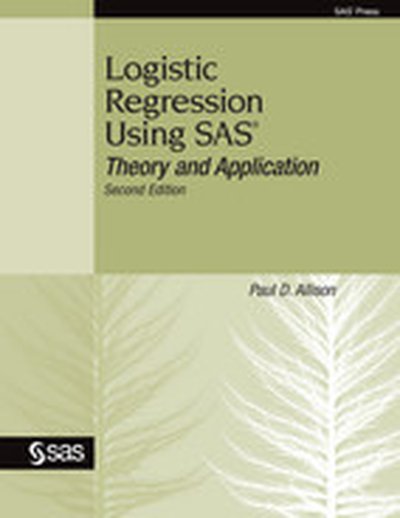
Logistic Regression Using SAS, 2nd Edition

If you are a researcher or student with experience in multiple linear regression and want to learn about logistic regression, Paul Allison's Logistic Regression Using SAS: Theory and Application, Second Edition, is for you! Informal and nontechnical, this book both explains the theory behind logistic regression, and looks at all the practical details involved in its implementation using SAS. Several real-world examples are included in full detail. This book also explains the differences and similarities among the many generalizations of the logistic regression model. The following topics are covered: binary logistic regression, logit analysis of contingency tables, multinomial logit analysis, ordered logit analysis, discrete-choice analysis, and Poisson regression. Other highlights include discussions on how to use the GENMOD procedure to do loglinear analysis and GEE estimation for longitudinal binary data. Only basic knowledge of the SAS DATA step is assumed. The second edition describes many new features of PROC LOGISTIC, including conditional logistic regression, exact logistic regression, generalized logit models, ROC curves, the ODDSRATIO statement (for analyzing interactions), and the EFFECTPLOT statement (for graphing nonlinear effects). Also new is coverage of PROC SURVEYLOGISTIC (for complex samples), PROC GLIMMIX (for generalized linear mixed models), PROC QLIM (for selection models and heterogeneous logit models), and PROC MDC (for advanced discrete choice models).

This book is part of the SAS Press program.
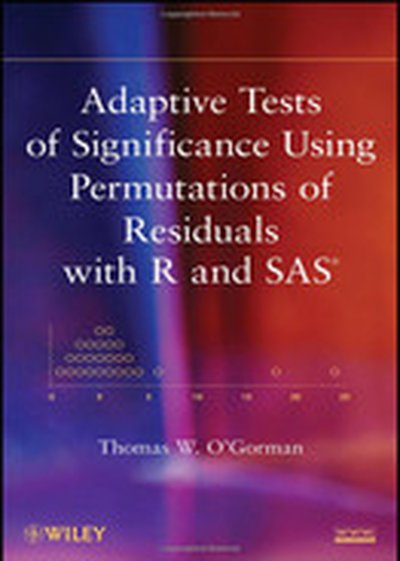
Adaptive Tests of Significance Using Permutations of Residuals with R and SAS

Provides the tools needed to successfully perform adaptive tests across a broad range of datasets Adaptive Tests of Significance Using Permutations of Residuals with R and SAS® illustrates the power of adaptive tests and showcases their ability to adjust the testing method to suit a particular set of data. The book utilizes state-of-the-art software to demonstrate the practicality and benefits for data analysis in various fields of study. Beginning with an introduction, the book moves on to explore the underlying concepts of adaptive tests, including: Smoothing methods and normalizing transformations Permutation tests with linear methods Applications of adaptive tests Multicenter and cross-over trials Analysis of repeated measures data Adaptive confidence intervals and estimates Throughout the book, numerous figures illustrate the key differences among traditional tests, nonparametric tests, and adaptive tests. R and SAS® software packages are used to perform the discussed techniques, and the accompanying datasets are available on the book's related website. In addition, exercises at the end of most chapters enable readers to analyze the presented datasets by putting new concepts into practice. Adaptive Tests of Significance Using Permutations of Residuals with R and SAS® is an insightful reference for professionals and researchers working with statistical methods across a variety of fields including the biosciences, pharmacology, and business. The book also serves as a valuable supplement for courses on regression analysis and adaptive analysis at the upper-undergraduate and graduate levels.