talk-data.com talk-data.com

Topic

Cyber Security

cybersecurity information_security data_security privacy

615

tagged

Activity Trend

297 peak/qtr
2020-Q1 2026-Q1

Activities

Showing filtered results

Filtering by: O'Reilly Data Engineering Books ×
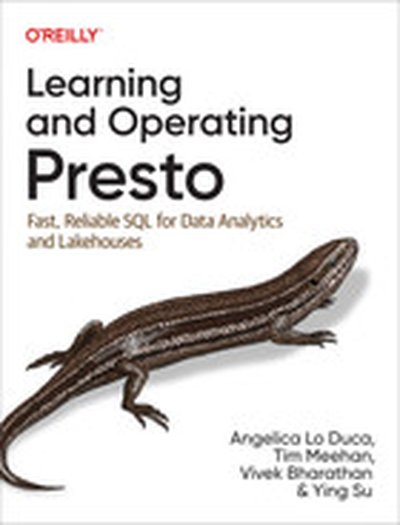
Learning and Operating Presto

The Presto community has mushroomed since its origins at Facebook in 2012. But ramping up this open source distributed SQL query engine can be challenging even for the most experienced engineers. With this practical book, data engineers and architects, platform engineers, cloud engineers, and software engineers will learn how to use Presto operations at your organization to derive insights on datasets wherever they reside. Authors Angelica Lo Duca, Tim Meehan, Vivek Bharathan, and Ying Su explain what Presto is, where it came from, and how it differs from other data warehousing solutions. You'll discover why Facebook, Uber, Alibaba Cloud, Hewlett Packard Enterprise, IBM, Intel, and many more use Presto and how you can quickly deploy Presto in production. With this book, you will: Learn how to install and configure Presto Use Presto with business intelligence tools Understand how to connect Presto to a variety of data sources Extend Presto for real-time business insight Learn how to apply best practices and tuning Get troubleshooting tips for logs, error messages, and more Explore Presto's architectural concepts and usage patterns Understand Presto security and administration
IBM Power E1050: Technical Overview and Introduction

This IBM® Redpaper publication is a comprehensive guide that covers the IBM Power E1050 server (9043-MRX) that uses the latest IBM Power10 processor-based technology and supports IBM AIX® and Linux operating systems (OSs). The goal of this paper is to provide a hardware architecture analysis and highlight the changes, new technologies, and major features that are being introduced in this system, such as: The latest IBM Power10 processor design, including the dual-chip module (DCM) packaging, which is available in various configurations from 12 - 24 cores per socket. Support of up to 16 TB of memory. Native Peripheral Component Interconnect Express (PCIe) 5th generation (Gen5) connectivity from the processor socket to deliver higher performance and bandwidth for connected adapters. Open Memory Interface (OMI) connected Differential Dual Inline Memory Module (DDIMM) memory cards delivering increased performance, resiliency, and security over industry-standard memory technologies, including transparent memory encryption. Enhanced internal storage performance with the use of native PCIe-connected Non-volatile Memory Express (NVMe) devices in up to 10 internal storage slots to deliver up to 64 TB of high-performance, low-latency storage in a single 4-socket system. Consumption-based pricing in the Power Private Cloud with Shared Utility Capacity commercial model to allow customers to consume resources more flexibly and efficiently, including AIX, Red Hat Enterprise Linux (RHEL), SUSE Linux Enterprise Server, and Red Hat OpenShift Container Platform workloads. This publication is for professionals who want to acquire a better understanding of IBM Power products. The intended audience includes: IBM Power customers Sales and marketing professionals Technical support professionals IBM Business Partners Independent software vendors (ISVs) This paper expands the set of IBM Power documentation by providing a desktop reference that offers a detailed technical description of the Power E1050 Midrange server model. This paper does not replace the current marketing materials and configuration tools. It is intended as an extra source of information that, together with existing sources, can be used to enhance your knowledge of IBM server solutions..

Building a Fast Universal Data Access Platform

Your company relies on data to succeed—data that traditionally comes from a business's transactional processes, pulled from the transaction systems through an extract-transform-load (ETL) process into a warehouse for reporting purposes. But this data flow is no longer sufficient given the growth of the internet of things (IOT), web commerce, and cybersecurity. How can your company keep up with today's increasing magnitude of data and insights? Organizations that can no longer rely on data generated by business processes are looking outside their workflow for information on customer behavior, retail patterns, and industry trends. In this report, author Christopher Gardner examines the challenges of building a framework that provides universal access to data. You will: Learn the advantages and challenges of universal data access, including data diversity, data volume, and the speed of analytic operations Discover how to build a framework for data diversity and universal access Learn common methods for improving database and performance SLAs Examine the organizational requirements that a fast universal data access platform must meet Explore a case study that demonstrates how components work together to form a multiaccess, high-volume, high-performance interface About the author: Christopher Gardner is the campus Tableau application administrator at the University of Michigan, controlling security, updates, and performance maintenance.

Introduction to Integration Suite Capabilities: Learn SAP API Management, Open Connectors, Integration Advisor and Trading Partner Management

Discover the power of SAP Integration Suite's capabilities with this hands-on guide. Learn how this integration platform (iPaaS) can help you connect and automate your business processes with integrations, connectors, APIs, and best practices for a faster ROI. Over the course of this book, you will explore the powerful capabilities of SAP Integration Suite, including API Management, Open Connectors, Integration Advisor, Trading Partner Management, Migration Assessment, and Integration Assessment. With detailed explanations and real-world examples, this book is the perfect resource for anyone looking to unlock the full potential of SAP Integration Suite. With each chapter, you'll gain a greater understanding of why SAP Integration Suite can be the proverbial swiss army knife in your toolkit to design and develop enterprise integration scenarios, offering simplified integration, security, and governance for your applications. Author Jaspreet Bagga demonstrates howto create, publish, and monitor APIs with SAP API Management, and how to use its features to enhance your API lifecycle. He also provides a detailed walkthrough of how other capabilities of SAP Integration Suite can streamline your connectivity, design, development, and architecture methodology with a tool-based approach completely managed by SAP. Whether you are a developer, an architect, or a business user, this book will help you unlock the potential of SAP's Integration Suite platform, API Management, and accelerate your digital transformation. What You Will Learn Understand what APIs are, what they are used for, and why they are crucial for building effective and reliable applications Gain an understanding of SAP Integration Suite's features and benefits Study SAP Integration assessment process, patterns, and much more Explore tools and capabilities other than the Cloud Integration that address the full value chain of the enterprise integration components Who This Book Is For Web developers and application leads who want to learn SAP API Management.

AI for Big Data-Based Engineering Applications from Security Perspectives

This book emphasizes the idea of understanding the motivation of the advanced circuits’ design to establish the AI interface and to mitigate the security attacks in a better way for big data. It is for students, researchers, and professionals, faculty members and software developers who wish to carry out further research.

Building a Next-Gen SOC with IBM QRadar

In "Building a Next-Gen SOC with IBM QRadar", you'll learn how to utilize IBM QRadar to create an efficient Security Operations Center (SOC). The book covers deploying QRadar in various environments, understanding its architecture, and leveraging its powerful features to detect and respond to real-time threats with confidence, ultimately enabling advanced security practices. What this Book will help me do Understand and deploy IBM QRadar in different environments, including on-premises and cloud. Leverage QRadar's features to analyze network traffic, detect threats, and enhance security monitoring. Effectively use QRadar rules and searches to identify, correlate, and respond to security events. Integrate AI technologies with QRadar to automate and improve threat management processes. Maintain, troubleshoot, and scale the QRadar environment to meet evolving security needs. Author(s) Ashish Kothekar is an experienced cybersecurity specialist with a deep understanding of IBM QRadar and SOC operations. He has dedicated his career to helping organizations implement effective security practices. Through his accessible writing and detailed examples, he aims to empower security professionals to maximize their use of QRadar. Who is it for? This book is perfect for SOC analysts, security engineers, and cybersecurity enthusiasts who want to enhance their security skills. Readers should have a basic knowledge of networking and cybersecurity principles. If you're looking to deepen your understanding of IBM QRadar and build a next-gen SOC, this book is for you.

How I Rob Banks

Follow FC as he steals from the world’s most secure banks and government facilities—without breaking a single law In How I Rob Banks: And Other Such Places, renowned ethical hacker and social engineer FC delivers a gripping and often hilarious discussion of his work: testing the limits of physical bank security by trying to “steal” money, data, and anything else he can get his hands on. In the book, you’ll explore the secretive world of physical assessments and follow FC as he breaks into banks and secure government locations to identify security flaws and loopholes. The author explains how banks and other secure facilities operate, both digitally and physically, and shows you the tools and techniques he uses to gain access to some of the world’s most locked-down buildings. You’ll also find: Strategies you can implement immediately to better secure your own company, home, and data against malicious actors Detailed photos, maps, and drawings to bring to life the unbelievable true stories contained inside An inside and candid look at a rarely examined industry through the eyes of one of its most respected penetration testers A can’t-miss account of real-life security exploits perfect for infosec pros, including red and blue teamers, pentesters, CIOs, CISSPs, and social engineers, How I Rob Banks also belongs in the hands of anyone who loves a great Ocean’s 11-style story pulled straight from the real world.

IBM FlashSystem 7300 Product Guide

This IBM® Redpaper Product Guide describes the IBM FlashSystem® 7300 solution, which is a next-generation IBM FlashSystem control enclosure. It combines the performance of flash and a Non-Volatile Memory Express (NVMe)-optimized architecture with the reliability and innovation of IBM FlashCore® technology and the rich feature set and high availability (HA) of IBM Spectrum® Virtualize. To take advantage of artificial intelligence (AI)-enhanced applications, real-time big data analytics, and cloud architectures that require higher levels of system performance and storage capacity, enterprises around the globe are rapidly moving to modernize established IT infrastructures. However, for many organizations, staff resources, and expertise are limited, and cost-efficiency is a top priority. These organizations have important investments in existing infrastructure that they want to maximize. They need enterprise-grade solutions that optimize cost-efficiency while simplifying the pathway to modernization. IBM FlashSystem 7300 is designed specifically for these requirements and use cases. It also delivers a cyber resilience without compromising application performance. IBM FlashSystem 7300 provides a rich set of software-defined storage (SDS) features that are delivered by IBM Spectrum Virtualize, including the following examples: Data reduction and deduplication Dynamic tiering Thin-provisioning Snapshots Cloning Replication and data copy services Cyber resilience Transparent Cloud Tiering (TCT) IBM HyperSwap® including 3-site replication for high availability Scale-out and scale-up configurations further enhance capacity and throughput for better availability With the release of IBM Spectrum Virtualize V8.5, extra functions and features are available, including support for new third-generation IBM FlashCore Modules Non-Volatile Memory Express (NVMe) type drives within the control enclosure, and 100 Gbps Ethernet adapters that provide NVMe Remote Direct Memory Access (RDMA) options. New software features include GUI enhancements, security enhancements including multifactor authentication and single sign-on, and Fibre Channel (FC) portsets.

Snowflake SnowPro™ Advanced Architect Certification Companion: Hands-on Preparation and Practice

Master the intricacies of Snowflake and prepare for the SnowPro Advanced Architect Certification exam with this comprehensive study companion. This book provides robust and effective study tools to help you prepare for the exam and is also designed for those who are interested in learning the advanced features of Snowflake. The practical examples and in-depth background on theory in this book help you unleash the power of Snowflake in building a high-performance system. The best practices demonstrated in the book help you use Snowflake more powerfully and effectively as a data warehousing and analytics platform. Reading this book and reviewing the concepts will help you gain the knowledge you need to take the exam. The book guides you through a study of the different domains covered on the exam: Accounts and Security, Snowflake Architecture, Data Engineering, and Performance Optimization. You’ll also be well positioned to apply your newly acquired practical skills to real-world Snowflake solutions. You will have a deep understanding of Snowflake to help you take full advantage of Snowflake’s architecture to deliver value analytics insight to your business. What You Will Learn Gain the knowledge you need to prepare for the exam Review in-depth theory on Snowflake to help you build high-performance systems Broaden your skills as a data warehouse designer to cover the Snowflake ecosystem Optimize performance and costs associated with your use of the Snowflake data platform Share data securely both inside your organization and with external partners Apply your practical skills to real-world Snowflake solutions Who This Book Is For Anyone who is planning to take the SnowPro Advanced Architect Certification exam, those who want to move beyond traditional database technologies and build their skills to design and architect solutions using Snowflake services, and veteran database professionals seeking an on-the-job reference to understand one of the newest and fastest-growing technologies in data

Proactive Early Threat Detection and Securing Oracle Database with IBM QRadar, IBM Security Guardium Database Protection, and IBM Copy Services Manager by using IBM FlashSystem Safeguarded Copy

This IBM® blueprint publication focuses on early threat detection within a database environment by using IBM Security® Guardium® Data Protection and IBM QRadar® . It also highlights how to proactively start a cyber resilience workflow in response to a cyberattack or potential malicious user actions. The workflow that is presented here uses IBM Copy Services Manager as orchestration software to start IBM FlashSystem® Safeguarded Copy functions. The Safeguarded Copy creates an immutable copy of the data in an air-gapped form on the same IBM FlashSystem for isolation and eventual quick recovery. This document describes how to enable and forward Oracle database user activities (by using IBM Security Guardium Data Protection) and IBM FlashSystem audit logs by using IBM FlashSystem to IBM QRadar. This document also describes how to create various rules to determine a threat, and configure and launch a suitable response to the detected threat in IBM QRadar. The document also outlines the steps that are involved to create a Scheduled Task by using IBM Copy Services Manager with various actions.

SnowPro™ Core Certification Companion: Hands-on Preparation and Practice

This study companion helps you prepare for the SnowPro Core Certification exam. The author guides your studies so you will not have to tackle the exam by yourself. To help you track your progress, chapters in this book correspond to the exam domains as described on Snowflake’s website. Upon studying the material in this book, you will have solid knowledge that should give you the best shot possible at taking and passing the exam and earning the certification you deserve. Each chapter provides explanations, instructions, guidance, tips, and other information with the level of detail that you need to prepare for the exam. You will not waste your time with unneeded detail and advanced content which is out of scope of the exam. Focus is kept on reviewing the materials and helping you become familiar with the content of the exam that is recommended by Snowflake. This Book Helps You Review the domainsthat Snowflake specifically recommends you study in preparation for Exam COF-C02 Identify gaps in your knowledge that you can study and fill in to increase your chances of passing Exam COF-C02 Level up your knowledge even if not taking the exam, so you know the same material as someone who has taken the exam Learn how to set up a Snowflake account and configure access according to recommended security best practices Be capable of loading structured and unstructured data into Snowflake as well as unloading data from Snowflake Understand how to apply Snowflake data protection features such as cloning, time travel, and fail safe Review Snowflake’s data sharing capabilities, including data marketplace and data exchange Who This Book Is For Those who are planning to take the SnowPro Core Certification COF-C02 exam, and anyone who wishes to gain core expertise in implementing and migrating tothe Snowflake Data Cloud

Data Mesh in Action

Revolutionize the way your organization approaches data with a data mesh! This new decentralized architecture outpaces monolithic lakes and warehouses and can work for a company of any size. In Data Mesh in Action you will learn how to: Implement a data mesh in your organization Turn data into a data product Move from your current data architecture to a data mesh Identify data domains, and decompose an organization into smaller, manageable domains Set up the central governance and local governance levels over data Balance responsibilities between the two levels of governance Establish a platform that allows efficient connection of distributed data products and automated governance Data Mesh in Action reveals how this groundbreaking architecture looks for both startups and large enterprises. You won’t need any new technology—this book shows you how to start implementing a data mesh with flexible processes and organizational change. You’ll explore both an extended case study and real-world examples. As you go, you’ll be expertly guided through discussions around Socio-Technical Architecture and Domain-Driven Design with the goal of building a sleek data-as-a-product system. Plus, dozens of workshop techniques for both in-person and remote meetings help you onboard colleagues and drive a successful transition. About the Technology Business increasingly relies on efficiently storing and accessing large volumes of data. The data mesh is a new way to decentralize data management that radically improves security and discoverability. A well-designed data mesh simplifies self-service data consumption and reduces the bottlenecks created by monolithic data architectures. About the Book Data Mesh in Action teaches you pragmatic ways to decentralize your data and organize it into an effective data mesh. You’ll start by building a minimum viable data product, which you’ll expand into a self-service data platform, chapter-by-chapter. You’ll love the book’s unique “sliders” that adjust the mesh to meet your specific needs. You’ll also learn processes and leadership techniques that will change the way you and your colleagues think about data. What's Inside Decompose an organization into manageable domains Turn data into a data product Set up central and local governance levels Build a fit-for-purpose data platform Improve management, initiation, and support techniques About the Reader For data professionals. Requires no specific programming stack or data platform. About the Authors Jacek Majchrzak is a hands-on lead data architect. Dr. Sven Balnojan manages data products and teams. Dr. Marian Siwiak is a data scientist and a management consultant for IT, scientific, and technical projects. Quotes This book teleports you into the seat of the chief architect on a data mesh project. - From the Foreword by Jean-Georges Perrin, PayPal A must-read for anyone who works in data. - Prukalpa Sankar, Co-Founder of Atlan Satisfies all those ‘what’, ‘why’, and ‘how’ questions. A unique blend of process and technology, and an excellent, example-driven resource. - Shiroshica Kulatilake, WSO2 The starting point for your journey in the new generation of data platforms. - Arnaud Castelltort, University of Montpellier

Building Real-Time Analytics Applications

Every organization needs insight to succeed and excel, and the primary foundation for insights today is data—whether it's internal data from operational systems or external data from partners, vendors, and public sources. But how can you use this data to create and maintain analytics applications capable of gaining real insights in real time? In this report, Darin Briskman explains that leading organizations like Netflix, Walmart, and Confluent have found that while traditional analytics still have value, it's not enough. These companies and many others are now building real-time analytics that deliver insights continually, on demand, and at scale—complete with interactive drill-down data conversations, subsecond performance at scale, and always-on reliability. Ideal for data engineers, data scientists, data architects, and software developers, this report helps you: Learn the elements of real-time analytics, including subsecond performance, high concurrency, and the combination of real-time and historical data Examine case studies that show how Netflix, Walmart, and Confluent have adopted real-time analytics Explore Apache Druid, the real-time database that powers real-time analytics applications Learn how to create real-time analytics applications through data design and interfaces Understand the importance of security, resilience, and managed services Darin Briskman is director of technology at Imply Data, Inc., a software company committed to advancing open source technology and making it simple for developers to realize the power of Apache Druid.

Mastering PostgreSQL 15 - Fifth Edition

Mastering PostgreSQL 15 provides a deep dive into advanced topics of PostgreSQL database systems, covering installation, configuration, optimization, and administration. By reading this book, you will gain the skills to manage, secure, and optimize PostgreSQL database instances for complex applications. What this Book will help me do Understand and utilize advanced indexing techniques in PostgreSQL to improve query performance. Perform efficient database backup and recovery processes to ensure data safety and integrity. Master replication and failover methods to achieve high availability and data consistency. Implement authentication and encryption to enhance database server security. Troubleshoot PostgreSQL to identify and resolve common operational issues. Author(s) Hans-Jürgen Schönig, the author of Mastering PostgreSQL 15, is a leading expert in PostgreSQL with decades of experience in the field. His passion for databases has driven him to deliver solutions in high-performance database management and large-scale data systems. With a thorough and approachable style, Hans-Jürgen imparts complex technical knowledge effectively to his readers. Who is it for? This book is ideal for experienced PostgreSQL developers and database administrators looking to master PostgreSQL 15. Readers should have a foundational understanding of database systems and are seeking to implement advanced features and best practices in enterprise environments. It's tailored for those aspiring to enhance their operational and architectural skills in managing PostgreSQL systems.

IBM FlashSystem 9500 Product Guide

This IBM® Redpaper® Product Guide describes the IBM FlashSystem® 9500 solution, which is a next-generation IBM FlashSystem control enclosure. It combines the performance of flash and a Non-Volatile Memory Express (NVMe)-optimized architecture with the reliability and innovation of IBM FlashCore® technology and the rich feature set and high availability (HA) of IBM Spectrum® Virtualize. Often, applications exist that are foundational to the operations and success of an enterprise. These applications might function as prime revenue generators, guide or control important tasks, or provide crucial business intelligence, among many other jobs. Whatever their purpose, they are mission critical to the organization. They demand the highest levels of performance, functionality, security, and availability. They also must be protected against the modern scourge, cyberattacks. To support such mission-critical applications, enterprises of all types and sizes turn to the IBM FlashSystem 9500. IBM FlashSystem 9500 provides a rich set of software-defined storage (SDS) features that are delivered by IBM Spectrum Virtualize, including the following examples: Data reduction and deduplication Dynamic tiering Thin-provisioning Snapshots Cloning Replication and data copy services Cyber resilience Transparent Cloud Tiering IBM HyperSwap® including 3-site replication for HA Scale-out and scale-up configurations that further enhance capacity and throughput for better availability With the release of IBM Spectrum Virtualize V8.5, extra functions and features are available, including support for new third-generation IBM FlashCore Modules NVMe-type drives within the control enclosure, and 100 Gbps Ethernet adapters that provide NVMe Remote Direct Memory Access (RDMA) options. New software features include GUI enhancements and security enhancements, including multifactor authentication (MFA) and single sign-on (SSO), and Fibre Channel (FC) portsets.

Net Zeros and Ones

Design, implement, and integrate a complete data sanitization program In Net Zeros and Ones: How Data Erasure Promotes Sustainability, Privacy, and Security, a well-rounded team of accomplished industry veterans delivers a comprehensive guide to managing permanent and sustainable data erasure while complying with regulatory, legal, and industry requirements. In the book, you’ll discover the why, how, and when of data sanitization, including why it is a crucial component in achieving circularity within IT operations. You will also learn about future-proofing yourself against security breaches and data leaks involving your most sensitive information—all while being served entertaining industry anecdotes and commentary from leading industry personalities. The authors also discuss: Several new standards on data erasure, including the soon-to-be published standards by the IEEE and ISO How data sanitization strengthens a sustainability or Environmental, Social, and Governance (ESG) program How to adhere to data retention policies, litigation holds, and regulatory frameworks that require certain data to be retained for specific timeframes An ideal resource for ESG, data protection, and privacy professionals, Net Zeros and Ones will also earn a place in the libraries of application developers and IT asset managers seeking a one-stop explanation of how data erasure fits into their data and asset management programs.

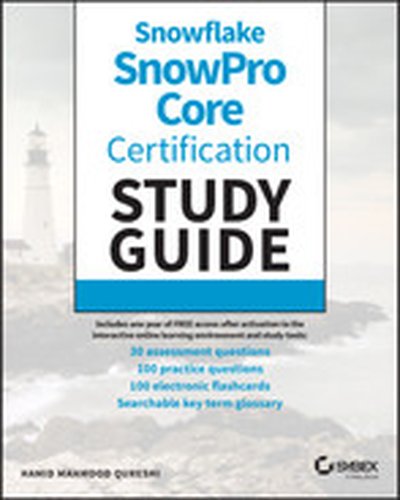
Snowflake SnowPro Core Certification Study Guide

Prepare smarter, faster, and better with the premier study guide for Snowflake SnowPro Core certification Snowflake, a cloud-based data warehousing platform, has steadily gained popularity since its 2014 launch. Snowflake offers several certification exams, of which the SnowPro Core certification is the foundational exam. The SnowPro Core Certification validates an individual's grasp of Snowflake as a cloud data warehouse, its architectural fundamentals, and the ability to design, implement, and maintain secure, scalable Snowflake systems. The Snowflake SnowPro Core Certification Study Guide delivers comprehensive coverage of every relevant exam topic on the Snowflake SnowPro Core Certification test. Prepare efficiently and effectively for the exam with online practice tests and flashcards, a digital glossary, and concise and easy-to-follow instruction from the subject-matter experts at Sybex. You'll gain the necessary knowledge to help you succeed in the exam and will be able to apply the acquired practical skills to real-world Snowflake solutions. This Study Guide includes: Comprehensive understanding of Snowflake's unique shared data, multi-cluster architecture Guidance on loading structured and semi-structured data into Snowflake Utilizing data sharing, cloning, and time travel features Managing performance through clustering keys, scaling compute up, down & across Steps to account management and security configuration including RBAC & MFA All the info you need to obtain a highly valued credential for a rapidly growing new database software solution Access to the Sybex online learning center, with chapter review questions, full-length practice exams, hundreds of electronic flashcards, and a glossary of key terms Perfect for anyone considering a new career in cloud-based data warehouse solutions and related fields, Snowflake SnowPro Core Certification Study Guide is also a must-read for veteran database professionals seeking an understanding of one of the newest and fastest-growing niches in data.

An Ethical Guide to Cyber Anonymity

"An Ethical Guide to Cyber Anonymity" is a comprehensive resource for understanding and safeguarding your privacy while navigating the internet. By the end of this book, you will have gained the skills and knowledge to maintain your cyber anonymity, ensuring your activities online remain private and secure. What this Book will help me do Understand the fundamental concepts of cyber anonymity and internet privacy. Learn practical methods to protect your identity from being compromised online. Gain expertise in configuring tools to achieve a secure and anonymous online presence. Identify and mitigate risks associated with privacy threats from various entities. Master techniques to ensure safe and private internet usage for yourself and others. Author(s) Kushantha Gunawardana is a seasoned expert in cybersecurity with years of experience in dealing with cyber anonymity and data protection. With a passion for educating others, Kushantha translates complex technical ideas into accessible and actionable knowledge. Their approach combines in-depth technical expertise with a focus on ethical practices and real-world applications. Who is it for? This book is ideal for journalists, ethical hackers, and cybersecurity professionals who are striving to protect their anonymity online. It is also a great resource for security-aware individuals looking to safeguard their personal privacy. Beginners or intermediates in the field of web privacy who aim to strengthen their understanding will find this book highly valuable. Parents wishing to protect their family's online identity can also benefit from its guidance.

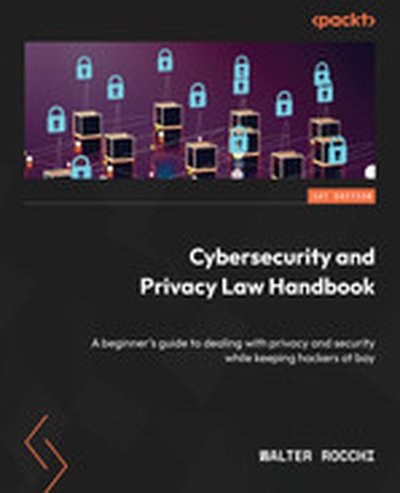
Cybersecurity and Privacy Law Handbook

Cybersecurity and privacy compliance are critical to protecting organizations from data breaches and fines. In the "Cybersecurity and Privacy Law Handbook," you'll find practical, beginner-friendly guidance to understand standards, identify gaps, and implement policies to secure your workplace effectively. What this Book will help me do Understand international cybersecurity standards such as ISO27001 and NIST. Identify and analyze security gaps using gap analysis and business impact methodologies. Ensure compliance with privacy laws like GDPR, HIPAA, and FTC regulations. Develop and implement effective cybersecurity policies and procedures. Navigate complex US-specific privacy regulations and their implications. Author(s) None Rocchi is an experienced author and practitioner in cybersecurity and privacy. With extensive knowledge in international compliance standards, they excel in breaking down complex topics into digestible and actionable content. Their practical and approachable writing style makes tackling the technical and legal facets of cybersecurity straightforward and engaging. Who is it for? This book is tailored for professionals new to cybersecurity and privacy who wish to understand and implement fundamental practices in this domain. It is ideal for managers, students, or experts from other fields looking to manage security functions effectively. No prior deep technical knowledge is required, making it friendly for beginners.

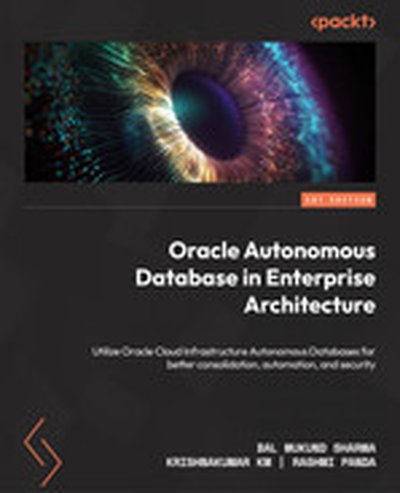
Oracle Autonomous Database in Enterprise Architecture

Explore the capabilities of Oracle Autonomous Database (ADB) to improve enterprise-level data management. Through this book, you will dive deep into deploying, managing, and securing ADBs using Oracle Cloud Infrastructure (OCI). Gain hands-on experience with high-availability setups, data migration methods, and advanced security measures to elevate your enterprise architecture. What this Book will help me do Understand the key considerations for planning, migrating, and maintaining Oracle Autonomous Databases. Learn to implement high availability solutions using Autonomous Data Guard in ADB environments. Master the configuration of backup, restore, and disaster recovery strategies within OCI. Implement advanced security practices including encryption and IAM policy management. Gain proficiency in leveraging ADB features like APEX, SQL Developer Web, and REST APIs for rapid application development. Author(s) The authors None Sharma, Krishnakumar KM, and None Panda are experts in database systems, particularly in Oracle technologies. With years of hands-on experience implementing enterprise solutions and training professionals, they have pooled their knowledge to craft a resource-rich guide filled with practical advice. Who is it for? This book is ideal for cloud architects, database administrators, and implementation consultants seeking to leverage Oracle's Autonomous Database for enhanced automation, security, and scalability. It is well-suited for professionals with foundational knowledge of Linux, OCI, and databases. Aspiring cloud engineers and students aiming to understand modern database management will also benefit greatly.