TBA
 talk-data.com
Topic
Druid
Apache Druid
realtime
big_data
olap
14
tagged
Activity Trend
1
peak/qtr
2020-Q1
2026-Q2
Top Events
Apache Druid is a high performance, relatively time, distributed OLAP database. I am going to talk about origin story of Druid, and I will show in a live demo why Druid and Kafka are a match like peanut butter and jelly, for real time analytics.

Join Hellmar Becker in an illuminating session on 'Building an Event Analytics Pipeline with Kafka, ksqlDB, and Druid' 🛠️📊. Discover how to create a modern event analytics pipeline that differs from traditional ETL setups, and witness a live demo showcasing the setup process using Kafka, ksqlDB, and Apache Druid, all in just a few minutes. 🚀 #EventAnalytics #PipelineBuilding
✨ H I G H L I G H T S ✨
🙌 A huge shoutout to all the incredible participants who made Big Data Conference Europe 2023 in Vilnius, Lithuania, from November 21-24, an absolute triumph! 🎉 Your attendance and active participation were instrumental in making this event so special. 🌍
Don't forget to check out the session recordings from the conference to relive the valuable insights and knowledge shared! 📽️
Once again, THANK YOU for playing a pivotal role in the success of Big Data Conference Europe 2023. 🚀 See you next year for another unforgettable conference! 📅 #BigDataConference #SeeYouNextYear
Summary
Building streaming applications has gotten substantially easier over the past several years. Despite this, it is still operationally challenging to deploy and maintain your own stream processing infrastructure. Decodable was built with a mission of eliminating all of the painful aspects of developing and deploying stream processing systems for engineering teams. In this episode Eric Sammer discusses why more companies are including real-time capabilities in their products and the ways that Decodable makes it faster and easier.
Announcements
Hello and welcome to the Data Engineering Podcast, the show about modern data management Introducing RudderStack Profiles. RudderStack Profiles takes the SaaS guesswork and SQL grunt work out of building complete customer profiles so you can quickly ship actionable, enriched data to every downstream team. You specify the customer traits, then Profiles runs the joins and computations for you to create complete customer profiles. Get all of the details and try the new product today at dataengineeringpodcast.com/rudderstack This episode is brought to you by Datafold – a testing automation platform for data engineers that finds data quality issues before the code and data are deployed to production. Datafold leverages data-diffing to compare production and development environments and column-level lineage to show you the exact impact of every code change on data, metrics, and BI tools, keeping your team productive and stakeholders happy. Datafold integrates with dbt, the modern data stack, and seamlessly plugs in your data CI for team-wide and automated testing. If you are migrating to a modern data stack, Datafold can also help you automate data and code validation to speed up the migration. Learn more about Datafold by visiting dataengineeringpodcast.com/datafold You shouldn't have to throw away the database to build with fast-changing data. You should be able to keep the familiarity of SQL and the proven architecture of cloud warehouses, but swap the decades-old batch computation model for an efficient incremental engine to get complex queries that are always up-to-date. With Materialize, you can! It’s the only true SQL streaming database built from the ground up to meet the needs of modern data products. Whether it’s real-time dashboarding and analytics, personalization and segmentation or automation and alerting, Materialize gives you the ability to work with fresh, correct, and scalable results — all in a familiar SQL interface. Go to dataengineeringpodcast.com/materialize today to get 2 weeks free! As more people start using AI for projects, two things are clear: It’s a rapidly advancing field, but it’s tough to navigate. How can you get the best results for your use case? Instead of being subjected to a bunch of buzzword bingo, hear directly from pioneers in the developer and data science space on how they use graph tech to build AI-powered apps. . Attend the dev and ML talks at NODES 2023, a free online conference on October 26 featuring some of the brightest minds in tech. Check out the agenda and register today at Neo4j.com/NODES. Your host is Tobias Macey and today I'm interviewing Eric Sammer about starting your stream processing journey with Decodable
Interview
Introduction How did you get involved in the area of data management? Can you describe what Decodable is and the story behind it?
What are the notable changes to the Decodable platform since we last spoke? (October 2021) What are the industry shifts that have influenced the product direction?
What are the problems that customers are trying to solve when they come to Decodable? When you launched your focus was on SQL transformations of streaming data. What was the process for adding full Java support in addition to SQL? What are the developer experience challenges that are particular to working with streaming data?
How have you worked to address that in the Decodable platform and interfaces?
As you evolve the technical and product direction, what is your heuristic for balancing the unification of interfaces and system integration against the ability to swap different components or interfaces as new technologies are introduced? What are the most interesting, innovative, or unexpected ways that you have seen Decodable used? What are the most interesting, unexpected, or challenging lessons that you have learned while working on Decodable? When is Decodable the wrong choice? What do you have planned for the future of Decodable?
Contact Info
esammer on GitHub LinkedIn
Parting Question
From your perspective, what is the biggest gap in the tooling or technology for data management today?
Closing Announcements
Thank you for listening! Don't forget to check out our other shows. Podcast.init covers the Python language, its community, and the innovative ways it is being used. The Machine Learning Podcast helps you go from idea to production with machine learning. Visit the site to subscribe to the show, sign up for the mailing list, and read the show notes. If you've learned something or tried out a project from the show then tell us about it! Email [email protected]) with your story. To help other people find the show please leave a review on Apple Podcasts and tell your friends and co-workers
Links
Decodable
Podcast Episode
Understanding the Apache Flink Journey Flink
Podcast Episode
Debezium
Podcast Episode
Kafka Redpanda
Podcast Episode
Kinesis PostgreSQL
Podcast Episode
Snowflake
Podcast Episode
Databricks Startree Pinot
Podcast Episode
Rockset
Podcast Episode
Druid InfluxDB Samza Storm Pulsar
Podcast Episode
ksqlDB
Podcast Episode
dbt GitHub Actions Airbyte Singer Splunk Outbox Pattern
The intro and outro music is from The Hug by The Freak Fandango Orchestra / CC BY-SA
Sponsored By:
Neo4J: 
NODES 2023 is a free online conference focused on graph-driven innovations with content for all skill levels. Its 24 hours are packed with 90 interactive technical sessions from top developers and data scientists across the world covering a broad range of topics and use cases. The event tracks: - Intelligent Applications: APIs, Libraries, and Frameworks – Tools and best practices for creating graph-powered applications and APIs with any software stack and programming language, including Java, Python, and JavaScript - Machine Learning and AI – How graph technology provides context for your data and enhances the accuracy of your AI and ML projects (e.g.: graph neural networks, responsible AI) - Visualization: Tools, Techniques, and Best Practices – Techniques and tools for exploring hidden and unknown patterns in your data and presenting complex relationships (knowledge graphs, ethical data practices, and data representation)
Don’t miss your chance to hear about the latest graph-powered implementations and best practices for free on October 26 at NODES 2023. Go to Neo4j.com/NODES today to see the full agenda and register!Rudderstack: 
Introducing RudderStack Profiles. RudderStack Profiles takes the SaaS guesswork and SQL grunt work out of building complete customer profiles so you can quickly ship actionable, enriched data to every downstream team. You specify the customer traits, then Profiles runs the joins and computations for you to create complete customer profiles. Get all of the details and try the new product today at dataengineeringpodcast.com/rudderstackMaterialize: 
You shouldn't have to throw away the database to build with fast-changing data. Keep the familiar SQL, keep the proven architecture of cloud warehouses, but swap the decades-old batch computation model for an efficient incremental engine to get complex queries that are always up-to-date.
That is Materialize, the only true SQL streaming database built from the ground up to meet the needs of modern data products: Fresh, Correct, Scalable — all in a familiar SQL UI. Built on Timely Dataflow and Differential Dataflow, open source frameworks created by cofounder Frank McSherry at Microsoft Research, Materialize is trusted by data and engineering teams at Ramp, Pluralsight, Onward and more to build real-time data products without the cost, complexity, and development time of stream processing.
Go to materialize.com today and get 2 weeks free!Datafold: 
This episode is brought to you by Datafold – a testing automation platform for data engineers that finds data quality issues before the code and data are deployed to production. Datafold leverages data-diffing to compare…
Summary
Real-time capabilities have quickly become an expectation for consumers. The complexity of providing those capabilities is still high, however, making it more difficult for small teams to compete. Meroxa was created to enable teams of all sizes to deliver real-time data applications. In this episode DeVaris Brown discusses the types of applications that are possible when teams don't have to manage the complex infrastructure necessary to support continuous data flows.
Announcements
Hello and welcome to the Data Engineering Podcast, the show about modern data management RudderStack helps you build a customer data platform on your warehouse or data lake. Instead of trapping data in a black box, they enable you to easily collect customer data from the entire stack and build an identity graph on your warehouse, giving you full visibility and control. Their SDKs make event streaming from any app or website easy, and their extensive library of integrations enable you to automatically send data to hundreds of downstream tools. Sign up free at dataengineeringpodcast.com/rudderstack Your host is Tobias Macey and today I'm interviewing DeVaris Brown about the impact of real-time data on business opportunities and risk profiles
Interview
Introduction How did you get involved in the area of data management? Can you describe what Meroxa is and the story behind it?
How have the focus and goals of the platform and company evolved over the past 2 years?
Who are the target customers for Meroxa?
What problems are they trying to solve when they come to your platform?
Applications powered by real-time data were the exclusive domain of large and/or sophisticated tech companies for several years due to the inherent complexities involved. What are the shifts that have made them more accessible to a wider variety of teams?
What are some of the remaining blockers for teams who want to start using real-time data?
With the democratization of real-time data, what are the new categories of products and applications that are being unlocked?
How are organizations thinking about the potential value that those types of apps/services can provide?
With data flowing constantly, there are new challenges around oversight and accuracy. How does real-time data change the risk profile for applications that are consuming it?
What are some of the technical controls that are available for organizations that are risk-averse?
What skills do developers need to be able to effectively design, develop, and deploy real-time data applications?
How does this differ when talking about internal vs. consumer/end-user facing applications?
What are the most interesting, innovative, or unexpected ways that you have seen Meroxa used? What are the most interesting, unexpected, or challenging lessons that you have learned while working on Meroxa? When is Meroxa the wrong choice? What do you have planned for the future of Meroxa?
Contact Info
LinkedIn @devarispbrown on Twitter
Parting Question
From your perspective, what is the biggest gap in the tooling or technology for data management today?
Closing Announcements
Thank you for listening! Don't forget to check out our other shows. Podcast.init covers the Python language, its community, and the innovative ways it is being used. The Machine Learning Podcast helps you go from idea to production with machine learning. Visit the site to subscribe to the show, sign up for the mailing list, and read the show notes. If you've learned something or tried out a project from the show then tell us about it! Email [email protected]) with your story. To help other people find the show please leave a review on Apple Podcasts and tell your friends and co-workers
Links
Meroxa
Podcast Episode
Kafka Kafka Connect Conduit - golang Kafka connect replacement Pulsar Redpanda Flink Beam Clickhouse Druid Pinot
The intro and outro music is from The Hug by The Freak Fandango Orchestra / CC
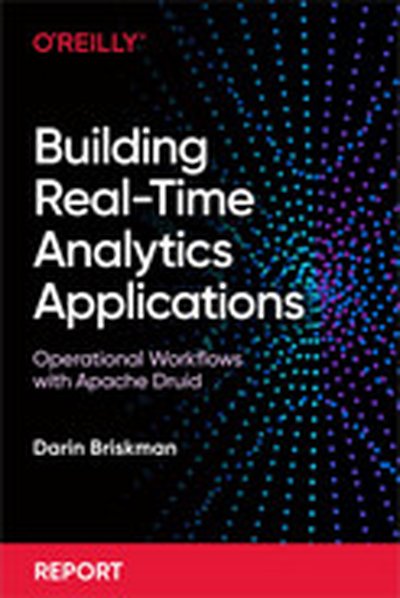
Every organization needs insight to succeed and excel, and the primary foundation for insights today is data—whether it's internal data from operational systems or external data from partners, vendors, and public sources. But how can you use this data to create and maintain analytics applications capable of gaining real insights in real time? In this report, Darin Briskman explains that leading organizations like Netflix, Walmart, and Confluent have found that while traditional analytics still have value, it's not enough. These companies and many others are now building real-time analytics that deliver insights continually, on demand, and at scale—complete with interactive drill-down data conversations, subsecond performance at scale, and always-on reliability. Ideal for data engineers, data scientists, data architects, and software developers, this report helps you: Learn the elements of real-time analytics, including subsecond performance, high concurrency, and the combination of real-time and historical data Examine case studies that show how Netflix, Walmart, and Confluent have adopted real-time analytics Explore Apache Druid, the real-time database that powers real-time analytics applications Learn how to create real-time analytics applications through data design and interfaces Understand the importance of security, resilience, and managed services Darin Briskman is director of technology at Imply Data, Inc., a software company committed to advancing open source technology and making it simple for developers to realize the power of Apache Druid.
Spreadsheets revolutionized IT by giving end users the ability to create their own analytics. Providing direct end user access to trillion-row datasets generated in financial markets or digital marketing is much harder. New SQL data warehouses like ClickHouse and Druid can provide fixed latency with constant cost on very large datasets, which opens up new possibilities.
Our talk walks through recent experience on analytic apps developed by ClickHouse users that enable end users like market traders to develop their own analytics directly off raw data. We’ll cover the following topics.
-
Characteristics of new open source column databases and how they enable low-latency analytics at constant cost.
-
Idiomatic ways to validate new apps by building MVPs that support a wide range of queries on source data including storing source JSON, schema design, applying compression on columns, and building indexes for needle-in-a-haystack queries.
-
Incrementally identifying hotspots and applying easy optimizations to bring query performance into line with long term latency and cost requirements.
-
Methods of building accessible interfaces, including traditional dashboards, imitating existing APIs that are already known, and creating app-specific visualizations.
We’ll finish by summarizing a few of the benefits we’ve observed and also touch on ways that analytic infrastructure could be improved to make end user access even more productive. The lessons are as general as possible so that they can be applied across a wide range of analytic systems, not just ClickHouse.
Connect with us: Website: https://databricks.com Facebook: https://www.facebook.com/databricksinc Twitter: https://twitter.com/databricks LinkedIn: https://www.linkedin.com/company/data... Instagram: https://www.instagram.com/databricksinc/
Summary Building a data platform is an iterative and evolutionary process that requires collaboration with internal stakeholders to ensure that their needs are being met. Yotpo has been on a journey to evolve and scale their data platform to continue serving the needs of their organization as it increases the scale and sophistication of data usage. In this episode Doron Porat and Liran Yogev explain how they arrived at their current architecture, the capabilities that they are optimizing for, and the complex process of identifying and evaluating new components to integrate into their systems. This is an excellent exploration of the decisions and tradeoffs that need to be made while building such a complex system.
Announcements
Hello and welcome to the Data Engineering Podcast, the show about modern data management When you’re ready to build your next pipeline, or want to test out the projects you hear about on the show, you’ll need somewhere to deploy it, so check out our friends at Linode. With their managed Kubernetes platform it’s now even easier to deploy and scale your workflows, or try out the latest Helm charts from tools like Pulsar and Pachyderm. With simple pricing, fast networking, object storage, and worldwide data centers, you’ve got everything you need to run a bulletproof data platform. Go to dataengineeringpodcast.com/linode today and get a $100 credit to try out a Kubernetes cluster of your own. And don’t forget to thank them for their continued support of this show! This episode is brought to you by Acryl Data, the company behind DataHub, the leading developer-friendly data catalog for the modern data stack. Open Source DataHub is running in production at several companies like Peloton, Optum, Udemy, Zynga and others. Acryl Data provides DataHub as an easy to consume SaaS product which has been adopted by several companies. Signup for the SaaS product at dataengineeringpodcast.com/acryl RudderStack helps you build a customer data platform on your warehouse or data lake. Instead of trapping data in a black box, they enable you to easily collect customer data from the entire stack and build an identity graph on your warehouse, giving you full visibility and control. Their SDKs make event streaming from any app or website easy, and their state-of-the-art reverse ETL pipelines enable you to send enriched data to any cloud tool. Sign up free… or just get the free t-shirt for being a listener of the Data Engineering Podcast at dataengineeringpodcast.com/rudder. The most important piece of any data project is the data itself, which is why it is critical that your data source is high quality. PostHog is your all-in-one product analytics suite including product analysis, user funnels, feature flags, experimentation, and it’s open source so you can host it yourself or let them do it for you! You have full control over your data and their plugin system lets you integrate with all of your other data tools, including data warehouses and SaaS platforms. Give it a try today with their generous free tier at dataengineeringpodcast.com/posthog Your host is Tobias Macey and today I’m interviewing Doron Porat and Liran Yogev about their experiences designing and implementing a self-serve data platform at Yotpo
Interview
Introduction How did you get involved in the area of data management? Can you describe what Yotpo is and the role that data plays in the organization? What are the core data types and sources that you are working with?
What kinds of data assets are being produced and how do those get consumed and re-integrated into the business?
What are the user personas that you are supporting and what are the interfaces that they are comfortable interacting with?
What is the size of your team and how is it structured?
You recently posted about the current architecture of your data platform. What was the starting point on your platform journey?
What did the early stages of feature and platform evolution look like? What was the catalyst for making a concerted effort to integrate your systems into a cohesive platform?
What was the scope and directive of the project for building a platform?
What are the metrics and capabilities that you are optimizing for in the structure of your data platform? What are the organizational or regulatory constraints that you needed to account for?
What are some of the early decisions that affected your available choices in later stages of the project? What does the current state of your architecture look like?
How long did it take to get to where you are today?
What were the factors that you considered in the various build vs. buy decisions?
How did you manage cost modeling to understand the true savings on either side of that decision?
If you were to start from scratch on a new data platform today what might you do differently? What are the decisions that proved helpful in the later stages of your platform development? What are the most interesting, innovative, or unexpected ways that you have seen your platform used? What are the most interesting, unexpected, or challenging lessons that you have learned while working on designing and implementing your platform? What do you have planned for the future of your platform infrastructure?
Contact Info
Doron
Liran
Parting Question
From your perspective, what is the biggest gap in the tooling or technology for data management today?
Closing Announcements
Thank you for listening! Don’t forget to check out our other show, Podcast.init to learn about the Python language, its community, and the innovative ways it is being used. Visit the site to subscribe to the show, sign up for the mailing list, and read the show notes. If you’ve learned something or tried out a project from the show then tell us about it! Email [email protected]) with your story. To help other people find the show please leave a review on iTunes and tell your friends and co-workers
Links
Yotpo
Data Platform Architecture Blog Post
Greenplum Databricks Metorikku Apache Hive CDC == Change Data Capture Debezium
Podcast Episode
Apache Hudi
Podcast Episode
Upsolver
Podcast Episode
Spark PrestoDB Snowflake
Podcast Episode
Druid Rockset
Podcast Episode
dbt
Podcast Episode
Acryl
Podcast Episode
Atlan
Podcast Episode
OpenLineage
Podcast Episode
Okera Shopify Data Warehouse Episode Redshift Delta Lake
Podcast Episode
Iceberg
Podcast Episode
Outbox Pattern Backstage Roadie Nomad Kubernetes Deequ Great Expectations
Podcast Episode
LakeFS
Podcast Episode
2021 Recap Episode Monte Carlo
The intro and outro music is from The Hug by The Freak Fandango Orchestra / CC BY-SA
a…
Summary There are many dimensions to the work of protecting the privacy of users in our data. When you need to share a data set with other teams, departments, or businesses then it is of utmost importance that you eliminate or obfuscate personal information. In this episode Will Thompson explores the many ways that sensitive data can be leaked, re-identified, or otherwise be at risk, as well as the different strategies that can be employed to mitigate those attack vectors. He also explains how he and his team at Privacy Dynamics are working to make those strategies more accessible to organizations so that you can focus on all of the other tasks required of you.
Announcements
Hello and welcome to the Data Engineering Podcast, the show about modern data management When you’re ready to build your next pipeline, or want to test out the projects you hear about on the show, you’ll need somewhere to deploy it, so check out our friends at Linode. With their managed Kubernetes platform it’s now even easier to deploy and scale your workflows, or try out the latest Helm charts from tools like Pulsar and Pachyderm. With simple pricing, fast networking, object storage, and worldwide data centers, you’ve got everything you need to run a bulletproof data platform. Go to dataengineeringpodcast.com/linode today and get a $100 credit to try out a Kubernetes cluster of your own. And don’t forget to thank them for their continued support of this show! Today’s episode is Sponsored by Prophecy.io – the low-code data engineering platform for the cloud. Prophecy provides an easy-to-use visual interface to design & deploy data pipelines on Apache Spark & Apache Airflow. Now all the data users can use software engineering best practices – git, tests and continuous deployment with a simple to use visual designer. How does it work? – You visually design the pipelines, and Prophecy generates clean Spark code with tests on git; then you visually schedule these pipelines on Airflow. You can observe your pipelines with built in metadata search and column level lineage. Finally, if you have existing workflows in AbInitio, Informatica or other ETL formats that you want to move to the cloud, you can import them automatically into Prophecy making them run productively on Spark. Create your free account today at dataengineeringpodcast.com/prophecy. The only thing worse than having bad data is not knowing that you have it. With Bigeye’s data observability platform, if there is an issue with your data or data pipelines you’ll know right away and can get it fixed before the business is impacted. Bigeye let’s data teams measure, improve, and communicate the quality of your data to company stakeholders. With complete API access, a user-friendly interface, and automated yet flexible alerting, you’ve got everything you need to establish and maintain trust in your data. Go to dataengineeringpodcast.com/bigeye today to sign up and start trusting your analyses. Your host is Tobias Macey and today I’m interviewing Will Thompson about managing data privacy concerns for data sets used in analytics and machine learning
Interview
Introduction How did you get involved in the area of data management? Data privacy is a multi-faceted problem domain. Can you start by enumerating the different categories of privacy concern that are involved in analytical use cases? Can you describe what Privacy Dynamics is and the story behind it?
Which categor(y|ies) are you focused on addressing?
What are some of the best practices in the definition, protection, and enforcement of data privacy policies?
Is there a data security/privacy equivalent to the OWASP top 10?
What are some of the techniques that are available for anonymizing data while maintaining statistical utility/significance?
What are some of the engineering/systems capabilities that are required for data (platform) engineers to incorporate these practices in their platforms?
What are the tradeoffs of encryption vs. obfuscation when anonymizing data? What are some of the types of PII that are non-obvious? What are the risks associated with data re-identification, and what are some of the vectors that might be exploited to achieve that?
How can privacy risks mitigation be maintained as new data sources are introduced that might contribute to these re-identification vectors?
Can you describe how Privacy Dynamics is implemented?
What are the most challenging engineering problems that you are dealing with?
How do you approach validation of a data set’s privacy? What have you found to be useful heuristics for identifying private data?
What are the risks of false positives vs. false negatives?
Can you describe what is involved in integrating the Privacy Dynamics system into an existing data platform/warehouse?
What would be required to integrate with systems such as Presto, Clickhouse, Druid, etc.?
What are the most interesting, innovative, or unexpected ways that you have seen Privacy Dynamics used? What are the most interesting, unexpected, or challenging lessons that you have learned while working on Privacy Dynamics? When is Privacy Dynamics the wrong choice? What do you have planned for the future of Privacy Dynamics?
Contact Info
LinkedIn @willseth on Twitter
Parting Question
From your perspective, what is the biggest gap in the tooling or technology for data management today?
Closing Announcements
Thank you for listening! Don’t forget to check out our other show, Podcast.init to learn about the Python language, its community, and the innovative ways it is being used. Visit the site to subscribe to the show, sign up for the mailing list, and read the show notes. If you’ve learned something or tried out a project from the show then tell us about it! Email [email protected]) with your story. To help other people find the show please leave a review on iTunes and tell your friends and co-workers
Links
Privacy Dynamics Pandas
Podcast Episode – Pandas For Data Engineering
Homomorphic Encryption Differential Privacy Immuta
Podcast Episode
The intro and outro music is from The Hug by The Freak Fandango Orchestra / CC BY-SA
Support Data Engineering Podcast
Summary A majority of the time spent in data engineering is copying data between systems to make the information available for different purposes. This introduces challenges such as keeping information synchronized, managing schema evolution, building transformations to match the expectations of the destination systems. H.O. Maycotte was faced with these same challenges but at a massive scale, leading him to question if there is a better way. After tasking some of his top engineers to consider the problem in a new light they created the Pilosa engine. In this episode H.O. explains how using Pilosa as the core he built the Molecula platform to eliminate the need to copy data between systems in able to make it accessible for analytical and machine learning purposes. He also discusses the challenges that he faces in helping potential users and customers understand the shift in thinking that this creates, and how the system is architected to make it possible. This is a fascinating conversation about what the future looks like when you revisit your assumptions about how systems are designed.
Announcements
Hello and welcome to the Data Engineering Podcast, the show about modern data management When you’re ready to build your next pipeline, or want to test out the projects you hear about on the show, you’ll need somewhere to deploy it, so check out our friends at Linode. With their managed Kubernetes platform it’s now even easier to deploy and scale your workflows, or try out the latest Helm charts from tools like Pulsar and Pachyderm. With simple pricing, fast networking, object storage, and worldwide data centers, you’ve got everything you need to run a bulletproof data platform. Go to dataengineeringpodcast.com/linode today and get a $100 credit to try out a Kubernetes cluster of your own. And don’t forget to thank them for their continued support of this show! Modern Data teams are dealing with a lot of complexity in their data pipelines and analytical code. Monitoring data quality, tracing incidents, and testing changes can be daunting and often takes hours to days. Datafold helps Data teams gain visibility and confidence in the quality of their analytical data through data profiling, column-level lineage and intelligent anomaly detection. Datafold also helps automate regression testing of ETL code with its Data Diff feature that instantly shows how a change in ETL or BI code affects the produced data, both on a statistical level and down to individual rows and values. Datafold integrates with all major data warehouses as well as frameworks such as Airflow & dbt and seamlessly plugs into CI workflows. Go to dataengineeringpodcast.com/datafold today to start a 30-day trial of Datafold. Once you sign up and create an alert in Datafold for your company data, they will send you a cool water flask. RudderStack’s smart customer data pipeline is warehouse-first. It builds your customer data warehouse and your identity graph on your data warehouse, with support for Snowflake, Google BigQuery, Amazon Redshift, and more. Their SDKs and plugins make event streaming easy, and their integrations with cloud applications like Salesforce and ZenDesk help you go beyond event streaming. With RudderStack you can use all of your customer data to answer more difficult questions and then send those insights to your whole customer data stack. Sign up free at dataengineeringpodcast.com/rudder today. Your host is Tobias Macey and today I’m interviewing H.O. Maycotte about Molecula, a cloud based feature store based on the open source Pilosa project
Interview
Introduction How did you get involved in the area of data management? Can you start by giving an overview of what you are building at Molecula and the story behind it?
What are the additional capabilities that Molecula offers on top of the open source Pilosa project?
What are the problems/use cases that Molecula solves for? What are some of the technologies or architectural patterns that Molecula might replace in a companies data platform? One of the use cases that is mentioned on the Molecula site is as a feature store for ML and AI. This is a category that has been seeing a lot of growth recently. Can you provide some context how Molecula fits in that market and how it compares to options such as Tecton, Iguazio, Feast, etc.?
What are the benefits of using a bitmap index for identifying and computing features?
Can you describe how the Molecula platform is architected?
How has the design and goal of Molecula changed or evolved since you first began working on it?
For someone who is using Molecula, can you describe the process of integrating it with their existing data sources? Can you describe the internal data model of Pilosa/Molecula?
How should users think about data modeling and architecture as they are loading information into the platform?
Once a user has data in Pilosa, what are the available mechanisms for performing analyses or feature engineering? What are some of the most underutilized or misunderstood capabilities of Molecula? What are some of the most interesting, unexpected, or innovative ways that you have seen the Molecula platform used? What are the most interesting, unexpected, or challenging lessons that you have learned from building and scaling Molecula? When is Molecula the wrong choice? What do you have planned for the future of the platform and business?
Contact Info
LinkedIn @maycotte on Twitter
Parting Question
From your perspective, what is the biggest gap in the tooling or technology for data management today?
Closing Announcements
Thank you for listening! Don’t forget to check out our other show, Podcast.init to learn about the Python language, its community, and the innovative ways it is being used. Visit the site to subscribe to the show, sign up for the mailing list, and read the show notes. If you’ve learned something or tried out a project from the show then tell us about it! Email [email protected]) with your story. To help other people find the show please leave a review on iTunes and tell your friends and co-workers Join the community in the new Zulip chat workspace at dataengineeringpodcast.com/chat
Links
Molecula Pilosa
Podcast Episode
The Social Dilemma Feature Store Cassandra Elasticsearch
Podcast Episode
Druid MongoDB SwimOS
Podcast Episode
Kafka Kafka Schema Registry
Podcast Episode
Homomorphic Encryption Lucene Solr
The intro and outro music is from The Hug by The Freak Fandango Orchestra / CC BY-SA
Support Data Engineering Podcast
Summary With the constant evolution of technology for data management it can seem impossible to make an informed decision about whether to build a data warehouse, or a data lake, or just leave your data wherever it currently rests. What’s worse is that any time you have to migrate to a new architecture, all of your analytical code has to change too. Thankfully it’s possible to add an abstraction layer to eliminate the churn in your client code, allowing you to evolve your data platform without disrupting your downstream data users. In this episode AtScale co-founder and CTO Matthew Baird describes how the data virtualization and data engineering automation capabilities that are built into the platform free up your engineers to focus on your business needs without having to waste cycles on premature optimization. This was a great conversation about the power of abstractions and appreciating the value of increasing the efficiency of your data team.
Announcements
Hello and welcome to the Data Engineering Podcast, the show about modern data management When you’re ready to build your next pipeline, or want to test out the projects you hear about on the show, you’ll need somewhere to deploy it, so check out our friends at Linode. With 200Gbit private networking, scalable shared block storage, and a 40Gbit public network, you’ve got everything you need to run a fast, reliable, and bullet-proof data platform. If you need global distribution, they’ve got that covered too with world-wide datacenters including new ones in Toronto and Mumbai. And for your machine learning workloads, they just announced dedicated CPU instances. Go to dataengineeringpodcast.com/linode today to get a $20 credit and launch a new server in under a minute. And don’t forget to thank them for their continued support of this show! This week’s episode is also sponsored by Datacoral, an AWS-native, serverless, data infrastructure that installs in your VPC. Datacoral helps data engineers build and manage the flow of data pipelines without having to manage any infrastructure, meaning you can spend your time invested in data transformations and business needs, rather than pipeline maintenance. Raghu Murthy, founder and CEO of Datacoral built data infrastructures at Yahoo! and Facebook, scaling from terabytes to petabytes of analytic data. He started Datacoral with the goal to make SQL the universal data programming language. Visit dataengineeringpodcast.com/datacoral today to find out more. Having all of your logs and event data in one place makes your life easier when something breaks, unless that something is your Elastic Search cluster because it’s storing too much data. CHAOSSEARCH frees you from having to worry about data retention, unexpected failures, and expanding operating costs. They give you a fully managed service to search and analyze all of your logs in S3, entirely under your control, all for half the cost of running your own Elastic Search cluster or using a hosted platform. Try it out for yourself at dataengineeringpodcast.com/chaossearch and don’t forget to thank them for supporting the show! You listen to this show to learn and stay up to date with what’s happening in databases, streaming platforms, big data, and everything else you need to know about modern data management. For even more opportunities to meet, listen, and learn from your peers you don’t want to miss out on this year’s conference season. We have partnered with organizations such as O’Reilly Media, Dataversity, Corinium Global Intelligence, Alluxio, and Data Council. Upcoming events include the combined events of the Data Architecture Summit and Graphorum, the Data Orchestration Summit, and Data Council in NYC. Go to dataengineeringpodcast.com/conferences to learn more about these and other events, and take advantage of our partner discounts to save money when you register today. Your host is Tobias Macey and today I’m interviewing Matt Baird about AtScale, a platform that
Interview
Introduction How did you get involved in the area of data management? Can you start by describing the AtScale platform and how it fits in the ecosystem of data tools? What was your motivation for building the platform and what were some of the early challenges that you faced in achieving your current level of success? How is the AtScale platform architected and what have been some of the main areas of evolution and change since you first began building it?
How has the surrounding data ecosystem changed since AtScale was founded? How are current industry trends influencing your product focus?
Can you talk through the workflow for someone implementing AtScale? What are some of the main use cases that benefit from data virtualization capabilities?
How does it influence the relevancy of data warehouses or data lakes?
What are some of the types of tools or patterns that AtScale replaces in a data platform? What are some of the most interesting or unexpected ways that you have seen AtScale used? What have been some of the most challenging aspects of building and growing the platform? When is AtScale the wrong choice? What do you have planned for the future of the platform and business?
Contact Info
LinkedIn @zetty on Twitter
Parting Question
From your perspective, what is the biggest gap in the tooling or technology for data management today?
Closing Announcements
Thank you for listening! Don’t forget to check out our other show, Podcast.init to learn about the Python language, its community, and the innovative ways it is being used. Visit the site to subscribe to the show, sign up for the mailing list, and read the show notes. If you’ve learned something or tried out a project from the show then tell us about it! Email [email protected]) with your story. To help other people find the show please leave a review on iTunes and tell your friends and co-workers Join the community in the new Zulip chat workspace at dataengineeringpodcast.com/chat
Links
AtScale PeopleSoft Oracle Hadoop PrestoDB Impala Apache Kylin Apache Druid Go Language Scala
The intro and outro music is from The Hug by The Freak Fandango Orchestra / CC BY-SA
Support Data Engineering Podcast
Summary
With the attention being paid to the systems that power large volumes of high velocity data it is easy to forget about the value of data collection at human scales. Ona is a company that is building technologies to support mobile data collection, analysis of the aggregated information, and user-friendly presentations. In this episode CTO Peter Lubell-Doughtie describes the architecture of the platform, the types of environments and use cases where it is being employed, and the value of small data.
Preamble
Hello and welcome to the Data Engineering Podcast, the show about modern data management When you’re ready to build your next pipeline you’ll need somewhere to deploy it, so check out Linode. With private networking, shared block storage, node balancers, and a 40Gbit network, all controlled by a brand new API you’ve got everything you need to run a bullet-proof data platform. Go to dataengineeringpodcast.com/linode to get a $20 credit and launch a new server in under a minute. Are you struggling to keep up with customer request and letting errors slip into production? Want to try some of the innovative ideas in this podcast but don’t have time? DataKitchen’s DataOps software allows your team to quickly iterate and deploy pipelines of code, models, and data sets while improving quality. Unlike a patchwork of manual operations, DataKitchen makes your team shine by providing an end to end DataOps solution with minimal programming that uses the tools you love. Join the DataOps movement and sign up for the newsletter at datakitchen.io/de today. After that learn more about why you should be doing DataOps by listening to the Head Chef in the Data Kitchen at dataengineeringpodcast.com/datakitchen Go to dataengineeringpodcast.com to subscribe to the show, sign up for the mailing list, read the show notes, and get in touch. Join the community in the new Zulip chat workspace at dataengineeringpodcast.com/chat Your host is Tobias Macey and today I’m interviewing Peter Lubell-Doughtie about using Ona for collecting data and processing it with Canopy
Interview
Introduction How did you get involved in the area of data management? What is Ona and how did the company get started?
What are some examples of the types of customers that you work with?
What types of data do you support in your collection platform? What are some of the mechanisms that you use to ensure the accuracy of the data that is being collected by users? Does your mobile collection platform allow for anyone to submit data without having to be associated with a given account or organization? What are some of the integration challenges that are unique to the types of data that get collected by mobile field workers? Can you describe the flow of the data from collection through to analysis? To help improve the utility of the data being collected you have started building Canopy. What was the tipping point where it became worth the time and effort to start that project?
What are the architectural considerations that you factored in when designing it? What have you found to be the most challenging or unexpected aspects of building an enterprise data warehouse for general users?
What are your plans for the future of Ona and Canopy?
Contact Info
Email pld on Github Website
Parting Question
From your perspective, what is the biggest gap in the tooling or technology for data management today?
Links
OpenSRP Ona Canopy Open Data Kit Earth Institute at Columbia University Sustainable Engineering Lab WHO Bill and Melinda Gates Foundation XLSForms PostGIS Kafka Druid Superset Postgres Ansible Docker Terraform
The intro and outro music is from The Hug by The Freak Fandango Orchestra / CC BY-SA Support Data Engineering Podcast
Summary
Building a data pipeline that is reliable and flexible is a difficult task, especially when you have a small team. Astronomer is a platform that lets you skip straight to processing your valuable business data. Ry Walker, the CEO of Astronomer, explains how the company got started, how the platform works, and their commitment to open source.
Preamble
Hello and welcome to the Data Engineering Podcast, the show about modern data infrastructure When you’re ready to launch your next project you’ll need somewhere to deploy it. Check out Linode at www.dataengineeringpodcast.com/linode?utm_source=rss&utm_medium=rss and get a $20 credit to try out their fast and reliable Linux virtual servers for running your data pipelines or trying out the tools you hear about on the show. Go to dataengineeringpodcast.com to subscribe to the show, sign up for the newsletter, read the show notes, and get in touch. You can help support the show by checking out the Patreon page which is linked from the site. To help other people find the show you can leave a review on iTunes, or Google Play Music, and tell your friends and co-workers This is your host Tobias Macey and today I’m interviewing Ry Walker, CEO of Astronomer, the platform for data engineering.
Interview
Introduction How did you first get involved in the area of data management? What is Astronomer and how did it get started? Regulatory challenges of processing other people’s data What does your data pipelining architecture look like? What are the most challenging aspects of building a general purpose data management environment? What are some of the most significant sources of technical debt in your platform? Can you share some of the failures that you have encountered while architecting or building your platform and company and how you overcame them? There are certain areas of the overall data engineering workflow that are well defined and have numerous tools to choose from. What are some of the unsolved problems in data management? What are some of the most interesting or unexpected uses of your platform that you are aware of?
Contact Information
Email @rywalker on Twitter
Links
Astronomer Kiss Metrics Segment Marketing tools chart Clickstream HIPAA FERPA PCI Mesos Mesos DC/OS Airflow SSIS Marathon Prometheus Grafana Terraform Kafka Spark ELK Stack React GraphQL PostGreSQL MongoDB Ceph Druid Aries Vault Adapter Pattern Docker Kinesis API Gateway Kong AWS Lambda Flink Redshift NOAA Informatica SnapLogic Meteor
The intro and outro music is from The Hug by The Freak Fandango Orchestra / CC BY-SA Support Data Engineering Podcast
Summary
What exactly is data engineering? How has it evolved in recent years and where is it going? How do you get started in the field? In this episode, Maxime Beauchemin joins me to discuss these questions and more.
Transcript provided by CastSource
Preamble
Hello and welcome to the Data Engineering Podcast, the show about modern data infrastructure Go to dataengineeringpodcast.com to subscribe to the show, sign up for the newsletter, read the show notes, and get in touch. You can help support the show by checking out the Patreon page which is linked from the site. To help other people find the show you can leave a review on iTunes, or Google Play Music, and tell your friends and co-workers Your host is Tobias Macey and today I’m interviewing Maxime Beauchemin
Questions
Introduction How did you get involved in the field of data engineering? How do you define data engineering and how has that changed in recent years? Do you think that the DevOps movement over the past few years has had any impact on the discipline of data engineering? If so, what kinds of cross-over have you seen? For someone who wants to get started in the field of data engineering what are some of the necessary skills? What do you see as the biggest challenges facing data engineers currently? At what scale does it become necessary to differentiate between someone who does data engineering vs data infrastructure and what are the differences in terms of skill set and problem domain? How much analytical knowledge is necessary for a typical data engineer? What are some of the most important considerations when establishing new data sources to ensure that the resulting information is of sufficient quality? You have commented on the fact that data engineering borrows a number of elements from software engineering. Where does the concept of unit testing fit in data management and what are some of the most effective patterns for implementing that practice? How has the work done by data engineers and managers of data infrastructure bled back into mainstream software and systems engineering in terms of tools and best practices? How do you see the role of data engineers evolving in the next few years?
Keep In Touch
@mistercrunch on Twitter mistercrunch on GitHub Medium
Links
Datadog Airflow The Rise of the Data Engineer Druid.io Luigi Apache Beam Samza Hive Data Modeling
The intro and outro music is from The Hug by The Freak Fandango Orchestra / CC BY-SA Support Data Engineering Podcast