talk-data.com talk-data.com

Topic

SQL

Structured Query Language (SQL)

database_language data_manipulation data_definition programming_language

780

tagged

Activity Trend

107 peak/qtr
2020-Q1 2026-Q1

Activities

Showing filtered results

Filtering by: O'Reilly Data Engineering Books ×
Joe Celko's Trees and Hierarchies in SQL for Smarties, 2nd Edition

The demand for SQL information and training continues to grow with the need for a database behind every website capable of offering web-based information queries. SQL is the de facto standard for database retrieval, and if you need to access, update, or utilize data in a modern database management system, you will need SQL to do it. The Second Edition of Joe Celko's Trees and Hierarchies in SQL for Smarties covers two new sets of extensions over three entirely new chapters and expounds upon the changes that have occurred in SQL standards since the previous edition's publication. Benefit from mastering the challenging aspects of these database applications in SQL as taught by Joe Celko, one of the most-read SQL authors in the world. Expert advice from a noted SQL authority and award-winning columnist who has given 10 years of service to the ANSI SQL standards committee Teaches scores of advanced techniques that can be used with any product, in any SQL environment Offers graph theory and programming techniques for working around deficiencies and gives insight into real-world challenges
Oracle Database 11gR2 Performance Tuning Cookbook

Unlock the full potential of your Oracle Database 11gR2 with "Oracle Database 11gR2 Performance Tuning Cookbook." This comprehensive guide provides over 80 practical recipes designed to enhance the performance of your database systems. By following these steps, you'll acquire the skills to not only identify and address performance-related issues but also prevent them proactively, ensuring your database operates at peak efficiency. What this Book will help me do Optimize application design to achieve top-tier performance. Deploy efficient and scalable SQL and PL/SQL for enhanced data handling. Implement proper data structures for optimal storage and indexing. Diagnose and address memory, I/O, and contention bottlenecks. Master database tuning techniques to maintain high performance under varying loads. Author(s) Ciro Fiorillo is an experienced database administrator and performance tuning expert specializing in Oracle databases. With a rich background in database architecture and optimization, Ciro conveys practical knowledge through an engaging and hands-on approach. His teaching focuses on empowering professionals to effectively tackle challenges within database environments. Who is it for? This book is designed for database administrators (DBAs), software developers, and system architects aiming to optimize Oracle Database performance. It suits professionals with varying experience levels, providing accessible insights for newcomers and advanced tips for seasoned practitioners. If you aspire to solve performance issues systematically or design high-performing Oracle-based applications, this book aligns with those goals.

Fundamentals of Database Management Systems, Second Edition

Gillenson's new edition of Fundamentals of Database Management Systems provides concise coverage of the fundamental topics necessary for a deep understanding of the basics. In this issue, there is more emphasis on a practical approach, with new "your turn" boxes and much more coverage in a separate supplement on how to implement databases with Access. In every chapter, the author covers concepts first, then show how they're implemented in continuing case(s.) "Your Turn" boxes appear several times throughout the chapter to apply concepts to projects. And "Concepts in Action" boxes contain examples of concepts used in practice. This pedagogy is easily demonstrable and the text also includes more hands-on exercises and projects and a standard diagramming style for the data modeling diagrams. Furthermore, revised and updated content and organization includes more coverage on database control issues, earlier coverage of SQL, and new coverage on data quality issues.

PHP & MySQL: The Missing Manual

If you can build websites with CSS and JavaScript, this book takes you to the next level—creating dynamic, database-driven websites with PHP and MySQL. Learn how to build a database, manage your content, and interact with users through queries and web forms. With step-by-step tutorials, real-world examples, and jargon-free explanations, you’ll soon discover the power of server-side programming. The important stuff you need to know: Get a running start. Write PHP scripts and create a web form right away. Learn the language. Get up to speed on PHP and SQL syntax quickly. Build a database. Use MySQL to store user information and other data. Make it dynamic. Create pages that change with each new viewing. Be ready for mistakes. Plan error messages to help direct users. Manage your content. Use the file system to access user data, including images and other binary files. Control operations. Create an administrative interface to oversee your site.

Microsoft SQL Server 2012 A Beginners Guide 5/E, 5th Edition

Essential Microsoft SQL Server 2012 Skills Made Easy Get up and running on Microsoft SQL Server 2012 in no time with help from this thoroughly revised, practical resource. Filled with real-world examples and hands-on exercises, Microsoft SQL Server 2012: A Beginner's Guide, Fifth Edition starts by explaining fundamental relational database system concepts. Then, you'll learn how to write Transact-SQL statements, execute simple and complex database queries, handle system administration and security, and use the powerful analysis, business intelligence, and reporting tools. XML, spatial data, and full-text search are also covered in this step-by-step tutorial. Install, configure, and customize SQL Server 2012 Create and modify database objects with Transact SQL statements Write stored procedures and user-defined functions Handle backup and recovery Automate administrative tasks Tune your database system for optimal performance, availability, and reliability Implement security measures using authentication, encryption, and authorization Work with SQL Server Analysis Services, SQL Server Reporting Services, and other business intelligence tools Store, display, and query XML documents Manage spatial data Query documents using MS Full-Text Search (FTS)

Effective MySQL Optimizing SQL Statements

The Essential Guide to SQL Statement Optimization Written by Oracle ACE Director and MySQL expert Ronald Bradford, Effective MySQL: Optimizing SQL Statements is filled with detailed explanations and practical examples that can be applied immediately to improve database and application performances. Featuring a step-by-step approach to SQL optimization, this Oracle Press book helps you to analyze and tune problematic SQL statements. Identify the essential analysis commands for gathering and diagnosing issues Learn how different index theories are applied and represented in MySQL Plan and execute informed SQL optimizations Create MySQL indexes to improve query performance Master the MySQL query execution plan Identify key configuration variables that impact SQL execution and performance Apply the SQL optimization lifecycle to capture, identify, confirm, analyze, and optimize SQL statements and verify the results Improve index utilization with covering indexes and partial indexes Learn hidden performance tips for improving index efficiency and simplifying SQL statements

Microsoft SQL Server 2012 Reporting Services 4/E, 4th Edition

The Definitive Guide to Microsoft SQL Server 2012 Reporting Services Create, deploy, and manage business intelligence reports using the expert tips and best practices in this hands-on resource. Written by a member of the original Reporting Services development team, Microsoft SQL Server 2012 Reporting Services, Fourth Edition covers the complete process of building and distributing reports and explains how to maximize all of the powerful, integrated SSRS capabilities, including the new and enhanced features. A detailed case study and sample reports are included in this practical reference. Plan for, install, configure, and customize SQL Server 2012 Reporting Services Retrieve data with SELECT queries Generate reports from the Report Wizard and from scratch Enhance your reports with charts, images, gauges, and maps Add value to reports through summarizing, totaling, and interactivity Build reusable report templates Embed Visual Basic, .NET functions and subreports into your reports Enable end-user access to reports via the Report Server and its Report Manager web interface Integrate SSRS reports with your own websites and custom applications Follow along with sample reports from the book's case study

Oracle Database 11g & MySQL 5.6 Developer Handbook

Master Application Development in a Mixed-Platform Environment Build powerful database applications in a mixed environment using the detailed information in this Oracle Press guide. Oracle Database 11g & MySQL 5.6 Developer Handbook lays out programming strategies and best practices for seamlessly operating between the two platforms. Find out how to migrate databases, port SQL dialects, work with Oracle MySQL databases, and configure effective queries. Security, monitoring, and tuning techniques are also covered in this comprehensive volume. Understand Oracle Database 11 g and MySQL 5.6 architecture Convert databases between platforms and ensure transactional integrity Create tables, sequences, indexes, views, and user accounts Build and debug PL/SQL, SQL*Plus, SQL/PSM, and MySQL Monitor scripts Execute complex queries and handle numeric and date mathematics Merge data from source tables and set up virtual directories

SQL Server MVP Deep Dives, Volume 2

SQL Server MVP Deep Dives, Volume 2 lets you learn from the best in the business—64 SQL Server MVPs offer completely new content in this second volume on topics ranging from testing and policy management to integration services, reporting, and performance optimization techniques...and more. About the Technology About the Book To become an MVP requires deep knowledge and impressive skill. Together, the 64 MVPs who wrote this book bring about 1,000 years of experience in SQL Server administration, development, training, and design. This incredible book captures their expertise and passion in 60 concise, hand-picked chapters. SQL Server MVP Deep Dives, Volume 2 picks up where the first volume leaves off, with completely new content on topics ranging from testing and policy management to integration services, reporting, and performance optimization. The chapters fall into five parts: Architecture and Design, Database Administration, Database Development, Performance Tuning and Optimization, and Business Intelligence. What's Inside Discovering servers with PowerShell Using regular expressions in SSMS Tuning the Transaction Log for OLTP Optimizing SSIS for dimensional data Real-time BI Much more About the Reader This unique book is your chance to learn from the best in the business. It offers valuable insights for readers of all levels. About the Authors Written by 64 SQL Server MVPs, the chapters were selected and edited by Kalen Delaney and Section Editors Louis Davidson (Architecture and Design), Paul Randal and Kimberly Tripp (Database Administration), Paul Nielsen (Database Development), Brad McGehee (Performance Tuning and Optimization), and Greg Low (Business Intelligence). Quotes

Big Data Glossary

To help you navigate the large number of new data tools available, this guide describes 60 of the most recent innovations, from NoSQL databases and MapReduce approaches to machine learning and visualization tools. Descriptions are based on first-hand experience with these tools in a production environment. This handy glossary also includes a chapter of key terms that help define many of these tool categories: NoSQL Databases—Document-oriented databases using a key/value interface rather than SQL MapReduce—Tools that support distributed computing on large datasets Storage—Technologies for storing data in a distributed way Servers—Ways to rent computing power on remote machines Processing—Tools for extracting valuable information from large datasets Natural Language Processing—Methods for extracting information from human-created text Machine Learning—Tools that automatically perform data analyses, based on results of a one-off analysis Visualization—Applications that present meaningful data graphically Acquisition—Techniques for cleaning up messy public data sources Serialization—Methods to convert data structure or object state into a storable format

MariaDB Crash Course

This first-to-market tutorial covers everything beginners need to succeed with MariaDB, the open, community-based branch of MySQL. Master trainer Ben Forta introduces all the essentials through a series of quick, easy-to-follow, hands-on lessons. Instead of belaboring database theory and relational design, Forta focuses on teaching solutions for the majority of SQL users who simply want to interact with data. Forta covers all this, and more: Using the MariaDB toolset * Retrieving and sorting data Filtering data using comparisons, wildcards, and full text searching Analyzing data with aggregate functions Performing insert, update, and delete operations Joining relational tables using inner, outer, and self joins Combining queries using unions * Using views Creating and modifying tables, and accessing table schemas Working with stored procedures, cursors, and other advanced database features Managing databases, users, and security privileges This book was reviewed and is supported by MariaDB's developers, Monty Program AB. It contains a foreword by project founder Monty Widenius, primary developer of the original version of MySQL.

Oracle Database 11g Performance Tuning Recipes: A Problem-Solution Approach

Performance problems are rarely "problems" per se. They are more often "crises" during which you're pressured for results by a manager standing outside your cubicle while your phone rings with queries from the help desk. You won't have the time for a leisurely perusal of the manuals, nor to lean back and read a book on theory. What you need in that situation is a book of solutions, and solutions are precisely what Oracle Database 11g Performance Tuning Recipes delivers. Oracle Database 11g Performance Tuning Recipes is a ready reference for database administrators in need of immediate help with performance issues relating to Oracle Database. The book takes an example-based approach, wherein each chapter covers a specific problem domain. Within each chapter are "recipes," showing by example how to perform common tasks in that chapter's domain. Solutions in the recipes are backed by clear explanations of background and theory from the author team. Whatever the task, if it's performance-related, you'll probably find a recipe and a solution in this book. Provides proven solutions to real-life Oracle performance problems Offers relevant background and theory to support each solution Written by a team of experienced database administrators successful in their careers What you'll learn Optimize the use of memory and storage Monitor performance and troubleshoot problems Identify and improve poorly-performing SQL statements Adjust the most important optimizer parameters to your advantage Create indexes that get used and make a positive impact upon performance Automate and stabilize using key features such as SQL Tuning Advisor and SQL Plan Baselines Who this book is for Oracle Database 11g Performance Tuning Recipes is aimed squarely at Oracle Database administrators. The book especially appeals to those administrators desiring to have at their side a ready-to-go set of solutions to common database performance problems.

Expert Oracle Exadata

Throughout history, advances in technology have come in spurts. A single great idea can often spur rapid change as the idea takes hold and is propagated, often in totally unexpected directions. Exadata embodies such a change in how we think about and manage relational databases. The key change lies in the concept of offloading SQL processing to the storage layer. That concept is a huge win, and its implementation in the form of Exadata is truly a game changer. Expert Oracle Exadata will give you a look under the covers at how the combination of hardware and software that comprise Exadata actually work. Authors Kerry Osborne, Randy Johnson, and Tanel Pöder share their real-world experience, gained through multiple Exadata implementations with the goal of opening up the internals of the Exadata platform. This book is intended for readers who want to understand what makes the platform tick and for whom—"how" it does what it is does is as important as what it does. By being exposed to the features that are unique to Exadata, you will gain an understanding of the mechanics that will allow you to fully benefit from the advantages that the platform provides. Will changes the way you think about managing SQL performance and processing Provides a roadmap to laying out the Exadata platform to best support your existing systems Dives deeply into the internals, removing the "black box" mystique and showing how Exadata actually works What you'll learn Configure Exadata from the ground up Optimize for mixed OLTP/DW workloads Migrate large data sets from existing systems Connect Exadata to external systems Support consolidation stratigies using the Resource Manager Configure high-availability features of Exadata, including real application clusters (RAC) and automatic storage management (ASM) Apply tuning strategies utilizing the unique features of Exadata Who this book is for Expert Oracle Exadata is for database administrators and developers who want to understand what makes Exadata unique so that they can take advantage of all the platform has to offer. It is also for anyone who needs to plan and execute migrations of systems to the Exadata platform. Finally, the book will be invaluable to those who support and maintain such systems.

Oracle Database 11g Building Oracle XML DB Applications

Master the XML Programming Features in Oracle Database 11 g Develop, debug, and administer data-backed XML applications using the expert instruction and best practices in this Oracle Press guide. Oracle Database 11g: Building Oracle XML DB Applications discusses the latest development tools, technologies, and components. Find out how to set up Oracle XML Database (Oracle XML DB), build XML applications in Oracle JDeveloper 11 g, work with XSLT stylesheets, and incorporate full-text search. Troubleshooting, performance tuning, and security are also covered in this comprehensive resource. Create, store, and query XML types using Oracle XML DB Load XML documents into relational tables and define SQL views Parse and validate schema with Oracle XDK for Java and PL/SQL packages Merge documents, generate reports, and transform data using XSLT Construct applications from Oracle XML DB Web services Use Oracle JDeveloper 11 g to design and deploy XML applications Integrate Oracle Text and Oracle Secure Enterprise Search features Streamline the development process using Oracle Application Express

Expert PL/SQL Practices for Oracle Developers and DBAs

Expert PL/SQL Practices is a book of collected wisdom on PL/SQL programming from some of the best and the brightest in the field. Each chapter is a deep-dive into a specific problem, technology, or feature set that you'll face as a PL/SQL programmer. Each author has chosen their topic out of the strong belief that what they share can make a positive difference in the quality and scalability of code that you write. The path to mastery begins with syntax and the mechanics of writing statements to make things happen. If you've reached that point with PL/SQL, then let the authors of Expert PL/SQL Practices show you how to combine syntax and mechanics with features and techniques to really make the language sing. You'll learn to do more with less effort, to write code that scales and performs well, and to eliminate and avoid defects. These authors are passionate about PL/SQL and the power it places at your disposal. They want you to succeed, to know all that PL/SQL can offer. Let Expert PL/SQL Practices open your eyes to the full power of Oracle's world-class language for the database engine. Goes beyond the manual to cover good techniques and best practices Delivers knowledge usually gained only by hard experience Covers the functionality that distinguishes PL/SQL as a powerful and scalable programming language for deploying logic inside the database engine

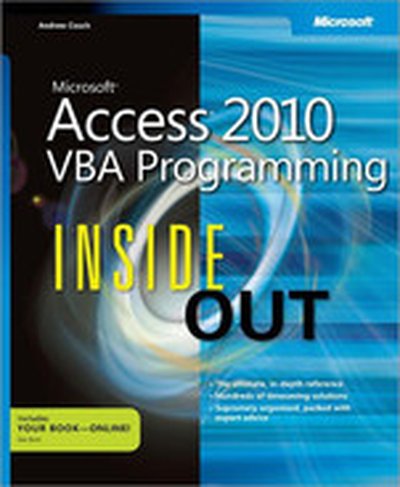
Microsoft® Access® 2010 VBA Programming Inside Out

You're beyond the basics, so dive right in and customize, automate, and extend Access—using Visual Basic for Applications (VBA). This supremely organized reference is packed with hundreds of time-saving solutions, troubleshooting tips, and workarounds. It's all muscle and no fluff. Discover how the experts use VBA to exploit the power of Access—and challenge yourself to new levels of mastery! Enhance your application with VBA built-in functions and SQL code Use the Access Object Model to work with data in forms and reports Manipulate data using SQL, queries, and recordsets with Data Access Objects (DAO) Create classes for handling form and control events Connect your Access database to different sources of data Effectively plan how to upsize an existing Access database to Microsoft SQL Server Dynamically update Microsoft Excel spreadsheets from the database Migrate your Access database directly to the cloud using SQL Azure

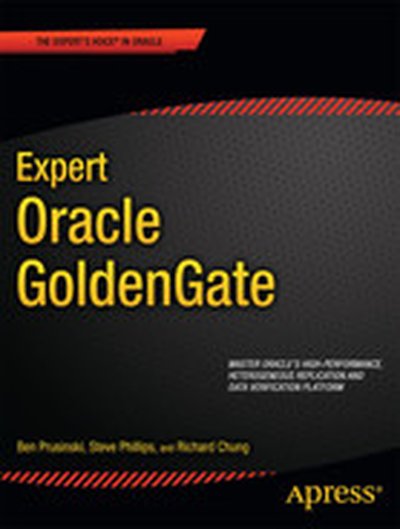
Expert Oracle GoldenGate

Expert Oracle GoldenGate is a hands-on guide to creating and managing complex data replication environments using the latest in database replication technology from Oracle. GoldenGate is the future in replication technology from Oracle, and aims to be best-of-breed. GoldenGate supports homogeneous replication between Oracle databases. It supports heterogeneous replication involving other brands such as Microsoft SQL Server and IBM DB2 Universal Server. GoldenGate is high-speed, bidirectional, highly-parallelized, and makes only a light impact on the performance of databases involved in replication. The authors share their experience in the form of tutorials on designing and implementing all types of Oracle GoldenGate environments. You'll learn methods for tuning Oracle GoldenGate performance. You'll discover GoldenGate's utility as a migration and ETL tool. You'll learn to configure highly-available environments involving GoldenGate, RAC, and Data Guard. From installation to design to implementation and troubleshooting, Expert Oracle GoldenGate helps you master all aspects of using and applying Oracle GoldenGate as the replication tool of choice in your environment. Explains all aspects of using GoldenGate for replication Covers homogeneous, heterogeneous, and bidirectional replication Shows the use of GoldenGate for data migration and extract, transform, load (ETL) What you'll learn Install Oracle GoldenGate quickly and painlessly Design single- and bi-directional replication solutions Apply GoldenGate to high-availability solutions Troubleshoot and tune GoldenGate for performance Verify data synchronization using GoldenGate Veridata Manage and monitor GoldenGate environments using GoldenGate Director Who this book is for Expert Oracle GoldenGate is for database professionals needing to master the latest in replication technology from Oracle. It is for the Oracle database administrator, technical manager, or Oracle developer requiring a solid base of expertise on to implement or manage replication environments with GoldenGate technology. Expert Oracle GoldenGate is an appropriate and timely reference for all users of the GoldenGate software.

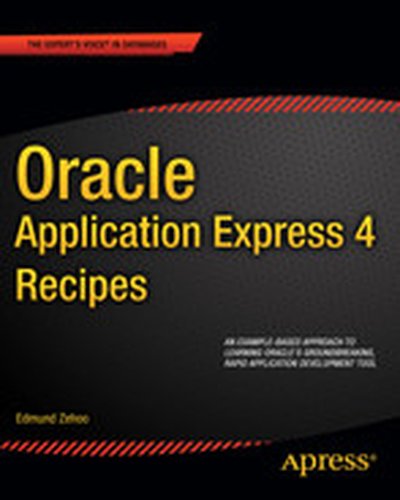
Oracle Application Express 4 Recipes

Oracle Application Express 4 Recipes provides an example-based approach to learning Application Express—the ground-breaking, rapid application development platform included with every Oracle Database license. The recipes format is ideal for the quick-study who just wants a good example or two to kick start their thinking and get pointed in the right direction. The recipes cover the gamut of Application Express development. Author and Application Express expert Edmund Zehoo shows how to create data entry screens, visualize data in the form of reports and charts, implement validation and back-end logic, and much more. Solutions are presented in an easy, problem/solution format from which you can copy and adapt for your own use. Detailed discussion for each solution deepens your understanding and aids in customizing the solutions to fit your particular development challenges. Teaches Application Express via an example-based format Takes you from beginner to intermediate level Shows how to build a fully-functional web store in just one hour What you'll learn Create web application forms and tables Customize application look and feel Visualize data via reports, calendars, maps, and charts Globalize applications in support of language and regional differences Implement complex business logic Optimize the performance of Application Express Protect applications from security threats Who this book is for Oracle Application Express 4 Recipes is aimed at web application developers, PL/SQL developers, and database administrators wishing to learn and use Oracle's groundbreaking tool for rapid development—Application Express. The book is a quick-study and is perfect for the reader who wants only a good example to work from, customize, and adapt.

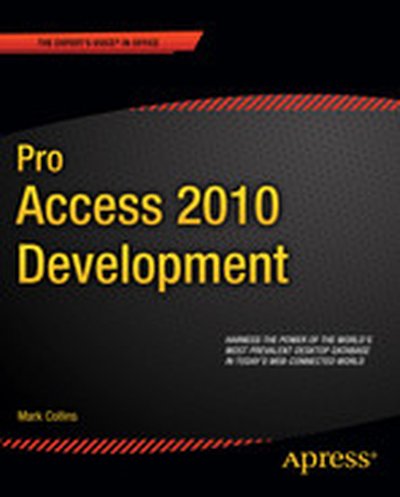
Pro Access 2010 Development

Pro Access 2010 Development is a fundamental resource for developing business applications that take advantage of the features of Access 2010 and the many sources of data available to your business. In this book, you'll learn how to build database applications, create Web-based databases, develop macros and VBA tools for Access applications, integrate Access with SharePoint and other business systems, and much more. Using a practical, hands-on approach, this book will take you through all the facets of developing Access-based solutions, such as data modeling, complex form development, and UI customizations. You'll then deploy your solution to the web and integrate it with other external data sources. This book is full of handy tricks to help you get the most out of what Access has to offer, including its comprehensive set of features and tools for collecting, using, and acting on business data, whether your data is in Access or stored on another platform. You'll also see how to smoothly integrate your applications with SQL Server databases and other Office programs, such as Outlook. What you'll learn How to build business applications that integrate local data, web-generated data, and data available from SQL Server and other sources How to develop VBA routines and macros to enhance the automation of your database How to deploy databases to your users and "web-ify" your application for access from anywhere How to secure access to your data and maintain its integrity How to integrate Access with SharePoint and other business applications Who this book is for This book is for intermediate to advanced Access developers who want to get up to speed with the new features available in Access 2010. Experienced Access users who want to begin developing code-based applications and project solutions in Access will also find this book useful.

Pro Oracle Application Express 4, Second Edition

Pro Oracle Application Express 4 is your key to mastering one of the most innovative products to come out Oracle in years. Application Express, termed APEX for short, is fast becoming one of the easiest and most widely-used of tools for creating enterprise-level applications that run against an Oracle database. APEX is easy enough for power users to create ad-hoc applications atop something more reliable than a spreadsheet. Yet APEX is powerful and extensible enough to enable fully-scalable, enterprise-level applications that are accessed by thousands of users. Authors Tim Fox, John Scott, and Scott Spendolini take you to the professional level in developing for Application Express. They show how to handle user authentication in enterprise environments and how to extend APEX by writing components based upon Oracle's new plug-in architecture. You'll learn to deal with localization issues such as time zones and translations, and to customize the look and feel of an APEX website to blend in with your corporate branding strategy. The authors also cover web service development, performance and scalability, and the production issues that you encounter in enterprise-level deployments. Many years of experience in solving the "hard problems" are coalesced in this book to help you, the reader, take advantage of all that APEX has to offer. Focuses on high-end, enterprise-level development Covers new features such as plug-ins and Websheets Introduces the new interface released with APEX 4.0 What you'll learn Design APEX solutions that conform to your corporate look-and-feel Create compelling reports, charts, navigation, and layout Create your own components based upon APEX's new plug-in architecture Authenticate users and manage their access to your applications Develop and deploy web services using APEX Scale APEX applications to thousands of users Secure your applications and data from intrusion Who this book is for Pro Oracle Application Express 4 is aimed at application developers looking for a rapid application development environment harnessing the full power of the Oracle Database, including SQL and PL/SQL. The book meets the needs of developers working at both the departmental and the enterprise level, with an emphasis on high-end, enterprise deployment.